Calendar: December 8

A Year: Day to Day Men: 8th of December

Saturday Morning After Shower

On the eighth of December in 1881, Vienna’s Ring Theater was destroyed by a gaslight fire that killed three hundred and eighty-four people.

The popular Ring Theater in Vienna, Austria was built between 1872 and 1874 by architect Heinrich von Förster from plans drawn by Emil Ritter. Opening in January of 1874 under the direction of operatic tenor and actor Albin Swoboda Sr, it was originally the Opéra Comique. In September of 1878, it changed its name to the Ring Theater and its focus to spoken plays and variety presentations as well as German and Italian operas. 

As the footprint of the theater was small and it was intended for an audience of seventeen hundred, the architect designed the theater with four levels. On the eight of December in 1881, a fire began shortly before a performance of “Les Contes Fantastiques d’Hoffmann”, a French libretto written by composer Jacques Offenbach. The theater’s entire interior was engulfed in flames and collapsed; three hundred and eight-four people perished. In 1882, new regulations for theaters were passed regarding public safety provisions, including outward-opening doors, safety curtains and the fireproofing of the theater sets. 

The Emperor of Austria and King of Hungary Franz Joseph used his private funds to build an apartment building on the site of the demolished Ring Theater. Although a private residence, it supported worthy public causes. This building also suffered a fire in 1945 with heavy damages and eventually collapsed in 1951.

Between the years 1969 and 1974, an office building occupied the site and served as the federal headquarters for the Vienna police and federal security guards: a plaque commemorating the fire is installed on the police headquarters. The original Attic-styled statues from the Ring Theater are now in Vienna’s Pötzleinsdorfer Schlosspark, a sprawling natural preserve with statues, wildlife areas and a small farm. 

Calendar: December 6

A Year: Day to Day Men: 6th of December

Apple Picker

On December 6, 1421, Henry VI was born. The only child of Henry V,  he succeeded to the English throne at the age of nine months upon his father’s death, and succeeded to the French throne on the death of his maternal grandfather Charles VI shortly afterwards.

Completely unlike his aggressive father, Henry had a timid, shy, and passive personality, seemed mostly well-intentioned, and disliked warfare and violence; he was also at times mentally unstable. This resulted in various nobles (who often had diverging interests among themselves) attempting to establish control over him, throughout his reign. He proved an indecisive and ineffective ruler, overall incapable of leading his country in times of adversity.

As the situation involving the contesting of the claims to the throne in France worsened, political instability in England also increased. General misrule brought in waves of civil unrest and a breakdown in law and order. Parts of the English nobility began to resent the king’s favouritism, his inability to defend their lands in France, and some of his overall policy decisions.

Partially in the hope of achieving peace, in 1445 Henry married Charles VII’s niece, Margaret of Anjou, an ambitious and strong-willed woman who would come to influence much of the King’s decisions and become an effective power behind the throne and whose scheming would widen the rift among the English aristocracy. The peace policy failed, leading to the murder of William de la Pole, one of Henry’s key advisors. By 1453, Calais was Henry’s only remaining territory on the continent.

Henry VI was deposed from the throne on March 29, 1461 by Richard of York’s son who took the throne as Edward IV and imprisoned Henry in the Tower of London in 1465. Henry was restored to the throne in 1470 only to be imprisoned again in the Tower in 1471 where he died on May 21, 1471, possibly killed on the orders of Edward IV.

Calendar: December 4

A Year: Day to Day Men: 4th of December 

Lost in Thought

On the fourth day of December in 1872, the American-registered merchant brigantine, Mary Celeste, was discovered adrift and deserted in the Atlantic Ocean off the Azores Islands. 

The Mary Celeste was built in Spencer’s Island, Nova Scotia, and launched in 1861 under British registration as the “Amazon”. Seven years later, she was transferred to American ownership and renamed the “Mary Celeste”. She was a brigantine, a two-masted sailing vessel with a fully square-rigged foremast and at least two sails on her main mast: a square topsail and a gaff sail behind the mast. The Mary Celeste had a single deck, tonnage of 198.42 gross tons and a length of 30.3 meters. After her salvage in 1872, the Mary Celeste was rebuilt with a second deck and  additional depth; her tonnage was increased to 282.28 gross tons. 

In October of 1867, the “Amazon” was driven ashore during a storm and was so badly damaged that her owners abandoned her as a wreck. She was eventually acquired by a New York mariner Richard Haines who restored her and registered with the Collector of the Port of New York as an American vessel named “Mary Celeste”. The ship was seized by Haines’s creditors and sold to a consortium headed by James H. Winchester. Early in 1872, the Mary Celeste underwent a major refit which enlarged her considerably. 

In October of 1872, Captain Benjamin Spooner Briggs took command of the Mary Celeste for her first voyage following her extensive refit. As the voyage was to Genoa, Italy, Briggs arranged for his wife and infant daughter to accompany him, but left his school-aged son in the care of his grandmother. Satisfied with his ship and crew, the Mary Celeste was loaded on the twentieth of October with a cargo of seventeen-hundred barrels of alcohol. On November 5th, the ship left the pier with Briggs, his wife and daughter and seven crew members. 

On November 15th in 1872, the Canadian brigantine “Dei Gratia” left New York harbor with a cargo destined for Genoa, Italy. She followed the same general route as the Mary Celeste, only eight days behind. On December 4th at a point midway between the Azores and the coast of Portugal, the helmsman of the Dei Gratia reported a vessel with an odd set to her sails heading erratically towards their ship. Seeing no one on deck and receiving no replies to their signals, Captain Morehouse sent the first and second mates to investigate. The ship was deserted, the sails poorly set with some missing, and much of the rigging was damaged.

While the main hatch was secure, the other hatches of the Mary Celeste were open with the covers on deck. The ship’s single lifeboat was gone and the glass cover of the ship’s compass was shattered. There was a meter of water in the hold but that was not an alarming amount for the size of the vessel. The last entry in the daily log was November 25th, nine days earlier. While personal items in Captain Brigg’s cabin was scattered, gallery equipment was neatly stowed and there were ample provisions in the stores. With no signs of fire or violence, the missing lifeboat indicated an orderly departure from the ship. 

Captain Morehouse divided his crew of eight men to sail the Mary Celeste and the Dei Gratia to Gibraltar. The weather was calm but the progress, being under-crewed, was slow. A series of hearings were held at the Salvage Court in Gibraltar beginning in the middle of December. Various theories, based on testimonies from the Dei Gratia crew, were presented from mutiny and murder to conspiracy of fraud, due to the fact that the Mary Celeste was heavily over-insured. Fact and fiction became entwined over the decades with no determination as to the cause of the missing crew. At Spenser’s Island, the site of Mary Celeste’s original construction, a commemorative monument for her lost crew was erected as well as a memorial outdoor cinema theater. 

Calendar: December 2

A Year: Day to Day Men: 2nd of December

The Craving of Human Touch in Form

December 2, 1933 was the release date of Fred Astaire’s first film, “Dancing Lady”.

“Dancing lady” is a 1933 pre-Code musical film directed by Robert Z. Leonard and produced by David O Selznick and John W Considine, Jr. It starred Joan Crawford and Clark Gable, and featured Franchot Tone, Fred Astaire, Robert Benchley, and Ted Healy and His Stooges, who later became the Three Stooges. It was also one of Eve Arden’s first uncredited appearances on film.

The film featured the film debut of extraordinary dancer Fred Astaire, who appears as himself, as well as the first credited appearance of actor and singer Nelson Eddy, a classically trained baritone who became the highest paid singer at that time in the world. The film was a box office hit upon its release, receiving many positive reviews from critics.

After appearing in “Dancing Lady” for MGM Studios, Fred Astaire returned to RKO Radio Pictures and received fifth billing In the 1933 Dolores del Rio film “Flying Down to Rio”. It was in this film that Astaire first danced with Ginger Rogers.Astaire was reluctant to become part of a dance team; however, the obvious public appeal of the pairing persuaded him. The Astaire-Rogers partnership, and the choreography of Astaire and collaborator Hermes Pan, helped make dancing an important element of the Hollywood film musical.

Fred Astaire and Ginger Rogers made nine films together at RKO, including the 1934 “Gay Divorcee”, “Top hat” in 1935, the 1936 “ Swing Time, and “Carefree” released in 1938. Six films of the nine became the biggest moneymakers for the RKO studio, bringing the studio the prestige and artistry it coveted. The Astaire-Rogers partnership elevated them both to stardom.

Fred Astaire was given complete autonomy over the dance production. He is credited with two important innovations in early film musicals: Astaire insisted that a closely tracking dolly camera film a dance routine in as few shots as possible, typically with just four to eight cuts,  while holding the dancers in full view at all times. This gave the illusion of an almost stationary camera filming an entire dance in a single shot.

Astaire’s second innovation involved the context of the dance. Astaire was adamant that all song and dance routines be seamlessly integrated into the plot lines of the film. Instead of using the dance as a spectacle such as a Busby Berkeley routine, the dance was used to move the plot along. A typical Astaire film would include three dance routines in the plot: a solo by Astaire, a partnered comedy dance, and a partnered romantic dance routine.

Dragon Fish Shachihoko

Artist Unknown, Dragon Fish Shachihoko, Edo Period, Bronze, 160 x 86 x 43 cm, Private Collection

This bronze Shachihoko, or roof decoration, is in the form of a dragon fish with bushy eyebrows and whiskers, flared nostrils, a spiny dorsal fin, and four large pectoral fins. His body, covered with the scales of a carp, has a large flared tail fin. With only remnants of the gilding existing, the dragon fish has weathered into a green patina. 

Originally completely gilded, this Shachihoko would have adorned the gable end of either a temple roof or a samurai dwelling. Attributed with the power to control rain, this creature was thought to provide protection from fire. 

Source: brandtasianart.com

Calendar: November 27


A Year: Day to Day Men: 27th of November

The Bare White Wall

November 27, 1920 marks the release of Douglas Fairbanks’s “The Mark of Zorro”.

“The Mark of Zorro” was a 1920 silent adventure romance film, starring Douglas Fairbanks and Noah Beery Senior’, based on Johnston McCulley’s 1919 “The Curse of Capistrano” which introduced the character of Zorro. The story was adapted into a screenplay by Fairbanks, under the name of Elton Thomas, and Eugene Miller. “The Mark of Zorro” was the first film released through United Artists, formed by Mary Pickford, Charlie Chaplin, D.W. Griffith, and Fairbanks.

Douglas Fairbanks played Don Diego Vega, the effete son of a wealthy ranch owner, who has the secret identity of a masked Robin Hood- like rogue, known as Zorro, or The Fox. He is the champion of the people who appears out of nowhere to protect and right wrongs. He has a love interest, Lolita played by Marguerite De La Motte, and is pursued by the authorities, including Sergeant Pedro Gonzales played by Noah Beery Senior.

“The Mark of Zorro” is a landmark in the career of Douglas Fairbanks and in the development of the action adventure film. This was Fairbanks’s thirtieth motion picture; and he used it to transition from comedies to costume adventure films, which is how most people remember him. The audiences responded with enthusiasm to Fairbanks’s new persona, which allowed him to flaunt his considerable athleticism to its fullest advantage. Fairbanks’s stunts have lost none of their impact; no later cinematic superhero has ever been half so convincing as his Zorro leaping from rooftop to rooftop, and over the heads of his enemies.

This film helped popularize one of Americas’s most prominent creations of fiction; the enduring character of the superhero. It established the pattern for future caped crusaders with dual identities. “The Mark of Zorro” was remade twice: in 1940 starring Tyrone Power and in 1974 starring Frank Langella. The United States Library of Congress selected it in 2015 for preservation in the National Film Registry.

In DC Comics, it is established that “The Mark of Zorro” was the film that young Bruce Wayne saw just before the death of his parents outside the movie theater. Zorro is often portrayed as Bruce Wayne’s childhood hero and an influence upon his Batman persona. Bill Finger, co-creator with Bob Kane of the character Batman, was inspired by the Zorro played by Fairbanks, leading to similarities in costumes, the secret caves, and the unexpected secret identities.

Antonio Canova

Antonio Canova, “Psyche Revived by Cupid’s Kiss”, Detail, 1787, Marble, Louvre Museum, Paris

“Psyche Revived by Cupid’s Kiss” is a marble sculpture by Italian artist Antonio Canova, who was raised by his stonemason grandfather, Pasino Canova. Antonio Canova valued his independence as an artist, believing that art was above politics. However, through pressure by the French on the papacy, he was forced to accept titles and honors.

The marble sculpture is in a Neoclassical style but shows characteristics of the then emerging Romantic movement. There were two versions of this piece; the image shown being the prime version, which was acquired by Joachim Murat, Marshal of France and Admiral of France under the reign of Napoleon. After Murat’s death, the sculpture entered the Louvre Museum in 1824.

Image reblogged with thanks to http://abrighterhellas.tumblr.com

Calendar: November 25

A Year: Day to Day Men: 25th of November

The Jaguar Hunter

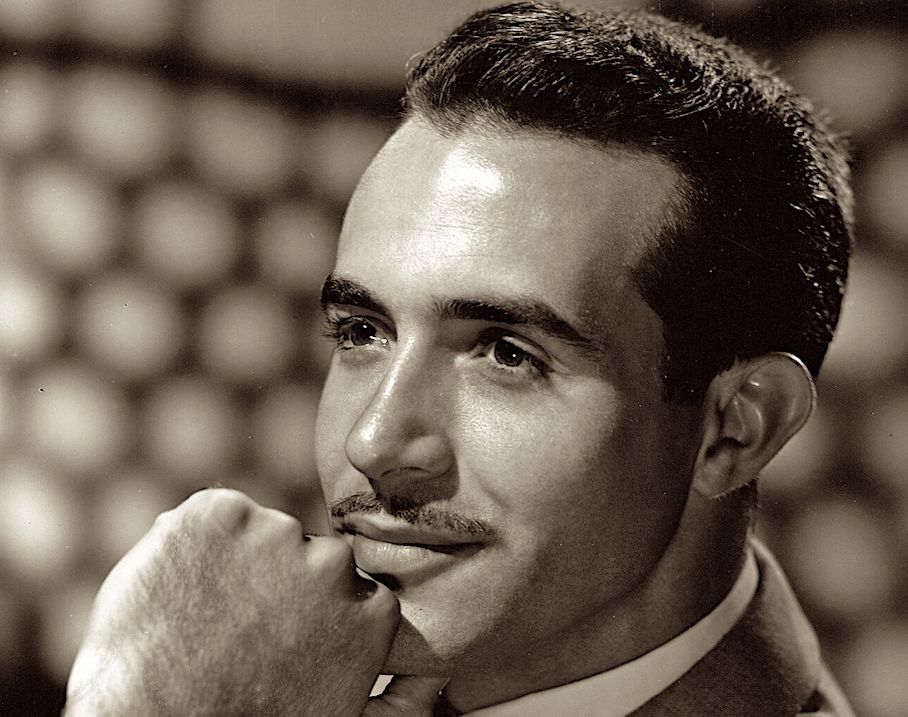
November 25, 1920 marks the birthdate of actor Ricardo Montalbán

Born in Mexico City, Mexico, to Spanish immigrants, Ricardo Montalbán made his New York stage debut in 1940 in a small role in “Her Cardboard Lover”, starring Tallulah Bankhead. In 1947 he landed his first major Hollywood film role in the musical “Fiesta”, playing twin siblings with Esther Williams. Montalbán had a memorable dance number in that film with Cyd Charisse.

The dark, handsome Montalbán with the Spanish accent would go on to play numerous Latin romantic-types. He teamed up again with Esther Williams in two more films, the musical romantic comedy “Neptune’s Daughter” and the 1948 romantic comedy “On an Island with You”. In 1949, Montalbán broke from his romantic typecast to play a border agent in the suspense drama film “Border Incident” directed by Anthony Mann.

During the 1950s and 1960s Montalbán was one of only a handful of actively working Hispanic actors in Hollywood, often playing characters of different ethnicities, such as the character Nakamura in the 1957 “Sayonara” and Tokura in a “Hawaii Five-O” episode. He also starred as a naive, penniless French duke in the romance comedy “Love is a Ball” released in 1963.

Ricardo Montalbán’s best known television role was that of the man in the white suit with the cultured demeanor, Mr. Roarke, on the television series “Fantasy Island” which ran from 1977 to 1984. The series was one of the most popular on television at that time, making him and his co-star Herve Villechaize, playing Tattoo, popular icons.

Montalbán’s most well-known film role was the character of Khan Noonien Singh in the 1982 “Star Trek II: The Wrath of khan”, in which he reprised the role he had originated in the 1967 episode of “Star Trek” titled “Space Seed”. Montalbán was already physically fit; so Khan’s costume was specifically designed to display his physique. He agreed to take the role at a significant pay cut because he relished reprising his original character. His only regret, Montalbán said, was that he and William Shatner never interacted in their roles; the scenes were all done through video communication, filming their scenes months apart to accommodate Montalbán’s schedule for “Fantasy Island”.

Montalbán reacted to the poor way Mexicans were being portrayed by establishing with other stars the Nosotros (We) Foundation in 1970 to advocate for Latinos in the movie and television industry. He served as its first president. The foundation created the Golden Eagle Awards, an annual awards show that highlights Latino actors. The awards are presented in conjunction with the Nosotros American Latino Film Festival, held at the now renamed Ricardo Montalbán Theater in Hollywood.

Calendar: November 24

A Year: Day to Day Men: 24th of November

One Facet of Life

November 24, 1639 marks the first known observation and recording of a transit of Venus.

By the 17th century, two developments allowed for the transits of planets across the face of the sun to be predicted and observed. One was the telescope of which the actual inventor is unknown; a patent for a refracting telescope was submitted in 1608 in the Netherlands by spectacle maker Hans Lippershey. Galileo heard about it, and in 1609 built his own version for observing celestial objects.

The second development was the new astronomy of Johannes Kepler, which assumed elliptical rather than circular orbits fro the planets. In 1627, Kepler published his “ Rudolphine Tables”, a star catalogue and planetary tables using some observational data collected by Danish astronomer Tycho Brahe. Two years later, Kepler published extracts from his tables concerning the transit of Mercury and of Venus for the year 1631. These occurred as predicted and were observed by several astronomers, vindicating Kepler’s approach to astronomical theory.

The first known observations and recording of the transit of Venus across the sun were made in 1639 by the English astronomers Jeremiah Horrocks and his friend and correspondent William Crabtree. These observations were made on November 24, under the Julian calendar then in use in England. This calendar was refined and gradually replaced by our Gregorian calendar initiated by Pope Gregory XIII, changing the observation date to December 4th of that year. Horrocks observed the event from the village of Much Hoole, Lancashire, and Crabtree, independently, observed the event from his home in Broughton, near Manchester.

Both men, followers of Kepler’s astronomy, were self-taught mathematical astronomers who methodically worked to correct and improve Kepler’s Tables by observation and measurement. In 1639, Horrocks was the only astronomer who realized that the transit of Venus was imminent; others became aware only upon receiving Horrocks’s report. The two men’s observations and later mathematical work were influential in establishing the size of the solar system. For their achievements, they are considered the founders fo British research astronomy.

Insert Image: Ford Madox Brown, “Crabtree Watching the Transit of Venus AD 1639”, 1883, Oil on Canvas, Manchester Town Hall, Manchester, England

Calendar: November 23

A Year: Day to Day Men: 23rd of November

Tiny Bears in a Row

November 23, 1862 was the birthdate of Belgian Neo-Impressionist painter Théo van Rysselberghe.

Born in Ghent, Théo van Rysselberghe studied at the Academy of Ghent under Theo Canneel and later at the Academie Royal des Beaux-Arts in Brussels under Jean-François Portaels. Van Rysselberghe was strongly influenced by North African paintings, which had become the fashion in Belgium. He made three trips to Morocco, staying there for a year and a half.

Van Rysselberghe painted his “Self Portrait with Pipe” in 1880, in the somber colors of the Belgium realistic tradition. His “Child in an Open Spot in the Forest”, also painted in that year, showed a move to impressionism. He started traveling extensively with his friends, impressionist Frantz Charlet and Asturian painter Dario de Regoyos, throughout Spain and Morocco, staying in Tanger for four months starting in October  of 1882. At this  time, Van Rysselberghe painted and drew many scenes form the streets and in the souk, including the 1882 “Arabian Street Cobbler”, the 1882 “Arabian Boy”, and “Resting Guard” in 1883.

Van Rysselberghe saw the works of the impressionists Monet and Auguste Renoir at the show of “Les XX” in 1886, becoming deeply impressed. He experimented with this technique in his 1886 “Woman with Japanese Album”. This impressionist influence became prominent in his later paintings. In 1886 he also discovered the pointillist techniques at that Eighth Impressionist Exhibition in Paris, abandoning realism and became an adept of pointillism,

Theo Van Rysselberghe’s “Gate of Mansour-El-Hay” and”Morocco-the Great Souk”, both done in 1887, are painted in the pointillist style, but still with short strokes of paint and not with points. These are among his rare pointillist paintings of Morocco. When he had finished these paintings, he stopped completely with this Moroccan period in his life. Van Rysselberghen then turned to portraiture, resulting in a series of neo- impressionist portraits. His famous portrait of Alice Sèthe, painted in 1888 in blue and gold, would become a turning point in his life. In this painting he used only points of paint on the canvas.

In 1898 Van Rysselberghe moved to Paris, although he maintained close links with the artistic milieu of Brussels, and executed in 1902, among other works, a series of decorative panels for the Hôtel Solvay, belonging to Victor Horta. Van Rysselberghe also played an important role in the introduction of the fauvist painters, whom he had met through his friend Paul Signac, to Belgium. From 1903 onward, his neo- Impressionism began to give way to more restrained forms, and during the last years of his life he also executed some sculptures. Van Rysselberghe died on the 13th of December of 1926 in Saint-Clair, France.

Calendar: November 22

A Year: Day to Day Men: 22nd of November

Red Knit Hat and Boots

November 22, 1932 was the birthdate of actor Robert Vaughn.

Born in New York City, Robert Vaughn studied at the Los Angeles State College of Applied Arts and Sciences, earning a Master’s Degree in theater. He received a Ph. D in communications from the University of Southern California in 1970. He published his dissertation as a book, “Only Victims: A Study of Show Business Blacklisting” in 1972.

Vaughn made his television debut in November of 1955 on the series “Medic”, the first of more than two hundred appearances on the show. He first film appearance was as an uncredited extra playing a golden calf idolater visible behind Yul Brynner in a scene from “The Ten Commandments”. Vaughn’s first credited movie role was playing Bob Ford, the killer of Jesse James, in the 1957 western “Hell’s Crossroads”.

Vaughn’s first film appearance of note was in “The Young Philadelphians”, for which he received an Academy Award nomination for Best Supporting Actor and the Golden Globe Award for Best Supporting Actor. He next appeared as the gunman Lee in “ The Magnificent Seven” in 1960, the western adaption of Kuorsawa’s epic “ Seven Samurai”.

Robert Vaughn was offered his most memorable role in 1964, starring in his own series as secret agent Napoleon Solo in the television series “The Man from U.N.C.L.E.”. His co-star was Scottish actor David McCallum who played fellow agent Illya Kuryakin. This role would make Robert Vaughn a household name even behind the Iron Curtain. This series which ran from 1964 to 1968 created a spin-off show, large amounts of merchandising, overseas theatrical movies, and a sequel.

After the series ended, Vaughn was given the role of playing the ambitious California politician Chalmers, in the critical and box-office smash film “Bullitt” starring Steve McQueen. Vaughn was nominated for a BAFTA Award for Best Supporting Actor for this role. He won an Emmy for his portrayal of Frank Flaherty in ABC’s 1977 “Washington: Behind Closed Doors”. Vaughn did acting work in England also, appearing on the BBC drama “Hustle” and the British soap opera “Coronation Street”.

Robert Vaughn died from acute leukemia in Danbury, Connecticut on the 11th of November in 2016, eleven days before his eighty-fourth birthday. He was the first popular American actor to take a public stand against the Vietnam War and was an active member in the peace group Another Mother for Peace. Vaughn published his autobiography “A Fortunate Life” in 2008.

Calendar: November 20

A Year: Day to Day Men: 20th of November

Blue Sky and Two Ravens

November 20, 1890 was the birthdate of American film actor Robert Armstrong.

Robert Armstrong, born in Bay City, Michigan, attended the University of Washington, where he studied law. He gave up his studies to manage his uncle’s touring company. In his spare time, Armstrong wrote plays, appearing in one when it was produced. In 1926, he traveled to London and appeared on the British stage for one season.

Robert Armstrong’s film career began in 1927 when he appeared in Pathé’s romantic silent film drama ”The Main Event”, produced by Cecil DeMille. He had a very prolific film career in the late 1920s and early 1930s, making nine movies just in 1928. Armstrong is best know for his role as film director Carl Denham in the 1933 monster adventure film “King Kong”. He reprised his role as Denham in the sequel “Son of Kong”, released at the end of 1933.

Merian C. Cooper, the producer of “King Kong”, used Armstrong in several more movies. Armstrong and Fay Wray starred in “The Most Dangerous Game”, filmed at night on the same sets being used during the day for “King Kong”. He worked throughout the 1930s and 1940s for several film studios, starring in the 1937 musical comedy “The Girl Said No”, released by Grand National Films. In 1940, Armstrong co-starred in the Universal Pictures film “Enemy Agent”, a story about A Nazi spy ring in the country.

In 1942, Armstrong teamed up with actor Richard Cromwell in the notable gangster B-movie “Baby Face Nelson”, playing “Doc” Rogers, the boss of ‘Baby Face’ played by Cromwell. Later he played another leading character role, similar to Carl Denham, as Max O’Hara in “Mighty Joe Young” released in 1949. This film, produced by Merian C. Cooper and directed by Ernst B. Schoedsack, became a stop-motion animation classic, winning the Academy Award for Best Visual Effects in 1950.

Armstrong appeared in the 1950s as Sheriff Andy Anderson on the syndicated wester-themed television series “State Trooper”. He also made four guest appearances on the long-running television series “Perry Mason”, playing the both title character and murder victim on one show, a defendant on another, and the murderer in “The Case of the Accosted Accountant”. Robert Armstrong died of cancer in Santa Monica, California, within sixteen hours of the death of the co-producer of “King Kong”, Merian C. Cooper.

Bottom Insert Image: Robert Armstrong and Frank Reicher, “Song of Kong”, 1933, Director Ernest B. Schoedsack, Cinematography Edward Linden, J. O. Taylor and Vernon L. Walker, Film Clip Photo

Calendar: November 18

A Year: Day to Day Men: 18th of November

The Cross

November 18, 1908 was the birthdate of American comic actress Imogene Coca.

Imogene Coca, born Imogene Fernandez de Coca in Philadelphia, Pennsylvania was the daughter of José Fernandez de Coca, a conductor, and his wife Sadie Brady, a dancer and magician’s assistant.

In her youth, Imogene Coca received piano, dance, and voice lessons. While still a teenager, she moved from Philadelphia to seek a living as a dancer, starting in the chorus of the 1925 Broadway musical “When You Smile” which ran forty-nine performances in New York City. Coca came to be featured as a headliner, appearing in Manhattan nightclubs, with music arranged by her first husband, Robert Burton. She came to prominence when she began to combine music with comedy. Coca’s first big critical success was in Broadway musical revue “New Faces of 1934”. A well-received part of her act was a comic striptease, during which Coca made sultry faces and gestures but would manage to remove only one glove.

Imogene Coca played opposite Sid Caesar on “The Admiral Broadway Revue” from January to June in 1949. In the early days of live television, she again played opposite Sid Caesar in a sketch comedy program, “Your Show of Shows”, which was immensely popular from 1950 to 1954. Coca won the second-ever Primetime Emmy Award for Outstanding Lead Actress in a Comedy Series in 1951 and was nominated for four other Emmys for her work in the show. Her success in that program earned Coca her own series “The Imogen Coca Show which ran from 1954-1955.

Imogene Coca continued to appear on comedy and variety series from the 1950s to the 1980s. She appeared on “The Carol Burnett Show” and “The Hollywood Palace”, made guest appearances on “Bewitched” and “The Brady Bunch”, and occasionally appeared in films such as “Under the Yum Yum Tree” in 1963 and the 1963 “National Lampoon’s Vacation”, as Aunt Edna.

After having appeared in several Broadway musical-comedy revues and plays between the 1930s and the 1950s, Imogene Coca returned to Broadway at the age of 70 with a Tony Award-nominated performance as religious zealot Letitia Primrose in “On the Twentieth Century”, a 1978 stage musical adapted from the 1934 film. Her role, that of a religious fanatic who plasters decals onto every available surface, had been a male in both the film and the original stage production, and was rewritten specifically as a vehicle for Coca.

Bottom Insert Image: Sid Caesar and Imogene Coca, “Your Show of Shows”, 1950-1954, Publicity Shot, Shout Factory

Calendar: November 16

A Year: Day to Day Men: 16th of November

Yellow Skyscrapers

On November 16, 1581, Ivan the Terrible attacks his son and heir, Ivan Ivanovich.

Ivan Ivanovich was a Tsarevich, a heir apparent of Russia, and the second son of Ivan IV Vasilyevich, known as Ivan the Terrible. Young Ivan at the age of fifteen accompanied his father, who was seeking control of the city of Novgordo, during what became known as the Massacre of Novgordo. For a period of five weeks, Ivan and his father watched the army attack the city and slaughter all its noblemen.

Ivan Ivanovich’s relationship with his father began to deteriorate during the later stages of the Livonian War, where Russia faced a coalition of armed forces from Denmark, Norway, Sweden and the Union consisting of Lithuania and Poland. Angry with his father for his military failures, Ivan demanded to be given command of some of the troops to liberate the besieged city of Pskov, a Russian-held city under attack.

The relationship between father and son deteriorated further in November of 1581 when the Tsar physically assaulted Ivan’s pregnant wife. As a consequence, Ivan the younger’s wife, Yelena, suffered a miscarriage. Confronted about this, the Tsar changed the subject, accusing the younger Ivan of inciting rebellion and insubordination regarding Ivan’s recent actions of liberating the city of Pskov from the siege.

Angered, the Tsar Ivan struck his son, the younger Ivan, on the head with his scepter. Boris Godunov, minister to the court, tried to intervene but only received blows from the scepter himself. The younger Ivan fell, barely conscious with a bleeding wound on his temple. The younger Ivan only briefly regained consciousness before being transported to his chamber. For the next few days, Ivan the Terrible prayed for a miracle to save his son, but to no avail, Ivan Ivanovich, the Tsaravich, died on three days later on November 19, 1581.

Insert Image: Ilya Repin, “Ivan the Terrible and His Son Ivan on 16 November 1581”, 1883-1865, Oil on Canvas, 199.5 x 254 cm, Tretyakov Gallery, Moscow

David Hockney

David Hockney, “Man In Shower in Beverly Hills”, 1964, Acrylic on Canvas, 166.4 x 166.4 cm

Hockney formed his first impressions of Los Angeles from books and magazines he read before he visited the city. While still in London in 1963, he painted an invented shower scene, “Domestic Scene, Los Angeles”, now in a private collection, which included an image of two men taken from the homoerotic American magazine ‘Physique Pictorial’.

When Hockney went to Los Angeles six months later, he was particularly fascinated by the use of water for irrigation and recreation in the semi-arid environment. He delighted in experimenting with various methods of depicting drops and sprays of water, attracted by the ‘idea of painting moving water in a very slow and careful manne. Hockney painted swimming pools and lawn sprinklers, but was equally intrigued by showers.

“Americans take showers all the time … For an artist the interest of showers is obvious: the whole body is always in view and in movement, usually gracefully, as the bather is caressing his own body. There is also a three-hundred-year tradition of the bather as a subject in painting. Beverly Hills houses seemed full of showers of all shapes and sizes … They all seemed to me to have elements of luxury.” – David Hockney