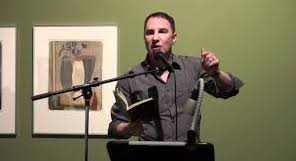
Bernard Steffen

The Artwork of Bernard Steffen

Born in Neodesha, Kansas, in 1907, Bernard Steffen was a lithographer and painter noted for his considerable output of work as a participant in the Works Progress Administration’s program for the arts. Besides his lithographic work, he produced many murals, depicting local histories, in United States Post Offices from 1934 to 1941.

Bernard Steffen graduated from Neodesha High School circa 1925; he then attended the Kansas City Art Institute on a scholarship. In 1928 Steffen received a scholarship to the Colorado Springs Art Institute, where he and Thomas Hart Benton roomed together. An early member of the Regionalist art movement. Benton became a lifelong friend and mentor to Steffen, whose style and preference for rural subject matter was influenced by Benton.

Steffen became a member of the American Artist’s Congress, a group established in New York City in 1935 to endorse government support for art unions and to promote a social-realist style in American painting. He worked as a staff artist for the Resettlement Administration, and painted murals for the Works Progress Administration (WPA), including one in 1938 for the US Post Office in Neodesha, Kansas. Steffen was a teacher and treasurer for the National Serigraph Society, and worked comfortably in the varied mediums of oil, tempera, lithography and screen printing.

The strong influence of Thomas Hart Benton’s style is seen in Bernard Steffen’s work. There is a strong contrast in the dark and light tones of his works, and his figures are broad and simplified, intended as representations of types rather than individuals.. Steffen was sympathetically drawn to the rural workers who appear in his prints and paintings of the 1930s; and he frequently emphasized agricultural themes. His subject matter, however, does not derive entirely from Benton’s influence, but also from his own experiences while growing up in Kansas.

Steffen also studied with Stanton McDonald Wright, the American modernist painter, who, along with Morgan Russell and Patrick Henry Bruck, were the only American artists to define a common aesthetic philosophy and issue a manifesto. The influence of Wright’s style can be seen in the emphasis Steffen applied towards underlying compositional structure. Like other artists of the 1930s, Steffen produced works which provided a connection between the artist and  his worker subjects.

After his work with the WPA, Bernard Steffen relocated his residence to Woodstock, New York, where he set up a studio. In 1977 he was diagnosed with ALS; however, he continued to produce art by holding a brush in his stiff hand and stippling the canvas. He married painter Eleanor Lipkins in June of 1978. Two years later, Bernard Steffen passed away, with his wife by his side, on July 10, 1980 at the age of seventy-two. He is buried at the Artists Cemetery in Woodstock, Ulster County, New York. 

His lithography and silk screen prints are in the collections of The Spencer Museum of Art at the University of Kansas, University of Michigan Art Museum, Dallas Museum of Art, and the Block Museum at Northwestern University. Many of his prints are part of the Library of Congress collection.

Note: A devastating fire in 1977 destroyed Bernard Steffen’s Woodstock, New York, home and studio, along with all of his artwork. What survives today are works previously sold or in galleries and museums at that time.

Top Insert Image: Photographer Unknown, Bernard Steffen at Gallery Showing, Date Unknown

Middle Insert Image: Bernard Steffen, “Pulling Corn (Fodder Chopper)”, Date Unknown, Serigraph in Color,, 27.9 x 35.2 cm, Private Collection

Bottom Insert Image: Bernard Steffen, “S Curve”, 1940, Lithograph on Paper, 24.1 x 21 cm, Private Collection

José Saramago: “We Feel Our Way Along the Road”

Photographers Unknown, In One Word, Brief

“We have an odd relationship with words. We learn a few when we are small, throughout our lives we collect others through education, conversation, our contact with books, and yet, in comparison, there are only a tiny number about whose meaning, sense, and denotation we would have absolutely no doubts, if one day, we were to ask ourselves seriously what they meant. Thus we affirm and deny, thus we convince and are convinced, thus we argue, deduce, and conclude, wandering fearlessly over the surface of concepts about which we only have the vaguest of ideas, and, despite the false air of confidence that we generally affect as we feel our way along the road in verbal darkness, we manage, more or less, to understand each other and even, sometimes, to find each other.” 

—José Saramago, The Double

Born in November of 1922 in Azinhaga, Portugal, José de Souse Saramago was a writer, translator, and the recipient of the 1998 Nobel Prize in Literature. In 1924 at the age of two, his family moved to the capital city of Lisbon. where he first attended primary school and later five years of technical school with studies in mechanics. Having no money to buy books, Saramago borrowed books from friends, including Portuguese language textbooks, and regularly frequented the local Lisbon public libraries. 

After obtaining a position as an administrative civil servant in the Social Welfare Service, Saramago married Ilda Reis in 1944. In 1947, the birth year of their only child Violante, he published his first book, a novel entitled “The Land of Sin”, which was commercially unsuccessful and later disowned by him. Saramago attempted writing two more novels; but eventually abandoned the works when he felt they were not worthwhile. For nineteen years, until 1966, he was absent from the Portuguese literary scene. At the end of the 1950s, José Saramago started working at Estúdios Cor, a publisher company, as production manager, a position which introduced him to some of the most important Portuguese writers.

José Saramago published his first poetry book in 1966, “Os Poemas Possíveis”. Four years later in 1970, his second book of poems entitled “Probably Joy” was published. This was followed by two collections of his written newspaper articles: “From This World and the Other” in 1971 and “The Traveler’s Baggage” in 1973,  Saramago published in 1974 his second novel “The Opinions the DL Had”, which told the story of the existing dictatorship of Portugal just before its toppling in April of that year. 

Saramago became deputy director of the morning newspaper “Diário de Nóticias” from April to November of 1975, at which time he was fired for political reasons after the coup of November 25th. Several books marked this period in Saramago’s life: “The Year of 1993”, a long poem that was published in 1975; a personal and philosophical book entitled “Manual of Painting and Calligraphy published in 1977;  and “The Notes”, a 1976 collection of political newspaper articles from “Diários de Nóticies”.

In the beginning of 1976, Saramago settled in the country village of Lavre in the Alentejo Province for a period of study, observation, and note-taking that would lead to the 1980 novel, “Risen from the Ground”, which follows the fortunes of a poor landless family living through major international events. In 1978, he published a collection of short stories, “Quasi Object”, which was followed by two plays in 1979: “The Night” and “What Shall I Do with This Book?”. The decade of the 1980s marked the publishing of four novels: a 1982 historical novel set during the reign of King John V of Portugal, entitled “Baltazar and Blimunda”; the 1984 “The Year of the Death of Ricardo Reis”; the 1986 “The Stone Raft”, in which the Iberian Peninsula breaks free from the continent and floats away; and “The History of the Siege of Lisbon” published in 1989. 

José Saramago’s  1991 fictional account of a flawed, humanized Christ, “The Gospel According to Jesus Christ”, was censored by the Portuguese government, who vetoed its presentation for the European Literary Prize under the pretext that the book was offensive to Catholics. As a result of this censorship, Saramago and his new wife, Spanish journalist Pilar del Rio, left Portugal and relocated their residence to the Canary Island of Lanzarote. In 1991, Saramago  wrote the play “In Nomeine Dei”, which would be the basis for the opera libretto to “Divara”. In 1993, he began writing his multi-volume diary “Cadernos de Lanzarote (Lanzarote Diaries)”. While he worked on his diary, two more novels followed: the 1995 “Blindness” and the 1997 “All the Names”.

Saramago’s novels often are based in fantastic scenarios; sections of continents breaking off, country-wide blindness; and a country in which suddenly death no longer exists. He addressed serious matters with empathy for the human condition; a recurring theme in his work dealt with a person’s need for an individual identity and established meaning to their life. Saramago’s experimental writing style often featured long sentences, sometimes extended to page length. He used periods sparingly, opting for a loose flow of clauses joined with commas. The paragraphs in Saramago’s works could extend for pages with dialogue unmarked by quotation marks; each character’s spoken words only distinguished by an initial capital letter.

A supporter of Iberian Federalism, José Saramago was selected by the Swedish Academy as the 1998 recipient of the Nobel Peace Prize for Literature. He was also the recipient of the 2004 America Award for lifetime achievement. José Saramoga passed away in June of 2010 at his residence on the Spanish island, Lanzarote.

Ernesto Garcia Cabral

The Illustrative Work of Ernesto Garcia Cabral

Ernesto Garcia Cabral, know as El Chango, was the most prolific illustrator, caricaturist, and cartoonist in the history of Mexican journalism. Despite a successful sixty-year career and the production of over twenty-five thousand illustrations, he was never widely known outside of Mexico, with the exception of France, where his work appeared in several publications. 

Ernesto Cabral was born in Huatusco, Veracruz, Mexico in December of 1890 to Vincent and Aurelia Garcia Cabral. As a boy, he displayed artistic ability with drawings of his classmates and landscapes; his first known illustrative work appeared in a Veracruz newspaper in 1900. Cabral received a scholarship in 1907 to study at the San Carlos Art Academy in Mexico City, where he studied under painter Germán Gedovius, a graduate of the Royal Academy of Munich and a master of the chiaroscuro technique. 

Cabral’s professional career, as an illustrator and caricaturist, began in 1909 with his employment at “The Tarantula,” a weekly paper of humor and politics published in Mexico City. While at the paper, he illustrated political activist Aquiles Serdán’s telegraphed eyewitness reports of the Mexican Revolution; these ten illustrations by Cabral are the first known images of the Revolution. In 1911, Cabral was invited by editor Mario Vitoria to co-found “Multicolor”, one of Mexico’s first political satire magazines which took an anti-revolutionary stance and was fueled by criticism of President Francisco Madero”s administration.

With somewhat suspicious timing, Ernesto Cabral was offered a government-sponsored scholarship to leave Mexico and study art in Paris in February of 1912, just when “Multicolor” fell into trouble with President Madero and the Mexican government’s administration. While studying there, Cafral worked as an illustrator for the several French publications: the humor magazines “Le Rire” and “La Baïonnette”, and the mildly risqué erotic magazine “La Vie Parisienne”. He also became associated with important artists such as Diego Rivera, sculptor and painter Fidas Flizondo, and painter Angel Zarraga. 

At the beginning of World War I, Cabral was given another government stipend which took him to Buenos Aires, Argentina, where he remained until 1917 or 1918. While living there, he illustrated for Argentina’s newspapers “La Nación” and “Caras y Caretas”, among others, and for the Chilean publications “Revista Popular” and “Los Diez de Chile”. 

On his return to Mexico in 1918, Cabral began to illustrate primarily in color and produced many illustrations, including art deco images, and caricatures for publications, such as “Revista de Revistas”, “El Semanario Nacional” and “Compañia Editorial Excélsior”. Established as a prominent caricaturist, Ernesto Cabral produced a prolific amount of editorial work throughout the 1920s and 1930s, during which time he also served as president of the National Union of Cartoonists. 

Ernesto Cabral is mostly remembered today for the posters and lobby cards he executed during The Mexican Golden Age of Cinema, which roughly spanned the years from 1936 to 1956. His style was solidified in the mid-1950s, beginning with his design for the 1956 Mexican comedy film  “El Rey de Mexico”. Cabral’s specialty was illustrations for comedy films. Although he did advertising work for several different studios, his most frequent assignments were for films produced by Mier y Brooks, a prominent studio during Mexico’s Golden Age. Cabral’s dynamic compositions, with their bold colors and cartoonish caricatures, were innovative in the field of film advertising and helped establish the careers of Mexican actors and comedians like Germán Valdés, aka Tin Tan, and Mario Moreno, also known as Cantiflas. 

Cabral continued, during the 1960s, producing work for publications like “Hoy”, “Jueves de Excélsior:, and the newspaper “Novedades”, in which he provided illustrations on the Cold War, the Vietnam conflict, and social upheaval in the world. The winner of the 1961 Mergenthaler Prize by the Inter-American Press Association, Ernesto Garcia Cabral passed away on August 8, 1968 in Mexico City at the age of seventy-seven.

A collection of Ernesto Cabral’s movie posters with descriptions can be located at: http://www.santostreet.com/subpages/ArtistCabral.htm

Peter Churcher

Paintings by Peter Churcher

Born in Brisbane, Australia, in 1964, Peter Churcher is a portrait and figurative painter in the realist tradition. He holds a Bachelor of Music with Honors from Melbourne University which he acquired in 1986. Traveling through Europe after gaining his Licentiate for Piano Performance from Trinity College in London, Churcher visited many galleries and decided to return to his original passion, painting. He studied at Melbourne’s Victorian College, now Deacon University, where in 1992 he earned his BFA in Painting.

Churcher first showed his work in the group exhibition “Artworks II: Thirty Emerging Melbourne Artists” held at the South Melbourne Town Hall. After entering his work in two group exhibitions at Lauraine Diggins Fine Art, he gave his first solo show at the gallery in 1994. Since that time Churcher has held solo exhibitions in Melbourne, Sydney and Brisbane, and has been represented in many group exhibitions across the country.

Peter Churcher’s work deals primarily with the human subject in  portraiture and group figurative narratives. His subjects are ordinary people sighted on the streets, who are presented on the canvas with their own personalities and natural enthusiasms. A number of commissioned portraits for both private and public personalities are also contained in Churcher’s body of work.

As a commissioned officer during the Persian Gulf War, Churcher was, in 2002, appointed to be Australia’s official war artist. Traveling to the Persian Gulf and Diego Garcia, he recorded the people and operations of the Royal Australian Navy and Royal Australian Air Force. Churcher’s work captured many aspects of army life not covered by the press photographers. His images of  Australia’s flying officers and pilots, the sailors, and the engine-room stokers aboard the HNAS Kanimbla are now included in the collection of the Australian War Memorial. 

Peter Churcher’s work is represented in many major public, corporate and private collections throughout Australia and overseas including the National Gallery of Australia  and The National Portrait Gallery, both in Canberra; The Australian War Memorial; and Parliament House in Victoria, among others. 

Peter Churcher is represented in Australia by Philip Bacon Galleries in Brisbane and Australian Galleries in Melbourne and Sydney. He is currently living and working in Barcelona, Spain. Churcher’s most recent solo show is at Lauraine Diggins Fine Art in Melbourne through April 16th of  2021. 

Top Insert Image: Peter Churcher, “Hostel”m 2017, Oil on Canvas, 116 x 98 cm, Private Collection

Bottom Insert Image: Peter Churcher, “The Young Painter”, 2014, Oil on Canvas, 78 x 60 cm, Private Collection

Walter Stuempfig

Paintings by Walter Stuempfig

Walter Stuempfig was one of Philadelphia’s most highly regarded painters of the mid-twentieth century. He is known primarily for his landscapes of the Philadelphia area and the shores of New Jersey. Stuempfig’s work is often pervaded with a sense of poetic melancholy that has led to his frequent classification as a romantic realist.

Born in the Germantown neighborhood of Philadelphia in January of 1914, Walter Stuempfig’s initial education was at the Germantown Academy from which he graduated in 1930. He spent a year studying architecture at the University of Pennsylvania before enrolling, in October of 1931, at the Pennsylvania Academy of the Fine Arts. Stuempfig studied under modernist illustrator and painter Henry McCarter, the impressionist landscape painter Daniel Garber and realist landscape painter Francis Speight. 

In 1934, Stuempfig won the William Emlen Cresson Memorial Travel Scholarship for study abroad. He traveled frequently to Europe, and he was deeply influenced by the European masters, particularly Nicolas Poussin, Caravaggio, and Jean-Baptiste-Camille Corot. From his initial exhibition in 1932 until  1966, Stuempfig regularly exhibited in the annual exhibitions at the Pennsylvania Academy. He had his first successful exhibition, as an American realist painter, at the Metropolitan Museum of Art’s 1942 “Artists for Victory” show. 

Discovered by art gallery director R. Kirk Askew, Stuempfig had his first one man show in 1943 at the Durlacher Brothers Gallery in New York. His show was sold out on opening night, with both the Whitney Museum and the Museum of Modern Art adding his work to their collections. Stuempfig continued to be represented by the Durlacher Brothers Gallery through 1961. In 1947, the Corcoran Gallery purchased his painting “Two Houses” which had won second prize in the biennial competition that year for contemporary American paintings.

Walter Stuempfig had married his wife Lila Hill, a sculptor who also studied at  the Pennsylvania Academy, in 1935. Upon his wife’s death in 1946, he concentrated more intensely on his artwork. working from his studio in the Chestnut Hill area of northwest Philadelphia. Stuempfig  would spend his summers painting at New Jersey’s shore area and the Manayunk area of Philadelphia. In 1948, he became an instructor in drawing and composition at the Pennsylvania Academy of Fine Art, where he taught until his death, after a long illness, in November of 1970.  

As a painter, Walter Stuempfig worked independently, and remained outside the mainstream of the contemporary artistic movements. He was a prolific artist, producing over fifteen hundred works of figure compositions, landscapes and architectural subjects, portraits, and still lifes, all done in the style of romantic realism. Stuempfig had a subtle and polished painting technique; his figurative work had a great subjectivity, which was often infused with nostalgia and personal sentiment.

Walter Stuempfig’s paintings can be found in many private and public collections including the Whitney Museum of American Art and the Museum of Modern Art in New York, the Phillips Collection in Washington, D.C., and the Philadelphia Museum of Modern Art and the Pennsylvania Academy of the Fine Arts.

Top Insert Image: Walter Stuempfig, “Queen of the Seas Casino”, Date Unknown, Oil on Canvas, 48.1 x 55.9 cm, Private Collection

Bottom Insert Image: Walter Stuempfig, “Sturgeon”, Date Unknown, Oil on Canvas, 45.7 x 35.6 cm, Pennsylvania Academy of Fine Arts

Rafael Campo: “What I Would Give”

Photographers Unknown, What I Would Give

What I would like to give them for a change
is not the usual prescription with
the hubris of the power to restore,
to cure; what I would like to give them, ill
from not enough of laying in the sun
not caring what the onlookers might think
while feeding some banana to their dogs–
what I would like to offer them is this,
not reassurance that their lungs sound fine,
or that the mole they’ve noticed change is not
a melanoma, but instead of fear
transfigured by some doctorly advice
I’d like to give them my astonishment
at sudden rainfall like the whole world weeping,
and how ridiculously gently it
slicked down my hair; I’d like to give them that,
the joy I felt while staring in your eyes
as you learned epidemiology
(the science of disease in populations)
the night around our bed like timelessness,
like comfort, like what I would give to them.

–Rafael Campo, What I Would Give, Landscape and Human Figure, 2002

Born in Dover, New Jersey, in November of 1964, Rafael Campo is a poet, doctor, and author. He graduated from Amherst College, where he earned his BA and MA degrees, and Harvard Medical School, where he earned his MD degree. Campo started practicing internal medicine in the early 1990s, at the height of the HIV-AIDS epidemic in the US. He currently practices medicine at both Harvard Medical School and Beth Israel Deaconess Medical Center in Boston.

Campo’s writing reflects his commitment to poetry as the fullest expression of self, and his understanding of it as a necessary tool for healing and empathy. A master of poetic meter, his work is highly structured in its various forms, including blank verse, villanelles and rhymed tercets. This attention to form tends to be mixed with narratives of family and illness, and often is structured around personal feelings for his patients and those who suffered from homophobic and racist encounters.

Rafael Campo’s first collections of poems, entitled “The Other Man Was Me: A Voyage to the New World”, won the National Poetry Series Open Competition in 1993. His 1996 collection “What the Body Told” was a winner of the Lambda Literary Award. Campo’s 1999 “Diva”, a collection which included his translations of poems by Federico García Lorca, was a finalist for the National Book Critics Circle Award. Three collections pf poetry followed: the “Landscape with Human Figure” published in 2002. “The Enemy” published in 2007, and “Alternative Medicine” published in 2013.

Rafael Campo is also the author of prose works, including the 2003 “The Healing Art: A Doctor’s Black Bag of Poetry”, which was reviewed favorably in medical journals. In this work, he used poems from poets such as Marilyn Hacker and William Carlos Williams, to address the necessity of differentiating between curing, which makes illness go away, and healing, which transforms one’s attitude toward illness. Campo’s earlier essay collection, “The Poetry of Healing”, published in 1997, received a Lambda Literary Award.

Campo is a PEN Center West Literary Award finalist and a recipient of the National Hispanic Academy of Arts and Sciences Annual Achievement Award. He recently received fellowships from the Guggenheim Foundation and the Echoing Green Foundation.

Note: Although Rafael Campo does not name his bed partner at the end of “What I Would Give”, it is understood from other poems and essays that it is Jorge, his longtime partner, then spouse. Rafael Campo came out as gay in the 1990s, and writes about this in his essay “The Desire to Heal” from “The Poetry of Healing”.

A small collection of Rafael Campo’s poetry can be found at: https://poets.org/poet/rafael-campo

The photo of the fighter, center of bottom row, is from a photo shoot of model Yuri Zalomov taken by photographer Andrei Vishnyakov.


Étienne-Louis Boullée

Architectural Design by Étienne-Louis Boullée

Born in Paris in February of 1728, Étienne-Louis Boullée was a architect, theorist, and teacher. Though regarded as one of the most visionary and influential architects in French neoclassicism, he saw none of his most extraordinary designs come to life. 

Throughout the late 1700s, Boullée taught, theorized, and practiced architecture in a characteristic style consisting of geometric forms on an enormous scale, an excision of unnecessary ornamentation, and the use of repetitive columns and other similar elements of regularity and symmetry. Boullée’s focus on polarity, offsetting opposite design elements, and his use of light and shadow were highly innovative for the period.

Boullée studied under architects Germain Boffrand of the Académie Royale d’Architecture, and Jacques-François Blondel of the Ecole des Arts, where he studied until 1746. He was immediately appointed a professor of architecture at the newly established Ecole des Ponts et Chaussées, under its director, civil engineer Jean-Rodolphe Perronet, This professorship gave Boullée access to public commissions and an opportunity to engage his architectural vision within France’s social and economic progress.

Étienne-Louis Boullée was elected to the Académie Royale d’Architecture in 1762, and was appointed chief architect to Frederick II of Prussia. From 1762 to 1778, he designed a number of private houses, most of which no longer exist, and several grand Parisian hotels, which included the Hôtel de Brunoy, demolished in 1939, and the still-existing Hôtel Alexandre, on the Rue de la Ville-l’Évèque. 

Boullèe’s reputation and vision as an architect rests mainly on his teachings and his drawn designs which span the years from France’s Revolution in 1784 to Napoleon’s rise to power and Egyptian expedition in 1790. Boullée’s project drawings, as a collection, represented  the necessary institutions for an ideal city or state. They displayed no direct political affiliations with any of the reigning doctrines or parties during this span of time; rather they adopted a belief in scientific progress symbolized in monumental forms, a dedication to celebrate the grandeur of a Nation, and, more often than not, a meditation on the sublime sobriety of death.

During this period, Boullée produced a continuous series of elaborate architectural designs beginning with a metropolitan cathedral and a colosseum for Paris, both designed in 1782. He designed a monumental-sized museum in 1783, which was followed by a cenotaph, or memorial tomb, for Isaac Newton in 1784. The design for a new reading room at the Royal Library was finished in 1785; and in 1787, Boullée finished plans for a new bridge over the Seine River.

In the late 1780s after the Revolution, severe illness forced Boullée to retire to his country house outside of Paris, where he finished the final architectural designs of his career. These included design plans for: a monument in celebration of the “Féte Dieu”, one of the most popular of the Revolutionary festivals; a monument to ‘Public Recognition’; and plans, finished in 1792, for both a national and a municipal palace. In silent protest against the terror spread by  the Revolution, Boullée also designed a reconstruction of the Tower of Babel which took the from of a pure cone on a cubic base, with a trail of figures winding in a spiral, hand to hand to the top; this sturcture would by seen by the nation as a symbol of hope for a unified people with a common language.

Étienne-Louis Boullée died in Paris on February 4th of 1799, at the age of seventy. During his life, he taught some of the most prominent architects of his day including Jean Chalgrin the designer of Paris’s Arc de Tromphe, and Jean-Nicolas-Louis Durand, who anticipated the use of simple modular elements in construction,. Boullée’s book “Architecture, Essai sur l’Art”, a collection of papers, notes and letters arguing for an emotionally committed Neoclassicism, was posthumously published in 1953.

‘Yes, I believe that our buildings, above all our public buildings, should be in some sense poems. The images they offer our senses should arouse in us sentiments corresponding to the purpose for which these buildings are intended.” — Étienne-Louis  Boullèe

Benoît Audran the Elder

Etchings by Benoît Audran the Elder

Born in Lyons, France, on November 23, 1661. Benoît Audran the Elder, second son of engraver Germain Audran, was an engraver, He received his primary instruction in engraving from his father; Benoît Audran later continued his studies under his uncle, the master engraver  Gérard Audran, who was appointed engraver to King Louis XIV. 

Although he never equalled the style of his uncle’s work, Benoît Audran established his own reputation with his many engravings of historical subjects and portraits. His style was bold and clear, in both the drawing of his figures and the fine expression of his characters. Benoît Audran’s many portraits include those of the French statesman Jean Baptiste Colbert; Joseph Clement of Bavaria, Archbishop of Cologne; and Swiss soldier and politician Samuel Frisching,. 

Benoît Audran the Elder also produced  several hundred engravings based on the works of various master artists. These include: “The Baptism of Jesus Christ” after the work of Italian Baroque painter Albani; “The Savior with Martha and Mary” and “St. Paul Preaching at Ephesus”, both after the neoclassical painter Eustache Le Suerur; and “The Accouchement of Marie de Medicis”, after Flemish artist Paul Rubens. Among Audran the Elder’s best works are the two engravings:, “The Seven Sacraments”, after the paintings of Nicolas Poussin, and “The Bronze Serpent”, after Charles Le Brun’s 1649 painting of the same name.

Benoît Audran engraved two plates, one in 1716 and one in 1717, which depicted David in his struggles with Goliath. Both of these works are ascribed as being based on the work of Mannerist Italian painter Daniele de Volterra, who is remembered for his association with Michelangelo.

Benoît Audran the Elder became a member of the Académie des Beaux-Arts in 1709 and was appointed engraver to King Louis XIV, a post which included a pension. Audran died in 1721 in the village of Ouzouer, near Sens in north-central France. 

Note: Inscription content on “David and Goliath” engravings: Lettered with dedication to the Prince de Chelamar, with his titles, followed by ‘Benoit Audran, graveur ordin. du Roy, dedie cette copie d’une des deux peintures de Michel Ange Buonarotta qu’occupent les surfaces d’une grande pierre, representant le même sujet du combat de David et de Goliath en deux differentes attitudes, laquelle a été présenté par son Ex. a Louis le Grand à Marly le 25 Juillet de l’année 1715 au nom de Monseign. Judice son frère, Grand Maître du Palais Apostolique.’ With date ‘A Paris le 31 Decembre 1716’

Top Insert Image: Benoît Audran the Elder, “Portrait of Jean-Baptiste Colbert”, 1676, Engraving, Palace of Versailles Research Center

Bottom Insert Image: Benoit Audran the Elder,, “George Monck, First Duke of Albemarle”, 1707, Engraving After Adriaen van der Werff, After Frabcis Barlow, Private Collection

Marcel Proust: “We See the World Multiply Itself”

Photographers Unknown, We See the World Multiple Itself

“Through art alone are we able to emerge from ourselves, to know what another person sees of a universe which is not the same as our own and of which, without art, the landscapes would remain as unknown to us as those that may exist on the moon. Thanks to art, instead of seeing one world only, our own, we see that world multiply itself and we have at our disposal as many worlds as there are original artists, worlds more different one from the other than those which revolve in infinite space, worlds which, centuries after the extinction of the fire from which their light first emanated, whether it is called Rembrandt or Vermeer, send us still each one its special radiance.” 

—Marcel Proust, In Search of Lost Time, Volume Six: Time Regained and A Guide to Proust

Born into a comfortable household in the Parisian borough of Auteuil in July of 1871, Valentin Louis Georges Eugène Marcel Proust was a novelist, essayist and critic. The event of his birth took place during the suppression of the Paris Commune, a revolutionary socialist government that seized control of Paris for two months, and the consolidation of the French Third Republic, which would last until World War II. These vast changes in France’s existence played an important role in Proust’s most prominent work, “In Search of Lost Time”.

Marcel Proust suffered from poor health throughout his life. When he was nine, he experienced the first attack of the asthma that would constrict and dominate his life. As a child, he spent long holidays in the village of Illiers, a commune in north central France, where he took pleasure in the natural surroundings. This village would become the model for the fictional town of Combray, later described within “In Search of Lost Time”. In 1882 Proust, at age eleven, became a pupil at the Lycée Condorcet, a prestigious high school in Paris, where he received an award for excellence in literature. Illness, however, disrupted his education.

Proust, in spite of his poor health, served a year, from 1889 to 1890, in the French army, stationed at Coligny Barracks in the river port city of Orléans. As a young man, Proust frequented the art and literary salons of Paris, including the salon of Madame Geneviève Straus, the mother of Proust’s school friend Jacques Bizet; the salon of French painter Madeleine Lemaire; and the salon of Madame Arman de Caillavet, the mother of playwright and close friend Gaston de Caillavet. Among those who knew him, he was considered a dilettante with a lack of self-discipline and a need to impress others with his knowledge.

Marcel Proust was involved in writing from an early age. He published a regular society column in the journal “Le Mensuel” from 1890 to1891. Proust co-founded in 1892 the literary journal “Le Banquet”, in which he regularly published articles through subsequent years. In the summer of 1894 and for three weeks in 1895, Proust and French composer Reynaldo Hahn were invited by Madame Lemaire to her château de Réveillon. The two young men began an intense affair, Proust’s only real liaison, that would last two years and evolve into a lifetime friendship. 

In 1896, a collection of Proust’s early writings, including drawings by Madame Lemaire, was published in an expensive edition with a forward written by poet Anatole France. In the same year, Proust began working on what would be an unfinished work. Many of the themes in “In Search of Lost Time”, including the enigma of memory and the necessity of reflection, are articulated in this unfinished work. Failing to resolve the plot, Proust gradually abandoned the work in 1897 and stopped entirely in 1899. This work, dealing with the relationship between writers and society, was published posthumously in 1952 by Éditions Gallimard under the title “Jean Santeuil”.

In 1908, after publishing in journals works which imitated other writers, Marcel Proust began to solidify his own style. Beginning in 1909 at the age of thirty-eight, Proust started work on his magnum opus, the seven volume  “In Search of Lost Time”. This novel is his most prominent work, known both for its length and its theme of involuntary memory. The story follows the narrator’s recollections of his childhood and experiences into adulthood during the late 1800s and early 1900s of aristocratic France, and examines his reflection on the loss of time and lack of meaning to the world. 

Proust established the structure of the novel early in the process, but kept adding new material and edited one volume after another for publication. He continued to work on it until his final illness in the autumn of 1922 forced him to stop. The last three volumes of the novel only existed in draft form, with oversights and fragmented passages, at Proust’s death in November of 1922. These last three volumes were edited and published posthumously by his younger brother Robert Proust. The finished novel totaled about thirty-two hundred pages and featured more than two thousand characters.

Marcel Proust never openly admitted to his homosexuality, although his family and close friends either knew or suspected it. His romantic relationship with composer Reynaldo Hahn and his infatuation with his chauffeur and secretary, Alfred Agostinelli, are well documented. Proust was also one of the men identified by police on a January 1918 raid on a male brothel run by Albert Le Cuziat. Although the influence of Proust’s sexuality on his writing is debatable, his “In Search of Lost Time” discusses gay life at length and features several main characters, both men and women, who are either homosexual or bisexual.

Note:  An interesting and informative biography on the life of Marcel Proust by Elyse Graham for “The Modernist Lab” can be found at:  https://campuspress.yale.edu/modernismlab/marcel-proust/

Jesse Hazel Arms

The Paintings of Jesse Arms

Born in Chicago, Illinois, on May 27, 1883, Jesse Hazel Arms was a painter, illustrator, printmaker, and muralist. She studied at the Art Institute of Chicago under Danish-American portraitist John Johanson and spent the summers studying with marine painter Charles Woodbury at his summer art colony school in Oguinquit, Maine. Following a short trip to Europe in 1909, Arms returned to her hometown of Chicago, where she worked as an artist and interior decorator.

Jesse Arms moved in 1911 to New York City where she became a student of painter and interior designer Albert Herter. She obtained employment with his company Herter Looms, a tapestry-textile design and manufacturing firm in New York City, where she specialized in tapestry cartoons until leaving the company in 1915. During her employment with Herter Looms, Arms assisted Albert Herter with his mural project for the Saint Francis Hotel in San Francisco and worked with Herter’s wife, still-life and portrait painter Adele Herter, as a private home decorator. 

Returning to her hometown of Chicago in 1915, Jesse Arms married Dutch-born painter and etcher Cornelius Botke. Together, they worked on murals in Chicago for the Kellogg Company and for the University of Chicago’s Noyes Hall, the social hub of the campus. In 1916, Jesse Arms gave birth to their only child, William. By 1917, after multiple exhibitions, she had gained recognition for her work and had won many awards both in Chicago and southern California. 

Following an initial visit in 1918 to California, Arms and her family relocated in 1919 to Carmel, California, where they became influential figures in the local art colony. The family eventually settled in 1927 on a ranch in Santa Paula, California, where Arms continued to paint and contributed to the managing of  the ranch. A prolific exhibitor of her work and member of both the California Art Club and the California Watercolor Society, Jesse Arms Botke died on October 2, 1971 in Santa Paula, California.

Jesse Arms was a prominent figure of the California School of Impressionism and became known for her exotic and richly decorated bird studies. Her highly detailed work depicted birds set in each species’ natural settings with an abundance of flora. Arms typically used oil paints, but also worked in watercolors and gouache; the backgrounds in her work were frequently embellished with gold and silver leaf. Arms also portrayed other subjects including genre and desert landscapes, and Native American figures.

Among the prizes award to Jesse Arms’s work are the 1918 Cahn Prize and the 1926 Shaffer Prize, both from the Art Institute of Chicago, and the 1938 Carpenter Prize from the Chicago Society for Sanity in Art. Her work can be seen in the collections of the San Diego Museum, Municipal Gallery of Chicago, Art Institute of Chicago, and the Pennsylvania Academy of Fine Arts.

Michele Giambono

Michele Giambono, “Man of Sorrows”, ca  1420-1430, Tempera and Gold on Wood Panel,  47 x 31.1 cm, Metropolitan Museum of Art

Born in Venice circa 1400, Michele Taddeo di Giovanni Bono, known as Giambono, was an Italian painter whose work reflected the International Gothic style with a Venetian influence. There are no known portraits of Michele Giambono and very little is known of his personal life, except for knowledge of a marriage in 1420 and his death circa 1462 in Venice.

Giambono was active as an artist between the years 1420 and 1462. He was influenced by the works of Jacobello del Fiore, a Late-Gothic style painter whose mature work displayed a local Venetian style;  Gentile da Fabriano, a painter of altarpieces and frescoes, whose 1423 “Adoration of the Magi” is regarded as one of the masterpieces of the international Gothic style; and Antonio di Puccio Pisanello, one of the most distinguished fresco painters and medalists of the early Italian Renaissance. 

Michele Giambono is known for his mosaic designs in the Mascoli Chapel of San Marco in Venice. In the left vault of the chapel, two elaborately decorated mosaics depict the Birth, the Presentation at the Temple, and the Annunciation. On the right side of the chapel, the life of the Virgin is continued with the Visitation and the Death, or Dormitio Virginis. The architectural elements in the mosaics are triangular in shape, slightly askew with rounded arches of Corinthian and Florentine style.

The paintings attributed to Giambono include “St. Chrysogonus on Horseback”, circa 1450, done in the International Gothic Style with suggested movement and gilded highlights; “Virgin and Child”, located at Galleria Franchetti in Venice and completed circa 1450, a painting by which Giambono became one of the first Italian artists to use iconographic images in a Christian context; “Portrait of a Man”, a tempera and silver on wood panel painting,  which is one of very few surviving early fifteenth-century Venetian portraits; and the five panel “Polyptych of Saint James”, located at Gallerie dell’Accademia in Venice.

Michele Giambono’s small, tempera and gold on wood panel painting, “The Man of Sorrows”, is one of his earliest known works, executed between 1420 and 1430. The central, well-rendered figure of Jesus was conceived as a focus for meditation. He is depicted upright in his tomb, his hands extended to display his wounds, and his  blood and crown of thorns rendered in relief. A diminutive Saint Francis , standing on the left, receives the Stigmata and becomes a surrogate for the viewer. Elaborately framed, with the reverse painted to imitate porphyry, a stone with imperial associations, the painting would have been a precious object of devotion, perhaps for a Franciscan friar. The pattern on the deteriorated background derives from Islamic textiles.

Note: The International Gothic is a period of Gothic art which began in Burgundy, France and northern Italy in the late fourteenth and early fifteenth-century. It then spread rapidly through Western Europe, although, most of the style’s development occurred in Italy. Initially a style of the courts of nobility, it gradually spread, becoming more robust in appearance, to the mercantile classes and lower nobility. Artwork of the period is known by the use of light, bright colors and especially gold in panel paintings, illuminated manuscripts, tapestries, and polychromed sculptures. Stylistic features included a dignified elegance, a more practiced use of perspective in the modeling and setting, and an attention to realistic detail in plants and animals. 

Top Insert Image: Michele Giambono, “Virgin and Child Enthroned”, circa 1440-1450, Tempera and Gold on Linden Wood, 121.5 x 56.5 cm, Museum of Fine Arts, Budapest

Bottom Insert Image: Michele Giambono, ‘San Grisógono a Caballo”, circa 1450, Oil on Panel, 199 x 134 cm, Venice


Gregory Scofield: “Your Mouth Will Be the Web”

Photographers Unknown, The Parts and Pieces Making a Whole: Set Twelve

with the tip of my spring tongue, ayike          frog
your mouth will be the web
catching apihkêsis words,          spider
that cannot be translated.

hâw, pîkiskwê!          Now, speak!

I’ll teach you Cree, nêhiyawêwin          the Cree language
that is the taste
of pima êkwa saskarômina          fat and saskatoon
berries
Your mouth will be the branches
I am picking clean,
a summer heat ceremony
that cannot be translated.

hâw, pîkiskwê!          Now, speak!

I’ll teach you Cree
in the winter, pipon           winter
when the dogs curl against our backs.
Your mouth will be pawâcakinâsis-pîsim          the frost exploding
moon
that cannot be translated.
It will be a ceremony.

hâw, pîkiskwê!          Now, speak!

I’ll teach you Cree
ê-kohk mistake ê-sâkihitan.          because I love you a
lot
It will be in the fall, this ceremony.
You will have the mouth of a beaver,
thick and luminescent.

I will make my camp there
ê-kohk mistake ê-sâkihitan          because I love you a
lot
This cannot be translated.

hâw, pîkiskwê!          Now, speak!

Gregory Scofield, I’ll Teach You Cree, Kipocihkân, Nightwood Editions, 2009

Born in July of 1966 in Maple Ridge, British Columbia, Gregory Scofield is a poet, playwright, and teacher whose work and activism is centered around the indigenous experience. He was born into a Métis family of Cree, Scottish, French and English descent, whose lineage can be traced back to the Hudson Bay fur trade and the Métis community of Kinosota, Manitoba. The Métis are a community of indigenous people in Canada and parts of the United States who are unique in being of mixed indigenous and European, primarily French, ancestry. 

Separated from his mother at age five and placed with strangers, Scofield grew up in northern Manitoba, northern Saskatchewan and the Yukon, where he struggled with poverty, substance abuse, racism, and his gay sexual identity. He has been writing poetry for over thirty years and has published multiple collections of his work, as well as novels and memoirs. Scofield is also a strong  advocate of social and racial justice for the indigenous communities.

Gregory Scofield’s first collection of poetry, “The Gathering: Stones for the Medicine Wheel “, published in 1994, provided insights into the lives of Canada’s Métis and was awarded the Dorothy Livesay Poetry Prize. In 1996, he received the Air Canada Award which is given annually to a promising Canadian writer under age thirty. Scofield published a memoir in 1998, entitled “Thunder Through My Veins”, which told the story of his traumatic, yet hopeful, fight to rediscover his heritage and accept his position as a person molded by completely opposed backgrounds.

From 1999 to 2009, Scofield published several collections of his  poetry. His 1999 “I Knew Two Métis Women” celebrated the lives of his mother Dorothy Scofield and his aunt Georgina Houle Young through the interweaving of poems, tales, and sly humor with verses from country classics by Hank Williams and the Carter Family. Scofield is also the author of the 1996 “Native Canadiana: Songs from the Urban Rez”, a cultural perspective on urban street life, and the 1997 “Love Medicine and One Song”, a work in which Scofield melds ezplicitly erotic imagery with elements of the Canadian bush and the rhythm of Cree words and phrases. For his 2005 collection of poems, “Singing Home the Bones”, he referenced the personal stories from his memoir “Thunder Through My Veins”.

While living in Vancouver, Gregory Scofield worked with street youth and became involved with the Louis Riel Métis Council, an educational and support organization. He taught First Nations and Métis Poetry at Brandon University in Manitoba, and later taught Identity Narratives at the Alberta College of Art and Design. Scofield also served as writer-in-residence at the University of Manitoba, the University of Winnipeg, and the Memorial University of Newfoundland.

In 2016, Scofield became Assistant Professor in English at Laurentian University in Sudbury, Ontario, where he teaches Creative Writing.  He has been  increasingly involved in publicizing Canada’s Missing and Murdered Indigenous Women (MMIW) on social media. Having lost an aunt and a cousin to racism and violence, Scofield honored their lives and the lives of other victims by making this topic the subject of many poems in his 2016 collection “Witness, I Am”. 

“With my poetry, I always begin with the title—the title becomes the sacred lodge of where the poems are going to be. “Witness, I Am” really came about with this idea of where we’re sitting right now, the contemporary reality of Indigenous people. It’s partly my own testimony as an Indigenous individual in this country. It’s the testimony of my auntie, who cannot speak. It’s the testimony of my mother, who cannot speak. It’s the testimony of generations of my family that were left voiceless. It’s also a ceremony of those things, of bringing the names together, of talking about the things that each of us witness.” – Gregory Scofield, CBC Radio Interview

An interesting read for those who want to explore Gregory Scofield’s work is Sara Jamieson’s treatise “Âyahkwêw Songs: AIDS and Mourning in Gregory Scofield’s “Urban Rez” Poems” which is located at: http://canadianpoetry.org/volumes/vol57/jamieson.html

David Kindersley

The Lettering of David Kindersley

Born in Codicote in 1915, David Guy Barnabas Kindersley was a British typeface designer and stone letter-carver, the grandson of the Arts and Crafts potter Sir Edmund Elton. He was educated at St. Cyprian’s School, a preparatory school for boys in Eastbourne, and later, attended Marlborough College for three years, at which time he left due to rheumatoid arthritis. 

Kindersley traveled to Paris and enrolled at the Academie St. Julian where he studied French and sculpture; he continued his sculptural studies under the Induni brothers, Peter Guiseppe and Joseph Vincent, both of whom were marble carvers in London. In December of 1934, Kindersley became an apprentice to Arts and Crafts sculptor and typeface designer Eric Gill at his workshop in the market town of High Wycombe. While at the workshop, he worked on several important commissions, including St. John’s College in Oxford, London’s Dorset House, and Bentalls, a department store designed by architect Maurice Webb and located in Kingston upon Thames. 

David Kindersley left Gill’s workshop in 1936 and opened his own shop on the River Arun, where he continued commission work sent by Gill. On the death of Eric Gill in 1940, he settled Gill’s affairs and continued work at his own shop until 1945, at which time he relocated to the county of Cambridgeshire. Here Kindersley developed his own style and methods, his decorative carving embellishments, his use of heraldic ornamentation, and his taste for carving lettering on slate.

In addition to teaching calligraphy at the Cambridge Art School in the late 1940s, Kindersley received a major commission for carved relief imaps to be placed in the American War Cemetery. He also became a consultant for film titles, through the influence of his cousin Sir Arthur Elton, documentary filmmaker and head of film production at Shell Oil. A major commission under taken by Kindersley 

In 1946, Kindersley established his first completely equipped letter-cutting workshop at Dales Barn in the village of Barton. He was joined by his wife and stone-cutter, Lida Lopes Cardozo, in 1976. A major commission undertaken by Kindersley and his wife was the distinctive large metal gates of the British Library which transformed its artistic “British Library” metal letters into a functional use. This project was followed by the gates at Queens’ College’s porter lodge; inspired by the same principle, the gates are composed of the letters “Queens College” wrought out of metal. 

David Kindersley is known for his accurate letter-spacing system. He designed the “Mo T Serif” typeface in 1952, which was originally submitted for the British Ministry of Transport for road signs. Kindersley created the “Itek Bookface” and, in collaboration with Will Carter, designed the book typeface “Octavian” for the Monotype Corporation in 1961. The Cardozo Kindersley Workshop publishes a number of typefaces based on Kindersley’s work, including the 2005 “Kindersley Street”, also known as “Kindersley Grand Arcade”, which is based on his 1952 “Mo T Serif”. 

David Kindersley authored two major works on typeface, the 1976 “Optical Letter Spacing for New Printing Systems” and the “Computer-Aided Letter Design”. Very interested in Sufism, he also published a book “Graphic Sayings” which contains his typeface plates bearing sayings by the Sufi mystics taken from the writings of Sufi author Idries Shah. 

Note: Kindersley’s workshop, now known as The Cardozo Kindersley Workshop, relocated to Victoria Road, Cambridge, in 1977. Upon Kindersley’s death in 1995, Cardozo, along with Graham Beck and a crew of five, continued the design, carving, printing and gild work.

Second Insert Image: Granville Davies, “David Kindersley”, Gelatin Silver Print, Printed 2005

Bottom Insert Image: Rory Cooron, “David Guy Barnabas Kindersley”, 1989, Bromide Fiber Print, 45.5 x 27.8 cm, National Portrait Gallery, London

Eden Yerushalmy, “Yuval Sliper”

Eden Yerushalmy, “Yuval Sliper”, 2020, Eroticco Magazine

Eden Yerushalmy is a professional hair stylist and photographer of portraits and fashion; he is living and working in Tel Aviv, Israel. Yerushalmy has done work for:  the clothing company Urban Outfitters and the online magazines Graveravens, Maxculine Dosage, Kaltblut Magazine, Yup Magazine, and The Male Fashion..

Yeurshalmy”s exclusive photo shoot of Yuval Sliper, an Israeli model with the BOLD talent agency, was posted in the November 2020  issue of the online Eroticco Magazine, located at:  https://eroticcomagazine.com..

For information on Eden Yerushalmy’s work, a link to the artist’s sites is located at:  https://www.instagram.com/edenyeru/

Hedda Sterne

The Artwork of Hedda Sterne

Born Hedwig Lindenberg in Bucharest, Romania, in 1910, Hedda Sterne received a rich primary education that included the study of multiple languages, German philosophy, and art history. With the encouragement of Modernist painter and professor Max Hermann Maxy, Sterne began her formal art education in 1918. Her first teacher was the Realist sculptor Frederic Stock, a professor at the Bucharest National University of the Arts. 

As early as 1924, Hedda Sterne gravitated to the Constructivist, Dada, and Surrealist artist communities of Bucharest and Paris. She took classes in ceramics atVienna’s Museum of Fine Arts and, in 1929, enrolled at the University of Bucharest, where she studied under literary and art critic Tudor Vianu, and philosophers Nae Ionescu, and Mircea Florian. In addition to her early work with Frederic Stock, Sterne worked in the studio of Surrealist painter Marcel Janco, who was a co-founder of the Dada movement, and became a close friend with Surrealist painters Victor Brauner and his brother Théodore Brauner, realist painter Jules Perahim, classical painter Medi Wexler, and surrealist poet Gheorghe Dinu.

In the late 1930s, Sterne began her work in the mediums of painting and collage. Drawn to the Surrealist practice of automatism, a process which allows the subconscious mind control over the formation of a work, Sterne  developed her own unique style of collage. Sterne’s collage work was first recognized in 1939 at the Fiftieth annual Salon des Indépendants in Paris, where her work was singled out by painter Jean Arp, who recommended her work to art patron and collector Peggy Guggenheim. After the outbreak of World War II and the Bucharest pogrom, Sterne was able to acquire the necessary visas for travel, which enabled her to embark from Lisbon and sail to New York in October of 1941. 

Settling in Manhattan, Hedda Sterne established an apartment and studio on East 50th Street and soon developed a close friendship with Peggy Guggenheim, a close neighbor on Beekman Place. Sterne re-united with many Surrealistic artists she had known in Paris, including Marcel Duchamp, Max Ernst, and André Breton. She also began a close friendship with author Antoine de Saint-Exupéry, whom she encouraged to illustrate his own book “The Little Prince”. Involved with the circle of New York School of artists, Sterne’s work was included in surrealism’s seminal exhibition in the United States, “The First Papers of Surrealism”,  held in October of 1942 at Manhattan’s Whitelaw Reid Mansion.

By 1943 Sterne’s work was regularly show in exhibitions at Peggy Guggenheim’s Art of This Century gallery, including the 1943 “Exhibition by 31 Women”. In November of 1943, Sterne had her first solo show in the United States at the Manhattan’s Wakefield Gallery, organized by art dealer and collector Betty Parsons. This began a nearly forty-year collaboration between Sterne and Parsons, who represented her after the opening of her own gallery, the Betty Parsons Gallery, in 1947.

Throughout her career, Hedda Sterne’s diverse series of artwork were a reflection of the changing world around her.  In the 1940s, she began to draw inspiration from the motion, architecture and scale of her new New York surroundings.  Following a visit to Vermont with her husband and fellow artist Saul Steinberg, Sterne began studying farm machinery, as well as the construction sites and harbors of New York and post-war Paris. By the 1950s, these Machine paintings and drawings had evolved into a series about motion itself.   Often utilizing commercial spray paint to invoke a feeling of speed, Sterne’s large gestural canvases of the mid-1950s were inspired by city bridges and her travels on highways around the United States.

Hedda Sterne began, in the 1960s, to explore new themes in her work, expanding beyond the inspiration of her immediate surrounding to include her interests in science and philosophy.  The qualities of light and space were often a central focus of investigation in Stern’s work.  While on a Fulbright Fellowship in Venice in 1963, she experimented with mosaic and refined a series entitled “Vertical-Horizontals”, paintings that invoked an expansive, horizontal landscape, whose reach, however, was confined within a vertical format. Later in the decade, as drawing took on a more central role in her practice, Sterne developed dense and intricate organic abstractions in series entitled “Lettuces and Baldanders”.

In addition to exploring both physical and conceptual subjects in her work, Sterne also produced both geometric and organic abstractions.  Among her largest series of works on canvas are her 1980s “Patterns of Thought” paintings, in which she, now in her seventies, explored the universality of signs and symbols through prismatic geometric structures.  While doing this series, Sterne also developed various drawings and loose studies of nature, with elaborate organic structures and ghostly apparitions emerging from the page.

Hedda Sterne was a prolific artist who maintained  a daily practice of making art throughout a career that spanned nine decades. Her work intersected with some of the most important movements and figures of twentieth-century art. Even though affected by macular degeneration, she continued to create new work in her eighties and nineties; unable to paint by 1998, she still drew. Her vision and movement affected by two strokes between 2004 and 2008, Sterne passed away in April of 2011 at the age of one hundred.

In 1977 Hedda Sterne was honored with her first retrospective exhibition of her work at the Montclair Art Museum in New Jersey. Her second retrospective entitled “Hedda Sterne: Forty Years” was held at New York’s Queens Museum in 1985. Her third retrospective was held in 2006, entitled “Uninterrupted Flux: Hedda Sterne; A Retrospective:, at the Krannert Art Museum at the University of Illinois.

Top Insert Image: Henri Cartier-Bresson, “Hedda Sterne”, 1961, Silver Gelaton Print.   Second Image: Edith Glogau, “Hedda Sterne, October 1932 Issue of Die Bühne Magazine, Vienna;   Third Image: Lilian Bristol, “Hedda Sterne in Her Studio with Her Portrait of Joan Mitchell”, 1955;   Bottom Image: Nina Leen, Hedda Sterne and New York School of Painters, January 1951 Life Magazine Photo

More information on Hedda Sterne’s life and a complete body of her work cna be found at the Hedda Sterne Foundation located at: https://heddasternefoundation.org