Hevré Guibert: “He Who Wished to be Master of the Truth”

Photographers Unknown, He Who Wished to Be Master of the Truth

He had to finish his books, this book he had written and rewritten, destroyed, renounced, destroyed once more, imagined once more, created once more, shortened and stretched out for ten years, this infinite book, of doubt, rebirth, modest grandiosity. He was inclined to destroy it forever, to offer his enemies their stupid victory, so they could go around clamoring that he was no longer able to write a book, that his mind had been dead for ages, that his silence was just proof of his failure. He burned or destroyed all the drafts, all the evidence of his work, all he left on his table were two manuscripts, side by side, he instructed a friend that this abolition was to continue. He had three abscesses in his brain but he went to the library every day to check his notes.

His death was stolen from he who wished to be master of his own death, and even the truth of his death was stolen from he who wished to be master of the truth. Above all the name of the plague was not to be spoken, it was to be disguised in the death records, false reports were given to the media. Although he wasn’t dead yet, the family he had always been ostracized from took in his body. The doctors spoke abjectly of blood relatives. His friends could no longer see him, unless they broke and entered: he saw a few of them, unrecognizable behind their plastic-bag-covered hair, masked faces, swaddled feet, torsos covered in jackets, gloved hands reeking of alcohol he had been forbidden to drink himself.

All the strongholds had collapsed, except for the one protecting love: it left an unchangeable smile on his lips when exhaustion closed his eyes. If he only kept a single image, it would be the one of their last walk in the Alhambra gardens, or just his face. Love kept on thrusting its tongue in his mouth despite the plague. And as for his death it was he who negotiated with his family: he exchanged his name on the death announcement for being able to choose his death shroud. For his carcass he chose a cloth in which they had made love, which came from his mother’s trousseau. The intertwined initials in the embroidery could bear other messages.

Hevré Guibert, A Man’s Secret, Written in Invisible Ink: Selected Stories, 2020, Translation by Jeffrey Zuckerman, Semiotexte  Publishing

Born in Saint-Cloud, Hauts-de-Seine on the fourteenth of December in 1955, Hervé Guibert was a French author and photographer. Through his novels and autobiographical studies, he was influential in changing the French public’s attitudes towards the HIV/AIDS crisis. Guibert wrote with aggressive candor, detachment, and passion, mixing diary writing, memoir, and fiction. His art and his writings were closely linked to his private life. Those of whom he wrote often became his friends, and his loved ones were often portrayed as celebrities, alternately idolized and exposed.

Guibert’s writing style was initially inspired by the work of Jean Genet and, later, Austrian writer Thomas Bernhard, a post-war author who explored obsession and isolation through multiple perspectives. Three of Guibert’s lovers played an important role in his life and work: Thierry Jouno, director for the International Theater for the Deaf whom he met in 1976; philosopher and author Michel Foucault whom he met in 1977; and Vincent Marmousez, a teenager who inspired his 1989 novel “Fou de Vincent (Crazy for Vincent)”.

Born into the conservative middle-class family of a veterinary inspector and a former teacher, Hervé Guibert moved to Paris at the age of seventeen with the hope of becoming an actor or scriptwriter. After his rejection from a Paris film school, he entered the literary world and, by the age of twenty, was writing dating advice for the glossy women’s magazine “20 Ans (Twenty Years)”. In 1977, he published his autobiographical novel/diary, “La Mort Propagande (Death Propaganda)”. 

Guibert was hired in 1978 as a photography critic by “Le Monde”, France’s evening newspaper, and successfully established himself as a photographer with a photographic literary volume containing intimate portraits of his great-aunts. In the same year, Guibert completed his second book “Les Aventures Singulières (The Singular Adventures)”, a collection of stories centered on a singular character, published through Éditions de Minuit in Paris. During the 1980s, Guibert was a reader at the Institut National des Jeunes Aveugles (Institute for the Young Blind) in Paris. This experience became the basis for his 1985 “Des Aveugles” which won the Fénéon Prize for that year. 

In 1981, Hervé Guibert published his “Image Fantôme (Ghost Image)”, an insightful collection of essays on various photographic forms such as family album portraits, photo-booth film strips, and pornographic Polaroids. In this work, Guibert presented photography as tactile, fetishistic and linked to frustrated desires. For a collaborative work with his theatrical friend, opera and theater director Patrice Chéreau, Guibert shared a 1984 Best Screenplay César Award for the 1983 “L’Homme Blessé (The Wounded Man)”.

In 1987, Guibert was granted a two year residency scholarship at Villa Medicis, the site of the French Academy in Rome, where he studied with his friend, the openly gay writer and journalist Mathieu Lindon. In January of 1988, Guibert was given a positive diagnosis for AIDS and began work on recording what would be the remainder of his life. In June of 1989, he married Christine, the partner of director Thierry Jouno, so his royalty income would pass legally to her and her two children. 

In 1989, Hervé Guibert published his highly erotic novella ““Fou de Vincent (Crazy for Vincent)”, a dramatization of his intermittent relationship with the impulsive and unpredictable teenager Vincent Marmousez. In 1990, Guibert revealed his HIV status in his real-life based novel “À l’Ami qui ne M’a Pas Sauvé la Vie (To the Friend Who Did Not Save My Life)”. He described in this work the existential effect the virus had on his life, its impact on a complete generation of people, the deaths of friends and lovers, and how AIDS forever transformed humanity’s relationship with desire and sexuality. 

Following the release of his 1990 novel, Guibert became the focus of media attention with interviews and several talk show appearances. He filmed scenes of his daily life with AIDS between July of 1990 and February of 1991. This film, “La Pudeur ou l’impudeur (Modesty of Shamelessness)”, produced by Pascale Breugnot, was broadcasted posthumously on French television in January of 1992. Guibert published two more additional auto-fictional novels that detailed the progression of his illness: the 1991 “Le Protocole Compassionnel” and the “L’Homme au Chapeau Rouge (The Man in the Red Hat)” which was published posthumously in 1992. 

Hervé Guibert’s last work, “Cytomégalovirus” was a description of his hospitalization in the autumn of 1991 and the increasing blindness he suffered from his illness. In the second week of December in 1991, Guibert attempted suicide by taking digitalin, a heart medication toxic in large doses. Two weeks later, he died at the age of thirty-six in Clamart, Hauts-de-Seine, on the twenty-seventh of December in 1991. 

A consummate photographer and author, Hevré Guibert had published twenty-five books before his death, five of which were published in the last year of his life. Excellent translations of his work are now readily available through many sites. Several volumes of Guibert’s work can be read online at the Internet Archive

Notes: A selection from Hervé Guibert’s posthumously published “Mausoleum of Lovers: Journals 1976-1991”, translated from the French by author Nathanaël, can be found at the Asymptote Journal site: https://www.asymptotejournal.com/nonfiction/herve-guibert-the-mausoleum-of-lovers/

A 2014 review of “Mausoleum of Lovers: Journals 1976-1991” can be found at the Lambda Literary Organization site: https://lambdaliterary.org/2014/10/mausoleum-of-lovers-journals-1976-1991-by-herve-guiber/

Dennis Cooper’s blog has an excellent article on Guibert’s 1989 “To the Friend Who Did Not Save My Life” that contains photography by Guibert, a biography, media trailers, book excerpts and a 1993 interview: https://denniscooperblog.com/spotlight-on-herve-guibert-to-the-friend-who-did-not-save-my-life-1989/

There is a noteworthy article by The New Yorker staff writer Julian Lucas from the print issue of September 21st in 2020 entitled “When a Virus Becomes a Muse”. This review of Hevré Guibert’s life and work can be found at: https://www.newyorker.com/magazine/2020/09/21/when-a-virus-becomes-a-muse

Information written by Christine (Guibert) on Hervé Guibert’s partner Thierry Joune and the impact he had on Guibert’s writings can be found at: https://www.findagrave.com/memorial/281395860/thierry-jouno

Top Insert Image: Ulf Andersen, “Hervé Guibert, Paris”, Date Unknown, Gelatin Silver Print, 40.3 x 39. 2 cm, William Talbott Hillman Foundation

Second Insert Image: Hervé Guibert, “Sienne, 1979”, Edtition of 25, Gelatin Silver Print on Cartoline, 14.5 x 21.9 cm, Private Collection

Third Insert Image: Hervé Guibert, “L’Oisillon, Santa Caterina, Elba”, 1979, Gelatin Silver Print, 14 x 21.7 cm, Private Collection

Fourth Insert Image: Hervé Guibert, “Michel Foucault”, 1980, Gelatin Silver Print, 14.5 x 21.5 cm, Private Collection

Bottom Insert Image: Hans Georg Berger, “Hervé Guibert” Date Unknown, Gelatin Silver Print, September 2020 Issue of The New Yorker


John Horne Burns: “That City in the Middle of the Sea”

Photographers Unknown, That City in the Middle of the Sea

Hal walked around the Galleria. He stuck his hands into his pockets, swaggered a little, and tried to smile at everyone. Often his smiles were returned. But he didn’t follow them up. His was the disinterested smile of God the Father surveying the world after the sixth day. And Hal had never seen so many soldiers whose free time hung like a weight on their backs, as their packs had hung in combat. They sat at the outside tables of the bars and drank vermouth. They wore shoulder patches of three divisions. Their faces were seamy or gentle or questioning or settled or blank. No other people in the Galleria Umberto had so many nuances on their lips as the Americans Hal saw there.

After looking in all the shop windows and all the posters and traversing both sides of the X-shaped pavement that bisected the Galleria, Hal sat down at one of the tables. He knew that he was in the tiniest yet the greatest city of the world. But it hadn’t the fixed pattern of a small town. It was a commune of August, 1944, and its population changed every day. These people who came to the Galleria to stand and drink and shop and look and question were set apart from the rest of the modern world. They were outside the formula of mothers and wives and creeds. The Galleria Umberto was like that city in the middle of the sea that rises every hundred years to dry itself m the sun.

John Horne Burns, The Gallery, Excerpt: Third Portrait (Hal), 1948, Harper & Brothers, New York

Born at Andover, Massachusetts in October of 1916, John Horne Burns was an American writer who, in his short life, published three works of which the best known was the 1947 best-seller “The Gallery”, An author whose first publication was well-received by critics, Burns  and his work eventually became largely forgotten.

The eldest of seven children of an upper middle-class Irish Catholic family, John Horne Burns was educated at St. Augustine’s School by the Sisters of Norte Dame and later at the Phillips Academy where he studied music. At Harvard University, Burns studied and became fluent in French, German and Italian; he also wrote several fictional works, none of which were published. Burns graduated Phi Beta Kappa in 1937 with a Bachelor of Arts in English, magna cum laude. After his graduation, he became a teacher at the Loomis School, a private boarding and day preparatory school in Windsor, Connecticut.

Although opposed to America’s decision to enter World War II, Burns was drafted as a private into the United States Army in 1942. He attended the Adjutant General’s School in Washington D.C. and received a commission as Second Lieutenant. Sent overseas in 1943, Burns served as a military intelligence officer in the cities of Casablanca and Algiers. Later transferred to Italy, he spent a year and a half censoring mail sent by prisoners of war. Burns lived during this period of service near the Galleria Umberto I, a partially destroyed shopping arcade frequented by soldiers, prostitutes and beggars. This galleria would provide the setting for his first novel. Burns was discharged from military service in 1946, at which time he returned to his teaching position at Loomis School. 

A man of both isolationist tendencies and an intense competitive nature, John Burns completed his first novel “The Gallery” in 1946 while teaching at the Loomis School. Published in 1947, the novel is composed of nine portraits of local women and soldiers interspersed with eight recollections narrated by an anonymous American soldier. Issues raised in the novel include economic and social inequities, homosexual experiences in the military, the impact of the Allied occupation on the population of Naples, and the assertion of individuality within the war effort. “The Gallery”, an unconventionally structured literary work, received high praise from critics and such writers as Ernest Hemingway, Joseph Heller, Edmund Wilson, and Gore Vidal.  

Burns became a man sought for his views on literature and would occasionally write a complimentary review. However, he became well-known for his strong, often caustic, reviews of both his peers and more established writers including such prominent men as Thomas Wolfe, Somerset Maugham, and James Michener. In 1949, Burns published his second novel, the satirical “Lucifer with a Book” that was based on his life experiences at the Loomis boarding school. He expected better reviews than those received by his first novel; however, the critical response to this work was dismal. 

Disheartened by the reviews, John Burns returned in 1950 to Italy where, designated a famous author by the local paper, he settled in Florence’s Hotel Excelsior, a famous expatriate gathering place along the Arno River. Burns wrote and published his third novel, the 1952 “A Cry of Children”. In this novel, he told the story of a man with a brilliant career as a concert pianist who is led by his mistress into a bohemian world of vice and depravity, only to be redeemed later by the very things he left behind. Although Burns’s third work also received uniformly negative reviews, some critics still thought that Burns was a writer of future distinction.

While working on a fourth novel, Burns supported himself by writing an article on the city of Florence for the American travel magazine “Holiday”. He eventually gained a reputation in Florence as a person who drank to excess and complained of rivals, critics and both friends and enemies. At the end of July in 1953, the publishing firm Harper & Brothers rejected Burns’s fourth book “The Stranger’s Guise”. In August while sailing with his Italian boyfriend just south off the port city of Livorno, Burns had a seizure. Five days later on the eleventh of August, he was dead of a cerebral hemorrhage at the age of thirty-six. 

Tom Burns, John’s younger brother, hired a well-connected American lawyer in Rome to investigate Burns’s death; however, nothing suspicious was found. Originally interred in Italy, John Burns’s body was later exhumed by his family and buried at Holyhood Cemetery in Brookline, Massachusetts. His short stories, poems, articles, photographs, and novels, including his final unpublished “The Stranger’s Guise”, are housed in the collections of the Boston University.

Notes: Writer Jerry Portwood has an interview with essayist David Margolick, author of “Dreadful”, a biography on the life of John Horne Burns, at the online July issue of Out magazine: https://www.out.com/entertainment/art-books/2013/07/18/john-horne-burns-gay-icon-david-margolick-gallery-military

The Lambda Literary also has a 2013 interview with author David Margolick that covers  John Burns’s life and legacy: https://lambdaliterary.org/2013/07/david-margolick-john-horne-burns-and-the-dreadful-life/

A dissertation by Mark Travis Bassett entitled “John Horne Burns: Toward a Critical Biography” can be read as a free PDF download from MOspace, an online thesis extension of the University of Missouri: https://mospace.umsystem.edu/xmlui/handle/10355/35623

An online version of John Horne Burns’s 1948 “The Gallery” can be read for free at the Internet Archive site located at: https://archive.org/details/in.ernet.dli.2015.168101/page/n5/mode/2up

For those interested, author David Margolick’s 2014 biography on John Burns, “Dreadful”, was published by Other Press and is available as both an ebook and paperback through various retailers.

Julien Green: “A World He Brushes Past Without Seeing”

Photographers Unknown, A World He Brushes Past Without Seeing

Paris est une ville dont on pourrait parler au pluriel, comme les Grecs l’a fait avec Athène. Car il y a beaucoup de Paris et celui des touristes n’a qu’une relation superficielle avec celui des Parisiens. Un étranger qui traverse Paris dans en voiture ou en autobus et qui va d’un musée à l’autre n’a aucune idée de ce monde qu’il ne voit pas, bien qu’il soit dans elle.

Personne ne peut affirmer de connaître bien une ville s’il n’a pas perdu son temps dans elle. L’âme d’une grande ville ne laisse pas se comprendre légèrement. Pour qu’on se familiarise vraiment avec elle, on doit dans elle, on a dû s’ennuyer et pâtir un peu dans elle. Bien sûr, chacun peut s’acheter un guide de la ville et constater que tous les monuments indiqués sont là. Mais, à l’intérieur de la frontière de Paris, une ville qui est accessible autant dure que Tombouctou l’était autrefois se cache. 

Paris is a city that might well be spoken of in the plural, as the Greeks used to speak of Athens, for there are many Parises, and the tourists’ Paris is only superficially related to the Paris of the Parisians. The foreigner driving through Paris from one museum to another is quite oblivious to the presence of a world he brushes past without seeing.

Until you have wasted time in a city, you cannot pretend to know it well. The soul of a big city is not to be grasped so easily; in order to make contact with it, you have to have been bored, you have to have suffered a bit in those places that contain it. Anyone can get hold of a guide and tick off all the monuments, but within the very confines of Paris there is another city as difficult to access as Timbuktu once was. 

Julien Green, Paris, 1987, Illustrator: Jean William Hanoteau, Publisher: Les Bibliophiles du Palais, Paris 

Born in Paris in September of 1900, Julien Hartridge Green was an American writer who spent most of his life in France. Over a seventy-year career as an author, he wrote novels,  essays, several plays, a journal written daily from 1919 to 1998, and a four-volume autobiography. In 1971, Green had the honor of being the first non-French national to be elected a member of the Académie Françoise. He had been awarded the Académie’s grand prize for literature in the previous year.

Julien Green was the youngest of seven children born to American parents Edward Green, a native of Virginia, and Mary Adelaide Hartridge from Savannah, Georgia. The family had emigrated and settled in Paris seven years before his birth. Raised in a traditional Protestant home, Green received his education in French schools including the city’s distinguished Lycée Janson-de-Sailly. After his mother’s death in 1914, he became a Roman Catholic two years later. 

After sitting for the French baccalaureate in 1917, Green served as an underage volunteer ambulance driver during the first World War, initially for the American Field Service and then for the American Red Cross. He entered the French Army in 1918 and served in an artillery unit until the end of the war. At the invitation of his uncle Walter Hartridge, Green studied from 1919 to 1922 at the University of Virginia, his first direct contact with the United States and its Southern culture. 

Julien Green returned to France in 1922 and began his career as a writer. His first published work in French was a critique entitled “Pamphlet Contre les Catholiques de France”, written under the name of Théophile Delaporte. In 1926, Green published his first novel “Mont-Cinère (Avarice House)” through philosopher and publisher Jacques Maritain who later published Green’s 1927 novel “Adrienne Mesurat (The Closed Garden)”. Until his death in 1973, Maritain remained a loyal friend, supporter and regular correspondent to Green

In the early 1930s, Green returned to the United States and began work on a novel set in the American South during the 1800s, an effort he abandoned after learning that Margaret Mitchell was nearing publication on her 1936 “Gone with the Wind”. Green’s Southern epic would be a three-volume saga written in France. The first volume “Les Pays Lointains (The Distant Lands, Dixie I)” was published in 1987. “Les Étoiles du Sud (The Stars of the South, Dixie II)” was published two years later. Both of these were reprinted in English in 1991 and 1993, respectively. The third volume of the saga, “Dixie (Dixie III)”, was published in both French and English in 1995.

In 1938, Julien Green began the publication of journals that provided a chronicle of his personal, literary and religious life as well as the atmosphere and events in the French capital. He extensively edited each of the journals to suppress accounts of his and others’ sexual adventures as well as the opinions he had expressed candidly to others. Of the nineteen volumes in the series, only two were published before the German invasion in 1940. Publication resumed after the war with volume three, “Devant la Porte Sombre (1940-1943)”, in 1946. The final volume, “Le Grand Large du Soir (1997-1998)”, was published in 2006.

After France’s surrender in July of 1940, Green fled Paris for the city of Pau in southwest France near the Spanish border. He was able to obtain visas for himself and his long-time partner, journalist Robert de Saint-Jean, for passage to Portugal from which they sailed on the 15th of July to New York City. After a brief stay with a cousin in Baltimore, Green was mobilized in 1942 by the United States Office of War Information to serve as a French-speaking broadcaster for the Voice of America. While in New York, he wrote his first English work, the  1942 memoir “Memories of Happy Days” and gave lectures at both Mills and Goucher colleges. Green also translated two works by French poet and essayist Charles Péguy into English and wrote articles for periodicals. 

After his return to Paris in late September of 1945, Julien Green continued the editing and publication of his journals. In the next fifteen years, he published four major novels: the 1947 “Si J’Étais Vous (If I Were You)”; the 1951 ““Moïre” set in Charlottesville, Virginia; the 1956 “Le Malfaiteur (The Transgressor)”; and the 1960 “Chaque Homme dans sa Nuit (Each in His Own Darkness)”, a novel of a young Catholic troubled by homosexual urges. Between 1963 and 1974, Green published four volumes of memoirs that had been written before his published journals. In the third volume of this set, the 1966 “Terre Lointaine (Love in America)”, Green described how he became aware of his homosexuality while at the University of Virginia. These four memoirs were reissued in 1985 under the title “Jeunes Années”. 

Julien Hartridge Green died in Paris on the thirteenth of August in 1996, shortly before his ninety-eighth birthday. His remains were entombed in a chapel designed for him at St. Egid Church in Klagenfurt, Austria. After his death, Green’s adopted adult son, novelist and playwright Éric Jourdan, served as executor of Green’s estate. Controversy surrounded Jourdan’s attempts to control and censor Green’s publications. After Jourdan’s death in 2015, his executor Tristan Gervais de Lafond supported the publication of an uncensored edition of Green’s journals; the first volume of this set was published in 2019.

Notes: Julien Green had been for many years the companion of author and journalist Robert de Saint-Jean whom he met in November of 1924. They lived together in an intimate and physical open  relationship for most of the inter-war years. Green and Saint-Jean frequented Paris’s popular gay clubs, traveled together in the 1920s and 1930s through Europe, Tunisia, and the  United States, and spent months together in London during the mid-1930s. For his body of work, Robert de Saint-Jean received in 1984 France’s literary award, the Prix Marcel Proust. He died in Paris at the age of eight-five in January of 1987.

The National Endowment for the Humanities’s online magazine “Humanities” has a feature article entitled “Julien Green: The End of a World”, written by NEH research fellow Francis-Noël Thomas. This article on Green’s life in Paris can be found at: https://www.neh.gov/humanities/2012/julyaugust/feature/julien-green-the-end-world

A complete list of Julien Green’s hundred seventy-two published works can be found at the GoodReads site located at: https://www.goodreads.com/author/list/36431.Julien_Green

Top Insert Image: George Hoyningen-Huene, “Julien Green”, 1930, Gelatin Silver Print, Vanity Fair 

Second Insert Image: Julien Green, “Journal (1928-1939)”, January 1958, Limited Edition, Volume Nine of Ten, Publisher Librairie Plon, Paris

Third Insert Image: Carl van Vechten, “Julien Green”, 1933, Gelatin Silver Print

Fourth Insert Image: Julien Green, “Les Pays Lointains”, 1987, Publisher Éditions de Seuil, Paris

Bottom Insert Image: Photographer Unknown, “Julien Green”, circa 1971, Gelatin Silver Print

Frank Sargeson: “It Was Well On Into Autumn”

Photographers Unknown, It Was Well On Into Autumn

Nobody lived on the island. There were a few holiday baches but they were empty now that it was well on into the autumn. Nor from this end could you see any landing places, and with the wind blowing up more and more it wasn’t too pleasant to watch the sea running up the rocks. And Fred had to spend a bit of time manoeuvring around before he found his reef.

It was several hundred yards out with deep water all round, and it seemed to be quite flat. If the sea had been calm it might have been covered to a depth of about a foot with the tide as it was. But with the sea chopping across it wasn’t exactly an easy matter to stand there. At one moment the water was down past your knees, and the next moment you had to steady yourself while it came up round your thighs. And it was uncanny to stand there, because with the deep water all around you seemed to have discovered a way of standing up out in the sea.

Anyhow, Fred took off his coat and rolled up his sleeves and his trousers as far as they’d go, and then he hopped out and got Ken to do the same and keep hold of the dinghy. Then he steadied himself and began dipping his hands down and pulling up mussels and throwing them back into the dinghy, and he worked at a mad pace as though he hadn’t a moment to lose. It seemed only a minute or so before he was quite out of breath.

It’s tough work, he said. You can see what a weak joker I am.

I’ll give you a spell, Ken said, only keep hold of the boat.

Well, Fred held the dinghy, and by the way he was breathing and the look of his face you’d have thought he was going to die. But Ken had other matters to think about, he was steadying himself and dipping his hands down more than a yard away, and Fred managed to pull himself together and shove off the dinghy and hop in. And if you’d been sitting in the stern as he pulled away you’d have seen that he had his eyes shut. Nor did he open them except when he took a look ahead to see where he was going, and with the cotton-wool in his ears it was difficult for him to hear.

Frank Sargeson, Excerpt from A Great Day, 1940, A Man and His Wife, Christchurch, New Zealand

Born in the New Zealand city of Hamilton in March of 1903, Frank Sargeson was a novelist and short story writer. One of New Zealand’s greatest literary innovators, he broke from colonial literary traditions and developed a style that expressed the rhythms of his native country’s speech and experience.

Born Norris Frank Davey, Frank Sargeson was the son of prosperous businessman Edwin Davey and his wife Rachel, both committed Methodists. He had a secure early life but later regarded it as limited in scope. Sargeson attended Hamilton High School and enrolled in 1921 as an extramural law student at Aukland University College. He worked in the offices of solicitors during the day and studied law in the evenings. Sargeson also stayed for a period at the Ōkahukura sheep farm of his uncle Oakley Sargeson. 

After an argument with his mother in 1925, Sargeson relocated to Aukland to continue his studies; he received his qualification as a solicitor in 1926. Sargeson left New Zealand at the beginning of 1927 and spent two years in Europe where he  explored London’s museums and theaters as well as the countrysides of England, France, Italy and Switzerland. While abroad, Sargeson  made a failed attempt at a novel and had his first homosexual relationship in London.

Upon his return to New Zealand in 1928, Frank Sargeson took the position of clerk in the Public Trust Office at Wellington and concentrated on writing short stories.. A series of homosexual encounters in 1929 led to his arrest and a two-year suspended sentence on the condition that he live with his uncle at the Ōkahukura farm. For eighteen months, Sargeson worked on the farm and wrote continuously. By May of 1930, he had successfully published an article on his European travels in the New Zealand Herald and completed his first novel, though it was rejected by several publishers.

In May of 1931, Sargeson took permanent residence at his parents’ well-worn beach cottage (bach) in Takapuna, a northern suburb of Aukland. He adapted the pseudonym of Frank Sargeson at this time to distance himself from his earlier conviction and as a tribute to his uncle. Sargeson never obtained employment as a solicitor and ultimately relied on homegrown food to sustain himself as he experimented with his writing. Registered as unemployed to be eligible for relief , he sheltered people who were struggled financially or lived on the fringes of society. On of these was Harry Hastings Doyle, a suspended horse trainer ten years his senior, who became his life-partner. Doyle lived at the cottage for extended periods over a span of thirty years, the last being his illness from 1967 until his death in 1971.

Although he had published one story and several articles in Aukland newspapers, Frank Sargeson considered the publishing of the fictional, five-hundred word “Conversations with My Uncle” in a July 1935 issue of the weekly magazine “Tomorrow” to be his first success in the literary world. In 1936, publisher Robert Lowry’s newly established Unicorn Press printed Sargeson’s first book, “Conversations with My Uncle and Other Sketches”. The short stories in this collection displayed the features that would characterize Sargeson’s style: austere, minimalist narration and characters as well as the use of everyday New Zealand spoken English.  

By 1940, Sargeson had established a significant reputation as a New Zealand writer with the publishing of more than forty stories. In the same year, his story “The Making of a New Zealander” won a prize at a New Zealand centennial competition and “A Man and His Wife”, his second short story collection, was published by Caxton Press. Sargeson’s writing had also reached the international market and appeared in journals and anthologies in Australia, the United Kingdom and the United States. His 1943 novella “That Summer” dealt with the dynamics of male friendship in the isolated New Zealand environment and, as in much of his fiction, contained implicit homoerotic elements. 

In 1946, Frank Sargeson formally changed his birthname to Frank Sargeson so his father could transfer ownership of the Takapuna cottage and its property to him. In the same year, New Zealand’s Internal Affairs changed his benefit allowance into a literary pension which continued until his eligibility for an old-age pension; this extra income allowd him to finance  a new cottage. His friend George Haydn, a Hungarian who had emigrated to New Zealand in 1939 to escape the Nazi invasion, designed a simple, economical dwelling and, with the help of his partner George Rollett, built the new cottage at cost. 

In the 1950s, Sargeson published the 1954 novella “I for One”, two stories and a short autobiographical essay. The majority of his time was spent writing plays, two of which,”The Cradle and the Egg” and “A Time for Sowing”, were staged in Aukland and later published in 1964 as “Wrestling with the Angel”. Sargeson had a burst of creative energy in the 1960s. His novel “Memoirs of a Peon”, based on the sexual adventures of a friend, was published in 1965, “The Hangover” in 1967, and his “Joy of the Worm” in 1969.

After the death of long-time partner Harry Doyle, Frank Sargeson published several collections of earlier works, among which were the 1972 “Man of England Now” which included the novella “A Game of Hide and Seek”,  and the 1973 “The Stories of Frank Sargeson”. Sargeson also chronicled his life in a set of three memoirs: “Once Is Enough” in 1973, the 1975 “More Than Enough”, and “Never Enough: Places and People Mainly” in 1977. These autobiographies were published in 1981 as a single volume entitled “Sargeson”. 

By 1980, Sargeson’s health had begun to decline. He was suffering from diabetes and congestive heart failure; he also had a mild stroke shortly before his seventy-seventh birthday. The onset of prostate cancer and senile dementia added to his deterioration. Frank Sargeson was admitted to the North Shore Hospital in December of 1981 and died there on the first of March in 1982. The Frank Sargeson Trust was formed to preserve his Tukapuna home as a museum and maintain a literary fellowship. Sargeson’s ashes were spread under a loquat tree in the newly renovated property’s garden in June of 1990.

Notes: The Frank Sargeson Trust website, which contains a chronological biography of Sargeson as well as the history of his Takapuna house, can be found at: https://franksargeson.nz

The essay introduction to Sargeson’s 1964 “Collected Stories: 1935-1963” is available through the Victoria University of Wellington’s Electronic Text Collection located at: https://nzetc.victoria.ac.nz/tm/scholarly/tei-PeaFret-t1-body-d12.html

Frank Sargeson’s “A Great Day” in its entirely can be found at: https://xpressenglish.com/our-stories/great-day-sargeson/

Top Insert Image: Photographer Unknown, “Frank Sargeson”, 1927, Gelatin Silver Print

Third Insert Image: John Reece Cole, “Harry Doyle and Frank Sargeson, Cottage at Takapuna, Aukland”, early 1950s, Gelatin Silver Print

Bottom Insert Image: Dave Roberts, “Frank Sargeson”, circa 1970-1980, Gelatin Silver Print, Flickr Images

Barry Webster: “The Whole Forest Goes Silent. . “

Photographers Unknown, The Whole forest Goes Silent

In the evenings, Sam performs exercises to prepare his body for love-making with Franz. He practices kissing (something he’d once hated) by smooching deer lips, antelope ears, frog anuses, and the great, whiskered muzzles of sleeping bison. He improves his petting skills by necking with juniper bushes and pine tree trunks with such passion that the bark snaps and sap runs, or with such tenderness that the whole forest goes silent and swallows nest in his hair.

Barry Webster, The Lava in My Bones, 2012, Arsenal Pulp Press 

Born in Toronto in 1961, Barry Webster is a Canadian musician, translator, and writer of fiction, short stories, and non-fiction. He earned his Bachelor of Arts in English Literature at the University of Toronto and his Master of Arts in Creative Writing at Concordia University in Montreal. Webster is a classically trained pianist with two Associate Diplomas, ARCTs, from the Royal Conservatory of Music in Toronto. Fluent in French, English and some German, he has translated some of his novels into French.

Webster’s first book of stories, “The Sound of All Flesh”, published by Porcupine’s Quill, won the 2005 ReLit Award for the best collection of Canadian short fiction; it was also a finalist for that year’s Hugh MacLennan Prize for Fiction presented by the Quebec Writers’ Foundation. This magic-realist collection of stories follows the lives of such people as a hydrophobic competitive swimmer, an opera singer who bathes in tubs of margarine for inspiration, and a travel writer whose terrified of having his photo taken. Webster’s stories from “The Sound of All Flesh” were short-listed for the National Magazine Award and the Canadian Broadcast Company-Quebec Prize.

Barry Webster’s 2012 novel entitled “The Lava in My Bones” is an ecologically-based novel, written in a magic-realist style, that is narrated from various perspectives. The storyline, divided into elemental sections such as rock, air, and water, follows Sam, a Canadian geologist, who attends an academic conference in Switzerland. There he meets the young, sexually active Franz, a swinger who  awakens Sam’s nascent homosexuality. “The Lava in My Bones” is a fantasy story through which the connection between lovers, the dysfunction of families, and personal links to the planet we inhabit are examined. Webster’s novel was a finalist for the Lambda Literary Award, the Ferro-Grumley Foundation and Publishing Triangle’s annual Literary Award, and the 2013 Dayne Ogilvie Prize for LBGTQ Emerging Writers presented by the Writers’ Trust of Canada.

Barry Webster has participated at numerous literary series, among which were the Saints and Sinners Festival in New Orleans, Berlin’s Takl Galerie Series, the National Gallery of Ottawa, Vancouver’s Raw Exchange, and muliple literary programs on CBC Radio. Webster’s work has appeared in various publications including The Toronto Star Event, The Washington Post, Fiddlehead Magazine, and The Globe and Mail, Canada’s foremost news media company. After periods in various European cities, Barry Webster currently resides in East Montreal.

“I once attended a panel discussion where the topic was ‘Canadian Literature: Quiet Writing for a Quiet Nation.’ Leonard Cohen’s Beautiful Losers is anything but quiet. It rants, seethes, and uses humor as a machete. The hyper-sensual language and extravagant fantasy of the erotic trysts between the narrator, his lover ‘F,’ and the ghost of saint Catherine Tekakwitha changed my understanding of fiction. I realized that thinking outside traditional heterosexual binaries requires a new template and so-called ‘realism’ can simply reinforce the status quo. Beautiful Losers showed me that literature could re-imagine what sexuality can be rather than merely slavishly reproducing the surface of life.”

—-Barry Webster, Montreal, The Query Project, September 2015, Plenitude Magazine

Note: Barry Webster’s website, which include a list of his published work, can be found at: http://www.barrywebster.ca/index.html

Plenitude Magazine is Canada’s only queer literary magazine. It promotes the development and growth of LGBTQ+ literature through online publication. The magazine can be found at: https://plenitudemagazine.ca

Top Insert Image: Camille Martin, “Barry Webster”, 2018, Color Print, Rogue Embryo Website

Header Photo Set: Fifth Image: Francesco Merlini, “Hua Hin”, The Farang Series, Gelatin Silver Print

Alan Hollinghurst: “A Drink, a Glow of Resolve and Sensible Postponement”

Photographers Unknown, A Drink, a Glow of Resolve and Sensible Postponement

“In truth the memoir was a game of postponement – a trick he played on himself almost daily, and fell for every time. There would be a poor and evasive morning, with letters to write as well, and a number of phone calls that had to be made; then lunch, at a place not necessarily close, and several things to do after lunch, with mounting anxiety in the two hours before six o’clock: and then a drink, a glow of resolve and sensible postponement till the following morning, when, too hung-over to do much work before ten, he would seek infuriated refuge, about eleven forty-five, in the trying necessity of going out once more to lunch. Over lunch, at Caspar’s or at the Garrick, he would be asked how work was going, when it could be expected, and the confidence of the questioner severely inhibited his answers – they had a bottle of wine, no more, but still the atmosphere was appreciably softened, his little hints at difficulties were taken as mere modesty – ‘I’m sure it will be marvelous’ – ‘It will take as long as it takes’ – and he left fractionally consoled himself, as if some great humane reprieve were somehow possible, and time (as deadline after deadline loomed and fell away behind) were not an overriding question. In the evenings especially, and towards bedtime, half-drunk, he started seeing connections, approaches, lovely ideas for the work, and sat suffused with a sense of the masterly thing it was in his power to do the next morning.” 

-Alan Hollinghurst, The Sparsholt Affair, 2017, Picador Publishers, London

Born in May of 1954 in Stroud located in the Cotswold area of Gloucestershire, Alan James Hollinghurst is an English novelist, short story author, poet and translator. Continuing the tradition of Christopher Isherwood and Edward Morgan Forster, he presents in his work the protagonist’s gay orientation as a given fact and, building on that fact, examines both the complexities and mundane aspects of everyday gay life. 

Born the only son to a bank manager father and a relatively emotionally-distant mother, Hollinghurst was raised in a politically conservative and financially comfortable family. He lived in all-male boarding schools from the age of seven to seventeen. Hollinghurst studied literature at Magdalen College, Oxford, where he earned his Bachelor of Arts in 1975. Upon receiving his degree, he taught for one-year terms on the Oxford campus at Somerville, Magdalen and Corpus Christi colleges. For his 1980 Master of Philosophy thesis, Hollinghurst wrote on the strategies adopted by such writers as Leslie Poles Hartley, Ronald Firbank and E. M. Forster to covertly express their sexuality in an age of stigma and prosecution. 

In 1981, Alan Hollinghurst lectured at University College London and, in the following year, joined the staff of London’s weekly literary review, The Times Literary Supplement,  where he edited the art and poetry pages before serving as deputy editor from 1985 to 1990. While working at the Times, he devoted his writing to poetry and published his first major collection, “Confidential Chats with Boys”, in 1982. This volume of poems was based on physician William Lee Howard’s 1911 sex education book of the same title which was adopted as standard by numerous boys’ schools.

Hollinghurst began work on four different novels before a grant allowed him to concentrate on his 1988 “The Swimming-Pool Library”. He presented his finished novel to his former housemate Andrew Motion, a subsequent Poet Laureate, who at that time was employed by London’s publishing house Chatto and Windus. The story is centered around Will Beckwith, a privileged, cultured and promiscuous gay man who meets the elderly aristocrat Lord Nantwich. This chance meeting and the later reading of Nantwich’s diaries lead Will to re-evaluate his own sense of the past as well as his family’s history. “The Swimming-Pool Library” won the Somerset Maugham Award in 1988 and, in the following year, the E. M. Forster Award of the American Academy of Arts and Letters. 

As a result of this successful literary debut, Alan Hollinghurst received an advance for his next novel, which allowed him to purchase a house in London’s Hampstead Heath and concentrate fully on writing fiction. His second novel, the 1994 “The Folding Star”, dealt with the incommunicable obsession of a middle-aged tutor for his seventeen-year old Belgian student. The tutor, Edward Manners, becomes involved in affairs with two men and, after introduced to the world of Symbolist painter Edgard Orst, is ultimately caught in the memories of his own adolescence and first love affair.

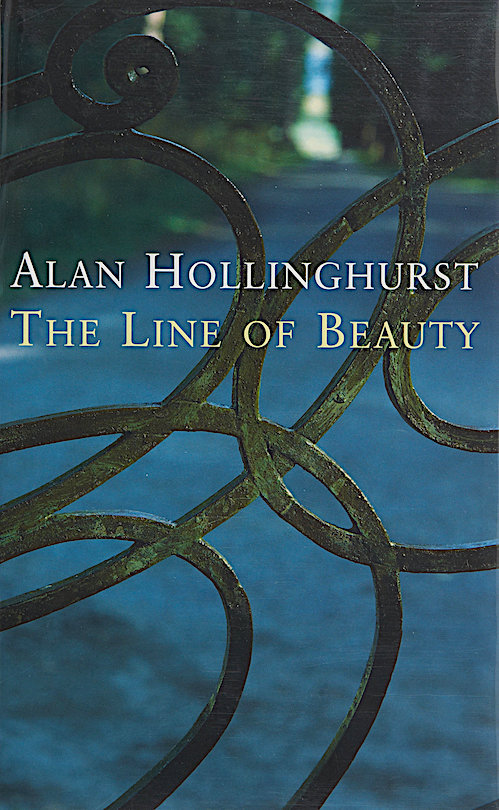
Hollinghurst’s third novel, the 1998 “The Spell”, used the satirical and romantic style of a weekend in the country plot to follow the changing relationships within a group of friends and occasional lovers. This work was followed by the 2004 three-part novel “The Line of Beauty”. Set during the Thatcher years between 1983 and 1987, the novel followed the life of the young, middle-class gay protagonist Nick Guest. Through exploring the realities of Nick’s tense and intimate relationships and life as a gay man, Hollinghurst examined the themes of hypocrisy, drugs, privilege and homosexuality during the time of England’s emerging AIDS crisis. “The Line of Beauty” won the high-profile 2004 Man Booker Prize with its fifty-thousand pound stipend and became the first gay novel to be so honored. It was also a finalist for the Lambda Literary Award and the National Book Critics Circle Award for Fiction.

Alan Hollinghurst’s fifth novel, the 2011 “The Stranger’s Child” which, told over the course of decades, revolves around a minor poet’s successful published poem and the resulting changes in his work and life. Received positively by critics, the novel was on the Man Booker Prize longlist, the Walter Scott Prize shortlist, and the winner of the 2013 Prix du Meilleur Livrr Étranger, France’s best foreign book prize. Hollinghurst’s sixth novel, the 2017 “The Sparsholt Affair”, explores the changing attitudes towards homosexuality as seen through the lives of two Englishmen: a teenager attending Oxford during the Second World War, and his later openly-gay son in London just after England decriminalizes homosexuality.

Hollinghurst currently lives in London with his partner Paul Mendez, the British author who authored the 2020 semi-autobiographical novel “Rainbow Milk” published by Dialogue Books, a Little, Brown and Company imprint.

“I grew up reading certain writers like Iris Murdoch who was very interested in sexual ambivalence and often created gay characters, usually from a cultured or academic background. I’m not sure how many straight writers I’ve read who create gay characters successfully from the inside, though I agree about Anthony Burgess and (his novel) “Earthly Powers”. — Alan Hollinghurst, 2017, Guardian Interview with Alex Clark

Note: For those interested, an interview between writer Peter Terzian and Alan Hollinghurst, “Alan Hollinghurst, The Art of Fiction No. 214”, is available through “The Paris Review”, a literary magazine featuring original writing, written interviews, podcasts and art. The article or a subscription to the magazine is available for purchase at: https://www.theparisreview.org/interviews/6116/the-art-of-fiction-no-214-alan-hollinghurst

Glenway Wescott: “The Very Apocalypse of Fertility”

Photographers Unknown, The Very Apocalypse of Fertility

“For Alwyn’s grandfather, who was known as “the greatest talker in the country,” used words which no one else understood, words which he did not understand, and words which do not exist, to swell a passionate theme, to confound his neighbors in an argument, and for their own sake. He would say, for example, “My farm was the very apocalypse of fertility, but the renter has rested on his oars till it is good for nothing,” or “Manifest the bounty to pass the salt shaker in my direction.” Something of the Bible, something of an Irish inheritance, something of a liar’s anxiety, made of his most ordinary remark a strange and wearisome oratory.” 

—Glenway Wescott, The Grandmothers: A Family Portrait, 1927, Harper & Brothers

Born in Kawaskum, Wisconsin in April of 1901, Glenway Wescott was an American poet, essayist, and novelist. The oldest of six children born to Bruce and Josephine Wescott, he was an openly gay figure of the 1920s American expatriate literary community in Paris. Wescott, who socialized with Ernest Hemingway in Paris, is considered the model for the young novelist character, Robert Prentiss, in Hemingway’s 1926 “The Sun Also Rises”.  

Upon his graduation from Wisconsin public schools in 1917, Glenway Wescott enrolled on a scholarship at the University of Chicago. He was a member of its literary circle which included such future writers as Elizabeth Madox Roberts and Arthur Yvor Winters. In the spring of 1919 at a Poetry Club meeting, Wescott met Monroe Wheeler, the twenty-year old founder of the Poetry journal. Their relationship together as a couple would last for almost seventy years until Wescott’s death. Both of their careers grew through these years, Wescott as a published writer and Wheeler as a publisher and the museum director of New York’s Museum of Modern Art.

In the later part of 1919, Wescott contracted the Spanish flu and withdrew from the university. For health reasons, he relocated to Santa Fe, New Mexico where he stayed for several months with friend and poet Arthur Yvor Winters. While recuperating, Wescott produced his first series of poems that was published by Wheeler in 1920 under the title “The Bittems”. He and Wheeler traveled to Europe in the fall of 1921, first staying  in Sussex with English writer and critic Ford Madox Ford before continuing onto Paris. 

With Wheeler’s return to New York City, Glenway Wescott traveled across Europe in 1923 employed as a factotum for the family of banker and philanthropist Henry Goldman. Returning to Wheeler in New York, he finished his first novel, “The Apple of the Eye”, a reflection on his Wisconsin childhood that was published in 1924.  In the following year, the couple took up residence in the French Riviera town of Villefranche-sur-Mer where they quickly became members of its literary and artistic circles. Among  their friends were dancer Isadora Duncan, German pianist Elly Ney, and artist Jean Cocteau. .

In 1925, Wescott published a second collection of poetry entitled “Natives of Rock: XX Poems”. The following year, the couple met George Platt Lynes, a minister’s son from New Jersey who, living in France, was preparing for college. Mutually infatuated, the three men would share a home for seventeen years. Wescott published his second work of fiction in 1927, “The Grandmothers: A Family Portrait”, a series of portraits drawn from his early memories in Wisconsin. This novel won the Harper Prize for that year; the critics’ praise for the best-selling work gained Wescott further recognition. Wescott published a 1928 collection of short stories entitled “Good-bye Wisconsin” that dwelt on the oppressive nature of Midwest life.

By 1930, Wescott, Wheeler and Lynes had settled in Paris, where Wheeler and the wealthy American heiress Barbara Harrison established Harrison of Paris, a book publishing enterprise with the goal of producing high quality limited editions. Although not officially a partner, Wescott provided literary advice and selected manuscripts for publication. Their first venture was a 1930 edition of Shakespeare’s poem “Venus and Adonis” with a cover design by Wescott. After a successful five years, the press was closed in 1935 due to prohibitive cost of production.

After publishing his 1930 novella “The Babe’s Bed”, Glenway Wescott wrote two underwhelming works of nonfiction, the 1932 “Fear and Trembling” and the 1933 “Calendar of Saints for Nonbelievers”. In 1935 with the closing of the Harrison press, he and Wheeler moved back to the United States where they shared a series of Manhattan apartments with now-noted photographer George Platt Lynes. The next year, the three men alternated living between New York and a farm house, named Stone-Blossom, on Wescott’s brother Lloyd’s dairy farm property in Union Township, New Jersey. 

In 1940, Wescott published his most critically-praised novel “The Pilgrim Hawk: A Love Story”. The short novel describes the event of a single afternoon in the life of Alwyn Tower, an expatriate novelist living in Paris. It is still considered one of the finest American short novels, on par with Faulkner’s “The Bear”. After his 1946 novel “Apartment in Athens”, Wescott ceased writing fiction and concentrated on publishing essays and editing the works of others. His last full-length book was the 1962 “Images of Truth”. Beginning in 1938, he worked in earnest on his journals documenting his life and thoughts. One volume of this extensive work was published posthumously as “Continual Lessons” in 1990.

In 1959, Glenway Wescott and Wheeler moved into a two-story farmhouse, Haymeadows, on Lloyd Wescott’s new farm in Rosemont, New Jersey. On the twentieth of February in 1987, Glenway Wescott died of a stroke in Rosemont and was buried in the small farmer’s graveyard behind a rock wall at Haymeadows. Two days after Wescott’s death, Wheeler had a stroke that left him blind and partially paralyzed. He died eighteen months later on August 14th in 1988 and was buried alongside Wescott. 

Notes: George Platt Lynes ended his relationship with Wescott and Wheeler in 1943, after falling in love with studio assistant George Tichenor. After a long career as a successful and renowned photographer, Lynes was diagnosed with lung cancer in May of 1955. He took one final trip to Europe and, upon his return to New York City, lived with his brother’s family. Wescott was at Lynes’s bedside when he passed away in December of 1955. 

The Monroe Wheeler Papers, consisting of correspondence, manuscripts and photographs, and the Glenway Wescott Papers, containing notebooks, journals, and correspondence, are housed at the Yale Research Initiative on the History of Sexualities of Yale University’s Department of History. 

Chelsea Station, an online magazine devoted to gay literature, has an article written by author Vinton Rafe McCabe entitled “Glenway Wescott: The Man Behind the Writer” that discusses Wescott’s “A Heaven of Words: Last Journals 1956-1984” and “A Visit to Priapus and Other Stories”, both posthumously published. The article can be found at: https://www.chelseastationmagazine.com/2014/05/glenway-wescott-the-man-behind-the-writer.html

Top Insert Image: George Platt Lynes, “Glenway Wescott” Date Unknown, Gelatin Silver Print

Second Insert Image: Bernard Perlin, “Glenway Wescott and Wheeler, Stone Blossom Farmhouse, Hampton, New Jersey” circa 1947, Gelatin Silver Print

Third Insert Image: George Platt Lynes, “Glenway Wescott”, 1938, Gelatin Silver Print, David Hunter McAlpin Fund

Bottom Insert Image: Photographer Unknown, “George Wescott and Monroe Wheeler, Nice, France”, 1927, Film Clip Shots, From “When We Were Three””, 1998, Arena Editions

Reinaldo Arenas: “As Long As the Sky Whirls”

Photographers Unknown, As Long As the Sky Whirls

For Lázaro Gómez

As long as the sky whirls
You will be my redemption and my doom,
magnetic vision,
lily in underwear,
salvation and madness
every night waiting.
As long as the sky whirls
no infernal could be a stranger
because I have to take care that that would not harm you,
No joy would go by inadvertent
Because in some way I have to reveal it to you,
As long as
the sky
whirls
you will be the truth of myself,
the song and the venom,
the danger and the ecstasies,
the vigil and the sleep,
the dread and the miracle.
As long as the sky whirls . . . but perhaps the sky whirls?
Well: as long as the sky exists.

As long as
the sky
exists
you will be my pain most noticeable,
my loneliness most tragic
my bewilderment unanimous
my perpetuous silence
and my absolute consolation.
As long as the sky exists . . . but perhaps the sky exists?
Well: as long as you yourself exist.
As long as
you yourself
exist
you will be the mirror and the time,
the infinity and the imminent,
the memory and the unusual
the defeat and the verse,
my enemy and my image.
Because there would be no more suns than the ones you yourself radiate
like there would be no other penance than to know that you exist.
But perhaps you do exist?

New York (May 1985)

Reinaldo Arenas, Mientras el Cielo Gire, 1989, English Translation 3003 Lázaro Gómez Carriles

Born in Aguas Claras in July of 1943, Reinaldo Arenas Fuentes was a gay Cuban poet, playwright and novelist known for his criticism of Fidel Castro, the Cuban Revolution and the ensuing government in Cuba. He was the author of the memoir “Before Night Falls”, written after Arenas’s escape to the United States in 1980. The memoir narrates his experience in the Cuban dissident movement and years as a political prisoner.

After moving to the city of Holguin as a teenager at age fourteen, Reinaldo Arenas became employed at a guava paste factory. Around 1958 when living conditions in the city worsened, he decided to join Castro and his revolutionary movement. Arenas spent ten days at the guerrilla headquarters in Velasco but was turned away. Once the guerrilla commandant realized that President Fulgencio Bastista’s secret police were already searching for Arenas, he accepted him into the group.

At the age of sixteen, Arenas was awarded a scholarship at La Pantoja, a captured Batista military camp that was converted into a polytechnic institute. Students attending took major courses in Marxist-Leninism in which they had to master the USSR manuals of  the Academy of Sciences and the Political Economy. Cuban Marxist theorist Blas Roca’s “Foundations of Socialism in Cuba” was also required reading. Arenas graduated with a degree as an agricultural accountant, but would later describe his education as indoctrination. 

In the early 1960s, Reinaldo Arenas relocated to Havana where he enrolled in a planning course at the University of Havana. While in the program, he worked for the National Institute for Agrarian Reform. During this time, Arenas began to live his life as a gay man, albeit secretly for fear of ending up in a Military Unit to Aid Production (UMAP), a term which basically described a concentration camp for Christians, suspected Cuban dissidents and LBGT people. A previous relationship Arenas had with a man, later arrested and sent to a UMAP camp, led to Arenas being listed as a gay man by the Cuban Committee for the Defense of the Revolution. 

Throughout his life, Arenas developed friendships and had relationships with many gay men. Various friends and acquaintances he knew pledged their loyalty to the Cuban regime in exchange for their safety. Many became informers for the government and reported other men, often friends or those with whom they had relationships. The government’s intention, in addition to seeking out dissidents, was to find gay and bisexual men and either persecute and jail them or turn them into informers. Although the reward for cooperation with the regime meant life outside of prison, the price to pay for living as an informer was to participate publicly in acts of repudiation denouncing your anti-regime beliefs or homosexuality.

In 1963, Reinaldo Arenas moved to Havana to study at the School of Planification and later at the Faculty of Letters of the University of Havana, where he studied literature and philosophy. He began working in 1964 at the National Library José Marti. Maria Teresa Freye de Andrade, who was the director of the National Library, officially transferred Arenas from his position at the National Institute for Agrarian Reform to a position at the National Library. When Fidel Castro appointed Police Captain Sidroc Ramos as the library’s director, Areans left his position at the library and became an editor for the Cuban Book Institute until 1968.

Arenas’s writings were beginning to gain recognition in the Cuban literary world in the 1960s. He received a literary award for his 1967 novel “Singing from the Well” at the Cirilo Villaverde National Competition held at the National Union of Cuban Writers and Artists. In the year before, Arenas’s “El Mundo Allucinante (This Hallucinatory World)” was awarded First Honorable Mention by the National Union of Cuban Writers and Artists. Although there was no better entry in the competition for that year, the judges refused to give the First Prize to Arenas; as a result, no First Prize was given in 1966. By 1967, Arenas’s critical writings and openly gay life were bringing him into conflict with Cuba’s communist government. 

From 1968 to 1974, Reinaldo Arenas was a journalist and editor for the literary magazine “The Cuban Gazette”. In 1974, Arenas was charged and convicted of ideological deviation and publishing abroad without official consent. He escaped from prison and tried a failed attempt to leave Cuba on a tire inner tube. Rearrested in southern Havana, Areanas was imprisoned in El Moro Castle, used at that time as a prison for rapists and murderers. By writing letters for illiterate prisoners, he maintained his life in prison and was able to obtain paper for his own scholarly work. Arenas was caught and severely punished for attempting to smuggle his work out of prison. Threatened with death, he was forced to renounce his work and was finally released in 1976.

Arnenas fled to the United States during the 1980 Mariel Boatlift, a mass migration organized by Cuban Americans with the consent of Cuban President Fidel Castro. In 1987, Arenas was diagnosed with the AIDS virus. He continued to write, speak against the Cuban government, and mentor many Cuban exile writers. After battling AIDS for three years, Reinaldo Arenas died of an intentional overdose of drugs and alcohol in December of 1990 in New York City. In 2012, he was inducted into the Legacy Walk, an outdoor public display on Chicago’s North Halsted Street, which celebrates LGBT contributions of world history and culture. 

Reinaldo Arenas published a significant oeuvre of work in his life. In addition to his two poetic volumes “El Centro” and “Leprosorio”, he wrote a set of five novels, the “Pentagonia” series,  which recounts life in post-revolutionary Cuba. Volumes included in this series are “Singing from the Well”, “Farewell to the Sea”, “Palace of the White Skunks”, the satirical “Color of Summer” and “The Assault”. Arenas’s second and best-known novel  “Hallucinations”, also published under the name “The Ill-Fated Peregrinations of Fray Servando”, was smuggled out of Cuba and first published in France in 1969. 

Arenas’s autobiography “Before Night Falls”, written after his escape from Cuba and published in English in 1993, was listed on the 1993 New York Times Best Books of the Year. This book became the 2000 film of the same name, directed by painter and filmmaker Julian Schnabel; the role of Arenas was played by Spanish actor Javier Bardem. The film version of the book was listed as one of the Top Ten Movies of the Year by the American Film Institute, nominated for the Golden Lion at the 2001 Venice International Film Festival with filmmaker Schnebel winning the Grand Jury Prize and Bardem winning Best Actor.

Reinaldo Arenas’s papers, typescript drafts, essays, interviews, newspaper articles, correspondence and other documents are housed in the Princeton University Library.

Note: Several interesting articles on Reinaldo Arenas and his work can be found on the eclectic blog website Byron’s Muse. The articles can be located at: https://byronsmuse.wordpress.com/tag/reinaldo-arenas/

Joseph Hansen: “Wider Than a Man’s Two Stretched Arms”

Photographers Unknown, An Assemblage of Hands

“The waterwheel was twice a man’s height, wider than a man’s two stretched arms. The timbers, braced and bolted with rusty iron, were heavy, hand-hewn, swollen with a century of wet. Moss bearded the paddles, which dripped as they rose. The sounds were good. Wooden stutter like children running down a hall at the end of school. Grudging axle thud like the heartbeat of a strong old man.”

Joseph Hansen, Death Claims, 1973

Born in Aberdeen, South Dakota in July of 1923, Joseph Hansen was a poet and American crime novelist, best know for his series of novels featuring the gay private detective Dave Brandstetter. After his family settled in Altadena, California, Hansen attended the Pasadena Community College, where he focused on literature. Inspired by the ease with which Walt Whitman viewed his own sexual identity and Ralph Waldo Emerson’s call to be true to one’s self, Hansen made the decision to embrace his gay identity at an early age.

Beginning his writing career in the genre of poetry, Hansen’s  first published work was a poem submitted in 1952 to The New Yorker magazine. While employed part-time at bookstores, he continued writing poetry for various magazines, including the Los Angeles-based ONE, the first pro-gay publication in the United States. Hansen’s early fiction efforts, under various pseudonyms,  were also first published by ONE  He also used pseudonyms for his early pulp writings of gay erotica. A total of six early fictional works, including his first novel “Strange Marriage”, published in 1965, were under the names of either James Colton or Rose Brock. 

In 1970, Joseph Hansen published “Fadeout”, the first novel under his own name, which became the introductory novel for his Dave Brandstetter series. Similar in style to a Raymond Chandler character, Hansen’s protagonist was an openly gay insurance investigator, who embodied the tough, stoic, and no-nonsense personality of the classic, private detective. Published two years before the Stonewall riots, a heroic, central literary character, who was a homosexual and not a one-dimensional figure, was revolutionary for that period in history. The importance of the detective’s personal life, his dealing with the death of his partner, his aging and his loneliness, expanded the psychological dimension of the hardboiled genre and, at the same time, offered the genre’s enthusiasts a gay man’s point of view.

Cited now as a groundbreaker in both crime and gay fiction, the gay character of Brandstetter was originally rejected by Ellery Queen’s Mystery Magazine in 1973 because the editor thought that subscribers were not ready for homosexuality in their novels , especially not presented as a part of ordinary social life. Just as the mystery novels of Per Wahloo and Maj Sjowall can be read collectively as a long discussion of Swedish society, the twelve-volume series of “Brandstetter” can be read as a chronicle of gay lives in California during the 1960s and 1970s. Hansen  showed the heterosexual world through this series that being gay is no more homogenizing than any other social category.

Joseph Hansen won the 1992 Lifetime Achievement Award from the Private Eye Writers of America. For his 1991 “A Country of Old Men”, the final novel in the Brandstetter series, he won a Lambda Literary Award for Gay Men’s Mystery. Hansen created a second investigative series, the 1988 “Bohannon’s Book”, which consisted of five novellas, centered on the character of a former deputy sheriff. This was followed in 1993 by the five novella sequel “Bohannon’s Country”. Hansen won a second Lambda Literary Award in 1993 for his novel “Living Upstairs”, the story of a young gay man coming of age.

Jospeh Hansen was active in the Gay Rights Movement and was a co-founder in 1965 of the influential gay publication “Tangents”. He produced a radio program on Los Angeles’s KPFX in 1969 entitled “Homosexuality Today” and helped with the planning for the first Gay Pride Parade in Hollywood, held in 1970. Since his first publications in early gay tabloids, Hansen strove for an inclusive civil society without  divisions in regards to race or sexual orientation. 

Described in the American Hard-Boiled Crime Writers anthology as the father of the gay mystery novel, Joseph Hansen died on November 24th of 2004 of heart failure at his Laguna Beach home in California. He was predeceased by his wife of fifty-one years, artist and educator Jane Bancroft, a lesbian with whom he shared an arrangement to have same-sex lovers, and a daughter who later transitioned and changed her name. According to friends, Hansen also had two long-term male lovers.

”Of all the writers who contributed to the LA poetry renaissance in the second half of the 20th century, Joseph Hansen probably gave the most and got the least in return. Most significantly, Hansen was one of the co-founders of the Beyond Baroque poetry workshop (now the Beyond Baroque Literary Arts Center), a free and open-to-the-public gathering that has met on Wednesday evenings in Venice for 45 years. Along with John Harris, Hansen established an accessible public workshop with serious standards of literary excellence. The fact that Hansen won a National Endowment for the Arts Creative Writing Fellowship for his fiction a couple of years after starting the workshop only reinforced his stature as the workshop’s standard-bearer.”

—Bill Mohr

James Schuyler: “I Remember Very Well the Morning”

Photographers Unknown, I Remember Very Well the Morning

Coming from the deli
a block away today I
saw the UN building
shine and in all the
months and years I’ve
lived in this apartment
I took so you and I
would have a place to
meet I never notice
that it was in my view.

I remember very well
the morning I walked in
and found you in bed
with X. He dressed
and left. You dressed
too. I said, “Stay
five minutes.” You
did. You said, “That’s
the way it is.” It
was not much of a surprise.

Then X got on speed
and ripped off an
antique closet and an
air conditioner, etc.
After he was gone and
you had changed the
Segal lock, I asked
you on the phone, “Can’t
you be content with
your wife and me?” “I’m
not built that way”,
you said. No surprise.

Now, without saying
why, you’ve let me go.
You don’t return my
calls, who used to call
me almost every evening
when I lived in the coun-
try. “Hasn’t he told you
why?” “No, and I doubt he
ever will.” Goodbye. It’s
mysterious and frustrating.

How I wish you would come
back! I could tell
you how, when I lived
on East 49th, first
with Frank and then with John,
we had a lovely view of
the UN building and the
Beekman Towers. They were
not my lovers, though,
You were. You said so.

James Schuyler, This Dark Apartment, The Morning of the Poem, 1980

Born in November of 1923 in Chicago, Illinois, James Marcus Schuyler was a poet who won the 1980 Pulitzer Prize for Poetry for his collection “The Morning of the Poem”. He spent his childhood years in East Aurora, New York, and, after high school graduation, attended Bethany College in West Virginia from 1941 to 1943. During World War Two, Schuyler served on a Navy destroyer in the North Atlantic; he remained in the U.S. Navy until 1947.

After moving to New York City in the late 1940s, Schuyler worked for the National Broadcasting Company and became friends with the English poet and playwright  W. H. Auden. In 1947, he relocated to the Isle of Ischia in Italy, where he shared an apartment and worked for two years as Auden’s secretary. While in Italy, Schuyler attended the University of Florence . 

James Schuyler returned to New York City in 1950; the next year he was introduced to poets Frank O’Hara and John Ashbery at a New York party. The three poets shared an apartment on 49th Street in Manhattan and worked closely together, often contributing to each other’s writing projects. In this early period of Schuyler’s writing, he wrote two play productions: “Presenting Jane”, performed at the Cambridge,  Massachusetts, Poet’s Theatre in 1952 and “Shopping and Waiting: A Dramatic Pause” performed in 1953 at New York’s American Theater for Poets. 

By the middle of the 1950s, Schuyler was a writer and art critic for Art News magazine and was curating for circulating exhibitions at the Museum of Modern Art. Among the artists he befriended were Larry Rivers, William and Elaine de Kooning, Jane Freilicher, and landscape and portrait painter Fairfield Porter. Schuyler would live with Porter and his family at their homes for twelve years from 1961 to 1973; he dedicated his first major collection of poems, the 1969 “Freely Espousing”, to Fairfield Porter and his wife Anne. This collection received the Frank O’Hara Prize for Poetry in 1969. 

The most productive period in James Schuyler’s career occurred in the late 1969s and extended through the 1970s. He coauthored a novel, entitled  “A Nest of Ninnies”, with John Ashbery in 1969 and produced three major collections of poetry: “The Crystal Lithium” in 1972, the 1974 “Hymn to Life”, and the 1980 “The Morning of the Poem”, of which the title poem is considered to be among the best long poems of the postmodern era. Numerous other works have been published throughout the years, including a 1989 recording entitled “Hymn to Life and Other Poems” produced by Watershed Intermedia.

James Schuyler was a central figure in the New York School, an informal group of poets, painters, musicians and dancers active in vanguard of New York City’s 1950-60s avant-garde art scene. He was a Guggenheim Fellow, a fellow of the American Academy of Poets, a recipient of the Longview Foundation Award in 1961, and a 1985 recipient of the Whiting Award given to emerging writers. 

James Marcus Schuyler died in Manhattan following a stroke, in April fo 1991, at the age of sixty-seven. His ashes are interred at the Little Portion Friary, Mount Sinai, Long Island, New York. The major collection of his papers are in the Mandeville Department of Special Collections at San Diego’s University of California. 

Note: Although James Schuyler revealed very little of his personal life, it is known that he was gay and had a relationship  with military man and writer William Eric Aalto, near the end of Aalto’s life. Aalto is featured in Schuyler’s long, prose poem “Dining Out with Doug and Frank”, which describes a meal with Aalto , and  poet and critic Douglas Crase and his partner, professor in plant pathology Frank Polach. Schuyler also had a relationship with American realist, city-scape artist Frank Button, who was also associated with the New York School art movement.

The long conversational poem “Dining Out with Doug and Frank” can be found at: https://www.ronnowpoetry.com/contents/schuyler/DiningOut.html.

For those interested, twelve of James Schuyler’s poems can be found in their entirety at the Poetry Foundation located at: https://www.poetryfoundation.org/poets/james-schuyler#tab-poems

Manuel Puig: “The Most Beautiful Thing”


Photographers Unknown, The Most Beautiful Thing

“—What is being a man for you? —It’s many things, but for me… well, the most beautiful thing about a man is that, being pretty, strong, but without making a fuss of strength, and that he is advancing safely. That he walks safely, like my waiter, that he speaks without fear, that he knows what he wants, where he is going, without fear of anything. “It’s an idealization, a guy like that doesn’t exist.” “Yes, he exists, he is like that.” —Well, it will give that impression, but inside, in this society, without power, no one can advance safely, as you say.—Being a man is much more than that, it means not putting anyone down, with an order, with a tip. Moreover, it is… not allowing anyone next to you to feel less, that no one next to you feel bad.”

Manuel Puig, The Kiss of the Spider Woman

Born in December of 1932 in General Villegas, Argentina, Manuel Puig was a novelist and a screenwriter. As there was no secondary school in his hometown, his parents sent him to Buenos Aires in 1946 where he attended College Ward, an educational institute with intercultural bilingual education at all levels. During his time at College Ward, Puig began to systematically read books. Starting with the Nobel Prize winners, he read works by such writers as André Gide, Hermann Hesse, Aldous Huxley, Thomas Mann, and Jean-Paul Sartre.

After seeing Henri-Georges Clouzot’s 1947 police drama film, “Quai des Orfèvres”, Puig decided on a film career as a director. For this profession, he learned three languages: Italian, French, and German. In 1950, Puig enrolled at the University of Buenos Aires Faculty of Architecture; but, in 1951, he switched to its School of Philosophy. He was already working, upon graduation, as a film archivist and editor in Buenos Aires; and later, after  winning a scholarship from the Italian Institute of Buenos Aires, he continued that employment in Italy.

Returning to Argentina, Manuel Puig started his obligatory military service in 1953 where he served as a translator in the Aeronautics section. Living in Buenos Aires in the 1968, Puig wrote his first major novel, “La Traición de Rita Hayworth (Betrayed by Rita Hayworth)”, a novel told in multiple voices to create a portrayal of ordinary Argentinian lives in the1930s and 1940s. In 1969, he wrote his second novel “Boquitas Pintadas (Heartbreak Tango)”, a story about the contrast between mediocre reality and fantastical dreams; the novel also raised questions about machismo and the damage it causes. The narrative is told through confessions, letters, diaries, newspaper clippings, eyewitness accounts, and rememberances of life.

Holding leftist political tendencies and seeing the instability of the Argentinian government, Puig relocated to Mexico in 1973, a place where he would live in exile throughout rest of his life. He wrote his third novel “The Buenos Aires Affair” in 1973, and three years later, wote possibly his best known work, the 1976 “El Beso de la Mujer Araña (The Kiss of the Spider Woman)”. Unusual in that it has no traditional narrative voice, the novel is told in large part through dialogue, without any indication of who is speaking, except the insertion of a dash to show change of speaker. 

“Kiss of the Spider Woman” depicts the daily conversations between two Argentinian prison cellmates, one a political prisoner who was part of a group attempting the overthrow of the government and the other a transgender woman in jail for corruption of a minor. The two characters, seemingly opposites, form an intimate bond in their cell and become lovers, albeit briefly, and they are both changed by that relationship.   

Manuel Puig’s novel was initially published only in Spain; however, upon its publication, it was included on a list of novels banned to the population of Buenos Aires. Despite having been entered into the Frankfurt Book Fair in Germany, it remained banned in Argentina until Raúl Alfonsin’s government took control in 1976. Puig adapted “Kiss of the Spider Woman” into a stage play in 1983. The novel was later adapted in 1985 into an Academy Award-winning film of the same name, starring William Hurt and Raul Julia. Hurt’s winning the 1986 Oscar for Best Actor marked the first time an Academy Award went to an actor in an openly gay role. 

In 1989, Puig moved from Mexico City to Cuernavaca, Mexico. Following doctor’s orders to stop smoking, he took daily walks, but the high altitude of the area labored his breathing. He had access to higher quality medical care than most and received care at a clinic near his home. Experiencing pain for several days, he was admitted to the Las Palmas Surgical Center on July 21, 1990, for risk of peritonitis. 

An emergency operation removed Manuel Puig’s inflamed gall bladder; however, his lungs filled with fluid and he became delirious. He died from an acute heart attack, on July 22, 1990.  After funeral rites, attended by only six people including his mother, Manuel Puig’s body was sent to Argentina and placed in the Puig family tomb in the La Plata Cemetery.