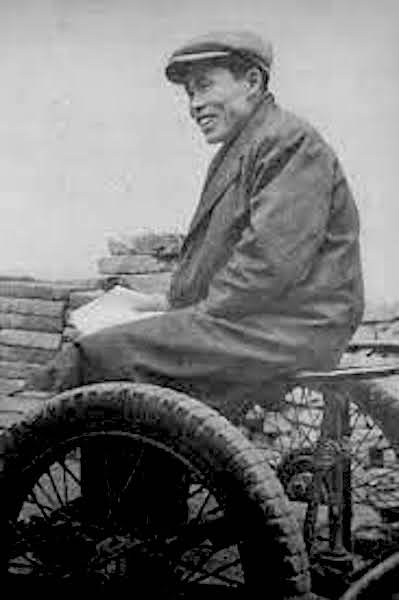
Sekino Jun’ichirō

Woodblock prints by Sekino Jun’ichirō

Born in 1914 at the historic Yasukata district of the Aomori Prefecture, Sekino Jun’ichirō (関野 凖一郎) was a Japanese woodblock printer and one of the major postwar artists of the Sōsaku Hanga (創作版画 Creative Print) movement. This woodblock printing movement stressed the artist as the sole creator motivated by a desire for self-expression. The artist was responsible for all divisions of the labor, the drawing, carving and printing, as opposed to the traditional collaborative system of ukiyo-e (浮世絵).

The son of a merchant dealing in agricultural products, Sekino Jun’ichirō explored oil painting and printmaking from an early age. He studied intaglio etching and lithography under Kon Junzō and, later, at the Nihon Etching Institute under its founder Nishida Takeo (西田武雄). In 1935, Sekino won a first prize at the government sponsored exhibition in Teiten for his 1935 “Aomori Harbor”. In the following year, he won an etching prize at the juried Annual Imperial Exhibition held in Bunten.

In 1937, Sekino became a member of the Nihon Hanga Kyôkai (日本版画協会), an association of Japanese printmakers founded in 1918 to promote printmaking as a modern art form. Sekino moved to Tokyo in 1938 where he studied woodblock printing under Kôshirô Onchi (恩地 孝四郎), printmaker, photographer and founder of the Sōsaku Hanga movement. He became an associate of Kôshirô and a founding member of his teacher’s Ichimokukai (一木会 First Thursday Society), an informal study group that supported aspiring print artists. 

During the Second World War, Sekino Jun’ichirō worked in an ammunition factory. The war years uniquely challenged Japanese printmakers as access to the Western markets, particularly the United States, was disrupted leaving many struggling financially. Paper and ink became scarce and further limited printmaking, eventually bringing it almost to a standstill by 1945. After the war years, Sekino supported himself and his wife, Katsuko, through illustrating books and creating realistic woodblock print portraits that gradually led to international recognition.  

In 1953, Sekino had his first solo exhibition at Tokyo’s Yoseido Gallery which specialized in contemporary modern Japanese prints. In 1958, he received an invitation from the Rockefeller Foundation and the American Japan Society that began a series of international travels. Sekino’s work appeared in international exhibitions, print biennials, and such prestigious institutions as the Boston Museum of Fine Arts, New York’s Museum of Modern Art and the Bibliothèque Nationale in Paris.  

Sekino Jun’ichirō taught printmaking in 1958 at New York’s Pratt Institute. In 1963, American artist and educator Gordon Waverly Gilkey, in his position as first dean of the College of Liberal Arts, hired Sekino to teach a class at Oregon State University. Sekino also taught at the University of Washington and worked in New Mexico’s Tamarind Studio where he studied with printmaker Glen Alps, the developer of the collographic printing process. In 1969, Sekino returned to teaching at Oregon State University.

Sekino launched his “Fifty-Three Stations of the Tokaido” at the end of 1959. This series, depicting the system of roads linking the city of Edo with the then-capital of Kyoto, was a popular subject for artists, most notable of which was master printmaker Utagawa Hiroshige (歌川 広重) who began his Ukiyo-e woodblock prints in 1832. Sekino designed and carved all of his woodblocks himself and gave the responsibility of printing the series to skilled artisans Yoneda Minoru, Kobayashi Sokichi and “Living National Treasure” Iwase Koichi. Sekino received Japan’s 1975 Ministry of Education Award for this fourteen-yearlong series. In 1975, Oregon State University exhibited Sekino’s “Fifty-Three Stations” alongside Hiroshige’s 1834 version..

Sekino Jun’ichirō passed away of lung cancer in April of 1988 at the age of seventy-three. His second son Sekino Yowsaku is a Tokyo woodblock printmaker who often incorporates gold leaf into his images. Sekino Junpei, the eldest son, is a retired mathematics professor who is known for his digital art and fractal computer graphics.

The Imperial Household Agency awarded Sekino Jun’ichirō with two Medals of Honor, the Shijuhosho in 1981 and the Kyokujitsu Shojusho in 1987, for his cultural contributions. The Imperial Household frequently purchased his woodblock prints to be used as gifts to foreign dignitaries when members of the Imperial family traveled abroad to promote Japan’s friendly international relations. 

Sekino’s woodblock prints are currently in the permanent collections of Ashmolean Museum of Oxford, Boston Museum of Fine Arts, the British Museum, Cincinnati Art Museum, Cleveland Museum of Art, Fine Arts Museums of San Francisco, Los Angeles County Museum of Art, New York’s Museum of Modern Art (MOMA), Tokyo’s National Museum of Modern Art, the Portland Art Museum, University of Oregon’s Jordan Schnitzer Museum of Art, and Royal Ontario Museum, among others. 

Notes: Japanese names in modern times consist of a family name (surname) followed by the given name, thus, 関野 凖一郎 Sekino (family name)  Jun’ichirō (given name), a traditional form I use for my articles. Beginning in the Meiji period of Japan during the turn of the twentieth-century, many English-language publications began to place the family name in the last position. Many Japanese people when writing and speaking English have now adopted this Western naming order.

The Fort Wayne Museum of Art has a 2023 article entitled “Treasures from the Vault: Jun’ichrō Sekino” that discusses Sekino’s contribution to Japanese printmaking: https://fwmoa.blog/2022/09/19/treasures-from-the-vault-junichiro-sekino/

For those interested in a deeper study of Japanese printmaking, the JSTOR site has a free journal article by Oliver Statler entitled “Modern Japanese Creative Prints” from the July 1955 “Monumenta Nipponica” at: https://www.jstor.org/stable/2382817

Top Insert Image: Photographer Unknown, “Sekino Jun’ichirō”, Date Unknown, Gelatin Silver Print, Windy City Times, January 5 2011, Chicago

Second Insert Image: Sekino Jun’ichirō, “Jun Morning in Kyoto”, 1979, Woodblock Print, 68 of 98 Edition, 85 x 57.8 cm, Private Collection

Third Insert Image: Sekino Jun’ichirō, “Yoshid”, Woodblock Print, No. 35 of “Fifty-Three Stations of the Tokaido”, Private Collection

Fourth Insert Image: Sekino Jun’ichirō, “Falling Leaves”, 1960-1970s, Woodblock Print, 55 of 128 Edition, 46.4 x 69.2 cm, Private Collection

Bottom Insert Image: Sekino Jun’ichirō, “Ki’iroi Ochiba (Yellow Fallen Leaf”, circa 1990, 43 x 60.5 cm, Private Collection

Yashima Gakutei

Yashima Gakutei, “Carp Ascending a Waterfall”, 1892 (Edo Period), Surimono, Woodblock Print with ink and Color on Paper, 18.8 x 21.6 cm, Private Collection

Born in the Honshu city of Osaka circa 1786, Yashima Gakutei (八島岳亭) was a Japanese poet and artist known for the quality of his woodblock prints and his artistic contribution to Ukiyo-e (浮世絵)  a traditional poetic art form that flourished from the seventeenth to the nineteenth-century. Among the images depicted in ukiyo-e woodblock prints and paintings were landscapes, wrestlers and kabuki actors, dancers and courtesans, folk tales and historic scenes, and images of an erotic nature. 

Gakutei was the illegitimate son of the samurai Hirata under the Tokugawa shogunate established by Tokugawa Ieyasu (徳川 家康), one of the three Great Unifiers of Japan during the Edo period. Gakutei’s mother later married into the Yashima clan, thus granting him the name of Yashima Gakutei. He received his art training from master ukiyo-e printmakers Totya Hokkei (魚屋 北渓) and Katsushika Hokusai (葛飾 北斎) who, though best known for his woodblock print series “Thirty-Six Views of Mount Fuji, worked in multiple mediums including book illustration.

After his training, Yashima Gakutei settled at Osaka in the 1830s. He was known for his technical precision, his embossing skill, and his specialization in the traditional surimono art form, which some critics say surpassed that of his teacher Totya Hokkei. These surimono (摺物) woodblock prints were deluxe editions privately commissioned by poetry societies and wealthy patrons of the arts for special occasions, poetry competitions, and the celebration of the New Year. Gakutei employed lavish printing techniques on the finest homemade papers with generous use of gold, silver, bronze, and mica highlights, as well as embossing and lacquer-like effects. 

During his career, Gakutei also created images of landscapes and seascapes for books, a rarity among those artists who had studied under Hokusai. He received a commission to provide all the illustrations for the “Kyōka Suikoden (狂歌水滸伝)”, a volume of traditional Japanese poetry. Among Gakutei’s other works are a series of five surimono woodblock prints that featured young female musicians performing gagaku (雅楽), the traditional imperial court music from the Heian period (794 to 1185); a series of embossed woodblock prints depicting all the gods of fortune as beautiful women, or bijin (美人); and a privately issued and embossed surimono tetraptych entitled “The Ascent to Heaven”, a four-panel scene depicting the well known Japanese fairy story “The Tale of the Bamboo Cutter”. 

As a poet, Yashima Gakutei wrote and illustrated many humorous poems in the kyōka (狂歌) style, a genre of Japanese tanka poetry that was prevalent in the Edo region, now the area of modern Tokyo. Formed within the tanka meter of 5-7-5-7-7 syllables per line, these short poems placed mundane or vulgar humor within elegant, poetic settings. Wordplay and puns were often used; a classic styled poem would often be given a vulgar twist at the end. 

As a translator, Gakutei is known for his translation of the sixteenth-century Chinese novel “Journey to the West (西遊記)”, one of the Classic Chinese Novels that is attributed to Ming dynasty poet and novelist Wu Cheng’en (吳承恩). This account of the legendary pilgrimage of Tang dynasty Buddhist monk Xuanzang was illustrated with woodblock prints created by Gakutei. 

Yashima Gakutei died in 1868, the same year as the Meiji Restoration that replaced the Tokugawa shogunate military government with a reinstallation of Emperor Meiji under a constitutional monarchy, thus ending Japan’s Edo period.

Notes: Many of the details of Yashima Gakutei’s life are shrouded in mystery. The Art Institute of Chicago indicates that he was known by several names including Yashima Harunobu, Horikawa Tarô,  and Gakutei Kyûzan, among others. The Ronin Gallery, the largest collection of Japanese prints in the United States, lists his birthplace as Edo under the name of Harunobu Sugawara. For my article, I am relying on information from the Bates College Museum of Art in Lewiston, Maine, which lists his birthplace as Osaka. 

Top Insert Image: Yashima Gakutei, “Hotei”, circa 1927, “Allusions to the Seven Lucky Gods”, Woodblock Print with Karazuri Printing and Metallic Pigment, 21 x 18.4 cm, Ronin Gallery

Second Insert Image: Yashima Gakutei, “Muneyuki Shoots a Tiger”, circa 1829, Woodblock Print Surimono, 21 x 18.4 cm, Private Collection

Bottom Insert Image: Yashima Gakutei, “Furuichi Dance”, circa 1822, Woodblock Print with Ink and Color, Embossing and Metallic Pigments, 21 x 19 cm, Private Collection

James Kirkup: “Behind Its Music Laughs the Mouth of Pan”

Photographers Unknown, Behind Its Music Laughs the Mouth of Pan

Lips hardened by winter’s dumb duress
Part on this other, broader smile of youth
That masks deep shyness in its shallow kiss,
While silently behind its music laughs the mouth
Of Pan, and mourns the skull of a severer myth.

The keen and thick-fringed eyes denote
Languor, delight, astonishment or grief,
Interpreters expressive of the heart
That makes the lake dance, and the leaf.

Boy, in cupped hands hold whatever passion time invents:
Fire your tiny forges with gigantic sound, and fill
Heaven with your fierce harmonics! Inspire those instruments,
Aeolus, lyre and grove-hung harp, that now miraculously thrill
Our childhood, the toy that trembles to an ancient will!

James Kirkup, Boy with a Mouth Organ, June 1951, Poetry Review, Volume 42 Number 3 (May-June)

Born in South Shields, County Durham in April of 1918, James Harold Kirkup was an English poet, author, dramatist, travel writer and accomplished translator of prose, verse and drama. The only son of a carpenter, Kirkup received his initial education at Westoe Secondary School in South Shields and later earned a degree in Modern Languages at Kings College, Durham University. During World War II, he was a conscientious objector and worked as an agricultural laborer for the Forestry Commission in the Yorkshire and Essex regions. Kirkup also taught for a short period at Colwall, Malven’s Downs School where poet Wystan Hugh Auden had been an educator.

Kirkup’s first volume of poems, “The Drowned Sailor and Other Poems”, was published in 1947 by London’s Grey Walls Press. From 1950 to 1952, he was the first Gregory Poetry Fellow at Leeds University, a position that made him the first resident university poet in the United Kingdom. During this residency, Kirkup published his first substantial collection of poetry, the 1951 ”The Submerged Village and Other Poems”, through the Oxford University Press, one of the most prestigious publishers of contemporary poetry in the English language. Between 1952 and 1963, he published five more poetry collections though this press.

In 1952, James Kirkup moved to Gloucestershire and became a visiting poet at the Bath Academy of Art and Design until 1955. After a brief period of teaching at a London grammar school, he decided to relocate to Europe in 1956. Kirkup taught for three years at several European universities, including Spain’s University of Salamanca. Invited to teach at Tohoku University in Sendai, he arrived in Japan at the beginning of January of 1959. During his thirty years in the country, Kirkup held the position of an English Literature professor at several Japanese universities.

Kirkup recorded his first experience of Japan in his 1962 “These Horned Islands: A Journal of Japan”. He described his travels in Japan and the country’s effect on his life in his 1970 prose volume “Japan Behind the Fan”. Kirkup discussed the various art forms he encountered in Japan, including its poetry, theater, and Noh dramas, in a subsequent volume published in 1974, “Heaven, Hell and Hara-kiri: The Rise and Fall of the Japanese Superstate”.

James Kirkup’s study of the Japanese poetic art of haiku would remain a strong influence on his work, one that would engage him for the rest of his life. Delighted by his many discoveries in Japan, Kirkup published many collections of haiku poems. Among these are the 1968 “Paper Windows: Poems from Japan” and the 1969 “Japan Physical” which contains “Song of the New Mats: Thirteen Haiku”, a set of haiku poems describing the scent of green tatami mats. 

After settling in the Principality of Andorra, Kirkup began an arrangement in 1995 with James Hogg and Wolfgang Görtschacher of the University of Salzburg Press for the republication of his earlier out of print books. He also offered new manuscripts that established the Salzburg imprint as his principal publisher. This two-year collaboration resulted in more than a dozen publications including “A Certain State of Mind”, “Broad Daylight: Poems East and West”, “Tanka Tales”, and the two volume collection “Collected Shorter Poems: Omens of Disaster (Volume 1)” and “Once and For All (Volume 2)”. 

A Fellow of the Royal Society of Literature, James Kirkup published over one hundred-fifty volumes of poetry, translations, autobiography and travel writing during his lifetime. He died in Andorra at the age of ninety-one in May of 2009. His papers are held at Yale University, the University of Leeds, Yorkshire, and at the South Shields Library in South Tyneside, Tyne and Wear, England. Kirkup’s poem “Ghosts, Fire, Water” from his 1995 anthology “No More Hiroshimas: Poems and Translations” was adapted by New Zealand composer Douglas Mews for unaccompanied choir and alto solo. Mew’s musical adaptation has been performed worldwide since 1972.

Notes:  The Haiku Foundation has an excellent article by David Burleigh which discusses Jame Kirkup’s life in Japan and his strong interest in the haiku form. The article can be found at: https://www.thehaikufoundation.org/omeka/files/original/f021d52af5d1ffe7ff926ca47d2b0e99.pdf

For many years, James Kirkup was an obituary writer for the British online newspaper, The Independent. He wrote some three-hundred obituaries, many of them faxed to the news service from his home in Andorra. The Independent’s obituary for Kirkup can be found at: https://www.independent.co.uk/news/obituaries/james-kirkup-poet-author-and-translator-who-also-wrote-approximately-300-obituaries-for-the-independent-1685745.html

James Kirkup’s collected papers and audiovisual materials in the Archives at Yale are located at: https://archives.yale.edu/repositories/11/resources/833


Ben Kimura

The Art of Ben Kimura

Born in 1947, Ben Kimura (木村べん) was a Japanese artist known for his gay erotic artwork. As noted by historian and artist Gengoroh Tagame, he and Sadeo Hasogawa were among the central figures in Japan’s resurgence of gay artwork in the 1970s.  

Ben Kimura began his career in 1978 as an illustrator and cover artist for “Barazoku”, Japan’s first commercially circulated gay men’s magazine. The monthly magazine, edited by Bungaku Itō, began publication in July of 1971 and published four-hundred issues, the last being in 2008. Kimura was a regular art contributor until his departure in 1989. During this time, he was also a major contributor for cover and story illustrations for “Sabu”magazine. 

Kimura also contributed illustrations to the early yaoi magazines “June” and “Allan”, both male to male romance-fiction magazines for a female audience. His work for these magazines placed him among the first gay artists to achieve crossover success with a female audience. 

Ben Kimura’s artwork was highly sought after by the Japanese gay publications throughout the 1970s and 1980s. Unique among contemporary Japanese homoerotic artists, his work typically depicted masculine, handsome men rendered in a style that was romantic and sensual rather than explicitly pornographic. Kimura’s fit and stylish young men evoked both familiarity and a sense of nostalgia for life’s past encounters . 

In addition to work done for periodicals, Kimura self-published two collections of his homoerotic illustrations. The first collection was the 1997  “Tan-Pan Body (画集)” which was primarily a collection of cover art done for Sabu magazine prior to 1997. Kimura’s second collection “Go-One Boy (作品集)” was published in 1998. 

Ben Kimura died from a pulmonary embolism at the age of fifty-six on the eighteenth of February in 2003. As a tribute, a second printing of his “Tan-Pan Body” was reissued shortly after his death. Kimura’s collected works are managed by his partner and artistic executor Kihira Kai. 

Keisuke Yamamoto

Stone Lithographs by Keisuke Yamamoto

Born in Osaka in 1961, Keisuke Yamamoto is a Japanese lithographer and painter known for his still lifes and landscape images. He graduated in 1986 from historical Kanazawa’s College of Art and Design with a Master of Fine Arts in Oil Painting and then studied lithographic techniques at a printing studio. Since his graduation, Yamamoto has been an independent painter and lithography artist. He currently lives and works in Kyoto where he maintains his atelier.

Lithography, in essence, requires clear systematic planning in its execution; errors can not be corrected. Yamamoto’s hand-drawn stone lithographs, although appearing simplistic, required great forethought and skill in carving. His work does not contain any narrative but instead focuses on the incredible stillness of a moment in time. The beauty of Yamamoto’s work is created by the interactions between time, silence, light and shadow, the composition of which places the viewer as an observing visitor.

In his “Light, Time, Silence” begun in 1992, Keisuke Yamamoto created a series of lithographs which reconstructed three recurring elements, chairs, stairs and windows, which were arranged in multiple settings with different lighting conditions. The main theme for this series was the conception of the natural flow of time. To achieve this, Yamamoto had to depict the surrounding spaces as well as the gradation of light with great accuracy. He was aware that our ability to see and understand the world visually was based on the light that reflected off various objects. Upon light entering our eyes, our brains process the information and present it to us as a particular object with a particular color and shape. Yamamoto understood the illustration of the visual world depends actually on the depiction of light; and the flow of time must be illustrated through changes in that light.

Keisuke Yamamoto is represented in the United States by the Davidson Galleries, a collection of nearly twenty-thousand works on paper, which is located on Occidental Avenue South in Seattle, Washington. His works can be seen at: https://www.davidsongalleries.com/collections/keisuke-yamamoto

Top Insert Image: Keisuke Yamamoto, “Apple Tree”, 1961/2013, Lithograph, AP, 38.1 x 60.1 cm, Davidson Galleries

Bottom Insert Image: Keisuke Yamamoto, “Sea Breeze B”, 1961, Lithograph, “Light, Time, Silence” Series, Edition of 20, 30.2 x 20 cm, Davidson Galleries

Kintsugi (金継ぎ): The Golden Joinery

Kintsugi (金継ぎ): The Golden Joinery

Translated poetically as ‘golden repair’ Kintsukurai, or ‘golden journey’ Kintsugi, is the Japanese art of fixing broken pottery, which became the common practice of restoration by the 17th century.

The kintsugi technique may have been invented around the fifteenth century, under the rule of Ashikaga Yoshimasa, the eighth shogun of the Ashikaga shogunate. This seems plausible because the invention of kintsugi is set in a very fruitful era for art in Japan. Under Yoshimasa’s rule, the city saw the development of the Higashiyama Bunka cultural movement that was heavily influenced by Zen Buddhism; the start of the tea ceremony Sado or the Way of Tea; the tradition of Ikebana called Kado or Way of Flowere; the Noh theater; and the Chinese style of ink painting.

The repair of the broken pottery is achieved by mending the areas of breakage with lacquer dusted or mixed with powdered gold, silver, or platinum, a method similar to the maki-e (蒔絵) technique, which was used for decoration purposes on pottery. The glue traditionally used to bring the pieces together is the urushi lacquer, which is being sourced for thousands of years from the Rhus verniciflua plant.

Once the repairs are completed, beautiful seams of gold  and silver glint in the conspicuous cracks of the ceramic wares. Every repaired piece is unique, because of the randomness with which ceramics shatters and the irregular patterns formed that are enhanced with the use of metals.

Kintsugi does not disguise the breakage but, philosophically, treats the breakage and the repair as part of the history of the object. The art of Kintsugi has similarities to the Japanese philosophy of wabi-sabi, a world view centered on the acceptance of transience and imperfection. Marks of wear by the use of an object are valued by Japanese aesthetics. The repair marks are highlighted, proof of an event in the object’s lifetime, and the object is allowed to continue its existence.

Kintsugi is comprised of three predominant styles: the crack; the piece-method; and the joint-call. In each case the pottery is repaired by a gold, silver, or platinum-dusted epoxy; however the finished results and the techniques used vary.

The most common method of repair is the crack approach where objects are mended with a minimal of lacquer. This method culminates in shining veins of precious metal, which defines the art form. Works restored with the piece-method feature replacement fragments made entirely of gilded epoxy. Pottery repaired using the joint-call technique employ similarly-shaped pieces from other broken wares, combining the two aesthetically different works into one unique unified piece. 

Images are reblogged from kintsugi artisan Joseph Weaver’s site: https://josephweaver.com

Hideo Takeda

Hideo Takeda, , “Yoshisune, Escape from Kyoto”, Date Unknown, Silkscreen, The Genpei War Series “Battle of the Genji and the Heike”, Edition of 185

Hideo Takeda was born in Osaka, Japan in 1948. He attended Tokyo’s Tama Fine Arts University, graduating in 1973 with an Master of Arts in Sculpture. Inspired by American-style cartoons and illustrations, he decided to become a cartoonist. His graduation submission for Tama Fine Arts University was a self-published book entitled “Madam Chen’s Chinese Restaurant” which consisted of one-panel cartoons. In his later years, he continued publishing one-panel collections including the 1976 “Opera Glass”, the 1986 “Sketchbook of 100 Kinds of Professions”, and the 1987 “The Poisons”.

At the age of twenty-seven, after giving several one-man shows of his work, Takeda won the Bungeishunju Manga-sho Award for his portfolio “Monmon”, a collection of eleven silkscreens focusing on the art of tattoos. In 1985, one of his best known silkscreens, “The Mark of the Fan”, showing an ancient warrior riding a horse through blue waves, appeared on the cover of art historian Lawrence Smith’s “Contemporary Japanese Prints: Symbols of a Society in Transition”. This print was one of Takeda’s Gempie series which marked the 800th anniversary of the Battle of Dan-no-Ura, the climax of the civil war between the Taira and Minamoto families.

In 1993 at the British Museum, Hideo Takeda had the first one-man show dedicated to the Japanese art of manga, entitled “Takeda Hideo and the Japanese Cartoon Tradition”. Manga, developed in Japan in the late 18th century, are graphic novels of illustrative panels presenting a broad range of genres from comedy and historical to horror and erotica. Takeda’s most recent works are a series of drawings and books titled “World Night Tours”, published in 2012.

Insert Image: Hideo Takeda, “The Training of Ushiwaka-Maru”, Genpei Series, Edition of 185, 1985, Silkscreen Print, 62.6 x 48.2 cm

An extensive collection of his Hideo Takada’s work can be found on his website located at:

http://www.hideotakeda.com/news.html


Samurai Champloo

“Samurai Champloo” is a Japanese anime series developed by the Japanese animation and production company Manglobe. The production team was lead by director Shinichiro Watanabe, character designer Kazuto Nakazawa and mechanical designer Mahiro Maeda. This series was Watanabe’s first directorial effort for an anime television series after his critically acclaimed “Cowboy Bebop”.  “Samurai Champloo” ran for twenty-six episodes from May of 2004 until March of 2005.

The series blended historical Edo-period backdrops with modern styles and references. The show dealt with the Shimabara Rebellion in Edo-era Japan, the restriction of Japanese foreign relations exclusive of the Netherlands, the art of ukiyo-e painting, and fictionalized appearances of real-life Edo-era personalities. Artistic license trumped accuracy and the music score used contemporary music.

Calendar: December 22

Year: Day to Day Men: December 22

Filtered Light

On the 22nd of December in 1885, Itō Hirobumi, a samurai, became the first Prime Minister of Japan during the Meiji era. The Meiji era, which extended from October of 1868 to July of 1912, was the first half of the Empire of Japan. It was a period of movement from an isolated feudal society at risk of colonization to a modern, industrialized nation state influenced by Western scientific, technological, political, legal and aesthetic ideas. 

Itō Hirobumi was the son of a modest samurai family in the Chōshū domain of western Japan. He grew up at a time of convulsive political conditions during the decline of the Tokugawa shogunate which had governed Japan since 1603. Itō was sent to England in 1863 by the leaders of Chōshū to study naval science. He played a minor role in the events leading to the 1868 Meiji Restoration, a movement which overthrew the shogunate and reestablished the formal authority of the Emperor. 

Itō’s role in the Meiji Restoration brought him into contact with Kido Takayoshi who became one of the great leaders of early Meiji Japan and an important mentor to Itō. His connections with Kido and Ōkubo Toshimichi, one of the leaders of the Restoration, enabled him to perform government assignments to the United States and the Iwakura Mission to Europe as well as study matters such as taxation, treaty revision, and budgetary systems. 

When Ōkubo was assassinated in 1878, Itō Hirobumi succeeded him as Minister of Home Affairs. This advancement brought him into conflict with the ambitious statesman Ōkuma Shigenobu. Itō forced Ōkuma out of the government in 1881 and persuaded the government to adopt a constitution. The Emperor proclaimed the constitution in 1889 and, in the next year, the National Diet was established. The National Diet is the legislature of Japan consisting of the House of Representatives and the House of Councillors, both elected and responsible for nominating the Prime Minister.

At this time, Itō was the most important person in the Meiji government. Serious about establishing a constitutional government, he and other officials had spent one and a half years in Europe studying under constitutional scholars. This writing of basic rights and the establishment of the Diet was a very progressive act given Japan’s samurai background and its tense domestic and foreign problems.

Itō Hirobumi remained a prominent figure in the 1890s and achieved two important successes. The first was an agreement with Great Britain that did away with extraterritoriality thus subjecting British nationals in Japan to Japanese law. The second was Japan’s 1895 victory over China in the First Sino-Japanese War, primarily a conflict over influence in Korea. The war demonstrated the failure of China’s Qing dynasty’s attempts to modernize its military and shifted the regional dominance from China to Japan.

In 1905, following the Russo-Japanese War, Itō was sent to Korea to negotiate a treaty that turned Korea into a Japanese protectorate. He returned to Korea as resident general in 1906 and pursued a gradual policy of economic and bureaucratic reform. Itō sought to suppress Korean nationalism and even engineered King Kojong’s abdication; however, he could not prevent the move favored by Japanese leaders to annex Korean. In October of 1909, Itō Hirobumi was assassinated in the city of Harbin, North China, by An Chung-gŭn, a member of the Korean Independence movement.

Itō Hirobumi was the one Japanese leader who advocated a moderate and sympathetic approach to Japan’s Korean policy; his assassination ultimately became a factor to Japan’s annexation of Korea in 1910.

Kôichi Imaizumi, “Berlin Drifters”

Kôichi Imaizumi, “Berlin Drifters”, Trailer, 2017, Habakari Cinema Research, Jurgen Bruning Filmproduction

Pinku eiga star and intense adult director Kôichi Imaizumi teamed with Japan’s prominent adult manga author for the film “Berlin Drifters”. A low-budget, all-hands-on-deck affair, “Berlin Drifters “ unites a who’s who of Asian and European eroticists, from Dutch porn star Michael Selvaggio and German self-described erotic photographer Claude Kolz to Chinese LGBT activist and dramatist Xiaogang Wei. Most notable, however, could be the participation of Japanese gay erotica artist Gengoroh Tagame, most easily described as Japan’s Tom of Finland.

Imaizumi is perhaps best known as a pinku eiga actor — the soft-core Japanese mini-features, celebrated in last year’s Nikkastu Roman Porno Series and which have given some of the country’s most prominent filmmakers their starts. As a director, Imaizumi dabbled with graphic sex in both “The Secret to My Silky Skin”, starring Majima, and the troubling sci-fi rape comedy “The Family Complete”.

Imaizumi’s hallmarks of sexuality and masculinity are present in “Berlin Drifters”,  but also the insights regarding acceptance and the stigmas surrounding homosexuality in Japan. “Berlin Drifters” was shown at the Hong Kong Lesbian and Gay Film Festival. Sales of the film are through Habakari Cinema Research.

Dragon Fish Shachihoko

Artist Unknown, Dragon Fish Shachihoko, Edo Period, Bronze, 160 x 86 x 43 cm, Private Collection

This bronze Shachihoko, or roof decoration, is in the form of a dragon fish with bushy eyebrows and whiskers, flared nostrils, a spiny dorsal fin, and four large pectoral fins. His body, covered with the scales of a carp, has a large flared tail fin. With only remnants of the gilding existing, the dragon fish has weathered into a green patina. 

Originally completely gilded, this Shachihoko would have adorned the gable end of either a temple roof or a samurai dwelling. Attributed with the power to control rain, this creature was thought to provide protection from fire. 

Source: brandtasianart.com

Calendar: November 3

A Year: Day to Day Men: 3rd of November

The Redness of the World

November 3, 1928 was the birthdate of Japanese manga artist and film producer Osamu Tezuka.

Osamu Tezuka was born in the Osaka Perfecture of Japan. Drawing from a early age, he continued his manga skills throughout his school years, creating his first adept amateur works. In 1945, Tezuka was accepted into Osaka University in the field of medicine. It was during tihis time that he began publishing his first professional works.

After the end of World War II, at the age of seventeen, Osamu Tezuka published his first work, “Diary of Ma-chan”, a collection of four-panel comic strips about a small pre-school boy. After a discussion with fellow manga artist Shichima Sakai, Tezuka completed a manga based loosely on the famous story “Treasure Island”. This manga, entitled “Shin Takarajima (New Treasure Island)”, was published and became an overnight success, starting the golden age of manga, similar to the craze in America for comic books at the time.

With the success of his manga Treasure Island, Tezuka traveled to Tokyo to seek a publisher. The publisher Shinseikaku agreed to purchase “The Strange Voyage of Dr. Tiger” and publisher Domei Shuppansha purchased “The Mysterious Dr. Koronko”. While he was still studying in medical school , Tezuka published his first masterpiece: a science-fiction trilogy called “Lost World”, “Metropolis”, and “Next World”.

In 1951, Tezuka graduated from the Osaka School of Medicine and published ”Ambassador Atom”, the first appearance of the Astro Boy character. The humanoid robot Atom with human emotions became extremely popular with young boys. In February of 1952, “Tetsuwan Atom” became a serial in the  Weekly Shonen Magazine. The character Atom and his adventures became an instant phenomenon in Japan.

Tezuka entered the animation industry in Japan in 1961, founding Mushi Productions. He innovated the industry with the broadcast of the animated version of “Astro Boy” in 1963, the first Japanese animation to be dubbed into English for an American audience. Other series were later translated to animation, including “Jungle Emperor”, the first Japanese animated series produced in full color.

Osamu Tezuka is a descendent of Hattori Hanzō, a famous ninja and samurai who faithfully served the shogun Tokugawa Ieyasu during the Sengoku period in Japan. Tokugawa Ieyasu was one of the three unifiers of Japan in the late 1500s.

Kaneto Shindo, “Onibaba”: Film History Series


Kaneto Shindo, “Onibaba (Demon Hag)”, 1964, Cinematogapher Kiyomi Kuroda

Born in Saeki in the Hiroshima Prefecture in April of 1912, Kaneto Shindo was a Japanese film director, screenwriter, film producer and writer. One of the pioneers of independent film production in Japan, he co-founded, with director Kōzaburō Yoshimura and actor Taiji Tonoyama, the film company Kindai Eiga Kyōkai which produced most of Shindo’s films, most notably “The Naked Island” and “Ohibaba”.

Born to wealthy landowners, Kanato Shindo was the youngest of four children. His father was a loan guarantor; however, he went bankrupt and all family members, now living in a storehouse, had to seek employment to support the household. Shindo’s mother worked as an agricultural worker until her death in his early childhood. Living with his brother in 1933, Shindo was inspired by Sadao Yamanak’s early film “Bangaku No Isshō” to seek a career in film. He saved enough money working for a year at a bicycle shop to enable his move to Kyoto, the major cultural capital of Japan.  

In Kyoto, Kanato Shindo found employment at the film developing department of Shinkō Kinema, a successful film studio and distributor in the 1930s. With access to old scripts, he studied them and their relationships to the films that were processed. When Shinkō Kinema moved to Tokyo in November of 1936, Shindo was able to get a position in its art department managed by Hiroshi Mizutani, a talented art director and production designer. For his work as an art director, he scouted and sketched locations for film shooting, cameras being less used at the time.

While working at Shochiku Film Studios after World War Two, Shindo met director Kōzaburo Yoshimura and began one of the most successful film partnerships in Japan’s postwar industry. The partnership’s first critical hit was the 1947 “A Ball at the Anjo House”, a drama film that won the prestigious Kinema Junpo Award. Both men left Shochiku Studios to form, along with actor Taiji Tonoyama, the independent film company Kindai Eiga Kyokai, which produce most of Shindo’s films. 

In 1951, Kanato Shindo made his debut as director with the autobiographical drama “Story of a Beloved Wife”, with actress Nobuko Otowa in the role of his deceased common-law wife Takako Kuji. After directing the 1952 “Avalanche”, Shindo made the 1952 “Children of Hiroshima”, a drama of a young teacher who returns to Hiroshima to find surviving friends. Premiered at the 1953 Cannes Film Festival, this first Japanese film to deal with the atomic bomb was an international success. This pivotal film was followed by Shindo’s 1953 “Epitome”, whose central theme was the strength and endurance of women in times of distress.

Between 1953 and 1959, Shindo made political films that were critiques of poverty and women’s suffering in contemporary Japan. These included the 1953 “Life of a Women”, the 1954 “Dobu”, and the 1955 “Wolf”, based on a true story of desperate men and women who rob a money transport. In 1960, Shindo put all his resources into producing his “The Naked Island”, a non-dialogue black and white drama film of a struggling couple with two young sons living on a small island with no water supply. The film was awarded the Grand Prize at the Second Moscow International Film Festival in 1961.

After making “Ningen” in 1962 and “Mother” in 1963, Kanato Shindo shifted his focus as filmmaker to the individuality of a person, specifically a person’s sexual nature. From these ideas came his 1964 film “Onibaba”. Written and directed by Shindo, this historical drama-horror film was inspired by the Shin Buddhist parable of “yome-odoshi-no men”, in which a mother used a mask to scare her daughter from going to the temple. In the parable, the mother was punished by the mask sticking to her face. After begging to remove it, she was able to take it off, but the flesh of her face came with it.

“Onibaba” stars Nobuko Otowa and Jitsuko Yoshimura as fourteenth-century Japanese peasant women living in a reed-filled marshland who survive by killing and robbing defeated samurai. Wanting to film in a field of suski grass, Shindo found his location at inna-Numa in Chiba. Filming for the black and white film started on the thirtieth of June in1964 and continued for three months. Some of the sequences were shot in slow-motion. Its background and title music consists of Taiko drumming combined with jazz.

“Onibaba” won numerous awards and the Grand Prix at the Panama Film Festival. The Award for Best Supporting Actrress went to Jitsuko Yoshimura and the Best Cinematography Award to Kiyomi Kuroda at the 1964 Blue Ribbon Awards by the Association of Tokyo Film Journalists.  

Japanese Tsuba

Japanese Tsuba, Edo Period

The Tsuba is usually a round, or occasionally squarei, guard at the end of the grip of bladed Japanese weapons, like the katana and its various variations, the tachi, wakizachi, tanto, and others. They contribute to the balance of the weapon and to the protection of the hand. The tsuba was mostly meant to be used to prevent the hand from sliding onto the blade during thrusts as opposed to protecting from an opponent’s blade.

During the Muromachi period, 1333-1573, and the Momoyama period, 1573-1603, the tsuba were more for functionality than for decoration, being made of stronger metals and designs. With the peace in Japan during the Edo period, 1603- 1868, the tsuba became more ornamental and made of less practical metals.

Tsuba are usually finely decorated. Whole dynasties of craftsmen arose whose only craft was making the tsuba. These decorated fittings were often used as heirlooms, passed from one generation to another. Many Japanese families with samurai roots would have their family crests crafted onto a tsuba.

Ando Hiroshige

Ando Hiroshige, “Suido Bridge and Suruga Hill”, Number 63 from the “One Hundred Views of Famous Places in Edo” Series, 1857, Color Woodcut, Chazen Museum of Art

Ando Hiroshige was a Japanes ukiyo-e artist, considered the last great master of that tradition. He is best known for his landscapes, such as the series “The Fifty-Three Stations of the Tokaido” and “The Sixty-Nine Stations of the Kiso Kaido”, and for his depictions of birds and flowers. The subjects of his work was atypical of the genre, whose typical focus was on beautiful women, popular actors, and scenes of the urban pleasure districts of Japan’s Edo period.

In 1856, Hiroshige retired from the world,  becoming a Buddhist monk; this was the year he began his “One Hundred Views of Famous Places in Edo” series.  He died aged 62 during the great Edo cholera epidemic of 1858 and was buried in a Zen Buddhist temple in Asakusa.