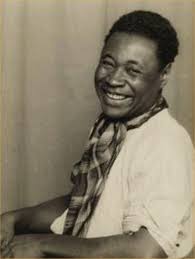
Henry Taylor Lamb

Paintings by Henry Taylor Lamb

Harry Taylor Lamb was born in 1883 at Adelaide, Australia, one of seven children to Horace Lamb, a professor of mathematics at Manchester University, and his wife Elizabeth Foot, sister-in-law to Charles Hamilton, 5th Earl of Abercom. Lamb grew up in Manchester where he first studied medicine at the Manchester University Medical School, from which he obtained a graduate scholarship in 1904. Despite this, he  abandoned medicine and, with encouragement of his friend portrait artist Francis Dodd, changed his studies to art. 

In January of 1906 at the age of twenty-two, Lamb traveled to London to study under Welsh etcher and painter  Augustus John and Irish portrait painter William Orpen at their Chelsea Art School. In May of 1906, Lamb  married Nina Forrest, known as Euphemia, who was an artist’s model and a member of the Bloomsbury Group: however, the relationship was short-lived with the divorce finalized in 1927. Lamb was acquainted  with several members of the Group which included painter Vanessa Stephen and art critic Clive Bell, whom he knew from his earlier days in London, and critic and biographer Lytton Strachey, a friend for whom he later executed a small portrait in 1914 . Lamb painted a grand larger version of this portrait in 1914, which showed Strachey in his typical languid pose. 

In 1907, Henry Lamb attended the Académie de La Palette in Paris, which at that time was under the direction of portrait painter Jacques-Émile Blanche. Upon his return to London, he took a studio at Number 8 Fitzroy Street and became a member of the Fitzroy Street Group, a supportive organization for artists established in 1907. Lamb was a co-founder of the Camden Town Group, a collective of English Post-impressionist artists established in 1911. In 1913, both groups merged to form the London Group. Now one of the oldest artist-led organizations, it holds open submission exhibitions for members and guest artists.

Lamb spent several summers on the South coast of Brittany where he painted his 1911 “Death of a Peasant”, portraying the tragic death of cancer victim Madame Favennec. For this painting, he experimented with a fifteenth-century technique of painting oils over a layer of tempera. Inspired to seek out more traditional scenes for his work, Lamb traveled in 1912 to Gola, a small island off the coast of County Donegal, Ireland. There he made many paintings of the Irish fishermen and their wives, including the 1912 “Irish Girls”, a post-impressionist work now in the Tate collection. 

With the outbreak of the First World War, Lamb returned to his study of medicine, qualified as a doctor at Guy’s Hospital, and saw active service in the Royal Army Medical Corps as a battalion medical officer with the 5th Batalion.  For his service with the Royal Inniskilling Fusiliers, he was awarded the Military Cross. Lamb also served in Palestine and on the Western Front. In February of 1918 before his end of service, he received a commission by the British War Memorials Commission to produce a large painting for a proposed Hall of Remembrance

Though he was not officially a military artist, Lamb produced many sketches of his time in the Palestine campaign and on the Macedonian Front, which would form the basis of future large-scale paintings. Two of his works from those sketches, the 1916 “Advanced Dressing Station on the Struma”, now in Manchester City Art Gallery, and the 1919 “Irish Troops in  the Judaean Hills”, now in the Imperial War Museum, are considered among his best work.

In 1928, Henry Lamb married novelist and biographer Lady Margaret Pansy Pakenham, a daughter of the 5th Earl of Longford, and settled in the village of Coombe Bissett, in Salisbury, United Kingdom. He was appointed an official full-time war artist by the War Artists Advisory Committee during World War II; at which time, he painted portraits of soldiers and studies of servicemen at work throughout southern England. In the winter of 1941, he was attached to the 12th Canadian Army Tank Battalion and painted a series of personnel portraits. 

Lamb was elected as an associate of the Royal Academy in 1940, became a Trustee for the National Portrait Gallery in 1942, and served as a Trustee from 1944 to 1951 at the Tate Gallery, He became a full member of the Royal Academy in 1949. Henry Taylor Lamb died, at the age of seventy-seven, on October 8th in 1969 at the Spire Nursing Home in Salisbury, Wiltshire, and is buried in the churchyard at Coombe Bissett. 

Retrospectives of Henry Lamb’s work have been held at the Salisbury Museum and the Poole Museum. His work can be found in collections across the country and aroundthe world, including the Tate Collection in London, the Imperial War Museum, the British Government Art Collection, and the National Gallery of Canada.

Note: Henry Lamb first met his friend Lytton Strachey at a party in London at the beginning of 1906. Strachey was gay and developed an enduring attraction to Lamb; however, his several attempts to seduce Lamb were unsuccessful. After Lamb returned to London in 1909 from his studies in Paris. Lytton introduced him to what would become known as the Bloomsbury Group. Among its members were Virginia and Leonard Woolf, E. M. Forster, Duncan Grant, and Bertram Russell.

Henry Lamb executed several paintings of his friend Strachey, which he included in his first solo exhibition at the Alpine Club Gallery in May and June of 1922. Among those works exhibited was his 1914 portrait “Lytton Strachey”, which showed Strachey seated against a large window at Lamb’s studio in Vale of Heath, Hampstead. Lamb emphasized Strachey’s gaunt, ungainly figure in his typical languid pose with a presented air of resigned intellectual superiority. The trees in the vista seen through the window are painted in a rhythmic, decorative manner consistent with Lamb’s essentially academic approach. Browns, violets, and greens predominate this palette which, woven into future compositions, would distinguish Lamb’s work from others in group exhibitions.

Insert Images from Top to Bottom::

Henry Lamb, “Self-Portrait, 1938, Oil on Canvas, 45.7 x 35.6 cm, Private Collection

Henry Lamb, “Phantasy”, 1912, Oil on Canvas, 86.4 x 61 cm, Tate Museum, London

Henry Lamb, “The Lady with Lizards”, 1900-1933, Oil on Canvas, 51.5 x 40.9 cm, Manchester Art Gallery

Henry Lamb, “Self_Portrait”, 1914, Oil on Panel, 36.8 x 31.8 cm, National Portrait Gallery, Washington DC

Christopher Isherwood: “A Single Man”

Photographers Unknown, The Faces of Man: Photo Set Ten

“Staring and staring into the mirror, it sees many faces within its face – the face of the child, the boy, the young man, the not-so-young man – all present still, preserved like fossils on superimposed layers, and, like fossils, dead. Their message to this live dying creature is: Look at us – we have died – what is there to be afraid of?

 It answers them: But that happened so gradually, so easily. I’m afraid of being rushed.” 

—Christopher Isherwood, A Single Man

Christopher Isherwood’s 1964 novel “A Single Man” is considered by many to be his finest achievement. When it first appeared, it shocked many with its frank, sympathetic, and moving portrayal of a gay man in maturity. The novel,  which was Isherwood’s favorite of his own work, depicts one day in the life of George, a middle-aged gay Englishman who is a professor at a Los Angeles University. He is an outsider in every way, and his internal reflections and interactions with others reveal a man who loves being alive despite everyday injustices and loneliness. George, unable to cope with the sudden death of his younger partner Jim, encounters different people who give him insight into the possibilities of being alive and human in the world. 

“A Single Man” was adapted into the drama film of the same name in 2009. It was the directorial debut of fashion designer Tom Ford, and starred Colin Firth who, for his role in the film, was nominated for the Best Actor Academy Award. Matthew Goode plays Jim, his partner, seen in flashback sequences. Shot in twenty-one days, the film premiered on the 11th of September, 2009, at the 66th Venice International Film Festival, where it won the festival’s third annual Queer Lion Award, and then entered the film festival circuit. It had an initial limited run in the United States in December of 2009, and began its wider release in the early part of 2010. 

José Saramago: “We Feel Our Way Along the Road”

Photographers Unknown, In One Word, Brief

“We have an odd relationship with words. We learn a few when we are small, throughout our lives we collect others through education, conversation, our contact with books, and yet, in comparison, there are only a tiny number about whose meaning, sense, and denotation we would have absolutely no doubts, if one day, we were to ask ourselves seriously what they meant. Thus we affirm and deny, thus we convince and are convinced, thus we argue, deduce, and conclude, wandering fearlessly over the surface of concepts about which we only have the vaguest of ideas, and, despite the false air of confidence that we generally affect as we feel our way along the road in verbal darkness, we manage, more or less, to understand each other and even, sometimes, to find each other.” 

—José Saramago, The Double

Born in November of 1922 in Azinhaga, Portugal, José de Souse Saramago was a writer, translator, and the recipient of the 1998 Nobel Prize in Literature. In 1924 at the age of two, his family moved to the capital city of Lisbon. where he first attended primary school and later five years of technical school with studies in mechanics. Having no money to buy books, Saramago borrowed books from friends, including Portuguese language textbooks, and regularly frequented the local Lisbon public libraries. 

After obtaining a position as an administrative civil servant in the Social Welfare Service, Saramago married Ilda Reis in 1944. In 1947, the birth year of their only child Violante, he published his first book, a novel entitled “The Land of Sin”, which was commercially unsuccessful and later disowned by him. Saramago attempted writing two more novels; but eventually abandoned the works when he felt they were not worthwhile. For nineteen years, until 1966, he was absent from the Portuguese literary scene. At the end of the 1950s, José Saramago started working at Estúdios Cor, a publisher company, as production manager, a position which introduced him to some of the most important Portuguese writers.

José Saramago published his first poetry book in 1966, “Os Poemas Possíveis”. Four years later in 1970, his second book of poems entitled “Probably Joy” was published. This was followed by two collections of his written newspaper articles: “From This World and the Other” in 1971 and “The Traveler’s Baggage” in 1973,  Saramago published in 1974 his second novel “The Opinions the DL Had”, which told the story of the existing dictatorship of Portugal just before its toppling in April of that year. 

Saramago became deputy director of the morning newspaper “Diário de Nóticias” from April to November of 1975, at which time he was fired for political reasons after the coup of November 25th. Several books marked this period in Saramago’s life: “The Year of 1993”, a long poem that was published in 1975; a personal and philosophical book entitled “Manual of Painting and Calligraphy published in 1977;  and “The Notes”, a 1976 collection of political newspaper articles from “Diários de Nóticies”.

In the beginning of 1976, Saramago settled in the country village of Lavre in the Alentejo Province for a period of study, observation, and note-taking that would lead to the 1980 novel, “Risen from the Ground”, which follows the fortunes of a poor landless family living through major international events. In 1978, he published a collection of short stories, “Quasi Object”, which was followed by two plays in 1979: “The Night” and “What Shall I Do with This Book?”. The decade of the 1980s marked the publishing of four novels: a 1982 historical novel set during the reign of King John V of Portugal, entitled “Baltazar and Blimunda”; the 1984 “The Year of the Death of Ricardo Reis”; the 1986 “The Stone Raft”, in which the Iberian Peninsula breaks free from the continent and floats away; and “The History of the Siege of Lisbon” published in 1989. 

José Saramago’s  1991 fictional account of a flawed, humanized Christ, “The Gospel According to Jesus Christ”, was censored by the Portuguese government, who vetoed its presentation for the European Literary Prize under the pretext that the book was offensive to Catholics. As a result of this censorship, Saramago and his new wife, Spanish journalist Pilar del Rio, left Portugal and relocated their residence to the Canary Island of Lanzarote. In 1991, Saramago  wrote the play “In Nomeine Dei”, which would be the basis for the opera libretto to “Divara”. In 1993, he began writing his multi-volume diary “Cadernos de Lanzarote (Lanzarote Diaries)”. While he worked on his diary, two more novels followed: the 1995 “Blindness” and the 1997 “All the Names”.

Saramago’s novels often are based in fantastic scenarios; sections of continents breaking off, country-wide blindness; and a country in which suddenly death no longer exists. He addressed serious matters with empathy for the human condition; a recurring theme in his work dealt with a person’s need for an individual identity and established meaning to their life. Saramago’s experimental writing style often featured long sentences, sometimes extended to page length. He used periods sparingly, opting for a loose flow of clauses joined with commas. The paragraphs in Saramago’s works could extend for pages with dialogue unmarked by quotation marks; each character’s spoken words only distinguished by an initial capital letter.

A supporter of Iberian Federalism, José Saramago was selected by the Swedish Academy as the 1998 recipient of the Nobel Peace Prize for Literature. He was also the recipient of the 2004 America Award for lifetime achievement. José Saramoga passed away in June of 2010 at his residence on the Spanish island, Lanzarote.

Peter Churcher

Paintings by Peter Churcher

Born in Brisbane, Australia, in 1964, Peter Churcher is a portrait and figurative painter in the realist tradition. He holds a Bachelor of Music with Honors from Melbourne University which he acquired in 1986. Traveling through Europe after gaining his Licentiate for Piano Performance from Trinity College in London, Churcher visited many galleries and decided to return to his original passion, painting. He studied at Melbourne’s Victorian College, now Deacon University, where in 1992 he earned his BFA in Painting.

Churcher first showed his work in the group exhibition “Artworks II: Thirty Emerging Melbourne Artists” held at the South Melbourne Town Hall. After entering his work in two group exhibitions at Lauraine Diggins Fine Art, he gave his first solo show at the gallery in 1994. Since that time Churcher has held solo exhibitions in Melbourne, Sydney and Brisbane, and has been represented in many group exhibitions across the country.

Peter Churcher’s work deals primarily with the human subject in  portraiture and group figurative narratives. His subjects are ordinary people sighted on the streets, who are presented on the canvas with their own personalities and natural enthusiasms. A number of commissioned portraits for both private and public personalities are also contained in Churcher’s body of work.

As a commissioned officer during the Persian Gulf War, Churcher was, in 2002, appointed to be Australia’s official war artist. Traveling to the Persian Gulf and Diego Garcia, he recorded the people and operations of the Royal Australian Navy and Royal Australian Air Force. Churcher’s work captured many aspects of army life not covered by the press photographers. His images of  Australia’s flying officers and pilots, the sailors, and the engine-room stokers aboard the HNAS Kanimbla are now included in the collection of the Australian War Memorial. 

Peter Churcher’s work is represented in many major public, corporate and private collections throughout Australia and overseas including the National Gallery of Australia  and The National Portrait Gallery, both in Canberra; The Australian War Memorial; and Parliament House in Victoria, among others. 

Peter Churcher is represented in Australia by Philip Bacon Galleries in Brisbane and Australian Galleries in Melbourne and Sydney. He is currently living and working in Barcelona, Spain. Churcher’s most recent solo show is at Lauraine Diggins Fine Art in Melbourne through April 16th of  2021. 

Top Insert Image: Peter Churcher, “Hostel”m 2017, Oil on Canvas, 116 x 98 cm, Private Collection

Bottom Insert Image: Peter Churcher, “The Young Painter”, 2014, Oil on Canvas, 78 x 60 cm, Private Collection

Walter Stuempfig

Paintings by Walter Stuempfig

Walter Stuempfig was one of Philadelphia’s most highly regarded painters of the mid-twentieth century. He is known primarily for his landscapes of the Philadelphia area and the shores of New Jersey. Stuempfig’s work is often pervaded with a sense of poetic melancholy that has led to his frequent classification as a romantic realist.

Born in the Germantown neighborhood of Philadelphia in January of 1914, Walter Stuempfig’s initial education was at the Germantown Academy from which he graduated in 1930. He spent a year studying architecture at the University of Pennsylvania before enrolling, in October of 1931, at the Pennsylvania Academy of the Fine Arts. Stuempfig studied under modernist illustrator and painter Henry McCarter, the impressionist landscape painter Daniel Garber and realist landscape painter Francis Speight. 

In 1934, Stuempfig won the William Emlen Cresson Memorial Travel Scholarship for study abroad. He traveled frequently to Europe, and he was deeply influenced by the European masters, particularly Nicolas Poussin, Caravaggio, and Jean-Baptiste-Camille Corot. From his initial exhibition in 1932 until  1966, Stuempfig regularly exhibited in the annual exhibitions at the Pennsylvania Academy. He had his first successful exhibition, as an American realist painter, at the Metropolitan Museum of Art’s 1942 “Artists for Victory” show. 

Discovered by art gallery director R. Kirk Askew, Stuempfig had his first one man show in 1943 at the Durlacher Brothers Gallery in New York. His show was sold out on opening night, with both the Whitney Museum and the Museum of Modern Art adding his work to their collections. Stuempfig continued to be represented by the Durlacher Brothers Gallery through 1961. In 1947, the Corcoran Gallery purchased his painting “Two Houses” which had won second prize in the biennial competition that year for contemporary American paintings.

Walter Stuempfig had married his wife Lila Hill, a sculptor who also studied at  the Pennsylvania Academy, in 1935. Upon his wife’s death in 1946, he concentrated more intensely on his artwork. working from his studio in the Chestnut Hill area of northwest Philadelphia. Stuempfig  would spend his summers painting at New Jersey’s shore area and the Manayunk area of Philadelphia. In 1948, he became an instructor in drawing and composition at the Pennsylvania Academy of Fine Art, where he taught until his death, after a long illness, in November of 1970.  

As a painter, Walter Stuempfig worked independently, and remained outside the mainstream of the contemporary artistic movements. He was a prolific artist, producing over fifteen hundred works of figure compositions, landscapes and architectural subjects, portraits, and still lifes, all done in the style of romantic realism. Stuempfig had a subtle and polished painting technique; his figurative work had a great subjectivity, which was often infused with nostalgia and personal sentiment.

Walter Stuempfig’s paintings can be found in many private and public collections including the Whitney Museum of American Art and the Museum of Modern Art in New York, the Phillips Collection in Washington, D.C., and the Philadelphia Museum of Modern Art and the Pennsylvania Academy of the Fine Arts.

Top Insert Image: Walter Stuempfig, “Queen of the Seas Casino”, Date Unknown, Oil on Canvas, 48.1 x 55.9 cm, Private Collection

Bottom Insert Image: Walter Stuempfig, “Sturgeon”, Date Unknown, Oil on Canvas, 45.7 x 35.6 cm, Pennsylvania Academy of Fine Arts

Rafael Campo: “What I Would Give”

Photographers Unknown, What I Would Give

What I would like to give them for a change
is not the usual prescription with
the hubris of the power to restore,
to cure; what I would like to give them, ill
from not enough of laying in the sun
not caring what the onlookers might think
while feeding some banana to their dogs–
what I would like to offer them is this,
not reassurance that their lungs sound fine,
or that the mole they’ve noticed change is not
a melanoma, but instead of fear
transfigured by some doctorly advice
I’d like to give them my astonishment
at sudden rainfall like the whole world weeping,
and how ridiculously gently it
slicked down my hair; I’d like to give them that,
the joy I felt while staring in your eyes
as you learned epidemiology
(the science of disease in populations)
the night around our bed like timelessness,
like comfort, like what I would give to them.

–Rafael Campo, What I Would Give, Landscape and Human Figure, 2002

Born in Dover, New Jersey, in November of 1964, Rafael Campo is a poet, doctor, and author. He graduated from Amherst College, where he earned his BA and MA degrees, and Harvard Medical School, where he earned his MD degree. Campo started practicing internal medicine in the early 1990s, at the height of the HIV-AIDS epidemic in the US. He currently practices medicine at both Harvard Medical School and Beth Israel Deaconess Medical Center in Boston.

Campo’s writing reflects his commitment to poetry as the fullest expression of self, and his understanding of it as a necessary tool for healing and empathy. A master of poetic meter, his work is highly structured in its various forms, including blank verse, villanelles and rhymed tercets. This attention to form tends to be mixed with narratives of family and illness, and often is structured around personal feelings for his patients and those who suffered from homophobic and racist encounters.

Rafael Campo’s first collections of poems, entitled “The Other Man Was Me: A Voyage to the New World”, won the National Poetry Series Open Competition in 1993. His 1996 collection “What the Body Told” was a winner of the Lambda Literary Award. Campo’s 1999 “Diva”, a collection which included his translations of poems by Federico García Lorca, was a finalist for the National Book Critics Circle Award. Three collections pf poetry followed: the “Landscape with Human Figure” published in 2002. “The Enemy” published in 2007, and “Alternative Medicine” published in 2013.

Rafael Campo is also the author of prose works, including the 2003 “The Healing Art: A Doctor’s Black Bag of Poetry”, which was reviewed favorably in medical journals. In this work, he used poems from poets such as Marilyn Hacker and William Carlos Williams, to address the necessity of differentiating between curing, which makes illness go away, and healing, which transforms one’s attitude toward illness. Campo’s earlier essay collection, “The Poetry of Healing”, published in 1997, received a Lambda Literary Award.

Campo is a PEN Center West Literary Award finalist and a recipient of the National Hispanic Academy of Arts and Sciences Annual Achievement Award. He recently received fellowships from the Guggenheim Foundation and the Echoing Green Foundation.

Note: Although Rafael Campo does not name his bed partner at the end of “What I Would Give”, it is understood from other poems and essays that it is Jorge, his longtime partner, then spouse. Rafael Campo came out as gay in the 1990s, and writes about this in his essay “The Desire to Heal” from “The Poetry of Healing”.

A small collection of Rafael Campo’s poetry can be found at: https://poets.org/poet/rafael-campo

The photo of the fighter, center of bottom row, is from a photo shoot of model Yuri Zalomov taken by photographer Andrei Vishnyakov.


Benoît Audran the Elder

Etchings by Benoît Audran the Elder

Born in Lyons, France, on November 23, 1661. Benoît Audran the Elder, second son of engraver Germain Audran, was an engraver, He received his primary instruction in engraving from his father; Benoît Audran later continued his studies under his uncle, the master engraver  Gérard Audran, who was appointed engraver to King Louis XIV. 

Although he never equalled the style of his uncle’s work, Benoît Audran established his own reputation with his many engravings of historical subjects and portraits. His style was bold and clear, in both the drawing of his figures and the fine expression of his characters. Benoît Audran’s many portraits include those of the French statesman Jean Baptiste Colbert; Joseph Clement of Bavaria, Archbishop of Cologne; and Swiss soldier and politician Samuel Frisching,. 

Benoît Audran the Elder also produced  several hundred engravings based on the works of various master artists. These include: “The Baptism of Jesus Christ” after the work of Italian Baroque painter Albani; “The Savior with Martha and Mary” and “St. Paul Preaching at Ephesus”, both after the neoclassical painter Eustache Le Suerur; and “The Accouchement of Marie de Medicis”, after Flemish artist Paul Rubens. Among Audran the Elder’s best works are the two engravings:, “The Seven Sacraments”, after the paintings of Nicolas Poussin, and “The Bronze Serpent”, after Charles Le Brun’s 1649 painting of the same name.

Benoît Audran engraved two plates, one in 1716 and one in 1717, which depicted David in his struggles with Goliath. Both of these works are ascribed as being based on the work of Mannerist Italian painter Daniele de Volterra, who is remembered for his association with Michelangelo.

Benoît Audran the Elder became a member of the Académie des Beaux-Arts in 1709 and was appointed engraver to King Louis XIV, a post which included a pension. Audran died in 1721 in the village of Ouzouer, near Sens in north-central France. 

Note: Inscription content on “David and Goliath” engravings: Lettered with dedication to the Prince de Chelamar, with his titles, followed by ‘Benoit Audran, graveur ordin. du Roy, dedie cette copie d’une des deux peintures de Michel Ange Buonarotta qu’occupent les surfaces d’une grande pierre, representant le même sujet du combat de David et de Goliath en deux differentes attitudes, laquelle a été présenté par son Ex. a Louis le Grand à Marly le 25 Juillet de l’année 1715 au nom de Monseign. Judice son frère, Grand Maître du Palais Apostolique.’ With date ‘A Paris le 31 Decembre 1716’

Top Insert Image: Benoît Audran the Elder, “Portrait of Jean-Baptiste Colbert”, 1676, Engraving, Palace of Versailles Research Center

Bottom Insert Image: Benoit Audran the Elder,, “George Monck, First Duke of Albemarle”, 1707, Engraving After Adriaen van der Werff, After Frabcis Barlow, Private Collection

Michele Giambono

Michele Giambono, “Man of Sorrows”, ca  1420-1430, Tempera and Gold on Wood Panel,  47 x 31.1 cm, Metropolitan Museum of Art

Born in Venice circa 1400, Michele Taddeo di Giovanni Bono, known as Giambono, was an Italian painter whose work reflected the International Gothic style with a Venetian influence. There are no known portraits of Michele Giambono and very little is known of his personal life, except for knowledge of a marriage in 1420 and his death circa 1462 in Venice.

Giambono was active as an artist between the years 1420 and 1462. He was influenced by the works of Jacobello del Fiore, a Late-Gothic style painter whose mature work displayed a local Venetian style;  Gentile da Fabriano, a painter of altarpieces and frescoes, whose 1423 “Adoration of the Magi” is regarded as one of the masterpieces of the international Gothic style; and Antonio di Puccio Pisanello, one of the most distinguished fresco painters and medalists of the early Italian Renaissance. 

Michele Giambono is known for his mosaic designs in the Mascoli Chapel of San Marco in Venice. In the left vault of the chapel, two elaborately decorated mosaics depict the Birth, the Presentation at the Temple, and the Annunciation. On the right side of the chapel, the life of the Virgin is continued with the Visitation and the Death, or Dormitio Virginis. The architectural elements in the mosaics are triangular in shape, slightly askew with rounded arches of Corinthian and Florentine style.

The paintings attributed to Giambono include “St. Chrysogonus on Horseback”, circa 1450, done in the International Gothic Style with suggested movement and gilded highlights; “Virgin and Child”, located at Galleria Franchetti in Venice and completed circa 1450, a painting by which Giambono became one of the first Italian artists to use iconographic images in a Christian context; “Portrait of a Man”, a tempera and silver on wood panel painting,  which is one of very few surviving early fifteenth-century Venetian portraits; and the five panel “Polyptych of Saint James”, located at Gallerie dell’Accademia in Venice.

Michele Giambono’s small, tempera and gold on wood panel painting, “The Man of Sorrows”, is one of his earliest known works, executed between 1420 and 1430. The central, well-rendered figure of Jesus was conceived as a focus for meditation. He is depicted upright in his tomb, his hands extended to display his wounds, and his  blood and crown of thorns rendered in relief. A diminutive Saint Francis , standing on the left, receives the Stigmata and becomes a surrogate for the viewer. Elaborately framed, with the reverse painted to imitate porphyry, a stone with imperial associations, the painting would have been a precious object of devotion, perhaps for a Franciscan friar. The pattern on the deteriorated background derives from Islamic textiles.

Note: The International Gothic is a period of Gothic art which began in Burgundy, France and northern Italy in the late fourteenth and early fifteenth-century. It then spread rapidly through Western Europe, although, most of the style’s development occurred in Italy. Initially a style of the courts of nobility, it gradually spread, becoming more robust in appearance, to the mercantile classes and lower nobility. Artwork of the period is known by the use of light, bright colors and especially gold in panel paintings, illuminated manuscripts, tapestries, and polychromed sculptures. Stylistic features included a dignified elegance, a more practiced use of perspective in the modeling and setting, and an attention to realistic detail in plants and animals. 

Top Insert Image: Michele Giambono, “Virgin and Child Enthroned”, circa 1440-1450, Tempera and Gold on Linden Wood, 121.5 x 56.5 cm, Museum of Fine Arts, Budapest

Bottom Insert Image: Michele Giambono, ‘San Grisógono a Caballo”, circa 1450, Oil on Panel, 199 x 134 cm, Venice


Matthijs Röling

Paintings by Matthijs Röling

Born in Oostkapelle, The Netherlands, in 1943, Matthijs Nicolaas Röling is a figurative painter, lithographer and academy lecturer who has carried on the tradition of realistic painting, enriching its language with artistic techniques derived from surrealism. 

Röling received his training at the Royal Academy of Art in The Hague from 1960 to 1963; he continued his studies at the Rijksacademie in Amsterdam in 1963 to 1964 . He had his first exhibition in 1965 at the Drents Museum in the city of Assen . In 1972, Röling became a lecturer at the Academie Minerva in Groningen where he taught such future artists as realist painters Jan van der Kooi, Douwe Elias, and Peter Pander. Röling has also lectured at the Classical Academy for Fine Art, also in Groningen.

Matthijs Röling first achieved recognition for his work in 1976 with his series of still-lifes, entitled “Cabinets”. In 1983 he began working on large-scale decorative projects, such as monumental canvases and wall and ceiling paintings. In recent years these projects have come to occupy an increasingly important place within Röling’s highly diverse body of work.

Röling’s first large-scale, oil on panel mural, entitled “De Sterrenhemel (The Starry Sky)”, was finished in 1983. The mural is located at the Café De Eenhoorn in the city of Eelde, and consists of four horizontal panels, each panel depicting a section of the night sky with its zodiac symbols and measuring 196 x 173 x 16 centimeters. In a 1987 collaboration with Northern-realist painter Wout Muller, Matthijs Röling produced the mural “Boom van Kennis (Tree of Knowledge)”, which is installed in the auditorium of the Academy Building at the University of Groningen. 

Since 1962, Matthijs Röling has been regularly exhibiting his work in museums and galleries throughout the Netherlands, including Amsterdam’s galleries M.L. de Boer and Galerie Mokum, and Groningen’s Galerie Wiek XX. Röling received the Dr. AH Heineken Prize for Art in 1994 for his short operatic work. The Drents Museum in Assen houses a number of Röling’s paintings and sketchbooks in its collection.

Claude McKay: “The Shadow-Fact with Which I Strove”

Photographers Unknown, The Shadow-Fact with Which I Strove

I
Not once in all our days of poignant love,
Did I a single instant give to thee
My undivided being wholly free.
Not all thy potent passion could remove
The barrier that loomed between to prove
The full supreme surrendering of me.
Oh, I was beaten, helpless utterly
Against the shadow-fact with which I strove.
For when a cruel power forced me to face
The truth which poisoned our illicit wine,
That even I was faithless to my race
Bleeding beneath the iron hand of thine,
Our union seemed a monstrous thing and base!
I was an outcast from thy world and mine.

II
Adventure-seasoned and storm-buffeted,
I shun all signs of anchorage, because
The zest of life exceeds the bound of laws.
New gales of tropic fury round my head
Break lashing me through hours of soulful dread;
But when the terror thins and, spent, withdraws,
Leaving me wondering awhile, I pause–
But soon again the risky ways I tread!
No rigid road for me, no peace, no rest,
While molten elements run through my blood;
And beauty-burning bodies manifest
Their warm, heart-melting motions to be wooed;
And passion boldly rising in my breast,
Like rivers of the Spring, lets loose its flood.

Claude McKay, One Year After, 2003

Born in Sunny Ville, Jamaica, in 1889, Festus Claudius McKay was poet and writer, one of the key figures in the literary movement of the 1920s Harlem Renaissance. His work ranged from vernacular verse celebrating peasant life in Jamaica to poems which protested racial and economic inequities. 

Proud of his African heritage, Claude McKay’s early interests were in the study of English poetry. He received his formative education under the tutelage of his brother, schoolteacher Uriah Theophilus McKay, and a local Englishman Walter Jekyll, who advised aspiring poet McKay to write verse in the Jamaican dialect. McKay’s studies were based in the British classic writers, such as Milton and Pope, and the later Romantic authors. McKay also studied the writings of philosopher Arthur Schopenhauer, whose works Jekyll was translating into English.

In 1906, McKay spent a year in Brown’s Town and the Jamaican capital of Kingston; but, after encountering extensive racism, he returned to Sunny Ville. In 1912, McKay published through a London company two collections of verses portraying opposing aspects of Black life inJamaica:“Songs of Jamaica” and “Constab Ballads”. His “Songs of Jamaica” presented a celebration of Jamaican peasant life and the people’s connections to the land. McKay’s “Constab Ballads”, however, portrayed a bleaker outlook on the plight of Black Jamaicans and was explicitly critical of the discrimination in urban Kingston. 

For his “Songs of Jamaica”, Claude McKay received an award and a stipend from the Jamaican Institute of Arts and Sciences, which he used to travel to America in 1912. He studied briefly at Kansas State College, but left in 1914 for New York City where he worked various menial jobs and continued writing poetry. In 1917, McKay published two poems in the short-lived periodical “Seven Arts”; a few years later, he published poems in the “Liberator” magazine. among these was his famous “If We Must Die”, a response to mob attacks by white Americans upon Afro-American communities during the ?Red Summer” from April to November of 1919.

McKay began a two year period of travel and work abroad, which began with a stay in Holland and Belgium, before moving to London and working at the “Workers’ Dreadnought” periodical, published on behalf of the East London Federation of Suffragettes. In 1920 he published his third collection of poetry, “Spring in New Hampshire”, notable for containing  “Harlem Shadows”, a poem of the plight of Black sex workers in the degrading urban city. 

Returning to the United States in 1921 McKay involved himself in various social causes. His 1922 anthology collection of poems, “Harlem Shadows”, assured his stature as a leading member of the Harlem Renaissance. Working on behalf of Blacks and laborers, McKay became involved with the Universal Negro Improvement Association and produced several articles for its publication. His travels took him to Paris, where he was hospitalized for a severe respiratory infection; upon recovery, McKay  traveled for the next eleven years, touring Europe and northern Africa. 

During this travel period, Claude McKay published three novels and a short story collection. His first novel, the 1928 “Home to Harlem”, tells the story of two black men, one who represents the instinctual aspect of an individual and, the other, the intellectual perspective, whose lives in Harlem are affected with either happiness or despair. This social-realist novel detailed a portrait of the hardships of Black urban life and recounted  different ways of rebelling against its ensuing circumstances. 

Mc Kay followed this book with the 1929 “Banjo” A Story without a Plot”, a novel about Banjo, a Black vagabond living in the French port city of Marseilles, who embodies the largely instinctual way of life, and Ray, a struggling, intellectual artist conventionally employed. The two men, always dissatisfied and disturbed by their limited roles in the racist society of Marseilles, cope with their problems in their own way, but both eventually decide to leave the city. 

In his third novel “Banana Bottom”, McKay presented a more incisive exploration of the Black individual’s quest for cultural identity in the face of racism, and explored the underlying racial and cultural tensions. In this story, the protagonist was a Jamaican peasant girl, who with pride and independence, fled the oppressive racist society in which she was forced to live and returned to an idealized peasant Jamaican environment.

During his final years abroad, Claude McKay published his 1932 “Gingertown”, a collection of twelve short stories, six of which were addressed to Harlem life and dealt with Black exploitation, and six stories which were set in Jamaica and North Africa, McKay’s last home before his return to the United States. Upon his return to Harlem in the mid-1930s, he began work on an autobiography, “A Long Way from Home”, a work published in 1937 about his challenges as a Black man in society.

Developing a keen interest in Catholicism after his disillusionment with Communism in the late 1930s, McKay became active in Harlem’s Friendship House, a missionary movement and a leading proponent of interracial justice. His work with the organization inspired his 1940 non-fiction historical treatise “Harlem: Negro Metropolis”, an account of the black community in Harlem during the 1920s and 1930s. McKay later moved to Chicago and worked as a teacher for a Catholic organization. 

In 1943, McKay started “Cycle Manuscript”, a collection of forty-four poems, which were never published; this important document remains as a typescript at the Beinecke Library of Yale University. By the middle of the 1940s, McKay’s health had deteriorated. He endured several illnesses throughout his last years and eventually died of heart failure in May of 1948. Claude McKay was buried at Calvary Cemetery in Queens, New York. 

Notes: An extensive collection of Claude McKay’s poetry can be found at: https://www.poemhunter.com/claude-mckay/poems/

An interesting read is “A Love So Fugitive and So Complete: Recovering the Queer Subtext of Claude McKay’s Harlem Shadows” by Lindsay Tuggle of the University of Sydney (originally printed in the journal “The Space Between; Literature and Culture 1914-1945”) which is located at: https://www.monmouth.edu/department-of-english/documents/a-love-so-fugitive-and-so-completerecovering-the-queer-subtext-of-claude-mckays-harlem-shadows.pdf/

Maurice Grosser

Paintings by Maurice Grosser

Born on October 23, 1903 in Huntsville, Alabama, Maurice Grosser was an American writer, art critic, and painter. He attended Harvard University and graduated with a degree in Mathematics with honors in 1924. While at Harvard, Grosser received painting instruction from painter and professor Denman Ross, a trustee of Boston’s Museum of Fine Art. Grosser also studied both life drawing and painting at Boston’s Architectural School and South Boston’s Art School,

Awarded Harvard’s Sheldon Fellowship for a two year period, Grosser was able to study painting in both France and Italy. In 1925 in Paris, he met for the second time and began a relationship with American composer and critic Virgil Thomson, who became his life partner and frequent collaborator. After meeting Gertrude Stein in Paris in 1926, they returned to the United States and took up residence at New York’s Hotel Chelsea, where they presided over a salon which attracted leading figures in the arts, such as writer and poet Frank O’Hara, composer Leonard Bernstein, author Tennessee Williams, and avant-garde composer John Cage

Maurice Grosser first began his collaborative work with Virgil Thomson around 1928, when he assisted in the production of Thomson’s new opera “Four Saints in Three Acts”. The libretto for the opera was prepared by Gertrude Stein, the music was composed by Thomson, and the scenario was developed by Grosser. This opera was noted for its musical content, its form, and its portrayal of the European saints by a cast of black performers, with singers directed by Eva Jessye, a prominent black choral director. 

Grosser next worked with Thomson on his provocative 1947 opera “The Mother of Us All”, based on the life of social reformer Susan B.  Anthony. The libretto for this opera was written by Gertrude Stein, who sent the finished work to Thomson in March of 1946, just a few months before her death in July. The two-act opera premiered in May of 1947 with soprano Dorothy Dow as Susan B. Anthony. The work was a 1956 Off-Broadway production, part of the Santa Fe Opera’s 1976 season, and staged at the New York City Opera in 2000 and the San Francisco Opera in 2003. 

A third collaboration between Maurice Grosser and Thomson was the 1985 “18 Portraits”. For many years, they had made portraits, some dating from the 1920s, of mutual friends in both music and paint forms. The portraits of each sitter were presented in eighteen separate bi-folios, with a single sheet insert consisting of two pages of music and an original lithograph of a  pencil and charcoal portrait.

A writer as well as a painter, Maurice Grosser lived among a circle of avant-garde authors, artists, and musicians. He spent long periods living and working abroad, first in Paris and later in Morocco, Spain, Turkey, Greece, Israel, Nigeria, Canada, and Brazil. As an artist, Grosser painted in a conservative realist style, in which he depicted structured landscapes in New England, and in the southern and western states. He was also a portraitist whose more famous subjects were  his companion, composer Virgil Thomson, Scottish operatic soprano Mary Garden, writer and playwright Jane Bowles, and British mathematician Alfred North Whitehead.

Between 1956 and 1967, Maurice Grosser served as art critic for “The Nation” magazine. As an author, he wrote four books on painting and art criticism, including “Painting in Public / Painting in Our Time” in 1948 and republished in 1964; “The Painter’s Eye” in 1951; the 1962 “Critic’s Eye”; and “Painter’s Progress” in 1971. Grosser’s memoir entitled “Visiting Gertrude Stein and Alice Toklas” was published posthumously in 2006 by New York Review Books. 

Maurice Grosser died on December 22, 1986, at the age of eighty-three. His ashes are interred at Maple Hill Cemetery in Huntsville, Alabama. Virgil Thomson died on September 30, 1989, in his suite at the Hotel Chelsea in Manhattan at age ninety-two. 

Note: Maurice and Virgil first met in 1920 while both were attending meetings of The Liberal Club at Harvard; but the intimate relationship between the two would not fully evolve until they met by chance in 1925 at the Parisian cafe “Deux Magots”.

Top Insert Image: Maurice Grosser, “Self Portrait”, 1925, Oil on Canvas, Location Unknown

Middle Insert Image: Maurice Grosser, “Self-Portrait”, 1985, Lithograph, Private Collection

Bottom Insert Image: Carl Van Vechten, “Maurice Grosser”, 1935, Silver Gelatin Print, Library of Congress

Candido Pontinari

The Paintings of Candido Portinari

Considered one of the most important Brazilian painters, Candido Portinari was a prominent and influential member of Brazil’s Neo-Realist movement. Producing more than five thousand canvases, Portinari’s  inspiration was rooted in his formative years spent with family on a Brodowski coffee plantation. He developed a social preoccupation throughout his work and was active in both the cultural and political worlds of Brazil.

Candido Portinari was born in December of 1903 in the Brodowski municipality of São Paulo, Brazil. He received formal education at the local school until 1912, when, at the age of nine, his family’s poverty forced his suspension of education. However, even at a young age, Portinari manifested an interest and aptitude in drawing and painting. At the age of fifteen, he assisted a visiting group of Italian painters and sculptors who had come to the area for the purpose of decorating  local small town churches. 

In 1919, Portinari moved to Rio de Janeiro with friends of his parents, the Toledo family, who owned a boarding house in the city. He enrolled in the Lyceum of Arts and Trades and, in the following year, at the National School of Fine Arts, where he regularly attended figure drawing classes. Portinari exhibited his work for the first time in 1922 and received an Honorable Mention for his portrait of classmate Ezequel Fonseca Filho. At this time he became one of the first Brazilian artists to incorporate Modernist elements in his work, which would feature in all future work.

 In 1924 Candido Portinari submitted eight works to the selection panel of the National School of Fine Arts, of which the panel chose his seven portraits for the exhibition. A pivotal point in his career occurred in 1928 with the presentation of twelve works at the 35th General Exhibition of Fine Arts. For his oil portrait of poet and diplomat Olegário Mariano, he won the European Travel Prize and achieved recognition in the press. 

After a solo exhibition of twenty-five portraits at the Palace Hotel in Rio de Janeiro, Portinari traveled to Paris, settling in the artist haven of Montparnasse. He visited museums in Europe and met other artists working in the various trends of Modernism, mostly drawn to the styles of Cubism and Surrealism. In 1930, Portinari participated in a group exhibition of Brazilian art at the Exposition d’Art Brésilien in Paris, where he entered two works, a still life and a portrait. While in Paris, he met Maria Victoria Martinelli, a nineteen year old Uruguayan, who would become his lifelong companion. 

Portinari decided, during this Parisian stay, that the prominent subject of his work would be the colorful people and landscapes in his Brodowski homeland. Returning to Brazil with Martinelli in 1931, he began a prolific period of work as an artist. In a 1932 solo exhibition at the Palace Hotel promoted by the Brazilian Artists Association, Portinari presented over sixty works. For the first time, the artist showed paintings with Brazilian themes, primarily scenes from his childhood, circus themes, and scenes of circle games. 

Portinari painted his first work with a social theme “The Evicted” in 1934; in the same year, his portraiture work “Mestizo” was purchased by the Pinacoteca de São Paulo and became the first of his paintings to be included in a public institution. At the invitation of Celso Kelly whose portrait he had painted in 1926, Portinari was hired in 1935 to teach mural and easel painting at the Art Institute of the Federal District University in Rio de Janeiro. Between 1935 and 1940, Portinari produced several major works, which portrayed the Brazilian spirit with all its hardships, but also its strengths, hard work and independence. 

Candido Portinari’s 1935 “Coffee”, a large painting depicting the hard-working coffee harvesters and baggers, was entered into the Carnegie Institute exhibition and won Second Honorable Mention. Portinari produced four large panels for the Art Deco-designed Monument Via Dutra, which celebrated the construction of the Rio-São Paulo motorway. These interior murals were the first of his works on the themes of socialism and nationalism.He also created exterior mosaic panels and twelve fresco murals for the Modernist-designed Gustavo Capanema Palace.

In the years that followed, Portinari’s work gained greater recognition in the United States. In 1939 he painted three panels, “Northeastern Rafts”, “Gaúcha Scene”, and “Night of Saint John”, for the interior of the Brazilian Pavilion at the New York World’s Fair. Impressed by the paintings, Alfred H. Barr, then director of the New York’s MOMA, showcased Portinari’s work in a solo exhibition at the museum, a first time for a Brazilian artist. This led to a commission by the Library of Congress to create murals to decorate its magnificent Hispanic Reading Room.

In the 1940s, Candido Portinari turned to politics, becoming a full member of the Brazilian Communist Party, and ran for congress and senate twice, but was defeated narrowly. In 1947 he left for exile in Uruguay where he was to stay until 1951 when, benefitting from a thaw in government persecution, he returned to Brazil for the rest of his life. It was in 1952 that Portinari started his best known work, the grandiose double mural “Guerra e Paz (War and Peace)”, commissioned by the Brazilian government as a gift to the United Nations, to be displayed in the United Nations’s newly built headquarters in New York City.

These panels are Portinari’s masterpiece and one of the most recognizable pieces of Brazilian art. Measuring individually an imposing 46 by 32 feet, Portinari sought to encapsulate in this work the hopes and fears that the newly founded organization represented to a world reeling from the horrors of the Second World War. He worked on the project for four years and produced one hundred-eighty sketches to complete his two-paneled mural. The dark-blue, purple and red palette of the “War” tableau contrasts starkly with the lighter yellow tones of its companion “Peace”, offering all its viewers a reminder of the peace mission of the United Nations.

For the completion of this monumental project, Portinari sacrificed his own health. During the long process of creating the two panels, Portinari became increasingly sick due to the toxicity of the paint fumes he inhaled while painting the panels. Dedicated to complete the two murals, he finished his work in 1956; however, he suffered from health issues, showing symptoms of lead poisoning, throughout the last decade of his life. Candido Portinari died on February 6, 1962 due to contact with the paint. His dedication to his work at the expense of his health made him even more of a legend among the people of Brazil, a martyr to art and the cause of equality.

Top Insert Image: Paulo Rossi Osir, “Candido Portinari”, 1935, Oil on Canvas, Museu de Arte Contemporânea da Universidade de São Paulo:  Second Insert Image: Candido Portinari, “Flautista”, 1957, Oil on Canvas,  41 x 50 cm, Private Collection;  Third Insert Image: Candido Pontinari, “Mastiço”, 1934, Oil on Canvas, Pinacoteca de São Paulo:   Bottom Insert Image: Candido Portinari, “Guerra e Paz (War and Peace”, 1952-1956, Dyptch in Oil on Six-Sheet Cedar Plywood, Each Panel: 14.32 x 10.66 meters, United Nations General Assembly, New York City 

R.M. Vaughan: “A Smile Pulled from the Eyes”

Photographers Unknown, But, Once You Start Living, It Never Ends

“Mais, une fois qu’on a commence’ de vivre, ca n’en finit plus.”
-Anne He’bert, La Robe Corail

yes, I could be transparent, have no more than 2 meanings
for every sentence, smother      the small inhalations
in duck-lined beds  (instinctual)
but I am not

tired, only some part of me, the corner of intellect
reserved for newspapers, educated company, family fights
won’t shut up, won’t misread for me, play blind man’s bluff or
any game with kissing and shut eyes      won’t say  –  this means
nothing. I am safe-

from harm, I take baby steps      dangle limbs over balconies
sit on cane back chairs made for light men in linens      even dance
fat-legged, convinced of rhythm      but from love all manner
and logic, knoves if necessary      nothing closes me, nothing

to danger, a smile pulled from the eyes, where smartness lives
or a wrist, the left, folding surrendered air in cross-cuts      language
for events microscopic, just as loud      but to love
no tricks no practiced feints of hip or cape, no tangles of scarves
to swirl over the very idea      because love happened, once, and
like anything charming      love was just another language, another dress,
a sneaky link of party half-grins      spread chair to chair, room to room
sogning the trickster from his mark

–R.M. Vaughan, Untitled, Invisible to Predators, ECW Press, Fall 1999

Born in the city of Saint John in New Brunswick, Canada, in 1965, Richard Murray Vaughan was a poet, novelist, and playwright. He earned both his Bachelor of Arts degree in Creative Writing and his Masters of Arts in English from the University of New Brunswick. Openly gay, he was playwright-in-residence for the years 1994 and 1995 at Buddies in Bad Times, a professional Canadian theater company. Originally focused on staged adaptions of poetry, the company became dedicated to the promotion of queer theatrical expression during the 1980s.

RM Vaughan published many works in his career, including fiction, poetry, anthologies, stage plays, and journalistic articles for such publications as the digital digest Utne Reader, the digital LGBYQ2-focused Xtra magazine, and the print newspaper The Globe and Mail. Vaughan’s memoir about his struggles with insomnia, entitled “Bright Eyed”, was published in 2015. 

Vaughan has written many poetry books and chapbooks. Some of his most successful works include “A Selection of Dazzling Scarves” published in 1996 and “96 Tears (in my Jeans)” published in 1997 by Broken jaw Press. The most recent collections of his poetry include the 2004 “Ruined Stars” and “Troubled: A Memoir in Poems” published in 2008. His single poems have been included in over fifty anthologies. 

As a novelist, RM Vaughan’s work includes “A Quilted Heart” in 1998 and “Spells” in 2003; as a playwright, his work includes the 1998 “Camera, Woman” and the 2003 “The Monster Trilogy”. Vaughan’s short narrative and experimental videos have been exhibited in many Canadian and international galleries and festivals, and are represented by V-Tape and the Canadian Filmmakers’s Distribution Centre.

RM Vaughan’s works often touched on queer stories of coming-of-age and eroticism. He had a taste for the supernatural and macabre, and was captivated by the world of the celebrity. Vaughan published the book of essays “Compared to Hitler” in 2013 which featured  many of his opinions on contemporary culture.

While working as writer-in-residence at the University of New Brunswick, located in Fredericton, RM Vaughan was reported missing on October 13th of 2020. His body was reported discovered ten days later on October 23rd; his death was not considered as foul play. 

Note: A collection of six poems by Richard Murray Vaughan can be found at Canadian Poetry Online, located at: https://canpoetry.library.utoronto.ca/vaughan/poems.htm

Francesco Mochi

Francesco Mochi, “Saint Veronica”, 1629, Marble, 500 cm, Basilica di San Pietro, Vatican City

One of the most individual sculptors of his age, Francesco Mochi was born in July of 1580 at Montevarchi, Italy. His initial training was with Santi di Tito, one of the most influential painters of the fundamental Baroque style. Mochi also studied under Mannerist sculptor Giambologna, who exposed him to pictorial clarity and the importance of ability and design in drawing. Mochi moved to Rome circa 1599 and trained in the studio of sculptor Camillo Mariani, whose work in Venice and Rome formed a base for the Baroque style of the seventeenth century.

Francesco Mochi worked in many of the thriving cities of central Italy, including Florence, Rome, Piacenza, and Orvieto. His early career was aided by the powerful Farnese family who brought him many commissions. Mochi worked with sculptor Stefano Maderno on the papal commission for the Cappella Paoline in the Basilica of Santa Maria Maggiore, Rome, where his travertine sculpture “Saint Matthew and the Angel” now resides. 

Mochi’s first major work was the dual-statue composition “Annunciation of the Virgin by the Angel”, which he completed in full by 1608. The polished smoothness of the marble surfaces and the audacity of Mochi’s composition is considered to have signaled the end point of Mannerism and the rise of the Baroque period. In the period between 1612 and 1620, Mochi created two works, commissioned by the Farnese family, consisting of monumental bronze equestrian statues of Ranuccio and Alessandro Farnese, both Dukes of Parma, which were erected in Piazza Cavalli in Piacenza. 

The statue of Ranuccio Farnese, executed first, is linked in style and type to earlier Renaissance models that depicted the rider as peacemaker and statesman, for example Giambologna’s Cosimo de’ Medici. However, in the statue of Alessandro Farnese, Francesco Mochi broke entirelynew ground to create the first dynamic equestrian monument of the Baroque. In an unprecedented manner, he used the device of a billowing cloak to unify the rider with the bulk of the horse and to create the illusion of warlike energy. During the casting, Mochi quarreled with the founder and took over the job himself; other than sculptor Domenico Guidi, he was the only major Roman sculptor with the expertise to cast his own work.

Finished with the equestrian statues, Francesco Mochi returned in 1629 to Rome, which was now dominated by the exuberant Baroque style of Gian Lorenzo Bernini, who was fully in charge of major commissions. Mochi, whose work was no longer fashionable, was becoming increasingly bitter and disappointed as the number of commissions he received decreased. One of the requests he did receive in this period was a commission for Pope Urban VIII, which was given to him by Bernini, to sculpt a statue which would be placed in one of the four niches at the crossing piers in Saint Peter’s Basilica.

One of the four larger-than-life sculptures in the crossing of the Basilica, “Saint Veronica” displaying the lost Veil of Veronica, executed between 1629-1632, is the best known masterpiece of Mochi’s work. Gian Bernini provided models for three of the statues but gave Mochi free-reign with the design for Saint Veronica. Influenced by Hellenistic sculpture, Mochi conceived the figure in strongly emotional terms: In agony, Saint Veronica holds the Veil, a lost relic of the Christ’s passion, in trembling outstretched hands. Spiraling, thin, drapery folds create an illusion of motion, as though the figure is rushing from the niche in an effort to present the viewer with the miraculous imprint of Christ’s countenance upon the veil. 

Compared to the heroic calm of the figures designed by Gian Bernini, especially his design for the statue of Saint Longinus, Francesco Mochi’s work, both original and audacious, received much criticism and, due to its excessive motion, was seen to be unsuitable and overstepping the decorum of the Basilica. More and more frequently after this criticism, Mochi lost commissions to Bernini and high-Baroque sculptor Alessandro Algardi, and even had planned commissions rescinded or his finished work rejected by the patrons. Seen by his contemporaries as being a difficult and bitter man, Francesco Mochi died on the 6th of February in 1654.

Top Insert Image: Francesco Mochi, “Saint Veronica”, 1629, Detail, Marble, Saint Peter’s Basilica, Rome, Italy

Middle Insert Image: Francesco Mochi, “Bust of a Youth”, 1630s, Marble on Variegated Black Marble Socle, 40.5 x 33 x 29 cm, Art Institute of Chicago

Bottom Insert Image: Francesco Mochi, “Angel of Annunciation”, 1603-1609, Marble, Museo dell’Opera del Duomo, Orvieto, Italy

Richard Laeton

Digital Photographic Art by Richard Laeton

Born and raised in Long Beach, New York, Richard Laeton is a graphic designer and illustrator. He attended the Carnegie Mellon University from 1973 to 1975, receiving his BA in Communication Design, and the Parsons School of Design from 1974 to 1975, earning his MFA in Illustration and Design. Laeton currently lives and works in Marin County, California. 

A versatile graphic designer with expertise in all phases of art direction, Laeton was graphic designer and illustrator for the SYDA Foundation from 1995 to 2003. He was art director for the global world music label Real Music from 2005 to 2012. During that period, Laeton founded Laeton Designs, a provider of designs and illustrations for private clients, as well as a source for commissioned portraitures, fine art drawings, and other digital work. 

Richard Laeton creates works of art that blend conventional photography and painting with digital technology. Inspired by the naturally occurring forms, contours, and colors in the environment, his figurative work uses natural colors with a layered and textural approach to the image. Laeton’s works include figurative works, celebrity portraits, floral images, abstracts, and meditative works.

For more information and available images for purchase, Richard Laeton’s website is located at:  https://richard-laeton.pixels.com

Insert Image: Richard Leaton, “Andrea P”, Date Unknown, Digital Art Photography