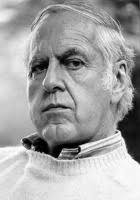
Photographers Unknown, The Primary, the Crucial Scenario
Lie to yourself about this and you will
Forever lie about everything.
Everybody already knows everything
so you can
lie to them. That’s what they want,
But lie to yourself, what you will
lose is yourself. Then you
turn into them.
For each gay kid whose adolescence
was America in the forties and fifties
the primary, the crucial
scenario
forever is coming out—
or not. Or not. Or not. Or not. Or not.
Involuted velleities of self-erasure.
Quickly after my parents
died, I came out. Foundational narrative
designed to confer existence.
If I had managed to come out to my
mother, she would have blamed not
me, but herself.
The door through which you were shoved out
into that light
was self-loathing and terror.
Thank you, terror!
You have learned early that adults’ genteel
fantasies about human life
were not, for you, life. You think sex
is a knife
driven into you to teach you that.
–Frank Bidart, Queer, 2012
Born in May of 1939 in Bakersfield, California, poet Frank Bidart was educated at the University of California at Riverside, where he was attracted to the works of T.S. Eliot and Ezra Pound. Upon graduation, he moved to Cambridge, Massachusetts, to study literature at Harvard University. During his graduate years, Bidart became a student and friend of poets Robert Lowell and Elizabeth Bishop.
Frank Bidart has written his work in a variety of forms, of which the best known are his earliest books containing monologues by troubled characters. Throughout the wide range of his work, the dilemma of individual guilt, both its origins and consequences,has a prominent place in the work and is explored in its various forms. In order to express the importance of words and sentences in his stories, Bidart regularly uses  varied forms of typography in the formal structure of the work, including blank spaces, block capitalization, italics, punctuation, and techniques such as quotations, monologues, and paraphrasing.
Frank Bidart’s first volume of poetry, “Golden State”, an eight year project of self-reflection and a search for identity, was published in 1973. The volume was selected for the Brazilier Poetry series by Pulitzer Prize recipient Richard Howard. The first poem, and most famous, in the collection is “Herbert White”, which presents the first-person confession of a child-murdering necrophiliac without any introduction or narrative frame. Bidart’s intent was to present someone, whose violent pattern grew out of the drama of his past, as the direct opposite of a previous poem’s character who sought insight through order and analyzation.
In 1977, Bidart published his second collection of poetry, “The Book of the Body”, a series of poems featuring characters struggling to overcome both emotional and physical adversity. The opening poem, “The Arc”, is written through the musings of an amputee. Included also in Bidart’s collection is a monologue, entitled “Ellen West”, spoken by a woman with an obsessive eating disorder. The narratives in this collection are not seamless, but spliced together bits of speech, journal notes, anecdotes, reminiscences, and analogies which follow each other in a progression.
Frank Bidart gained his reputation as an original poet with his 1983 collection “The Sacrifice”, which received widespread praise. The core of this volume is a thirty-page work entitled “The War of Vaslav Nijinsky”, a poem which alternates prose sections on the dancer’s life with monologues by Nijinsky. A two year project, it went through many revisions and emerged as an experiment in language and punctuation.
Frank Bidart’s 1997 book “Desire” was published as a single work in two sections. The first section contains thirteen short poems, including a memorial to New York City artist and writer Joe Brainard, who died of AIDS-induced pneumonia in 1994. The book’s second half , entitled “The Second Hour of the Night”, contains a recounting of Ovid’s tale of Myrrha’s incestuous love for her father Cinryus. Appearing at the end of the work, the tale is told in a single-narrative of formal dictation which is essentially a meditation on longing and desire. This collection was nominated for the National Book Award, the Pulitzer Prize, and the National Book Critics Circle Award; it received the Library of Congress’s 1998 Rebekka Bobbit Prize for best poetry book.
Bidart’s 2005 “Star Dust”. also divided in two parts, has a central theme: man’s drive toward creation, the way we give form and shape to experience. The first section is composed of the short poems about the failure of men to realize the human need to create. These poems were previously published in the Pulitzer nominated chapbook “Music like Dirt”. The second section consists of eight short lyrics and a long narrative poem entitled “The Third Hour of the Night”, which tells the story of Benvenuto Cellini’s struggle to complete his statue of Perseus holding the head of Medusa. Composed of poems which emphasized the way we shape our lives and experiences, “Star Dust” was nominated for a National Book Award.
Frank Bidart’s most recent collections include the 2008 “Watching the Spring Festival: Poems”, “Metaphysical Dog: Poems” published in 2013, and “Half-light: Collected Poems 1965-2016” which won the Pulitzer Prize and the National Book Award. Frank Bidart was elected a Chancellor of the Academy of American Poets in 2003. He has taught at Wellesley College since 1972.