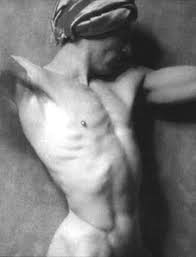
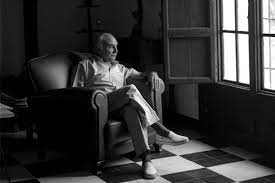
John Kingsley Orton: “Ordinary Decent People”

Photographers Unknown, Parts and Pieces Making a Whole: Set Thirteen

Sir- As a playgoer of forty years standing, may I say that I heartily agree with Peter Pinnell in his condemnation of ‘Entertaining Mr Sloane’. I myself was nauseated by this endless parade of mental and physical perversion. And to be told that such a disgusting piece of filth now passes for humor! Today’s young playwrights take it upon themselves to flaunt their contempt for ordinary decent people. I hope that the ordinary decent people of this country will shortly strike back! Yours truly, Edna Welthorpe (Mrs)

—John Kingsley Orton, Letter Sent for Publication under the Alias of Edna Welthorpe

Born in Leicester, England in January of 1933, John Kingsley Orton, known under the pen name of Joe Orton, was a working-class, gay playwright whose outrageous black comedies shocked, outraged, and amused theatre audiences in the 1960s. 

After attending secretarial classes at Clark’s College in Leicester from 1945 to 1947, Joe Orton worked as a junior clerk for three pounds a week. He began performing in theater productions beginning in 1949 and joined several groups, including the Leicester Dramatic Society. Orton was accepted for a scholarship at London’s Royal Academy of Dramatic Art in November of 1950; however, due to appendicitis, his entrance was delayed until May of 1951. It was at the Royal Academy that Orton met the seven-year older Kenneth Leith Halliwell, who also was a struggling actor and writer. After moving into a West Hampstead flat, they quickly formed a strong relationship and became lovers.

After graduation, Orton and Halliwell collaborated on writing several novels, which were unsuccessful at  publishing. Due to a lack of serious work, they began to amuse themselves with pranks and hoaxes. From January 1959 to May of 1962, Orton and Halliwell removed books from several local public libraries and began to modify the blurbs and cover art. One volume of poetry by writer and broadcaster John Betjeman was found with a new dust jacket featuring a photograph of a nearly naked, tattooed middle-aged man. Discovered by the authorities in May of 1962 and later found guilty of five counts of theft and malicious damage to seventy books, the two men served six months in prison. A collection of these altered book covers are now housed in the Islington Local History Center.

In 1959, Joe Orton wrote his only novel, which was  posthumously published as “Head to Toe”, and soon began to have success in his plays’ productions. His first play “Fred and Madge” was written in 1959; and “The Visitors” followed two years later. In 1963 the BBC purchased Orton’s radio play “The Ruffian on the Stair”, which was broadcast on August 31st of 1964 and, later in 1966, adapted as a stage play. 

By the end of August, Orton had also completed his play “Entertaining Mr. Sloane”, which premiered on May 6th of 1964 to reviews which ranged from praise to outrage. Although it lost money on its short run, the play tied for first in the Variety Critics’ Poll for Best New Play, and Orton came second in the category for Most Promising Playwright. By 1965, “Entertaining Mr. Sloane” was being performed in Spain, Israel, Australia, and New York, as well as being adapted into both a film and television play.

Written between June and October of 1964, Joe Orton’s next play was “Loot”, a wild parody of detective fiction, which added the blackest farce and jabs at established ideas on death, the police, religion, and justice. It underwent sweeping rewrites before it was judged fit for the West End. “Loot” was first staged in London on September 27th of 1966 to rave reviews. In November the play moved to the Criterion Theater where it ran for three hundred forty-two performances, won several awards and firmly established Orton’s fame.

Orton, over the next ten months, revised his “The Ruffian on the Stair” and his “The Erpngham Camp” for the stage as a double play entitled “Crimes of Passion”. He also wrote his television play “Funeral Games”, the screenplay entitled “Up Against It” for the Beatles music group, and his final full-length play “What the Butler Saw”, a play of seduction, blackmail, and cross-dressing, which came to the West End stage in 1969, eighteen months after Orton’s death.

On the 9th of August of 1967, John Kingsley Orton was bludgeoned to death by Kenneth Halliwell at their home in Islington, London, killed by nine hammer blows to the head. Halliwell then committed suicide with an overdose of Nembutal. Later evidence showed that Orton had earlier confided to a friend that he wanted to end his relationship with Halliwell; and it also showed that Halliwell had spoken to his psychiatrist three times on the day of the murder. Halliwell had felt increasingly threatened and isolated by Orton’s success, and had come to rely on barbiturates and antidepressants. The bodies, along with Halliwell’s suicide note, were found on the morning of August 10th by a chauffeur who had arrived to transport Orton for a meeting in London. 

The body of Joe Orton was brought into the chapel of London’s Golders Green Crematorium to a recording of the Beatles’ song “A Day in the Life”. Playwright and director Harold Pinter read the eulogy. After Orton’s cremation, his ashes and Halliwell’s ashes were mixed together and scattered in a section of the Garden of Remembrance at Golders Green; no marking memorial stone is erected there. A statue of Joe Orton was later installed in the city of Leicester and, in 1987, a film adaption of John Lahr’s 1978 biography of Orton was released under the title “Prick Up Your Ears”.

Note: For those interested in theater and gay history, an interesting article is Greg Buzwell’s 2019 “Homosexuality, Censorship, and British Drama During the 1950s and 1960s” located at the British Library site: https://www.bl.uk/20th-century-literature/articles/homosexuality-censorship-and-british-drama-during-the-1950s-and-1960s

Fabrian Cháirez

The Artwork of Fabrian Cháirez

Born in Chiapas in 1987, Fabrian Cháirez is a Mexican artist whose work questions the predominate idea of masculinity and provides alternate representations of the male image. Already showing an artistic aptitude at an early age, he studied from 2007 to 2012 at the Faculty of Arts in the University of Sciences and Arts of Chiapas, where he graduated with a BFA in Visual Arts.

Cháirez is a figurative and traditional academically trained painter whose work emphasizes both composition and color. The body of his work has a neoclassical style and is influenced by symbolism and the Art Nouveau. Major art influences in his paintings have come from the works of Mexican Neo-Expressionist painter Julio Gálan: Spanish portrait and landscape painter Joaquin Sorolla, known for his sunlit canvases;  Mexican painter Saturnino Herrán, renowned for his majestic paintings of indigenous people; and Spanish portrait painter Dîego Velásquez, whose work became the model for the early realist and impressionist painters. 

Cháirez’s work, in response to the hostilities against the concept of sexual diversity, revolves around the image of the male body and the LBGTQ world. In his discussion of the stereotypes of Mexican virility, he uses the traditional Mexican archetypes, such as wrestlers, charros or horsemen, and the Mara Salvatrucha or criminal gangs, for his central figures. Cháirez places these generic images in suggestive and erotic scenarios in direct contrast to the existing social norm regarding the male image.

In 2015, Fabrian Cháirez had a solo exhibition entitled “The Garden of Delights” at the José María Velasco Gallery where he presented thirty pieces, including graphic work, illustrations, and oil paintings. In this body of work, he showed typical male figures with feminine features. In 2019, Cháirez exhibited his most controversial work, “The Revolution” at the Palacio de Belles Artes, a prominent cultural center located in central Mexico City. 

“The Revolution” is a thirty by twenty centimeter oil painting on canvas that represents the revolutionary general Emiliano Zapata, a stereotype of Mexican masculinity, who is shown seated naked, wearing a pink hat, tricolor sash, and high-heeled shoes, on a horse. Created in 2014, Cháirez produced this image as a example of other types of masculine representation. After the Mexican Ministry of Culture selected this work to be part of, and the poster image for, the 2019  exhibition entitled “Emiliano: Zapata After Zapata”, a controversy developed in the social media. Zapata’s relatives and supporters threatened to sue Cháirez and the National Institute of Fine Arts for denigrating the figure of the revolutionary leader. 

On December 11, 2019, a demonstration occurred within the Palacio de Belles Arts in which demands for the removal of “The Revolution” were made. A counter demonstration by LBGTQ activists defended the inclusion of the painting in the exhibition. A message from the Minister of Culture defended the painting’s inclusion and rejected any violence or censorship. On December 13th, a note, containing the personal opinion of the Zapata family,  was added next to the painting as a compromise, despite objections by Cháirez and his supporters. In January of 2020, “The Revolution” became part of the Tatxo Benet Censored Art Collection, a collection of all art banned for political, religious or moral reasons, soon to be permanently housed in Barcelona. 

Fabrian Cháirez’s website is located at: https://www.fabianchairez.com

Manuel Puig: “The Most Beautiful Thing”


Photographers Unknown, The Most Beautiful Thing

“—What is being a man for you? —It’s many things, but for me… well, the most beautiful thing about a man is that, being pretty, strong, but without making a fuss of strength, and that he is advancing safely. That he walks safely, like my waiter, that he speaks without fear, that he knows what he wants, where he is going, without fear of anything. “It’s an idealization, a guy like that doesn’t exist.” “Yes, he exists, he is like that.” —Well, it will give that impression, but inside, in this society, without power, no one can advance safely, as you say.—Being a man is much more than that, it means not putting anyone down, with an order, with a tip. Moreover, it is… not allowing anyone next to you to feel less, that no one next to you feel bad.”

Manuel Puig, The Kiss of the Spider Woman

Born in December of 1932 in General Villegas, Argentina, Manuel Puig was a novelist and a screenwriter. As there was no secondary school in his hometown, his parents sent him to Buenos Aires in 1946 where he attended College Ward, an educational institute with intercultural bilingual education at all levels. During his time at College Ward, Puig began to systematically read books. Starting with the Nobel Prize winners, he read works by such writers as André Gide, Hermann Hesse, Aldous Huxley, Thomas Mann, and Jean-Paul Sartre.

After seeing Henri-Georges Clouzot’s 1947 police drama film, “Quai des Orfèvres”, Puig decided on a film career as a director. For this profession, he learned three languages: Italian, French, and German. In 1950, Puig enrolled at the University of Buenos Aires Faculty of Architecture; but, in 1951, he switched to its School of Philosophy. He was already working, upon graduation, as a film archivist and editor in Buenos Aires; and later, after  winning a scholarship from the Italian Institute of Buenos Aires, he continued that employment in Italy.

Returning to Argentina, Manuel Puig started his obligatory military service in 1953 where he served as a translator in the Aeronautics section. Living in Buenos Aires in the 1968, Puig wrote his first major novel, “La Traición de Rita Hayworth (Betrayed by Rita Hayworth)”, a novel told in multiple voices to create a portrayal of ordinary Argentinian lives in the1930s and 1940s. In 1969, he wrote his second novel “Boquitas Pintadas (Heartbreak Tango)”, a story about the contrast between mediocre reality and fantastical dreams; the novel also raised questions about machismo and the damage it causes. The narrative is told through confessions, letters, diaries, newspaper clippings, eyewitness accounts, and rememberances of life.

Holding leftist political tendencies and seeing the instability of the Argentinian government, Puig relocated to Mexico in 1973, a place where he would live in exile throughout rest of his life. He wrote his third novel “The Buenos Aires Affair” in 1973, and three years later, wote possibly his best known work, the 1976 “El Beso de la Mujer Araña (The Kiss of the Spider Woman)”. Unusual in that it has no traditional narrative voice, the novel is told in large part through dialogue, without any indication of who is speaking, except the insertion of a dash to show change of speaker. 

“Kiss of the Spider Woman” depicts the daily conversations between two Argentinian prison cellmates, one a political prisoner who was part of a group attempting the overthrow of the government and the other a transgender woman in jail for corruption of a minor. The two characters, seemingly opposites, form an intimate bond in their cell and become lovers, albeit briefly, and they are both changed by that relationship.   

Manuel Puig’s novel was initially published only in Spain; however, upon its publication, it was included on a list of novels banned to the population of Buenos Aires. Despite having been entered into the Frankfurt Book Fair in Germany, it remained banned in Argentina until Raúl Alfonsin’s government took control in 1976. Puig adapted “Kiss of the Spider Woman” into a stage play in 1983. The novel was later adapted in 1985 into an Academy Award-winning film of the same name, starring William Hurt and Raul Julia. Hurt’s winning the 1986 Oscar for Best Actor marked the first time an Academy Award went to an actor in an openly gay role. 

In 1989, Puig moved from Mexico City to Cuernavaca, Mexico. Following doctor’s orders to stop smoking, he took daily walks, but the high altitude of the area labored his breathing. He had access to higher quality medical care than most and received care at a clinic near his home. Experiencing pain for several days, he was admitted to the Las Palmas Surgical Center on July 21, 1990, for risk of peritonitis. 

An emergency operation removed Manuel Puig’s inflamed gall bladder; however, his lungs filled with fluid and he became delirious. He died from an acute heart attack, on July 22, 1990.  After funeral rites, attended by only six people including his mother, Manuel Puig’s body was sent to Argentina and placed in the Puig family tomb in the La Plata Cemetery.

James Huctwith


Figurative Paintings by James Huctwith

Born in rural southern Ontario, Canada in 1967, James Huctwith is a painter in the realist tradition. From 1986 to 1989, he studied fine art at the University of Guelph’s College of Art in Ontario, primarily in architecture and art history and theory. Huctwith started painting and exhibiting in the early 1990s in Vancouver. Relocating to Toronto in 1995, he was represented by the O’Connor Gallery where he regularly exhibited his emotionally and physically explicit work for a decade.

After a period of personal disruption and change, Huctwith joined Vancouver’s Gallery Jones in the spring of 2005. He stayed with the gallery for two years, during which time he exhibited  a series of non-figurative works. Beginning in 2006, Huctwith was also represented for two years by Montreal’s Galerie Harwood, where the work he exhibited consisted primarily of interpretations of the still life genre. In 2007, he ended his relationship with the O’Connor Gallery.

Feeling a need to recapture his connection with his work, James Huctwith returned to the province of Ontario, placed his previous work with Toronto’s Antonio Arch Fine Arts, and signed up with Ottawa’s Galeria La Petite Mort. His first solo show of figurative work at the Petite Mort gallery in the fall of 2009 was a success. Huctwith’s work, now published and regularly reviewed, is collected internationally with many works in private collections..

Huctwith’s current realist work, both figurative and portraiture, is done with an emphasis on historical techniques. His canvases of male figures are moody, masculine, and mysterious. While a sense of calmness is presented in Huctwith’s scenes, there is often a lurking undercurrent of uncertainty and conflict.

The artist’s website can be found at: http://daintybastard.blogspot.com

Franz Szony

Photographic Work by Franz Szony

Raised in Reno, Nevada, Franz Szony is a writer and photographic artist whose main body of work, both in its fine art and commercial forms, embraces conceptual portraiture. 

After finishing his primary education in 2014, which included art classes at an early age, Szony relocated to San Francisco where he attended the Academy of Art. At the academy, he initially studied fashion and illustration, and, later. focused on photography. After learning the technical aspects of photography, Szony returned to his hometown of Reno where, as a freelance artist, he photographed different advertisement campaigns for newspapers, theaters, and several casinos. He exhibited his own work in a small gallery he created and hosted monthly nude drawing workshops in that space. 

Szony moved to Los Angeles in 2012 and settled in the Brewery Artist Loft complex, an industrially zoned area where artists rent living and working space. Inspired by the area’s creative energy, he photographed campaigns for perfume and fashion brands, created album covers, and did creative photographic work for companies, including Disney and Warner Brothers. 

Influenced by illustrators such as Marc Davis and Erte, and, at an early age, by the extravagant stage shows of Reno’s casinos, Franz Szony’s conceptual portraiture work is lush both in its color and settings. His images are presented ambiguously in time and place, and androgynously in character. Szony’s photographs often contain symbolic or mythological elements and convey psychological, political, and sexual identity messages to the viewers.  

Franz Szony is also a songwriter who has produced several music videos in which he has incorporated his poetry and visual art. Shot over a period of three days, his music video, “Petunia”, based on several of his photographic pieces, was released in 2018. Other music videos by Szony include “La Petite Mort”, “Antibeige”, and “Pansy”, also released in 2018; and “What You Seek” and “Surrender Dorothy”, both released in 2020. 

Szony had solo exhibitions at Reno’s Sierra Arts Foundation in 2015 and at Hollywood’s World of Wonder Gallery in 2019. His work is included in many private collections. Franz Szony’s website is located at http://www.franzszony.com

Maurice Sendak: “Where the Wild Things Are”

Photographers Unknown,  Where the Wild Things Are

Max stepped into his private boat
and waved goodbye
and sailed back over a year
and in and out of weeks
and through a day
and into the night of his very own room
where he found his supper waiting for him
and it was still hot”

—Maurice Sendak, Where the Wild Things Are

Born to Polish Jewish immigrant parents in Brooklyn, New York, in June of 1928, Maurice Bernard Sendak was an American writer and illustrator of children’s books. He was affected in his childhood by the deaths of many of his extended family who perished in the Holocaust. An early reader of books, Sendak decided at the age of twelve to become an illustrator after seeing Walt Disney’s film “Fantasia”.

Sendak started his professional career with the creation of window displays, one of which was in the toy store FAO Schwarz located on Fifth Avenue in Manhattan. His first published illustrations, a series of figures explaining the atom and its energy, were in the 1947 textbook “Atomics for the Millions” written by Maxwell Leigh Eidinoff. In the 1950s, Sendak illustrated children’s books written by other authors, including two books written by his older brother, author Jack Sendak, and the “Little Bear” series of books written by Danish-American author Else Holmelund Minarik.

In 1956 Maurice Sendak published his first authored book, “Kenny’s Window”. and soon started working on second effort, for which he was inspired to use the Yiddish expression ‘vilde chaya”, or wild animals, to indicate overexcited children. Sendak’s authored and illustrated 1963 children’s book “Where the Wild Things Are” received international acclaim. Initially banned for two years by libraries and critiqued negatively, the book won the annual Caldecott Medal in 1964 for recognition as the most distinguished American illustrated book for children. Since its publication, it has sold over nineteen million copies worldwide.

Sendak illustrated Isaac Bashevis Singer’s first children’s book “Zlateh the Goat and Other Stories, which was published in 1966 and received the Newbery Honor for children’s literature. He authored and illustrated the 1970 “In the Night Kitchen”, a young boy’s dream journey through a surreal baker’s kitchen, one of a trilogy of books which contains “Where the Wild Things Are” and the 1981 “Outside Over There”. Illustrated in a different style from his previous works, the book is mainly pictorial with few captions. “In the Night Kitchen”, with its depiction of the young protagonist’s nudity, was controversial upon its release and is still ranked as one of the most frequently challenged books. 

Maurice Sendak’s works included many in the fields of television and stage. He was active in the development of the “Sesame Street” series, and wrote and designed four stories for the series, including an adaption of his book “Bumble Ardy” into an animated film. Sendak adapted his “Where the Wild Things Are’ into a stage production in 1979, and also designed sets for many operas and ballets, including Tchaikovsky’s “The Nutcracker:, Mozart’s “The Magic Flute”,  and Prokofiev’s “The Love for Three Oranges”.

In 1957, Maurice Sendak met his partner, psychoanalyst Eugene Glynn, with whom he remained for fifty years until Glynn’s death in May of 2007. After his partner’s death, he donated one million dollars to the Jewish Board of Family and Children’s Services in memory of Glynn, who had treated children and young adults there. While his sexuality was known among his friends, Sendak kept his sexuality from public view for almost his entire life. When the social climate regarding homosexuality began to change, he  came out, at the age of eighty years old, during a 2008 interview with the New York Times.

Considered one of the most important children’s book artists of the twentieth century, Maurice Sendak died on May 8th of 2012 at the Danbury Hospital in Conneticutt from stroke complications. His body was cremated and his ashes scattered at an unconfirmed location. Under an agreement with, and supported by a grant from, the Maurice Sendak Foundation, his original artwork, sketches, books, and other materials, totaling close to ten thousand items, are housed at the University of Conneticutt’s Archives and Special Collections in the Thomas J Dodd Research Center.

Hubert Julian Stowitts

The Photographs and Artwork of Hubert Julian Stowitts

Born in Rushville, Nebraska, in June of 1892, Hubert Julian (Jay) Stowitts was an American painter and ballet dancer. Raised in the Lakota Souix area of South Dakota, he moved with his family to Los Angeles in 1911. Upon his arrival, Stowitts enrolled at the University of California, Berkeley, where, as a gay student, he became a successful college athlete, captained the university’s track team, and acted in several student theater productions. 

Captivated by a ballet performance seen in San Francisco, Stowitts decided to begin private dance lessons. He became an accomplished dancer and performed both on the public stage and at private parties for  San Francisco’s upper class residents. Stowitts kept his dancing secret from his parents for much of his college years; he graduated from the University of California in 1915 with a degree in Commerce. 

In the summer of 1915, while dancing at the Greek Theatre, a large amphitheater owned by the University of California, Julian Stowitts impressed Russian ballerina Anna Pavlova who was in attendance. He accepted an invitation to join her dance company and dropped plans to attend graduate school at Harvard. Stowitts, the first American to star with a Russian ballet troupe, traveled as a successful dancer for six years throughout Europe and the Americas. Leaving Pavlova’s company, he moved to Paris and started a solo career with performances throughout Europe, including a starring role with the Folies Bèrgere in 1924.

During his solo career, Stowitts executed choreographies for other dance companies, designed sets and costumes, and continued  his painting. In 1925 at the age of thirty-three, he retired from dancing and pursued a new career as a painter and occasional film actor. Stowitts traveled through the Far East in the late 1920s, where he lived and painted  in Java for a year. After a stay in Indonesia, he lived in the southern part of Asia for several years and, during this stay, created a series of one hundred and fifty-five canvases entitled “Vanishing India”. After his return to Europe in 1931, Stowitts’s  painted depictions and scholarly studies of traditional Indonesian and Indian dance and costume enjoyed wide popularity in the 1930s.

For the art exhibition at the 1936 Berlin Olympics, Julian Stowitts presented a series of fifty-five paintings depicting American male athletes in the nude, which caused a sensation among the attendees. While in Berlin, he assisted German film director Leni Reifenstahl on her “Olympia”, released in 1938 as the first feature film documentary of an Olympic Games, later used by the Nazis as a propaganda film. Due to her fame and influence, Riefenstahl was able to protect Stowitts from persecution for being gay; but his exhibition was closed by the Nazi regime because of their objection to the manner in which Stowitts depicted Jewish and African-American athletes. 

Returning to California in 1937, Stowitts struggled financially as his artwork began to lose public interest. He found, with the assistance of friends, some security with employment as a house caretaker in the Los Angeles area. Stowitts continued to lecture on Indian and Javanese culture and to paint privately for the remainder of his life. The last of his painting series, uncompleted due to illness, was “The Labors of Hercules”, in which actor and body builder Steve Reeves served as the model. Hubert Julian Stowitts died in San Marino, California on February 8, 1953.

The papers of American dancer and painter Hubert Julian Stowitts, including biographical materials, correspondence, and exhibition and performance related materials are available for research at the Bancroft Library of the University of California, Berkeley. 

Francisco Brines: “The Cause of Love”

Photographers Unknown, The Cause of Love

When they have asked me the cause of my love
I have never answered: You already know its great bearuty.
(And there are still more beautiful faces.)
Nor have I described the certain qualities of his spirit
that he always showed me in his customs,
or in readiness for silence or smile
as required by my secret.
They were things of the soul, and I said nothing about her.
(And I should still add that I have met higher souls.)
The fruit of my love now I know:
man’s imperfections overcome his presence,
it is atrocious to think
that bodies do not correspond to souls in us,
and so the grace of the spirit blinds bodies,
its clarity, the aching flower of experience,
goodness itself.
important events that we never discovered,
or we find out late.
The bodies lie, other times, an airy heat,
moved light, honda freshness;
and the damage reveals its dry falsehood to us.
Know the truth of my love now:
matter and breath joined in his life
like the light that falls on the mirror
(it was a small light, a tiny mirror);
It was a perfect random creation.
A being in order grew next to me,
and my disorder was serene.
I loved its limited perfection.

–Francisco Brines, Cause of Love

Born in Oliva, Valencia, in January of 1932, Francisco Brines Bañó was a Spanish poet and essayist. He was a prominent member of the Generation of “50, a Spanish literary movement whose new literary language incorporated metaphysical and philosophical techniques to undermine the strict censorship of the Franco government.

After studying at the Jesuits of Valencia, Francisco Brines attended the University of Madrid, where he studied Philosophy and Letters, and also the Universities of Valencia, Deusto and Salamanca, where he earned a degree in Law. He became a reader of Spanish literature at the University of Cambridge and a Professor of Spanish at the University of Oxford.

Described as a metaphysical poet, Brines was highly influenced by the work of Luis Cernuda, an openly gay poet of the Generation of ’27; inspired by these works, many of Brines’s poems also convey the theme of homosexual love. His poetry is characterized by the intimate tone of his verses, the constant reflection on the passage of time and decay of the living, and observations on the condition of a human being subjected to his own limitations. Memory also plays a fundamental role in Brines’s writing; although, his poems reveal the belief that neither poetry nor memory can endure the passage of time or save the moments of the past.

Francisco Brines’s first collection of poems, entitled “Las Brasas (Embers)”, was published in 1959 and won the 1960 Adonais Poetry Prize. In 1966, Francisco Brines published “Words in the Dark”, which earned him the National Critics Award in 1967. In the same year, he also won the Valencian Literature Award. “The Autumn of Roses’, a collection of sixty poems written over a ten year period, was published in 1986 and won the National Prize for Literature. This book, in which elegies of lamentation and exaltation merge, was his most critically acclaimed work.

Entering the world of theater, Brines revised and adapted playwright Pedro Calderón de la Barca’s 1636 drama“El Alcalde de Zalamea (The Mayor of Zalamea)”. Directed by José Luis Alonso, the play was performed by the Classical Theater Company in 1988. Told in three acts, it explored the power of a self-made man against political authority in seventeenth-century Spain,

Brines was recognized for his work by the Royal Spanish Academy in 1998 with the Fastenrath Prize and, later, received the 1999 National Prize for Spanish Letters for his poetic oeuvre. Elected a member of the Royal Spanish Academy of the Language in April of 2000, Brines gave his institutional speech on the poetry of Luis Cernuda, one of the poets who influenced his work. In 2020, he won the Premio Cervantes, the most important literary award of the Spanish language world.

Francisco Brines Bañó was taken to Gandía Hospital shortly after King Felipe VI and Queen Letizia presented him with the 2020 Cervantes Prize at his family estate in Oliva, Valencia, as he was unable to attend the official ceremony due to his delicate state of health. He died on the 20th of May in 2021, at the age of eighty-one, at Gandía Hospital, after a hernia operation.

Note: An interesting article on the homoeroticism of Francisco Brines’s poetry, long regarded as an open secret but rarely acknowledged in critical studies, entitled “Francisco Brines and the Humanist Closet” by Jonathan Mathew of the University of Kansas, can be found at: https://kuscholarworks.ku.edu/bitstream/handle/1808/7478/Mayhew_Francisco%20Brines.pdf?sequence=1&isAllowed=y

Virgilio Pinera: “The Waves of Music We Made”

Photographers Unknown, The Waves of Music We Made

Can it be they are going to kill?
Will they pierce the heart with a huge knife?
And with the sharpest scalpel empty the eyes?
And with the steeliest chisel break the skull?
And with the most hammer of hammers crush the bones?

Can it be that on the exotic table
–table of sex, table of love–
my love, you and I,
being startled one night
your heart spoke
when you were under my blood?
Can it be the same as it was
when it was an oath, and even more so,
your work, your word bled,
soaked by the soft perfume of kisses,
so as not to deny, to be one indivisible?
And can it be so blindly believed,
so blindly, that all the suns go dark forever
while the soul travels in darkness?
Can it be there never was a soul despite the waves of music
we made?
Soul that never was though you might be for an instant?

Renenber that instant when you were a soul and adored
me,
and then your own monster came suddenly
to take you to the place where being you were?

Can it be that after you are no longer,
when not being is merely a mound of dried out kisses,
you wil be by not being, instead of being love?

Virgilio Pinera, Poem to be Said in the Midst of a Great Silence, The Weight of the Island, 1967

Born in Cárdenas, Matanzas, Cuba in 1912, Virgilio Piñera was an author, playwright, poet, and essayist known for his avant-garde work, caustic wit, acid tongue, and bohemian lifestyle. He lived under the dual repression of the Catholic church and reactionary government leaders such as Argentina’s Juan Perón and Cuba’s Fulgencio Batista. Piñera’s homosexuality and non-conformism led to his marginalization during a well-documented period of Cuban history when homophobia and petty bureaucracy stifled creative freedom

An avid reader from an early age, which included works by Marcel Proust and Herman Melville, Piñera drew his inspiration from different genres, a foundation which became fundamental to his distinctive work with its combination of Cuban vernacular and more refined language.At the age of thirteen, Piñera’s family moved to Camagüey, a municipality located in central Cuba, where he earned his high school diploma. After settling in Havana in 1938,  he received his Doctoral Degree in philosophy from the University of Havana in 1949. 

Piñera published in his poems in Havana’s literary magazine “Espuela de Plata” and, in 1941. wrote his first poetry collection, “Las Furias (The Furies)” and  his most famous play “Electra Garrigó”, which featured the choral structure of a Greek tragedy alongside distinctive Cuban elements. Staged both before and after the revolution of Castro and Guevara, this play later became a powerful symbol of the Revolution and was consciously performed before foreign and  notable public figures as  being emblematic of the transformed nation.

Following his founding of the magazine “Poeta” in 1942, Piñera wrote his collection of poems entitled “La Isla en Peso (The Weight of the Island)”. Drawing upon episodes in his personal life as well as the social interactions occurring inside Cuba, he explored the nebulous regions between sadness and beauty, and disillusion and reality. Published posthumously after Piñera’ death in 1979, “The Weight of the Island” was initially scorned by some poets and critics; however, the collection is now regarded as one of the classics of Cuban literature.

In 1944, Virgilio Piñera, along with writer José Lezama Lima and editor and critic José Rodríguez Feo, founded the prestigious literary and arts review “Origenes”, which provided a focal point for promising poets and critics in Cuba during the 1940s and 1950s. The journal published short stories, poetry, and critical essays on art, literature, music and philosophy. Among Piñera’s contributions were several poems, an essay on Argentinian literature, and an 1945 essay entitled “El Secreto de Kafka”, a work in which Piñera developed his theory on the creation of images into a literary surprise. 

Piñera lived in Buenos Aires, Argentina, for a twelve year period from 1946 to 1958; it was  during this stay that he developed his voice as a writer. He worked as a translator and proofreader at the Cuban Embassy and became friends with writers Jorge Luis Borges and essayist José Bianco, who would write the forward to Piñera’s collection of short stories “El que Vina a Salvarme (The One Who Came to Save Me)”. Along with other writers, Piñera worked on the translation of Polish author Witold Gombrowicz’s 1937 controversial novel “Ferdydurke” into Spanish. 

Virgilio Piñera wrote two plays in Buenos Aires,  “Jesús” and “Falsa Alarma”, a fast paced, absurdist play of humor and anguish, to which he lengthened with dialogue for a later 1957 staging. His first novel, entitled “La Carne de René (René’s Flesh)”, was published in 1952 and told the dark story of a twenty-year old protagonist forced into a merciless life. After the closure of his literary review “Origenes” and the founding of his final magazine “Ciclón (Cyclone)”, Piñera left Argentina in 1958 to settle permanently in Cuba, where he arrived shortly before the Revolution. His work appeared in the newspaper “Revolución” and other numerous journals. In 1962, with the Cuban revolution in full motion, Piñera’s  most autobiographical play, “Airo Frio (Cold Air)”, a very personal celebratory work supporting the ouster of dictator Batista’s police and army, opened in Havana. 

Shortly after the opening of “Airo Frio”, Fidel Castro’s government made the decision that there was no room for any views other than those completely sympathetic to the Revolution. Intellectuals and other luminaries, as well as the religious and those youths not conforming to the revolution, were to face persecution. Virgilio Piñera, although never public about his homosexuality, was arrested under the revolutionary government’s clampdown on the prostitutes, pimps and homosexuals. By 1971, he was ostracized by the Cuban government and the literary establishment. As his career declined into obscurity. Piñera continued to write at n increased rate; however, his plays were no longer performed. 

In 1968, Piñera received Latin America’s most prestigious literary prize, the Premio Casa de las Américas, for his play “Dos Viejos Pánicos (Two Old Panics)”. Despite the award and acclaim, the play would not have its first performance in Cuba until the 1990s.  Leaving behind more than twenty plays, three novels, volumes of short stories and a vast number of poems, Virgilio Piñera, who lived the last years of his life in poverty, died of a cardiac arrest on the 18th of August in 1979, without any official recognition of his death. He is buried in his native town of Cárdenas.

As a way to redress some of the wrongs committed against Piñera in the past, Cuba declared the year 2012 as “El Añ0 Virgiliano”. In the month of June, a group of thirty researchers from countries, such as the United Kingdom, Mexico, Spain and the United States, came together in Havana to discuss the life, work and legacy of Virgilio Pañera, one of Latin America’s prominent writers. His two best known plays, “Airo Frio” and “Dos Viejos Pánicos”, were performed and a new ballet by choreographer Iván Tenorio, entitled “Virgiliando”, had its premiere. 

Note: The University of Miami Libraries contains the digital Cuban Heritage Collection which includes material on Virgilio Piñera. Included in the material are correspondence exchanged between Piñera and Adolfo de Obieta during the 1940s and 1950s, as well as a typescript of Piñera’s play “Una Caja de Zapatos Vacía” that he sent to his friend Luis F. González-Cruz, who published it in Miami in 1986. This material can be found at: https://merrick.library.miami.edu/cdm/search?collection=chc5278

Andrey Avinoff

Andrey Avinoff, Images from “The Fall of Atlantis” Series

In February of 1884, Andrey Avinoff was born to a wealthy Russian family in the town of Tulchyn, located in the western portion of Ukraine near the border of Moldova. Educated by private tutors on the family estate in the Ukraine, he was trained as a lawyer and diplomat at the University of Moscow, and became a gentlemen-in-waiting to the last tsar. A multi-faceted figure in the tradition of Da Vinci, Avinoff was equally at home in the worlds of art and science, spoke seven languages and read ten more, established an entomological library of seven-thousand volumes, and was an expert of Russian icons, Persian miniatures, and other esoteric subjects.

In his twenties, Avinoff inherited a bachelor uncle’s fortune and, pursuing his entomological interests, financed forty-two butterfly collecting expeditions between 1904 and 1914, including one to western Tibet in 1912. He eventually established himself as one of the world’s greatest butterfly collectors, with an initial collection of approximately eighty-thousand specimens, most of which came from central Asia. This collection was later impounded by the Bolsheviks during the Revolution and is now housed in the Zoological Museum in St. Petersburg. 

Due to his training in law and diplomacy, Andrey Avinoff was chosen by the Kerensky government of Russia to tundertake a purchasing mission in New York. Taking only one volume from his vast library, he left with his sister,  portrait painter Elizabeth Shoumatoff, on the last train out of St. Petersburg before the Revolution. When they arrived in New York several months later, the Russia they knew no longer existed. Avinoff decided to settle in Pittsburgh where, as a gay man, he lived a generally secluded upper-class life in the thriving city’s strongly elitist society.

After a brief career as a commercial artist, where he produced Art Deco advertising including work for Colgate toothpaste and Parliament cigarettes, Avinoff became an assistant curator of entomology in 1926 at the Carnegie Museum of Natural History in Pittsburgh, under the directorship of William Rolland. Within a year, he became the director of the museum, a position he held until his retirement in 1946. During the 1930s, Avinoff, along with his nephew Nicholas Shoumanoff, made six trips to Jamaica, where he collected fourteen-thousand specimens of the island’s moths and butterflies. Returning home, he established a second entomological library and a three-thousand volumn library on Russian Decorative Art, which Avinoff bestowed to his nephew in his will. 

Following a decline in his health during the latter part of his life, Andrey Avinoff moved to New York and resumed his interest in painting. A talented artist since his early years, he worked in a variety of mediums, including pencil, ink, watercolor, and oil paints. Avinoff  produced over his lifetime an impressive number of extraordinary detailed watercolors, mostly of flowers and butterflies, which were scientifically accurate, but often phantasmagorical and mystical in style. Besides still-lifes and landscapes, he  also produced paintings with themes of religious, sexual or apocalyptic nature. 

Avinoff’s most known work is his “The Fall of Atlantis” series, which illustrated George V. Golokhvastoff’s two hundred-fifty page poem of the same name. The series consists of twenty three illustrations, done in black and white chalk with pencil and watercolor, some of which are heightened with body white. The work exemplifies the Art Deco style, which was popular in the 1930s, and incorporates a young male figure of mystical imagery. Published in 1938 as a limited edition and presented in two matching gray cloth drop-back boxes, the set also contained a self-portrait of Audrey Avinoff, done in pencil and initialed. 

Andrey Avinoff was awarded an honorary Doctorate of Science from the University of Pittsburgh and was a member of the Entomological Society of America, having joined in 1939. Among Avinoff’s close friends were the Russian poet and novelist Vladmir Nabokov, author of “Speak, Memory” and “Lolita”, and biologist and sex researcher Alfred Kinsey, both of whom were also interested in entomology. Audrey Avinoff died in July of 1949 at the age of sixty-five. 

Besides his work published in numerous science and botanical publications, Andrey Avinoff’s work is housed in the collections of the Audrey Avinoff Foundation, the Smithsonian American Art Museum, the Kinsey Institute at Indiana University, and the Carnegie Museum of Art, as well as in many private collections.

Second and Third Insert Images: Andrey Avinoff, Titles Unknown, “The Fall of Atlantis” Series, 1938, Black and White Chalk with Pencil and Watercolor on Paper

Jorge Eduardo Eielson: “Half of My Body Smiles”

Photographers Unknown, Half of My Body Smiles

Si la mitad de mi cuerpo sonríe
La otra mitad se llena de tristeza
Y misteriosas escamas de pescado
Suceden a mis cabellos. Sonrío y lloro
Sin saber si son mis brazos
O mis piernas las que lloran o sonríen
Sin saber si es mi cabeza
Mi corazón o mi glande
El que decide mi sonrisa
O mi tristeza. Azul como los peces
Me muevo en aguas turbias o brillantes
Sin preguntarme por qué
Simplemente sollozo
Mientras sonrío y sonrío
Mientras sollozo

If a half of my body smiles,
The other one is steeped in sadness,
And strands of my hair
Turn into mysterious fish scales as they grow.
I smile and I cry
Oblivious as to whether it is my arms
Or my legs that smile or cry,
Oblivious as to whether it is my head,
My heart or my glans
Deciding on my smile
Or sadness. Blue like the fish,
I swim through waters troubled or shimmering,
Never wondering why
I just sob
As I smile and I smile
As I sob.

–Jorge Eduardo Eielson, Cuerpo Dividido (Body Divided), Translation by Juan Ribó Chalmeta and Irina Urumova

Glyn Warren Philpot

Glyn Warren Philpot, “A Young Breton”, 1917, Oil on Canvas, 127 z 101.6 cm, Tate Museum, London

Best known for his portraits of contemporary figures, Glyn Warren Philpot was a British painter and sculptor. Born in Chapham, London in 1884, he began studies at the Lambeth School of Art in 1900, under landscape painter Philip Connard. Philpot later studied at the studio of painter and sculptor Jean-Paul Laurens at the Académie Julian in Paris.

 In 1904 one of Philpot’s paintings was included in the Royal Academy’s annual Summer Exhibition and this led to his first portrait commission. By 1911, he was living and working in a studio flat in London and had become successfully established as a society portrait painter. Painting up to dozen portrait commissions a year, Philpot was able travel in Europe and America, where he absorbed the modernist influences of portraits by Diego Velázquez, Edouard Manet, and  Francisco de Goya, among others. 

Following his conversion to Catholicism in 1905, Glyn Philpot explored religious and spiritual subject matter throughout his career. After a visit to Florence and central Italy for the first time in the early 1920s, his production of religious-inspired paintings increased significantly. Philpot also produced narrative scenes that were less formal and done with looser brushwork. Some of these show the influence of the French Symbolist movement, which was disseminated throughout the European art forms at this time. These more personal works of Philpot were shown in 1910 at his first solo exhibition in London, however, these works  received far less critical acclaim than his portraits. 

Despite his conversion to Catholicism, Philpot’s interests in the male nude and portraits of young men show a gradual expression of his own homosexuality. A trip to Berlin in the autumn of 1931, where Philpot confronted both the shocking rise of Nazism and the sexual openness of the city, encouraged him to be less secretive about his own homosexuality. This trip further contributed to his belief in the need for a change and a new openness in his art. At an exhibition in 1932, Philpot showed transparently homoerotic portraits of Julien Zaïre, a Parisian cabaret artist, and Karl Heinz Müller, a young German man who had been Philpot’s companion in Berlin. 

After the start of World War I, Glyn Philpot joined the Royal Fussiliers and, in August of 1915, attended a training course at Aldershot, known as the home of the British Army. There he met Vivian Forbes, a fellow soldier and aspiring artist.. In 1917, as officers, they were independently invalided out of the army and, together, they shared a home and studio at Lanstown House in London between 1923 and 1935. Formerly a business man in Egypt, Forbes, with encouragement from Philpot, became an artist and later exhibited at the Royal Academy and elsewhere throughout the 1920s. Although he was talented, charming and devoted to Philpot, Forbes demonstrated increasing emotional instability, within which he became insanely jealous of Philpot’s other friends and liaisons. Despite the tumultuous nature of the relationship, Philpot never disowned him and found inspiration in their relationship.

Philpot lived in Paris  for a year in 1931, at a time when modernism was at its beginning. His exposure to modern art in Europe had an impact on Philpot’s work and influenced the change in style that characterized his early paintings in the 1930s. His “Acrobats Waiting to Rehearse”, painted in 1939 with monochromic light pink hues and contemplative mood, is similar in style to Picasso’s work of his Rose Period. Philpot was also acquainted with the art of Henri Matisse, whom he had met in 1930 when both were on the jury at the Carnegie International Competition, where Picasso was awarded first prize.

On visits to America and Paris, Glyn Philpot frequented jazz clubs and made sketches and painted portraits of black men. At a time when few portraits of black men were painted by white artists, Philpot’s paintings and drawings display empathy and sensitivity towards his sitters. In 1929, he met Henry Thomas, a Jamaican man who had missed his boat home, and  became a steady companion and aide until Philpot’s death. Starting in 1932, Thomas would sit as the model for all of Philpot’s paintings of black men. 

During the 1930s Philpot suffered from high blood-pressure and breathing difficulties. He passed the summer of 1937 in France where he spent time with Forbes. On December 18th,  Philpot collapsed suddenly in London and died of a brain hemorrhage. Vivian Forbes returned from Paris in a highly distressed state to attend Philpot’s funeral at Westminster Cathedral on December 22. The following day he took his own life with an overdose of sleeping pills. Glyn Warren Philpot is buried in a pink granite tomb in St. Peter’s Churchyard, Petersham, in west London. The burial site of Vivian Forbes is unknown.

Note: In regards to Glyn Philbo’s 1917 painting “A Young Breton”, there is another picture of the same young man, full face, entitled ‘Guillaume Rolland, a Young Breton’, in the Art Gallery of Toronto, Canada. This painting most likely was painted about the same time as the Tate image, shown above.

Inser Images From Top to Bottom:

Glyn Warren Philpot, “Portrait of Henry Thomas”, Date Unknown, Private Collection

Glyn Warren Philpot, “Resurgam (Again)”, 1929, Oil on Canvas, 86 x 89 cm, Private Collection

:Glyn Warren Philpot, “The Man in Black”, 1913, Oil on Canvas, 76.8 x 69.2 cm, Tate Museum, London

Glyn Warren Philpot, “Portrait of Vivian Forbes”, Date Unknown, Oil on Canvas, 146 x 97 cm, Private Collection

Paul Monette: “Everything Extraneous Has Burned Away”

Photographers Unknown, Everything Extraneous Has Burned Away

everything extraneous has burned away
this is how burning feels in the fall
of the final year not like leaves in a blue
October but as if the skies were a paper lantern
full of trapped moths beating their fired wings
and yet I can lie on this hill just above you
a foot beside where I will lie myself
soon soon and for all the wrack and blubber
feel still how we were warriors when the
merest morning sun in the garden was a
kingdom after Room 1010 war in not all
death it turns out war is what little
thing you hold onto refugees and far from home
oh sweetie will you please forgive me this
that every time I opened a box of anything
Glad Bags One-A-Days KINGSIZE was
the worst I’d think will you still be here
when the bus is empty Rog Rog who will
play boy with me now that I bucket with tears
through it all when I’d cling beside you sobbing
you’d shrug it off with the quietest I’m still
here
I have your watch in the top drawer
which I don’t dare wear yet help me please
the boxes grocery home day after day
the junk that keeps men spotless but it doesn’t
matter now how long they last or I
the day has taken you with it and all
there is now is burning dark the only green
is up by the grave and this little thing
of telling the hill I’m here oh I’m here

Paul Monette, Here, Love Alone: Eighteen Elegies for Rog 

Born in October of 1945 in Lawrence, Massachusetts, Paul Monette was n poet, author, and gay rights activist, best known for his essays about gay relationships. He graduated from the Phillips Academy, a university-preparatory school, in 1963 and earned his Bachelor of Arts at Yale University in 1967.  

Monette’s formative years in the rigid social boundaries and strict religious atmosphere of his middle-class upbringing prompted him to not disclose his gay orientation. Questioning his sexual identity, he moved to Boston, where he taught writing and literature at Milton Academy and Pine Manor College. In 1974 in Boston, Monette met his longtime partner, lawyer Roger Horwitz, a graduate of Harvard Law School, with a Ph.D in comparative literature from Harvard University.

In November of 1977, Paul Monette and Roger Horwitz moved to Los Angeles, where they became strongly associated with the gay rights movement in the city. Monette wrote and published several novels during this period; his first novel, “Taking Care of Mrs Carroll”, featuring two male lovers and a legendary movie goddess, was published in 1978. In the period from 1977 to 1982, he wrote several more works of poetry, fiction and memoirs, including the 1979 “The Gold Diggers” and the 1981 murder mystery “The Long Shot”.

Monette’s more serious work began with the onslaught of the AIDS crisis, when his work focused on its occurring loss and heartbreak. In 1985, his partner, Roger Horwitz, was diagnosed with the AIDS virus and, after a long nineteen month fight against the virus, passed away in October of 1986. After Horwitz’s death, Monette continued his writing and remained active with many public speaking appearances.

In 1988, Paul Monette published his “Love Alone: Eighteen Elegies for Rog”, a collection of poems in remembrance of Horwitz. Using different fonts and no punctuation, the lines are interpreted by the reader’s determination when to begin and end a sentence. Through the poetry Monette described the events that occurred during Roger’s decline in health and his own transition through the various  emotions he experienced, which included denial, anger, bargaining, depression and, finally, acceptance. His description of his loss is particularly evident in the poem “The Very Same”, written on the day of Horwitz’a funeral.

Monette published his “Afterlife” in 1990 and “Halfway Home” in 1991, both which were centered around people with AIDS and their families’ experiences. His most acclaimed book, the 1988 “Borrowed Time: An AIDS Memoir”, chronicles his partner Roger Horwitz’s long fight, and eventual death, from the AIDS virus. Describing the devastating loneliness felt by AIDS patients and their loved ones, the memoir received both the PEN Center West and Lambda literary awards. Monette’s 1992 memoir “Becoming a Man: Half a Life Story”, an autobiography of his early closeted life, culminating with his meeting Roger, was written as a classical coming of age story and won the National Book Award in 1992. 

Monette’s life story, including the final years before his own death from AIDS in February of 1995, is documented in Monte Bramer and Lesli Klainberg’s 1996 film “Paul Monette: The Brink of Summer’s End”. Premiered at the 1996 Los Angeles Outfest, the film went on to win four awards for best documentary, including the GLAAD Media Award and the Sun Dance Film Festival. 

Paul Monette died in Los Angeles where he lived with his partner of five years, author and psychotherapist Winston Wilde. He is buried alongside Roger Horwitz at Forest Lawn Memorial Park in Hollywood Hills Los Angeles. Shortly before his death, Paul Monette established the Monette-Horwitz Trust to support future LBGT activism and scholarship.Trust Awards are given annually to individuals and organizations for their contribution to eradicating homophobia through literary, scholarly, archival, or activist work. 

Luigi Lucioni

Paintings by Luigi Lucioni

Born in 1900 in Malnate, a small town near Milan, Italy, Luigi Lucioni was an accomplished etcher and artist who painted precisely described landscapes, still-lifes, and portraits over his sixty year career. Working with a strong feeling for his subjects and with great technical skill. Lucioni was a classical realist with a modern perspective, who drew inspiration from the Italian Renaissance artists, as well as the work of Paul Cezanne and landscape artist Claude Lorrain.

Lucioni’s body of work, both landscape and portraiture, was a result of close observation, meticulous delineation, and the careful positioning of compositional elements. He was paid close attention to the textures, patterns, colors, and the arrangement of shapes that would effect his compositions. 

In August of 1911, Luigi Lucioni came to the United States with his family, where they landed in New York Harbor with three hundred-fifty other third-class passengers. After being processed, the family initially moved into an apartment on Christopher Street in Manhattan before finally eventually settling, in 1929, at Union City, New Jersey. At age fifteen, Lucioni entered a competition for admission to Cooper Union, a private college with full scholarships to admitted students, and was accepted. 

In 1915, Lucioni began studying drawing and painting at the Cooper Union, where he received sound criticism from painting instructor and muralist William de Leftwich Dodge. Through Dodge’s influence, Lucioni developed a determination not to adapt to current trends in art but to pursue his own artistic vision. At age nineteen, he entered New York City’s National Academy of Design, where he studied etching under William Aueerbach-Levy. As a student, Lucioni met and was acquainted with many in the city’s circle of gay artists, including painter Jared French, photographer George Platt Lynes, writer Lincoln Kirstein, and artist Paul Cadmus, with whom he became romantically involved. 

In 1924, Lucioni was awarded a Tiffany Foundation Scholarship, which enabled him to spend part of every year for the next decade painting at Tiffany’s Oyster Bay, Long Island, estate. In 1925 he traveled to Italy for the first time since he had left the country as a boy. Lucioni’s encounter with Italy’s Renaissance art, which included the works of Botticelli, Raphael, and Piranesi, had a profound affect on his developing painting style. Upon his return to the United States from Italy, Luigi Lucioni lived and worked in a townhouse at 33 West 10th Street in New York City.

In 1928, Lucioni painted his “Portrait of Paul Cadmus” which memorialized the passion of both artists for the works of painter Piero della Francesca. Using a modern, close-up format, Lucioni modeled Cadmus against the geometric backdrop of a creased white cloth, capturing a piercing gaze that is at once mysterious and mesmerizing. In 1931, Lucioni  was commissioned to paint a Vermont landscape and, struck by the beauty of the mountains, eventually purchased a farmhouse in 1939 near Manchester, where he spent his  summers.

 In 1938, Lucioni met actress and singer Ethel Waters through a mutual friend, writer and photographer Carl Van Vechten, who was a patron of the Harlem Renaissance. The result of this meeting was the 1939 “Portrait of Ethel Waters”, which last seen publicly in 1942 and presumed lost, is now in the collection of the Huntsville Museum of Art. In 1939, Lucioni also painted the “Portrait of Jared French” in which he used a  close-up format to capture the textures of French’s  hair and skin with fine details; Lucioni also highlighted French’s face by placing it against an off-white cloth background.

During the course of his successful career, Luigi Lucioni  exhibited in New York with the Ferargil Gallery, the Associated American Artists, and the Milch Gallery. In 1932, he became the youngest person to have a painting purchased by the Metropolitan Museum of Art. Lucioni passed away on July 22nd of 1988 in New York City..

Lucioni’s work is in the collections of many leading American museums, including the Metropolitan Museum of Art, Whitney Museum of American Art, Brooklyn Museum, Pennsylvania Academy of the Fine Arts, Dallas Museum of Art, Carnegie Museum of Art, Denver Art Museum, and Nelson-Atkins Museum of Art.

Top Insert Image: Luigi Lucioni, “Rose Hobart”, 1934, Oil on Canvas, 76.7 x 61 cm, Private Collection

Middle Insert Image: Photographer Unknown, “Luigi Lucioni”. 1930, Photographic Print, 13 x 18 cm, Archives of American Art, Smithsonian Museum 

Bottom Insert Image: Luigi Lucioni, “Resting Athlete”, 1938, Oil on Canvas, 110.5 x 122 cm, Private Collection

David Levithan: “Every You, Every Me”

Photographers Unknown, The Faces of Man: Photo Set Eleven

“I thought about the word ‘profile’ and what a weird double meaning it had. We say we’re looking at a person’s profile online, or say a newspaper is writing a profile on someone, and we assume it’s the whole them we’re seeing. But when a photographer takes a picture of a profile, you’re only seeing half the face… It’s never the way you would remember seeing them. You never remember someone ‘in profile.’ You remember them looking you in the eye, or talking to you. You remember an image that the subject could never see in a mirror, because you are the mirror. A profile, photographically, is perpendicular to the person you know.” 

― David Levithan, Every You, Every Me

Born in Short Hills, New Jersey in 1972, David Levithan is an American fiction author, who has written works which feature strong male gay characters. After graduating from Millburn High School in 1990, he received an internship at Scholastic Corporation, a multinational publishing and media company, where he was edited the young-adult novel series “The Baby-Sitters Club”. Levithan is still an editorial director at Scholastic and is also the founding editor of PUSH, an imprint of Scholastic focused on new authors. 

Levithan acknowledged his style of writing, both humorous and affecting, was influenced by the works of author Judith Viorst, known for her humorous observational poetry and children’s literature. The majority of Levithan’s work is in the young-adult category, of which several have been adapted for film. He collaborated with writer Rachel Cohn on the 2006 novel “Nick and Nora’s Infinite Playlist’, which was adapted into the 2008 feature film directed by Peter Sollett. David Levithan’s 2012 novel “Every Day” was adapted into a romantic fantasy drama, of the same name, and was released in 2018. A second collaboration between him and Cohen produced the 2007 novel “Naomi and Ely’s No Kiss List”, a best-friends relationship story of two apartment neighbors, one gay male and one heterosexual female. This novel was adapted into a film directed by Kristin Hanggi, best known for her 2009 Broadway musical “Rock of Ages”, and released in 2015 at the Outfest Film Festival. 

David Levithan/s first novel specifically for adults was the 2011 “The Lover’s Dictionary”. The novel was inspired by the alphabetical order of entry of words in the book “Words You Need to Know” shich was sitting on his desk. The “Dictionary” is told entirely through alphabetically arranged dictionary entries, both brief and concise and  without chronological order, that reveal the two characters joyful but struggling relationship. 

Levithan has edited, along with Billy Merrell, the 2006 anthology “The Full Spectrum: A New Generation of Writing About Gay, Lesbian, Bisexual, Transgender, Questioning and Other Identities”. He was also a collaborative author with Ned Vizzini for the 2021  graphic novel “Be More Chill: The Graphic Novel”, illustrated by Nick Betozzi, known for his Alternative Comics series “Rubber Necker”..