


Photographers Unknown, The Shadow-Fact with Which I Strove
I
Not once in all our days of poignant love,
Did I a single instant give to thee
My undivided being wholly free.
Not all thy potent passion could remove
The barrier that loomed between to prove
The full supreme surrendering of me.
Oh, I was beaten, helpless utterly
Against the shadow-fact with which I strove.
For when a cruel power forced me to face
The truth which poisoned our illicit wine,
That even I was faithless to my race
Bleeding beneath the iron hand of thine,
Our union seemed a monstrous thing and base!
I was an outcast from thy world and mine.
II
Adventure-seasoned and storm-buffeted,
I shun all signs of anchorage, because
The zest of life exceeds the bound of laws.
New gales of tropic fury round my head
Break lashing me through hours of soulful dread;
But when the terror thins and, spent, withdraws,
Leaving me wondering awhile, I pause–
But soon again the risky ways I tread!
No rigid road for me, no peace, no rest,
While molten elements run through my blood;
And beauty-burning bodies manifest
Their warm, heart-melting motions to be wooed;
And passion boldly rising in my breast,
Like rivers of the Spring, lets loose its flood.
Claude McKay, One Year After, 2003
Born in Sunny Ville, Jamaica, in 1889, Festus Claudius McKay was poet and writer, one of the key figures in the literary movement of the 1920s Harlem Renaissance. His work ranged from vernacular verse celebrating peasant life in Jamaica to poems which protested racial and economic inequities.
Proud of his African heritage, Claude McKay’s early interests were in the study of English poetry. He received his formative education under the tutelage of his brother, schoolteacher Uriah Theophilus McKay, and a local Englishman Walter Jekyll, who advised aspiring poet McKay to write verse in the Jamaican dialect. McKay’s studies were based in the British classic writers, such as Milton and Pope, and the later Romantic authors. McKay also studied the writings of philosopher Arthur Schopenhauer, whose works Jekyll was translating into English.
In 1906, McKay spent a year in Brown’s Town and the Jamaican capital of Kingston; but, after encountering extensive racism, he returned to Sunny Ville. In 1912, McKay published through a London company two collections of verses portraying opposing aspects of Black life inJamaica:“Songs of Jamaica” and “Constab Ballads”. His “Songs of Jamaica” presented a celebration of Jamaican peasant life and the people’s connections to the land. McKay’s “Constab Ballads”, however, portrayed a bleaker outlook on the plight of Black Jamaicans and was explicitly critical of the discrimination in urban Kingston.
For his “Songs of Jamaica”, Claude McKay received an award and a stipend from the Jamaican Institute of Arts and Sciences, which he used to travel to America in 1912. He studied briefly at Kansas State College, but left in 1914 for New York City where he worked various menial jobs and continued writing poetry. In 1917, McKay published two poems in the short-lived periodical “Seven Arts”; a few years later, he published poems in the “Liberator” magazine. among these was his famous “If We Must Die”, a response to mob attacks by white Americans upon Afro-American communities during the ?Red Summer” from April to November of 1919.
McKay began a two year period of travel and work abroad, which began with a stay in Holland and Belgium, before moving to London and working at the “Workers’ Dreadnought” periodical, published on behalf of the East London Federation of Suffragettes. In 1920 he published his third collection of poetry, “Spring in New Hampshire”, notable for containing “Harlem Shadows”, a poem of the plight of Black sex workers in the degrading urban city.
Returning to the United States in 1921 McKay involved himself in various social causes. His 1922 anthology collection of poems, “Harlem Shadows”, assured his stature as a leading member of the Harlem Renaissance. Working on behalf of Blacks and laborers, McKay became involved with the  Universal Negro Improvement Association and produced several articles for its publication. His travels took him to Paris, where he was hospitalized for a severe respiratory infection; upon recovery, McKay traveled for the next eleven years, touring Europe and northern Africa.
During this travel period, Claude McKay published three novels and a short story collection. His first novel, the 1928 “Home to Harlem”, tells the story of two black men, one who represents the instinctual aspect of an individual and, the other, the intellectual perspective, whose lives in Harlem are affected with either happiness or despair. This social-realist novel detailed a portrait of the hardships of Black urban life and recounted different ways of rebelling against its ensuing circumstances.
Mc Kay followed this book with the 1929 “Banjo” A Story without a Plot”, a novel about Banjo, a Black vagabond living in the French port city of Marseilles, who embodies the largely instinctual way of life, and Ray, a struggling, intellectual artist conventionally employed. The two men, always dissatisfied and disturbed by their limited roles in the racist society of Marseilles, cope with their problems in their own way, but both eventually decide to leave the city.
In his third novel “Banana Bottom”, McKay presented a more incisive exploration of the Black individual’s quest for cultural identity in the face of racism, and explored the underlying racial and cultural tensions. In this story, the protagonist was a Jamaican peasant girl, who with pride and independence, fled the oppressive racist society in which she was forced to live and returned to an idealized peasant Jamaican environment.
During his final years abroad, Claude McKay published his 1932 “Gingertown”, a collection of twelve short stories, six of which were addressed to Harlem life and dealt with Black exploitation, and six stories which were set in Jamaica and North Africa, McKay’s last home before his return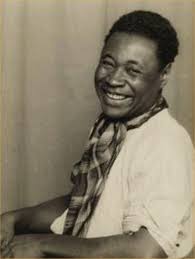 to the United States. Upon his return to Harlem in the mid-1930s, he began work on an autobiography, “A Long Way from Home”, a work published in 1937 about his challenges as a Black man in society.
Developing a keen interest in Catholicism after his disillusionment with Communism in the late 1930s, McKay became active in Harlem’s Friendship House, a missionary movement and a leading proponent of interracial justice. His work with the organization inspired his 1940 non-fiction historical treatise “Harlem: Negro Metropolis”, an account of the black community in Harlem during the 1920s and 1930s. McKay later moved to Chicago and worked as a teacher for a Catholic organization.
In 1943, McKay started “Cycle Manuscript”, a collection of forty-four poems, which were never published; this important document remains as a typescript at the Beinecke Library of Yale University. By the middle of the 1940s, McKay’s health had deteriorated. He endured several illnesses throughout his last years and eventually died of heart failure in May of 1948. Claude McKay was buried at Calvary Cemetery in Queens, New York.
Notes: An extensive collection of Claude McKay’s poetry can be found at: https://www.poemhunter.com/claude-mckay/poems/
An interesting read is “A Love So Fugitive and So Complete: Recovering the Queer Subtext of Claude McKay’s Harlem Shadows” by Lindsay Tuggle of the University of Sydney (originally printed in the journal “The Space Between; Literature and Culture 1914-1945”) which is located at: https://www.monmouth.edu/department-of-english/documents/a-love-so-fugitive-and-so-completerecovering-the-queer-subtext-of-claude-mckays-harlem-shadows.pdf/