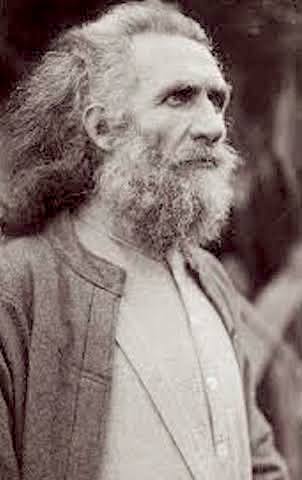
The Photography of Bernard Guillot
Born in the Rhine River city of Basel in 1950, Bernard Guillot was a French photographer and painter who traveled extensively in Europe, the Middle East and the United States.  He divided his career primarily between Egypt and the French highland region of Massif Central. Guillot was renowned for his expressive fusion of painting and photography that was heavily influenced by his dual life in those two countries.
Guillot was introduced to painting during his childhood by his mother and his godfather Antoine Mislin, both of whom were Anthroposophists, members of an early twentieth-century religious movement founded by Austrian esoteric Rudolf Steiner. After three years of medical study in Paris, Guillot entered the École Nationale Supérieure des Beaux-Arts from which he graduated in 1975.
From 1975 to 1977, Bernard Guillot resided in New York City where he began to engage with photography. He created his series “Twelfth Avenue” during this period; this collection of images later became part of the 2010 exhibition “Mixed Use Manhattan”. Throughout his career, Bernard Guillot worked on several photographic series in France and Egypt. Between 1977 and 1996 in the French city of Nice, he created a photographic chronicle of his life at a house allegedly haunted by the presence of curator emeritus and poet Claude Fourmet.
In Egypt between 1977 and 2003, Guillot decisively defined both his life and inspiration. In Cairo, he wandered the spaces of the aging Hôtel Maffet Astoria and created a chronicle of photographs which centered on the themes of appearance and disappearance. Guillot revisited the hotel’s rooms every night until that last night when the hotel was finally closed and permanently sealed tight. This succession of images was published by Ides Calendes as “Hôtel Maffet Astoria, Le Caire” in 1999.
In Cairo, Guillot created the series “Cité des Morts (City of the Dead)” between 1977 and 2017. The series examined Egypt’s oldest Muslim cemetery that was also the oldest necropolis in the Middle East. Stretching more than ten kilometers, it is characterized by the coexistence of the living and the dead, as about one million Egyptians live among the tombs. Guillot’s images are sparse in people and concentrate on the effects of time  upon the city and its spaces. Limited to two hundred-fifty copies, this photographic edition contained text in both English and Arabic.
Around the turn of the century, Bernard Guillot began combining painting with photography. He used Chinese ink and sometimes acrylic to paint directly onto the gelatin silver print, confusing and interfering with the original image. Through this process, Guillot sought to bring what was present, but not visible, in the external world to the surface. It is this understanding of reality as being more than the present, the seen or the known that informs much of Guillot’s works. Several photographs in the “Cité des Morts” series were altered by this process. Other series linking photography with painting include “Le Cap Blanc-Nez”, “Le Cimetière Juif de Berlin”, and “Mauer Park”.
Later during his time in Cairo, Guillot turned photographs taken with his cell phone into unique books in the style of palimpsests. Both a symbolist and impressionist, Guillot’s photographs were characterized by a mystical and poetic approach that examined time, identity, and the  period between states of existence. He utilized the interplay of shadow and reflection, and gave prominence to the enigmatic and the wonders of life.
Bernard Guillot died in Paris on the twenty-ninth of June in 2021at the age of seventy-one. He had exhibited his photographs in multiple group and solo shows throughout his career. Guillot’s photographs are contained in many private collections as well as such public institutions as the Musée d’ Art Moderne in Paris, Centre Georges Pompidou, Bibliothèque Nationale, American University in Cairo and the Palestinian Museum, among others.
Notes: Palimpsests are manuscripts or pieces of writing material on which the original writing has been effaced, but not completely removed, to make room for later writing. Traces of the original text still are visible. A common example of a palimpsest is reused medieval parchment, a costly writing material at the time, from which old ink was scraped to provide a writing surface for new text.
Galerie Frédéric Moisan has a short article on Bernard Guillot which includes his painted photographs, drawings, paintings and a video of Guillot at the Hôtel Maffet Astoria: http://www.galerie-fmoisan.fr/en/artist/bernard-guillot#/
The photographic archive site TINTERA has a short biography on Bernard Guillot plus a collection of images from the “Atelier du Cairo”, “Hôtel Maffet Astoria” and “Cite des Morts” series: https://www.tintera.art/bernard-guillot-1
Top Insert Image: Bernard Guillot, “Self Portrait”, July 2021, Gelatin Silver Print
Second Insert Image: Bernard Guillot, Untitled, 1977-2017, “Cité des Morts” Series, Hand Painted Gelatin Silver Print, 67 x 57 cm, Unique Print
Third Insert Image: Bernard Guillot, Untitled, 2004, “Cité des Morts” Series, Gelatin Silver Print, 50 x 42 cm
Bottom Insert Image: Bernard Guillot, Untitled, “Hotel Maffet Astoria” Series, (Balcony Doors), 1979-2003, Gelatin Silver Print