Mario Stefani: “Victorious We Will Come Out”

Photographers Unknown, Victorious We Will Come Out

Vittoriosi usciremo
Non farmi ricordare i giorni che sono passati
se tu ancora tornerai a me come una volta
vittoriosi usciremo da questa lunga lotta con il tempo
ci attend forse maggiore felicità del passato
(la forza degli occhi il riconoscere in noi
che vivi siamo del nostro amore).

Victorious we will come out
Don’t make me remember the days that have passed
if you will come back to me as it once was
victorious we will get out of this long struggle with time
perhaps greater happiness than in the past awaits us
(the strength of the eyes, the recognition in us
that we live, we are of our love).

Mario Stefani, Vittoriosi Usciremo, Il Male di Vivere, 1968

Born in August of 1938 in Venice, Mario Stefani was an Italian poet and journalist. He graduated with a Master of Arts degree in Literature; his thesis examined the letters of sixteenth-century author and playwright Pietro Aretino, an influential figure in Venice’s art and politics. Stefani worked on Professor Neuro Bonifazi’s literary research team at the University of Urbino. He began a career as a journalist employed by the Venice newspaper “Il Gazzettino” and, later. became a contributor to the “Literary Political Observer”, “Arena”, and “Resto del Carlino”.

Mario Stefani’s poetry is mostly written in Italian. Stefani’s deceptively simple poems are characterized by a clarity of expression that bring forth his own experiences, often imbued with nostalgia. His two collections of Venetian-dialect poetry, written in the late 1960s, were composed of that era’s simple Venetian style without any linguistic experimentation. Prefaces to Stefani’s collections were written by such notables as novelist and essayist Aldo Palazzeschi, biologist and novelist Giuseppe Longo, and poets Giovanni Raboni and Andrea Zanzotto.

 In 1960, Mario Stefani published his first collection of poetry “Desiderio della Vita (Desire for Life)”. In the course of his career, over twenty volumes of Stefani’s poetry were published. Included among these collections are the 1961 “Giorno Dopo Giorno (Day After Day)”, the 1968 “Come el Vento ne la Laguna (Like the Wind in the Lagoon)”, and “Il Male di Vivere (The Evil of Living)” published in 1968. Stefani’s “Elegie Veneziane (Venetian Elegies)”, published in 1971, won the first prize Bergamo Award for poetry.

Other notable poetry collections by Stefani include the 1974 “Poesie per un Ragazzo (Poems to a Boy)’, “In Debito con la Vita (In Debt to Life)” published in 1984, and “ Una Quieta Disperazione (A Quiet Despair)”, published posthumously in 2001. In 1981, Stefani’s “Nessun Altro Dio (No Other Gods)”, a collection of fifty-five poems, was translated into English by Anthony Reid, a translator and personal friend of Stefani, and published with annotations by illustrator Martin Pitts.

In addition to his poetry, Mario Stefani also published several short stories: the 1986 “At the Table with Margherita”, “Excellent Cakes and Vicious Virtues” in 1987, and the 1988 “Metamorphosis of a Dog and Other Tales”. In addition to the Bergamo Prize, Stefani was awarded the Prize of the Presidency of the Council of Ministers, and prizes at festivals in Milan, Gabicce, and Abano. American writer John Berendt devoted a chapter on the life of Mario Stefani, entitled “The Man Who Loved Others”, in his 2005 non-fiction book of Venice’s interesting inhabitants, “The City of Falling Angels”. In 2013, literary scholar Flavio Cogo published “Mario Stefani and Venice: Chronicles of a Great Love”, which examines Stefani’s love for Venice through his writings and his political and cultural engagements.

Mario Stefani became an openly gay in the 1970s. He worked for a period as an high school teacher of literature and was an active member of Italy’s Radical Party for decades. Stefani also hosted a popular unscripted television show. His poems were included in school text books and set to music in 1973 by composer Roberto Micconi for a performance at the Benedetto Marcello Conservatory of Music in Venice.

In the middle of February of 2001, graffiti featuring the quote “Loneliness is not being alone; it’s loving others to no avail. Mario Stefani” appeared on a wall by Venice’s Rialto Bridge. Three weeks later on the fourth of March, Mario Stefani committed suicide by hanging himself in his kitchen. His estate, valued at one million dollars, was per his request given to the local fruit vendor whose young daughter had inspired Stefani’s work.

In 2002, Stefani created an archive of his work which consists of sixty-eight hundred volumes from his personal library, articles related to his cultural work and twenty-six artworks including paintings and graphics. This archive is housed in the museum collection of the Fondazione Querini Stampalia, a cultural institution in Castello, Venice.

Jericho Brown: “I Am What Gladiators Call a Man in Love”

Photographers Unknown, I Am What Gladiators Call a Man in Love

I don’t remember how I hurt myself,
The pain mine
Long enough for me
To lose the wound that invented it
As none of us knows the beauty
Of our own eyes
Until a man tells us they are
Why God made brown. Then
That same man says he lives to touch
The smoothest parts, suggesting our
Surface area can be understood
By degrees of satin. Him I will
Follow until I am as rough outside
As I am within. I cannot locate the origin
Of slaughter, but I know
How my own feels, that I live with it
And sometimes use it
To get the living done,
Because I am what gladiators call
A man in love—love
Being any reminder we survived.

Jericho Brown, Colosseum, The New Testament, 2014, Copper Canyon Press

Born in April of 1976 in the Louisiana city of Shreveport, Jericho Brown is an American poet, writer and educator. In 1995, he earned his Bachelor of Arts at the historical Dillard University where he was a member of the Alpha Phi Alpha fraternity. Brown graduated with his Master of Fine Arts from the University of New Orleans and earned his Doctor of Philosophy at the University of Houston. 

From 2002 to 2007, Jericho Brown was a teaching fellow in the University of Houston’s English department. He was a visiting professor for the MFA program at San Diego State University in the spring of 2009, as well as, an assistant English professor at the University of Sand Diego. Brown is currently an associate professor of English and the director of the Creative Writing Program at Emory University in Atlanta, Georgia. In addition to his duties at Emory, he has taught at conferences and workshops, including the University of Iowa’s Summer Writing Festival. 

Brown’s first publication was the 2008 “Please”, a winner of the American Book Award. The poems and prose contained in this volume explore, through recollections of family, history and culture, the intersection of love and violence that surrounds the identity and sexuality of both the African American and male personae. 

Jericho Brown’s second work was the 2014 collection of poems “The New Testament”. Lamenting the erasure of culture and ethnicity, he examined the issues of race, masculinity and sexuality by means of elegies, myths, and fairy tales. This collection won the American Book Award, the Whiting Award for Poetry, and the Paterson Poetry Prize. “The New Testament” also won the 2015 Anisfield-Wolf Book Award, a literary award to honor written works that make contributions to the understanding of racism and the rich diversity of human culture. 

Brown published his third collection “The Tradition” through Copper Canyon Press in April of 2019. The work in this volume examines our modern traditions developed in a time when terror is the norm. Juxtaposed with themes of the natural world are poems that expose the numbness of society to issues of sexuality, racism, sexual assault, gun control, and police brutality. This third collection by Brown won the 2020 Pulitzer Prize for Poetry and the Paterson Poetry Prize, as well as, a place in the finals for the National Book Award and the National Book Critics Circle Award. 

In October of 2020, Jericho Brown traveled to his hometown of Shreveport to accept the John William Corrington Award for Literary Excellence from Centenary College’s Department of English. He is also the recipient of fellowships from the Guggenheim Foundation, the Radcliffe Institute for Advanced Study at Harvard, and the National Endowment for the Arts. Brown’s literary work has appeared in multiple publications including The New Republic, The New York Times, The Paris Review, The New Yorker, Buzzfeed, Jubilat, and volumes of The Best American Poetry. 

Notes:  Jericho Brown’s website includes both poems and prose, interviews, and scheduled lectures and readings. The site is located at: https://www.jerichobrown.com

A reading by Jericho Brown of work from “The Tradition”, recorded in Spain just after he won the Pulitzer Prize, was originally aired on Poetry Spoken Here. It is now available again on SoundCloud located at: https://soundcloud.com/poetry-spoken-here/special-rebroadcast-pulitzer-prize-winner-jericho-brown-reading-at-the-unamuno-author-festival

Top Insert Image: Taylor Carpenter, “Jericho Brown”, 2016, Color Print, The Atlanta Journal-Constitution

Bottom Insert Image: Audra Melton, “Jericho Brown”, 2020, Color Print, Arts & Culture Section, Garden & Gun

Curtis Holder

The Artwork of Curtis Holder

Born in 1968, Curtis Holder is an English artist based in London. He works primarily in colored pencil and graphite to create large-scale figurative works and portraits on paper. Raised on an estate in Leicester in the 1980s, Holder majored in Graphic Design at the prestigious Kingston University and completed his postgraduate studies in Character Animation at Central Saint Martins in London.

Curtis Holder’s multi-layered drawings emerge through an unpredictable series of energetic lines that reveal the form, as well as, the emotional state of his subject. He works briskly, layering pencils and graphite for their dynamic effect. Holder does not alter any marks after they are laid on the paper. All pencil marks, including preparatory ones, remain on the paper in the finished work. The complexity of the lines, the pose of the sitter, and the graphic quality of the work combine to form images of great insight.

A prolific artist, Holder has entered his work in many group exhibitions. Among these are the Society of Graphic Fine Art’s 2021 Centenary Exhibition “Unlocked” in London; the 2021 United Kingdom Colored Pencil Society’s 20th Anniversary Gala Exhibition at Oxo Tower Wharf in London; the 2022 Portrait Artist of the Year at Compton Verney, Warwickshire; and the 2023 Royal Society of British Artists Annual Exhibition in London. 

Curtis Holder’s debut solo exhibition “Something Unspoken” was held from November of 2021 through January of 2022 at the 45 Park Lane Gallery in London. His solo exhibition “The Makers: Portraits from Backstage” opened at the National Theater, South Bank, London in January and continues to the 4th of November in 2023. These multilayered pencil portraits depict those valuable theater people who work backstage at the National Theater. In 2022, Holder was awarded the honor of being the National Theater’s first artist in residence.

Holder is a member of the Contemporary British Portrait Painters and an Associate Member of the Society of Graphic Fine Art. His work is held in private and public collections including London’s National Portrait Gallery, the Birmingham Museum and Art Gallery, the Soho House, and the National Theater in London.

Curtis Holder and his partner, Steve Goggin, a digital content manager for the Historic Royal Palaces, reside in a midcentury house in south London. Holder holds summer drawing classes in the garden for neighbors and also teaches part-time at the local primary school.

“What prevents people from breaking into that (art) world is visibility. If you don’t see yourself represented, you’ll think there’s no way in. I’d like to take my story to as many children as possible and say, you can survive as an artist. It’s like any other job, you have to work hard. But it’s as real as becoming a doctor. I want to show others that art can be a career, and a way of life.”  —Curtis Holder, December 2020, The Guardian, London

Note: Curtis Holder’s website contains information on current exhibitions and the commission of work, as well as, available original drawings and limited edition prints. His site is located at: https://www.curtisholder.co.uk

A podcast interview between Curtis Holder and Alyson Walsh can be heard at Alyson Walsh’s “That’s Not My Age” on Spotify: https://thatsnotmyage.com/age/thats-not-my-age-podcast-portrait-artist-of-the-year-curtis-holder/

Second Insert Image: Curtis Holder, “Gaylene”, 2021, Colored Pencil on Paper, 90 x 66 cm

Bottom Insert Image: Curtis Holder, “One Man and His Dog”, 2022, Colored Pencil and Acrylic Gouache on Paper, 120 x 120 cm

Jack Edward Larson: Film History Series

Photographer Unknown, “Jack Larson as Jimmy Olsen”, circa 1950s, Studio Publicity Photo, “Adventures of Superman”, Warner Brothers / International Movie Data Base 

Born in Los Angeles, California in February of 1928, Jack Edward Larson was an American actor, screenwriter, producer and librettist; he wrote the libretto to American composer Virgil Thomson’s 1972 three-act opera “Lord Byron”. Larson’s acting career spanned a period of sixty years, during which he appeared in both film and television productions.

The son of George Larson and Anita Calicoff, Jack Larson was raised in Pasedena, California, and attended its Junior College. Encouraged by his teachers to study the works of Shakespeare, he began writing and directing plays at the college. Larson’s productions caught the attention of a talent scout from the Warner Brothers film studio. After signing with Warner Brothers, he was given his first role, as Lieutenant ‘Shorty’ Kirk, in director Raoul Walsh’s 1947 aviation film “Fighter Squadron”. Three uncredited roles followed: the boy role in R. G. Springsteen’s 1949 drama “Flame of Youth”; the role of Dusty in Philip Ford’s 1950 western “Redwood Forest Trail”; and the role of Tommy in Ford’s mystery film of the same year “Trial Without Jury”.

In early 1951, Larson was presented with the film role of an energetic but naive young reporter. Encouraged by his agent, he agreed to portray Jimmy Olsen in Robert L. Lippert’s black and white film “ Superman and the Mole Men”. This film, shot in the month of July, served as the pilot for the “Adventures of Superman” television series. The initial filming and production for the first season was accomplished in August/September of 1951. There were one hundred-four episodes in the series which was filmed in black and white until 1954 after which it was filmed in color until the series’ end in April of 1958. While Larson’s character of Jimmy Olsen gave him wide recognition, it also limited his development as an actor by typecasting him in his future roles.

During his film work on “Adventures of Superman”, Jack Larson continued to appear, both credited and uncredited, in fourteen films produced through different production companies. Among these were Joseph Kane’s 1951 adventure film for Republic Pictures “Fighting Coast Guard”; Harry Levin’s 1952 family comedy “Belles on Their Toes” for 20th Century Fox; Thomas Carr’s 1953 western for Allied Artists “Star of Texas”; and John H. Auer’s 1957 drama for Warner Brothers “Johnny Trouble” which starred Ethel Barrymore in her final role.

Larson made cameo appearances in two films of the Superman series. He played a train passenger in Richard Donner’s 1978 “Superman”. In Bryan Singer’s 2006 “Superman Returns”, Larson was given the role of Bo, the Metropolis bartender and loyal friend of Superman. In addition to his film roles, Larson also acted in several television series: the 1955 “Navy Log” with roles in four episodes; “The Millionaire” in 1960; “Gomer Pyle” in 1965; “Superboy” in 1991; “Lois and Clark: The New Adventures of Superman” in 1996 as old Jimmy Olsen; and “Law and Order: Special Victims Unit” in 2010.

Jack Larson was a longtime friend of Gore Vidal whom he first met in 1954 at a Santa Monica party. His social circle included other literary figures such as Christopher Isherwood and expatriate writer and composer Paul Bowles, author of “The Sheltering Sky”. In 1958, Larson met his life partner, the director and screenwriter James Bridges. Listed among Bridges’s many films are “The Paper Chase”, “Urban Cowboy” and “The China Syndrome”. Larson and Bridges resided together at the Frank Lloyd Wright-designed George Sturges House in Brentwood, Los Angeles, until Bridge’s death in June of 1993.

Prior to his meeting Bridges, Larson had been the companion of actor Montgomery Clift. When Larson was feeling typecast by his Jimmy Olsen character, it was Clift who advised him to stop putting himself in those casting positions, advice which Larson followed by writing plays and librettos. Due to his long association with Clift, Larson was interviewed extensively for the 2018 biographical documentary “Making Montgomery Clift”. Directed by Hillary Demmon and Montgomery Clift’s nephew Robert Clift, the film presented a different side to Montgomery Clift’s life than previous biographies. Told through interviews with family and friends, it presented Clift as a man who enjoyed life and was comfortable with himself as a gay man. 

Jack Larson died on September 20th in 2015 at the age of eighty-seven. On both plays and films, he had often collaborated with his longtime partner, James Bridges. Larson’s interment was at the Rose Hills Memorial Park in Whittier, California. 

Notes: As part of its “The Interviews: Twenty Five Years” series, the Television Academy has a two-chapter video interview with Jack Larson on its site. I highly recommend this interview; click on full interview to see the lissted sections. The interview can be located at: https://interviews.televisionacademy.com/interviews/jack-larson#interview-clips

Top Insert Image: William Claxton, “Jack Larson”, Jack Larson and James Bridges Photo Shoot, 26.7 x 34.3 cm, Gelatin Silver Print, Private Collection

Second Insert Photo: Photographer Unknown, “Jack Larson (Jimmy Olsen) and Steve Reeves (Clark Kent)”, circa 1950s, “Adventures of Superman”, Film Clip Photo, Everett Collection

Third Insert Photo: William Claxton, “Jack Larson”, Jack Larson and James Bridges Photo Shoot, 26.7 x 34.3 cm, Gelatin Silver Print, Private Collection

Bottom Insert Photo: William Claxton, “Jack Larson and Jame Bridges”, Photo Shoot, Gelatin Silver Print, Private Collection

Max Jacob: “The Winged Horse Contains My Passion”

Photographers Unknown, The Winged Horse Contains My Passion

The farmers call me by name on the roads
   as they might tell a skylark from a thrush
but they know the names of the animals better
than mine, for my name is Dolor.

If that which I love weighs upon my wound, it pains it;
if it weigh only upon summer, it is the field that suffers.

What will feed summer and my love if not that sorrow,
   since my love and summer can no longer feed on joy?

The swan disappears in the slant of branches,
and the naked muses take me in their arms;
the winged horse contains my passion
and the wild flowers spread for me.

Max Jacob, Ballad of the Country Exile, 1939 (Original French Composition)
Translation by Harvey Shapiro for Poetry, Volume 76 Issue 2, May 1950

Born in July of 1876 in Quimper, a prefecture of the Finistère department of Brittany, Max Jacob was a French poet, writer, critic and painter. His poetry, a complex blend composed of Breton, Parisian, Jewish and Roman Catholic elements, was instrumental to the new directions of modern poetry in the early twentieth-century. In addition to his birth name, Max Jacob used two pseudonyms for his writings, Morven le Gaëlique and Léon David. 

At the age of eighteen, Max Jacob relocated to Paris’s Montmartre artist community in 1894, a time when Symbolism was at its peak. He supported himself through a series of odd jobs including teaching piano and freelancing as an art critic. In the summer of 1901, Jacob met the twenty-year old Pablo Picasso who had arrived in Paris with no knowledge of the French language. Both struggling financially, they shared a studio flat on the Rue Ravignan and named their residence Bateau Laviour for its resemblance to laundry boats floating on the Seine. Through various social connections, Jacob and Picasso became friends with poet and novelist Guillaume Apollinaire and artists Jean Hugo, Christopher Wood, Jean Cocteau and Amedeo Modigliani. 

As a homosexual, Jacob attempted to achieve a sense of belonging in France, whose moral attitudes, politics, and institutions excluded him. Even though homosexuality had not technically been illegal under the Napoleonic Code since 1810, police still harassed gay men in the name of public order. Although Jacob was not involved in politics, he remembered the miscarriage of justice and antisemitism involved in the 1896-1899 Dreyfus Affair and saw first-hand the racist questioning of the French Jewish community regarding their patriotism. 

In the fall of 1906, Max Jacob told friends he received a vision of the Christ. After which, he began to embrace Catholicism and was eventually baptised in 1915. He fictionalized this spiritual vision in the 1911 “Saint Matorel (Saint Matthew)”, illustrated by Pablo Picasso, and the 1919 confessional work “La Defense de Tartufe”. Jacob began to find an audience for his literary work in France with his first collection of unique prose poetry, the 1917 “The Dice Cup” which was well received in Parisian literary circles. In 1921, he published a volume of free verse poetry entitled “Le Laboratoire Central”. 

Disenchanted with his life in Paris, Jacob sought a change and became a lay associate at the Benedictine community in Saint-Benoit-sur-Loire, where he lived on a small income earned from selling his gouache paintings. Jacob spent two long periods in association with the Benedictine community, the first from 1921 to 1928 and the second from 1936 to 1944. Though the church met his spiritual needs, he still had a series of infatuations with artistic men which he expressed through letters of spiritual and stylistic advice. Jacob later produced a series of love poems that proclaimed his desires, abeit in a heterosexual style similar to what Marcel Proust wrote about his chauffeur Alfred Agostinelli. 

Despite half of his live as a practicing Catholic and being awarded the Legion of Honor, Max Jacob was arrested by the Gestapo in February of 1944. Taken to the city of Orléans, he was place in a ten by ten meter military cell with sixty-five other Jewish men, women and children. On the twenty-sixth of February, Jacob and the others were packed into a train and hauled to the Gare d’Austerlitz in Paris. During his stay at this train station, Jacob sent out written pleas for help to his friends and influential people who might possibly intercede.

Jacob was next sent to the Drancy internment camp where, after surrendering his gold watch and money, he was registered and numbered. Given a green sticker, Jacob was scheduled to leave on transport number sixty-nine on the seventh of March. He developed severe pneumonia in the internment camp and, due to the lack of medicine, suffered severely for two days. Max Jacob died in the evening of the fifth of March, two days before the scheduled transport carried 1,501 people to Auschwitz.

Director Gabriel Aghion’s 2007 biographical drama “Monsieur Max” was a film that covered the life of Max Jacob from the First World War until his death in 1944. The role of Jacob was played by French actor and director Jean-Claude Brialy. This was Brialy’s last role before his death in May of 2007; he was survived by his partner, Bruno Finck. 

Notes: For those interested in more information on the life of Max Jacob, there are two excellent online articles worth reading:

Mardean Isaac’s 2021 article “Max Jacob and the Angel on the Wall” at the Arts & Letters section of the online Tablet located at: https://www.tabletmag.com/sections/arts-letters/articles/max-jacob-angel

Poetry editor Rosanna Warren’s October 2020 “The Death of Max Jacob”, excerpted from her book “Max Jacob: A Life in Art and Letters”, at the Arts & Culture section of The Paris Review located at: https://www.theparisreview.org/blog/2020/10/14/the-death-of-max-jacob/

Top Insert Image: Photographer Unknown, “Max Jacob”, 1922, Vintage Print

Second Insert Image: Amedeo Modigliani, “Max Jacob”, 1916, Paris, Oil on Canvas, 92.7 x 60.3 cm, Cincinnati Art Museum, Ohio

Third Insert Image: Jean Cocteau, “Manuel Ortiz de la Zarate, Moishe Kisling, Max Jacob, Pablo Picasso, and Paquerette Meeting for Lunch”,  1916, Gelatin Silver Print

Bottom Insert Image: Roger Toulouse, “Max Jacob”, 1942, Oil on Canvas, 61.2 x 53 cm, Musée des Beaux-Arts de Quimper, France

Flower Field Gif: https://rivermusic.tumblr.com

Jaime Gil de Biedma: “How Many Times Do I Remember From You”

Photographers Unknown, How Many Times Do I Remember From You

Do I ever remember
certain nights in June of that year,
almost blurry, of my adolescence
(it was in nineteen hundred it seems to me
forty nine)
because in that month
I always felt a restlessness, a small anguish
the same as the heat that began,
nothing else
than the special sound of the air
and a vaguely affective disposition.
They were the incurable nights
and fever.
The high school hours alone
and the untimely book
next to the wide open balcony (the street
freshly watered it disappeared
below, among the lighted foliage)
without a soul to put in my mouth.
How many times do I remember
from you, far away
nights of the month of June, how many times
tears came to my eyes, tears
for being more than a man, how much I wanted
morir
or dreamed of selling myself to the devil,
you never listened to me.
But also
life holds us because precisely
it is not how we expected it.

Jaime Gil de Biedma, Nights of the Month of June, Fellow Travelers, 1959

Born in November of 1929 in Nava de la Asunción, Jaime Gil de Biedma y Alba was a Spanish poet. He is considered, among his readers, one of the most proficient Anglophiles in the field of contemporary literature originating from the Iberian Peninsula. Gil de Biedma belonged to the “Generation of ’50”, a group of poets born from the cultivated social realism that arose in the aftermath of the Spanish Civil War. He introduced new techniques into traditional Spanish literature through his use of both dramatic monologue and a diary form of intimate introspection.

Born into a Catalan family with strong conventional values, Jaime Gil de Biedma studied law both in Madrid and Salamanca. As a student in Madrid, he became acquainted with intellectuals such as Gabriel Ferrater and Carlos Barral, both of whom became influential Spanish poets. Gil de Biedma’s lifelong adherence to Anglo-American culture became firmly established by his Oxford studies as a law graduate in 1953 with his reading of works by T. S. Eliot, W. H. Auden, and Stephen Spender, who would go on to become United States Poet Laureate in 1965.

Gil de Biedma was also fascinated with the work of Spanish poet Luis Cernuda, a member of the “Generation of ’27” who went into self-exile during the Spanish Civil War. Although separated in age by twenty-seven years, both men had several traits in common: great respect for lyrical English, upbringing in a conventional bourgeois family, openness in regard to their homosexuality, and opposition to the Franco dictatorship. Gil de Biedma exchanged many letters with Cernuda and dedicated his 1959 poem “Nights of the Month of June” to him. In the fall of 1962, one year before Cernuda’s death in Mexico, he published a strong tribute to Cernuda that placed him above all other poets of the 1950s.

In regard to his poetry, Jaime Gil de Biedma is a member of Spain’s “Generation of ’50” which included such poets as José Ángel Valente, Francisco Brines Bañó, and Ángel González. The poets in this group, while focused on social issues, were all aware of the literary character of their verse. Partly due to Luis Cernuda’s influence, they introduced to Spain what is now known as poetry of experience, an immediate intellectual experience presented through narration by a fictional-self.

In his work, Gil de Biedma created bridges between English and his birth language of Spanish. He brought his poetry closer to the language spoken on the street by incorporating older Spanish poetic forms such as sestina. Attributed to the twelfth-century troubador Arnaut Daniel, sestina is a fixed verse form containing six stanzas of six lines each, normally followed by a three-line envoi, essentially a postscript in the form of a ballad or dedication. A perfectionist in the composition of his work, Gil de Biedma believed the essential experience in the first reading of a poem was not the understanding of the poem but rather the feeling the verses produce in the reader. The understanding will manifest, sooner or later, when the reader asks why he was so affected.

Gil de Biedma published his first work in 1952, “Versos a Carlos Barral”, a series of poems dedicated to his friend Carlos Barral, poet and literary publisher. This was followed in 1953 by “Segun Sentencia del Tiempo (According to the Judgement of Time)”. In his early work, Gil de Biedma strongly criticized the dictatorship of Francisco Franco. The title for his 1952 “Compañeros de Viaje (Travel Companions)” referred to a Trotskyist expression for Communist sympathizers. By the early 1950s, Franco was either suppressing or tightly controlling all political opponents across the spectrum, from communist to liberal democrats and Catalan separatists.

In 1965, Jaime Gil de Biedma published a collection of love poems imbued with eroticism entitled “Un Favor de Venus” which was followed by another socially-themed collection, the 1966 “Moralidades (Moralities)”. In 1969, he published his last collection of poems, “Poemas Póstumos (Posthumous Poems)” in which a disappointed Gil de Biedma confronted himself and the facades he had erected around his personal identity. After this volume, he published poems in various literary journals and wrote his 1974 memoir “Diario de un Artista Seriamente Enfermo (Diary of a Seriously Ill Artist)”. Diary entries from February and April of 1960 reveal that Gil de Biedma was already rereading his 1956 notes; in 1971, he began a lengthy and meticulous reconstruction of the written material.

As a homosexual during a strongly conservative period in Spain, Gil de Biedma was essentially forced to lead a double life. As part of a conservative family and, since 1955, holding an important position in the family’s Compañia General de Tabacos de Filipinas, he was a discreet and respectable executive. In the company of close friends, Gil de Biedma was openly gay with a quick wit and sharp tongue. At different times, he had suffered discrimination and blackmail. Gil de Biedma’s poetry was a reflection of this duality as, while he explored themes of love, romance and sex, he never disclosed the gender of the loved one.

Even at the end of his life, Jaime Gil de Biedma was adamant about keeping his poetry neutral. After learning that a journalist wanted to analyze his work from a gay literary point of view, he was distressed and went through great trouble to ensure that the journalist would not take that approach. Ten years before his death, Gil de Biedma stopped writing poetry. He had decided that the persona of the poet James Gil de Biedma had nothing left to say and, subsequently, abandoned that role in literary society. Three years after being diagnosed in 1987, Jaime Gil de Biedma died in Barcelona on the eighth of January in 1990 from complications due to AIDS.

Notes: For the thirtieth anniversary of Jaime Gil de Biedma’s death, Javier Gil Martin, a collaborator of the Adiós Cultural magazine, wrote an article on Gil de Biedma’s “Posthumous Poems”. This article can be found at the Adiós Cultural site located at: https://www-revistaadios-es.translate.goog/articulo/165/JAIME-GIL-DE-BIEDMA-/-POEMAS-POSTUMOS.html?_x_tr_sl=es&_x_tr_tl=en&_x_tr_hl=en&_x_tr_pto=sc

Director Sigfrid Monleón’s 2009 biographical drama “El Cónsul de Sodoma (The Consul of Sodom) is a journey through the work and life of Catalan poet Jaime Gil de Biedma. It premiered at the San Sebastián International Film Festival in 2010. The film received five nominations at the Goya Awards, including Best Lead Actor (Jordi Mollá) and a Gaudi Awards nomination for Best Performance by an Actor in a Leading Role (Jordi Mollá).

Oswell Blakeston: “And the Moral Seems to Be. . .”

Photographers Unknown, And the Moral Seems to Be . . .

In winter, Miss Jansson paints in her very comfortable studio in Helsinki; but in summer, she comes to the island and draws Moomin.

Max said, “Don’t you ever feel inspired to paint the Finnish countryside in summer?”

“It’s all so damned green,” she answered.

Then she told us about the squirrel, the one squirrel which has appeared on the island; and it slept under her neck and tried to collect food there. As the relationship between artist and squirrel developed, the squirrel came to expect a game at four o’clock in the morning. Tove Jansson had to get out of bed and pretend to be a tree. The squirrel would run up and down her frozen limbs.

One day, the squirrel disappeared. He may have jumped on a floating plank, for later he was reported to have appeared on another island. It must have been the same squirrel, for he positively forced open the tent of some campers, and—he was not welcome. It was four o’clock in the morning. 

As soon as Miss Jansson learnt of the incident, she immediately rowed to the other island. She called. She stood about the place looking like a tree. But the squirrel never showed a whisker. Perhaps he’d sailed off again on a romantic Odyssey, looking for another squirrel and using his curly tail as a sail. And the moral seems to be that it is not enough to be a tree!

Oswell Blakeston, Sun At Midnight, 1958 Travel Book, The Archipelago, Page 85, Publisher Anthony Blond, London

Born to a family of Austrian origins in May of 1907, Henry Joseph Hasslacher was an English writer, poet, and filmmaker. He used the pseudonym Oswell Blakeston during his career, a reference to his mother’s maiden name and to English poet and essayist Osbert Sitwell.

Oswell Blakeston left his home at the age of sixteen; he subsequently became a stage magician’s assistant, a cinema organist, and an assistant cameraman at Gaumont Studios where he worked alongside the young David Lean. In August of 1927, Blakeston joined the staff of the Pool Group’s magazine “Close Up” as the protégé of the publication’s editor Kenneth Macpherson. He contributed a total of eighty-four articles to all but four of the journal’s issues, more than any other writer. 

While writing for “Close Up”, Blakeston worked in various capacities in the British film industry. In 1929, he first tested his directorial skills with the short film “I Do Like to Be Beside the Seaside”, which was based on the popular British music hall song of the same name. Working alongside American photographer Francis Bruguière, Blakeston directed and produced the short 1930 film “Light Rhythms”. This strictly abstract film, one of the first in England, added new dimensions to Bruguière’s experimental photographic work through the use of moving light sources, superimpositions, and elements of music. The film score was composed by Jack Ellitt and played on piano by Donald Sosin. 

Among Oswell Blakeston’s early literary endeavors was his co-editorship with Herbert Jones of the small magazine “Seed” from 1932 to 1933. Under the pseudonym of Simon, he collaborated with novelist and screenwriter Roger Buford on the writing of four mystery novels: the 1933 “Murder Among Fiends”, “Death on the Swim” in 1934, the 1935 “Cat with a Moustache”, and “The Mystery of the Hypnotic Room” in 1949. Blakeston also wrote novels and story collections, as well as, ten volumes of poetry under his own name. His fifteen books of fiction were wide ranging in scope and included a number of works that mixed gay themes with suspense and detective plots.

Blakeston contributed writings to British writer and poet John Gawsworth’s published short-story anthologies. He also collaborated on works with Matthew Phipps Shiell, also known as M. P. Shiel, a writer of supernatural horror and science fiction whose “The Purple Cloud” remains his best known work. Blakeston is known in the literary world for a number of publication firsts. His 1932 “Magic Aftermath” was the first fiction published with a spiral binding and his 1935 crime novel “The Cat with the Moustache” contained one of the first descriptions of a hallucinatory experience with peyote or mescal.

In the 1950s, Blakeston was a frequent contributor to “ArtReview” and other periodicals including “John O’ London’s Weekly” and “What’s On in London”. In addition to his novels and poetry, Blakeston published cookbooks, travel adventures, works on photography and cinematography, and two books on animals, “Working Cats” and “Zoo Keeps Who?”. Most of his  literary work was produced for publication by small presses and speciality publishers and thus is no longer in print. Recent interest in Blakeston’s writings has resulted in reprints of his more popular works; more obscure volumes appear occasionally at more specialized venues.

Blakeston met painter Max Chapman at the end of the 1920s. Chapman had attended London’s Byam Shaw School of Art where he studied under and became friends with painter Charles Ricketts. Ricketts and his life-time companion Charles Shannon were part of the literary and artistic circle that included Aubrey Beardsley and Oscar Wilde. Blakeston and Chapman became life-long partners and lived together at a residence named “Lobster Pot” in Mousehole, a small fishing village in Cornwall. Through his association with Chapman, Blakeston met and became friends with modernist writer Mary Francis Butts and poet and author Dylan Thomas.

Both Blakeston and Chapman became fixtures of the Cornish artistic scene. Blakeston’s paintings were a mix of abstract and expressionistic imagery executed in a small scale. His 1982 “Adolescence”, though influenced by Chapman’s work, is stylistically closer to the Pop Art movement; it is currently housed in the collection of the Middlesbrough Institute of Modern Art. Blakeston exhibited his artwork in over forty solo shows and one-hundred group shows. In 1981, he shared an exhibition with Max Chapman at the Middlesbrough Art Gallery. Blakeston’s paintings are housed in the collections of the Victoria & Albert Museum, Belfast’s Ulster Museum, the Middlesbrough Institute of Modern Art, and galleries in Poland, Finland and Portugal. 

Blakeston and Chapman’s portraits were drawn by painter and sculptor Sven Berlin, a member of the St. Ives artistic community: Blakeston’s portriat in 1939 and Chapman’s in 1941. These portraits became part of a series entitled “St. Ives Personalities”, that is now held in a private collection. A portrait of Blakeston painted by Max Chapman was part of a 1976 exhibition of portraits held at the Camden Art Centre. Oswell Blakeston died on the 4th of June in 1985. Max Chapman continued to paint until his death, fourteen years later, on the 18th of November in 1999. 

Notes: Although listed at the British Film Institute registry and mentioned in Michael O’Pray’s “The British Avant-Garde Film 1926 to 1995”, Oswell Blakeston’s film “I Do Like to Be Beside the Seaside” seems not available for viewing. His 1930 “Light Rhythms” is however available for viewing at the Light Cone Experimental Film site located at: https://lightcone.org/en/film-5793-light-rhythms 

Since the 1930s, one of Oswell Blakeston’s passions was the history and architecture of follies, costly ornamental buildings with no practical purpose that were usually built in gardens or parks. He amassed a collection of county files, notes and clippings on the subject. A short article on this topic can be found at The Folly Flâneuse’s site located at: https://thefollyflaneuse.com/oswell-blakestons-folly-suitcase/

Additional information on Oswell Blakeston’s life and published works can be found at the Social Networks and Archival Context site located at: https://snaccooperative.org/ark:/99166/w6087wx3#biography-collapse

Top Insert Image: Howard Coster, “Oswell Blakeston”, 1930s, Photo Session, Half-Plate Negative Print, National Portrait Gallery, London

Second Insert Image: Oswell Blakeston, “Pass the Poison Separately”, 1976, Publisher Catalyst, Ontario

Third Insert Image: Oswell Blakeston and Francis Bruguière, “Few Are Chosen, Studies in the Theatrical Lighting of Life’s Theatre”, 1931, First Edition, Scholartis Press, Private Collection

Fourth Insert Image: Oswell Blakeston, “The Night’s Moves”, 1961, First Edition, Publisher Gaberbocchus Press, London

Bottom Insert Image: Howard Coster, “Oswell Blakeston”,  1930s, Photo Session, Half-Plate Film Negative Print, National Portrait Gallery, London

Roland Caillaux

The Artwork of Roland Caillaux

Born in January of 1905, Roland Ferdinand Caillaud was a French film and theater actor, as well as, an illustrator and painter. Known professionally as Roland Caillaux, he was a key figure among the literary and artistic celebrities who lived and worked in Saint-Germain-des-Prés of Paris’s sixth Arrondissement. 

The son of a wealthy Parisian family, Roland Caillaux inherited enough money upon the death of his parents to enable him to live a comfortable life free from financial restriction. He had a residence at  5 Rue de l’Ancienne-Comédie in the sixth Arrondissement of Paris and maintained a studio space on the Rue Boulard in the fourteenth Arrondissement. Caillaux was openly homosexual and enjoyed the relative freedom of Paris in the 1930s. He developed friendships with many of the writers, artists and filmmakers of the period including Jean Cocteau, Maurice Sachs, François Sentein, Jean Marais, Marcel Carné, and Jean Genet, among others. 

In his lifetime, Caillaux was best known as a film and theater actor. His first appearance, an uncredited role, was in director Jaque Catelain’s 1924 drama film “La Galerie des Monstres”, a story of a young married couple’s tribulations after they join a circus. After playing the role of Le Sergent in Jene Renoir’s 1928 “Tire au Flanc”, Caillaux was given the role of Grippe-Soleil in Tony Lekain and Gaston Ravel’s 1929 “Figaro”, a film adaption of the 1778 Beaumarchais play “The Marriage of Figaro”. In the same year, he had a role in René Hevil’s film “Le Ruisseau (The Stream)”, and appeared onstage in a brief run of Vladmir Kirchon and Andreï Ouspenski’s play “La Rouille” at the Théâtre de l’Avenue in Paris. 

The height of Roland Caillaux’s acting career occurred in 1930 with appearances in two films: “Soyons Gais” and composer John Daumery’s comedy musical “Le Masque d’Hollywood” directed by Clarence Badger. In the same year, he was in two theatrical performances: playwright Georges Neveux’s first notable work “Juliette ou la Cié des Songes” and Edmond Haraucourt’s “La Passion” held at the Comédie-Française. In 1932, Caillaux appeared in two films: the character of André Duval, Sergent de Spahis, in Rex Ingram and Alice Terry’s “Baroud” and a lead role in Georges Lacombe’s comedy “Ce Cochon de Morin”. His final film role was Lieutenant Jean Dumontier in Jean Benoît-Lévy and Marie Epstein’s 1934 “Itto” which, filmed in French Morocco, received a nomination for Best Foreign Film at the 1935 Venice Film Festival.

As a visual artist during the period from 1940 to 1960, Caillaux worked in his Rue Boulard studio where he produced landscapes, portraits, lithographs and drawings. The rare erotic works he produced were meant to be circulated among his circle of friends in the arts, cinema and music worlds. In Paris in 1945, Roland Caillaux produced what is probably his best known illustrated work, “Vingt Lithographies pour un Livre que J’ai Lu (Twenty Lithographs for a Book I Read)”, a folio of twenty homoerotic lithographs loosely presented in printed wrappers within a cloth folding box.

Caillaux’s “Vingt Lithographies pour un Livre que J’ai Lu” was published in a small run of one-hundred fifteen copies without the name of the author, illustrator or printer. The lithographs were accompanied by text, attributed to novelist and playwright Jean Genet, that contain variant excerpts from two poems, “Notre Dame-des-Fleurs” and “The Parade”. These two poetic works by Genet were later published in a limited edition run, entitled “Poems”, in 1948 by Editions L’Arbalète. 

Roland Caillaux passed away in Paris in December of 1977. Many of his illustrations, not publicly seen before, were discovered by Nicole Canet of Paris’s Galerie Au Bonheur du Jour and subsequently exhibited. Caillaux’s works are housed in many private collections and frequently appear in international auctions. 

Note: The spelling of Roland Caillaud’s birth name was written with a “d”; however, throughout his career as an actor and draftsman, he wrote his last name with an “x”. In regards to his drawings, those not erotic were signed Roland Caillaux; while the erotic drawings were signed with a “spider” signature, a small spider web with an “x” in the middle.

Nicole Canet’s Galerie Au Bonheur du Jour, located in the heart of Paris, represents work by Caillaux and other artists in the fields of painting, illustration and photography. The gallery also publishes a wide collection of catalogues. Galerie Au Bonheur du Jour is located online at: https://www.aubonheurdujour.net 

Top Insert Image: Dora Maar (Henriette Théodora Markovitch), “Portrait of Roland Caillaux”, Date Unknown, Gelatin Silver Print

Second Insert Image: Roland Caillaux, “Sailor”, 1932, Oil on Canvas on Cardboard, 26 x 21 cm, Private Collection

Bottom Insert Image: Dora Maar (Henriette Théodora Markovitch), “Portrait of Roland Caillaux”, 1935, Gelatin-Argent Negative on Flexible Support in Cellulose Nitrate, 18 x 13 cm, Le Centre Pompidou, Paris

Alan Hollinghurst: “A Drink, a Glow of Resolve and Sensible Postponement”

Photographers Unknown, A Drink, a Glow of Resolve and Sensible Postponement

“In truth the memoir was a game of postponement – a trick he played on himself almost daily, and fell for every time. There would be a poor and evasive morning, with letters to write as well, and a number of phone calls that had to be made; then lunch, at a place not necessarily close, and several things to do after lunch, with mounting anxiety in the two hours before six o’clock: and then a drink, a glow of resolve and sensible postponement till the following morning, when, too hung-over to do much work before ten, he would seek infuriated refuge, about eleven forty-five, in the trying necessity of going out once more to lunch. Over lunch, at Caspar’s or at the Garrick, he would be asked how work was going, when it could be expected, and the confidence of the questioner severely inhibited his answers – they had a bottle of wine, no more, but still the atmosphere was appreciably softened, his little hints at difficulties were taken as mere modesty – ‘I’m sure it will be marvelous’ – ‘It will take as long as it takes’ – and he left fractionally consoled himself, as if some great humane reprieve were somehow possible, and time (as deadline after deadline loomed and fell away behind) were not an overriding question. In the evenings especially, and towards bedtime, half-drunk, he started seeing connections, approaches, lovely ideas for the work, and sat suffused with a sense of the masterly thing it was in his power to do the next morning.” 

-Alan Hollinghurst, The Sparsholt Affair, 2017, Picador Publishers, London

Born in May of 1954 in Stroud located in the Cotswold area of Gloucestershire, Alan James Hollinghurst is an English novelist, short story author, poet and translator. Continuing the tradition of Christopher Isherwood and Edward Morgan Forster, he presents in his work the protagonist’s gay orientation as a given fact and, building on that fact, examines both the complexities and mundane aspects of everyday gay life. 

Born the only son to a bank manager father and a relatively emotionally-distant mother, Hollinghurst was raised in a politically conservative and financially comfortable family. He lived in all-male boarding schools from the age of seven to seventeen. Hollinghurst studied literature at Magdalen College, Oxford, where he earned his Bachelor of Arts in 1975. Upon receiving his degree, he taught for one-year terms on the Oxford campus at Somerville, Magdalen and Corpus Christi colleges. For his 1980 Master of Philosophy thesis, Hollinghurst wrote on the strategies adopted by such writers as Leslie Poles Hartley, Ronald Firbank and E. M. Forster to covertly express their sexuality in an age of stigma and prosecution. 

In 1981, Alan Hollinghurst lectured at University College London and, in the following year, joined the staff of London’s weekly literary review, The Times Literary Supplement,  where he edited the art and poetry pages before serving as deputy editor from 1985 to 1990. While working at the Times, he devoted his writing to poetry and published his first major collection, “Confidential Chats with Boys”, in 1982. This volume of poems was based on physician William Lee Howard’s 1911 sex education book of the same title which was adopted as standard by numerous boys’ schools.

Hollinghurst began work on four different novels before a grant allowed him to concentrate on his 1988 “The Swimming-Pool Library”. He presented his finished novel to his former housemate Andrew Motion, a subsequent Poet Laureate, who at that time was employed by London’s publishing house Chatto and Windus. The story is centered around Will Beckwith, a privileged, cultured and promiscuous gay man who meets the elderly aristocrat Lord Nantwich. This chance meeting and the later reading of Nantwich’s diaries lead Will to re-evaluate his own sense of the past as well as his family’s history. “The Swimming-Pool Library” won the Somerset Maugham Award in 1988 and, in the following year, the E. M. Forster Award of the American Academy of Arts and Letters. 

As a result of this successful literary debut, Alan Hollinghurst received an advance for his next novel, which allowed him to purchase a house in London’s Hampstead Heath and concentrate fully on writing fiction. His second novel, the 1994 “The Folding Star”, dealt with the incommunicable obsession of a middle-aged tutor for his seventeen-year old Belgian student. The tutor, Edward Manners, becomes involved in affairs with two men and, after introduced to the world of Symbolist painter Edgard Orst, is ultimately caught in the memories of his own adolescence and first love affair.

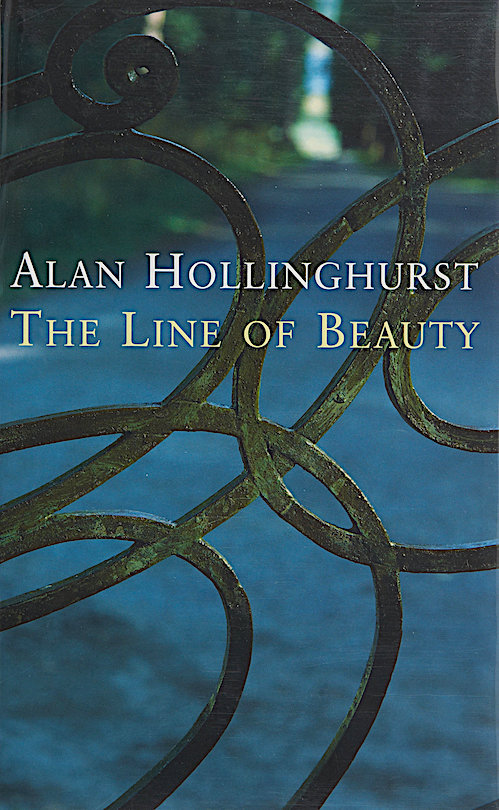
Hollinghurst’s third novel, the 1998 “The Spell”, used the satirical and romantic style of a weekend in the country plot to follow the changing relationships within a group of friends and occasional lovers. This work was followed by the 2004 three-part novel “The Line of Beauty”. Set during the Thatcher years between 1983 and 1987, the novel followed the life of the young, middle-class gay protagonist Nick Guest. Through exploring the realities of Nick’s tense and intimate relationships and life as a gay man, Hollinghurst examined the themes of hypocrisy, drugs, privilege and homosexuality during the time of England’s emerging AIDS crisis. “The Line of Beauty” won the high-profile 2004 Man Booker Prize with its fifty-thousand pound stipend and became the first gay novel to be so honored. It was also a finalist for the Lambda Literary Award and the National Book Critics Circle Award for Fiction.

Alan Hollinghurst’s fifth novel, the 2011 “The Stranger’s Child” which, told over the course of decades, revolves around a minor poet’s successful published poem and the resulting changes in his work and life. Received positively by critics, the novel was on the Man Booker Prize longlist, the Walter Scott Prize shortlist, and the winner of the 2013 Prix du Meilleur Livrr Étranger, France’s best foreign book prize. Hollinghurst’s sixth novel, the 2017 “The Sparsholt Affair”, explores the changing attitudes towards homosexuality as seen through the lives of two Englishmen: a teenager attending Oxford during the Second World War, and his later openly-gay son in London just after England decriminalizes homosexuality.

Hollinghurst currently lives in London with his partner Paul Mendez, the British author who authored the 2020 semi-autobiographical novel “Rainbow Milk” published by Dialogue Books, a Little, Brown and Company imprint.

“I grew up reading certain writers like Iris Murdoch who was very interested in sexual ambivalence and often created gay characters, usually from a cultured or academic background. I’m not sure how many straight writers I’ve read who create gay characters successfully from the inside, though I agree about Anthony Burgess and (his novel) “Earthly Powers”. — Alan Hollinghurst, 2017, Guardian Interview with Alex Clark

Note: For those interested, an interview between writer Peter Terzian and Alan Hollinghurst, “Alan Hollinghurst, The Art of Fiction No. 214”, is available through “The Paris Review”, a literary magazine featuring original writing, written interviews, podcasts and art. The article or a subscription to the magazine is available for purchase at: https://www.theparisreview.org/interviews/6116/the-art-of-fiction-no-214-alan-hollinghurst

Sir Nigel Barnard Hawthorne: Film History Series

Born in the West Midland city of Coventry in April of 1929, Sir Nigel Barnard Hawthorne was an English stage, television and film actor. Among the many honors for his work, he was appointed a Commander of the Order of the British Empire in the 1987 New Years Honors List, which highlights the good works by citizens of the Commonwealth. Hawthorne was later knighted in the 1999 New Years Honors List for services to Theater, Film and Television.

The second child of physician Charles Barnard Hawthorne and his wife Agnes Rosemary Rice, Nigel Hawthorne was three years old when the family moved to the Gardens district of Cape Town, South Africa. He attended Cape Town’s St. George’s Grammar School and later its Christian Brothers College. Hawthorne enrolled at the University of Cape Town where he acted in plays with fellow student Theo Aronson, who became biographer to England’s royal family and partner of historian Brian Roberts. Hawthorne’s professional theatrical debut was the character Archie Fellows in  the 1950 Cape Town production of British playwright Edward Percy Smith’s 1940 thriller “The Shop at Sly Corner”. 

Dissatisfied with life in South Africa, Hawthorne relocated to London where he pursued a career in acting. Through his performances, he gradually gained recognition as one of London’s great character actors. Starting in the late 1950s, Hawthorne appeared in various character roles in British television series. Seeking opportunities in the United States, he traveled to New York City where, in 1974, he was cast as Touchstone in Broadway production of Shakespeare’s comedy “As You Like It” at the Mark Hellinger Theatre. Through the persuasion of British stage actors Ian McKellen and Judi Dench, Hawthorne joined the Stratford-upon-Avon based Royal Shakespeare Company in the mid-1970s.

In 1980, Nigel Hawthorne began his most famous television role of Sir Humphrey Appleby, the Permanent Secretary of the Department of Administrative Affairs, in the BBC2 political satire series “Yes Minister” which ran from 1980 to 1984. He later portrayed the character of the Cabinet Secretary in its sequel “Yes Prime Minister”. For this role, Hawthorne won four British Academy Television Awards for Best Light Entertainment Performance. 

Hawthorne appeared as Mr. Kinnnoch in Richard Attenborough’s long delayed 1982 historical film “Gandhi”, which became the winner of eight Academy Awards and the third highest grossing film in the world for 1982. In the same year, he appeared as dissident Russian scientist Dr. Pyotr Baranovich in Clint Eastwood’s cold war thriller “Firefox”. Hawthorne returned to the New York stage in 1990 to appear as British writer C. S. Lewis in the Broadway production of William Nicholson’s “Shadowlands” performed at the Brooks Atkinson Theater. For that role, Hawthorne won the 1991 Tony Award for Best Actor in a Play. 

In 1991, Nigel Hawthorne played his most famous theatrical role, King George III, in playwright Alan Bennett’s fictionalized biographical study “The Madness of George III”. Bennett’s play toured the United Kingdom and the United States before returning to London’s Royal National Theater in 1993. For this role, Hawthorne won a Best Actor Olivier Award. He also appeared in the same role for the 1994 film adaption of the play, entitled “The Madness of King George”, for which he received an Academy Award nomination for Best Actor and the British Academy of Film and Television Arts Award for Best Actor.  

Hawthorne followed this success with the role of George the Duke of Clarence, playing opposite his friend Ian McKellen, in Richard Loncraine’s 1995 British period drama “Richard III” adapted by McKellen and Loncraine from Shakespeare’s play. He won his sixth BAFTA award for his role in the 1996 television mini-series “The Fragile Heart” and also drew praise for his role of Georgie Pillson in the London Weekend Television series “Mapp and Lucia”, based on the three 1930s novels by Edward Frederic Benson. Hawthorne next appeared in the film role of U.S. President Martin Van Buren in director Steven Spielberg’s 1997 historical drama “Amistad”, a story based on the 1839 events aboard the Spanish slave ship La Amistad and the legal battle that followed.

Beginning in the late 1970s, Nigel Hawthorne began work as a voice actor and appeared in several animated films. In 1978, he was cast as the voice of Campion in Martin Rosen’s “Watership Down”, a British animated adventure-drama film based on Richard Adams’s 1972 novel. Hawthorne was also cast in two Disney films: the voice of Ffiewddur Fflam in the 1985 dark fantasy “The Black Cauldron” and Professor Porter in the 1999 “Tarzan”, the first animated version of the novel. 

In 1968, Hawthorne met his life-long partner Trevor Bentham who at that time was the stage manager for the Royal Court Theater in the West End of London. Bentham later became a scriptwriter and wrote for John Irvin’s 1995 romantic comedy “A Month by the Lake” and “The Clandestine Marriage”. From 1979 until Hawthorne’s death, the couple lived together and acted as fundraisers for the North Hertfordshire Hospice and other local charities. 

In 2001 after undergoing several surgeries for diagnosed pancreatic cancer, Nigel Hawthorne was discharged from the hospital in time for the Christmas holidays. On the twenty-sixth of December in 2001, he died at the age of seventy-two from a heart attack at his home. His funeral, attended by many of his fellow actors, was held at St. Mary’s, the Parish Church of Thundridge, Hertfordshire; Trevor Bentham served as one of the pallbearers.

Notes: Nigel Hawthorne completed his autobiography just before he died. “Straight Face”, which covered his ambition to be an actor, his career, and his battle with cancer, was published posthumously in 2002 by Hodder & Stoughton. 

An interview with Sir Nigel Hawthorne and film critic Dan Lybarger, in which Hawthorne discussed King George III, director David Mamet, and the film “The Big Brass Ring”, can be found at the Lybarger Links website located at: http://www.tipjar.com/dan/hawthorne.htm

Top Insert Image: Photographer Unknown, “Nigel Hawthorne”, Studio Publicity Photo, Gelatin Silver Print

Second Insert Image: “Derek Fowlds, Nigel Hawthorne and Paul Eddington”, circa 1980, “Yes Minister”, Television Series Studio Shot, BBC2

Third Insert Image: Photographer Unknown, “Nigel Hawtorne”, Studio Publicity Photo, Gelatin Silver Print

Fourth Insert Image: “Nigel Hawthorne and Helen Mirren”, 1994, “The Madness of King George”, Film Clip Shot, Director Nicholas Hylner, Cinematographer Andrew Dunn

Bottom Insert Image: Photographer Unknown, “Nigel Hawthorne and Trevor Bentham”, Date Unknown, Gelatin Silver Print


Glenway Wescott: “The Very Apocalypse of Fertility”

Photographers Unknown, The Very Apocalypse of Fertility

“For Alwyn’s grandfather, who was known as “the greatest talker in the country,” used words which no one else understood, words which he did not understand, and words which do not exist, to swell a passionate theme, to confound his neighbors in an argument, and for their own sake. He would say, for example, “My farm was the very apocalypse of fertility, but the renter has rested on his oars till it is good for nothing,” or “Manifest the bounty to pass the salt shaker in my direction.” Something of the Bible, something of an Irish inheritance, something of a liar’s anxiety, made of his most ordinary remark a strange and wearisome oratory.” 

—Glenway Wescott, The Grandmothers: A Family Portrait, 1927, Harper & Brothers

Born in Kawaskum, Wisconsin in April of 1901, Glenway Wescott was an American poet, essayist, and novelist. The oldest of six children born to Bruce and Josephine Wescott, he was an openly gay figure of the 1920s American expatriate literary community in Paris. Wescott, who socialized with Ernest Hemingway in Paris, is considered the model for the young novelist character, Robert Prentiss, in Hemingway’s 1926 “The Sun Also Rises”.  

Upon his graduation from Wisconsin public schools in 1917, Glenway Wescott enrolled on a scholarship at the University of Chicago. He was a member of its literary circle which included such future writers as Elizabeth Madox Roberts and Arthur Yvor Winters. In the spring of 1919 at a Poetry Club meeting, Wescott met Monroe Wheeler, the twenty-year old founder of the Poetry journal. Their relationship together as a couple would last for almost seventy years until Wescott’s death. Both of their careers grew through these years, Wescott as a published writer and Wheeler as a publisher and the museum director of New York’s Museum of Modern Art.

In the later part of 1919, Wescott contracted the Spanish flu and withdrew from the university. For health reasons, he relocated to Santa Fe, New Mexico where he stayed for several months with friend and poet Arthur Yvor Winters. While recuperating, Wescott produced his first series of poems that was published by Wheeler in 1920 under the title “The Bittems”. He and Wheeler traveled to Europe in the fall of 1921, first staying  in Sussex with English writer and critic Ford Madox Ford before continuing onto Paris. 

With Wheeler’s return to New York City, Glenway Wescott traveled across Europe in 1923 employed as a factotum for the family of banker and philanthropist Henry Goldman. Returning to Wheeler in New York, he finished his first novel, “The Apple of the Eye”, a reflection on his Wisconsin childhood that was published in 1924.  In the following year, the couple took up residence in the French Riviera town of Villefranche-sur-Mer where they quickly became members of its literary and artistic circles. Among  their friends were dancer Isadora Duncan, German pianist Elly Ney, and artist Jean Cocteau. .

In 1925, Wescott published a second collection of poetry entitled “Natives of Rock: XX Poems”. The following year, the couple met George Platt Lynes, a minister’s son from New Jersey who, living in France, was preparing for college. Mutually infatuated, the three men would share a home for seventeen years. Wescott published his second work of fiction in 1927, “The Grandmothers: A Family Portrait”, a series of portraits drawn from his early memories in Wisconsin. This novel won the Harper Prize for that year; the critics’ praise for the best-selling work gained Wescott further recognition. Wescott published a 1928 collection of short stories entitled “Good-bye Wisconsin” that dwelt on the oppressive nature of Midwest life.

By 1930, Wescott, Wheeler and Lynes had settled in Paris, where Wheeler and the wealthy American heiress Barbara Harrison established Harrison of Paris, a book publishing enterprise with the goal of producing high quality limited editions. Although not officially a partner, Wescott provided literary advice and selected manuscripts for publication. Their first venture was a 1930 edition of Shakespeare’s poem “Venus and Adonis” with a cover design by Wescott. After a successful five years, the press was closed in 1935 due to prohibitive cost of production.

After publishing his 1930 novella “The Babe’s Bed”, Glenway Wescott wrote two underwhelming works of nonfiction, the 1932 “Fear and Trembling” and the 1933 “Calendar of Saints for Nonbelievers”. In 1935 with the closing of the Harrison press, he and Wheeler moved back to the United States where they shared a series of Manhattan apartments with now-noted photographer George Platt Lynes. The next year, the three men alternated living between New York and a farm house, named Stone-Blossom, on Wescott’s brother Lloyd’s dairy farm property in Union Township, New Jersey. 

In 1940, Wescott published his most critically-praised novel “The Pilgrim Hawk: A Love Story”. The short novel describes the event of a single afternoon in the life of Alwyn Tower, an expatriate novelist living in Paris. It is still considered one of the finest American short novels, on par with Faulkner’s “The Bear”. After his 1946 novel “Apartment in Athens”, Wescott ceased writing fiction and concentrated on publishing essays and editing the works of others. His last full-length book was the 1962 “Images of Truth”. Beginning in 1938, he worked in earnest on his journals documenting his life and thoughts. One volume of this extensive work was published posthumously as “Continual Lessons” in 1990.

In 1959, Glenway Wescott and Wheeler moved into a two-story farmhouse, Haymeadows, on Lloyd Wescott’s new farm in Rosemont, New Jersey. On the twentieth of February in 1987, Glenway Wescott died of a stroke in Rosemont and was buried in the small farmer’s graveyard behind a rock wall at Haymeadows. Two days after Wescott’s death, Wheeler had a stroke that left him blind and partially paralyzed. He died eighteen months later on August 14th in 1988 and was buried alongside Wescott. 

Notes: George Platt Lynes ended his relationship with Wescott and Wheeler in 1943, after falling in love with studio assistant George Tichenor. After a long career as a successful and renowned photographer, Lynes was diagnosed with lung cancer in May of 1955. He took one final trip to Europe and, upon his return to New York City, lived with his brother’s family. Wescott was at Lynes’s bedside when he passed away in December of 1955. 

The Monroe Wheeler Papers, consisting of correspondence, manuscripts and photographs, and the Glenway Wescott Papers, containing notebooks, journals, and correspondence, are housed at the Yale Research Initiative on the History of Sexualities of Yale University’s Department of History. 

Chelsea Station, an online magazine devoted to gay literature, has an article written by author Vinton Rafe McCabe entitled “Glenway Wescott: The Man Behind the Writer” that discusses Wescott’s “A Heaven of Words: Last Journals 1956-1984” and “A Visit to Priapus and Other Stories”, both posthumously published. The article can be found at: https://www.chelseastationmagazine.com/2014/05/glenway-wescott-the-man-behind-the-writer.html

Top Insert Image: George Platt Lynes, “Glenway Wescott” Date Unknown, Gelatin Silver Print

Second Insert Image: Bernard Perlin, “Glenway Wescott and Wheeler, Stone Blossom Farmhouse, Hampton, New Jersey” circa 1947, Gelatin Silver Print

Third Insert Image: George Platt Lynes, “Glenway Wescott”, 1938, Gelatin Silver Print, David Hunter McAlpin Fund

Bottom Insert Image: Photographer Unknown, “George Wescott and Monroe Wheeler, Nice, France”, 1927, Film Clip Shots, From “When We Were Three””, 1998, Arena Editions

Jack Anderson: “A Leap into the Unknown”

Photographers Unknown, Parva Scaena (Brief Scenes): Photo Set Twenty-Six

Look in the Salon des Refusés of most periods
and there will hang the homosexuals
labeled by critics
“contrary to nature”.

Now, to use a familiar set of distinctions, what
exists but is not nature must be art;
yet art is also an imitation
of some process of nature: so art, too, is natural,
whatever its manner.

Art may evolve through accretions of tradition
or leap ahead into the unknown.
This form of expression, the gay life
so maddening and unimaginable to some,
necessarily involves a leap into the unknown,
for its traditions, such as they are, are shadowy.

Note how, on every side, images proclaim
and sustain the straight life. In parks and town squares
one may behold the monumental figures of, say,
Cohibere guarding his family from the Amplecti,
of Scruta and Amentia denouncing the barbarians,
or of the marriage of Turpa and Insulsus on the battlefield.

Images of the gay life, in contrast, are obscure, are
curiosities kept locked from the public in cabinets: in consequence,
gay lives must style themselves with craft,
with daring. Many fail. Even so,
some grow amazing and beautiful.

And since such triumphs are typically achieved
amidst general bewilderment and in defiance
of academic theory, the gay life
deserves to be ranked among
the significant examples of art, past and present.
And because it has disordered whatever may be
the accustomed ways of seeing in its time,
it is therefore avant-garde,
naturally avant-garde.

Jack Anderson, A Lecture on Avant-Garde Art, Word of Mouth: An Anthology of Gay American Poetry, Editor Timothy Liu, 2000

Born in Milwaukee, Wisconsin in June of 1935, Jack Anderson is an American poet, dance critic and dance historian. He has contributed numerous reviews on dance performances for both the “New York Times” and “Dance Magazine”. Anderson is also known for his scholastic work on dance history and eleven volumes of poetry.

In his formative years, Jack Anderson studied piano and acted in theater groups before his departure to college. He earned his Bachelor of Arts at Northwestern University with a major in Theater and minors in English Literature and Philosophy. Anderson completed his graduate studies at Indiana University where he earned his Master of Arts in Creative Writing. He pursued further studies at the University of California, Berkeley, until a position became available at the “Oakland Tribune”. 

Anderson joined the staff of the weekly news publication in 1959 as a copy boy. He was promoted after one year to assistant drama critic and, in addition to his work at the Tribune, began writing dance criticism for both the English periodical “Ballet Today” and America’s leading dance periodical “Dance Magazine”. After relocating to New York in 1969, Anderson was a member of the editorial staff of “Dance Magazine” until 1970, after which he continued to contribute reviews until 1978. 

While living in London with his partner, dance historian and writer George Dorris, Jack Anderson was deputy dance critic from 1970 to 1971 at the “Daily Mail” under critic and broadcaster Oleg Kerensky. In 1972, he became the New York correspondent for London’s “Dancing Times” magazine. Already writing and teaching dance history, Anderson along with George Dorris founded the scholarly journal “Dance Chronicle: Studies in Dance and the Related Arts”, which became one of the genre’s leading periodicals. In 1978, he joined Anna Kisselgoff and Jennifer Dunning as the dance critics for “The New York Times”, where he remained until 2005.  

Drawn to poetry throughout his adult life, Anderson published his first two collections of poetry in 1969: “The Hurricane Lamp” and “The Invention of New Jersey”. His subtle yet witty poems often explore themes of urban life and travel. Anderson has the urban sophistication and the alertness to create often lurid tales that in a strange way make sense. Among his many volumes are the 1978 “Toward the Liberation of the Left Hand”, “The Clouds of That Country” published in 1982, the 1990 “Field Trips on the Rapid Transit”, and “Backyards of the Universe” published in 2017. In recognition of his work, Anderson received a creative writing fellowship and a literary award from the National Endowment for the Arts.

Recognized as both an effective teacher and lecturer, Jack Anderson has taught dance history and criticism at the University of Adelaide in Australis, the University of Minnesota, the North Carolina School of the Arts, the University of Oklahoma, and New York’s New School, among others. From the 1970s through the 1990s, Anderson has produced seven books on various aspects of dance. Among these are the 1979 “The Nutcracker”, the “Ballet & Modern Dance” available in three editions, and the 1981 “The One and Only: The Ballet Russe de Monte Carlo” which won that year’s José de la Rorre Bueno Prize for best English-language writing in dance history.

Note: Jack Anderson and George Dorris, a dance scholar and now retired English professor, had known each other slightly at Northwestern University. They later met in 1965 on the Lincoln Center subway platform after a New York City Ballet performance. They have traveled together throughout the world and become friends with dance scholars in many countries. In 2006, they were married in Toronto and currently reside in Manhattan, New York.

A collection of six poems by Jack Anderson can be found at the Poetry Foundation website located at: https://www.poetryfoundation.org/poets/jack-anderson#tab-poems  

The second edition, recently updated, of Anderson’s “Ballet and Modern Dance: A Concise History” is available through Amazon. 

Francis Gerard Dillon

The Paintings of Gerard Dillon

Born in Belfast in 1916, Francis Gerard Dillon was an Irish painter and designer. He was one of the most imaginative folk-inspired Irish painters of the twentieth-century. Except for a drawing class in London and a short period at the Belfast Art School in the early 1930s, Dillon was a self-taught artist who developed his own particular style.

Interested in art, film and theater since childhood, George Dillon left school at the age of fourteen and traveled to London. He supported himself with odd jobs during the early 1930s followed by a position with a London decorating firm from 1934 to 1939. Dillon began to paint in 1936 and frequently visited the Connemara region which played a major influence on his work. There he painted many landscapes and portraits of the local people working the land.

With the outbreak of World War II, Dillon returned to Belfast and, over the next five years, developed his skill as a painter in Dublin and Belfast. In 1942 with the support of his friend Mary Harriet “Mainie” Jellett, an early abstract painter and promoter of Irish modern art, he had his first solo exhibition at The Country Shop in St. Stephen’s Green, Dublin. The paintings in the show, “Father Forgive Them Their Sins”, were focused on his concerns over the new war in Europe.

Beginning in 1943, Gerard Dillon was a regular contributor and committee member of the Irish Exhibition of Living Art. Founded by Mary Jellett, it was a yearly exhibition of Irish abstract expressionism and avant-garde art that challenged the traditionalist Irish art movements supported by the Royal Hibernian Academy and National College of Art. In 1944, Dillon presented his work alongside the work of fellow Belfast painter George Campbell at painter John Lamb’s Portadown Gallery.

Dillon relocated to London in 1945; however, he continued to return to Connemara in the late 1940s and during the 1950s so he could paint in his favorite town of Roundstone. In 1951, Dillon was introduced to Belfast painter Noreen Rice, who was also a self-taught artist of surrealistic and primitive style. For the support and guidance given in her early career, Noreen Rice would regard both Dillon and George Campbell as her mentors for decades. 

In the late 1950s Gerard Dillon moved away from landscape painting and moved into complete abstraction. He was surrounded by the abstract expressionist movement and exposed to works by Mark Rothko, William de Kooning, Jackson Pollock, Antonio Tàpies and Asger Jorn, all of whom were exhibiting at the Tate. It is possible that collage artist and painter Richard Hamilton, while staying with Dillon in London in 1950s, influenced Dillon who began working with collage, found objects, and repetitions of color and patterns for large-scale composition pieces. After moving to Dublin, Dillon received a double honor in 1958 with his representation of Ireland at New York City’s Guggenheim International Exhibition and his representation of Great Britain at Pittsburg’s International Exhibition.

Dillon’s three brothers tragically passed away within quick succession of one another between 1962 and 1966. This traumatic period gravely affected his state of mind; Dillon’s work turned into a form of escapist art as he tried to cope with the loss. Throughout this period he returned continuously to the motif of the clown and the figure of Pierrot, a theme also explored by other artists in the Ulster group. At the end of the 1960s, there was a pronounced shift in Dillon’s work. The impact of his loss followed by suffering a stroke in 1967 affected his artistic output. The reoccurring motifs of clown and Pierrot became submerged in surreal, fantastical landscapes and geometric patterns. Dillon was also struggling with finding a way to express his sexuality. His deep interest in self-analysis developed a series of symbolic motifs, most often masked figures, which came to represent himself within his art.

Gerard Dillon continued his painting, made tapestries, and designed theatrical sets and costumes for playwright Seán O’Casey’s 1968 “Juno and the Paycock”. During the Troubles in Northern Ireland, Dillon withdrew his work from the Belfast branch of the Irish Exhibition of Living Art; however, he also gave work for gallery owner Sheelagh Flannigan’s October 1969 exhibition supporting relief for the victims of the Belfast riots. During his last years of illness, Francis Gerard Dillon continued to be actively involved in a children’s art workshop at Dublin’s National Gallery of Ireland. On the 14th of June in 1971, he died of a second stroke at the age of fifty-five. Dillon’s grave, as requested, is unmarked in Belfast’s Milltown Cemetery. 

Note: Gerard Dillon was both a homosexual and a religious man. There is one entry in his diary of a homosexual encounter that resulted in a sense of guilt; that incident aside, there is no other empirical evidence concerning encounters in his life. Karen Reihill, the author of “Gerard Dillon: Art and Friendships”, points to a probable love on Dillon’s part for the painter Daniel O’Neill, another self-taught artist from Belfast who, along with Dillon and George Campbell, was a member of a small artists’ colony in Conlig, County Down. Reihill also pointed to Dillon’s association with two members of the modernist White Stag Group: British painters Basil Rákóczi, who was known to be bisexual, and Kenneth Hall, who was homosexual.

Top Insert Image: Gerard Dillon, “Self Portrait”, Date Unknown, Pen and Ink Drawing on Paper, 16.5 x 11.4 cm, Private Collection

Second Insert Image: Gerard Dillon, “Hole in the Hill”, circa 1959, Mixed Media and Collage, 45 x 59 cm, Private Collection

Third Insert Image: Gerard Dillon, “Self Portrait with Pierrot and Nude”, circa 1960s, Oil on Board, National Gallery of Ireland

Bottom Insert Image: Gerard Dillion, “Marine Movement”, Date Unknown, Mixed Media on Canvas, 40 x 51 cm, Private Collection

William Dickey: “The Silent Traffic of Bystanders”

Photographers Unknown, The Silent Traffic of Bystanders

Henry went over the edge of the bridge first; he always did.
Then Mr. Interlocutor and Mr. Bones, then the blackface
minstrels
with their tambourines. You have to empty out
all the contents before the person himself dies.

The beard went over the edge, and Stephen Crane,
and the never-completed scholarly work on Shakespeare,
and faculty wives, and a sheaf of recovery wards
white-tiled in the blue shadow of the little hours.

He loosened his necktie and the recurrent dream
of walking out under water to the destined island.
His mother went over in pearls; his father went over.
His real father went over, whoever his father was.

He thought to go over with someone, hand in hand
with perhaps Mistress Bradstreet, but someone always
preceded him.
The news of his death preceded him. It hit the water
with a fat splash and the target twanged.

When there was nothing to see with or hear with, the
silent traffic
of bystanders wrapped in snow, his only body
let itself loose, turned and waved before it went over
to what it could never understand as being the human
shore.

William Dickey, The Death of John Berryman, January 1996

Born in Bellingham, Washington in December of 1928, William Hobart Dickey was an American poet and educator. While his talent was known to critics, Dickey worked on his poetry without actively promoting it and, thus, was largely unknown to the general public. In his work, he often used abstract ideas that contained both insight and feeling. Dickey expressed his personal visions through poetry and gave preceptive observations on life that spoke to his readers.

William Dickey attended Reed College in Portland, Oregon where he earned his Bachelor of Arts, with a novel as his thesis, in 1951. With an awarded Woodrow Wilson Fellowship, Dickey earned his Master of Arts in 1955 at Harvard University and his Master of Fine Arts at the University of Iowa in 1956. As a Fulbright scholar, he studied from 1959 to 1960 at the University of Oxford’s Jesus College.

Dickey studied at the Iowa Writers’ Workshop under poet John Berryman, a major figure in American poetry in the latter half of the century and a key figure in Confessional Poetry, a form which focused on extreme moments of individual experience. Barrymore, whose childhood was shaken by the suicide death of his father, developed his own style and is best known for his 1964 “The Dream Songs”, short lyric poems of eighteen lines in three stanzas. Dickey studied in Barrymore’s intense poetry workshop with such poets as Henri Coulette, Donald Justice, Jane Cooper, and Robert Dana.

In 1959, William Dickey published his first volume of poetry, “Of the Festivity”, a balanced collection of  humorous and serious works expressing keen observations on life. Selected by scholars as being culturally important, “Of the Festivity” was chosen by Oxford’s Professor of Poetry William Hugh Auden as the winner of the Yale Series of Younger Poets Competition. In his 1971 volume “More Under Saturn”, Dickey wrote darker toned poems with an added degree of cynicism to their humor. For this collection, he won a 1972 silver medal from the Commonwealth Club of California.

Dickey’s sixth volume of work “The Rainbow Grocery” was also published in 1971. It later received the Juniper Prize from the University of Massachusetts Press in 1978. The poems in this volume, which achieved a balance between humor and seriousness, were more loosely constructed, more sexual, and more frenzied than the poems in “Of the Festivity”. Dickey published seven more volumes of poetry. Among these are the 1981 “The Sacrifice Consenting”, “Brief Lives” and “The King of the Golden River”, both published in 1985, the 1994 “In the Dreaming”, and his last volume, the posthumously published 1996 “The Education of Desire”.

William Dickey, after receiving his Masters at the University of Iowa,  taught English at Cornell University from 1956 to 1959. After returning from Oxford in 1960, he was an assistant professor of English at Dennison University in Granville, Ohio until 1962. At which time, Dickey joined San Francisco State University’s faculty as a Professor of English and Creative Writing and taught until his 1991 retirement. In 1988, he was the editor of the tenth-anniversary edition of the established literary journal “New England Review and Bread Loaf Quarterly”. In 1990, the journal returned to its original 1978 name “New England Review”.

Dickey lived in San Francisco with life-partner Leonard Sanazaro, a poet and teacher of English and Creative Writing at San Francisco’s City College. Due to complications from a series of HIV-related surgeries, William Hobart Dickey died at the age of sixty-five at San Francisco’s Kaiser Hospital in May of 1994.

Notes: William Dickey’s poem “The Death of John Berryman”, an elegy to his former professor, was completed shortly before Dickey’s death. It was published posthumously in the January 1996 issue of “Poetry” and in the 1997 anthology “The Best American Poetry”.

Living as a gay man in San Francisco during the AIDS epidemic, William Dickey used the Hypercard program on his first Macintosh to produce a total of fourteen “Hyperpoems”,  unique documents of gay life in San Francisco during the epidemic. Writer Matthew Kirscherbaum, with the assistance of Dickey’s literary executor Susan Tracz, extracted those files and added them to the Internet Archive. Organized into two volumes, they can be found at: https://archive.org/details/william_dickey_hyperpoems_volume_1     https://archive.org/details/william_dickey_hyperpoems_volume_2

Charles de Sousy Ricketts

The Artwork of Charles de Sousy Ricketts

Born in Geneva in October of 1866, Charles de Sousy Ricketts was a versatile British illustrator, author and printer known for his work as a book designer, typographer, and designer of theatrical sets and costume. He was the only son of Charles Robert Ricketts, a Royal Navy veteran and amateur painter, and Héléne Cornélie de Sousy, daughter of the Marquis de Sousy. Ricketts spent his formative years mainly in France and received his education through his governesses. 

After the death of his mother in 1880, Charles Ricketts relocated with his father to London where, considered too frail for school, he became largely self-educated through reading and visiting museums. In 1882, Ricketts entered the City and Guilds of London Art School where he apprenticed to wood-engraver Charles Roberts. Later that year, his father died and he became dependent on the modest support of his paternal grandfather. On his sixteenth birthday, he met his lifelong partner Charles Haslewood Shannon, a fellow student three years his senior who was studying painting and lithography. The two men lived together in both a personal and professional partnership until Ricketts’s death.

After finishing their studies, Ricketts became a commercial and magazine illustrator; Shannon took a teaching post at London’s newly founded Croyton School of Art. In 1888, Ricketts took possession of painter James Whistler’s former house, The Vale, in Chelsea which soon became a gathering place of contemporary artists. Starting in 1889 until its final issue in 1897, Ricketts and Shannon produced “The Dial”, a journal of poetry, prose, and English Pre-Raphaelite and French Symbolist illustrations. This portfolio became a major publication of the Aesthetic Movement. 

Charles Ricketts, in collaboration with Shannon, illustrated their close friend Oscar Wilde’s 1891 ”A House of Pomegranates” and the 1894 “The Sphinx”. Ricketts and Shannon worked together on the type and illustrations for editions of “Daphnis and Chloe” in 1893 and “Hero and Leander” in 1894. After initially running a small press, they founded London’s Vale Press in 1896 which published more than seventy-five books including a thirty-nine volume edition of Shakespeare’s work. Ricketts designed illustrations as wells fonts, initials, and borders specific to Vale Press. He also executed woodcut illustrations of Art Nouveau design and androgynous figures for their publications. After a 1904 fire at their printer Ballantyne Press destroyed their engraving woodcuts, Ricketts and Shannon made the decision to abandon publishing; Ricketts destroyed all the typefaces he had designed for Vale Press.

Beginning in the early 1900s, Ricketts placed his focus on painting and sculpture. He had a deep knowledge of earlier painters and was particularly influenced by the works of the Symbolist painter Gustave Moreau and the French Romantic painter Eugène Delacroix. Among Ricketts’s many paintings are the 1904 “Betrayal of Christ”, the 1911 “The Death of Don Juan”, “Bacchus in India” painted in 1913, “Jepthah’s Daughter” painted in 1924, and the 1915 “Montezuma”, now at the Manchester Art Gallery. Over the course of his career, Ricketts produced about twenty sculptures among which are “Silence”, a memorial to his friend Oscar Wilde, and two bronze works entitled “Paolo and Francesca” and “Orpheus and Eurydice”.

From 1906 to his death, Charles Ricketts was a celebrated theatrical set and costume designer. His first commission was for a private production of s double billing of Oscar Wilde’s plays, “Salome” and “A Florentine Tragedy”, at King’s Hall in Covent Garden. In 1907, he designed costumes and stage sets for Aeschylus’s “The Persians” also performed at King’s Hall. During the early 1900s, Ricketts designed both costume and sets for many commercial theater productions including Hugo Hofmannsthal’s “Electra” in 1908, “King Lear” at the Haymarket in 1909, and two of Bernard Shaw’s plays, “The Dark Lady of the Sonnets” in 1910 and “Annajanska, the Bolshevik Empress” in 1918.

After World War One, Ricketts continued his theatrical design with Shaw’s “Saint Joan” at the New Theater in 1924, “Henry VIII” at the Empire Theater in 1925 and “Macbeth” at the Princess Theater in 1926. He also designed costumes and sets  for the D’Oyly Carte Opera Company’s 1926 production of “The Mikado” at the Savoy Theater. Most of Ricketts’s designs for “The Mikado” were retained by other designers of the company for more than fifty years. Ricketts final theater designs were for the 1931 production of Ferdinand Bruckner’s “Elizabeth of England” preformed at London’s Cambridge Theater and a production of Donald Tovey’s opera “The Bride of Dionysus” staged posthumously in Edinburgh after Ricketts’s death.

As a writer, Charles Ricketts published two monographs on art as well as essays and articles  on a wide range of subjects for publications. Using the pen-name of Jean Paul Raymond, he wrote and designed two collections of short stories published in 1928 and 1933. Under the same pen-name, Ricketts wrote the 1932 “Recollections of Oscar Wilde”, an extremely personal memoir that was published after Ricketts’s death. Ricketts’s last years were were greatly effected by Charles Shannon’s serious fall and resulting permanent brain damage. The strain of the situation with the addition of overwork to finance the household contributed to the decline of Ricketts’s health and ultimately his death.

Charles de Sousy Ricketts died suddenly at age sixty-five from coronary heart disease on the 7th of October in 1931 at the Regent’s Park house. He was cremated and his ashes partly scattered in London’s Richmond Park, and the remainder buried at Arolo, Lake Maggiore in Italy. Charles Shannon outlived him by six years and died in March of 1937.

Note: The New York Public Library’s assistant curator Julie Carlsen, along with Henry W. and Albert A. Berg of the English and American Literature Collection, have written an interesting article on Ricketts and Shannon’s designs for the bindings of Oscar Wilde’s work published by Vale Press. The article can be found at: https://www.nypl.org/blog/2021/10/12/publishers-bindings-oscar-wilde-charles-shannon-charles-ricketts

Top Insert Image: George Charles Beresford, “Charles de Sousy Ricketts”, October 1903, Sepia-Toned Platinotype Print, 15.5 x 10.7 cm, National Portrait Gallery, London

Second Insert Image: Charles de Sousy Ricketts, Page from Ricketts’s “The Prado and Its Masterpieces”, 1923, Published by E.P. Dutton and Company, New York, Private Collection

Third Insert Image: Charles de Sousy Ricketts, Illustration and Text from Michael Field’s “The Race of Leaves”, 1901, Woodcut, The Ballantyne Press, Private Collection

Bottom Insert Image: George Charles Beresford, “Charles Haslewood Shannon and Charles de Sousy Ricketts”, October 1903, Modern Print from Original Negative, 11 x 15.7 cm, National Portrait Gallery, London