Calendar: December 1

A Year: Day to Day Men: 1st of December

The Painted Wall

December 1, 1887 marks the first appearance of Sherlock Holmes in print.

The first appearance of Sherlock Holmes was in the detective novel “A Study in Scarlet” written by British author Sir Arthur Conan Doyle. It appeared in the magazine “Beeton’s Christmas Annual” on December 1st of 1887, published by Ward Lock and Company of London. Although Sir Conan Doyle wrote fifty-six short stories featuring Holmes, “A Study in Scarlet” is one of only four full-length novels in the original canon.

Sir Conan Doyle, a general practice doctor,  wrote “A Study in Scarlet” at the age of twenty-seven in less than three weeks. The novel was originally entitled “A Tangled Skein” but changed for publication in the Christmas Annual. Doyle received twenty-five pounds for the novel, but no royalties.

“A Study in Scarlet” begins with a heading which establishes the role of Dr. John Watson as narrator, setting up the point that the work to follow is not fiction but fact, being a reminiscence of Dr. Watson. The novel introduces Holmes to Watson, establishes their friendship, and brings in the character of Inspector Lestrade. It is also the first work of detective fiction to incorporate the magnifying glass as an investigative tool.

There are only eleven complete copies of the 1887 “Beeton’s Christmas Annual” known to exist; each now having considerable value. Ward Lock and Company published “A Study in Scarlet in a book form in July of 1888 with featured illustrations by Charles Doyle, Conan’s father. A second edition was published in the following year, this time illustrated by George Hutchinson. In 1890 the first American version was published by Philadelphia-based J.B. Lippincott and Company.

As the first Sherlock Holmes story published, “A Study in Scarlet” was among the first to be adapted to the screen. In 1914, Conan Doyle authorized a silent film to be produced by G. B. Samuelson. Holmes was played by James Bragington, an accountant who worked as an actor for the only time of his life. He was hired for his resemblance to Holmes, as presented in the sketches originally published with the story. Due to the nature of film at that time and the rarity of archiving, it is now a lost film. The success of the film allowed for a second version to be produced that same year by Francis Ford, which has also been lost.

The novel “A Study in Scarlet” has rarely been adapted in full: the 1933 film entitled “A Study in Scarlet” with Reginald Owen actually bears no plot relation to the novel. The most notable instance closest to the novel is the episode in the second season of the BBC television series “Sherlock Holmes” with Peter Cushing as Holmes and Nigel Stock as Dr. Watson, which put more detail into the screenplay.

Bottom Insert Image: Sidney Paget, “Holmes Gives Me a Sketch of the Events”, 1892, Illustration for “Silver Blaze”, Strand Magazine, December, 1892, Private Collection

Calendar: November 30

A Year: Day to Day Men: 30th of November

The Sextant-Carrier

November 30 1937 was the birthdate of British film director and producer Ridley Scott.

Ridley Scott grew up in West Hartlepool, England, and attended the West Hartlepool College of Art and the Royal College of Art in London. He worked as a set designer and a director in British television. In 1967, Scott began to direct commercials, known for their visual stylization and their distinctive atmospheric lighting effects.

Scott brought these effects into his feature films which he began directing in 1977. His directorial debut was the 1977 film “The Duelists”, a period film set in Napoleonic France base on a short story by Joseph Conrad. This film won the best first-feature award at the Cannas Film Festival. Scott followed the success with three more films, now widely regarded as classics:

The first, the science fiction horror story “Alien” was released in 1979. It was met with critical acclaim and box office success. It won the Academy Award for Best Visual Effects, three Saturn Awards for Best Science Fiction Film, Best Direction for Scott and Best Supporting Actress for Veronica Cartwright. The second was the 1985 “Legend”, an allegorical fairy tale, was fleshed out with the help of American author William Hjortsberg, with the final screenplay going through fifteen revisions. The makeup effects were designed by special effects artist Rob Bottin, who had worked on “The Howling” and Carpenter’s “The Thing”.  The third, a dystopian fable of a dark, grim and polluted future, “Blade Runner” was released in 1982 and was based on a Philip K Dick novel. This contemporary film noir heavily employed Scott’s use of set design to enhance the mood of the film. It later became an acclaimed cult classic, hailed for its retrofitted future.

Ridley Scott’s 1991 “Thelma and Louise was acclaimed for its visual style as well as the lead characters and the feminist theme. Scott received an Academy Award nomination for his work on the film. After a series of commercial failures, Scott directed the 2000 “The Gladiator”, starring Russell Crowe in the title role. the action drama set in ancient Rome was a critical and commercial success, winning the Academy Award for Best Picture. It also earned Scott his second nomination for best director.

Scott revisited the eerie world of “Alien” in the sci-fi Thriller “Prometheus” in 2012. He brought his spectacular sensibilities to bear on the biblical story of Moses in “Exodus:Gods and Kings” in 2014, following that with the taut space drama “The Martian”, released in 2015 and starring Matt Damon as the astronaut who must survive on Mars. Ridley Scott also served as producer for a number of films and television programs, including the series “Numb3rs” from 2005-2010 and “The Good Wife” form 2009 to 2016.

Calendar: November 29

A Year: Day to Day Men: 29th of November

Trade or Barter

November 29, 1895 was the birthdate of choreographer Busby Berkeley.

Born William Berkeley Enos in California, Busby Berkeley, enlisted for service in the military during World War I. He oversaw military drills for both the American and French forces, an experience which would give him inspiration in later years. Taking advantage of his mother’s theatrical connections, Berkeley became an entertainment officer, directing and producing plays for the American troops in postwar Germany.

Taking the name of Busby Berkeley, he turned to the stage after the war, finding his forte was directing musicals. In 1927, Berkeley choreographed the Rogers and Hart musical “A Connecticut Yankee”, which was a tremendous success, making him one of Broadway’s most-coveted choreographers. Following that success, he choreographed, directed, and produced the 1929 musical “The Street Singer”.

Success brought Busby Berkeley to the attention of Hollywood. Samuel Goldwyn had him work on comedian Eddie Cantor’s film “Whoopee”, previously a production on Broadway by Flo Ziegfeld. Berkeley choreographed and directed the dance numbers in the film. He late worked on the Bert Lahr musical “Flying High” and the 1932 “Night World” with its night club scenes.

Busby Berkeley decided to move to the Warner Brothers Studio; this is where his most famous work was done. In 1933, he staged the dances for three musicals now regarded as classics: “Gold Diggers of 1933”, “42nd Street”, and “Footlight Parade”. All three films were backstage stories, concerned with the production of a Broadway show. The musical numbers Berkeley created were a opulent fantasy universe, using camera angles and movements that produced views unable to be seen by a sitting audience. Placing his camera directly above the action, he often showed his ensemble of performers moving in precise geometric formations.

In 1935, Warner Brothers made Busby Berkeley a full-fledged director, He produced one of his best works, “Gold Diggers of 1935”, an account of the events at a summer resort showcasing the musical number “Lullaby of Broadway” sung by Wini Shaw. This song won an Academy Award in 1936 and Berkeley was nominated for an Oscar for best dance director. He won his second Oscar for his work of choreography in “Gold diggers of 1937”.

Beginning in the 1960s, Berkeley’s films enjoyed a nostalgic revival, with both critics and film lovers showing renewed interest in his work. He himself returned briefly to Broadway in 1970 to supervise a production of “No No Nanette” with Ruby Keeler, the star of his three great 1933 films.

Calendar: November 28

A Year: Day to Day Men: 28th of November

Responsive to Touch

November 28, 1866 was the birthdate of American architect Henry Bacon.

Born in Watseka, Illinois, Henry Bacon studied briefly at the University of Illinois in 1884 but left to be employed at the office of McKim, Mead and White, one of the best-known architectural firms at that time. Bacon’s work was in the late Greek Revival and Beaux-Arts forms associated with the firm. He worked on the 1889 Paris World Expo, the Boston Public Library, the Harvard Club of New York, and New York’s Pennsylvania Station.

In 1889, Henry Bacon won a scholarship for architectural students, enabling him to travel in Europe, learning and drawing details of Roman and Greek architecture. Upon his return to the United States, he rejoined McKim’s firm, working on projects such as the Rhode island State House and the World’s Columbian Exposition of 1893 in Chicago.

In 1897, Bacon formed a partnership, called the Brite and Bacon Architects, with James Brite, a younger architect from the McKim firm. In the same year, they were selected to build three private residences including the La Fetra Mansion  in Summit, New Jersey. The La Fetra Mansion was designed and built by Bacon, and his design was published in the September 1901 issue of “Architecture” the pre-eminent architectural professional journal of its time.

The La Fetra Mansion fully exhibits Bacon’s preference for Beaux-Arts Neo-Greek and Roman architecture styles. His simple and elegant lines, and his skill in dimensions and proportions, gave rise to a stately elegance, peaceful tranquility, and a sense of divine protection.

In 1897, Henry Bacon was also approached by a group which was organized with the intent to raise public and private funds to build a monument in Washington, D.C. to memorialize President Abraham Lincoln. Bacon began his conceptual, artistic, and architectural design for the Lincoln Memorial that year. He continued in the effort even though the funding for the building of the project did not materialize until years later. The Memorial opened in May of 1922.

The Brite and Bacon Partnership dissolved in 1902, partly resulting from Brite’s disagreement over Bacon’s passion and the unpaid time he spent on the design of the Lincoln Memorial. After that, Bacon practiced under his own name with significant success, building a large number of famous public buildings and monuments. In May of 1923 President Warren G Harding presented Bacon with the American Institute of Architects’s Gold Medal, making him the sixth recipient of that honor. Henry Bacon died in February of 1924 and is buried in North Carolina.

Top Insert Image: Photographer Unknown, “Henry Bacon”, 1910,, Vintage Portrait Photo, The Royal Institute of British Architects, London

Second Insert Image: Henry Bacon, “Competition Proposal for a Monument to Abraham Lincoln”, 1911-1915, Record Group 42, National Archives, Washington DC

Bottom Insert Image: George F. Landegger, “B. C. Scranton Library, Madison, Connecticut”, Architect Henry Bacon, 1900

Calendar: November 27


A Year: Day to Day Men: 27th of November

The Bare White Wall

November 27, 1920 marks the release of Douglas Fairbanks’s “The Mark of Zorro”.

“The Mark of Zorro” was a 1920 silent adventure romance film, starring Douglas Fairbanks and Noah Beery Senior’, based on Johnston McCulley’s 1919 “The Curse of Capistrano” which introduced the character of Zorro. The story was adapted into a screenplay by Fairbanks, under the name of Elton Thomas, and Eugene Miller. “The Mark of Zorro” was the first film released through United Artists, formed by Mary Pickford, Charlie Chaplin, D.W. Griffith, and Fairbanks.

Douglas Fairbanks played Don Diego Vega, the effete son of a wealthy ranch owner, who has the secret identity of a masked Robin Hood- like rogue, known as Zorro, or The Fox. He is the champion of the people who appears out of nowhere to protect and right wrongs. He has a love interest, Lolita played by Marguerite De La Motte, and is pursued by the authorities, including Sergeant Pedro Gonzales played by Noah Beery Senior.

“The Mark of Zorro” is a landmark in the career of Douglas Fairbanks and in the development of the action adventure film. This was Fairbanks’s thirtieth motion picture; and he used it to transition from comedies to costume adventure films, which is how most people remember him. The audiences responded with enthusiasm to Fairbanks’s new persona, which allowed him to flaunt his considerable athleticism to its fullest advantage. Fairbanks’s stunts have lost none of their impact; no later cinematic superhero has ever been half so convincing as his Zorro leaping from rooftop to rooftop, and over the heads of his enemies.

This film helped popularize one of Americas’s most prominent creations of fiction; the enduring character of the superhero. It established the pattern for future caped crusaders with dual identities. “The Mark of Zorro” was remade twice: in 1940 starring Tyrone Power and in 1974 starring Frank Langella. The United States Library of Congress selected it in 2015 for preservation in the National Film Registry.

In DC Comics, it is established that “The Mark of Zorro” was the film that young Bruce Wayne saw just before the death of his parents outside the movie theater. Zorro is often portrayed as Bruce Wayne’s childhood hero and an influence upon his Batman persona. Bill Finger, co-creator with Bob Kane of the character Batman, was inspired by the Zorro played by Fairbanks, leading to similarities in costumes, the secret caves, and the unexpected secret identities.

Calendar: November 26

A Year: Day to Day Men: 26th of November

Incoming Surf

November 26, 1853 marks the birthdate of prominent lawman, gambler and saloon keeper Bat Masterson.

Born Bartholomew William Barclay Masterson in Henryville, Quebec, Canada, Bat Masterson grew up on a series of family farms in New York, Illinois, and Kansas. In 1873, at the age of twenty, he left home and began working as a buffalo hunter and Indian scout in Dodge City, Kansas.

Over the next decade, Masterson worked intermittently as the Ford County Sheriff from 1877 to 1879 and a deputy United States Marshal in 1879; but he largely made his living as a saloonkeeper and a gambler. During this time, he befriended and became an associate of legendary lawman Wyatt Earp, who served both Dodge City, Kansas and Tombstone, Arizona. Masterson’s brothers, Ed and James, were also Dodge City lawmen.

Bat Masterson spent his later years in New York City. He became a close friend of President Theodore Roosevelt and was one of the “White House Gunfighters” who received federal appointments from Roosevelt, along with Pat Garrett and Pat Daniels. In 1905, President Theodore Roosevelt appointed him deputy U.S. Marshal for the southern district of New York, a position that Masterson held until 1907.

Masterson’s enthusiasm for sports, especially prizefighting, led him to become a feature sports writer for Human Life Magazine. Masterson became a leading authority on prizefighting, attending almost every important match and title fight in the United States. This led eventually to Masterson becoming sports editor of the New York Morning Telegraph, a broadsheet newspaper focusing mostly on theater and sport racing. His column covered not only boxing and other sports, but he also gave his opinions on crime, politics, and other topics.

On October 25, 1921, at age 67, Bat Masterson died at his desk from a massive heart attack after writing what became his final column for the Morning Telegraph. About 500 people attended Masterson’s service at Frank E. Campbell’s Funeral Church at Broadway and 66th Street. He was buried at Woodlawn Cemetery in Bronx, New York. His full name, William Barclay Masterson, appears above his epitaph on the large granite grave marker in Woodlawn. Masterson’s epitaph states that he was “Loved by Everyone”.

Calendar: November 25

A Year: Day to Day Men: 25th of November

The Jaguar Hunter

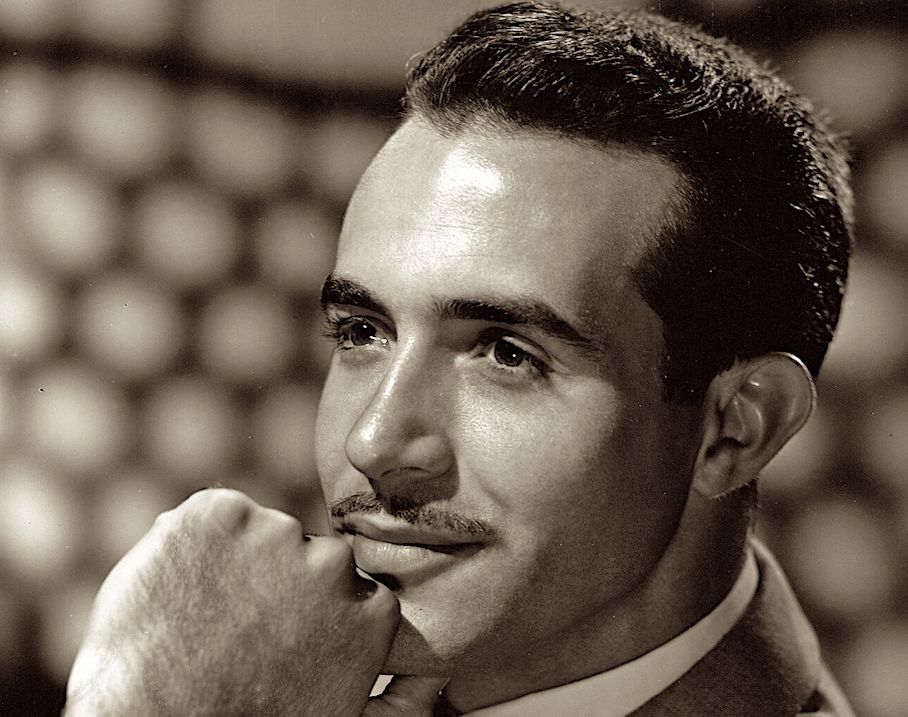
November 25, 1920 marks the birthdate of actor Ricardo Montalbán

Born in Mexico City, Mexico, to Spanish immigrants, Ricardo Montalbán made his New York stage debut in 1940 in a small role in “Her Cardboard Lover”, starring Tallulah Bankhead. In 1947 he landed his first major Hollywood film role in the musical “Fiesta”, playing twin siblings with Esther Williams. Montalbán had a memorable dance number in that film with Cyd Charisse.

The dark, handsome Montalbán with the Spanish accent would go on to play numerous Latin romantic-types. He teamed up again with Esther Williams in two more films, the musical romantic comedy “Neptune’s Daughter” and the 1948 romantic comedy “On an Island with You”. In 1949, Montalbán broke from his romantic typecast to play a border agent in the suspense drama film “Border Incident” directed by Anthony Mann.

During the 1950s and 1960s Montalbán was one of only a handful of actively working Hispanic actors in Hollywood, often playing characters of different ethnicities, such as the character Nakamura in the 1957 “Sayonara” and Tokura in a “Hawaii Five-O” episode. He also starred as a naive, penniless French duke in the romance comedy “Love is a Ball” released in 1963.

Ricardo Montalbán’s best known television role was that of the man in the white suit with the cultured demeanor, Mr. Roarke, on the television series “Fantasy Island” which ran from 1977 to 1984. The series was one of the most popular on television at that time, making him and his co-star Herve Villechaize, playing Tattoo, popular icons.

Montalbán’s most well-known film role was the character of Khan Noonien Singh in the 1982 “Star Trek II: The Wrath of khan”, in which he reprised the role he had originated in the 1967 episode of “Star Trek” titled “Space Seed”. Montalbán was already physically fit; so Khan’s costume was specifically designed to display his physique. He agreed to take the role at a significant pay cut because he relished reprising his original character. His only regret, Montalbán said, was that he and William Shatner never interacted in their roles; the scenes were all done through video communication, filming their scenes months apart to accommodate Montalbán’s schedule for “Fantasy Island”.

Montalbán reacted to the poor way Mexicans were being portrayed by establishing with other stars the Nosotros (We) Foundation in 1970 to advocate for Latinos in the movie and television industry. He served as its first president. The foundation created the Golden Eagle Awards, an annual awards show that highlights Latino actors. The awards are presented in conjunction with the Nosotros American Latino Film Festival, held at the now renamed Ricardo Montalbán Theater in Hollywood.

Calendar: November 24

A Year: Day to Day Men: 24th of November

One Facet of Life

November 24, 1639 marks the first known observation and recording of a transit of Venus.

By the 17th century, two developments allowed for the transits of planets across the face of the sun to be predicted and observed. One was the telescope of which the actual inventor is unknown; a patent for a refracting telescope was submitted in 1608 in the Netherlands by spectacle maker Hans Lippershey. Galileo heard about it, and in 1609 built his own version for observing celestial objects.

The second development was the new astronomy of Johannes Kepler, which assumed elliptical rather than circular orbits fro the planets. In 1627, Kepler published his “ Rudolphine Tables”, a star catalogue and planetary tables using some observational data collected by Danish astronomer Tycho Brahe. Two years later, Kepler published extracts from his tables concerning the transit of Mercury and of Venus for the year 1631. These occurred as predicted and were observed by several astronomers, vindicating Kepler’s approach to astronomical theory.

The first known observations and recording of the transit of Venus across the sun were made in 1639 by the English astronomers Jeremiah Horrocks and his friend and correspondent William Crabtree. These observations were made on November 24, under the Julian calendar then in use in England. This calendar was refined and gradually replaced by our Gregorian calendar initiated by Pope Gregory XIII, changing the observation date to December 4th of that year. Horrocks observed the event from the village of Much Hoole, Lancashire, and Crabtree, independently, observed the event from his home in Broughton, near Manchester.

Both men, followers of Kepler’s astronomy, were self-taught mathematical astronomers who methodically worked to correct and improve Kepler’s Tables by observation and measurement. In 1639, Horrocks was the only astronomer who realized that the transit of Venus was imminent; others became aware only upon receiving Horrocks’s report. The two men’s observations and later mathematical work were influential in establishing the size of the solar system. For their achievements, they are considered the founders fo British research astronomy.

Insert Image: Ford Madox Brown, “Crabtree Watching the Transit of Venus AD 1639”, 1883, Oil on Canvas, Manchester Town Hall, Manchester, England

Calendar: November 23

A Year: Day to Day Men: 23rd of November

Tiny Bears in a Row

November 23, 1862 was the birthdate of Belgian Neo-Impressionist painter Théo van Rysselberghe.

Born in Ghent, Théo van Rysselberghe studied at the Academy of Ghent under Theo Canneel and later at the Academie Royal des Beaux-Arts in Brussels under Jean-François Portaels. Van Rysselberghe was strongly influenced by North African paintings, which had become the fashion in Belgium. He made three trips to Morocco, staying there for a year and a half.

Van Rysselberghe painted his “Self Portrait with Pipe” in 1880, in the somber colors of the Belgium realistic tradition. His “Child in an Open Spot in the Forest”, also painted in that year, showed a move to impressionism. He started traveling extensively with his friends, impressionist Frantz Charlet and Asturian painter Dario de Regoyos, throughout Spain and Morocco, staying in Tanger for four months starting in October  of 1882. At this  time, Van Rysselberghe painted and drew many scenes form the streets and in the souk, including the 1882 “Arabian Street Cobbler”, the 1882 “Arabian Boy”, and “Resting Guard” in 1883.

Van Rysselberghe saw the works of the impressionists Monet and Auguste Renoir at the show of “Les XX” in 1886, becoming deeply impressed. He experimented with this technique in his 1886 “Woman with Japanese Album”. This impressionist influence became prominent in his later paintings. In 1886 he also discovered the pointillist techniques at that Eighth Impressionist Exhibition in Paris, abandoning realism and became an adept of pointillism,

Theo Van Rysselberghe’s “Gate of Mansour-El-Hay” and”Morocco-the Great Souk”, both done in 1887, are painted in the pointillist style, but still with short strokes of paint and not with points. These are among his rare pointillist paintings of Morocco. When he had finished these paintings, he stopped completely with this Moroccan period in his life. Van Rysselberghen then turned to portraiture, resulting in a series of neo- impressionist portraits. His famous portrait of Alice Sèthe, painted in 1888 in blue and gold, would become a turning point in his life. In this painting he used only points of paint on the canvas.

In 1898 Van Rysselberghe moved to Paris, although he maintained close links with the artistic milieu of Brussels, and executed in 1902, among other works, a series of decorative panels for the Hôtel Solvay, belonging to Victor Horta. Van Rysselberghe also played an important role in the introduction of the fauvist painters, whom he had met through his friend Paul Signac, to Belgium. From 1903 onward, his neo- Impressionism began to give way to more restrained forms, and during the last years of his life he also executed some sculptures. Van Rysselberghe died on the 13th of December of 1926 in Saint-Clair, France.

Calendar: November 22

A Year: Day to Day Men: 22nd of November

Red Knit Hat and Boots

November 22, 1932 was the birthdate of actor Robert Vaughn.

Born in New York City, Robert Vaughn studied at the Los Angeles State College of Applied Arts and Sciences, earning a Master’s Degree in theater. He received a Ph. D in communications from the University of Southern California in 1970. He published his dissertation as a book, “Only Victims: A Study of Show Business Blacklisting” in 1972.

Vaughn made his television debut in November of 1955 on the series “Medic”, the first of more than two hundred appearances on the show. He first film appearance was as an uncredited extra playing a golden calf idolater visible behind Yul Brynner in a scene from “The Ten Commandments”. Vaughn’s first credited movie role was playing Bob Ford, the killer of Jesse James, in the 1957 western “Hell’s Crossroads”.

Vaughn’s first film appearance of note was in “The Young Philadelphians”, for which he received an Academy Award nomination for Best Supporting Actor and the Golden Globe Award for Best Supporting Actor. He next appeared as the gunman Lee in “ The Magnificent Seven” in 1960, the western adaption of Kuorsawa’s epic “ Seven Samurai”.

Robert Vaughn was offered his most memorable role in 1964, starring in his own series as secret agent Napoleon Solo in the television series “The Man from U.N.C.L.E.”. His co-star was Scottish actor David McCallum who played fellow agent Illya Kuryakin. This role would make Robert Vaughn a household name even behind the Iron Curtain. This series which ran from 1964 to 1968 created a spin-off show, large amounts of merchandising, overseas theatrical movies, and a sequel.

After the series ended, Vaughn was given the role of playing the ambitious California politician Chalmers, in the critical and box-office smash film “Bullitt” starring Steve McQueen. Vaughn was nominated for a BAFTA Award for Best Supporting Actor for this role. He won an Emmy for his portrayal of Frank Flaherty in ABC’s 1977 “Washington: Behind Closed Doors”. Vaughn did acting work in England also, appearing on the BBC drama “Hustle” and the British soap opera “Coronation Street”.

Robert Vaughn died from acute leukemia in Danbury, Connecticut on the 11th of November in 2016, eleven days before his eighty-fourth birthday. He was the first popular American actor to take a public stand against the Vietnam War and was an active member in the peace group Another Mother for Peace. Vaughn published his autobiography “A Fortunate Life” in 2008.

Calendar: November 20

A Year: Day to Day Men: 20th of November

Blue Sky and Two Ravens

November 20, 1890 was the birthdate of American film actor Robert Armstrong.

Robert Armstrong, born in Bay City, Michigan, attended the University of Washington, where he studied law. He gave up his studies to manage his uncle’s touring company. In his spare time, Armstrong wrote plays, appearing in one when it was produced. In 1926, he traveled to London and appeared on the British stage for one season.

Robert Armstrong’s film career began in 1927 when he appeared in Pathé’s romantic silent film drama ”The Main Event”, produced by Cecil DeMille. He had a very prolific film career in the late 1920s and early 1930s, making nine movies just in 1928. Armstrong is best know for his role as film director Carl Denham in the 1933 monster adventure film “King Kong”. He reprised his role as Denham in the sequel “Son of Kong”, released at the end of 1933.

Merian C. Cooper, the producer of “King Kong”, used Armstrong in several more movies. Armstrong and Fay Wray starred in “The Most Dangerous Game”, filmed at night on the same sets being used during the day for “King Kong”. He worked throughout the 1930s and 1940s for several film studios, starring in the 1937 musical comedy “The Girl Said No”, released by Grand National Films. In 1940, Armstrong co-starred in the Universal Pictures film “Enemy Agent”, a story about A Nazi spy ring in the country.

In 1942, Armstrong teamed up with actor Richard Cromwell in the notable gangster B-movie “Baby Face Nelson”, playing “Doc” Rogers, the boss of ‘Baby Face’ played by Cromwell. Later he played another leading character role, similar to Carl Denham, as Max O’Hara in “Mighty Joe Young” released in 1949. This film, produced by Merian C. Cooper and directed by Ernst B. Schoedsack, became a stop-motion animation classic, winning the Academy Award for Best Visual Effects in 1950.

Armstrong appeared in the 1950s as Sheriff Andy Anderson on the syndicated wester-themed television series “State Trooper”. He also made four guest appearances on the long-running television series “Perry Mason”, playing the both title character and murder victim on one show, a defendant on another, and the murderer in “The Case of the Accosted Accountant”. Robert Armstrong died of cancer in Santa Monica, California, within sixteen hours of the death of the co-producer of “King Kong”, Merian C. Cooper.

Bottom Insert Image: Robert Armstrong and Frank Reicher, “Song of Kong”, 1933, Director Ernest B. Schoedsack, Cinematography Edward Linden, J. O. Taylor and Vernon L. Walker, Film Clip Photo

Calendar: November 19

A Year: Day to Day Men: 19th of November

Superman

November 19, 1959 marks the release date for the television show “Rocky and His Friends”.

“Rocky and His Friends” was a serialized animation show, produce by Jay Ward Productions, that ran from November 1959 to June of 1964. During its history, it appeared under several broadcast titles, most notably “The Rocky and Bullwinkle Show”. The series was structured as a variety show, with the main feature being the adventures of Rocky the Flying Squirrel and the moose Bullwinkle. Their main adversaries were the two “Russian” spies Boris Badenov and Natasha Fatale. both who worked for the Fearless Leader.

The animation show included three other supporting segments: the old-time melodrama styled “Dudley Do-Right of the Mounties”; “Peabody’s Improbable History”, in which the dog Mr. Peabody takes his boy Sherman to different historical events in time; and “Fractured Fairy Tales”, a new look, albeit slightly askew, at the classic fairy tales.

The idea for “Rocky and His Friends” was from Jay Ward and Alex Anderson, who had both collaborated on “Crusader Rabbit”, the first animated series created specifically for television. Production began in February of 1958 with the hiring of the voice actors: June Foray who voiced Rocky, Natasha, and every female character on the show; Paul Frees who voiced Boris and Inspector Fenwick,; Bill Scott who voiced Bullwinkle, Dudley Do-Right and Mr. Peabody, and William Conrad who narrated the Rocky and Dudley Do-Right segments..

“Rocky and His Friends” was sponsored by the cereal-manufacturer General Mills, who insisted that the show have an late-afternoon time slot, targeting it toward children. The writers and designers were hired; however, no animators were hired. Instead in a move to save cost, the advertising agency for General Mills outsourced the animation to a Mexican company called Gamma Productions, which caused many productions problems because of its quality of animation and mistakes in the continuity of the animated characters and scenes.

“Rocky and His Friends” abounded with quality writing and wry humor, appealing to adults as well as children. Its segments mixed puns, self-humor, and satire on the existing culture and topics in life. The animation art has an unpolished look with limited action compared to the other animated series produced at that time. Despite this, the series is still held in high esteem by critics, with some viewing it as a well-written radio program with visual images. The series was influential to the development of other animated series and, to date, has aired in one hundred countries.

Calendar: November 18

A Year: Day to Day Men: 18th of November

The Cross

November 18, 1908 was the birthdate of American comic actress Imogene Coca.

Imogene Coca, born Imogene Fernandez de Coca in Philadelphia, Pennsylvania was the daughter of José Fernandez de Coca, a conductor, and his wife Sadie Brady, a dancer and magician’s assistant.

In her youth, Imogene Coca received piano, dance, and voice lessons. While still a teenager, she moved from Philadelphia to seek a living as a dancer, starting in the chorus of the 1925 Broadway musical “When You Smile” which ran forty-nine performances in New York City. Coca came to be featured as a headliner, appearing in Manhattan nightclubs, with music arranged by her first husband, Robert Burton. She came to prominence when she began to combine music with comedy. Coca’s first big critical success was in Broadway musical revue “New Faces of 1934”. A well-received part of her act was a comic striptease, during which Coca made sultry faces and gestures but would manage to remove only one glove.

Imogene Coca played opposite Sid Caesar on “The Admiral Broadway Revue” from January to June in 1949. In the early days of live television, she again played opposite Sid Caesar in a sketch comedy program, “Your Show of Shows”, which was immensely popular from 1950 to 1954. Coca won the second-ever Primetime Emmy Award for Outstanding Lead Actress in a Comedy Series in 1951 and was nominated for four other Emmys for her work in the show. Her success in that program earned Coca her own series “The Imogen Coca Show which ran from 1954-1955.

Imogene Coca continued to appear on comedy and variety series from the 1950s to the 1980s. She appeared on “The Carol Burnett Show” and “The Hollywood Palace”, made guest appearances on “Bewitched” and “The Brady Bunch”, and occasionally appeared in films such as “Under the Yum Yum Tree” in 1963 and the 1963 “National Lampoon’s Vacation”, as Aunt Edna.

After having appeared in several Broadway musical-comedy revues and plays between the 1930s and the 1950s, Imogene Coca returned to Broadway at the age of 70 with a Tony Award-nominated performance as religious zealot Letitia Primrose in “On the Twentieth Century”, a 1978 stage musical adapted from the 1934 film. Her role, that of a religious fanatic who plasters decals onto every available surface, had been a male in both the film and the original stage production, and was rewritten specifically as a vehicle for Coca.

Bottom Insert Image: Sid Caesar and Imogene Coca, “Your Show of Shows”, 1950-1954, Publicity Shot, Shout Factory

Calendar: November 17

A Year: Day to Day Men: 17th of November

Alongside His Steed

November 17, 1933 was the released date of the Marx Brothers film “Duck Soup”.

Movies gave the Marx Brothers a mass audience, and the films were the instrument that translated what was once essentially a Jewish style of humor into the dominant note of American comedy. Although they were not taken as seriously, the Marx Brothers were as surrealist as Dali, and as verbally outrageous as Gertrude Stein. Because they worked the genres of slapstick and screwball comedy, the Marx Brothers did not get the same kind of attention. However, their effect on the mind of the population was very influential.

The Marx Brothers created a body of work in which individual films are like slices from the whole, but the 1933 “Duck Soup” is probably the best. It represents a turning point in their movie work; it was their last film for Paramount, and the last in which all of the scenes directly involved the brothers.

When “Duck Soup” became a box office disappointment for Paramount, the Marx Brothers moved over to MGM. Production chief Irving Thalberg ordered their plots pf new films to find room for roles of conventional romantic couples, breaking up the madcap routines and slowing the pace. Buster Keaton’s sound comedies for MGM suffered from the same interference, meddling and dilution by the studio.

To describe the plot of a Marx Brothers film would be an exercise in futility, since a Marx Brothers movie exists in moments, bits, sequences, and dialogue, not in comprehensible stories. The film “Duck Soup” stars Groucho as Rufus T. Firefly, who becomes dictator of Fredonia under the sponsorship of the rich Mrs. Teasdale, played wonderfully as Margaret Dumont. The neighboring nation of Sylvania and its Ambassador Trintino have designs on the country of Fredonia. So Ambassador Trintino hires Harpo and Chico as spies for information. This premise provides a basis for one inspired sequence after another, including sustained examples of Groucho’s puns and sneaky double entendres. It also supports a couple of wordless physical sequences that probably have their roots in the vaudeville acts the brothers performed and saw years earlier.

One comedy sequence in “Duck Soup” is one of the highlights of the first century of film. Harpo, who has disguised himself as Groucho, sneaks into Mrs. Teasdale’s room , tries to break into a safe and shatters a mirror. Groucho himself comes downstairs to investigate. Harpo is standing inside the frame of the broken mirror, and tries to avoid detection by pretending to be Groucho’s reflection. This leads to a sustained pantomime involving flawless timing, as Groucho tries to catch the reflection in an error, and Harpo matches every move. Finally, in a perfect escalation of zaniness, Chico blunders into the frame, also dressed as Groucho.