Virgilio Pinera: “The Waves of Music We Made”

Photographers Unknown, The Waves of Music We Made

Can it be they are going to kill?
Will they pierce the heart with a huge knife?
And with the sharpest scalpel empty the eyes?
And with the steeliest chisel break the skull?
And with the most hammer of hammers crush the bones?

Can it be that on the exotic table
–table of sex, table of love–
my love, you and I,
being startled one night
your heart spoke
when you were under my blood?
Can it be the same as it was
when it was an oath, and even more so,
your work, your word bled,
soaked by the soft perfume of kisses,
so as not to deny, to be one indivisible?
And can it be so blindly believed,
so blindly, that all the suns go dark forever
while the soul travels in darkness?
Can it be there never was a soul despite the waves of music
we made?
Soul that never was though you might be for an instant?

Renenber that instant when you were a soul and adored
me,
and then your own monster came suddenly
to take you to the place where being you were?

Can it be that after you are no longer,
when not being is merely a mound of dried out kisses,
you wil be by not being, instead of being love?

Virgilio Pinera, Poem to be Said in the Midst of a Great Silence, The Weight of the Island, 1967

Born in Cárdenas, Matanzas, Cuba in 1912, Virgilio Piñera was an author, playwright, poet, and essayist known for his avant-garde work, caustic wit, acid tongue, and bohemian lifestyle. He lived under the dual repression of the Catholic church and reactionary government leaders such as Argentina’s Juan Perón and Cuba’s Fulgencio Batista. Piñera’s homosexuality and non-conformism led to his marginalization during a well-documented period of Cuban history when homophobia and petty bureaucracy stifled creative freedom

An avid reader from an early age, which included works by Marcel Proust and Herman Melville, Piñera drew his inspiration from different genres, a foundation which became fundamental to his distinctive work with its combination of Cuban vernacular and more refined language.At the age of thirteen, Piñera’s family moved to Camagüey, a municipality located in central Cuba, where he earned his high school diploma. After settling in Havana in 1938,  he received his Doctoral Degree in philosophy from the University of Havana in 1949. 

Piñera published in his poems in Havana’s literary magazine “Espuela de Plata” and, in 1941. wrote his first poetry collection, “Las Furias (The Furies)” and  his most famous play “Electra Garrigó”, which featured the choral structure of a Greek tragedy alongside distinctive Cuban elements. Staged both before and after the revolution of Castro and Guevara, this play later became a powerful symbol of the Revolution and was consciously performed before foreign and  notable public figures as  being emblematic of the transformed nation.

Following his founding of the magazine “Poeta” in 1942, Piñera wrote his collection of poems entitled “La Isla en Peso (The Weight of the Island)”. Drawing upon episodes in his personal life as well as the social interactions occurring inside Cuba, he explored the nebulous regions between sadness and beauty, and disillusion and reality. Published posthumously after Piñera’ death in 1979, “The Weight of the Island” was initially scorned by some poets and critics; however, the collection is now regarded as one of the classics of Cuban literature.

In 1944, Virgilio Piñera, along with writer José Lezama Lima and editor and critic José Rodríguez Feo, founded the prestigious literary and arts review “Origenes”, which provided a focal point for promising poets and critics in Cuba during the 1940s and 1950s. The journal published short stories, poetry, and critical essays on art, literature, music and philosophy. Among Piñera’s contributions were several poems, an essay on Argentinian literature, and an 1945 essay entitled “El Secreto de Kafka”, a work in which Piñera developed his theory on the creation of images into a literary surprise. 

Piñera lived in Buenos Aires, Argentina, for a twelve year period from 1946 to 1958; it was  during this stay that he developed his voice as a writer. He worked as a translator and proofreader at the Cuban Embassy and became friends with writers Jorge Luis Borges and essayist José Bianco, who would write the forward to Piñera’s collection of short stories “El que Vina a Salvarme (The One Who Came to Save Me)”. Along with other writers, Piñera worked on the translation of Polish author Witold Gombrowicz’s 1937 controversial novel “Ferdydurke” into Spanish. 

Virgilio Piñera wrote two plays in Buenos Aires,  “Jesús” and “Falsa Alarma”, a fast paced, absurdist play of humor and anguish, to which he lengthened with dialogue for a later 1957 staging. His first novel, entitled “La Carne de René (René’s Flesh)”, was published in 1952 and told the dark story of a twenty-year old protagonist forced into a merciless life. After the closure of his literary review “Origenes” and the founding of his final magazine “Ciclón (Cyclone)”, Piñera left Argentina in 1958 to settle permanently in Cuba, where he arrived shortly before the Revolution. His work appeared in the newspaper “Revolución” and other numerous journals. In 1962, with the Cuban revolution in full motion, Piñera’s  most autobiographical play, “Airo Frio (Cold Air)”, a very personal celebratory work supporting the ouster of dictator Batista’s police and army, opened in Havana. 

Shortly after the opening of “Airo Frio”, Fidel Castro’s government made the decision that there was no room for any views other than those completely sympathetic to the Revolution. Intellectuals and other luminaries, as well as the religious and those youths not conforming to the revolution, were to face persecution. Virgilio Piñera, although never public about his homosexuality, was arrested under the revolutionary government’s clampdown on the prostitutes, pimps and homosexuals. By 1971, he was ostracized by the Cuban government and the literary establishment. As his career declined into obscurity. Piñera continued to write at n increased rate; however, his plays were no longer performed. 

In 1968, Piñera received Latin America’s most prestigious literary prize, the Premio Casa de las Américas, for his play “Dos Viejos Pánicos (Two Old Panics)”. Despite the award and acclaim, the play would not have its first performance in Cuba until the 1990s.  Leaving behind more than twenty plays, three novels, volumes of short stories and a vast number of poems, Virgilio Piñera, who lived the last years of his life in poverty, died of a cardiac arrest on the 18th of August in 1979, without any official recognition of his death. He is buried in his native town of Cárdenas.

As a way to redress some of the wrongs committed against Piñera in the past, Cuba declared the year 2012 as “El Añ0 Virgiliano”. In the month of June, a group of thirty researchers from countries, such as the United Kingdom, Mexico, Spain and the United States, came together in Havana to discuss the life, work and legacy of Virgilio Pañera, one of Latin America’s prominent writers. His two best known plays, “Airo Frio” and “Dos Viejos Pánicos”, were performed and a new ballet by choreographer Iván Tenorio, entitled “Virgiliando”, had its premiere. 

Note: The University of Miami Libraries contains the digital Cuban Heritage Collection which includes material on Virgilio Piñera. Included in the material are correspondence exchanged between Piñera and Adolfo de Obieta during the 1940s and 1950s, as well as a typescript of Piñera’s play “Una Caja de Zapatos Vacía” that he sent to his friend Luis F. González-Cruz, who published it in Miami in 1986. This material can be found at: https://merrick.library.miami.edu/cdm/search?collection=chc5278

Friedrich Dürrenmatt: “What Will the Future Bring?”

Photographers Unknown, What Will the Future Bring?

“What is going to happen? What will the future bring? I do not know, I have no presentiment. When a spider flings itself from a fixed point down into its consequences, it continually sees before it an empty space in which it can find no foothold, however much it stretches. So it is with me; before me is continually an empty space, and I am propelled by a consequence that lies behind me. This life is turned around and dreadful, not to be endured.” 

–Friedrich Dürrenmatt, The Assignment: or, On the Oberving of the Observer of the Observers

Born in Konolfingen, Switzerland, in 1921, Friedrich Dürrenmatt was an author and dramatist who was a proponent of epic theater, a form of dramatic, political plays staged through documentary effects and audience interaction.  After studies in philosophy and German literature, he stopped his academic career in 1943 to become an author and dramatist. He became one of the more prolific writers in the German language on the crisis of the nuclear bomb and arms race.

Written when he was twenty-six,  Dürrenmatt’s first play. the 1946 “It is Written”, revolves around a battle, occurring in a city under siege, between a religious fanatic who takes scripture literally and a cynic who craves sensation. The play’s 1947 premiere resulted in fights and protests in the audience.  Between 1948 and 1949, Dürrenmatt wrote several sketches for Zürich’s anti-Nazi Cabaret Cornichon, a Swiss cabaret company opposed to fascism and Nazism. 

Friedrich Dürrenmatt’s first major success was the 1950 play “Romulus the Great”, an exploration of the last days of the Roman Empire presided over by Romulus, its last emperor. In the same year, he published a novel entitled “The Judge and His Hangman”.  Dürrenmatt’s 1956 play “Der Besuch der Alten Dame (The visit of the Old Woman)” was a strange fusion of comedy and drama about a wealthy woman who offers a fortune to the people of her hometown if they would kill the man who jilted her years earlier.

During his youth, Dürrenmatt hesitated for a long time between a career as a writer and a painter. Although he chose writing, he continued to paint and draw, which he considered his passion. Dürrenmatt had some exhiibitons of his work in Neuchâtel, Switzerland, in 1976 and 1985; he also had a show in Zürich in 1978. A permanent exhibition of his collective work, both artistic and literary, is on display at the Centre Dürrenmatt in Neuchâtel.

Throughout four decades, Dürrenmatt produced novels, novellas, radio plays, and theater performances. Among these were the radio plays “Incident at Twilight” in 1952 and “The Mission of the Vega” in 1954, the novella “The Pledge: Requiem for the Detective Novel”in 1948, and the 1962 play “The Physicists: A Comedy in Two Acts” which dealt with scientific ethics and mankind’s intellectual responsibilities. 

In 1990, Friedrich Dürrenmatt gave two famous speeches, the first in honor of Václav Havel, the Czech statesman and former dissident, and the second in honor of Mikhail Gorbachev, who moved his country to more social democracy and promoted the policy of glasnot, or openness. Later that year, on December 14th, Friedrich Dürrenmatt died from heart failure in Neuchâtel, Switzerland.

Middle Insert Image: Frederich Dürrenmatt, “Minotaurus. Eine Ballade VII”, 1984 – 85, Ink on Paper, 40 × 30 cm,  Centre Dürrenmat Neuchâtel

Bottom Insert Image: Sabine Gisiger, “Friedrich Dürrenmatt”, from Gisiger’s  2016 documentary film “Dürrenmatt: Eine Liebesgeschichte”

Yuri Georges Annenkov

Yuri Georges Annenkov, Theater and Film Costume Design

Besides his renown as a painter and illustrator, Yuri Georges Annenkov was one of the top costume designers in French cinema from 1926 until the end of the 1950s. Born into a family of Imperial Russia’s cultural elite that suffered through the changes in political power, he was able to overcome the accusations of political radicalism that surrounded his family. This enabled Annenkov to study at the Stieglitz School of Art in Saint Petersburg, where Marc Chagall became one of his classmates.

Before the outbreak of the First World War, Annenkov traveled to Paris for further study, and began illustrating books and designing for the stage. In the period immediately after the Russian Revolution, he returned to Russian and was active in the Soviet Theater and outdoor performance shows, and also worked as a portraitist. Annenkov emigrated to Paris in 1924 where he settled and began designing ballet sets for American ballet choreographer George Balanchine and Russian ballet dancer and choreographer Léonide Massine.

In 1926, Yuri Georges Annenkov began what was to become a two-decade long career in movies. He was first engaged in 1926 to design the costumes for German film director F. W. Murnau’s production “Faust”, which would be Murnau’s last German film. From 1945 to 1955, Annekov was the president of the French Syndicate of Cinema Technicians. 

Annenkov’s most important body of work in film were the costumes he designed for the post-war films of director Max Ophüls, which included “La Ronde”, a series of character vignettes with circular visual motifs, and the 1953 “The Earrings of Madame De. .”, a romantic drama for which Annenkov received an Oscar nomination for Best Costume Design. 

The work Annenkov did as art director for Ophüls culminated with his brilliant costumes created for the director’s final film, the 1955 “Lola Montès”. The film is a deliberate exercise in overabundance and opulence, and here, guided by Ophüls, Annenkov’s use of the Baroque style is a subtle critique of excess. Filmed in Technicolor by cinematographer Christian Matras, “Lola Montès” had an important influence on the French New Wave cinema movement and has since become a cult classic.

Calendar: December 27

Year: Day to Day Men; December 27

Moss Green on a Field of Blue

The 27th of December in 1904 marks the theatrical premier of James Matthew Barrie’s play “Peter Pan”, also known as “The Little Boy Who Wouldn’t Grow Up”. The play was produced by Charles Frohman and opened at the Duke of York’s Theater in London. The lead character of Peter Pan was played by thirty-seven year old Nina Boucicault due to regulations regarding child actors. Gerald du Maurier doubled as Mr. Darling and Captain Hook. 

Peter Pan first appeared in J. M. Barrie’s 1902 novel “The Little White Bird”. This original story focused on the fictional idea that all babies where at one point birds. The inspiration for the iconic scenes of Peter Pan flying can be drawn from that idea. Peter Pan actually appeared as a minor character in a few chapters of “The Little White Bird”. 

The London play was met with positive reviews by both critics and viewers. In 1905, Frohman brought “Peter Pan” to New York where it premiered at Broadway’s Empire Theater. Maude Adams played Peter, a role she reprised in 1912 and 1915 theatrical runs. The Broadway role of Peter Pan was showcased by Marilyn Miller in 1924 and Eva Le Galliennne in 1928.

In 1906, Barrie published a second novel, entitled “Peter Pan in Kensington Gardens”, that expanded the character of Peter Pan through a series of adventures. Barrie continued to re-examine the character through multiple revisions of the play and, in 1911, wrote a third novel entitled “Peter and Wendy”. The story line for the novel was inspired by the revisions Barrie had made to the play. 

“Peter Pan” made its first adaption as a musical in 1950 with music and lyrics by Leonard Bernstein. The play starred Jean Arthur as Peter Pan and horror icon Boris Karloff as Captain Hook. However, after its initial run, this adaption virtually vanished until 2018 when Bard College did a contemporary take on the show.

The best known “Peter Pan” musical is the 1954 adaption with Mary Martin as Peter Pan and Cyril Ritchard as Captain Hook. This play, directed and choreographed by Jerome Robbins, won Tony Awards for the lead actors. Broadway revivals starred Sandy Duncan in 1979 and ex-gymnast Cathy Rigby throughout the 1990s. In 2014, a live NBC telecast of the stage show starred Allison Williams as Peter and Christopher Walken as Captain Hook.

Calendar: December 8

A Year: Day to Day Men: 8th of December

Saturday Morning After Shower

On the eighth of December in 1881, Vienna’s Ring Theater was destroyed by a gaslight fire that killed three hundred and eighty-four people.

The popular Ring Theater in Vienna, Austria was built between 1872 and 1874 by architect Heinrich von Förster from plans drawn by Emil Ritter. Opening in January of 1874 under the direction of operatic tenor and actor Albin Swoboda Sr, it was originally the Opéra Comique. In September of 1878, it changed its name to the Ring Theater and its focus to spoken plays and variety presentations as well as German and Italian operas. 

As the footprint of the theater was small and it was intended for an audience of seventeen hundred, the architect designed the theater with four levels. On the eight of December in 1881, a fire began shortly before a performance of “Les Contes Fantastiques d’Hoffmann”, a French libretto written by composer Jacques Offenbach. The theater’s entire interior was engulfed in flames and collapsed; three hundred and eight-four people perished. In 1882, new regulations for theaters were passed regarding public safety provisions, including outward-opening doors, safety curtains and the fireproofing of the theater sets. 

The Emperor of Austria and King of Hungary Franz Joseph used his private funds to build an apartment building on the site of the demolished Ring Theater. Although a private residence, it supported worthy public causes. This building also suffered a fire in 1945 with heavy damages and eventually collapsed in 1951.

Between the years 1969 and 1974, an office building occupied the site and served as the federal headquarters for the Vienna police and federal security guards: a plaque commemorating the fire is installed on the police headquarters. The original Attic-styled statues from the Ring Theater are now in Vienna’s Pötzleinsdorfer Schlosspark, a sprawling natural preserve with statues, wildlife areas and a small farm. 

Calendar: November 25

A Year: Day to Day Men: 25th of November

The Jaguar Hunter

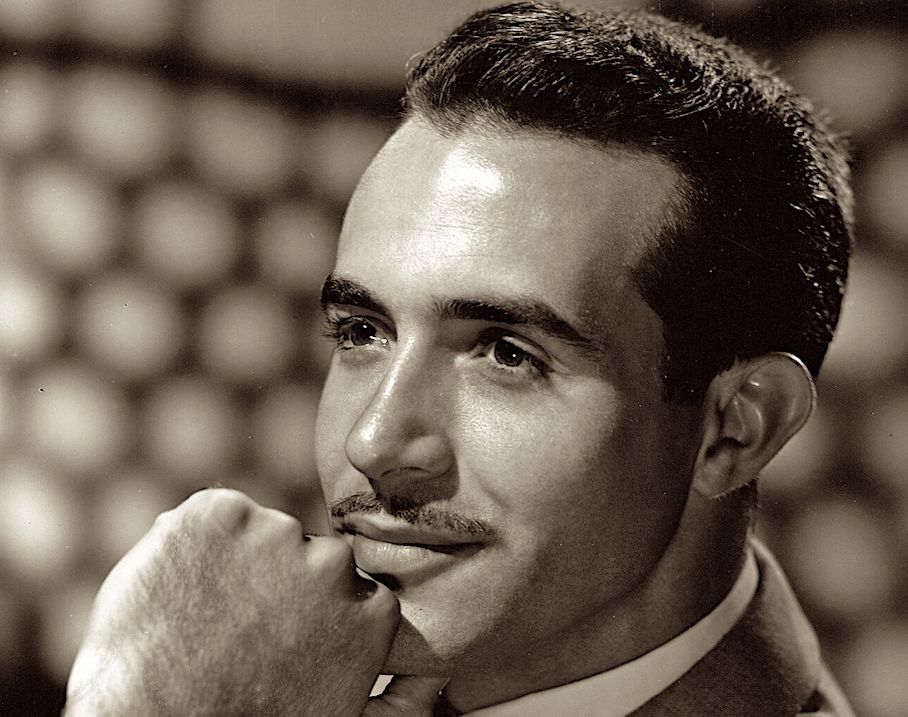
November 25, 1920 marks the birthdate of actor Ricardo Montalbán

Born in Mexico City, Mexico, to Spanish immigrants, Ricardo Montalbán made his New York stage debut in 1940 in a small role in “Her Cardboard Lover”, starring Tallulah Bankhead. In 1947 he landed his first major Hollywood film role in the musical “Fiesta”, playing twin siblings with Esther Williams. Montalbán had a memorable dance number in that film with Cyd Charisse.

The dark, handsome Montalbán with the Spanish accent would go on to play numerous Latin romantic-types. He teamed up again with Esther Williams in two more films, the musical romantic comedy “Neptune’s Daughter” and the 1948 romantic comedy “On an Island with You”. In 1949, Montalbán broke from his romantic typecast to play a border agent in the suspense drama film “Border Incident” directed by Anthony Mann.

During the 1950s and 1960s Montalbán was one of only a handful of actively working Hispanic actors in Hollywood, often playing characters of different ethnicities, such as the character Nakamura in the 1957 “Sayonara” and Tokura in a “Hawaii Five-O” episode. He also starred as a naive, penniless French duke in the romance comedy “Love is a Ball” released in 1963.

Ricardo Montalbán’s best known television role was that of the man in the white suit with the cultured demeanor, Mr. Roarke, on the television series “Fantasy Island” which ran from 1977 to 1984. The series was one of the most popular on television at that time, making him and his co-star Herve Villechaize, playing Tattoo, popular icons.

Montalbán’s most well-known film role was the character of Khan Noonien Singh in the 1982 “Star Trek II: The Wrath of khan”, in which he reprised the role he had originated in the 1967 episode of “Star Trek” titled “Space Seed”. Montalbán was already physically fit; so Khan’s costume was specifically designed to display his physique. He agreed to take the role at a significant pay cut because he relished reprising his original character. His only regret, Montalbán said, was that he and William Shatner never interacted in their roles; the scenes were all done through video communication, filming their scenes months apart to accommodate Montalbán’s schedule for “Fantasy Island”.

Montalbán reacted to the poor way Mexicans were being portrayed by establishing with other stars the Nosotros (We) Foundation in 1970 to advocate for Latinos in the movie and television industry. He served as its first president. The foundation created the Golden Eagle Awards, an annual awards show that highlights Latino actors. The awards are presented in conjunction with the Nosotros American Latino Film Festival, held at the now renamed Ricardo Montalbán Theater in Hollywood.

Calendar: November 6

A Year: Day to Day Men: 6th of November

The Edge of the World

November 6, 1914 was the birthdate of character actor Jonathan Harris.

Born in the Bronx section of New York City, Jonathan Harris was the son of a Russian-Jewish family. He attended Fordham University, New York, to study medicine, earning a degree in 1936. Harris transformed himself into the American idea of an Englishman by replacing his Bronx accent with the lightly modulated vocal tone he heard on British films.

After joining the Millpond Playhouse repertory company, on Long Island in 1939, Harris appeared in more than 100 regional theaters, before his debut on Broadway in 1942. He appeared in the 1946 play “A Flag is Born” opposite Quentin Reynolds and Marlon Brando. His first television work came in 1949 with The Chevrolet Tele-Theatre’s “His Name Is Jason”, followed by roles in many other series: “Bonanza”, “The Twilight Zone”, “Zorro” and others.

Jonathan Harris was in a co-star role opposite Michael Rennie, who played Harry Lime, in the television series “The Third Man”, playing sidekick Bradford Webster for seventy-two episodes. From 1963-1965, Harris co-starred in the sitcom “The Bill Dana Show”. He played Mister Phillips, the pompous manager of a posh hotel who is constantly at odds with Bill Dana’s character José Jiménez.

Jonathan Harris was cast over two other actors for the role of Dr. Zachary Smith, the evil and conniving double agent on “Lost in Space”. The series was already in production when Harris joined the cast, and the starring/co-starring billing had already been contractually assigned. Harris successfully negotiated to receive “Special Guest Star” billing on every episode.

The series was successful upon its debut, and midway through the first season, Harris began to rewrite his own dialogue. Due to Harris’s popularity on the show, creator and producer Irwin Allen approved his changes and gave him carte blanche as a writer. Harris subsequently stole the show, mainly via a seemingly never-ended series of alliterative insults directed toward The Robot, which soon worked their way into popular culture.

Jonathan Harris spent much of his later career as a voice actor, heard in television commercials as well as cartoons such as “Darkwing Duck”, “A Bug’s Life”, the series “Buzz Lightyear of Star Command”, and “Toy Story 2”. In 2001, a year prior to his death, he recorded voice work for the animated theatrical short “The Bolt Who Screwed Christmas”. This film, Harris’s last work, was released posthumously in 2009.

Calendar: November 4

A Year: Day to Day Men: 4th of November

The Heat of the Sun

November 4,1896 was the birthdate of American character actor Ian Wolfe.

Born in Illinois, Ian Wolfe worked in theater productions until 1934 when he started his career as a character actor in film and later television. Central to Wolfe’s appeal was the fact that, until he reached actual old age, he always looked considerably older than he actually was. His career lasted until the last years in his life, encompassing almost four hundred roles in television and film, including many classics.

Ian Wolfe appeared in many well known films: Alfred Hitchcock’s “Saboteur” playing Robert in the film noir spy thriller; “Rebel Without a Cause” as Dr. Minton, the astronomy professor; the role of Maggs in the 1935 “Mutiny on the Bounty”; and George Lucas’s “THX 1138”, playing the prisoner PTO.

American at birth, Ian Wolfe, because of his experience in theater, had very precise diction which caused him to be often cast as an Englishman. He appeared in the 1943 film :Sherlock Holmes in Washington” , as an antique shop clerk. He also was in the final film of the Holmes series, the 1946 “Dressed to Kill” as the Commissioner of Scotland Yard. In Billy Wilder’s “Witness for the Prosecution”, Ian Wolfe played Carter, chief clerk to Sir Wilfrid, played by Charles Laughton.

Ian Wolfe guest-starred on many television series over the course of his career. The first season of “The Lone Ranger” had him playing a crooked small town doctor attempting to swindle a man. He  appeared on the episode “The Case of the Midnight Howler” of the 1966 “Perry Mason” series. Star Trek fans will recognize him in two episodes of the original series: the 1968 “Bread and Circuses” as Septinus, and the 1969 “All Our Yesterdays” acting in the role of Mr. Atoz.

Wolfe’s last film role, at the age of 94, was as Munger in the 1990 released “Dick Tracy”, produced and directed by Warren Beatty. Ian Wolfe died a year later at the age of 95 of natural causes in January of 1992.

“Mostly, they know the face, but they don’t know the name. Some people are funny. Some are nice. They don’t try to take up your time. They say, “I see you a lot and I sure enjoy you” and they’re gone. It’s my voice, too, that people recognize. I had no idea that my voice is distinctive in any way. But people will say, “I knew you by your voice”. – Ian Wolfe

Calendar: November 1

A Year: Day to Day Men: 1st of November

The Revelation From On High

November 1st was the opening day of two of William Shakespeare’s plays.

On November 1, 1604, William Shakespeare’s tragedy play “Othello”, believed to have been written in 1603, had its first presentation in the Banqueting House at Whitehall. The story revolves around Othello, a Moorish general in the Venetian army, and his jealous and traitorous ensign, Iago. It is believed to  be based on the story “A Moorish Captain” by Giovanni Battista Giraldi, the Italian novelist and poet. However, the story also resembles an incident in the tale “The Three Apples” from the “Arabian Nights” collection.

Shakespeare, while following the story of Giraldi, departed from it in some details, such as adding minor characters. The major departure is the death of the heroine Desdemona. In his presentation, Shakespeare has Othello kill Desdemona by suffocation, toning down the violence. In Giraldi’s story, the “Moor” bludgeons his wife to death with a sand-filled stocking, described in gruesome detail. In Shakespeare’s play, Othello, commits suicide; and in Giraldi’s tale Othello is exiled and then pursued by Desdemona’s relatives who kill him.

Later performances of “Othello” occurred in April of 1610 at the Globe Theater and at Oxford in September of 1610. It also was performed at the Blackfriars Theater in London by the King’s Men, an acting company to which Shakespeare belonged for most of his career. “Othello” was one of twenty plays performed by the King’s Men during the winter of 1612, in celebration of the wedding of Princess Elizabeth and Frederick V, the Electorate of the Palatinate region of the Holy Roman Empire.

On November 1, 1611, Hallowmas night, Shakespeare’s romantic comedy “Tempest”, believed to have been written 1610-1611, was first presented by the King’s Men before King James I and the English royal court at Whitehall Palace. This play was also one of the twenty plays performed to celebrate Princess Elizabeth’s marriage. The next recorded performance was at the Blackfriars Theater in 1669; this is supported by the stage directions written within the play script.

The “Tempest” differs from Shakespeare’s other plays, being organized in a stricter Neo-classical style. Shakespeare in the “Tempest” observed the three rules of drama: the play’s plot  should have one action that it follows, with minimal subplots; the action in the play’s plot  should occur no longer than a day’s span; a play’s plot should exist in a single physical space with the stage representing that place. Shakespeare’s other plays’s plots took place in multiple separate locations and over the course of several days or years.

Calendar: October 24

A Year: Day to Day Men: 24th of October

Zebra Stripes

October 24, 1882 was the birthdate of English actress Dame Agnes Sybil Thorndike.

Sybil Thorndike was born in Gainsborough, Lincolnshire, and was educated at the Rochester Grammar School for Girls. She trained as a classical pianist, visiting London to attend lessons at the Guildhall School of Music and Drama, an independent arts school. Thorndike gave her first public performance as a pianist at the age of eleven. However, in 1899, she was forced to give up playing due to cramps affecting the muscles in her hand and forearm.

Sybil Thorndike’s brother, the author Russel Thorndike, encouraged her to train as an actress under voice teacher Elsie Fogerty at her school, the Central School of Speech and Drama in London. Thorndike was offered her first professional contract at the age of 21: an United States tour in actor Ben Greet’s company. She first appeared on stage in the 1904 production of “The Merry Wives of Windsor” by Shakespeare. Thorndike continued touring the US for four years doing Shakespearean repertory and playing 112 different roles.

In 1908, Thorndike was understudy for the role of Candida in a tour directed by George Bernard Shaw, who recognized her talent. It was on this tour that she met her future husband, Lewis Casson, a British actor and theater director. Later in 1908, she joined theater manager Annie Horniman’s company, playing various roles over a three year span. She joined the non-profit Old Vic Company in London, playing leading roles in Shakespeare and other classical plays.

From 1920 to 1922 Thordike and her husband starred in a British version of the French ghoulish and grisly “Grand Guignol” that was directed by Jose Levy. She appeared in the title role of “Saint Joan” in 1924, a play written specifically for her by George Bernard Shaw. It was a major success and was revived repeatedly until her final performance in that role in 1941.

During the second World War, Sybil Thorndike and her husband toured in Shakespearean productions on behalf of the Council for the Encouragement of the Arts, before joining Laurence Olivier for the 1944 season at the Old Vic Theater. After the war, it was discovered that she was listed in the Nazi “Black Book” as one of the Britons who were to be arrested and held after a future Nazi invasion of Britain.

Sybil Thorndike was made Dame Commander of the Order of the British Empire in 1931. She was made a Companion of Honor, an award for outstanding achievements, in 1971. She and her husband, Lewis, who was knighted in 1945, were one of a few couples who both held titles in their own right. She is one of the principal characters portrayed in Nicholas de Jongh’s play “Plague Over England”, about John Gielgud’s arrest for homosexual acts in 1953. Sybil Thorndike passed in June of 1976 and her ashes are buried in Westminster Abbey.

Calendar: October 14

A Year: Day to Day Men: 14th of October

The Maroon Leather Armchair

October 14, 1893 was the birthdate of silent film and stage actress Lillian Gish.

After appearing for thirteen years with her sister Dorothy on the vaudeville stage, Lillian Gish eventually found her way onto the big screen. In 1912, she met famed director D. W. Griffith, who immediately cast her in what was to be her first film, the 1912 “An Unseen Enemy”. This was followed the same year by two more films: “The One She Loved”,  and “My Baby”. Gish would make a total of twelve films for Griffith in 1912.

After performing in twenty five films in the next two years, Lillian Gish’s exposure to the public was so great that she fast became one of the top stars in the industry, alongside “America’s Sweetheart” Mary Pickford.. In 1915, Lillian Gish starred as Elsie Stoneman in Griffith’s most ambitious project to date, the 1915 “The Birth of a Nation”. Although the number of films that she now appeared in were not as frequent as her first years, she was popular and successful enough to be able to pick and choose the right films. In 1916, Gish appeared in another Griffith classic, “Intolerance: Love’s Struggle Throughout the Ages”.

By the early 1920s, Gish’s career was slowing down; new actors and actresses appeared on the scene, replacing former stars. Lillian Gish did not appear at all on the screen again until the year of 1926. She appeared in “La Boheme” as Mimi and “The Scarlet Letter” in the lead role as Hester Prynne. As the 1920s ended, silent films were being replaced with the new sound films. At this time, Lillian Gish returned to stage productions which were acclaimed by the public and critics alike.

In 1933, Gish filmed “His Double Life” with Roland Young, and then didn’t make another film for ten years. When Gish did return in 1943, she played in two big-budget pictures, the 1942 “Commandos Strike at Dawn” and “Top Man” released in 1943. Although these roles did not bring her the attention she had in her early career, Gish still proved she could hold her own with the best of them. She later earned an Oscar nomination as Best Supporting Actress for her role of Laura Belle McCanles in the 1946 “Duel in the Sun”, but lost to Anne Baxter for her performance in “The Razor’s Edge”.

One of the most critically acclaimed roles of Lillian Gish’s career came in the 1955 thriller “The Night of the Hunter”, also notable as the only film directed by actor Charles Laughton. Lillian Gish made in 1987 what was to be her last motion picture, “The Whales of August”, a box-office success that exposed her to a new generation of fans. After a seventy-five year career in film, on February 27, 1993, Lillian Gish died at age 99 peacefully in her sleep in New York City.

Simeon Solomon

Simeon Solomon,  Frontispiece to His Book ‘”A Vision of Love Revealed in Sleep”’, 1871

Solomon’s “A Vision of Love Revealed in Sleep” is an important early gay text, a prose poem,which was privately published in 1871. The image above is captioned “Until the day break and the shadows flee away”, a quotation from the Bible in the Song of Solomon 2:17.

The performance by Neil Bartlett, entitled “A Vision of Love Revealed in Sleep”, was an one-man homage to the life and work of Pre-Raphaelite painter Simeon Solomon. The performance was originally created and performed at the height of the first wave of the British AIDs epidemic in 1987.

Calendar: October 8

A Year: Day to Day Men: 8th of October

Thumb in Briefs

October 8, 1910 was the birthdate of American actor Kirk Alyn, born John Feggo Jr.

Kirk Alyn was born to Hungarian immigrant parents in New Jersey. He started his career as a chorus boy for Broadway plays, appearing in musicals such as the 1930 “Girl Crazy” and Hellzapoppin” on Broadway in 1938. Alyn also worked as a singer and dancer in vaudeville acts before he went to Hollywood in the early 1940s to act for feature films. He was only successful in getting bit parts in low-budget movies.

Kirk Alyn was featured in movie serials, including the 1948 “Federal Agents Versus Underworld Inc”, the 1950 “Radar Patrol Versus Spy King” and the 1952 “Blackhawk”, a spy thriller based on a Quality comic book. In 1948 he had a role as a police officer in the Charlie Chan series film “The Trap”. In early 1948, Kirk Alyn achieved his fame when producer Sam Katzman of Columbia Pictures asked him to play Superman.

Alyn played Superman for the first live-action “Superman” movie serial, released in 1948. The serial consisted of fifteen episodes covering Superman’s arrival on earth, his job at the Daily Planet newspaper, and his meeting Lois Lane and Jimmy Olsen. The series revolved around Superman’s battle with the arch criminal Spider Lady. Two years later another serial was released entitled “Atom Man Versus Superman”, featuring Lyle Talbot as the villain Lex Luthor.

In these serials, Kirk Alyn gave a different portrayal of Clark Kent, emphasizing the element of his disguise, a tradition of the older radio series. Superman’s flight was effected by Alyn jumping up, at which point an animated character made by rotoscoping flew away. Initially wires were used for the first serial but were clearly visible in the footage; so the animation was used instead.

Kirk Alyn was the Grand marshal of the Metropolis, Illinois Christmas parade and Annual Superman Celebrations many times. DC Comics named him in 1985 as one of the honorees in the company’s 50th anniversary publication “Fifty Who Made DC Great”. Alyn died in 1999 in The Woodlands, Texas, was cremated, and had his ashes scattered off the coast of California.