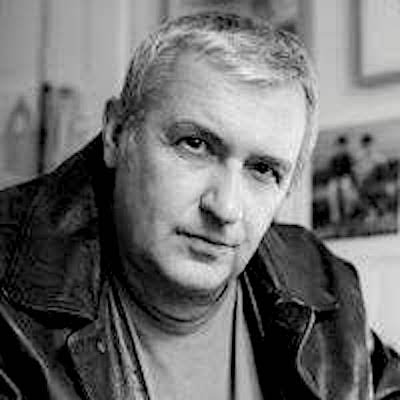
Herbert List

Photography by Herbert List

Herbert List was a classically educated artist who combined his fascination with  Surrealism and Classicism with his love for photography. His austere, classically posed black and white compositions, particularly his Greek and Italian homoerotic nudes, became a prominent influence on both fashion and contemporary photography. 

Born in Hamburg, Germany, in October of 1903 to a wealthy business family, Herbert List  studied art and literature between 1921 and 1923 at the University of Heidelberg. In 1923, he began to travel for the family’s coffee business, Kaffee-Import Firma List & Heineken. List made contacts and visited plantations in Costa Rica, Guatemala, Brazil and El Salvador; during this four year period, he began to record his travels photographically.  

Through his connections to the European avant-garde, List became associated with  American photographer Andreas Bernhard, known for his dynamic black and white city scenes and natural structures. Bernhard  introduced him to the Rolleiflex camera which allowed for more sophisticated compositions. Beginning in 1930, influenced by the Bauhaus artists and  the emerging surrealist movement, List began photographing still life and portraits of friends, often employing draped fabrics, masks, and double exposures. 

Once the National Socialist Party was in control of Germany, the Gestapo began to pay attention to Herbert List’s openly gay lifestyle and Jewish heritage. In 1936, he left Germany for Paris and decided to begin a professional career as a photographer. During 1937 List maintained a studio in London and held his first solo show at Galerie du Chasseur d’Images, the first Paris gallery dedicated to photography.  Starting in 1936 with a reference from fashion photographer George Hoyningen-Huene to Harper’s Bazaar magazine, List began a three year period working as a fashion photographer for various magazines, including Verve, Vogue, and Life.

Dissatisfied  with fashion photography, List returned to his still life and portraiture  work. He traveled throughout Greece from 1937 to 1939 where he took photographs of ancient temples, sculptures and landscapes; two hundred of these photographs would be published in his 1953 “Licht Über Hellas: Eine Symphonie in Bildern”. During this time, List supported himself with work for magazines and the press, and by doing portraiture work. 

Working in Athens, Herbert List hoped to escape World War II; however, when troops invaded Greece, he was forced in 1941 to return to Germany, where, due to a grandparent’s Jewish heritage, he was denied the ability to work or publish professionally. Near the end of the war in 1944, despite his Jewish heritage, he was drafted into the German military and served in Norway as a map designer. A trip to Paris during his military service allowed him the opportunity to photograph images of Jean Cocteau, Pablo Picasso, Georges Braque, Jean Arp, Joan Miró, and other artists.

After the war, List continued to live in Munich until 1960, where he photographed its ruins and produced freelance photo essays for newspapers and magazines such as Look, Picture Post, Heute, and Harper’s Bazaar. List was made art editor in 1948 for the Swiss-German language, daily free newspaper Heute, which was published by the Allied Forces. In 1951 through an invitation by photojournalist Robert Capa, he started contributing photographs to Magnum, an international photographic cooperative. 

Through the next decade Herbert List focused his interest on photographing life in Italy. where he shot photo essays, street scenes, architectural views, and portraits using a 35 mm camera and a telephoto lens. His work became more spontaneous and was influenced by the Italian neorealist film movement and the work of his Magnum colleague Henri Cartier-Bresson. List ’s travels for his photographic work was extensive, including trips to Spain, France, Mexico, and the Caribbean. 

List’s publications include “Rom”, a collection of his work in Rome, published in Munich in 1950:“Caribia”, his Caribbean Island series published in 1958: “Nigeria”, published in 1963; and “Napoli”,  a 1962  collaboration with Italian director Vittorio de Sica. List is best known for his  1988 book “Junge Männer”, a collection of seventy images of young men lounging in the sun, wrestling, or gazing at the camera. The introduction of the book was written by English novelist Stephen Spender, who fictionalized List as Joachim Lenz in his novel “The Temple”. 

Herbert List passed away in Munich on the 4th of April in 1975. His archive of photographs, originally part of the Ratjen Collection, is now housed in the National Gallery in Washington DC. His work is held in many private and public collections, including New York’s Metropolitan Museum of Art, Boston’s Museum of Fine Art, Kunsthaus Zürich, Cologne’s Museum Ludwig, Munich;s Stadtmaueum, and the Musée Picasso in Paris.

Insert Images:

Herbert List, “Self Portrait, Herrsching”, 1947, Silver Gelatin Print

Herbert List, “Man and Dog”, 1939, Gelatin Silver Print

Photographer Unknown, “Herbert List and Max Scheler, Venice”, 1952, Silver Gelatin Print, Mas Scheler Estate

Herbert List, “Young Man Under Reed Roof, Torremolinos”, 1951, Gelatin Silver Print

Chris Plytas

Photography by Chris Plytas

Born in 1953 in London, Chris Plytas is an established contemporary visual artist whose work covers the psychology of self-image and identity. His photographic portraiture works have been admired often for their way of unearthing the primal and sensual core of their subjects, and the way they sometimes straddle the borderline between beatific innocence and animal rage.

From 1974 to 1977, Plytas studied fine art, painting and sculpture at St. Martins School of Art in London and earned a BFA with honors. After graduation, he developed his darkroom skills on landscape and portraiture photography.Plytas also  did reportage photography for publications, in which he covered  events such as night clubs, concerts, fashion shows, the Royal Wedding, and the Cannes Film Festival.

During the period form 1977 to 1985, Chris  Plytas did photographic printing, layouts, and personal design realization in London for Vivienne Westwood, the English fashion designer largely responsible for bringing punk and new wave fashions into the mainstream. In 1982, he became Director of Berwick Universal Pictures, Limited, an award-winning documentary film company based in Soho, London.  Starting in 1985, Plytas began concentrating on his own personal, black and white, fine art photography, shot with Hasselblad cameras, for exhibition and personal archives. 

Chris Plytas’ first series, entitled “Australia”, was shot over a six month period mostly in the New South Wales and Victoria provinces of Australia. This large body of work, consisting of landscape and portraiture, was exhibited in 1987 at London’s Photographers Gallery and toured Europe for six years with support from Fonds National d’Art Contemporain, a public collection of France’s contemporary art. 

Starting in 1987, Plytas engaged in a six-year shoot for his series “Hadrian: The Violence and Sexuality of Adolescence” series, a coming of age story shot in real time. His next series “Le Corps Enjeux (The Body)” was shown as part of the Mois de la Photo exhibition, sponsored by Audiovisuel and Kodak,  held in Paris in 1988. Plytas spent a year from 1992 to 1993 in the Xi’an and the Yannan regions of China, where he shot his “China: Voyage to the East” portfolio, a series which he dedicated to Sun Wukong, the trickster Monkey King.

Known for his exhibited photographic series, Chris Plytas began to receive commissions for portraiture work. His “Family Portraits” series was commissioned by the De Ganay Archives and, at present, consists of forty-eight individual portraits of members of the French aristocratic family. He has also received portraiture commissions from various  other European  and American families 

After shooting his “Miami Beach” series in  1994.  Plytas  has continued working, throughout his career, on multiple personal portfolios, some of which have been exhibited and published. These include his “The Burden of Classicism”; “Nature and Nurture”; “Youth: A Retrospective” shot in Italy; “Beach-Scapes” shot in  Italy and Sicily; a series entitled “Allegorical Portraits”; and “Blood Ties”, a portfolio documenting family member connections.

In addition to his participation in numerous group exhibitions, Plytas  has shown his work in solo gallery exhibitions, including  Paris’ Galerie PONS in 1995, Paris’ Galerie Serge Aboukrat in 2000, a 2002 exhibition in Italy entitled “Frascati Doc”, an exhibition project at the Chateau de Courances in France in 2004, and in 2015 a Paris exhibition entitled “What is Erotic?”. 

Chris Plytas’ work is available in limited editions and custom portfolios. Private individual or family portraits can be commissioned. His website is located at: https://www.chrisplytas.com/index

Insert Images:

Chris Plytas,, Title Unknown (Slogan on Wall), 1992-93, China, Voyage to the East Series, Silver Gelatin Print

Chris Plytas,, “Boy and Girl Entwined”, 1986-2003, The Body Series, Silver Gelatin Print

Andreas Fux

Photography by Andreas Fux

Born in East Berlin of the German Democratic Republic in 1964, Andreas Fux is a photographer whose body of work focuses on how the human individual evolves into his own artistic creation. He belongs to the Prenzlauerberg photo artist scene, which documented the last decade of the German Democratic Republic. 

Andreas Fux initially trained from 1980 to 1982 as an electrician. In 1983, he began his own sstudy of  the process and techniques of photographic work. During the years between 1983 and 1988, Fux exhibited his photographs in private gallery spaces. His first published works appeared in a 1988 issue of Das Magazin, a monthly East Berlin magazine that focused on culture and lifestyle. Working as a freelancer, Fux provided the publication with black and white photographs covering Berlin’s punk and youth culture.

 In 1989, Fux worked on photo productions for Deutsche Film-Aldiengesellschaff, the state-owned film studio of East Germany. Since 1990, he has been working as a freelance photographer for various newspapers and magazines, as well as executing his own photographic projects. In 1992, Fux’s first solo photographic book was published entitled “The Russians”; it was a supplement to his solo exhibition, of the same name, at the Janssen Gallery in Berlin, a show which later traveled to Hamburg and Munich. 

Andreas Fux gained a wider audience for his work with the 2005 series “The Sweet Skin”, which covered a decade of works between 1995 and 2005. For this series of portraits which focused on tattoos and skin scarification; he followed the lives of his models, with daily documentation and night shoots in his studio. Against a mostly white background and in the silence of the photo studio, nude photographs of his models were taken, in which the contrast between intimacy of the body and clinical sterility of the room was exaggerated. In another series entitled “At the End of the Night”, whose topic was body culture, the nude, and sexuality, Fux posed his subjects against a black background with a selective light source that modeled and fragmented the models sculpturally. 

Fux’s 2001 series “The Horizonte” is reminiscent in its formality of the 1980s “Seascapes” series done by Japanese photographer and architect Hiroshi Sugimoto, in which Sugimoto bifurcated the landscape images exactly in half by the horizon line. At the beginning of September 2001, Fux travelled across the North Sea on board a Ukrainian training sailboat. For this series, he celebrated the beauty of the horizon as an interaction between sea, clouds and light. The images of “The Horizonte” series were seen by the critics as an expression of calm and innocence. For his 2010 series “Kerberos and Chimaira”, Fux staged his motifs in a wind tunnel at Berlin-Adlershot. Using the strict compositions of expressionism and the aesthetic codes of the latex and fetish scene, his series examined  a dangerous and often not considered proximity between the erotic picture codes of fetishism and the aesthetics of National Socialism.

For his 2016 exhibition “Shame and Beauty”,  Andreas Fux opposed new portraits with a selection of older works, a combination which showed the development of his oeuvre over the years. His new work preserved the almost tender and respectful handling of his subjects found in his early works. The photographic sessions in which he bathed his models in soft light took an entire night, were meticulously planned, and took place in a highly sensitized atmosphere. This Berlin show contextualized the discussion on governmental and social repression and persecution; the works in this show had previously been exhibited by Fux in Moscow in September of 2015 under rather adverse conditions.

Andreas Fux has had solo exhibitions in Germany and abroad, including the Widmer and Theodoris Gallery in Zurich, the Photo Festival in New York, the Esther Woerdehoff Gallery in Paris and the Pasinger Fabrik Gallery in Munich.

A collection of Fux’s photo work from Berlin can be found at: https://andreas-fux.berlin

Franz Szony

Photographic Work by Franz Szony

Raised in Reno, Nevada, Franz Szony is a writer and photographic artist whose main body of work, both in its fine art and commercial forms, embraces conceptual portraiture. 

After finishing his primary education in 2014, which included art classes at an early age, Szony relocated to San Francisco where he attended the Academy of Art. At the academy, he initially studied fashion and illustration, and, later. focused on photography. After learning the technical aspects of photography, Szony returned to his hometown of Reno where, as a freelance artist, he photographed different advertisement campaigns for newspapers, theaters, and several casinos. He exhibited his own work in a small gallery he created and hosted monthly nude drawing workshops in that space. 

Szony moved to Los Angeles in 2012 and settled in the Brewery Artist Loft complex, an industrially zoned area where artists rent living and working space. Inspired by the area’s creative energy, he photographed campaigns for perfume and fashion brands, created album covers, and did creative photographic work for companies, including Disney and Warner Brothers. 

Influenced by illustrators such as Marc Davis and Erte, and, at an early age, by the extravagant stage shows of Reno’s casinos, Franz Szony’s conceptual portraiture work is lush both in its color and settings. His images are presented ambiguously in time and place, and androgynously in character. Szony’s photographs often contain symbolic or mythological elements and convey psychological, political, and sexual identity messages to the viewers.  

Franz Szony is also a songwriter who has produced several music videos in which he has incorporated his poetry and visual art. Shot over a period of three days, his music video, “Petunia”, based on several of his photographic pieces, was released in 2018. Other music videos by Szony include “La Petite Mort”, “Antibeige”, and “Pansy”, also released in 2018; and “What You Seek” and “Surrender Dorothy”, both released in 2020. 

Szony had solo exhibitions at Reno’s Sierra Arts Foundation in 2015 and at Hollywood’s World of Wonder Gallery in 2019. His work is included in many private collections. Franz Szony’s website is located at http://www.franzszony.com

William Orpen

William Orpen, “Self Portrait on Cliff Top in Howth”, cica 1910, Black Charcoal and Gouache, 50.5 x 36.5 cm, Private Collection

Born in County Dublin in November of 1878, William Newenham Montague Orpen was an Irish draftsman and portrait painter of London’s wealthy Edwardian society. A talented figure of British-Irish Post-Impressionism, he was the youngest son of wealthy, amateur painters and a gifted student who learned rapidly from a succession of celebrated tutors. 

William Orpen was enrolled at the Dublin Metropolitan School of Art in 1891, where he studied from 1892 to 1896.  He continued his studies at London’s Slade School of Art between 1897 and 1899, under figurative painter Henry Tonks, landscape painter Philip Wilson Steer, and genre and portrait painter Frederick Brown. Having mastered oil painting and different painting techniques, Orpen’s work, during his six years of study, received many prizes including the British Isles gold medal for life drawing.

Upon graduation from the Slade School, Orpen, along with his fellow graduate, Welsh painter Augustus John,  opened in the autumn of 1903, the Chelsea Art School, a private teaching studio, near King’s Road in Chelsea. Although it was meant as a joint venture, most of the teaching and running of the school was undertaken by John, with Orpen’s chief contribution being a series of lectures on anatomy. Both male and female students were admitted to the school but, despite John’s own bohemian lifestyle, the sexes were segregated for the Life classes. The project was not a success, and, after the waning of both’s interest, the school closed in 1907.

From 1902 to 1915, William Orpen, in addition to his classes at the Chelsea School, taught at the Dublin Metropolitan School of At, where his pupils included portrait painter Margaret Clarke,  romantic-realist painter John Keating, and cartoonist Grace Gifford. In the summer of 1904, he and his friend and mentor, the gallery director and art dealer Hugh Lane, traveled to Paris and Madrid. Orpen guided Lane on the purchase of Impressionist works, and Lane, several years later, commissioned Orpen for a portrait series of notable Irish figures to be displayed at Dublin’s  Municipal Gallery of Modern Art. In 1908, Orpen began exhibiting his work regularly at London’s Royal Academy;  the work in this period was done in a distinctive open-air style that featured figures composed of touches of color.

Starting in 1912, Orpen began his successful career as a portrait painter with a series of portraits of his favorite model, Vera Brewster Hone, the wife of writer Joseph Hone. This series, of such quantity that Orpen numbered them instead of naming them, included the 1912 “The Angler” and the 1918 “The Roscommon Dragoon”, which portrayed Vera Brewster wearing a Dragoon uniform. With the support of painter John Singer Sargent, Orpen built a reputation, in both Dublin and London, as a fashionable portrait painter who presented his subjects in a traditional, polished style. He also painted several group portraits, a popular genre at the time, which include the 1912 “The Cafe Royal in London”, depicting Orpen and Augustus John,  and the 1909 “Homage to Manet”, with the subjects, including Hugh Lane and Henry Tonks, assembled before Manet’s portrait of Eva Gonzales.

In December of 1915, as World War One commenced, William Orpen was commissioned into the Army Service Corps. In January of 1917, through connections with the senior ranks of the British Army, he was given the title of an official artist, which included a promotion to major and unrestricted access to the Front areas in France. Throughout the war years, Orpen painted battle locations, trench scenes, and many portraits of both enlisted men and officers. For his work in this period, he stopped using half-tones and half-shades and adopted a new palettes of colors, with weak purples,  bright greens, and large white spaces of sunlight. Many of these war artist works are in the collection of the Imperial War Museum in London.

Both before and after the war, Orpen produced a number of realistic self-portraits. in which he used his skills as a draftsman to resolve the challenges of surface, lighting, and reflection that he set for himself. His 1910 “Myself and Cupid” was actually a painting within a painting; in this portrait, Orpen painted a table top beyond which was hung a portrait of himself sitting next to a statue of Cupid. Orpen’s 1910 self portrait, known as “Leading the Life in the West”, shows him reflected full-length in a mirror in his studio, wearing a bowler hat and holding gloves and a riding crop. An IOU note is tucked in the frame of the mirror, a testament to the pleasures and distractions of his early career. In Orpen’s 1917 self-portrait “Ready to Start”, painted shortly after his arrival in France, Orpen is inspecting himself in the mirror wearing his military uniform. The French postcards and papers on the desk in the foreground set the scene of wartime France, while the bottles of wine and spirits reference Orpen’s dependence on alcohol during the war.

William Orpen’s life after the war was never the same: he became an alcoholic, grew distant from his wife and family, and mostly painted only to support the lavish lifestyle he took up in Paris with his mistress. Despite his personal problems he was still successful and continued to exhibit widely. Orpen was made a member of the prestigious Royal Academy in 1921 and, in 1923, he received a commission to paint a portrait of Edward, Prince of Wales, for the Royal and Ancient Golf Club of St. Andrews. In 1927 he was commissioned for a portrait of Prime Minister David Lloyd George, which was posthumously entered into the National Portrait Gallery. Orpen’s work was also part of the painting event at the 1926 Summer Olympics in Amsterdam.

Orpen became seriously ill in May of 1931, and , after a period of alcohol-induced illness and memory loss, died in London, at the age of fifty-two, in September of 1931. His contribution to the teaching of Irish art has always been recognized as he helped to nurture and influence Ireland’s most important painters of the twentieth-century.William Orpen is buried at Putney Vale Cemetery in southwestern London; a commemorative stone is located in the Island of Ireland Peace Park at Messines, Belgium.

Insert Images Top to Bottom:

William Orpen, Self Portrait, 1913, Oil on Canvas, 122.9 x 89.9 cm, Saint Louis Art Museum

Sir William Orpen, “Self Portrait”, circa 1901, Colored Chalk on Dark Gray Paper, 15.5 x 10.9 cm, Private Collection

William Orpen, “Self Portrait (Ready to Start)”, 1917, Oil on Panel, 60.8 x 49.4 cm, Imperial War Museum, London

Leonardo Corredor

The Black and White Photography of Leonardo Corredor

Born in Mérida, Venezuela, and based in New York City, Leonardo Corredor is a photographer and art film director. Before his photography career, he was professional model, named Best Venezuelan Model in 2007. Since his first appearance as an actor in 2010, Corredor has appearred in several acting roles on television series, including “Control Remoto”, “Dum Dum”, and “La Merienda”. He has also hosted Telemundo’s show “Invasion Casera”.

In 2012 Corredor became a creative director and fashion photographer for webzines, print magazines and fashion advertisers, including Essential Homme, Man About Town, Rollercoaster Magazine, Portrait, Fashionably Male, and Solar Magazine, among others. He is represented by The Industry MGMT, a artist and model management agency, focused on still and motion photography,  with offices in New York and Los Angeles.

Examples of Leonardo Corredor’s photographic and video work can be found at his site located at: https://www.leonardocorredor.com

Glyn Warren Philpot

Glyn Warren Philpot, “A Young Breton”, 1917, Oil on Canvas, 127 z 101.6 cm, Tate Museum, London

Best known for his portraits of contemporary figures, Glyn Warren Philpot was a British painter and sculptor. Born in Chapham, London in 1884, he began studies at the Lambeth School of Art in 1900, under landscape painter Philip Connard. Philpot later studied at the studio of painter and sculptor Jean-Paul Laurens at the Académie Julian in Paris.

 In 1904 one of Philpot’s paintings was included in the Royal Academy’s annual Summer Exhibition and this led to his first portrait commission. By 1911, he was living and working in a studio flat in London and had become successfully established as a society portrait painter. Painting up to dozen portrait commissions a year, Philpot was able travel in Europe and America, where he absorbed the modernist influences of portraits by Diego Velázquez, Edouard Manet, and  Francisco de Goya, among others. 

Following his conversion to Catholicism in 1905, Glyn Philpot explored religious and spiritual subject matter throughout his career. After a visit to Florence and central Italy for the first time in the early 1920s, his production of religious-inspired paintings increased significantly. Philpot also produced narrative scenes that were less formal and done with looser brushwork. Some of these show the influence of the French Symbolist movement, which was disseminated throughout the European art forms at this time. These more personal works of Philpot were shown in 1910 at his first solo exhibition in London, however, these works  received far less critical acclaim than his portraits. 

Despite his conversion to Catholicism, Philpot’s interests in the male nude and portraits of young men show a gradual expression of his own homosexuality. A trip to Berlin in the autumn of 1931, where Philpot confronted both the shocking rise of Nazism and the sexual openness of the city, encouraged him to be less secretive about his own homosexuality. This trip further contributed to his belief in the need for a change and a new openness in his art. At an exhibition in 1932, Philpot showed transparently homoerotic portraits of Julien Zaïre, a Parisian cabaret artist, and Karl Heinz Müller, a young German man who had been Philpot’s companion in Berlin. 

After the start of World War I, Glyn Philpot joined the Royal Fussiliers and, in August of 1915, attended a training course at Aldershot, known as the home of the British Army. There he met Vivian Forbes, a fellow soldier and aspiring artist.. In 1917, as officers, they were independently invalided out of the army and, together, they shared a home and studio at Lanstown House in London between 1923 and 1935. Formerly a business man in Egypt, Forbes, with encouragement from Philpot, became an artist and later exhibited at the Royal Academy and elsewhere throughout the 1920s. Although he was talented, charming and devoted to Philpot, Forbes demonstrated increasing emotional instability, within which he became insanely jealous of Philpot’s other friends and liaisons. Despite the tumultuous nature of the relationship, Philpot never disowned him and found inspiration in their relationship.

Philpot lived in Paris  for a year in 1931, at a time when modernism was at its beginning. His exposure to modern art in Europe had an impact on Philpot’s work and influenced the change in style that characterized his early paintings in the 1930s. His “Acrobats Waiting to Rehearse”, painted in 1939 with monochromic light pink hues and contemplative mood, is similar in style to Picasso’s work of his Rose Period. Philpot was also acquainted with the art of Henri Matisse, whom he had met in 1930 when both were on the jury at the Carnegie International Competition, where Picasso was awarded first prize.

On visits to America and Paris, Glyn Philpot frequented jazz clubs and made sketches and painted portraits of black men. At a time when few portraits of black men were painted by white artists, Philpot’s paintings and drawings display empathy and sensitivity towards his sitters. In 1929, he met Henry Thomas, a Jamaican man who had missed his boat home, and  became a steady companion and aide until Philpot’s death. Starting in 1932, Thomas would sit as the model for all of Philpot’s paintings of black men. 

During the 1930s Philpot suffered from high blood-pressure and breathing difficulties. He passed the summer of 1937 in France where he spent time with Forbes. On December 18th,  Philpot collapsed suddenly in London and died of a brain hemorrhage. Vivian Forbes returned from Paris in a highly distressed state to attend Philpot’s funeral at Westminster Cathedral on December 22. The following day he took his own life with an overdose of sleeping pills. Glyn Warren Philpot is buried in a pink granite tomb in St. Peter’s Churchyard, Petersham, in west London. The burial site of Vivian Forbes is unknown.

Note: In regards to Glyn Philbo’s 1917 painting “A Young Breton”, there is another picture of the same young man, full face, entitled ‘Guillaume Rolland, a Young Breton’, in the Art Gallery of Toronto, Canada. This painting most likely was painted about the same time as the Tate image, shown above.

Inser Images From Top to Bottom:

Glyn Warren Philpot, “Portrait of Henry Thomas”, Date Unknown, Private Collection

Glyn Warren Philpot, “Resurgam (Again)”, 1929, Oil on Canvas, 86 x 89 cm, Private Collection

:Glyn Warren Philpot, “The Man in Black”, 1913, Oil on Canvas, 76.8 x 69.2 cm, Tate Museum, London

Glyn Warren Philpot, “Portrait of Vivian Forbes”, Date Unknown, Oil on Canvas, 146 x 97 cm, Private Collection

George Washington Lambert

George Washington Lambert, “The Half-Back (Maurice Lambert)”, 1920, Oil on Canvas, 76.2 x 61 cm, Art Gallery of South Australia, Adelaide

Although “The Half-Back (Maurice Lambert)” is a portrait of an individual, Australian painter George Lambert intended it to be seen as a general type of portrait, and thus gave it a generalized name. He originally exhibited it as “Young Man in a White Sweater” in 1920 at  London and, in the following year, at the Pittsburgh International. He later gave this portrait of his son Maurice, then an eighteen-year old sculpture student, a more athletic title, “The Half-Back”.

Lambert presented his son with a sensuous and powerful presence, typical of a matinee idol. This resulted from Lambert’s depiction of the sultry eyes, the dark brushed-back hair, the pouting expression of the mouth, and the subject’s white sweater, with the raised collar’s emphasis on the nape of the neck. Silhouetted against a plain blue background, the subject’s head and torso, composed of thin layers of paint to create a flat, matte surface,  are the focus of the painting.

Born in Paris in 1901, Maurice Lambert was the eldest of two children of George Lambert and Amelia Absell; the other child was a daughter Constant, born in 1905, who became a composer and conductor. Maurice Lambert studied sculpture under Derwent Wood at London’s  Royal Academy and also attended Chelsea Polytechnic. He is known mostly for his public sculptures. 

Considered one of the new group of British sculptors, Maurice Lambert’s  work in the late 1920s and 1930s was radical in his experimental use of materials. The wide range of his materials was evident in his 1929 “New Sculpture” exhibition, where he showed work made from African hardwood, alabaster, Portland stone, marble and metal. At the time his father painted this portrait, Maurice Lambert was still studying sculpture at the Royal College and was, also. working with his father at his studio as a model and painting assistant. 

Originally “The Half-Back” was in the collection of Australian painter Hans Heysen, known for his watercolors of monumental Australian gum trees, and images of men and animals in the Australian bush. It was purchased in 1958 by Adelaide’s Art Gallery of South Australia through a South Australian Government Grant. 

Biographical information on the life of George Lambert can be found at: https://ultrawolvesunderthefullmoon.blog/2020/12/18/george-washington-lambert/

Luigi Lucioni

Paintings by Luigi Lucioni

Born in 1900 in Malnate, a small town near Milan, Italy, Luigi Lucioni was an accomplished etcher and artist who painted precisely described landscapes, still-lifes, and portraits over his sixty year career. Working with a strong feeling for his subjects and with great technical skill. Lucioni was a classical realist with a modern perspective, who drew inspiration from the Italian Renaissance artists, as well as the work of Paul Cezanne and landscape artist Claude Lorrain.

Lucioni’s body of work, both landscape and portraiture, was a result of close observation, meticulous delineation, and the careful positioning of compositional elements. He was paid close attention to the textures, patterns, colors, and the arrangement of shapes that would effect his compositions. 

In August of 1911, Luigi Lucioni came to the United States with his family, where they landed in New York Harbor with three hundred-fifty other third-class passengers. After being processed, the family initially moved into an apartment on Christopher Street in Manhattan before finally eventually settling, in 1929, at Union City, New Jersey. At age fifteen, Lucioni entered a competition for admission to Cooper Union, a private college with full scholarships to admitted students, and was accepted. 

In 1915, Lucioni began studying drawing and painting at the Cooper Union, where he received sound criticism from painting instructor and muralist William de Leftwich Dodge. Through Dodge’s influence, Lucioni developed a determination not to adapt to current trends in art but to pursue his own artistic vision. At age nineteen, he entered New York City’s National Academy of Design, where he studied etching under William Aueerbach-Levy. As a student, Lucioni met and was acquainted with many in the city’s circle of gay artists, including painter Jared French, photographer George Platt Lynes, writer Lincoln Kirstein, and artist Paul Cadmus, with whom he became romantically involved. 

In 1924, Lucioni was awarded a Tiffany Foundation Scholarship, which enabled him to spend part of every year for the next decade painting at Tiffany’s Oyster Bay, Long Island, estate. In 1925 he traveled to Italy for the first time since he had left the country as a boy. Lucioni’s encounter with Italy’s Renaissance art, which included the works of Botticelli, Raphael, and Piranesi, had a profound affect on his developing painting style. Upon his return to the United States from Italy, Luigi Lucioni lived and worked in a townhouse at 33 West 10th Street in New York City.

In 1928, Lucioni painted his “Portrait of Paul Cadmus” which memorialized the passion of both artists for the works of painter Piero della Francesca. Using a modern, close-up format, Lucioni modeled Cadmus against the geometric backdrop of a creased white cloth, capturing a piercing gaze that is at once mysterious and mesmerizing. In 1931, Lucioni  was commissioned to paint a Vermont landscape and, struck by the beauty of the mountains, eventually purchased a farmhouse in 1939 near Manchester, where he spent his  summers.

 In 1938, Lucioni met actress and singer Ethel Waters through a mutual friend, writer and photographer Carl Van Vechten, who was a patron of the Harlem Renaissance. The result of this meeting was the 1939 “Portrait of Ethel Waters”, which last seen publicly in 1942 and presumed lost, is now in the collection of the Huntsville Museum of Art. In 1939, Lucioni also painted the “Portrait of Jared French” in which he used a  close-up format to capture the textures of French’s  hair and skin with fine details; Lucioni also highlighted French’s face by placing it against an off-white cloth background.

During the course of his successful career, Luigi Lucioni  exhibited in New York with the Ferargil Gallery, the Associated American Artists, and the Milch Gallery. In 1932, he became the youngest person to have a painting purchased by the Metropolitan Museum of Art. Lucioni passed away on July 22nd of 1988 in New York City..

Lucioni’s work is in the collections of many leading American museums, including the Metropolitan Museum of Art, Whitney Museum of American Art, Brooklyn Museum, Pennsylvania Academy of the Fine Arts, Dallas Museum of Art, Carnegie Museum of Art, Denver Art Museum, and Nelson-Atkins Museum of Art.

Top Insert Image: Luigi Lucioni, “Rose Hobart”, 1934, Oil on Canvas, 76.7 x 61 cm, Private Collection

Middle Insert Image: Photographer Unknown, “Luigi Lucioni”. 1930, Photographic Print, 13 x 18 cm, Archives of American Art, Smithsonian Museum 

Bottom Insert Image: Luigi Lucioni, “Resting Athlete”, 1938, Oil on Canvas, 110.5 x 122 cm, Private Collection

Henry Marvell Carr

Henry Marvell Carr, “Maurice Alan Easton”, 1944, Oil on Canvas, 76.2 x 63.5 cm, National Maritime Museum, Greenwich, London

Born in August of 1894 in Leeds, England, Henry Marvell Carr was a British portrait and landscape painter. He studied at Leeds College of Art and did his postgraduate work at the Royal College of Art under painter and printmaker William Rothenstein, best known for his work as a war artist in both World Wars. 

Henry Carr served in the Royal Field Artillery in France during World War I. The work he produced as a war artist was exhibited at London’s Royal Academy in 1921, and in other British and Parisian galleries. Among the works Carr painted during the 1920s were landscapes depicting England’s south coast and portraits of Olivia Davis, his daughter, and writer Aldous Huxley.

At the outbreak of war in 1939, Carr received an appointment by the War Artists’ Advisory Committee to serve as an official war artist. The first exhibition of his war paintings was held in July of 1940 at the National Gallery in London, which included his 1940 “Dismantling Emergency Water Tank”, a tableaux depicting the removal of one of the National Fire Services’s storage tanks installed during the Nazi bombardment of London. Other wartime works of Carr includes the 1941 “Incendiaries in a Suburb”, “Merchant Seaman Fireman” in 1942, and views of London’s gothic Saint Pancras Station and Saint Danes Church on the Strand.

Between 1942 and 1945, Henry Carr was later attached to the British First Army in North Africa and Italy, where he painted the battles, infantrymen, and casualties of these campaigns. Among his works in this period were portraits of General Dwight Eisenhower and naval telegraph operator Maurice Easton, and a 1945 depiction of a gun crew stationed at the entrance to the port of Algiers, entitled “A Bofors Gun, Algiers”. While stationed in Italy in 1944, Carr witnessed and painted a major eruption of Mount Vesuvius which occurred in late March and destroyed several towns. 

After the war, Carr resumed his career as a portrait painter. He was elected a Fellow of the Royal Society of Portrait Painters in 1948, and, in 1956, was awarded the Paris Salon’s Gold Medal. In 1966, Carr was elected Royal Academician at London’s Royal Academy. He published two academic works, the  1952 “Portrait Painting” and “Portrait Drawing” in 1961. Henry Marvel Carr died in South Kensington, London, in March of 1971 at the age of seventy-five.

Henry Carr’s 1944 head and shoulders portrait “Maurice Alan Easton” depicts Easton, who had a hostilities-only rating, in his seaman’s uniform and naval cap. As he was a telegraphist, Eason bears the radio communicator’s badge on his right arm. Originally a civilian railway clerk from Oxfordshire, Easton was selected from his naval barracks at Naples by Captain Carr who was working there as a wartime artist. In order to impart a symbolic significance to the portrait of the young man, Carr used fluid brushstrokes and portrayed Easton in a heroic stance. 

Carr’s finished work was exhibited simply as “The Sailor” in the Navy League’s post-war “Naval Art Exhibition”, which was held at the Suffolk Street Galleries and opened by the First Lord of the Admiralty on the 29th of January in 1946. The image of Easton was also used as a poster for the show, which greatly astonished Easton when he was sent back to London at that time and saw his face on the advertising billboards. Greenwich’s Maritime Museum only learnt the identity of the sitter, and the circumstances surrounding the portrait, from a 1946 clipping of the Sunday Dispatch newspaper, that it received in 1975 from an acquaintance of Maurice Easton.

Insert Image: Henry Marvell Carr, “Staff Sergeant Major E. A. Billett”, 1943, Oil on Canvas, 60.9 x 51.4 cm, Imperial War Museum, London

This Vast Expanse

Photographer Unknown, This Vast Expanse

Je vois les effroyables espaces de l’Univers qui m’enferment, et je me trouve attaché à un coin de cette vaste étendue, sans savoir pourquoi je suis plutôt en ce lieu qu’en un autre, ni pourquoi ce peu de temps qui m’est donné à vivre m’est assigné à ce point plutôt qu’à un autre de toute l’éternité qui m’a précédé, et de toute qui me suit.

I see the dreadful spaces of the Universe that lock me up, and I find myself attached to a corner of this vast expanse, without knowing why I am more in this place than in another, nor why this little time given to me to live is assigned to me at this point rather than to another in all the eternity that preceded me, and all that follows me.

—Pascal, Pensées sur la Religion

Sinclair Lewis: “All Sorts of Edifying Things”

Photographers Unknown, A Collection: Ten Portraits of the Self

“They decided now, talking it over in their tight little two-and-quarter room flat, that most people who call themselves ‘truth seekers’ – persons who scurry about chattering of Truth as though it were a tangible separable thing, like houses or salt or bread – did not so much desire to find Truth as to cure their mental itch. In novels, these truth-seekers quested the ‘secret of life’ in laboratories which did not seem to be provided with Bunsen flames or reagents; or they went, at great expense and much discomfort from hot trains and undesirable snakes, to Himalayan monasteries, to learn from antiseptic sages that the Mind can do all sorts of edifying things if one will but spend thirty or forty years in eating rice and gazing on one’s navel.

To these high matters Martin responded, ‘Rot!’ He insisted that there is no Truth but only many truths; that Truth is not a colored bird to be chased among the rocks and captured by its tail, but a skeptical attitude toward life.” 

—Sinclair Lewis, Arrowsmith

Born in February of 1885 in the village of Sauk Centre, Minnesota, Sinclair Lewis was a writer and playwright, the first writer from the United States to receive the Nobel Prize in Literature. In late 1902, he studied for a year at Oberlin Academy, a preparatory school, to qualify for acceptance at Yale University. Lewis entered Yale in 1903, but received his Bachelor’s Degree in 1908; he had taken personal time to work at Upton Sinclair’s Helicon Home Colony, a cooperative-living colony in New Jersey, and to spend time in Panama. 

Lewis’s earliest published work, short sketches and poetry, appeared in the two Yale publications, the Yale Courant and the Yale Literary Magazine, of which he was editor. After graduation, he took employment at various newspapers and publishing houses, where he wrote short popular stories for the public. Lewis’s first published book was a 1912 juvenile adventure story, written under the name Tom Graham, entitled “Hike and the Aeroplane”. 

Sinclair Lewis’s first serious novel, “Our Mr Wrenn: The Romantic Adventures of a Gentile Man”, a whimsical story that sold nine thousand copies, was published in 1914. This novel was followed by the 1915 “The Trail of the Hawk” and, in 1917, “The Job”, a novel whose story discussed the rights of working women. Lewis published in 1917 and 1919 two redeveloped serial stories for the public, “The Innocents: A Story for Lovers” and “Free Air”, which was adapted as a silent film in 1922.  

As early as 1916, Lewis had begun making notes for a novel about small town life. After moving to Washington DC, he completed writing the novel in the middle of 1920. His “Main Street”, published in October of 1920, achieved phenomenal success, eventually selling two million copies in a few years. Lewis followed this success with the 1922 “Babbit”, a satirical novel about commercial culture and civic promotion in the United States. 

Sinclair Lewis’s 1925 “Arrowsmith”, a novel written with preparatory assistance by science writer Paul de Kruif, contained social commentary on the state and prospects of medicine in 1920s United States. Lewis describes many aspects of medical training, medical practice, scientific research, scientific fraud, medical ethics, public health, and the personal and professional conflicts that are still relevant today. Professional jealousy, institutional pressures, greed, stupidity, and negligence are all satirically depicted. But, throughout the story, Lewis also discusses tireless dedication, intellectual honesty, and respect for the scientific method. Read by generations of pre-medical and medical students, the novel won the 1926 Pulitzer Prize for Literature.

Lewis published “Elmer Gantry” in 1927, a novel denounced by many religious leaders for depicting a hypocritical evangelical minister, and “Dodsworth”, a satirical novel depicting the differences between US and European intellect, manners and morals, in 1929. “Dodsworth” was adapted for stage in 1934 and became a film in 1936, one highly regarded by the critics and now preserved in the National Film Registry. “Elmer Gantry” was adapted as a drama film in 1960 by director Richard Brooks and, in the following year, won three Academy Awards.

In 1930, Sinclair Lewis won the Nobel Prize in Literature, the first writer from the United States to receive the award. After winning the Nobel Prize, he wrote eleven more novels, ten of which were published in his lifetime. Of these, the most known is his 1935 “It Can’t Happen Here”, a novel about the election of a fascist to the American presidency. In 1937, Lewis, a long-time drinker, was checked in for treatment at the Austen Riggs Center, a psychiatric hospital in Massachusetts. After ten days, he checked himself out with no understanding of his drinking problem. 

During the 1940s, Sinclair Lewis appeared frequently with author Lewis Browne, discussing a wide range of topics,  on popular lecture tours throughout the United States. He also worked on his novel “Kingsblood Royal”, an early contribution to the civil rights movement  completed and published in 1947, which dealt with the denial of oppurtunity for Afro-Americans to purchase homes in white communities.

By 1948, after first renting and later purchasing rural property in Massachusetts, Sinclair Lewis had created a 720 acre gentleman’s farm of agricultural and forest land. His intention to make this homestead a permanent residence, however, was denied to him by his declining health due to serious  medical issues.. Three years later, Sinclair Lewis died in Rome from advanced alcoholism on January 10, 1951, at the age of sixty-five. His body was cremated and the ashes buried at Greenwood Cemetery in his hometown of Sauk Centre.

Top Insert Image: Artist Unknown, “Sinclari Lewis”, 1925, Halftone Photo Print

Bottom Insert Image: Jack Coughlin, “Sinclair Lewis”, Date Unknown, Etching, 15.9 x 13.3 cm,

Note: The text for the autobiography written by Sinclair Lewis for his 1930 Nobel Prize for Literature can be found at the Nobel Prize Organization’s site: https://www.nobelprize.org/prizes/literature/1930/lewis/biographical/

Frank Duveneck

Paintings by Frank Duveneck

Born in October of 1848 in Covington, Kentucky, Frank Duveneck was an American etcher and painter. He began painting in his early teens and was employed as an assistant to Wilhelm Lamprecht, a graduate of Munich’s Royal Academy who began a mission to decorate churches in the Cincinnati region. In 1869, Duveneck traveled to Munich where he intended to continue his study of church decoration.

After developing an interest in easel painting, Duveneck enrolled in 1870 at the Royal Academy of Fine Arts in Munich, where he studied under painters and illustrators Wilheim Diez and Alexander Strähuber.. Gaining distinction for his work, Duveneck won a prize in 1872 that entitled him to a studio of his own. Some of his best known works were painted during his time in Germany, including his 1872 “Whistling Boy”. one of Duveneck’s first renditions of working-class ruffians, now housed in the Cincinnati Art Museum.

Frank Duveneck’s work of this period are painted in a vigorous style that reveals the influence of Wilhelm Leibi, who was the leader of a group of young German realists guided by French  realist Gustave Courbet’s innovative and social-themed work. Duveneck’s early style, with its generally dark colors and expressive brushwork, was a melding of contemporary German practice with his interest in the techniques of the Old Masters, particularly the seventeenth-century Dutch and Flemish painters.

Duveneck returned to Cincinnati in 1873, and, in the following year, exhibited portraits he had painted in Germany. His reputation as an artist in the United States began with a successful 1875 Boston exhibition of his work where his bold and spontaneous style caused a sensation. Despite encouragement to stay in Boston and paint commissioned portraits, Duveneck returned to Germany where he set up a studio in Munich and began to develop a reputation among its American students.

After a trip to Venice in 1877, Frank Duveneck opened his own painting school in Munich, which soon drew the attention of studying artists. His students, who would become known as the Duveneck Boys, included such future artists as portrait painter and illustrator John White Alexander, and impressionist landscape painters Theodore Wendel and John H. Twachtman. In 1879 Duveneck and his students traveled to Italy, where they would remain for the next two years spending winters in Florence and summers in Venice.

Duveneck was elected to the Society of American Artists in 1880. Around this time, he became interested in etching and produced several works in this medium which were similar in style to those of James Whistler, whom Duveneck had met in Venice. This collection of works were exhibited in a London exhibition in 1881. After 1880 Duveneck altered his painting style to one of lighter colors and less somber lighting effects, which might have been a response to his stay in Italy.

In March of 1886, Frank Duveneck married Elizabeth Boott, one of his students. They lived at Villa Casteliani in Florence for two years and had one son, Frank Boott Duveneck. After his wife’s 1988 death of pneumonia in Paris, Duveneck made the decision  to return in the following year to the United States. He taught painting classes at Cincinnati, New York and Chicago, and frequently traveled to Europe throughout the 1890s. Duveneck became a teacher at the Art Academy of Cincinnati in 1890 and became a regular faculty member in 1900. He was elected into the National Academy of Design in 1905, and became a full Academician in 1906. 

Duveneck exhibited his works in a private room at the 1915 Panama-Pacific Exposition held in San Francisco; his works were received with great acclaim, and he was awarded a Special Gold Medal of Honor. Before his death in Cincinnati on January 2, 1919, Frank Duveneck donated a large and important group of his works to the Cincinnati Art Museum, which remains the center for Duveneck studies. His works can be seen at the New York’s Metropolitan Museum of Art, the National Gallery in Washington, DC, Boston’s Museum of Fine Art, and the Smithsonian American Art Museum, among others.

Top Insert Image:  J. Land, Portrait of Frank Duveneck, 1877, Detail, Photographic Sepia Print on Cabinet Card, Smithsonian Institution

Middle Insert Image: Frank Duveneck, “Study for ‘The Harem Guard”, 1879, Oil on Canvas, 76.2 x 66 cm, Fine Art Museums of San Francisco

Bottom Insert Image: Frank Duveneck, “Self-Portrait”, 1877, Oil on Canvas, Cincinnati Art Museum


August Sander

August Sander: Portraits from “People of the Twentieth Century”

Born in 1876 in Herdorf, a small village east of Cologne in Rhineland-Palatinate, Germany, August Sander was a photographer, now viewed as a forefather of conceptual art and a pioneering documentarian of human diversity. 

Sander spent his time, between 1897 and 1899, as a photographer’s assistant during his military service. In 1901, Sander started working for a photo studio in Linz, Austria, became a partner in 1902, and then the proprietor in 1904. By this time, he already had several exhibitions and purchases of his work by museums. After many successful exhibitions of his work, Sander relocated his studio to Cologne. 

In 1911, August Sander began the first series of portraits for what would be his monumental project, “People of the Twentieth Century”, an archived and sustained photographic enterprise of twentieth-century man, These emphatically objective photographs from the years of the Kaisers, the Weimar Republic, the Nazi regime, and the early Federal Republic make up an unprecedented document of both the individual and the collective recent history of the German  people. 

In 1927, August Sander traveled through Sardinia for three months, where he took hundreds of photographs. A exhibition of his portraits at the Kölnische Kunstverein in 1927 received positive reviews from both critics and the public. This exhibition led to the 1929 publishing of Sander’s “Antlitz der Zeit (Faces of Our Time)”, which included the first sixty portraits from his twentieth-century series and an introduction by German novelist and essayist Alfred Döblin.

Under the rise of the Nazi regime in Germany, Sander’s work and personal life were greatly restrained. In 1934, Sander’s son Erich, a member of the Socialist Workers’ Party, was arrested and sentenced to ten years in prison, where he died shortly before the end of his sentence. The printing blocks for Sander’s “Antlitz der Zeit” were destroyed and unsold copies impounded in 1936 by the authorities, most likely due to the publication’s image of a heterogeneous German society of which the Nazi Party disapproved.

Despite the political situation in Germany between 1933 and 1945, August Sander continued working in his Cologne studio, portraying intellectuals, Jewish citizens, National Socialists, as well as regular people from the street. Many of these commercial portraits were included in his opus ”People of the Twentieth Century” where they became a political statement. Beginning in 1942, Sander started to relocate the most important parts of his negative archive to Kuchhausen, a small village in Westerwald, where he continued both his commercial photographic work and  his project wor

Although August Sander’s main studio in Cologne was destroyed in a 1944 bombing raid, tens of thousands of his negatives, which he had left behind in the basement of a former apartment in Cologne, survived the war. In a later 1946 fire, approximately twenty-five thousand negatives were destroyed in the same apartment basement. In 1946, Sander continued his historical archive with  a post-war photographic documentation of the bombed city of Cologne in 1946. 

Sander sold a portfolio of four-hundred and eight photographs of Cologne, taken between 1920 and 1939, to the Kölnisches State Museum in 1953. These photos would form the 1988 book “Koõin wie es War (Cologne As It Was)””.  In 1962 an edition of eighty photographs from the “People of the Twentieth Century” was published as a book entitled “German Mirror: People of the Twentieth Century”. Still working on his project at the age of eighty-eight, August Sander died of a stroke on April 20th in 1964. His body was buried next to his son Erich in Cologne’s Melaten Cemetery.  

One of the most ambitious undertakings in the history of photography, the “People  of the Twentieth Century” project occupied Sander for some 40 years, from the early 1920s until his death, during which he took portraits of hundreds of German citizens and then categorized them by social type and occupation — from farm laborers to circus performers to prosperous businessmen and aristocrats. Remarkable for their unflinching realism and deft analysis of character and lifestyle, Sander’s individual images stand out as high points of photographic portraiture and collectively propose the idea of the archive as art. 

Although the Nazis confiscated the first publication of Sander’s work, and the majority of his negatives were later destroyed by fire, approximately eighteen hundred portrait negatives for “People of the Twentieth Century” survived, as well as Sander’s notes and plans. Together with the existing vintage prints, they have provided the basis for current reconstruction of Sander’s ambitious project in both book and exhibition form.

Middle Insert Image: August Sander, “Workmen in the Ruhr Region”, 1928, Silver Gelatin Print, August Sander Archive, VG, Bild-Kunst

Leonardo Corredor, “João Knorr”

Leonardo Corredor, “João Knorr”, Los Angeles Photo Shoot for Man About Town, January 2019

Born in Mérida, Venezuela, and based in New York City, Leonardo Corredor is a photographer and art film director. Before his photography career, he was professional model, named Best Venezuelan Model in 2007. Since his first appearance as an actor in 2010, Corredor has appearred in several acting roles on television series, including “Control Remoto”, “Dum Dum”, and “La Merienda”. He has also hosted Telemundo’s show “Invasion Casera”.

In 2012 Corredor became a creative director and fashion photographer for webzines, print magazines and fashion advertisers, including Essential Homme, Man About Town, Rollercoaster Magazine, Portrait, Fashionably Male, and Solar Magazine, among others. He is represented by The Industry MGMT, a artist and model management agency, focused on still and motion photography,  with offices in New York and Los Angeles.

Examples of Leonardo Corredor’s photographic and video work can be found at his site located at: https://www.leonardocorredor.com