Sinclair Lewis: “All Sorts of Edifying Things”

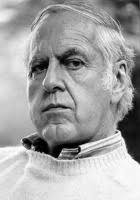
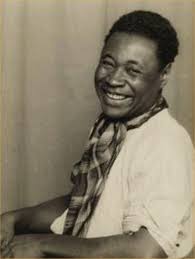
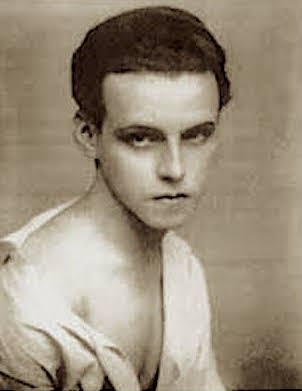
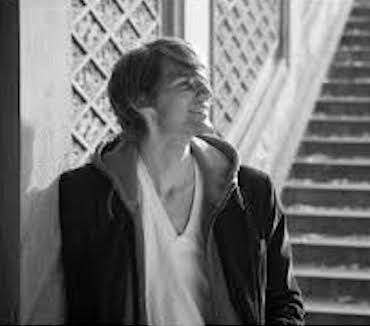
Photographers Unknown, A Collection: Ten Portraits of the Self

“They decided now, talking it over in their tight little two-and-quarter room flat, that most people who call themselves ‘truth seekers’ – persons who scurry about chattering of Truth as though it were a tangible separable thing, like houses or salt or bread – did not so much desire to find Truth as to cure their mental itch. In novels, these truth-seekers quested the ‘secret of life’ in laboratories which did not seem to be provided with Bunsen flames or reagents; or they went, at great expense and much discomfort from hot trains and undesirable snakes, to Himalayan monasteries, to learn from antiseptic sages that the Mind can do all sorts of edifying things if one will but spend thirty or forty years in eating rice and gazing on one’s navel.

To these high matters Martin responded, ‘Rot!’ He insisted that there is no Truth but only many truths; that Truth is not a colored bird to be chased among the rocks and captured by its tail, but a skeptical attitude toward life.” 

—Sinclair Lewis, Arrowsmith

Born in February of 1885 in the village of Sauk Centre, Minnesota, Sinclair Lewis was a writer and playwright, the first writer from the United States to receive the Nobel Prize in Literature. In late 1902, he studied for a year at Oberlin Academy, a preparatory school, to qualify for acceptance at Yale University. Lewis entered Yale in 1903, but received his Bachelor’s Degree in 1908; he had taken personal time to work at Upton Sinclair’s Helicon Home Colony, a cooperative-living colony in New Jersey, and to spend time in Panama. 

Lewis’s earliest published work, short sketches and poetry, appeared in the two Yale publications, the Yale Courant and the Yale Literary Magazine, of which he was editor. After graduation, he took employment at various newspapers and publishing houses, where he wrote short popular stories for the public. Lewis’s first published book was a 1912 juvenile adventure story, written under the name Tom Graham, entitled “Hike and the Aeroplane”. 

Sinclair Lewis’s first serious novel, “Our Mr Wrenn: The Romantic Adventures of a Gentile Man”, a whimsical story that sold nine thousand copies, was published in 1914. This novel was followed by the 1915 “The Trail of the Hawk” and, in 1917, “The Job”, a novel whose story discussed the rights of working women. Lewis published in 1917 and 1919 two redeveloped serial stories for the public, “The Innocents: A Story for Lovers” and “Free Air”, which was adapted as a silent film in 1922.  

As early as 1916, Lewis had begun making notes for a novel about small town life. After moving to Washington DC, he completed writing the novel in the middle of 1920. His “Main Street”, published in October of 1920, achieved phenomenal success, eventually selling two million copies in a few years. Lewis followed this success with the 1922 “Babbit”, a satirical novel about commercial culture and civic promotion in the United States. 

Sinclair Lewis’s 1925 “Arrowsmith”, a novel written with preparatory assistance by science writer Paul de Kruif, contained social commentary on the state and prospects of medicine in 1920s United States. Lewis describes many aspects of medical training, medical practice, scientific research, scientific fraud, medical ethics, public health, and the personal and professional conflicts that are still relevant today. Professional jealousy, institutional pressures, greed, stupidity, and negligence are all satirically depicted. But, throughout the story, Lewis also discusses tireless dedication, intellectual honesty, and respect for the scientific method. Read by generations of pre-medical and medical students, the novel won the 1926 Pulitzer Prize for Literature.

Lewis published “Elmer Gantry” in 1927, a novel denounced by many religious leaders for depicting a hypocritical evangelical minister, and “Dodsworth”, a satirical novel depicting the differences between US and European intellect, manners and morals, in 1929. “Dodsworth” was adapted for stage in 1934 and became a film in 1936, one highly regarded by the critics and now preserved in the National Film Registry. “Elmer Gantry” was adapted as a drama film in 1960 by director Richard Brooks and, in the following year, won three Academy Awards.

In 1930, Sinclair Lewis won the Nobel Prize in Literature, the first writer from the United States to receive the award. After winning the Nobel Prize, he wrote eleven more novels, ten of which were published in his lifetime. Of these, the most known is his 1935 “It Can’t Happen Here”, a novel about the election of a fascist to the American presidency. In 1937, Lewis, a long-time drinker, was checked in for treatment at the Austen Riggs Center, a psychiatric hospital in Massachusetts. After ten days, he checked himself out with no understanding of his drinking problem. 

During the 1940s, Sinclair Lewis appeared frequently with author Lewis Browne, discussing a wide range of topics,  on popular lecture tours throughout the United States. He also worked on his novel “Kingsblood Royal”, an early contribution to the civil rights movement  completed and published in 1947, which dealt with the denial of oppurtunity for Afro-Americans to purchase homes in white communities.

By 1948, after first renting and later purchasing rural property in Massachusetts, Sinclair Lewis had created a 720 acre gentleman’s farm of agricultural and forest land. His intention to make this homestead a permanent residence, however, was denied to him by his declining health due to serious  medical issues.. Three years later, Sinclair Lewis died in Rome from advanced alcoholism on January 10, 1951, at the age of sixty-five. His body was cremated and the ashes buried at Greenwood Cemetery in his hometown of Sauk Centre.

Top Insert Image: Artist Unknown, “Sinclari Lewis”, 1925, Halftone Photo Print

Bottom Insert Image: Jack Coughlin, “Sinclair Lewis”, Date Unknown, Etching, 15.9 x 13.3 cm,

Note: The text for the autobiography written by Sinclair Lewis for his 1930 Nobel Prize for Literature can be found at the Nobel Prize Organization’s site: https://www.nobelprize.org/prizes/literature/1930/lewis/biographical/

Vasily Grossman: “Modest Peculiarities”

Photographers Unknown, Modest Peculiarities

“Human groupings have one main purpose: to assert everyone’s right to be different, to be special, to think, feel and live in his or her own way. People join together in order to win or defend this right. But this is where a terrible, fateful error is born: the belief that these groupings in the name of a race, a God, a party or a State are the very purpose of life and not simply a means to an end. No! The only true and lasting meaning of the struggle for life lies in the individual, in his modest peculiarities and in his right to these peculiarities.” 

—Vasily Grossman, Life and Fate

Born into a Ukrainian Jewish family December of 1905, Vasily Semyonovich Grossman was a writer and a journalist. He trained as a chemical engineer at Moscow State University and, upon graduation, took a job in Stalino, now Donetsk, in south-eastern Ukraine. In the mid 1930’s, Grossman committed himself fully to writing;  he published, by 1936, two collections of short stories and the novel “Glyukauf” and was accepted into the privileged Union of Writers in 1937. Grossman’s 1940 novel “Stepan Kol’chugin”, written over the course of three years, was nominated fro a Stalin Prize, but was deleted from the list by Stalin himself during his campaign of political repression.

When Nazi Germany invaded the Soviet Union in 1941, Grossman, although exempt from military service, volunteered for the front lines where he spent almost three years. He became a war correspondent for the popular Red Army newspaper “Krasnaya Zvezda (Red Star)”. Grossman covered the major battles, including the Battle of Stalingrad and the Battle of Berlin, and also published his novels as serials in newspapers. His 1950 novel “Stalingrad”, published under the name “For a Just Cause”, is based upon his experiences during the siege. 

In his works, Vasily Grossman described Nazi ethnic-cleansing in occupied Ukraine and Poland, and the liberation by the Red Army of the extermination camps in Treblinka and Majdanek. His article “The Hell of Treblinka”, a collection of interviews taken from special work unit inmates who had escaped from Treblinka, was disseminated at the Nuremberg Trials as evidence for the prosecution. 

Grossman, along with Ilya Ehrenburg, participated in the assembly of the five-hundred page “Black Book”, compiled by the Jewish Anti-Fascist Committee in late 1944. This book documented the anti-Jewish crimes of the Holocaust and the participation of Jewish resistance members against the Nazi occupation during World War II. Upon the conclusion of the war, the book was denounced initially by the Russian Central Committee as anti-Soviet and finally refused publication in 1948.

Due to this suppression of the book, Vasily Grossman began to question his loyal support of the Soviet regime. He also criticized the process of collectivization and the political repression of peasants during the Great Famine of 1932 to 1933, which  resulted in the death by starvation of millions of Ukrainians. Persecuted by the state, only a few of Grossman’s works were published in his lifetime. In 1959 after submitting for publication his most prominent novel, “Life and Fate”, the Committee for State Security, KGB, raided his apartment, seized his manuscripts, notebooks and all typed copies, and refused publication for political reasons.

Vasily Grossman died of stomach cancer on September 14th in 1964. He was buried at the Troyekurovskoye Cemetery in Moscow. With the assistance of dissident researchers and writers, Grossman’s “Life and Fate” was retyped and finally published in the Soviet Union in 1988 after the initiation of the policy of glasnost. Other works by Grossman include “The People Immortal” published in 1943, and two posthumously published works published in 2010: “Everything Flows” and “The Road, Stories, Journalism, and Essays”. 

A Second Glance: Revisited

Photographers Unknown, A Second Glance: Revisited

“Everything goes forward like oiled clocks; for each minute of the dial there are a million noiseless clocks which tick off the rinds of time. We are traveling faster than the lightning calculator, faster than starlight, faster than the magician can think. Each second is a universe of time. And each universe of time is but a wink of sleep in the cosmogony of speed. When speed comes to its end we shall be there, punctual as always and blissfully un-denominated. We shall shed our wings, our clocks and our mantelpieces to lean on. We will rise up feathery and jubilant, like a column of blood, and there will be no memory to drag us down again.” 

—Henry Miller, Tropic of Capricorn

Manuel Ramos Otero: “The Pendulum of the Body”

Photographers Unknown, The Parts and Pieces Making a Whole: Set Thirteen

La muerte no fue la clave del secreto,
?Qué cuento no comienza en el crepúsculo?
?Qué cangrejo no busca su fantasma
en los fuegos fúnebresdel tiempo?
?Qué brujo no sabe que la luna
sostiene el péndulo del cuerpo?

Adánico regreso hasta la sombra.
Añosa regresión hasta el silencio.

Sin hilos. Sin agujas. sin cenizas.
Mi novio no havuelto de su tumba.

?Qué triangular el traje de mis nupcias!

Es perfecto este tálamo sin sangre.
Estoy en las ruinas del castillo.
Arranco los erizos de lacrare.
La orina se desborda de la copa.
Que nunca soledad. Que llegue nadie.

Death was not the key to secrecy,
What story does not start at twilight?
What crab does not look for its ghost in the funeral fires of time?
What a warlock does not know that the moon supports the pendulum of the body?

Adamic return to the shadow.
My years regress to silence.

Without threads. Without needles. without ashes.
My boyfriend has not returned from his grave.

How to triangulate the suit of my nuptials?

This bloodless thalamus is perfect.
I am in the castle ruins.
I pluck the lacrare hedgehogs.
The urine overflows from the glass.
That never loneliness. Let no one arrive.

–Manuel Ramos Otero, El Libro de la Muerte

Over the passage of time, Puerto Rican literature evolved from the art of oral story telling to its present-day status. Originally, written works by the native islanders of Puerto Rico were prohibited and repressed by the Spanish colonial government. Only those authors who were commissioned by the Spanish Crown to document the chronological history of the island were allowed to write. In the late 19th century, with the arrival of the first printing press and the founding of the Royal Academy of Belles Letters,  Puerto Rican literature finally began to flourish.

Born in Manati, Puerto Rico, in 1948, Manuel Ramos Otero is widely considered to be one of the first openly homosexual writers of the Puerto Rican diaspora.. Throughout his literary career, he boldly put his homosexuality at the core of his poetic, fiction, and non-fiction work. Feeling repressed and persecuted in his homeland because of the openness of his sexuality, Ramos Otero left Puerto Rico and relocated to New York City in 1968, where he received in 1979 his Master’s Degree in Literature from New York University. 

Otero’s writings, primarily semi-autobiographical pieces that dealt with themes of exile and rejection, are often considered controversial because of their unabashedly political, feminist and homoerotic subject matters. Exiled from Puerto Rico, Otero felt rejected in the United States because his writing did not deal with issues of race and class status that had become expected of Latino writers. Using  urban  gay Puerto Rican male writers as his protagonists,  he explored New York City’s gay subculture of  the 1970s and 1980s,  with its drugs, hustlers, prostitution, and dark sexual playgrounds  found beneath the rotting piers of the Greenwich Village and Chelsea waterfronts. 

In September of 1971, Ramos Otero founded Aspasguanza, a theatrical workshop in the Lower East Side of Manhattan. His traveling theater performed as part of the 1980 celebration of Fuegos Funebres in the historical district of Old San Juan in Puerto Rico. Dressed in a black kimono with face painted white,  Ramos Otero enacted the character of Tsuchigumo, a spider found in Noh dramas, Japanese mythology, and comic Japanese performances. 

During the decade of the 1970s, Ramos Otero traveled and collaborated creatively with his live-in partner, John Anthes, whose relationship is highlighted in much of Otero’s semi-autobiographical writing. In 1975, Otero founded the publishing group El Libro Viaje, which was devoted to increasing the publication of Puerto Rican authors in the United States. His highly experimental 1976 novel “La Novelabingo ( The Bingo Novel)”, was published through this press. After Anthes’s death in 1979, Otero dedicated two of his works to him: “Ritos Cancelado (Canceled Rites)” and “Ceremonia de Bienes y Raices (Ceremony of Goods and Roots)”. 

In 1980, Ramos Otero would later meet and develop a relationship with the Puerto Rican painter Angel Rodríguez-Díaz. In one of his better known stories, “Descuento”, Otero described a painting by Rodriquez-Dias, which would illustrate the cover of his last book of stories, “Página en Blanco Staccato”. This illustration of a Japanese Noh drama character would serve as inspiration for the theater performance at the 1980 Fuegos Funebres festival.

Ramos Otero taught writing and literature at Rutgers University, York College, LaGuardia Community College, and Lehman College. In addition to being a writer, he fostered and strengthened the literary community by helping to organize conferences and gatherings of Puerto Rican writers in the United States. Throughout his life, Ramos Otero participated in  literary collaborations and maintained close friendships with other influential Puerto Rican authors, including Rosario Ferré, Ana Lydia Vega, and Magalí García Ramis.

Manuel Ramos Otero returned to his hometown of Manati in 1990 to live out his final days, He died from complications of HIV/AIDS in San Juan, Puerto Rico, on October 7th of 1990 at the age of forty-two. Ramos Otero is remembered for his well-regarded short stories, his essays on literary criticism, and for his two  published works, the 1985 “El Libro de la Muerte”, which includes his Epitaphios Cycle of poems, and his “Invitacion al Polvo”,  a  work posthumously published in 1991 that directly addresses topics around the AIDS crisis.

Columbia University’s Archives houses a collection of Ramos Otero’s personal and professional correspondence, notebooks, reviews,  photographs and newspaper clippings which range from infancy to his death. Included in this collection are many letters from Otero to his mother discussing his relationship with John Anthes; there are also letters from Anthes to Otero’s mother.

Notes: A full translation of Manuel Ramos Otero’s work “Vivre del Cuento”, translated as “The Scheherazade Complex”, can be found at the Fordham University Library located at:  https://www.fordham.edu/download/downloads/id/463/scheherazade_complex

For those interested, a more extensive study of Manuel Ramos Otero’s life, including a history of his Traveling Theater, can be found at The Free Library located at: https://www.thefreelibrary.com/The+Travelling+Theater+of+Manuel+Ramos+Otero.-a0557578965

Rafael Campo: “What I Would Give”

Photographers Unknown, What I Would Give

What I would like to give them for a change
is not the usual prescription with
the hubris of the power to restore,
to cure; what I would like to give them, ill
from not enough of laying in the sun
not caring what the onlookers might think
while feeding some banana to their dogs–
what I would like to offer them is this,
not reassurance that their lungs sound fine,
or that the mole they’ve noticed change is not
a melanoma, but instead of fear
transfigured by some doctorly advice
I’d like to give them my astonishment
at sudden rainfall like the whole world weeping,
and how ridiculously gently it
slicked down my hair; I’d like to give them that,
the joy I felt while staring in your eyes
as you learned epidemiology
(the science of disease in populations)
the night around our bed like timelessness,
like comfort, like what I would give to them.

–Rafael Campo, What I Would Give, Landscape and Human Figure, 2002

Born in Dover, New Jersey, in November of 1964, Rafael Campo is a poet, doctor, and author. He graduated from Amherst College, where he earned his BA and MA degrees, and Harvard Medical School, where he earned his MD degree. Campo started practicing internal medicine in the early 1990s, at the height of the HIV-AIDS epidemic in the US. He currently practices medicine at both Harvard Medical School and Beth Israel Deaconess Medical Center in Boston.

Campo’s writing reflects his commitment to poetry as the fullest expression of self, and his understanding of it as a necessary tool for healing and empathy. A master of poetic meter, his work is highly structured in its various forms, including blank verse, villanelles and rhymed tercets. This attention to form tends to be mixed with narratives of family and illness, and often is structured around personal feelings for his patients and those who suffered from homophobic and racist encounters.

Rafael Campo’s first collections of poems, entitled “The Other Man Was Me: A Voyage to the New World”, won the National Poetry Series Open Competition in 1993. His 1996 collection “What the Body Told” was a winner of the Lambda Literary Award. Campo’s 1999 “Diva”, a collection which included his translations of poems by Federico García Lorca, was a finalist for the National Book Critics Circle Award. Three collections pf poetry followed: the “Landscape with Human Figure” published in 2002. “The Enemy” published in 2007, and “Alternative Medicine” published in 2013.

Rafael Campo is also the author of prose works, including the 2003 “The Healing Art: A Doctor’s Black Bag of Poetry”, which was reviewed favorably in medical journals. In this work, he used poems from poets such as Marilyn Hacker and William Carlos Williams, to address the necessity of differentiating between curing, which makes illness go away, and healing, which transforms one’s attitude toward illness. Campo’s earlier essay collection, “The Poetry of Healing”, published in 1997, received a Lambda Literary Award.

Campo is a PEN Center West Literary Award finalist and a recipient of the National Hispanic Academy of Arts and Sciences Annual Achievement Award. He recently received fellowships from the Guggenheim Foundation and the Echoing Green Foundation.

Note: Although Rafael Campo does not name his bed partner at the end of “What I Would Give”, it is understood from other poems and essays that it is Jorge, his longtime partner, then spouse. Rafael Campo came out as gay in the 1990s, and writes about this in his essay “The Desire to Heal” from “The Poetry of Healing”.

A small collection of Rafael Campo’s poetry can be found at: https://poets.org/poet/rafael-campo

The photo of the fighter, center of bottom row, is from a photo shoot of model Yuri Zalomov taken by photographer Andrei Vishnyakov.


Marcel Proust: “We See the World Multiply Itself”

Photographers Unknown, We See the World Multiple Itself

“Through art alone are we able to emerge from ourselves, to know what another person sees of a universe which is not the same as our own and of which, without art, the landscapes would remain as unknown to us as those that may exist on the moon. Thanks to art, instead of seeing one world only, our own, we see that world multiply itself and we have at our disposal as many worlds as there are original artists, worlds more different one from the other than those which revolve in infinite space, worlds which, centuries after the extinction of the fire from which their light first emanated, whether it is called Rembrandt or Vermeer, send us still each one its special radiance.” 

—Marcel Proust, In Search of Lost Time, Volume Six: Time Regained and A Guide to Proust

Born into a comfortable household in the Parisian borough of Auteuil in July of 1871, Valentin Louis Georges Eugène Marcel Proust was a novelist, essayist and critic. The event of his birth took place during the suppression of the Paris Commune, a revolutionary socialist government that seized control of Paris for two months, and the consolidation of the French Third Republic, which would last until World War II. These vast changes in France’s existence played an important role in Proust’s most prominent work, “In Search of Lost Time”.

Marcel Proust suffered from poor health throughout his life. When he was nine, he experienced the first attack of the asthma that would constrict and dominate his life. As a child, he spent long holidays in the village of Illiers, a commune in north central France, where he took pleasure in the natural surroundings. This village would become the model for the fictional town of Combray, later described within “In Search of Lost Time”. In 1882 Proust, at age eleven, became a pupil at the Lycée Condorcet, a prestigious high school in Paris, where he received an award for excellence in literature. Illness, however, disrupted his education.

Proust, in spite of his poor health, served a year, from 1889 to 1890, in the French army, stationed at Coligny Barracks in the river port city of Orléans. As a young man, Proust frequented the art and literary salons of Paris, including the salon of Madame Geneviève Straus, the mother of Proust’s school friend Jacques Bizet; the salon of French painter Madeleine Lemaire; and the salon of Madame Arman de Caillavet, the mother of playwright and close friend Gaston de Caillavet. Among those who knew him, he was considered a dilettante with a lack of self-discipline and a need to impress others with his knowledge.

Marcel Proust was involved in writing from an early age. He published a regular society column in the journal “Le Mensuel” from 1890 to1891. Proust co-founded in 1892 the literary journal “Le Banquet”, in which he regularly published articles through subsequent years. In the summer of 1894 and for three weeks in 1895, Proust and French composer Reynaldo Hahn were invited by Madame Lemaire to her château de Réveillon. The two young men began an intense affair, Proust’s only real liaison, that would last two years and evolve into a lifetime friendship. 

In 1896, a collection of Proust’s early writings, including drawings by Madame Lemaire, was published in an expensive edition with a forward written by poet Anatole France. In the same year, Proust began working on what would be an unfinished work. Many of the themes in “In Search of Lost Time”, including the enigma of memory and the necessity of reflection, are articulated in this unfinished work. Failing to resolve the plot, Proust gradually abandoned the work in 1897 and stopped entirely in 1899. This work, dealing with the relationship between writers and society, was published posthumously in 1952 by Éditions Gallimard under the title “Jean Santeuil”.

In 1908, after publishing in journals works which imitated other writers, Marcel Proust began to solidify his own style. Beginning in 1909 at the age of thirty-eight, Proust started work on his magnum opus, the seven volume  “In Search of Lost Time”. This novel is his most prominent work, known both for its length and its theme of involuntary memory. The story follows the narrator’s recollections of his childhood and experiences into adulthood during the late 1800s and early 1900s of aristocratic France, and examines his reflection on the loss of time and lack of meaning to the world. 

Proust established the structure of the novel early in the process, but kept adding new material and edited one volume after another for publication. He continued to work on it until his final illness in the autumn of 1922 forced him to stop. The last three volumes of the novel only existed in draft form, with oversights and fragmented passages, at Proust’s death in November of 1922. These last three volumes were edited and published posthumously by his younger brother Robert Proust. The finished novel totaled about thirty-two hundred pages and featured more than two thousand characters.

Marcel Proust never openly admitted to his homosexuality, although his family and close friends either knew or suspected it. His romantic relationship with composer Reynaldo Hahn and his infatuation with his chauffeur and secretary, Alfred Agostinelli, are well documented. Proust was also one of the men identified by police on a January 1918 raid on a male brothel run by Albert Le Cuziat. Although the influence of Proust’s sexuality on his writing is debatable, his “In Search of Lost Time” discusses gay life at length and features several main characters, both men and women, who are either homosexual or bisexual.

Note:  An interesting and informative biography on the life of Marcel Proust by Elyse Graham for “The Modernist Lab” can be found at:  https://campuspress.yale.edu/modernismlab/marcel-proust/

Claude McKay: “The Shadow-Fact with Which I Strove”

Photographers Unknown, The Shadow-Fact with Which I Strove

I
Not once in all our days of poignant love,
Did I a single instant give to thee
My undivided being wholly free.
Not all thy potent passion could remove
The barrier that loomed between to prove
The full supreme surrendering of me.
Oh, I was beaten, helpless utterly
Against the shadow-fact with which I strove.
For when a cruel power forced me to face
The truth which poisoned our illicit wine,
That even I was faithless to my race
Bleeding beneath the iron hand of thine,
Our union seemed a monstrous thing and base!
I was an outcast from thy world and mine.

II
Adventure-seasoned and storm-buffeted,
I shun all signs of anchorage, because
The zest of life exceeds the bound of laws.
New gales of tropic fury round my head
Break lashing me through hours of soulful dread;
But when the terror thins and, spent, withdraws,
Leaving me wondering awhile, I pause–
But soon again the risky ways I tread!
No rigid road for me, no peace, no rest,
While molten elements run through my blood;
And beauty-burning bodies manifest
Their warm, heart-melting motions to be wooed;
And passion boldly rising in my breast,
Like rivers of the Spring, lets loose its flood.

Claude McKay, One Year After, 2003

Born in Sunny Ville, Jamaica, in 1889, Festus Claudius McKay was poet and writer, one of the key figures in the literary movement of the 1920s Harlem Renaissance. His work ranged from vernacular verse celebrating peasant life in Jamaica to poems which protested racial and economic inequities. 

Proud of his African heritage, Claude McKay’s early interests were in the study of English poetry. He received his formative education under the tutelage of his brother, schoolteacher Uriah Theophilus McKay, and a local Englishman Walter Jekyll, who advised aspiring poet McKay to write verse in the Jamaican dialect. McKay’s studies were based in the British classic writers, such as Milton and Pope, and the later Romantic authors. McKay also studied the writings of philosopher Arthur Schopenhauer, whose works Jekyll was translating into English.

In 1906, McKay spent a year in Brown’s Town and the Jamaican capital of Kingston; but, after encountering extensive racism, he returned to Sunny Ville. In 1912, McKay published through a London company two collections of verses portraying opposing aspects of Black life inJamaica:“Songs of Jamaica” and “Constab Ballads”. His “Songs of Jamaica” presented a celebration of Jamaican peasant life and the people’s connections to the land. McKay’s “Constab Ballads”, however, portrayed a bleaker outlook on the plight of Black Jamaicans and was explicitly critical of the discrimination in urban Kingston. 

For his “Songs of Jamaica”, Claude McKay received an award and a stipend from the Jamaican Institute of Arts and Sciences, which he used to travel to America in 1912. He studied briefly at Kansas State College, but left in 1914 for New York City where he worked various menial jobs and continued writing poetry. In 1917, McKay published two poems in the short-lived periodical “Seven Arts”; a few years later, he published poems in the “Liberator” magazine. among these was his famous “If We Must Die”, a response to mob attacks by white Americans upon Afro-American communities during the ?Red Summer” from April to November of 1919.

McKay began a two year period of travel and work abroad, which began with a stay in Holland and Belgium, before moving to London and working at the “Workers’ Dreadnought” periodical, published on behalf of the East London Federation of Suffragettes. In 1920 he published his third collection of poetry, “Spring in New Hampshire”, notable for containing  “Harlem Shadows”, a poem of the plight of Black sex workers in the degrading urban city. 

Returning to the United States in 1921 McKay involved himself in various social causes. His 1922 anthology collection of poems, “Harlem Shadows”, assured his stature as a leading member of the Harlem Renaissance. Working on behalf of Blacks and laborers, McKay became involved with the Universal Negro Improvement Association and produced several articles for its publication. His travels took him to Paris, where he was hospitalized for a severe respiratory infection; upon recovery, McKay  traveled for the next eleven years, touring Europe and northern Africa. 

During this travel period, Claude McKay published three novels and a short story collection. His first novel, the 1928 “Home to Harlem”, tells the story of two black men, one who represents the instinctual aspect of an individual and, the other, the intellectual perspective, whose lives in Harlem are affected with either happiness or despair. This social-realist novel detailed a portrait of the hardships of Black urban life and recounted  different ways of rebelling against its ensuing circumstances. 

Mc Kay followed this book with the 1929 “Banjo” A Story without a Plot”, a novel about Banjo, a Black vagabond living in the French port city of Marseilles, who embodies the largely instinctual way of life, and Ray, a struggling, intellectual artist conventionally employed. The two men, always dissatisfied and disturbed by their limited roles in the racist society of Marseilles, cope with their problems in their own way, but both eventually decide to leave the city. 

In his third novel “Banana Bottom”, McKay presented a more incisive exploration of the Black individual’s quest for cultural identity in the face of racism, and explored the underlying racial and cultural tensions. In this story, the protagonist was a Jamaican peasant girl, who with pride and independence, fled the oppressive racist society in which she was forced to live and returned to an idealized peasant Jamaican environment.

During his final years abroad, Claude McKay published his 1932 “Gingertown”, a collection of twelve short stories, six of which were addressed to Harlem life and dealt with Black exploitation, and six stories which were set in Jamaica and North Africa, McKay’s last home before his return to the United States. Upon his return to Harlem in the mid-1930s, he began work on an autobiography, “A Long Way from Home”, a work published in 1937 about his challenges as a Black man in society.

Developing a keen interest in Catholicism after his disillusionment with Communism in the late 1930s, McKay became active in Harlem’s Friendship House, a missionary movement and a leading proponent of interracial justice. His work with the organization inspired his 1940 non-fiction historical treatise “Harlem: Negro Metropolis”, an account of the black community in Harlem during the 1920s and 1930s. McKay later moved to Chicago and worked as a teacher for a Catholic organization. 

In 1943, McKay started “Cycle Manuscript”, a collection of forty-four poems, which were never published; this important document remains as a typescript at the Beinecke Library of Yale University. By the middle of the 1940s, McKay’s health had deteriorated. He endured several illnesses throughout his last years and eventually died of heart failure in May of 1948. Claude McKay was buried at Calvary Cemetery in Queens, New York. 

Notes: An extensive collection of Claude McKay’s poetry can be found at: https://www.poemhunter.com/claude-mckay/poems/

An interesting read is “A Love So Fugitive and So Complete: Recovering the Queer Subtext of Claude McKay’s Harlem Shadows” by Lindsay Tuggle of the University of Sydney (originally printed in the journal “The Space Between; Literature and Culture 1914-1945”) which is located at: https://www.monmouth.edu/department-of-english/documents/a-love-so-fugitive-and-so-completerecovering-the-queer-subtext-of-claude-mckays-harlem-shadows.pdf/

R.M. Vaughan: “A Smile Pulled from the Eyes”

Photographers Unknown, But, Once You Start Living, It Never Ends

“Mais, une fois qu’on a commence’ de vivre, ca n’en finit plus.”
-Anne He’bert, La Robe Corail

yes, I could be transparent, have no more than 2 meanings
for every sentence, smother      the small inhalations
in duck-lined beds  (instinctual)
but I am not

tired, only some part of me, the corner of intellect
reserved for newspapers, educated company, family fights
won’t shut up, won’t misread for me, play blind man’s bluff or
any game with kissing and shut eyes      won’t say  –  this means
nothing. I am safe-

from harm, I take baby steps      dangle limbs over balconies
sit on cane back chairs made for light men in linens      even dance
fat-legged, convinced of rhythm      but from love all manner
and logic, knoves if necessary      nothing closes me, nothing

to danger, a smile pulled from the eyes, where smartness lives
or a wrist, the left, folding surrendered air in cross-cuts      language
for events microscopic, just as loud      but to love
no tricks no practiced feints of hip or cape, no tangles of scarves
to swirl over the very idea      because love happened, once, and
like anything charming      love was just another language, another dress,
a sneaky link of party half-grins      spread chair to chair, room to room
sogning the trickster from his mark

–R.M. Vaughan, Untitled, Invisible to Predators, ECW Press, Fall 1999

Born in the city of Saint John in New Brunswick, Canada, in 1965, Richard Murray Vaughan was a poet, novelist, and playwright. He earned both his Bachelor of Arts degree in Creative Writing and his Masters of Arts in English from the University of New Brunswick. Openly gay, he was playwright-in-residence for the years 1994 and 1995 at Buddies in Bad Times, a professional Canadian theater company. Originally focused on staged adaptions of poetry, the company became dedicated to the promotion of queer theatrical expression during the 1980s.

RM Vaughan published many works in his career, including fiction, poetry, anthologies, stage plays, and journalistic articles for such publications as the digital digest Utne Reader, the digital LGBYQ2-focused Xtra magazine, and the print newspaper The Globe and Mail. Vaughan’s memoir about his struggles with insomnia, entitled “Bright Eyed”, was published in 2015. 

Vaughan has written many poetry books and chapbooks. Some of his most successful works include “A Selection of Dazzling Scarves” published in 1996 and “96 Tears (in my Jeans)” published in 1997 by Broken jaw Press. The most recent collections of his poetry include the 2004 “Ruined Stars” and “Troubled: A Memoir in Poems” published in 2008. His single poems have been included in over fifty anthologies. 

As a novelist, RM Vaughan’s work includes “A Quilted Heart” in 1998 and “Spells” in 2003; as a playwright, his work includes the 1998 “Camera, Woman” and the 2003 “The Monster Trilogy”. Vaughan’s short narrative and experimental videos have been exhibited in many Canadian and international galleries and festivals, and are represented by V-Tape and the Canadian Filmmakers’s Distribution Centre.

RM Vaughan’s works often touched on queer stories of coming-of-age and eroticism. He had a taste for the supernatural and macabre, and was captivated by the world of the celebrity. Vaughan published the book of essays “Compared to Hitler” in 2013 which featured  many of his opinions on contemporary culture.

While working as writer-in-residence at the University of New Brunswick, located in Fredericton, RM Vaughan was reported missing on October 13th of 2020. His body was reported discovered ten days later on October 23rd; his death was not considered as foul play. 

Note: A collection of six poems by Richard Murray Vaughan can be found at Canadian Poetry Online, located at: https://canpoetry.library.utoronto.ca/vaughan/poems.htm

César Moro: “Like a Road That Vanishes”

Photographer Unknown, Like a Road That Vanishes

“The same as your non-existent window
Like a hand’s shadow in a phantom instrument
The same as your veins and your blood’s intense journey
With the same equality with the precious continuity that ideally
reassures me of your existence
At a distance
In the distance
Despite the distance
With your head and your face
And your entire presence without closing my eyes
And the landscape arising from your presence when the city was
only, could only be, the useless reflection of your slaughter
presence

In order to better moisten the birds’ feathers
The rain is falling a great distance
And it encloses me within you all by myself
Within and far from you
Like a road that vanishes on another continent.”
—César Moro, The Illustrated World

Born in Lima in 1903, César Moro, birth name Alfredo Quispez Asin, was a Peruvian poet and painter, whose only fond memory of his Jesuit childhood education was his learning French. He changed his name to César Moro, at the age of twenty, after a character by author Romón Gómez de la Serna. After years of unbearable parochialism and hostility towards any form of poetic expression, which characterized Lima between 1920 and 1930, Moro traveled to Paris in 1925 to pursue dance and art; but later poetry and art became his focus. 

Moro exhibited in group shows in Brussels in 1926, and in Paris the next year. He became a member of the Surrealist movement and exchanged ideas and art with such figures as poet Paul Éluard, writer and poet André Breton, poet Benjamin Péret, and outside the surrealist group, painters Henri and Simone Jannot. Moro promptly adopted French as his second writing language and became the only Latin American poet to contribute to Andre Breton’s surrealistic journals of the 1920s and 1930s.

While living in Paris, César Moro continued to publish his work in Latin America, including the Peruvian periodical “Amauta” whose April 1928 edition printed Moro’s poems “Oráculo”, “Infancia”, and “Following You Around”. He was active in the Parisian political protests through his contribution to the writing of the 1933 manifesto “Mobilization Against the War is Not Peace”. Moro added a note to the manifesto condemning Peru’s dictator Sánchez Cerro’s violent suppression of an uprising of sailors who were protesting against cruel discipline and poor nutrition. 

Moro returned to Lima in 1934 and continued to write against those in power. The police of Peruvian dictator Benavides entered his home and confiscated copies of the clandestine pamphlet, CADRE, which supported the Spanish Republic. As a result of continual police harassment, Moro fled Peru in March of 1938. He traveled to Mexico City, his residence for  the next ten years, and befriended other progressive artists seeking haven, such as  Austrian painter Wolfgang Paalen, photographer Eva Sulzer, surrealist painters Remedios Varo and Gordon Onslow Ford and British painter and novelist Leonora Carrington. 

With assistance from Wolfgang Paalen and André Breton, the modernist avant-garde artists of Mexico City organized the 1940 International Exhibition of Surrealism at the Galeria de Art Mexicano. This large exhibition followed two others exhibitions staged by Moro, the earliest in 1935 with Chilean artists Maria Valencia, Waldo Paaraguez, and Carlos Sotomayor. Moro became more closely associated with Wolfgang Paalen and his international literary and art journal “Dyn”. This journal gave Moro the opportunity to publish his French-language poetry, and allowed him to expand on his exploration of indigenous culture as subject matter. 

César Moro was prolific in his output during his stay in Mexico, where he also published in the periodicals “El Hijo Prodigo (The Prodigal Son)” and “Lettas de México (Letters from Mexico)”. He also translated the surrealist poems in the periodicals and a poem of his, a tribute to Breton, was published in the “Letters to Mexico”. As a result of his association with Paalen, Moro published two collections of his poetry, “Le Chateau de Grisou (Firedamp Castle)” and “Lettre d’Amour (Love Letter)”, and many translations of his surrealist and avant-garde texts.

César Moro, who was gay, led a self-described scandalous life quietly and privately. Many of his fellow surrealists were unaware of his homosexuality, which he embraced for the first time in Mexico. While his love poetry written in France is tortured; the poetry written in Mexico City for his collection “The Equestrian Turtle”, an oblique chronicle of Moro’s relationship with army lieutenant Antonio Acosta, is openly homoerotic. Throughout 1939, Moro wrote a series of letters and poems which expressed the totality of his feelings for Acosta as being the sum total of his life. This totality of love lasted the duration of Moro’s residency in Mexico; even after Acosta married and became a father. Moro appears to have played an almost godfather-like role in the life of Acosta’s son.

The intensity of Moro’s relationship with Antonio coincided with Moro’s rift with Breton and the surrealist movement after the publication of Breton’s 1944 “Arcane 17”, a work combining memoir, poetry and political treatise in which Breton cited that heterosexual love was the only legitimate one. Moro denounced, not without reason,the shortsightedness of Breton who had placed himself as the ultimate champion of freedom. From then on Breton, who could not accept love between members of the same sex, no longer had as great an impact on Moro’s artistic development. Moro turned instead to figures such as Paalen for direction in his work.

In 1948 César Moro returned to Lima, where he wrote poetry for the periodicals “The Magazine of Guatemala” and “Dwellings”, taught French at the Leoncio Prado military college, and met his future partner and lover, the French writer André Coyne. In 1954, he made his last public appearance at a conference on Marcel Proust, where he delivered a paper entitled “Passionately Loved and Admired”. César Moro died of leukemia in Lima on January 15th of 1956. His death went unnoticed by “Bief”, the surrealist main publication at that time. A large part of his prose and poetry was collected and published posthumously through the efforts of his lover and literary executor André Coyné.

Notes: César Moro’s 1939 collection “Le Tortuga Ecustre (The Equestrian Turtle)” contained an editorial and introduction by poet Américo Ferrari as well as  an epilogue by Moro’s lover André Coyné. In his epilogue on page 88, Coyné noted that the title of the collection is an erotic symbol derived from their 1934-35 experience in Lima of seeing two turtles copulating in a park.

On the Asymptote Journal site, there are three poems from “TheEquestrian Turtle” that were translated by Leslie Bary and Esteban Quispe. These poems are located at: https://www.asymptotejournal.com/poetry/cesar-moro-the-equestrian-turtle/

More extensive information on the life of poet César Moro can be found at JSTOR’s online library located at:  https://www.jstor.org/stable/90024968?seq=1

Matthew Hittinger: “In Strings of Is and Os”

Photographers Unknown, In Strings of Is and Os

I have been here since on other dates but it’s your ghost
still hausts this place. Or should I say duppy?
Can duppies cross the wide Sargasso sea?
or are they bound by the roots of the Banyan tree?

I won’t lie. A Jamaican ache. You seduced me
before you knew me, reading from a blank
sheet or receipt the words scared in that space
behind iris and cornea. And days later

when we met, when my boot heels clicked down those steps,
when
the March air blew me through that door, I gave
a wave to your perched chair. You would later
recount your disbelief to Richard that the man

who wrote you, who you thought a kindly old gentle
man, was an anagram and rhyme. Come now.
Did you really think me other than those
words you surely googled? I do not remember

what we drank, but I remember the direction
the wood grains went–yes I knew Erna’s work,
I studied with Lorna, and Walcott’s knot
was a year of my life. That landscape long dormant

woke again in me that night, your accent a chant,
your eyes brinning with island light, your skin
a song on my lips. Started, we parted
on opposite sides of the tracks, you Brooklyn-bound

me, Queens. I knew you, but not convinced of bamboo
clues I missed the hint, lint trapped in lucite.
The modern courting of email ensued,
the story of your name, our chat-box-poems exchanged

in strings of Is and Os. And that April surprise
to come home to find dew on my bed. Hi.
Hello. Hues conjured. There for me? For you?
for something we both felt and knew needed to bloom?

Matthew Hittinger, “71 Irving Place”, Smite and Spoon Project, 2017

Born in 1978 in Bethlehem, Pennsylvania, Matthew Hittinger is a poet and a printmaker. He earned his BFA in English and Art History at Pennsylvania’s Muhlenberg College in 2000 and his MFA in Creative Writing from the University of Michigan in 2004. Hittinger is married to Michael Ernst Sweet, a Canadian writer, educator, and photographer known for his oddly-framed street photography.

Hittinger is the author of the poetry collections “The Masque of Marilyn, The Erotic Postulate” and “Skin Shift”, which , in 2012, earned him recognition as a Debut Poet from Poets & Writers Magazine. He has also written three chapbooks: the 2007 “Pear Slip”,  winner of the 2006 Spire Press Chapbook Award, and two volumes published in 2009, “Narcissus Resists” and “Platos de Sal”.

Matthew Hittinger received the Helen S. and John Wagner Prize from the University of Michigan, the Kay Deeter Award from the literary journal “Fine Madness”, two Best of the Net nominations from Sundress Publications, and eleven nominations from the literary Pushcart Prize. His work has appeared on the web poetry anthology “Verse Daily” and in over fifty journals including American Letters & Commentary, the Michigan Quarterly Review, and StepAway Magazine, an award-winning online literary magazine. Hittinger’s work has also been featured in The Academy of American Poets.

Matthew Hittinger has also collaborated on projects with artists of other disciplines, such as the Canadian painter Kristy Gordon, American painter Judith Peck, composer Randall West, and New York City-based John Glover. Glover’s art song based on Hittinger’s poem “8:46 AM, Five Years Later” was included in the 2012 Five Borough Songbook, a book celebrating the five New York boroughs’ music festival.

Matthew Hittinger’s website is located at: https://matthewhittinger.com

Porfirio Barba-Jacob: “The Blind Hope”

Photographers Unknown, The Blind Hope

Pintad un Hombre joven, con palabras leales
y puras, con palabras de ensueño y emoción;
que haya en la estrofa el ritmo de los golpes cordiales
y en la rima el encanto móvil de la ilusión.

Destacad su figura, neta, contra el azul
del cielo, en la mañana florida, sonreída;
que el sol la bañe al sesgo y la deje bruñida;
que destelle en sus ojos una luz encendida;
que haga temblar las carnes un ansia contenida;
y el cándido mirar, y la ciega esperanza,
compendien el radiante misterio de la vida!

Paint a young man, with loyal and pure
words, with words of reveries and emotion;
and give to the strophe the rhythm of a cordial tone,
to the rhyme, the variable charm of illusion.

Outline his figure out against the blue
of the sky, in the flowery, smiling prime;
let the sun bathe it leaving it burnished
and his eyes sparkling with a burning flame.
Let a restrained yearning make his flesh tremble,
and the torso, the brow, the sinewy arms,
and the candid look and the blind hope,
compound the splendorous mystery of life!

—Porfirio Barba-Jacob, Retrato de un Jovencito (Portrait of a Young Man), 2006

Translation by Nicolás Suescún

Born in July of 1883, Miguel Ángel Osorio Benítez, best known by his pseudonym Porfirio Barba-Jacob, was a Columbian poet and writer of the Post-Modernist period. He was born in Santa Rosa de Osos, a city located in northwest Columbia; however, given to his grandparents soon after birth, Osorio spent his younger years in the countryside in Angostura. He did not receive a typical formal education but was self-taught, learning from his readings and experiences.

As a young man, Miguel Osorio was recruited by the Columbia government to fight in the Thousand Day’s War, its last civil war which ended in 1902. After working briefly as a teacher, he relocated to the capital Bogotá where he founded and managed, under the pseudonym Marin Jiménez, the literary magazine El Cancionero Antioqueño. Relocating in 1906 to Barranquilla, Osorio adopted a new pseudonym Ricardo Arenales in homage to Ricardo Hernández, a companion in his youth. Under this new name, he published the 1906 “La Tristeza del Camino (The Sadness of the Road)”, and the 1907 “Campiña Florida (The Countryside of Florida)”.

In 1908, Miguel Osorio traveled to Mexico which became his adoptive homeland and the major source of his lyrical work. A period of writing and relocations began after his move to Mexico, with journeys through Central America, Mexico and the United States. During this time Osorio contributed writings for many journals and magazines, and in 1917 published a work of fiction entitled “El Terremoto del Salvador (The Salvador Earthquake)”.

As a result of supporting the politician Porfirio Díaz during Mexico’s political crisis, Osorio was forced to flee to Guatemala; but after disagreeing with Guatemala’s authoritative Manuel Estrada Cabrera, he had to relocate to Cuba. In 1918, Osorio returned to Mexico and resumed his writings until 1922 when he was expelled by Mexico’s new president Ivaro Obregón. His flight this time took him to Guatemala. It was there in 1922, Osorio took a new pseudonym, Porfirio Barba-Jacob, which he would use on all further work.

Miguel Osorio, after being expelled in 1924 by Jorge Ubico, one of the more oppressive Guatemalan dictators, traveled to El Salvador where he was deported for his work by its dynastic president Alfonso Quiñónes Molina. This resulted in a three year journey through Honduras, a period residing in New Orleans, and a trip to Cuba. In 1927 Osorio journeyed back to his Columbian homeland for the last time.

During this Columbian stay, Miguel Osorio published writings in the journal “El Espectador” and two collections of poems: the 1933 “Canciones y Elegías (Songs and Elergies)” and the 1937 “La Cancio de la Vida Profunda y Otros Poemas (The Song of Deep Life and Other Poems)”. Osorio returned to his adopted homeland of Mexico, where in January of 1942, he died of tuberculosis in Mexico City at the age of fifty-eight.

Due to his anti-authoritarian writings. Miguel Osorio who identified himself with Ahasverus, the mythical immortal wanderer, lived a restless and bohemian life chased from cities and countries. Remaining open about his gay sexuality in that era’s puritanical society, Miguel Osorio was a perfectionist, who kept revising his work to achieve the lyrical quality and symmetry he desired. Essentially autobiographical but covering universal issues, his poetry tells of his love for his birthplace and nature, the issues of social justice, his relations with others, the darker aspects of human pain, and his own anguishes and vices.

A small collection of eight poems by Porfirio Barba-Jacob can be found at the Poetry International Archives located at: https://www.poetryinternational.org/pi/poet/7100/Porfirio-Barba-Jacob/en/tile

Randall Mann: “The Pool Shark Lurked”

Photographers Unknown, The Pool Shark Lurked

Like eelgrass through a glass-
bottom boat on the Silver River,
I see the state, obscured yet pure. Derision,

a tattooed flame crackling
underneath the lewd, uncool
khaki of an amused park worker.

I was the sometimes boy on a leash,
my sliver of assent in 1984 —
as if it were my decision.

The I-75 signage, more than metaphor.
As if I had the right to vote.
The slumber parties then were hidden wood;

the tea so sweet, the saccharin
pink and artificial, like intelligence.
The science sponsored in part by chance.

I made my acting debut with the red
dilettante down the street, “Rusty” Counts,
in Rusty Counts Presents: Suburbs of the Dead,

straight to VHS. My parents phoned a counselor.
A palmetto bug read Megatrends on the fold-
ing chair by our above-ground swimming pool …

The pool shark lurked, but not to fear.
The end unknowable, blue, inmost, and cold,
like the comfort of a diplomatic war.

—Randall Mann, Florida, Poetry, October 2015

Born in Provo, Utah, in January of 1972, Randall Mann is an American poet, the only son of Olympic medalist Ralph Mann. He spent his younger years in Kentucky and Florida, a time in which he was encouraged to read a wide range of literature. In his senior years in high school, Mann’s teachers supported his writing of poetry which he continued into his college years. Mann graduated with a BA and a MFA from the University of Florida. Since 1998 he has lived in San Francisco.

Randall Mann’s poetry is mostly influenced by the English poet Philip Larkin, whose poems are most often reflections of plainness and skepticism, the 1980 Pulitzer Prize Poetry winner Donald Justice who shared his insight into loss and distance, American poet Elizabeth Bishop whose work is formed with precise description and poetic serenity, and Chilean poet Pablo Neruda whose two-volume “Residencia en la Tierra” made him a renowned international poet.

In his work, Randall Mann explores the themes of loss, expectation, brutality, attraction, and the unabashed experiences of living a gay life. He is accomplished in the formalist design of the poem and has a witty sense in where he places his line-breaks. Mann projects a wide range of emotions in his work which is emphasized by the word choice he uses to set the poem’s tone. Usually set in the countrysides around San Francisco or in Florida, his poems often reflect the contrasts between the countryside beauty and the serious social problems inside city life, which includes the spreading of homelessness and random criminal attacks against the gay community.

Mann’s collections include the 2004 “Complaint in the Garden”, which won the Kenyon Review Prize in Poetry; “Breakfast with Thom Gunn”, published in 2009 and a finalist for the Lambda Literary Award for Gay Poetry and the California Book Award; the 2013 “Straight Razor”, a finalist for the Lambda Literary Award, and “Proprietary” published in 2017 and a finalist for the Northern California Book Award and Lambda Literary Award.

In addition to his poetry collections, Randall Mann is the author of “The Illusion of Intimacy: On Poetry”, a 2019 book of criticism in which Mann applies his attention to language, fearlessness, and sharp wit to a collection of musings, reviews, autographical sketches, and readings on the art of poetry. Mann also co-authored the seventh edition of“Writing Poems”, which was published in 2007.

A small collection of Randall Mann’s poetry can be found at the Poetry Foundation located at: https://www.poetryfoundation.org/poets/randall-mann#tab-poems

James Merrill: “Joyously Assimilate the Sun”

Photographers Unknown, Joyously Assimilate the Sun

“One summer—was he eight?—
They gave him the seed packet
Along with a 2’ by 4’
Slice of the estate.

To grow, to grow—grim law
Without appeal!
He, after all, kept growing every day. . .
Now this redundant chore.

Up sprouted green enough
For the whole canton, had one know to thin it.
Michaelmas found him eye to ey
With a gang of ruffians.

Not askable indoor,
Whose gaudy, wooden attitudes
(“Like pine cones in drag”)
There was scant question of endorsing

—Much as our droll friend, their legatee,
Would rap from them over the years. For instance
Think twice before causing
Just anything to be.

Then: Hold your head high in the stinking
Throngs of kind,
Joyously assimilate the Sun,
Never wear orange or pink.”

—-James Merrill, Alessio and the Zinnias

American poet James Ingram Merrill was born in New York City in 1926, the son of investment banker Charles E Merrill, co-founder of the Merrill Lynch brokerage firm. Brought up in wealth and having had interest in languages since early childhood, he attended St. Bernard’s, a prestigious New York grammar school. As a teenager, Merrill boarded at the Lawrenceville School, where he began to write poetry and became friends with the future novelist Frederick Buechner. During his attendance at Amherst College, his studies were interrupted when he was drafted for service in the US Army during World War II.

After his return to Amherst College in 1945, James Merrill had his first collection of poems “The Black Swan” published in 1946 privately in Athens, Greece, by his English professor and lover Kimon Friar. Merrill wrote his thesis on the French writer Marcel Proust, and took Proust’s themes of nostalgia, loss, and memory as his own. The fusion of archetype and autobiography became the basis his work; Merrill’s self awareness grew, through the writing of verse, within each successive collection of his poems. Although centered on the self, his poems displayed no urgency to reveal what is hidden and, in that sense, are not considered as confessional.

Merrill graduated from Amherst College with honors in 1947. After spending a few years traveling abroad in Europe, he met writer and artist David Jackson in a New York City comedy club. He and Jackson, who would be his partner for thirty years, settled in Stonington, Connecticut, in 1955. Although he was wealthy his entire life from a trust made early in his childhood, Merrill lived a modest life. Understanding the plight of many artists and a philanthropist in his own right, he founded the Ingram Merrill Foundation in 1956, a permanent endowment that subsidized the arts and public television with grants directly to writers and artists.

Already established in the 1970s among the finest lyric poets of his generation, Merrill started incorporating extensive occult messages into his work. With his partner David Jackson, he spent more than twenty years transcribing purportedly supernatural communications during séances using a ouija board. Merrill’s 1976 ouija board narrative cycle “The Book of Ephraim” appeared in the collection “Divine Comedies”, which won the 1977 Pulitzer Prize for poetry. Further installments included the 1978 “Mirabell: Books of Number”, which won the National Book Award for Poetry, and the 1980 “Scripts for the Pageant”.

A writer adept at wordplay and puns, James Merrill was a master of traditional poetic meter and form but also wrote many works in both free and blank verse. As he matured, his early polished and concise work changed to a more informal, relaxed and conversational tone. Often compared to W.B. Yeats with whom he shared an interest in mysticism, Merrill published, in three volumes between 1976 and 1980, his epic poem of 560 pages, “The Changing Light at Sandover”. A postmodern apocalyptic epic, it documents, partly in verse forms, the extended conversations of Merrill and Jackson with their spirit guides over the course of two decades. The poem, winner of the 1982 National Book Critics Circle Award, covers the joys and tragedies of man’s powers and the importance of our efforts to make a good life on earth.

After the publication of his epic poem, Merrill returned to writing shorter, whimsical and nostalgic poetry. These included the 1985 “Late Settings”; a 1988 collection of poems, prose poems and a play in verse entitled “The Inner Room”; and in 1995 his last book “A Scattering of Salts”. Merrill also wrote a memoir “A Different Person” in 1993; this book covers the writer’s block he suffered in his early career and his experiences of gay life in the 1950s, where he describes his friendships and relationships.

James Merrill served as a Chancellor of the Academy of American Poets, from 1979 until his death and was a member of the American Academy of Arts and Letters. In addition to his Pulitzer Prize and two National Book Awards, he also was awarded the Bobbitt Prize from the Library of Congress. While wintering in Arizona, Merritt died on February 6, 1995 from a heart attack related to AIDS; his longtime partner David Noyes Jackson died in July of 2001. Merrill’s ashes and Jackson’s remains are buried side by side at Evergreen Cemetery in Stonington. Jackson’s former wife and Merrill’s friend, Doris Sewell Jackson, is buried behind them.

Truman Capote: “Occasionally There Were Humans”

Photographer Unknown, Occasionally There Were Humans

“Sometimes on flat boring afternoons, he’d squatted on the curb of St. Deval Street and daydreamed silent pearly snow clouds into sifting coldly through the boughs of the dry, dirty trees. Snow falling in August and silvering the glassy pavement, the ghostly flakes icing his hair, coating rooftops, changing the grimy old neighborhood into a hushed frozen white wasteland uninhabited except for himself and a menagerie of wonder-beasts: albino antelopes, and ivory-breasted snowbirds; and occasionally there were humans, such fantastic folk as Mr Mystery, the vaudeville hypnotist, and Lucky Rogers, the movie star, and Madame Veronica, who read fortunes in a Vieux Carré tearoom.”

—-Truman Capote, Other Voices, Other Rooms

Rob Jacques: “This Rustic Eden”

Photographers Unknown, This Rustic Eden

. . .hills are turning
curved green against the astonished morning
sneeze-weed and ox-eye daisies
not caring I am a stranger
—-Audre Lorde

A pilgrim moving through on my way
to Wherever or Hereafter, I pull off I-90
into a town whose trees are flushed gold
with autumn, whose one white church
is washed honest and pure in stark fall light,
whose main street is paved with nostalgia,
and I park beside a roadside apple stand,
D’Arcy Spice, Irish Peach, and Silken
in bushel baskets above broad wood boxes
of Granny Smith, Gloster, and Ruby Grand.

I’m 17 again and just as innocent and good
as this rural town. A lanky, blond boy
with ice-gray eyes adds spice to this miracle
of a day, his face youthfully beautiful, and
I smile my greeting as I pick several Pippins
from a box in front of him and think I’d be
blessed to live free in this rustic Eden
without a care from urban storm and stress
as this boy turns away spitting, “Faggot!”
into autumn’s sacred, apple-fragrant air.

—-Rob Jacques, Every Traveler Has One Idaho Poem

Currently residing on a rural island in Washington State’s Puget Sound, Rob Jacques was raised in northern New England, after which he graduated from both Salem State University and the University of New Hampshire. He served as an officer in the US Navy during the Vietnam Era and has completed a civilian career as a technical editor and writer for the US Navy and the US Department of Energy.

Jacques has taught literature courses at Northern Virginia Community College, Olympic College, and the United States Naval Academy. Strongly influenced by the works of Emily Dickinson, Robert Frost and James Merrill, his poetry explores the metaphysical aspects of life and love, which include the paradoxes that develop as flesh and consciousness interact through one’s lifetime.

Jacques’s “War Poet”, published by Sibling Rivalry Press in 2017, is a collection of poems related to his experiences while on active duty in the US Navy. Full of erotic and martial intensity, the poems create a lyrical memoir out of the poet’s time serving as a gay man in the military. Exploring the complex intersections between violence and sexuality, Jacques’s poems alternate between wild abandon and formal rigidity. His work recognizes the self as a primary center of conflict, a body which is charged with understanding the conflux of love and war.

Rob Jacques’s second book of poems, “Adagio for Su Tung-p’o: Poems on How Consciousness Uses Flesh to Float Through Space/ Time”, was published by Fernwood Press in December of 2019. Jacques uses Su Tung-p’o’s poetic lines as epigraphs to introduce his own metaphysical work which looks at the human issues, addressed by poet Su Tung-p’o in the eleventh century, with a twenty-first century perspective.

Rob Jacques’s poetry has appeared in regional and national journals, including Prairie Schooner, Atlanta Review, American Literary Review, The Healing Muse, Poet Lore, and Assaracus, a quarterly print journal which features the work of a wide representation of gay poets. 

Note:  For readers who are interested in LGBTQ fiction and poetry, I recommend the publisher Sibling Rivalry Press, the home of the Undocupoet Fellowship and a sponsored project of Fractured Atlas, a nonprofit arts service organization: https://www.siblingrivalrypress.com