Matthew Hittinger: “In Strings of Is and Os”

Photographers Unknown, In Strings of Is and Os

I have been here since on other dates but it’s your ghost
still hausts this place. Or should I say duppy?
Can duppies cross the wide Sargasso sea?
or are they bound by the roots of the Banyan tree?

I won’t lie. A Jamaican ache. You seduced me
before you knew me, reading from a blank
sheet or receipt the words scared in that space
behind iris and cornea. And days later

when we met, when my boot heels clicked down those steps,
when
the March air blew me through that door, I gave
a wave to your perched chair. You would later
recount your disbelief to Richard that the man

who wrote you, who you thought a kindly old gentle
man, was an anagram and rhyme. Come now.
Did you really think me other than those
words you surely googled? I do not remember

what we drank, but I remember the direction
the wood grains went–yes I knew Erna’s work,
I studied with Lorna, and Walcott’s knot
was a year of my life. That landscape long dormant

woke again in me that night, your accent a chant,
your eyes brinning with island light, your skin
a song on my lips. Started, we parted
on opposite sides of the tracks, you Brooklyn-bound

me, Queens. I knew you, but not convinced of bamboo
clues I missed the hint, lint trapped in lucite.
The modern courting of email ensued,
the story of your name, our chat-box-poems exchanged

in strings of Is and Os. And that April surprise
to come home to find dew on my bed. Hi.
Hello. Hues conjured. There for me? For you?
for something we both felt and knew needed to bloom?

Matthew Hittinger, “71 Irving Place”, Smite and Spoon Project, 2017

Born in 1978 in Bethlehem, Pennsylvania, Matthew Hittinger is a poet and a printmaker. He earned his BFA in English and Art History at Pennsylvania’s Muhlenberg College in 2000 and his MFA in Creative Writing from the University of Michigan in 2004. Hittinger is married to Michael Ernst Sweet, a Canadian writer, educator, and photographer known for his oddly-framed street photography.

Hittinger is the author of the poetry collections “The Masque of Marilyn, The Erotic Postulate” and “Skin Shift”, which , in 2012, earned him recognition as a Debut Poet from Poets & Writers Magazine. He has also written three chapbooks: the 2007 “Pear Slip”,  winner of the 2006 Spire Press Chapbook Award, and two volumes published in 2009, “Narcissus Resists” and “Platos de Sal”.

Matthew Hittinger received the Helen S. and John Wagner Prize from the University of Michigan, the Kay Deeter Award from the literary journal “Fine Madness”, two Best of the Net nominations from Sundress Publications, and eleven nominations from the literary Pushcart Prize. His work has appeared on the web poetry anthology “Verse Daily” and in over fifty journals including American Letters & Commentary, the Michigan Quarterly Review, and StepAway Magazine, an award-winning online literary magazine. Hittinger’s work has also been featured in The Academy of American Poets.
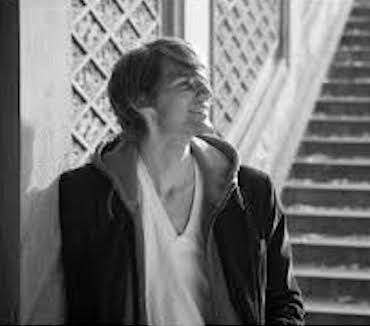
Matthew Hittinger has also collaborated on projects with artists of other disciplines, such as the Canadian painter Kristy Gordon, American painter Judith Peck, composer Randall West, and New York City-based John Glover. Glover’s art song based on Hittinger’s poem “8:46 AM, Five Years Later” was included in the 2012 Five Borough Songbook, a book celebrating the five New York boroughs’ music festival.

Matthew Hittinger’s website is located at: https://matthewhittinger.com

Matthew Bourne: “Swan Lake”

Matthew Bourne, “Swan Lake”

Craig Schwartz, Matthew Bourne’s “Swan Lake” (Dance Troupe), 2019

Johan Persson, Bourne’s “Swan Lake” (Matthew Ball and Liam Mower), 1995

English choreographer and director Matthew Bourne was born in Hackney in 1960. Leaving full time eduction in 1978, he received employment at routine positions in the arts field; in addition to this work, he directed various amateur dance companies. Bourne enrolled, at the age of twenty-two, in London’s  Conservatoire of Music and Dance, formerly the Laban Centre. For his final year, he danced with the center’s Transitions Dance Company, and at end of term in 1985 received a Bachelor of Arts in Dance Theater. After graduation, Bourne spent two more years dancing with the Transition performance company.

In 1987, along with friends and fellow dancers Emma Gladstone and David Massingham, Matthew Bourne established the dance company Adventures in Motion Pictures, where he was AMP’s artistic director from 1987 until 2002. He  also became a charter member of the all-male dance company, The Featherstonehaughs, formed in 1988. Bourne danced professionally for fourteen years, including in his own productions, until his final performance in 1999, when he appeared as The Private Secretary in the Broadway production of “Swan Lake”. 

As a choreographer and director, Matthew Bourne’s work includes “Spitfire”, a highly colored mixture of the 1845 ballet “Pas de Quatre” and men’s underwear advertising, and “The Infernal Galop” which toys with British illusions about lower-class Parisians, both choreographed during the 1980s. In the early 1990s, he produced “Town and Country”, a humorous exploration of life on a small island,  and “Deadly Serious”, a tribute to Alfred Hitchcock films. His revised production of the “Nutcracker!” premiered at Sadler’s Wells in 1992, and returned the following year for a second sold-out season. In 1995, Bourne met and became partners with dancer and choreographer Arthur Pita, who has become a frequent collaborator and is a principle dancer at AMP.

Of Bourne’s work, some of the most acclaimed pieces are those updated from classical ballet’s repertoire, and often infused with contemporary themes. His groundbreaking 1995 “Swan Lake” was a contemporary ballet, based on the Russian romantic work, which became the longest-playing dance production in the history of London’s West End. The ballet took Tchaikovsky’s music and a broad outline of the plot and paired them with an all-male dance company. Bourne’s 1995 “Swan Lake” received over thirty international awards including the Laurence Olivier Award for Best New Dance Production and  Tony Awards for Best Director, Best Choreography, and Best Costume Design.

In the 1995 “Swan Lake”, the roles of the white swan Odette and the black swan Odile, traditionally played by females, were danced by male performers and explored the issue of homoeroticism..Although the traditional story was changed for Bourne’s production, the central theme, the doomed, forbidden love and a protagonist who wishes to transcend conventional boundaries through that love, was still present. That theme had strong ties to the life of the ballet’s composer Pyotr Ilyich Tchaikovsky, whose homosexuality, although kept private, caused a number of complications in his life.

In 2002, Matthew Bourne founded the production company “New Adventures”. The first success of the new company, “Play Without Words”, premiered in 2002 and won the Olivier Awards for Best Entertainment and Choreography. The play was inspired by the 1963 film, “The Servant” in which the class system is chanllenged by the employer;s servant. Bourne’s revised “Nutcracker!”, also in 2002, received critical acclaim and embarked on a world tour. A Tenth Anniversary edition of “Swan Lake” in 2005 reached new audiences and its success led to an extensive international tour. These productions were followed in 2005 with a choreographed production of “Edward Scissorhands”. and revivals of classical musicals including: “My Fair Lady”, “South Paacific”, “Mary Poppins”, and “Olivr!”, among others. 

Matthew Bourne has worked with England’s Royal Shakespeare Company and the London’s National Theatre. He was knighted in the Queen’s  2016 New Year Honors for services to dance, and awarded the Queen Elizabeth II Coronation Award, one of the most coveted honors in the world of dance, in recognition of his outstanding services to the art of ballet. Bourne was presented the Special Award at the 2019 Olivier Awards, in recognition of his extraordinary achievements in dance. This Special Award makes Bourne joint holder of the most ever Olivier Awards, alongside Judi Dench.

Top and Bottom Insert Images:  Johan Persson, Matthew Bourne’s “Swan Lake” (Matthew Ball and Liam Mower) . Middle Insert Image: Johan Persson, “Liam Mower”, Photo Shoot

Arcangelo Corelli: Music History

Arcangelo Corelli, Concerto in D Major Op. 6 No. 4, 1714, Performed by the Voices of Music Ensemble

Born on February 17, 1653 in Fusignano, Papal States, Italy, Arcangelo Corelli was a violinist and composer of the Italian Baroque era, whose  family were prosperous landowners, but not of the nobility. Known chiefly for his influence on the development of violin style and for his sonatas, Corelli’s “12 Concert Grossi “ established the contrast between a small group of soloists and the full orchestra as a popular compositional medium. 

Historical records of the poet Giovanni Mario Crescimbeni, founder of the celebrated Academy of Arcadians, state Arcangelo Corelli initially studied music under priests, first in the city of Faenza and then in Lugo, before he moved in 1666 to Bologna, a major center of musical culture. Plausible, but largely unconfirmed, historical accounts link his musical education with several master violinists, including Giovanni Benvenuti, Bartolomeo Laurenti, and Giovanni Battista Bassani. 

Although it is unclear exactly when Corelli arrived in Rome, it is known that he was actively engaged as a violinist in 1675. He played as one of the supporting violinists in three Lenten oratorios: one at the church of San Giovanni dei Florentini, one held on August 25th for a celebration at the church San Luigi dei Francesi, and one for the ordination ceremony of a noble Chigi family member held at the church Santi Domenico e Sisto. By February of 1675, Corelli was third violinist in the Chapel of San Luigi dei Francesi’s orchestra in Rome; by the following year Corelli was second violinist.

Corelli rapidly gain a reputation by playing in a number of ensembles sponsored by wealthy patrons at San Marcello al Corso, for whom he played in oratorios during the Lenten seasons from 1671 to 1679. In June of 1677, Corelli completed and sent his first composition “Sonata for Violin and Lute” to Count Fabrizio Laderchi, a noble in Faenza attached to the household of Prince Francesco Maria de Medici. Corelli’s “Twelve  Trio Sonatas (Two Violins and Cello, with Organ Basso Continuo), Opus 1”, dedicated to Queen Christina of Sweden, was published in 1681. 

From September 1687 to November 1690, Arcangelo Corelli was musical director at the Palazzo Pamphili, where he performed and conducted important musical events, Including conducting an orchestra of one hundred fifty strings for Queen Christina. A favorite of the great music patron Cardinal Pietro Ottoboni, Corelli in 1690 entered into the Cardinal’s service where he performed in concerts at Ottoboni’s Palazzo della Cancelleria. Joining him at these concerts were the violinist Matteo Fornari, the cellist G. B. Lulier from Spain, and the harpsichordist Bernardo Pasquini, and other orchestral players.

Corelli had first met Matteo Fornari in 1682, and they soon developed an intimate relationship which lasted until Corelli’s death. Socially protected by Ottoboni and living discreetly among male friends, they devoted their time together to the pursuit of their music which included many performances played together. Their relationship became the inspiration for two compositions by their friend Giuseppe Valentini, who dedicated his trio sonatas to both Corelli and Fornari. During this period, Corelli quietly developed his best-known and most influential works, the orchestral “Concerti Grossi”, and also became one of the most renowned violin teachers, who taught such students as Gasparini, Castrucci, and Locatelli.

In 1702, Corelli went to Naples and performed a composition by the Italian composer Alessandro Scarlatti, a performance which was probably performed  in the presence of its regent, King Philip IV.  In 1706, together with composer Bernardo Pasquini and Scarlatti, Corelli was received into the Pontifical Academy of Arcadia in Rome and conducted a concert for the occasion. By 1708 he withdrew from public view and began to revise his compositions. A contemporary of both Lully and Handel, Corelli died in Rome on the 8th of January in 1713. 

Arcangelo Corelli left his large art collection of paintings, all his instruments and music, and all future proceeds from it, to Matteo Fornari who readied Corelli’s unpublished “Op. 6 Concertos” for publication with Estienne Roger of Amsterdam. By special decree from the Pope, Corelli was buried next to Raphael in the section of the Pantheon in Rome that holds the remains of painters and architects.

Arcangelo Corelli’s “Concerto in D Major Op. 6”, was published in 1714 in Amsterdam and dramatically affected the style of the baroque concerto for the next generation of composers. The reception of this collection, considered one of the crown jewels of baroque instrumental music, owes a portion of its success to the music publishing boom which began around 1690. Corelli’s signature violin sonata set, “Opus 5”, also widely published, appeared in at least forty-two editions by 1800. 

Corelli’s concertos are written in an expanded trio sonata style, in which the two solo violins and cello form a small ensemble within the larger tutti framework, which is performed with all instruments together. The fourth concerto, played in the video linked above, is noteworthy for its suave and serene introduction, the gracefulness of the dance movement, the exceptionally well-balanced counterpoint and harmony, and the furious concluding coda which flows out of the second ending of the last movement.

Note: The video is from the Voices of Music Lamentations of Jeremiah concert held in April of 2014. Played with period instruments and practice,, there isn’t any conductor present at the performance. Kati Kyme and Elizabeth Blumenstock play solo baroque violins; Shirley Edith Hunt plays solo baroque cello; Gabrielle Wunsch and Maxine Nemerovski play ripieno baroque violins; Lisa Grodin plays baroque viola; Farley Pearce plays violone; Hanneke van Proosdij plays baroque organ; and David Tayler plays the archlute.

Porfirio Barba-Jacob: “The Blind Hope”

Photographers Unknown, The Blind Hope

Pintad un Hombre joven, con palabras leales
y puras, con palabras de ensueño y emoción;
que haya en la estrofa el ritmo de los golpes cordiales
y en la rima el encanto móvil de la ilusión.

Destacad su figura, neta, contra el azul
del cielo, en la mañana florida, sonreída;
que el sol la bañe al sesgo y la deje bruñida;
que destelle en sus ojos una luz encendida;
que haga temblar las carnes un ansia contenida;
y el cándido mirar, y la ciega esperanza,
compendien el radiante misterio de la vida!

Paint a young man, with loyal and pure
words, with words of reveries and emotion;
and give to the strophe the rhythm of a cordial tone,
to the rhyme, the variable charm of illusion.

Outline his figure out against the blue
of the sky, in the flowery, smiling prime;
let the sun bathe it leaving it burnished
and his eyes sparkling with a burning flame.
Let a restrained yearning make his flesh tremble,
and the torso, the brow, the sinewy arms,
and the candid look and the blind hope,
compound the splendorous mystery of life!

—Porfirio Barba-Jacob, Retrato de un Jovencito (Portrait of a Young Man), 2006

Translation by Nicolás Suescún

Born in July of 1883, Miguel Ángel Osorio Benítez, best known by his pseudonym Porfirio Barba-Jacob, was a Columbian poet and writer of the Post-Modernist period. He was born in Santa Rosa de Osos, a city located in northwest Columbia; however, given to his grandparents soon after birth, Osorio spent his younger years in the countryside in Angostura. He did not receive a typical formal education but was self-taught, learning from his readings and experiences.

As a young man, Miguel Osorio was recruited by the Columbia government to fight in the Thousand Day’s War, its last civil war which ended in 1902. After working briefly as a teacher, he relocated to the capital Bogotá where he founded and managed, under the pseudonym Marin Jiménez, the literary magazine El Cancionero Antioqueño. Relocating in 1906 to Barranquilla, Osorio adopted a new pseudonym Ricardo Arenales in homage to Ricardo Hernández, a companion in his youth. Under this new name, he published the 1906 “La Tristeza del Camino (The Sadness of the Road)”, and the 1907 “Campiña Florida (The Countryside of Florida)”.

In 1908, Miguel Osorio traveled to Mexico which became his adoptive homeland and the major source of his lyrical work. A period of writing and relocations began after his move to Mexico, with journeys through Central America, Mexico and the United States. During this time Osorio contributed writings for many journals and magazines, and in 1917 published a work of fiction entitled “El Terremoto del Salvador (The Salvador Earthquake)”.

As a result of supporting the politician Porfirio Díaz during Mexico’s political crisis, Osorio was forced to flee to Guatemala; but after disagreeing with Guatemala’s authoritative Manuel Estrada Cabrera, he had to relocate to Cuba. In 1918, Osorio returned to Mexico and resumed his writings until 1922 when he was expelled by Mexico’s new president Ivaro Obregón. His flight this time took him to Guatemala. It was there in 1922, Osorio took a new pseudonym, Porfirio Barba-Jacob, which he would use on all further work.

Miguel Osorio, after being expelled in 1924 by Jorge Ubico, one of the more oppressive Guatemalan dictators, traveled to El Salvador where he was deported for his work by its dynastic president Alfonso Quiñónes Molina. This resulted in a three year journey through Honduras, a period residing in New Orleans, and a trip to Cuba. In 1927 Osorio journeyed back to his Columbian homeland for the last time.

During this Columbian stay, Miguel Osorio published writings in the journal “El Espectador” and two collections of poems: the 1933 “Canciones y Elegías (Songs and Elergies)” and the 1937 “La Cancio de la Vida Profunda y Otros Poemas (The Song of Deep Life and Other Poems)”. Osorio returned to his adopted homeland of Mexico, where in January of 1942, he died of tuberculosis in Mexico City at the age of fifty-eight.

Due to his anti-authoritarian writings. Miguel Osorio who identified himself with Ahasverus, the mythical immortal wanderer, lived a restless and bohemian life chased from cities and countries. Remaining open about his gay sexuality in that era’s puritanical society, Miguel Osorio was a perfectionist, who kept revising his work to achieve the lyrical quality and symmetry he desired. Essentially autobiographical but covering universal issues, his poetry tells of his love for his birthplace and nature, the issues of social justice, his relations with others, the darker aspects of human pain, and his own anguishes and vices.

A small collection of eight poems by Porfirio Barba-Jacob can be found at the Poetry International Archives located at: https://www.poetryinternational.org/pi/poet/7100/Porfirio-Barba-Jacob/en/tile

Avel de Knight

The Artwork of Avel de Knight

Avel C. de Knight was a Paris and New York-based artist, educator, curator, and art critic. Born in New York City in April of 1923, he was the son of parents who immigrated to the United States from Barbados and Puerto Rico. De Knight studied at the Pratt Institute in Brooklyn from 1942 to 1943, after which he served in the Army, in a segregated unit, until the end of World War II. 

After the war and with the aid of the GI Bill, De Knight traveled in 1946 to Paris, where he studied at the École des Beaux-Arts, the Académie Grande Chaumière, and the Académie Julian. In Paris, he discovered an environment that reflected the kind of freedom that an artist of color from the United States needed. He was one of many African American artists living and working in postwar Paris, a group which included expressionist painter Herb Gentry, modernist painter Beauford Delaney, and abstract painter Ed Clark, the first American artist credited with exhibiting a shaped canvas. 

Returning to the United States after living ten years abroad, Avel de Knight settled into an apartment in Manhattan’s Greenwich Village. In the 1950s, he would go on to win prizes and acclaim for his art, and supplement his income writing reviews as an art critic for the French language weekly “France-Amérique”. De Knight participated in his first group exhibition in 1953, which was held in the Village Art Center in New York City, where he was awarded the Village Art Center Prize for his work. He exhibited his work in one-man shows at the Sagittarius Gallery in New York City, his first solo show in 1957 and the second in October of 1959.

In addition to his painting and work as a critic, Avel de Knight taught at the Art Students League of New York and, as an academician well respected by the faculty and students, at the National Academy of Design for many years. Pursuing his cultural interests, de Knight spent two months in a cultural exchange program for the U.S. State Department in 1961 as an artist-lecturer in the former Soviet Union. During that time, he was particularly attracted to the regions influenced by Islam, such as Samarkand and Bukhara, just north of the Afghanistan border. This experience influenced his late 1960s “Mirage” series which coincided with the growing Black Arts movement in many of the urban centers throughout the United States.

Though Avel de Knight avoided any direct political statements in his work, his paintings and drawings during the latter part of the 1960s through the early 1970s can be viewed as celebrations of a perceived African aesthetic. Along with this sense of beauty, his work reflected the principles of classicism that he had internalized through his studies in Europe. From these sources, as well as Asian art and Ancient Western sculpture, de Knight was able to draw from a broad cross-section of historic world culture influences. 

De Knight’s interest in spirituality, which would be more explicit in his later work, was deeply rooted in his early experiences as a member of Manhattan’s La Iglesia Católico de la Milagrosa. Located on the fringe of “El Barrio,” the church was a Spanish National Parish that served a large Spanish-speaking community. In addition to images of hooded saints, one of the most powerful images was a life-size statue of Saint Sebastian pierced with arrows. Identified as the patron saint of the dying, and invoked as an intercessor against plague, the image of Saint Sebastian would be used by De Knight in his work as he saw the AIDS epidemic ravage the community he loved.

Avel de Knight was an Academician member of the National Academy of Design, a member of the American Watercolor Society, Audubon Society of Artists, and a member of the Audubon Society of Artists. He had a long and productive career until his death in 1995, and exhibited widely in both individual and group exhibitions. He won many awards, including the William A. Paxton Prize from the National Academy of Design and the Palmer Memorial Prize both from the National Academy School of Fine Arts, the Emily Lowe Award from the American Watercolor Society, and the Samuel F. B. Morse Medal from the National Academy School of Fine Arts.

Insert Top Image: Kurt Ammann, “Avel de Knight, Paris”, 1950

Insert Middle Image: Maurice Grosser, “Avel de Knight, Christopher Street, NYC”, 1961

Insert Bottom Image: Photographer and Date Unknown, “Avel de Knight”


George Daniell


The Photography of George Daniell

Born in May of 1911 in Yonkers, New York, George Daniell was an American photographer and a painter. His experience in the dramatic landscape of his childhood was the genesis that led to his passion for black and white photography’s cinematic effects. Taking a keen interest in a variety of subjects throughout his life, Danielle shot photos of dock workers in New Brunswick, crabbers on the Hudson, swimmers at Glen Island Beach and ballet dancers on Fire Island, all of which to him presented a fierce and tender celebration of the angular male figure.

George Daniell began his artistic career with a folding Kodak camera and a drawing class at the Grand Central Art School in New York City. He trained as a painter at Yale University, where he graduated in 1934 earning a Bachelor of Arts Degree in Painting and Photography. After returning to Yonkers, Daniell began photographing fishermen and bathers along the banks of the Hudson River, traveling further to Glen Island, Jones Beach, and Fire Island on subsequent excursions. Moving to New York City and attending courses at the Art Students League, he supported himself as a freelance photographer for publications such as “Time” and “Life” magazines.

In the summer of 1937, Daniell traveled north to Maine, first visiting the art colony at Ogunquit and then continuing up the coast to Monhegan Island. Developing his eye for composition and tonal values, he shot many images of Monhegan’s distinctive houses, rugged terrain, and working fishermen. The publication of many of these Monhegan  images in both “Time” and “Life” earned Daniell a reputation as an artist with a keen sense for recognizing the human moments within everyday life. He followed this project in the following year with an internationally acclaimed photo essay about the lives of herring fishermen living on Grand Manan Island, off the coast of New Brunswick.

In 1940 in New York, George Daniell continued his studies of painting at Bronx’s American People’s School, after which he served from 1942 to 1944 in the US Army during World War II.  After his discharge he returned to New York City, purchased a house on Fire Island, and continued his freelance photography career. Soon after resuming his work, Daniell met and fell in love with realist-expressionist painter and gallery owner Stephen Dorland. The couple  moved in 1960 to Trenton, Maine, near Acadia National Park, to paint and to start a country life together; over the next forty years, they would travel and paint together.

George Daniell’s association with renowned photographer and owner of the famous “291” Gallery,  Alfred Stieglitz, would lead to his most known series of work, the celebrity portraits. Meeting Georgia O’Keeffe at the gallery would result in two famous intimate photo shoots, one in 1948 at Daniell’s Fire Island house and one in 1952 at O’Keeffe’s Ghost Ranch in New Mexico, which formed a lasting friendship between the two. Some of the famous subjects included in this celebrity series were landscape painter and friend John Marin, photographer Berenice Abbott, writer Tennessee Williams, and actors Robert De Niro and Greta Garbo. 

Over the course of his career, George Daniell spent a considerable amount of time traveling abroad, completing two around the world excursions. Between 1950 and 1954, he photographed many street scenes and images of the local people in Rome and Florence. Returning to Italy for two months in 1955, Daniell shot a series of images depicting  the streets and countryside of devastated postwar Italy; he also shot a series of portraits on the movie sets of Rome’s Cinecittà Studios. Marked by a distinct sense of sensuality and interest in his subjects, these two series, which Daniell considered his favorite work, combined his democratic vision and his recognition of the celebrity.

Affected by Stephen Dorland’s death in October of 1983 and suffering from depression, George Daniell was hospitalized and shortly after suffered a stroke which limited his mobility. Drawn to the dark and deep tones of the North Atlantic Coast, which coalesce in his early paintings, Daniell moved to Bar Harbor, Maine where he returned to painting. He continued working as a photographer and painter until his death on September 14, 2002 at the age of ninety-one.

The George Daniell Museum located in South Beach, Florida, houses a full collection of George Daniell’s work which covers the years from 1920 to 1991, and includes paintings, aquarelles, and his more personal photographs. The collection was recently unearthed by his estate and was presented through the cooperation of the German organization Zentraldepot, a security facility with conservators and restorers.

Top and Bottom Insert Images: Self Portraits of George Daniell, George Daniell Estate

Middle Insert Image:  George Daniell, “Steve Dorland in Acapulco”, 1944, Silver Gelatin Print, 34.5 x 23.1 cm, George Daniell Estate 

Randall Mann: “The Pool Shark Lurked”

Photographers Unknown, The Pool Shark Lurked

Like eelgrass through a glass-
bottom boat on the Silver River,
I see the state, obscured yet pure. Derision,

a tattooed flame crackling
underneath the lewd, uncool
khaki of an amused park worker.

I was the sometimes boy on a leash,
my sliver of assent in 1984 —
as if it were my decision.

The I-75 signage, more than metaphor.
As if I had the right to vote.
The slumber parties then were hidden wood;

the tea so sweet, the saccharin
pink and artificial, like intelligence.
The science sponsored in part by chance.

I made my acting debut with the red
dilettante down the street, “Rusty” Counts,
in Rusty Counts Presents: Suburbs of the Dead,

straight to VHS. My parents phoned a counselor.
A palmetto bug read Megatrends on the fold-
ing chair by our above-ground swimming pool …

The pool shark lurked, but not to fear.
The end unknowable, blue, inmost, and cold,
like the comfort of a diplomatic war.

—Randall Mann, Florida, Poetry, October 2015

Born in Provo, Utah, in January of 1972, Randall Mann is an American poet, the only son of Olympic medalist Ralph Mann. He spent his younger years in Kentucky and Florida, a time in which he was encouraged to read a wide range of literature. In his senior years in high school, Mann’s teachers supported his writing of poetry which he continued into his college years. Mann graduated with a BA and a MFA from the University of Florida. Since 1998 he has lived in San Francisco.

Randall Mann’s poetry is mostly influenced by the English poet Philip Larkin, whose poems are most often reflections of plainness and skepticism, the 1980 Pulitzer Prize Poetry winner Donald Justice who shared his insight into loss and distance, American poet Elizabeth Bishop whose work is formed with precise description and poetic serenity, and Chilean poet Pablo Neruda whose two-volume “Residencia en la Tierra” made him a renowned international poet.

In his work, Randall Mann explores the themes of loss, expectation, brutality, attraction, and the unabashed experiences of living a gay life. He is accomplished in the formalist design of the poem and has a witty sense in where he places his line-breaks. Mann projects a wide range of emotions in his work which is emphasized by the word choice he uses to set the poem’s tone. Usually set in the countrysides around San Francisco or in Florida, his poems often reflect the contrasts between the countryside beauty and the serious social problems inside city life, which includes the spreading of homelessness and random criminal attacks against the gay community.

Mann’s collections include the 2004 “Complaint in the Garden”, which won the Kenyon Review Prize in Poetry; “Breakfast with Thom Gunn”, published in 2009 and a finalist for the Lambda Literary Award for Gay Poetry and the California Book Award; the 2013 “Straight Razor”, a finalist for the Lambda Literary Award, and “Proprietary” published in 2017 and a finalist for the Northern California Book Award and Lambda Literary Award.

In addition to his poetry collections, Randall Mann is the author of “The Illusion of Intimacy: On Poetry”, a 2019 book of criticism in which Mann applies his attention to language, fearlessness, and sharp wit to a collection of musings, reviews, autographical sketches, and readings on the art of poetry. Mann also co-authored the seventh edition of“Writing Poems”, which was published in 2007.

A small collection of Randall Mann’s poetry can be found at the Poetry Foundation located at: https://www.poetryfoundation.org/poets/randall-mann#tab-poems

James Merrill: “Joyously Assimilate the Sun”

Photographers Unknown, Joyously Assimilate the Sun

“One summer—was he eight?—
They gave him the seed packet
Along with a 2’ by 4’
Slice of the estate.

To grow, to grow—grim law
Without appeal!
He, after all, kept growing every day. . .
Now this redundant chore.

Up sprouted green enough
For the whole canton, had one know to thin it.
Michaelmas found him eye to ey
With a gang of ruffians.

Not askable indoor,
Whose gaudy, wooden attitudes
(“Like pine cones in drag”)
There was scant question of endorsing

—Much as our droll friend, their legatee,
Would rap from them over the years. For instance
Think twice before causing
Just anything to be.

Then: Hold your head high in the stinking
Throngs of kind,
Joyously assimilate the Sun,
Never wear orange or pink.”

—-James Merrill, Alessio and the Zinnias

American poet James Ingram Merrill was born in New York City in 1926, the son of investment banker Charles E Merrill, co-founder of the Merrill Lynch brokerage firm. Brought up in wealth and having had interest in languages since early childhood, he attended St. Bernard’s, a prestigious New York grammar school. As a teenager, Merrill boarded at the Lawrenceville School, where he began to write poetry and became friends with the future novelist Frederick Buechner. During his attendance at Amherst College, his studies were interrupted when he was drafted for service in the US Army during World War II.

After his return to Amherst College in 1945, James Merrill had his first collection of poems “The Black Swan” published in 1946 privately in Athens, Greece, by his English professor and lover Kimon Friar. Merrill wrote his thesis on the French writer Marcel Proust, and took Proust’s themes of nostalgia, loss, and memory as his own. The fusion of archetype and autobiography became the basis his work; Merrill’s self awareness grew, through the writing of verse, within each successive collection of his poems. Although centered on the self, his poems displayed no urgency to reveal what is hidden and, in that sense, are not considered as confessional.

Merrill graduated from Amherst College with honors in 1947. After spending a few years traveling abroad in Europe, he met writer and artist David Jackson in a New York City comedy club. He and Jackson, who would be his partner for thirty years, settled in Stonington, Connecticut, in 1955. Although he was wealthy his entire life from a trust made early in his childhood, Merrill lived a modest life. Understanding the plight of many artists and a philanthropist in his own right, he founded the Ingram Merrill Foundation in 1956, a permanent endowment that subsidized the arts and public television with grants directly to writers and artists.

Already established in the 1970s among the finest lyric poets of his generation, Merrill started incorporating extensive occult messages into his work. With his partner David Jackson, he spent more than twenty years transcribing purportedly supernatural communications during séances using a ouija board. Merrill’s 1976 ouija board narrative cycle “The Book of Ephraim” appeared in the collection “Divine Comedies”, which won the 1977 Pulitzer Prize for poetry. Further installments included the 1978 “Mirabell: Books of Number”, which won the National Book Award for Poetry, and the 1980 “Scripts for the Pageant”.

A writer adept at wordplay and puns, James Merrill was a master of traditional poetic meter and form but also wrote many works in both free and blank verse. As he matured, his early polished and concise work changed to a more informal, relaxed and conversational tone. Often compared to W.B. Yeats with whom he shared an interest in mysticism, Merrill published, in three volumes between 1976 and 1980, his epic poem of 560 pages, “The Changing Light at Sandover”. A postmodern apocalyptic epic, it documents, partly in verse forms, the extended conversations of Merrill and Jackson with their spirit guides over the course of two decades. The poem, winner of the 1982 National Book Critics Circle Award, covers the joys and tragedies of man’s powers and the importance of our efforts to make a good life on earth.

After the publication of his epic poem, Merrill returned to writing shorter, whimsical and nostalgic poetry. These included the 1985 “Late Settings”; a 1988 collection of poems, prose poems and a play in verse entitled “The Inner Room”; and in 1995 his last book “A Scattering of Salts”. Merrill also wrote a memoir “A Different Person” in 1993; this book covers the writer’s block he suffered in his early career and his experiences of gay life in the 1950s, where he describes his friendships and relationships.

James Merrill served as a Chancellor of the Academy of American Poets, from 1979 until his death and was a member of the American Academy of Arts and Letters. In addition to his Pulitzer Prize and two National Book Awards, he also was awarded the Bobbitt Prize from the Library of Congress. While wintering in Arizona, Merritt died on February 6, 1995 from a heart attack related to AIDS; his longtime partner David Noyes Jackson died in July of 2001. Merrill’s ashes and Jackson’s remains are buried side by side at Evergreen Cemetery in Stonington. Jackson’s former wife and Merrill’s friend, Doris Sewell Jackson, is buried behind them.

Rob Jacques: “This Rustic Eden”

Photographers Unknown, This Rustic Eden

. . .hills are turning
curved green against the astonished morning
sneeze-weed and ox-eye daisies
not caring I am a stranger
—-Audre Lorde

A pilgrim moving through on my way
to Wherever or Hereafter, I pull off I-90
into a town whose trees are flushed gold
with autumn, whose one white church
is washed honest and pure in stark fall light,
whose main street is paved with nostalgia,
and I park beside a roadside apple stand,
D’Arcy Spice, Irish Peach, and Silken
in bushel baskets above broad wood boxes
of Granny Smith, Gloster, and Ruby Grand.

I’m 17 again and just as innocent and good
as this rural town. A lanky, blond boy
with ice-gray eyes adds spice to this miracle
of a day, his face youthfully beautiful, and
I smile my greeting as I pick several Pippins
from a box in front of him and think I’d be
blessed to live free in this rustic Eden
without a care from urban storm and stress
as this boy turns away spitting, “Faggot!”
into autumn’s sacred, apple-fragrant air.

—-Rob Jacques, Every Traveler Has One Idaho Poem

Currently residing on a rural island in Washington State’s Puget Sound, Rob Jacques was raised in northern New England, after which he graduated from both Salem State University and the University of New Hampshire. He served as an officer in the US Navy during the Vietnam Era and has completed a civilian career as a technical editor and writer for the US Navy and the US Department of Energy.

Jacques has taught literature courses at Northern Virginia Community College, Olympic College, and the United States Naval Academy. Strongly influenced by the works of Emily Dickinson, Robert Frost and James Merrill, his poetry explores the metaphysical aspects of life and love, which include the paradoxes that develop as flesh and consciousness interact through one’s lifetime.

Jacques’s “War Poet”, published by Sibling Rivalry Press in 2017, is a collection of poems related to his experiences while on active duty in the US Navy. Full of erotic and martial intensity, the poems create a lyrical memoir out of the poet’s time serving as a gay man in the military. Exploring the complex intersections between violence and sexuality, Jacques’s poems alternate between wild abandon and formal rigidity. His work recognizes the self as a primary center of conflict, a body which is charged with understanding the conflux of love and war.

Rob Jacques’s second book of poems, “Adagio for Su Tung-p’o: Poems on How Consciousness Uses Flesh to Float Through Space/ Time”, was published by Fernwood Press in December of 2019. Jacques uses Su Tung-p’o’s poetic lines as epigraphs to introduce his own metaphysical work which looks at the human issues, addressed by poet Su Tung-p’o in the eleventh century, with a twenty-first century perspective.

Rob Jacques’s poetry has appeared in regional and national journals, including Prairie Schooner, Atlanta Review, American Literary Review, The Healing Muse, Poet Lore, and Assaracus, a quarterly print journal which features the work of a wide representation of gay poets. 

Note:  For readers who are interested in LGBTQ fiction and poetry, I recommend the publisher Sibling Rivalry Press, the home of the Undocupoet Fellowship and a sponsored project of Fractured Atlas, a nonprofit arts service organization: https://www.siblingrivalrypress.com

Grant Wood

Grant Wood, “Spring in Town”, 1941, Oil on Wood Panel, 66 x 60.9 cm, Swope Art Museum, Terra Haute, Indiana

Born in February of 1891 near Anamosa, Iowa, painter Grant Wood was one of the major exponents of Midwestern Regionalism, an art movement that flourished during the 1930s. His adolescent years on the family farm remained an inspiration to him throughout his artistic career. In his early years, Wood studied under tile-craftsman Ernest A. Batchelder and took drawing classes under painter Charles Cumming at the University of Iowa. In 1913, he moved to Chicago to study at the Art Institute until the death of his father in 1916; at which time, Wood returned home to Cedar Rapids to support his mother and sister.

Wood traveled to France in 1923, where he studied for two years at the Académie Julian in Paris. He then continued his European travels, staying in Italy for a period to paint. During this period, Wood painted in an Impressionist-inspired style, focusing on landscapes. Though his style changed significantly over time, the decorative patterns of foliage and light seen in his early work remained a feature of his mature style. Encouraged in 1925 by his friend David Turner, Wood gave up teaching to focus full-time on his art, setting up a studio space, furnished by Turner, in Cedar Rapids.

It was in this developmental time, through the support of the Cedar Rapids community and his exposure to its culture, that he became committed to Regionalism, drawing the subjects of his work from the local population and landscapes of the region. Wood’s distinctive style was finalized after a trip to Munich in 1928, where he oversaw the fabrication of his stained glass window design for the Veterans Memorial Building in Cedar Rapids. By 1929, after having  viewed painter Hans Memling’s canvases and painter-printmaker Albrecht Dürer’s work in Munich’s museums, Wood came to believe the crisp edges and meticulous details of their execution could be used to convey a distinctly American quality.

In Iowa City in the spring of 1941, with war overseas and anxiety growing at home, Grant Wood began his sketch work for “Spring in Town”, which he finished that summer along with its companion piece “Spring in the Country”. He painted the scene with crisp, clear lines and gave the scene a  perspective from slightly above: this enabled the viewer to see the whole panorama of small-town life and labor as well as its minute details. Wood drew from his own memories of farm life as a young boy but combined these with aspects of his present life, the houses he noticed, the people he knew, and his feelings about family and friends.

“Spring in Town” was one of Grant Wood’s last midwestern rural scenes before his death in February of 1942. After the United States entered World War II, the Saturday Evening Post magazine printed “Spring in Town” as patriotic propaganda, presenting the idyllic scene as the exemplar of American life. The painting, however, although manifestly tranquil, represented a traumatic personal memory- the death of Wood’s father and, as a result, the loss of the family’s Anamosa farm. Wood’s first conception of the “Spring in Town” image coincided with the fortieth anniversary of his father’s death on March 17, 1901.

Top Insert Image: Grant Wood’s “Self Portrait” was reworked several times by the artist, beginning in 1932, but was never finalized. This last version of the enigmatic artist was uncompleted at his death. It is in the Davenport Collection of the Figge Art Museum located in Davenport, Iowa.

Second Insert Image: Grant Wood’s 1937 “Saturday Night Bath” is a charcoal drawing on wove paper which is in the collection of Houston’s Museum of Fine Art. In 1939, the image, reproduced as a lithograph, was considered by the U. S. Post Office to be pornographic due to the depictions of the two naked men. 

Bottom Insert Image: Grant Wood, “Plowing on Sunday”, 1934, Black Conté Crayon, Ink, Colored Pencil and Gouache on Brown Wove Paper, 45.7 x 43.5 cm, Rhode Island School of Design Museum, Providence, Rhode Island


Tennessee Williams: “Curiously Stirring”

Photographers Unknown, Curiously Stirring

“So successfully have we disguised from ourselves the intensity of our own feelings, the sensibility of our own hearts, that plays in the tragic tradition have begun to seem untrue. For a couple of hours we may surrender ourselves to a world of fiercely illuminated values in conflict, but when the stage is covered and the auditorium lighted, almost immediately there is a recoil of disbelief. “Well, well!” we say as we shuffle back up the aisle, while the play dwindles behind us with the sudden perspective of an early Chirico painting. By the time we have arrived at Sardi’s, if not as soon as we pass beneath the marquee, we have convinced ourselves once more that life has as little resemblance to the curiously stirring and meaningful occurrences on the stage as a jingle has to an elegy of Rilke.”

—Tennessee Williams, Where I Live: Selected Essays

Widely regarded as one of the greatest playwrights in American history, Thomas Lanier Williams, known as Tennessee Williams, was born in Columbus, Mississippi in 1911. He was the second of three children born to  Cornelius Williams, a crude talking manager of a Saint Louis shoe company, and Edwina Dakin Williams,  the daughter of a minister and an overbearing mother. The troubled home life of the young Tennessee Williams became a source of many characters and themes of plays in his later life.

Williams started his writing early; at the age of thirteen, his first article “Isolated” was published in 1924 by the Ben Blewett Junior High newspaper and, by high school, he had two articles published in national magazines. In 1929, Williams enrolled in the University of Missouri’s journalism department, but was forced by his father in 1932 to leave and take employment. He continued to write while employed and finished two plays that were staged in 1937 by a Memphis theater group: “Candles to the Sun”, a drama dealing with Alabama coal miners unionizing,  and “The Fugitive Kind”. The latter play introduced the character who would inhabit most of Williams’ future plays: the marginal figure who, through no personal fault, is a misfit in society but who demonstrates an admirable will to survive. 

Williams enrolled at the University of Iowa and graduated in 1938 with a degree in English. In order to submit plays to a New York competition, he changed both his birthdate and name, which from that time on became “Tennessee Williams”. It was this period of his life that he began a habit of traveling and, also, came to the understanding that he was homosexual. In New York City, Williams joined a gay social circle which included fellow writer and friend Donald Windham. Between 1940 and 1948, a series of relationships, often tempestuous and ultimately failing, developed between Williams and men he met in his travels. After returning to New York from Rome in the spring of 1948, Williams met and fell in love with Sicilian actor Frank Merlo, with whom he had an enduring relationship that lasted for fourteen years until drug abuse and infidelities on both sides ended it. 

Tennessee Williams’ first professionally produced play, the 1940 “Battle of Angels”, debuted in Boston: however, it failed at its tryout with the audience. The play was withdrawn after Boston’s Watch and Ward Society banned it on the charge that it dealt with such topics as racism, suppressed sexuality, adultery, corruption and murder. Even though Williams rewrote his play several times and worked on it for 17 years, the 1957 rewrite “Orpheus Descending” was also  harshly criticized and widely considered a failure.

Williams’ breakthrough hit “The Glass Menagerie”, filled with characters based on his own troubled family, opened in Chicago in 1944 to great reviews. It moved to Broadway the next year and won the New York Drama Critics’ Circle Award in 1945, becoming the first in a long run of successes for Williams. Two years later in 1947, Williams’ drama play “A Streetcar Named Desire” opened, surpassing his previous success and giving him the status as one of the country’s leading playwrights. This play earned him a second Drama Critics’ Award and his first Pulitzer Prize. 

Tennessee Williams wrote three more successive plays which brought him critical acclaim: the  Pulitzer Prize winner for Drama “Cat on a Hot Tin Roof”, a 1955 three act play and Williams’ personal favorite, featuring motifs of social mores, decay, sexual desire and repression; the 1959 “Sweet Bird of Youth”, a play written for Williams’ friend Tallulah Bankhead,  telling the story of a gigolo and drifter who returns to his hometown as the companion of a faded movie star; and the 1961 drama play “The Night of the Iguana”, based on a previous short story and centered around misfits dealing with their sexual tensions and personal struggles, the central therm being goodness in which lost souls offer each other solace and understanding,. 

After Tennessee Williams’ breakup with Frank Merlo in early 1962, Merlo was diagnosed with inoperable lung cancer. Williams returned and cared for him until his death in September of 1963. In the years following Merlo’s death, he descended into a period of nearly catatonic depression and increasing drug use; this resulted in several hospitalizations and commitments to mental health facilities. Williams was never truly able to recoup his earlier success, or to entirely overcome his dependence on prescription drugs. 

William’ later plays were unsuccessful and closed to poor reviews. As he grew older, he felt increasingly alone; he feared old age and losing his sexual appeal to younger gay men. In the 1970s, when he was in his 60s, Williams had a lengthy relationship with Robert Carroll, a Vietnam veteran and aspiring writer in his twenties. The two men broke up in 1979, but remained friends, with Carroll receiving one of the only two bequests in Williams’ will.

On February 25, 1983, Williams was found dead at age 71 in his suite at the Hotel Elysée in New York from a toxic level of Seconal. Although writing in his will that he wished to be buried at sea near the spot that American poet Hart Crane died by choice, his body was buried, by the arrangement of his brother Dakin Williams, at Calvary Cemetery in Saint Louis.

In his career, Tennessee Williams also wrote two novels, “The Roman Spring of Mrs. Snow” in 1950 and”Moise and the World of Reason” in 1975, poetry, essays, film scripts, short stories, and an 1975 autobiography entitled “Memoirs”. In his will, Williams left his literary rights to the University of the South in Tennessee, the funds of which support a creative writing program.

Bottom Image Insert: Tennessee Williams and Frank Merlo, Date Unknown, Tennessee Williams Collection, Rare Books and Manuscript Library, Columbia University

Michael Stamm

Paintings by Michael Stamm

Michael Stamm’s work, using literature, design, and autobiographical sources, examines the need for human relationships in an increasingly interconnected but alienated world. Raised in Illinois, he received his BA at Wesleyan University in West Virginia and an MA in English Literature from Columbia University; he later earned a MFA from New York University in 2016. Stamm also attended in 2016 the Skowhegan School of Painting and Sculpture, an intensive nine-week residency program for emerging visual artists.

Stamm’s work explores the themes of identity, spiritual and physical wellness, the individual’s innate decision capacity, and the issue of self-doubt. While other gay artists often use erotic imagery in their work, he takes everyday, mundane imagery and codes it with queer history, thus transforming it into archetypes. Throughout Stamm’s body of work, text highlights the talkative self-awareness implicit in his paintings. Whether functioning as the headspace of the artist, of the subject, or an omniscient voice, the use of text animates a thought into an object.

During his MFA work at the New York University, Stamm had his first solo exhibition “Just Like This Please” at the Thierry Goldberg Gallery. From this period came  his “April 26,, 2016” series, a work consisting of nine small panels depicting the same corner of his studio at different times of the day. Michael Stamm produced the 2017 “Tincture” series of seven larger paintings, a more refined and surreal series incorporating the human figure as a design element in the terrazzo-like textured works. The tightly composed surfaces of his paintings are formed by applying thin glazes in multiple layers; and his portrayal of human bodies are highly stylized and often cropped.

In early 2018, Michael Stamm exhibited a group of eight portraits of his therapist, each painting showing her in a different session, but only depicted as a torso in various modes of dress and decoration. The paintings’ outlandish jewelry, inspired by Stamm’s own therapist, is overlaid by poetry, text from cybernetics textbooks, and lyrics from pop songs. His most recent series at the Shulamit Nazarian gallery in Los Angeles, entitled “So Super Sorry Sir”, is currently running from January 16th  to March 6th of 2021. 

Michael Stamm’s work has been the subject of solo exhibitions in New York at DC Moore Gallery and Thierry Goldberg, and has been included in several group exhibitions, including shows at Deli Gallery, New York; Jack Hanley Gallery, New York; Taymour Grahne Projects, London; Galerie Tobias Naehring, Leipzig, and Shulamit Nazarian, Los Angeles. 

For more information and exhibitions, the artist’s site is located at: https://michaelstamm.com

T M Davy

The Artwork of T M Davy

Born in New York, New York in 1980, T M Davy is a painter  whose body  work is characterized by realistic oil portraits.  Davy studied at the National Academy of Design in New York in 2001, and graduated with a Bachelor of Fine Arts from the School of Visual Arts in New York where he currently teaches. In 2012 , he was an artist in residence at BOFFO in  Fire Island, New York. 

T M Davy’s work relies on scenes that are directly connected to his life and surroundings. Persistent themes in his work are the issues of intimacy, love, and friendship. Past subjects in his work have included candle-lit scenes of domestic life with family, his husband Liam, and his circle of friends. Davy has also painted a series of images centered on horses, inspired by the time he spent on a relative’s farm, and a series of images of candles lit in darkness.

The consistency of Davy’s technical execution  and the sophistication of its realism are apparent in his oil on canvas work, whether in a small or a large-scale format. A connecting link in all of his paintings is his use of the chiaroscuro effect, a technique used also by painters Caravaggio and Anthony van Dyck, which emphasizes the interaction of light and shadow.He has also worked in the mediums of pastel and gouache, with which he produced several series of open air spontaneous drawings in a smaller scale format.

In his work produced on Fire Island, New York, Davy portrays many of his beachside figures entering or in the water, exemplifying the union of bodies with nature, a prominent theme of the artist. His portraits celebrate his inseparable communion with his husband, Liam Davy, as well as the intimacy and bond among close friends. His “Fire Island” series are a meditation on the power and freedom born from togetherness—between figure and landscape, mind and body, human and human.

Davy’s work has been included in group exhibitions at the “No Soul for Sale” exhibition at theTate Modern in London; the “B-Out” exhibition at the Andrew Edlin gallery in New York; the 2009 “Nudes” exhibition at Galeria Fortes Vilaca in São Paolo; and the 2019 “Nobody Promised You Tomorrow: Art 50 Years After Stonewall” at the Brooklyn Museum in New York, among others. He has had solo exhibitions at Galerie Thomas Fuchs in Stuttgart, Germany in 2018: the Exile gallery in Berlin, Germany, 2012; and gallery 11R in New York in 2014 and 2017. 

“We exist in an age of complete transition. The time is now to communicate the beauty of queer love around the world.   A paradigm shift in people’s conception of love is happening. If I can, I want to play a small part in that–in revealing how true and how eternal it is. Transcendence is a movement to the broadest spectrum. “ —T M Davy, 2019

Information of T M Davy’s work and exhibitions can be found at the artist’s site: http://www.tmdavy.com

Assotto Saint: “Shadows Also Shrinking Early”

Photographers Unknown, Shadows Shrinking Early

between
solitudes of illness
& beatitudes our lips utter
evening settles in this exile of senses for our surrender
one more friend’s death has clocked the day like a tolling bell
biding time we are shadows also shrinking early into destiny
let us gather our pills & swallow all regrets with a kiss
cover each other then weave
dreams of another day
to come.

—Assotto Saint, Life-Partners

Born in Les Cayes, Haiti, on October 2, 1957, Assotto Saint was an American poet, publisher and performance artist. He was a key figure in the LGBT and African-American art and literary culture of the 1980s and early 1990s. 

Saint, whose birth name was Yves François Lubin, moved to New York City in 1970 where he enrolled briefly in the pre-med program at Queens College, after which he pursued an artistic career. He adopted the name Assotto Saint for his career, choosing ‘Saint’ in honor of the revolutionary hero Toussaint L’Ouverture, who fought against France for Haiti’s independence, and ‘Assotto’ which is the name of the ceremonial drum used in Haitian Vodou rituals. 

From 1973 to 1980, Assotto Saint performed as a dancer with the Martha Graham Dance Company. In November of 1980, he met the Swedish musician and composer Jan Holmgren, who would become his life partner and a collaborator in his artistic career. Saint, along with Holmgren, founded the Metamorphosis Theater company, and Xotika, an electronic pop music group. His theater performance piece entitled “Risin’ to the Love We Need” won second prize from the Jane Chambers Award for Gay and Lesbian Playwriting in 1980. 

Assotto Saint became a United States citizen in 1986, after which time he began publishing poetry in anthologies, including the 1986 “In the Life: A Black Gay Anthology”; “Gay and Lesbian Poetry in Our Time” published in 1988; and the 1987 chapbook “Triple Trouble”. He soon founded his own press, Galiens Press, which worked to publish black gay poets. Included among the many works by Galiens Press are “The Road Before Us: 100 Gay Black Poets” in 1991 and two of Saint’s own poetry collections, “Stations” in 1989 and “Wishing for Wings” in 1994.

Assotto Saint won a 1992 Lambda Literary Award in the Gay Poetry category as editor of “The Road Before Us” and, in the following year, was a nominee in the Gay Anthology category for “Here to Dare: A Collection of Ten Gay Black Poets”, al work published by his Galiens Press. In 1994, he was a nominee in the Gay Poetry category for his own collection of poems “Wishing for Wings”. Saint also received a fellowship in poetry from New York’s Foundation of the Arts and the James Baldwin Award.

After both Saint and his partner Jan Holmgren were diagnosed HIV-positive, Saint became an AIDS activist and one of the first African American activists to publicly disclose his HIV status. Before his death, Saint appeared in Marlon Riggs’ 1992 film noir  “Non, Je Regrette Rien (No Regrets)”, covering the self-disclosure of five HIV-positive black men coping, through their difficult journeys, with the personal and social destruction of the epidemic. Jan Holmgren died on March 29, 1993, and Saint died on June 29, 1994. The couple are buried alongside each other at the Cemetery of the Evergreens in Brooklyn, New York. 

An autobiographical collection of Assotto Saint’s work entitled “Spells of a Voodoo Doll: The Poems Fiction, Essays, and Plays of Assotto Saint” was published by Richard Kasak at Masquerade Books in 1996. This compendium of Saint’s work was collected by Assotto’s friend and literary executor Michele Karlsbert who wrote a brief and heartfelt introduction to the book.

For those interested, the  preface written by Assotto Saint to his 1992 anthology “The Road Before Us” can be located at:  https://zocalopoets.com/tag/assotto-saint/

Patrick Angus

The Artwork of Patrick Angus

Born in December of 1953 in North Hollywood, California, American painter Patrick Angus studied at the Santa Barbara Art Institute. Inspired by David Hockney’s book “72 Drawings”, he came to New York in 1980 to see the Picasso retrospective at the Museum of Modern Art. Angus settled in the city and started illustrating the emerging modern gay culture with visual narratives and humor which had not been visible to the general population at that time. 

Patrick Angus depicted not only the pleasant aspects of the scenes he witnessed; but he was also concerned with the unadorned sides of the persons and situations. The central theme that is expressed in many of Angus’s works is the longing for true, not only physical, intimacy. With his distinct observation skills, his compositions, and the use of light and expressive color, he depicted his observation of the scene, but also captured its atmosphere and the vulnerability of its individuals. The loneliness that Angus, as well as other gay men, often felt during this time and the attempts to offset it play an important role in Angus’ body of work.

Angus is known for his depiction of the gay New York scene in the 1980s, particularly its bar scenes, porn theaters, bathhouses, and strip shows. He is especially known for his large paintings of the Gaiety Theater, above the Howard Johnson’s restaurant at the corner of 46th Street and Broadway, with its nightlife of bold colors, flashing lights, and young male erotic dancers. Angus often created a dialogue in his work with references to known artists; such as Picasso and Manet,, by depicting them in his work, a practice common with the notions of post-modern art. 

An example of this dialogue is Angus’s 1979 “Los Angeles Drawings”, which capture his experience discovering the city and its inhabitants at the beginning of his career as an openly gay artist. These drawings, which features portraits of men together in everyday life, are a direct conversation with fellow painter David Hockney, who remained a mentor, a collector of Angus’s work, as well as a friend until his death. 

Patrick Angus died in 1992 at the age of 38 from the effects of AIDS, without receiving due recognition for his work during his lifetime. In recent years, however, his popularity increased with major retrospective exhibitions being held. An exhibition in early 2015 at Galerie Thomas Fuchs was followed by art fair presentations in Karlsruhe, Berlin, Miami, and other cities. A comprehensive monograph was produced in 2016 by art publisher Hatje Cantz with the participation of Galerie Thomas Fuchs. 

This monograph was followed in 2017 by a major exhibition entitled “Patrick Angus” at the Kunstmuseum Stuttgart, Germany, on the occasion of which a publication was released by Distanz Verlag. In 2019 the Long Beach Museum of Art in California presented a retrospective of his work. The Leslie-Lohmann Museum of Gay and Lesbian Art in New York later showed Angus’s work in the group exhibition “On Our Backs: The Revolutionary Art of Queer Sex Work”. 

Patrick Angus is represented in the collections of the Fort Smith Regional Art Museum, the Kunstmuseum Stuttgart, the Leslie-Lohmann Museum of Gay and Lesbian Art and the Schwules Museum Berlin, and in many private collections.