Calendar: November 23

A Year: Day to Day Men: 23rd of November

Tiny Bears in a Row

November 23, 1862 was the birthdate of Belgian Neo-Impressionist painter Théo van Rysselberghe.

Born in Ghent, Théo van Rysselberghe studied at the Academy of Ghent under Theo Canneel and later at the Academie Royal des Beaux-Arts in Brussels under Jean-François Portaels. Van Rysselberghe was strongly influenced by North African paintings, which had become the fashion in Belgium. He made three trips to Morocco, staying there for a year and a half.

Van Rysselberghe painted his “Self Portrait with Pipe” in 1880, in the somber colors of the Belgium realistic tradition. His “Child in an Open Spot in the Forest”, also painted in that year, showed a move to impressionism. He started traveling extensively with his friends, impressionist Frantz Charlet and Asturian painter Dario de Regoyos, throughout Spain and Morocco, staying in Tanger for four months starting in October  of 1882. At this  time, Van Rysselberghe painted and drew many scenes form the streets and in the souk, including the 1882 “Arabian Street Cobbler”, the 1882 “Arabian Boy”, and “Resting Guard” in 1883.

Van Rysselberghe saw the works of the impressionists Monet and Auguste Renoir at the show of “Les XX” in 1886, becoming deeply impressed. He experimented with this technique in his 1886 “Woman with Japanese Album”. This impressionist influence became prominent in his later paintings. In 1886 he also discovered the pointillist techniques at that Eighth Impressionist Exhibition in Paris, abandoning realism and became an adept of pointillism,

Theo Van Rysselberghe’s “Gate of Mansour-El-Hay” and”Morocco-the Great Souk”, both done in 1887, are painted in the pointillist style, but still with short strokes of paint and not with points. These are among his rare pointillist paintings of Morocco. When he had finished these paintings, he stopped completely with this Moroccan period in his life. Van Rysselberghen then turned to portraiture, resulting in a series of neo- impressionist portraits. His famous portrait of Alice Sèthe, painted in 1888 in blue and gold, would become a turning point in his life. In this painting he used only points of paint on the canvas.

In 1898 Van Rysselberghe moved to Paris, although he maintained close links with the artistic milieu of Brussels, and executed in 1902, among other works, a series of decorative panels for the Hôtel Solvay, belonging to Victor Horta. Van Rysselberghe also played an important role in the introduction of the fauvist painters, whom he had met through his friend Paul Signac, to Belgium. From 1903 onward, his neo- Impressionism began to give way to more restrained forms, and during the last years of his life he also executed some sculptures. Van Rysselberghe died on the 13th of December of 1926 in Saint-Clair, France.

Agnolo di Cosimo di Mariano

Agnolo di Cosimo di Mariano (Bronzino), “Portrait of a Young Man”, 1530s, Oil on Wood, 96 x 75 cm, Metropolitan Museum of Art, New York City

The sitter of this arresting portrait remains unknown, but he was part of Bronzino’s close circle of literary friends in Florence and probably holds a book of poetry. Bronzino was himself a poet, delighting as much in the beauty of language as he did in the witty and fanciful details of his paintings.

In this painting, viewers would have appreciated the carved grotesque heads on the table and chair, and the almost hidden, masklike face suggested in the folds of the youth’s breeches as comments on masks and disguises.

George Platt Lynes

Photography by George Platt Lynes

In the 1930’s and 40’s, George Platt Lynes was the best-known fashion and portrait photographer in the U.S. He was also producing an abundance of male nudes that he circulated among friends and occasionally published in the Swiss homosexual magazine “Der Kreis” under the pseudonyms Roberto Rolf and Robert Orville. Over time, the male nudes became his most valuable artistic endeavor.

The photographs we have come to associate with Lynes are often his highly staged studio images, which he crafted with exacting control over the smallest detail. These images display his inventive use of diffused lighting that seems to come from everywhere and yet from nowhere. Idealized and perfected, bodies and faces are wrapped in light and shadows, their contours defined with precision by the spaces around them.

Lynes began a friendship with Dr Alfred Kinsey of the Kinsey Institute in Bloomington, Indiana and helped with his sex research. Between the years  1949 to 1955, Lynes sold and donated much of his erotic nudes to Kinsey. By May 1955, Lynes had been diagnosed terminally ill with lung cancer. He closed his studio and destroyed much of his print and negative archives, particularly his male nudes. It is now known that he had transferred many of these works to the Kinsey Institute. After a final trip to Europe, Lynes returned to New York City where he died on December 6, 1955.

Insert Image: George Platt Lynes, Self Portrait, 1934, Photogravure, Private Collection

Thomas Heatherwick

Thomas Heatherwick, The Zeitz Museum of Contemporary Art Africa, Cape Town, South Africa

British architectual designer Thomas Heatherwick created Sout Africa’s biggest art museum by holllowing out the inside of a historic grain silo building. Zeitz MOCAA opened on September 22 of 2017 and is located at Cape Town’s V&A Waterfront.

The museum is housed in 9,500 sq metres of custom designed space, spread over nine floors, carved out of the monumental structure of the historic Grain Silo Complex. The silo, disused since 1990, stands as a monument to the industrial past of Cape Town,  at one time the tallest building in South Africa.

The galleries and the atrium space at the centre of the museum have been carved from the silos’ dense cellular structure of forty-two tubes that pack the building. The development includes 6,000 sq metres of exhibition space in 80 gallery spaces, a rooftop sculpture garden, state of the art storage and conservation areas, a bookshop, a restaurant, bar, and reading rooms.

The museum will also house Centres for a Costume Institute, Photography, Curatorial Excellence, the Moving Image, Performative Practice and Art Education.

Calendar: November 22

A Year: Day to Day Men: 22nd of November

Red Knit Hat and Boots

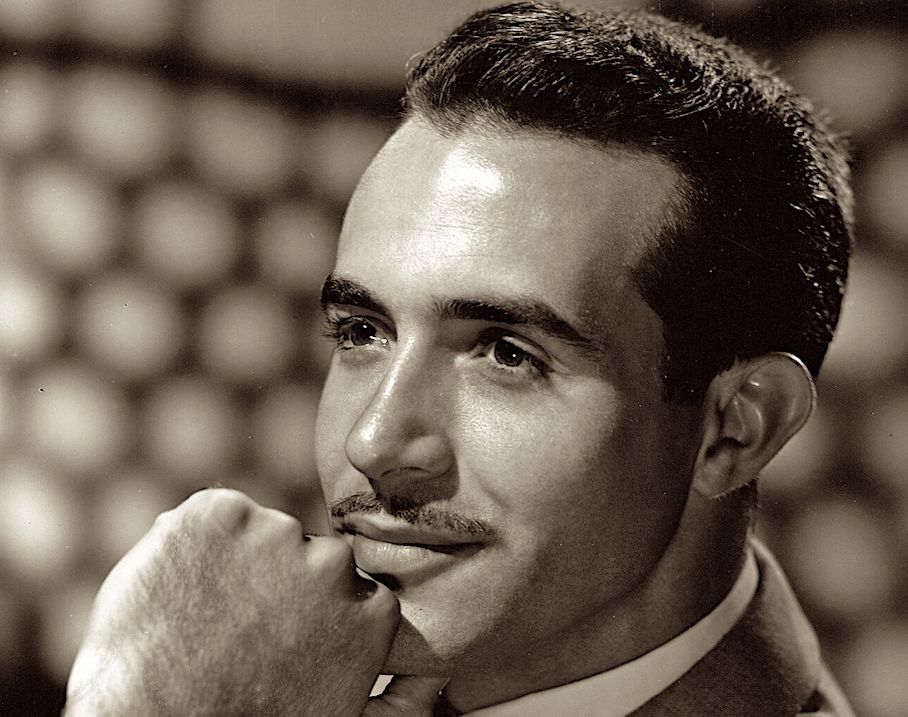
November 22, 1932 was the birthdate of actor Robert Vaughn.

Born in New York City, Robert Vaughn studied at the Los Angeles State College of Applied Arts and Sciences, earning a Master’s Degree in theater. He received a Ph. D in communications from the University of Southern California in 1970. He published his dissertation as a book, “Only Victims: A Study of Show Business Blacklisting” in 1972.

Vaughn made his television debut in November of 1955 on the series “Medic”, the first of more than two hundred appearances on the show. He first film appearance was as an uncredited extra playing a golden calf idolater visible behind Yul Brynner in a scene from “The Ten Commandments”. Vaughn’s first credited movie role was playing Bob Ford, the killer of Jesse James, in the 1957 western “Hell’s Crossroads”.

Vaughn’s first film appearance of note was in “The Young Philadelphians”, for which he received an Academy Award nomination for Best Supporting Actor and the Golden Globe Award for Best Supporting Actor. He next appeared as the gunman Lee in “ The Magnificent Seven” in 1960, the western adaption of Kuorsawa’s epic “ Seven Samurai”.

Robert Vaughn was offered his most memorable role in 1964, starring in his own series as secret agent Napoleon Solo in the television series “The Man from U.N.C.L.E.”. His co-star was Scottish actor David McCallum who played fellow agent Illya Kuryakin. This role would make Robert Vaughn a household name even behind the Iron Curtain. This series which ran from 1964 to 1968 created a spin-off show, large amounts of merchandising, overseas theatrical movies, and a sequel.

After the series ended, Vaughn was given the role of playing the ambitious California politician Chalmers, in the critical and box-office smash film “Bullitt” starring Steve McQueen. Vaughn was nominated for a BAFTA Award for Best Supporting Actor for this role. He won an Emmy for his portrayal of Frank Flaherty in ABC’s 1977 “Washington: Behind Closed Doors”. Vaughn did acting work in England also, appearing on the BBC drama “Hustle” and the British soap opera “Coronation Street”.

Robert Vaughn died from acute leukemia in Danbury, Connecticut on the 11th of November in 2016, eleven days before his eighty-fourth birthday. He was the first popular American actor to take a public stand against the Vietnam War and was an active member in the peace group Another Mother for Peace. Vaughn published his autobiography “A Fortunate Life” in 2008.

Fabrizio Ferri

Fabrizio Ferri, “The Ballet Dancer Roberto Boile”, Photo Shoot for the Book “Roberto Bolle: Viaggio nella Bellezza (Voyage into Beauty)”, 2015, Rizzoli Publishing

Fabrizio Ferri began his career as a photojournalist in 1970 at the age of seventeen, taking photographs of Italy’s political life. He then shifted his attention to the fashion world, moving temporarily to London in 1974 and to New York a year later. Ferri soon became one of the most sought-after photographers, working for top fashion magazines as Vogue, Harper’s Bazaar, Marie Claire, Elle, Vanity Fair, Interview, GQ and Esquire.

Valery Bryusov: “A Sweet Whirling of Ecstasy”

Photographers Unknown, Beguiling the Senses and Enchanting the Mind: Photo Set Seven

“If there exist fortunate people, if from time to time the wild sun of joy soars towards foreign lands in a sweet whirling of ecstasy — then where are the words which might tell of this? And if in the world there exists a beauty for enchantment, then how might one describe it?”

― Valery Bryusov

Dragon

Artist Unknown, (The Fire Dragon)

“How should we be able to forget those ancient myths that are at the beginning of all peoples, the myths about dragons that at the last moment turn into princesses; perhaps all the dragons of our lives are princesses who are only waiting to see us once beautiful and brave. Perhaps everything terrible is in its deepest being something helpless that wants help from us.

So you must not be frightened if a sadness rises up before you larger than any you have ever seen; if a restiveness, like light and cloudshadows, passes over your hands and over all you do. You must think that something is happening with you, that life has not forgotten you, that it holds you in its hand; it will not let you fall. Why do you want to shut out of your life any uneasiness, any miseries, or any depressions? For after all, you do not know what work these conditions are doing inside you.”
Rainer Maria Rilke, Letters to a Young Poet