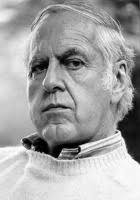
Henry Marvell Carr

Henry Marvell Carr, “Maurice Alan Easton”, 1944, Oil on Canvas, 76.2 x 63.5 cm, National Maritime Museum, Greenwich, London

Born in August of 1894 in Leeds, England, Henry Marvell Carr was a British portrait and landscape painter. He studied at Leeds College of Art and did his postgraduate work at the Royal College of Art under painter and printmaker William Rothenstein, best known for his work as a war artist in both World Wars. 

Henry Carr served in the Royal Field Artillery in France during World War I. The work he produced as a war artist was exhibited at London’s Royal Academy in 1921, and in other British and Parisian galleries. Among the works Carr painted during the 1920s were landscapes depicting England’s south coast and portraits of Olivia Davis, his daughter, and writer Aldous Huxley.

At the outbreak of war in 1939, Carr received an appointment by the War Artists’ Advisory Committee to serve as an official war artist. The first exhibition of his war paintings was held in July of 1940 at the National Gallery in London, which included his 1940 “Dismantling Emergency Water Tank”, a tableaux depicting the removal of one of the National Fire Services’s storage tanks installed during the Nazi bombardment of London. Other wartime works of Carr includes the 1941 “Incendiaries in a Suburb”, “Merchant Seaman Fireman” in 1942, and views of London’s gothic Saint Pancras Station and Saint Danes Church on the Strand.

Between 1942 and 1945, Henry Carr was later attached to the British First Army in North Africa and Italy, where he painted the battles, infantrymen, and casualties of these campaigns. Among his works in this period were portraits of General Dwight Eisenhower and naval telegraph operator Maurice Easton, and a 1945 depiction of a gun crew stationed at the entrance to the port of Algiers, entitled “A Bofors Gun, Algiers”. While stationed in Italy in 1944, Carr witnessed and painted a major eruption of Mount Vesuvius which occurred in late March and destroyed several towns. 

After the war, Carr resumed his career as a portrait painter. He was elected a Fellow of the Royal Society of Portrait Painters in 1948, and, in 1956, was awarded the Paris Salon’s Gold Medal. In 1966, Carr was elected Royal Academician at London’s Royal Academy. He published two academic works, the  1952 “Portrait Painting” and “Portrait Drawing” in 1961. Henry Marvel Carr died in South Kensington, London, in March of 1971 at the age of seventy-five.

Henry Carr’s 1944 head and shoulders portrait “Maurice Alan Easton” depicts Easton, who had a hostilities-only rating, in his seaman’s uniform and naval cap. As he was a telegraphist, Eason bears the radio communicator’s badge on his right arm. Originally a civilian railway clerk from Oxfordshire, Easton was selected from his naval barracks at Naples by Captain Carr who was working there as a wartime artist. In order to impart a symbolic significance to the portrait of the young man, Carr used fluid brushstrokes and portrayed Easton in a heroic stance. 

Carr’s finished work was exhibited simply as “The Sailor” in the Navy League’s post-war “Naval Art Exhibition”, which was held at the Suffolk Street Galleries and opened by the First Lord of the Admiralty on the 29th of January in 1946. The image of Easton was also used as a poster for the show, which greatly astonished Easton when he was sent back to London at that time and saw his face on the advertising billboards. Greenwich’s Maritime Museum only learnt the identity of the sitter, and the circumstances surrounding the portrait, from a 1946 clipping of the Sunday Dispatch newspaper, that it received in 1975 from an acquaintance of Maurice Easton.

Insert Image: Henry Marvell Carr, “Staff Sergeant Major E. A. Billett”, 1943, Oil on Canvas, 60.9 x 51.4 cm, Imperial War Museum, London

Edward O. Phillips: “The Universe is Copernican”

Photographers Unknown, Parva Scaena (Brief Scenes): Photo Set Twenty-Three

“To grow old is to realize the universe is Copernican, not Ptolemaic, and that self and the loved one do not form the epicenter of the solar system>”

—Edward O. Phillips

Born on November 26th of 1931 in Westmount, an enclave of Montreal, Edward Openshaw Phillips was a Canadian novelist who has written mainstream literary fiction and is best known for his series of mystery novels featuring gay detective Geoffry Chadwick. 

Edward Phillips earned his Bachelor of Arts from McGill University in Montreal, and earned his Bachelor of Civil Law Degree from the Université de Montréal. After deciding against legal practice, he graduated from Harvard University with a Master’s Degree in Education, and later earned a second Master’s Degree in English Literature from Boston University. Phillips taught English for seven years, first in the public English school system and later at Selwyn House School, an independent boys’ school located in Westmount. 

Having a long-established interest in drawing and painting, Phillips pursued this interest with art classes at both the Visual Arts Center in Westmount and the Montreal Museum School of Art. He later entered his work in numerous group shows and was exhibited in five solo shows within Canada.

Throughout his teaching career and painting period, Edward O. Phillips devoted himself to his writing, from which would come twelve novels and numerous short stories. His first novel, “Sunday’s Child”, the first of six titles in the Geoffry Chadwick series, was published in 1981, and was shortlisted for the Books in Canada First Novel Award. Phillips won the Arthur Ellis Award, presented annually by the Crime Writers of Canada, in 1987 for his novel “Buried on Sunday”, the second book of the Chadwick series. In 1989, his novel, “Hope Springs Eternal”, was shortlisted for the Stephen Leacock Memorial Medal for Humor. 

Phillips’s short story, entitled “Matthew and Chauncy”, was adapted by director and screenwriter Anne Claire Poirier into the 1990 film “Salut Victor”. Produced by the National Film Board, the film starred Jean-Louis Roux as Philippe and Jacques Godin as Victor in the story of two older men, one openly gay and one closeted, who fall in love during their stay at a retirement home.

Edward O. Phillips spent most of his life in Westmount, Quebec. Openly gay, he was in a fifty-two year relationship with partner Kenneth S. Woodman, who passed away in 2018. Edward Phillips died on May 30th of 2020 of complications from Covid-19. 


Jan Muller

Jan Muller, “The Martyrdom of Saint Sebastian”, circa 1699, Engraving, 53.6 x 33.8 cm, The Metropolitan Museum of Art, New York 

At the end of the sixteenth and early in the seventeenth century, Dutch Mannerist artists turned their attention to the German master Albrecht Dürer and other northern Renaissance artists, creating a revival of interest in their works. Printmakers copied these earlier designs or made new compositions emulating the style of their predecessors. 

Born in 1571 in Amsterdam, Jan Muller was one of these reproductive engravers. He most likely received his initial training in engraving from his father, Harmen Jansz Muller, an engraver and owner of The Gilded Compasses, a publishing business in Antwerp. Jan Muller’s work is generally associated with the school of Hendrick Goltzius, the most prominent of the Dutch Mannerist engravers, with whom Muller was employed until about 1589.

Though Jan Muller made engravings based on his own designs, he was essentially a reproductive engraver for works by Haarlem Mannerists or Prague artists, such as painter Bartholomeus Spranger and engraver Hendrick Goltzius. Muller had contact with many artists in the Prague area including, by relation through family marriage, Dutch sculptor Adriaen de Vries, who was working at Emperor Rudolf II’s court.

During the late 1590s, Muller would often be employed by Emperor  Rudolph to reproduce the designs of artists working at the royal court. The work he produced were characterized by an array of engraving techniques including areas of hatching and broad, sinuous lines. From 1594 through 1602. Muller traveled in Italy and lived in both Naples and Rome, where he continued to make engravings, including what are considered his most accomplished works. 

After 1602, Jan Muller continued to produce engraved portraits and a few other works. Upon his return to Amsterdam, he virtually abandoned his engraving and managed The Gilded Compasses, which he had inherited. Muller’s inheritance from his father included all his father’s engraved copperplates, artwork and printed paper along with the tools and their accessories. Between 1624 and his death in 1628, Jan Muller produced only four known compositions and one painting, whose provenance is  firmly attributed to him through his inventories and will.

Top Insert Image: Jan Muller, “The Martyrdom of Saint Sebastian”, Detail, circa 1699, Engraving, 53.6 x 33.8 cm, The Metropolitan Museum of Art, New York

Bottom Insert Image: Jan Harmensz Muller, “Two Wrestlers”, 1588-1592. Engraving, 16.8 x 21.2 cm, Rijksmuseum, The Netherlands


Guillermo Martin Bermejo

The Drawings of Guillermo Martin Bermejo

Born in 1971, Guillermo Martin Bermejo is a Spanish Postwar and Contemporary artist who is currently based in a small village north of Madrid. Influenced by the works of French novelist Marcel Proust and Swiss painter and graphic artist Otto Meyer-Andem, Bermejo’s pencil drawings reference both historical paintings and literature to form a very personal world. 

Drawn in pencil on pages from second-hand notebooks and the covers of paperback books, Bermejo’s  work, although deceptively simple in composition, is woven with his own life experiences and memories. While some of his drawings are simple portraits, others portray elaborate scenes which contain the settings and the traditions of village life in the mountainous area of norther Spain. 

Guillermo Bermejo’ stylized figures, often taken from history, appear in subtly altered scenes taken from renowned artworks,  These figurative scenes act, in a visual sense, as legends in which the total story is understood only through the underlying meaning of the objects placed in the tableaux. An example of this is found in Bermejo’s 2020 “Aschenbach’s Dream”,  a drawing which relates to an interpretation of Thomas Mann’s “Death in Venice”, drawn with figures from Luchino Visconti’s 1971 film of the same name . 

Guillermo Martin Bermejo’s work has appeared at the 2018 exhibition at Real Academia de San Fernando in Madrid, the Museo Carmen Thyssea Malaga in 2017, and the 2016 exhibiton at the Fundación Santiago y Segundo Momes in Valladolid. His most recent solo exhibition , entitled “La Pleyade de la Espana Moderna”, was held in 2019-2020 at Madrid’s Museo Lázaro Galdiano. Bermejo also exhibited at the 2020 Modern and Contemporary Art Fair in London. He is  currently represented by the James Freeman Gallery in London.

The Museum of Contemporary Art in Madrid acquired a series of twelve drawings by Bremejo in 2020 for the collection. His works appear in a number of notable collections, including the Koc Collection in Istanbul, the Caja Collection in Madird, the Marine International Bureau in Mónaco, and the Spanish Embassy in Tokyo, Japan.

This Vast Expanse

Photographer Unknown, This Vast Expanse

Je vois les effroyables espaces de l’Univers qui m’enferment, et je me trouve attaché à un coin de cette vaste étendue, sans savoir pourquoi je suis plutôt en ce lieu qu’en un autre, ni pourquoi ce peu de temps qui m’est donné à vivre m’est assigné à ce point plutôt qu’à un autre de toute l’éternité qui m’a précédé, et de toute qui me suit.

I see the dreadful spaces of the Universe that lock me up, and I find myself attached to a corner of this vast expanse, without knowing why I am more in this place than in another, nor why this little time given to me to live is assigned to me at this point rather than to another in all the eternity that preceded me, and all that follows me.

—Pascal, Pensées sur la Religion

Yerebatan Samici: Basilica Cistern

The Yerebatan Samici  (Basilica Cistern)

The Yerebatan Samici, or Basilica Cistern, is the largest of several hundred cisterns located beneath the city of Istanbul in Turkey. Built in the sixth-century during the reign of Byzantine Emperor Justinian I, it is located one hundred-fifty meters southwest of the Hagia Sophia and currently maintained as a tourist site.

Before the construction of the cistern, a public building serving as a commercial, legal and artistic center, called the Stoa Basilica, was located  on the site of the large public square at the First Hill of Constantinople. After assuming control of the empire in 324 AD, the Emperor Constantine built the Basilica Cistern on that site. The cistern served as a water filtration system for the extensive palace complex of Constantinople and other public buildings on the hill. After the Nika Riots of 532 destroyed nearly half of the city of Constantinople, the original cistern was rebuilt and enlarged during the reign of Emperor Justinian.

The Basilica Cistern/s chamber is about ninety-eight hundred square meters and is capable of holding eighty-thousand cubic meters of water. The ceiling, nine meters in height, is supported by twelve rows, spaced five meters apart, of twenty-eight marble columns, with capitals of mainly Corinthian and Ionic styles. The majority of the columns, carved and engraved from various types of marble and granite, were likely brought to Constantinople from other parts of the empire

Entrance to the Basilica Cistern is reached through a descent down fifty-two stone steps to the water storage. The source for the cistern’s water supply is the current Eğrikapı Water Distribution Center in the Belgrade Forest, located nineteen kilometers north of Istanbul. The water’s long journey includes a one-thousand meter run through both the Valens and Mağlova Aqueducts to reach the storage basin of the cistern.

The Basilica Cistern has undergone several restorations since its foundation. During the eighteenth-century reign of Ottoman Emperor Ahmed III, architect Muhammad Agha of Kayseri oversaw a major restoration in 1723. A second major restoration during the nineteenth-century was conducted during the reign of Sultan Abdulhamid II. The Metropolitan Museum of Istanbul also undertook two repairs to cracks in the masonry and damage to the columns, the first in 1968 and the second in 1985. 

During the 1985 restoration, fifty thousand tons of mud were removed from the Basilica Cistern, and platforms for tourists were built to replace the former tour boats. The cistern was opened to the public on the 9th of September in 1987. It has appeared as settings in fiction novels, video games, and films, including the 1063 James Bond “From Russia with Love” and Jean-Baptiste Andrea’s 2013 thriller “Brotherhood of Tears”

Frank Bidart: “The Primary, the Crucial Scenario”

Photographers Unknown, The Primary, the Crucial Scenario

Lie to yourself about this and you will
Forever lie about everything.

Everybody already knows everything

so you can
lie to them. That’s what they want,

But lie to yourself, what you will

lose is yourself. Then you
turn into them.

For each gay kid whose adolescence

was America in the forties and fifties
the primary, the crucial

scenario

forever is coming out—
or not. Or not. Or not. Or not. Or not.

Involuted velleities of self-erasure.

Quickly after my parents
died, I came out. Foundational narrative

designed to confer existence.

If I had managed to come out to my
mother, she would have blamed not

me, but herself.

The door through which you were shoved out
into that light 

was self-loathing and terror.

Thank you, terror!

You have learned early that adults’ genteel
fantasies about human life

were not, for you, life. You think sex

is a knife
driven into you to teach you that.

–Frank Bidart, Queer, 2012

Born in May of 1939 in Bakersfield, California, poet Frank Bidart was educated at the University of California at Riverside, where he was attracted to the works of T.S. Eliot and Ezra Pound. Upon graduation, he moved to Cambridge, Massachusetts, to study literature at Harvard University. During his graduate years, Bidart became a student and friend of poets Robert Lowell and Elizabeth Bishop. 

Frank Bidart has written his work in a variety of forms, of which the best known are his earliest books containing monologues by troubled characters. Throughout the wide range of his work,  the dilemma of individual guilt, both its origins and consequences,has a prominent place in the work and is explored in its various forms. In order to express the importance of words and sentences in his stories, Bidart regularly uses varied forms of typography in the formal structure of the work, including blank spaces, block capitalization, italics, punctuation, and techniques such as quotations, monologues, and paraphrasing. 

Frank Bidart’s first volume of poetry, “Golden State”, an eight year project of self-reflection and a search for identity, was published in 1973. The volume was selected  for the Brazilier Poetry series by Pulitzer Prize recipient Richard Howard. The first poem, and most famous, in the collection is “Herbert White”, which presents the first-person confession of a child-murdering necrophiliac without any introduction or narrative frame. Bidart’s intent was to present someone, whose violent pattern grew out of the drama of his past, as the direct opposite of a previous poem’s character who sought insight through order and analyzation.

In 1977, Bidart published his second collection of poetry, “The Book of the Body”, a series of poems featuring characters struggling to overcome both emotional and physical adversity. The opening poem, “The Arc”, is written through the musings of an amputee. Included also in Bidart’s collection is a monologue, entitled “Ellen West”, spoken by a woman with an obsessive eating disorder. The narratives in this collection are not seamless, but spliced together bits of speech, journal notes, anecdotes, reminiscences, and analogies which follow each other in a progression.

Frank Bidart gained his reputation as an original poet with his 1983 collection “The Sacrifice”, which received widespread praise. The core of this volume is a thirty-page work entitled “The War of Vaslav Nijinsky”, a poem which alternates prose sections on the dancer’s  life with monologues by Nijinsky. A two year project, it went through many revisions and emerged as an experiment in language and punctuation.

Frank Bidart’s  1997 book “Desire” was published as a single work in two sections. The first section contains thirteen short poems, including a memorial to New York City artist and writer Joe Brainard, who died of AIDS-induced pneumonia in 1994. The book’s second half , entitled “The Second Hour of the Night”, contains a recounting of Ovid’s tale of Myrrha’s incestuous love for her father Cinryus. Appearing at the end of the work, the tale is told in a single-narrative of formal dictation which is essentially a meditation on longing and desire. This collection was nominated for the National Book Award, the Pulitzer Prize, and the National Book Critics Circle Award; it received the Library of Congress’s 1998 Rebekka Bobbit Prize for best poetry book.

Bidart’s 2005 “Star Dust”. also divided in two parts, has a central theme: man’s drive toward creation, the way we give form and shape to experience. The first section is composed of the short poems about the failure of men to realize the human need to create. These poems were  previously published in the Pulitzer nominated chapbook “Music like Dirt”. The second section consists of eight short lyrics and a long narrative poem entitled “The Third Hour of the Night”, which tells the story of Benvenuto Cellini’s struggle to complete his statue of Perseus holding the head of Medusa. Composed of poems which emphasized the way we shape our lives and experiences, “Star Dust” was nominated for a National Book Award.

Frank Bidart’s  most recent collections include the 2008 “Watching the Spring Festival: Poems”, “Metaphysical Dog: Poems” published in 2013, and “Half-light: Collected Poems 1965-2016” which won the Pulitzer Prize and the National Book Award. Frank Bidart was elected a Chancellor of the Academy of American Poets in 2003. He  has taught at Wellesley College since 1972. 

Jacques Azéma

Paintings by Jacques Azéma

Born in 1910, Jacques Azéma was a French artist who made Marrakech his home in 1930. At the age of twenty, he had traveled throughout North Africa, until he finally settled in Morocco, his home for the next fifty years.

Azéma’s work grew from his fascination with Morocco’s geometric patterns prevalent in its architecture, mosques, and tiled walls and floors. Influenced by the works of the Surrealists, his soft, richly colored works include scenes of artisans at work, Marrakech street scenes, entertainers in the Jemma el Fna square, and local traditions among the people. 

Azéma’s small-format paintings reveal a dreamlike representation of Morocco, which closely represents the pictorial language of such surrealists as Giorgio de Chirico and Pierre Puvis de Chavannes. Azéma’s paintings greatly influenced a large number of aspiring Moroccan artists during the 1930s, including Marrakech artist Mohamed Ben Allel, whom Azéma encouraged to paint without heed of traditions.

Jacques Azéma was a professor of drawing and painting in Marrakech. As part of the group organized by Mahjoub Ben Seddik, one of the founders of the Moroccan Labor Union, Azéma taught painting workshops at Casblanca’s École des Beaux-Arts from 1962 to 1974. He also taught animated painting workshps at Marrkech’s Lycée Mangin High School, where he made an impact on its art students.

Jacques Azéma passed away in 1979 in Marrakech. A retrospective of his lifetime achievements and unique body of work was shown in 2008-2009 at the Yves Saint Laurent Museum in Marrakech. Many of his works are in private collections.

Carlos Mérida

Top Image: Carlos Mérida, “The Three Princesses”, 1955, Lacquer and Casein on Parchment on Laminated Wood, 41 z 32 cm, Saint Louis Art Museum

Bottom Image: Carlos Mérida, “Los Hechiceros (Sorcerers)”, 1958, Oil and Polytec on Panel, 70.2 x 109.9 cm, Private Collection

Born  in Guatemala City in December of 1891, Carlos Mérida was a Guatemalan artist who was one of the first artists to fuse European modernism to Latin American themes. His heritage was of mixed Spanish and Maya-Quiché ancestry, a culture he promoted  throughout his career. Although initially studying both art and music, Mérida, due to the partial loss of his hearing at age fifteen, concentrated his talents on his artwork, with a particular emphasis on painting.

Mérida entered Guatemala City’s Institute of Arts and Crafts, and later enrolled at the Institute of Science and Letters, where he became interested in the avant-garde movement. In 1910 at the age of nineteen, Mérida, with the help of Catalan artist, poet and writer Jaime Sabartés, organized his first solo exhibition at the offices of EL Economista, one of Guatemala City’s newspapers. Later in the same year, seeing little opportunity for an art career in Guatemala, he traveled to Europe where he settled in Paris, sought employment, and traveled the continent. 

During his stay in Europe, Mérida became acquainted with many of Europe’s  emerging artists, such as painters Pablo Picasso, Piet Mondrian, and Amedeo Modigliani. He also met Latin American artists who were studying in Europe at that time, including Diego Rivera, Ángel Zárraga, and Gerardo Murillo Cornado. Mérida exhibited his work, primarily figurative and landscape, at the Independent Salon and the Biroux Gallery, both located in Paris. 

Returning to Guatemala in 1914, Carlos Mérida developed an interest in the diversity of his country’s folklore and pre-Hispanic art,  which he began to use as a theme for his work. He exhibited his new work in the following year at his second show in Guatemala, an exhibition that would mark the beginning of modern painting in Guatemala. In 1919, after staying five years in Guatemala, Mérida moved to Mexico City. Gaining recognition for both his easel and mural works, he had his first exhibition in Mexico in 1920 at the National School of Fine Arts and, in the same year, his first show in the United States at the Hispanic Society of New York. One of Mérida’s earliest projects in Mexico was working on the great 1922 mural at the National Preparatory School as an assistant to Diego Rivera, who introduced him to the politically driven Mexican Social-Realism movement.  

In the late 1920s, Mérida returned to Europe, where his work underwent a shift inspired by the avant-garde works he encountered. Over the two decades from 1928 to 1948, Mérida had forty-five exhibitions in the United States, including New York’s 1922 Independent Artists Exhibition , and eighteen shows in Mexico, including  the 1940 International Surrealist Exhibition in Mexico City.

Carlos Mérida is best known for his mural and canvas work, most of which was executed in Mexico. He also did engraving, theater set design, and mosaic work; however, his preference was towards works on canvas. Like his contemporary Rufino Tamayo,  with whom he shared a 1930 exhibition at the Art Center of New York, Mérida generally did not paint large-scale narrative paintings, and was more interested in painting than politics. His work was not concerned with the representation of things, but rather a concept of them.

Mérida’s body of work shows a progression of experiments in form, color and techniques, with music and dance, two passions in Mérida’s life,  influencing the work’s rhythmic flow.  From 1907 to 1926, during the art world’s transition from Impressionism to Cubism, his early work in Europe was figurative, influenced by the works of Picasso and Modigliani. Mérida’s surrealistic phase began in the late 1920s and continued to the middle of the 1940s. At this time, he became one of Mexico’s first non-figurative painters with a series of works leaning towards abstractionism. From 1950 until his death, Mérida’s work is marked with a focus on geometric forms, particularly those found in indigenous cultures such as the Maya.

Carlos Mérida, convinced of a need to establish a natively American art form, felt it was important to emphasize his New World identity and culture. His work reflected on both Aztec and Maya cultures, including its folklore, and promoted its indigenous motifs. Mérida painted the indigenous people and landscapes of Mexico and Central America without the sentimental overtures of his predecessors. The discovery of the Bonampak ruins in 1946, with its temple frescoes, bas-reliefs, and burials, inspired him with new ideas which eventually led to his integrating painting and sculpture into architecture. 

In 1932, Mérida, along with Carlos Orozco Romero,  founded the dance school of the Secretaiat of Public Education which he oversaw for three years. His interest in dance led to designing stage sets and costumes for twenty-two performances from 1940 to 1979. He also documented one hundred and  sixty-two examples of indigenous dance, including pre-Hispanic. Mérida’s first retrospective was in 1966, followed by one in 1981 and again in 1992. A man committed to promoting the handcrafts and folk art of Latin America, particularly those of Guatemala, Carlos Mérida died in Mexico City at the age of ninety-four on December 21st of 1985.

Carlos Mérida’s works are held in the collections of the Art Institute of Chicago, the Art Museum of the Americas in Washington, D.C., the Los Angeles County Museum of Art, the Brazil’s Museo de Arte Moderno in San Paolo, the Instituto Nacional de Bellas Artes in Mexico City, and the Philadelphia Museum of Art, among others.

Top Insert Artwork: Carlos Mérida, Untitled, 1925-27, Lithograph, Images of Guatemala Series, 22.8 x 33 cm, San Antonio Museum of Art

Bottom Insert Artwork: Carlos Mérida, “El Ojo del Adivino (The Eye of the Fortune Teller)”, 1984, Oil on Canvas, 105.2 x 90.7 cm, Private Collection

William Morris Meredith: “Alive in Our Skins”

Photographers Unknown, Alive in Our Skins

Spared by a car or airplane crash or
cured of malignancy, people look
around with new eyes at a newly
praiseworthy world, blinking eyes like these.

For I’ve been brought back again from the
fine silt, the mud where our atoms lie
down for long naps. And I’ve also been
pardoned miraculously for years
by the lava of chance which runs down
the world’s gullies, silting us back.
Here I am, brought back, set up, not yet
happened away.

But it’s not this random
life only, throwing its sensual
astonishments upside down on
the bloody membranes behind my eyeballs,
not just me being here again, old
needer, looking for someone to need,
but you, up from the clay yourself,
as luck would have it, and inching
over the same little segment of earth-
ball, in the same little eon, to
meet in a room, alive in our skins,
and the whole galaxy gaping there
and the centuries whining like gnats—
you, to teach me to see it, to see
it with you, and to offer somebody
uncomprehending, impudent thanks.

William Morris Meredith, Accidents of Birth, Effort at Speech: New and Selected Poems, 1997

Born in January of 1919 in New York City, William Morris Meredith attended Lenox School in Massachusetts, graduating in 1936, and began writing poetry as a student at Princeton University. He graduated magna cum laude in 1940; his senior these was on the poet Robert Frost. After graduating, he worked for a year at the New York Times as a reporter before joining the army. Meredith transferred to the United States Navy in 1942 to become a pilot; he served on aircraft carriers in the Aleutian Islands and the Pacific Theater until the end of World War II.

Meredith’s first collection of poems, entitled “Love Letter from an Impossible Land”, was chosen by poet and playwright Archibald MacLeish for publication in the 1944 Yale Series of Younger Poets, an annual debut collection of promising U.S. poets. The poetry in this first collection were written while Meredith was still serving as a navy flier; many of the poems speak about the uncertainty of wartime life. His second collection of poems, “Ships and other Figures” was published in 1948. The volume contained twenty-nine brief poems, which included a trio of poems based on his wartime service.

William Meredith re-enlisted in 1952 to fly air missions in the Korean War, for which he received two Air Medals. In 1955 after his military service, he entered the academic field and taught English at the University of Hawaii, Connecticut College, and Princeton University until his retirement in 1983. In 1964, Meredith was elected as the Chancellor of the Academy of Poets, a position he held until 1987. From 1978 to 1980, he was Consultant in Poetry to the Library of Congress, the position which in 1985 became Poet Laureate Consultant. Meredith was the first gay poet to receive this honor.

During his academic career, Meredith published his 1958 “Open Sea and Other Poems”, a collection of poems previously published in journals, and his 1964 “The Wreck of the ‘Thresher’ and Other Poems”, of which the title poem is an elegy to the “Thresher”, an American submarine lost at sea with its crew in 1963. Meredith sustained a stroke in 1983, was immobilized for two years, and began to experience expressive aphasia, a condition which affected his ability to produce language. He retired early from teaching and endured a long period of  intensive rehabilitation to slowly regain his ability to speak.

A gathering of poems from Meredith’s career, entitled “Partial Accounts: New and Selected Poems” was published in 1987. Crafted from sonnets, quatrains, and and other formal poetic structures, the collection won the Pulitzer Prize for Poetry and a Los Angeles Times Book Award. A compilation of new and previously published works, “Effort at Speech: New and Selected Poems”, published in 1997, received the National Book Award for Poetry. Both these works, written during Meredith’s long rehabilitation, won poetry’s highest awards at a time in which he was without speech.

William Morris Meredith died in 2007 at the age of eighty-eight in New London, Connecticut. Throughout his long illness, he was nursed by his longtime partner of thirty-six years, the poet and fiction writer Richard Harteis. The William Meredith Foundation and the William Meredith Center for the Arts were established to continue his legacy through residency programs, poetry series, and other activities.

One of the most complete collections of William Meredith’s work can be found at Connecticut College. Acquired in 1994, the collection contains letters, drafts, speeches and papers from his time with the Library of Congress, government agencies, and many colleges.

British Pathé, “RMS Titanic”: Film History Series


Artist Unknown, Titanic Moored at Dock, Gifs, British Pathé, 1912

These three colorized gifs were taken from the beginning of a film, jointly owned by British Pathé and Gaumont Newsreels, containing known footage of the R.M.S. Titanic. Slightly different versions of this film are held by British Movietone and the National Film and Television Archive.

The three gifs depict the Titanic moored, probably on April 2nd of 1912, at the Thompson Graving Dock on Queen’s Island in Belfast, where the RMS Titanic was fitted out. In these shots, men can be seen walking beside the ship and smoke is seen issuing from the third funnel of the Titanic.

The British Pathé’s newsreel, just over six minutes in length,  covers several episodes in the story of the RMS Titanic’s final days. The captain of the RMS Titanic, Edward J. Smith, who perished when the ship sank, is shown on board the RMS Olympic, before assuming duty on the Titanic. Newsreel footage of icebergs and ice floes are shown to portray the scene of the disaster. Scenes of the rescue ship, Carpathia, nearing New York City with survivors, and scenes of the departing search and rescue vessel, Mackay Bennet, also are included in this Pathé footage.

At the forefront of cinematic journalism, British Pathé was a producer of newsreels and documentaries from 1910 to 1970 in England. The company blended information with entertainment for movie theater attendees who came to watch the news. Over the course of its sixty years, it documented everything from major armed conflicts and international political crises to the curious hobbies and eccentric lives of ordinary people.

British Pathé’s roots lie in 1896 Paris, France, when Société Pathé Frères  was founded by Charles Pathé and his brothers, who pioneered the development of the moving image. In 1908, the company invented the cinema newsreel with its introduction of the Pathé-Journal and opened a newsreel office on Wardour Street, London, in 1910. These early silent  newsreels, issued every two weeks and running about four minutes in length, were shown in local theaters; sound was introduced beginning in 1928. The Pathé newsreels captured events such as suffragette Emily Danison’s fatal injury by a racehorse at the 1913 Epsom Derby and Franz Reichelt’s fatal descent by parachute from the Eiffel Tower in February of 1912.

Considered now to be the finest newsreel archive in the world, British Pathé is a treasure trove of eighty-five thousand films unmatched in their historical and cultural significance. The company also represents the Reuters historical collection, which includes more than one hundred thirty-six thousand items from the following news agencies: Gaumont Graphic, active from 1910 to 1932; Empire News Bulletin, a film library from 1926 to 1930;  British Paramount,  a collection spanning from 1931 to 1957; and Gaumont British’s collection  from 1934 to 1959. Included in Pathés vast library of film is the collected content from the Visnews service active from 1957 until the end of 1984.

The full footage of British Pathé’s Titanic black and white newsreel can be found at: https://www.youtube.com/watch?v=05o7sOAjtXE

All footage can be viewed on the British Pathé website. https://www.britishpathe.com/

Ego Rodriguez

The Illustrative Work of Ego Rodriguez

Born in Gijón, Spain, in 1976, Ego Rodriguez is a self-taught, freelance graphic designer who has been based in the East End of London for the last twenty years. Born into an artistic family and initially trained by his parents in the arts, he began drawing in sketchbooks at an early age. Rodriguez’s work is currently focused on digital media; but he also creates work in acrylics, inks, mixed media, and watercolor.

Inspired by the fashion illustrations of Antonio López and Stefano Canulli, Rodriguez’s illustrative work is predominately  portraiture, done with well-defined aesthetics, clean edges, bold strokes, and contrasting colors, similar in style to the fashion illustrations of René Gruau, one of the best known artists of the haute couture world during the 1940s and 1950s. The central part of Rodriguez’s work has formed around his homoerotic images of male figures and his film world images due to their popularity.

In the beginning of Rodriguez’s art career, commissioned portraits for friends formed the basis of his art. Since then, his current body of work has included postcards, editorial work, logos, websites, wall paintings, and illustrative work for magazines, both online and published. Some of his clients have been Attitude, QX Magazine, Gay Times, and The Advocate. Rodriguez has also contributed work for The Pigeon Hole, an online global book club, and Swide, an online luxury magazine. 

Ego Rodriguez’s exhibition entitled “Macho” was featured in 2012 and 2014 in London, and also has been shown at Pride events worldwide.

More images, information on commissions, and contact can be found at the artist’s site: https://www.egorodriguez.com

Sinclair Lewis: “All Sorts of Edifying Things”

Photographers Unknown, A Collection: Ten Portraits of the Self

“They decided now, talking it over in their tight little two-and-quarter room flat, that most people who call themselves ‘truth seekers’ – persons who scurry about chattering of Truth as though it were a tangible separable thing, like houses or salt or bread – did not so much desire to find Truth as to cure their mental itch. In novels, these truth-seekers quested the ‘secret of life’ in laboratories which did not seem to be provided with Bunsen flames or reagents; or they went, at great expense and much discomfort from hot trains and undesirable snakes, to Himalayan monasteries, to learn from antiseptic sages that the Mind can do all sorts of edifying things if one will but spend thirty or forty years in eating rice and gazing on one’s navel.

To these high matters Martin responded, ‘Rot!’ He insisted that there is no Truth but only many truths; that Truth is not a colored bird to be chased among the rocks and captured by its tail, but a skeptical attitude toward life.” 

—Sinclair Lewis, Arrowsmith

Born in February of 1885 in the village of Sauk Centre, Minnesota, Sinclair Lewis was a writer and playwright, the first writer from the United States to receive the Nobel Prize in Literature. In late 1902, he studied for a year at Oberlin Academy, a preparatory school, to qualify for acceptance at Yale University. Lewis entered Yale in 1903, but received his Bachelor’s Degree in 1908; he had taken personal time to work at Upton Sinclair’s Helicon Home Colony, a cooperative-living colony in New Jersey, and to spend time in Panama. 

Lewis’s earliest published work, short sketches and poetry, appeared in the two Yale publications, the Yale Courant and the Yale Literary Magazine, of which he was editor. After graduation, he took employment at various newspapers and publishing houses, where he wrote short popular stories for the public. Lewis’s first published book was a 1912 juvenile adventure story, written under the name Tom Graham, entitled “Hike and the Aeroplane”. 

Sinclair Lewis’s first serious novel, “Our Mr Wrenn: The Romantic Adventures of a Gentile Man”, a whimsical story that sold nine thousand copies, was published in 1914. This novel was followed by the 1915 “The Trail of the Hawk” and, in 1917, “The Job”, a novel whose story discussed the rights of working women. Lewis published in 1917 and 1919 two redeveloped serial stories for the public, “The Innocents: A Story for Lovers” and “Free Air”, which was adapted as a silent film in 1922.  

As early as 1916, Lewis had begun making notes for a novel about small town life. After moving to Washington DC, he completed writing the novel in the middle of 1920. His “Main Street”, published in October of 1920, achieved phenomenal success, eventually selling two million copies in a few years. Lewis followed this success with the 1922 “Babbit”, a satirical novel about commercial culture and civic promotion in the United States. 

Sinclair Lewis’s 1925 “Arrowsmith”, a novel written with preparatory assistance by science writer Paul de Kruif, contained social commentary on the state and prospects of medicine in 1920s United States. Lewis describes many aspects of medical training, medical practice, scientific research, scientific fraud, medical ethics, public health, and the personal and professional conflicts that are still relevant today. Professional jealousy, institutional pressures, greed, stupidity, and negligence are all satirically depicted. But, throughout the story, Lewis also discusses tireless dedication, intellectual honesty, and respect for the scientific method. Read by generations of pre-medical and medical students, the novel won the 1926 Pulitzer Prize for Literature.

Lewis published “Elmer Gantry” in 1927, a novel denounced by many religious leaders for depicting a hypocritical evangelical minister, and “Dodsworth”, a satirical novel depicting the differences between US and European intellect, manners and morals, in 1929. “Dodsworth” was adapted for stage in 1934 and became a film in 1936, one highly regarded by the critics and now preserved in the National Film Registry. “Elmer Gantry” was adapted as a drama film in 1960 by director Richard Brooks and, in the following year, won three Academy Awards.

In 1930, Sinclair Lewis won the Nobel Prize in Literature, the first writer from the United States to receive the award. After winning the Nobel Prize, he wrote eleven more novels, ten of which were published in his lifetime. Of these, the most known is his 1935 “It Can’t Happen Here”, a novel about the election of a fascist to the American presidency. In 1937, Lewis, a long-time drinker, was checked in for treatment at the Austen Riggs Center, a psychiatric hospital in Massachusetts. After ten days, he checked himself out with no understanding of his drinking problem. 

During the 1940s, Sinclair Lewis appeared frequently with author Lewis Browne, discussing a wide range of topics,  on popular lecture tours throughout the United States. He also worked on his novel “Kingsblood Royal”, an early contribution to the civil rights movement  completed and published in 1947, which dealt with the denial of oppurtunity for Afro-Americans to purchase homes in white communities.

By 1948, after first renting and later purchasing rural property in Massachusetts, Sinclair Lewis had created a 720 acre gentleman’s farm of agricultural and forest land. His intention to make this homestead a permanent residence, however, was denied to him by his declining health due to serious  medical issues.. Three years later, Sinclair Lewis died in Rome from advanced alcoholism on January 10, 1951, at the age of sixty-five. His body was cremated and the ashes buried at Greenwood Cemetery in his hometown of Sauk Centre.

Top Insert Image: Artist Unknown, “Sinclari Lewis”, 1925, Halftone Photo Print

Bottom Insert Image: Jack Coughlin, “Sinclair Lewis”, Date Unknown, Etching, 15.9 x 13.3 cm,

Note: The text for the autobiography written by Sinclair Lewis for his 1930 Nobel Prize for Literature can be found at the Nobel Prize Organization’s site: https://www.nobelprize.org/prizes/literature/1930/lewis/biographical/

Frank Duveneck

Paintings by Frank Duveneck

Born in October of 1848 in Covington, Kentucky, Frank Duveneck was an American etcher and painter. He began painting in his early teens and was employed as an assistant to Wilhelm Lamprecht, a graduate of Munich’s Royal Academy who began a mission to decorate churches in the Cincinnati region. In 1869, Duveneck traveled to Munich where he intended to continue his study of church decoration.

After developing an interest in easel painting, Duveneck enrolled in 1870 at the Royal Academy of Fine Arts in Munich, where he studied under painters and illustrators Wilheim Diez and Alexander Strähuber.. Gaining distinction for his work, Duveneck won a prize in 1872 that entitled him to a studio of his own. Some of his best known works were painted during his time in Germany, including his 1872 “Whistling Boy”. one of Duveneck’s first renditions of working-class ruffians, now housed in the Cincinnati Art Museum.

Frank Duveneck’s work of this period are painted in a vigorous style that reveals the influence of Wilhelm Leibi, who was the leader of a group of young German realists guided by French  realist Gustave Courbet’s innovative and social-themed work. Duveneck’s early style, with its generally dark colors and expressive brushwork, was a melding of contemporary German practice with his interest in the techniques of the Old Masters, particularly the seventeenth-century Dutch and Flemish painters.

Duveneck returned to Cincinnati in 1873, and, in the following year, exhibited portraits he had painted in Germany. His reputation as an artist in the United States began with a successful 1875 Boston exhibition of his work where his bold and spontaneous style caused a sensation. Despite encouragement to stay in Boston and paint commissioned portraits, Duveneck returned to Germany where he set up a studio in Munich and began to develop a reputation among its American students.

After a trip to Venice in 1877, Frank Duveneck opened his own painting school in Munich, which soon drew the attention of studying artists. His students, who would become known as the Duveneck Boys, included such future artists as portrait painter and illustrator John White Alexander, and impressionist landscape painters Theodore Wendel and John H. Twachtman. In 1879 Duveneck and his students traveled to Italy, where they would remain for the next two years spending winters in Florence and summers in Venice.

Duveneck was elected to the Society of American Artists in 1880. Around this time, he became interested in etching and produced several works in this medium which were similar in style to those of James Whistler, whom Duveneck had met in Venice. This collection of works were exhibited in a London exhibition in 1881. After 1880 Duveneck altered his painting style to one of lighter colors and less somber lighting effects, which might have been a response to his stay in Italy.

In March of 1886, Frank Duveneck married Elizabeth Boott, one of his students. They lived at Villa Casteliani in Florence for two years and had one son, Frank Boott Duveneck. After his wife’s 1988 death of pneumonia in Paris, Duveneck made the decision  to return in the following year to the United States. He taught painting classes at Cincinnati, New York and Chicago, and frequently traveled to Europe throughout the 1890s. Duveneck became a teacher at the Art Academy of Cincinnati in 1890 and became a regular faculty member in 1900. He was elected into the National Academy of Design in 1905, and became a full Academician in 1906. 

Duveneck exhibited his works in a private room at the 1915 Panama-Pacific Exposition held in San Francisco; his works were received with great acclaim, and he was awarded a Special Gold Medal of Honor. Before his death in Cincinnati on January 2, 1919, Frank Duveneck donated a large and important group of his works to the Cincinnati Art Museum, which remains the center for Duveneck studies. His works can be seen at the New York’s Metropolitan Museum of Art, the National Gallery in Washington, DC, Boston’s Museum of Fine Art, and the Smithsonian American Art Museum, among others.

Top Insert Image:  J. Land, Portrait of Frank Duveneck, 1877, Detail, Photographic Sepia Print on Cabinet Card, Smithsonian Institution

Middle Insert Image: Frank Duveneck, “Study for ‘The Harem Guard”, 1879, Oil on Canvas, 76.2 x 66 cm, Fine Art Museums of San Francisco

Bottom Insert Image: Frank Duveneck, “Self-Portrait”, 1877, Oil on Canvas, Cincinnati Art Museum


Friedrich Dürrenmatt: “What Will the Future Bring?”

Photographers Unknown, What Will the Future Bring?

“What is going to happen? What will the future bring? I do not know, I have no presentiment. When a spider flings itself from a fixed point down into its consequences, it continually sees before it an empty space in which it can find no foothold, however much it stretches. So it is with me; before me is continually an empty space, and I am propelled by a consequence that lies behind me. This life is turned around and dreadful, not to be endured.” 

–Friedrich Dürrenmatt, The Assignment: or, On the Oberving of the Observer of the Observers

Born in Konolfingen, Switzerland, in 1921, Friedrich Dürrenmatt was an author and dramatist who was a proponent of epic theater, a form of dramatic, political plays staged through documentary effects and audience interaction.  After studies in philosophy and German literature, he stopped his academic career in 1943 to become an author and dramatist. He became one of the more prolific writers in the German language on the crisis of the nuclear bomb and arms race.

Written when he was twenty-six,  Dürrenmatt’s first play. the 1946 “It is Written”, revolves around a battle, occurring in a city under siege, between a religious fanatic who takes scripture literally and a cynic who craves sensation. The play’s 1947 premiere resulted in fights and protests in the audience.  Between 1948 and 1949, Dürrenmatt wrote several sketches for Zürich’s anti-Nazi Cabaret Cornichon, a Swiss cabaret company opposed to fascism and Nazism. 

Friedrich Dürrenmatt’s first major success was the 1950 play “Romulus the Great”, an exploration of the last days of the Roman Empire presided over by Romulus, its last emperor. In the same year, he published a novel entitled “The Judge and His Hangman”.  Dürrenmatt’s 1956 play “Der Besuch der Alten Dame (The visit of the Old Woman)” was a strange fusion of comedy and drama about a wealthy woman who offers a fortune to the people of her hometown if they would kill the man who jilted her years earlier.

During his youth, Dürrenmatt hesitated for a long time between a career as a writer and a painter. Although he chose writing, he continued to paint and draw, which he considered his passion. Dürrenmatt had some exhiibitons of his work in Neuchâtel, Switzerland, in 1976 and 1985; he also had a show in Zürich in 1978. A permanent exhibition of his collective work, both artistic and literary, is on display at the Centre Dürrenmatt in Neuchâtel.

Throughout four decades, Dürrenmatt produced novels, novellas, radio plays, and theater performances. Among these were the radio plays “Incident at Twilight” in 1952 and “The Mission of the Vega” in 1954, the novella “The Pledge: Requiem for the Detective Novel”in 1948, and the 1962 play “The Physicists: A Comedy in Two Acts” which dealt with scientific ethics and mankind’s intellectual responsibilities. 

In 1990, Friedrich Dürrenmatt gave two famous speeches, the first in honor of Václav Havel, the Czech statesman and former dissident, and the second in honor of Mikhail Gorbachev, who moved his country to more social democracy and promoted the policy of glasnot, or openness. Later that year, on December 14th, Friedrich Dürrenmatt died from heart failure in Neuchâtel, Switzerland.

Middle Insert Image: Frederich Dürrenmatt, “Minotaurus. Eine Ballade VII”, 1984 – 85, Ink on Paper, 40 × 30 cm,  Centre Dürrenmat Neuchâtel

Bottom Insert Image: Sabine Gisiger, “Friedrich Dürrenmatt”, from Gisiger’s  2016 documentary film “Dürrenmatt: Eine Liebesgeschichte”