Juan Adán Morlán

Juan Adán Morlán, “Luchadores de Florencia (Wrestlers of Florence)”, 1773, Terra Cotta, 36 x 40 x 28 cm, Uffizi Gallery, Florence

Born in March of 1741 in Tarazona, a provincial town of Zaragoza, Juan Adán Morlán was a Spanish painter and sculptor. The son of Juan and Manuela Morlán, he was baptized at the local parish church, Iglesia Parroquial San Pedro Apóstol, located in the town of Buenache de Alarcón. 

Juan Adán moved with his family around 1755 to Zargoza, the provincial capital, where he entered the workshop of Baroque architect and sculptor José Ramírez de Arellano. After being appointed sculptor to King Carlos III in 1740, José Ramírez had been commissioned in 1751 to oversee the work done at the capital’s Cathedral-Basilica of Our Lady of the Pillar. Once the works at the Cathedral were finished in 1765, Juan Adán at the age of twenty-four traveled to Rome.

Juan Adán Morlán lived on the resources he had saved from his work at the Basilica until they were exhausted. He then approached Tomas de Azpuru y Jiménez, a native of Zaragoza and the appointed Charge d’Affaires of Spain who oversaw King Carlos III’s business in Rome. Through Jiménez’s assistance, Juan Adán received several commissions for work in Rome. Among these were sculpturing a copy of Camilo Rusconi’s 1718 marble “Saint John the Evangelist” and a drawing that was later presented to Francisco Preciado de la Vega, a scholar elected both prince and secretary of the Academy of Artists, as well as, an Arcade of the College of Roman Arcades.

Juan Adán was granted a pension from the government in October of 1767 and began work on new commissions in Rome. In 1773, he created his terracotta “Luchadores de Florencia (Wrestlers of Florence)” and sent it to the Academic Board in Rome which extended his pension. In the following year, Juan Adán created his “Compassio Mariae”, a terracotta sculpture of the Virgin Mary supporting the body of the dead Christ. This technical exercise was sent that same year to the Academy as a pensioner’s work. 

In January of 1775, Juan Adán Morlán was appointed an Academic of Merit at the Academy of Saint Luke in Rome. He reproduced his “Compassio Mariae” again in 1791 for the church of the Royal College of Pious Schools of San Fernando. For this, Juan Adán was appointed Academic of Merit of Saint Fernando. He returned to Spain in 1776, where the Lérida Cathedral council commissioned him to work in the city until 1782. During Juan Adán’s stay in Lérida, construction work authorized by King Carlos III was still proceeding at the new Cathedral of Lérida that would serve as a  replacement for abandoned Cathedral of St. Mary of la Seu Vella,. 

Juan Adán stayed in the province of Granada from 1783 to 1786, where he worked at a chapel in the city of Cámenes. He returned in 1783 to the king’s court in Madrid where he was appointed lieutenant-director of Sculpture under the directorship of Isidro Carnicero, who rose to his position upon the death of director Roberto Michel. In May of 1793, Juan Adán received the appointment of Chamber Sculptor to King Carlos IV, a honor which became effective in February of 1795. 

In 1795, Juan Adán Morlán sculpted the busts of Carlos IV and his wife Maria Luisa of Parma, the youngest daughter of Philip, Duke of Parma and fourth son of Philip V of Spain. Numerous portrait commissions at this time were made by the nobility; among these was the 1794 portrait of Prime Minister Manuel Godoy y Álvarez de Faria, Duke of Alcudia. In 1807, Juan Adán Morlán made the Relief of San Miguel at his chapel inside the Cathedral of Granada and, in the following year, created the Anteo Fountain in the gardens of Aranjuez. 

Juan Adán was appointed in 1811 the Director of the Royal Academy of Fine Arts in San Fernando. In 1815, he became Chamber Sculptor to King Fernando VII who, after the defeat of the French invasion, was again legally recognized by the 1813 Treatry of Valençay as King of Spain.. A year after his royal appointment, Juan Adán Morlán died in Madrid on the 14th of June in 1816. He was buried in the Puerta de Fuencarral Cemetery in Madrid.

Top Insert Image: Juan Adán, “Manuel Godoy y Álvarez de Faria, Duke of Alcudia”, 1794, Marble, 72 x 53 x 35 cm, Real Academia de Belles Artes de San Fernando, Spain

Second Insert Image: Juan Adán Morlán, “Moisés (Moses)“, 1775, Terracotta, 67 x 32 x 30 cm, Real Academia de Bellas Artes de San Fernando, Madrid

Third Insert Image: Juan Adán, “San Juan Evangelista (St. John the Evangelist)“, 1767, Terracotta, 70 x 40 x 28 cm, Real Academia de San Fernando, Madrid

Bottom Insert Image: Juan Adán Morlán, “Priamo y Hector (Priam and Hector)”, 1770s, Terracotta, Real Academia de Bellas Artes de San Fernando, Madrid

Oswell Blakeston: “And the Moral Seems to Be. . .”

Photographers Unknown, And the Moral Seems to Be . . .

In winter, Miss Jansson paints in her very comfortable studio in Helsinki; but in summer, she comes to the island and draws Moomin.

Max said, “Don’t you ever feel inspired to paint the Finnish countryside in summer?”

“It’s all so damned green,” she answered.

Then she told us about the squirrel, the one squirrel which has appeared on the island; and it slept under her neck and tried to collect food there. As the relationship between artist and squirrel developed, the squirrel came to expect a game at four o’clock in the morning. Tove Jansson had to get out of bed and pretend to be a tree. The squirrel would run up and down her frozen limbs.

One day, the squirrel disappeared. He may have jumped on a floating plank, for later he was reported to have appeared on another island. It must have been the same squirrel, for he positively forced open the tent of some campers, and—he was not welcome. It was four o’clock in the morning. 

As soon as Miss Jansson learnt of the incident, she immediately rowed to the other island. She called. She stood about the place looking like a tree. But the squirrel never showed a whisker. Perhaps he’d sailed off again on a romantic Odyssey, looking for another squirrel and using his curly tail as a sail. And the moral seems to be that it is not enough to be a tree!

Oswell Blakeston, Sun At Midnight, 1958 Travel Book, The Archipelago, Page 85, Publisher Anthony Blond, London

Born to a family of Austrian origins in May of 1907, Henry Joseph Hasslacher was an English writer, poet, and filmmaker. He used the pseudonym Oswell Blakeston during his career, a reference to his mother’s maiden name and to English poet and essayist Osbert Sitwell.

Oswell Blakeston left his home at the age of sixteen; he subsequently became a stage magician’s assistant, a cinema organist, and an assistant cameraman at Gaumont Studios where he worked alongside the young David Lean. In August of 1927, Blakeston joined the staff of the Pool Group’s magazine “Close Up” as the protégé of the publication’s editor Kenneth Macpherson. He contributed a total of eighty-four articles to all but four of the journal’s issues, more than any other writer. 

While writing for “Close Up”, Blakeston worked in various capacities in the British film industry. In 1929, he first tested his directorial skills with the short film “I Do Like to Be Beside the Seaside”, which was based on the popular British music hall song of the same name. Working alongside American photographer Francis Bruguière, Blakeston directed and produced the short 1930 film “Light Rhythms”. This strictly abstract film, one of the first in England, added new dimensions to Bruguière’s experimental photographic work through the use of moving light sources, superimpositions, and elements of music. The film score was composed by Jack Ellitt and played on piano by Donald Sosin. 

Among Oswell Blakeston’s early literary endeavors was his co-editorship with Herbert Jones of the small magazine “Seed” from 1932 to 1933. Under the pseudonym of Simon, he collaborated with novelist and screenwriter Roger Buford on the writing of four mystery novels: the 1933 “Murder Among Fiends”, “Death on the Swim” in 1934, the 1935 “Cat with a Moustache”, and “The Mystery of the Hypnotic Room” in 1949. Blakeston also wrote novels and story collections, as well as, ten volumes of poetry under his own name. His fifteen books of fiction were wide ranging in scope and included a number of works that mixed gay themes with suspense and detective plots.

Blakeston contributed writings to British writer and poet John Gawsworth’s published short-story anthologies. He also collaborated on works with Matthew Phipps Shiell, also known as M. P. Shiel, a writer of supernatural horror and science fiction whose “The Purple Cloud” remains his best known work. Blakeston is known in the literary world for a number of publication firsts. His 1932 “Magic Aftermath” was the first fiction published with a spiral binding and his 1935 crime novel “The Cat with the Moustache” contained one of the first descriptions of a hallucinatory experience with peyote or mescal.

In the 1950s, Blakeston was a frequent contributor to “ArtReview” and other periodicals including “John O’ London’s Weekly” and “What’s On in London”. In addition to his novels and poetry, Blakeston published cookbooks, travel adventures, works on photography and cinematography, and two books on animals, “Working Cats” and “Zoo Keeps Who?”. Most of his  literary work was produced for publication by small presses and speciality publishers and thus is no longer in print. Recent interest in Blakeston’s writings has resulted in reprints of his more popular works; more obscure volumes appear occasionally at more specialized venues.

Blakeston met painter Max Chapman at the end of the 1920s. Chapman had attended London’s Byam Shaw School of Art where he studied under and became friends with painter Charles Ricketts. Ricketts and his life-time companion Charles Shannon were part of the literary and artistic circle that included Aubrey Beardsley and Oscar Wilde. Blakeston and Chapman became life-long partners and lived together at a residence named “Lobster Pot” in Mousehole, a small fishing village in Cornwall. Through his association with Chapman, Blakeston met and became friends with modernist writer Mary Francis Butts and poet and author Dylan Thomas.

Both Blakeston and Chapman became fixtures of the Cornish artistic scene. Blakeston’s paintings were a mix of abstract and expressionistic imagery executed in a small scale. His 1982 “Adolescence”, though influenced by Chapman’s work, is stylistically closer to the Pop Art movement; it is currently housed in the collection of the Middlesbrough Institute of Modern Art. Blakeston exhibited his artwork in over forty solo shows and one-hundred group shows. In 1981, he shared an exhibition with Max Chapman at the Middlesbrough Art Gallery. Blakeston’s paintings are housed in the collections of the Victoria & Albert Museum, Belfast’s Ulster Museum, the Middlesbrough Institute of Modern Art, and galleries in Poland, Finland and Portugal. 

Blakeston and Chapman’s portraits were drawn by painter and sculptor Sven Berlin, a member of the St. Ives artistic community: Blakeston’s portriat in 1939 and Chapman’s in 1941. These portraits became part of a series entitled “St. Ives Personalities”, that is now held in a private collection. A portrait of Blakeston painted by Max Chapman was part of a 1976 exhibition of portraits held at the Camden Art Centre. Oswell Blakeston died on the 4th of June in 1985. Max Chapman continued to paint until his death, fourteen years later, on the 18th of November in 1999. 

Notes: Although listed at the British Film Institute registry and mentioned in Michael O’Pray’s “The British Avant-Garde Film 1926 to 1995”, Oswell Blakeston’s film “I Do Like to Be Beside the Seaside” seems not available for viewing. His 1930 “Light Rhythms” is however available for viewing at the Light Cone Experimental Film site located at: https://lightcone.org/en/film-5793-light-rhythms 

Since the 1930s, one of Oswell Blakeston’s passions was the history and architecture of follies, costly ornamental buildings with no practical purpose that were usually built in gardens or parks. He amassed a collection of county files, notes and clippings on the subject. A short article on this topic can be found at The Folly Flâneuse’s site located at: https://thefollyflaneuse.com/oswell-blakestons-folly-suitcase/

Additional information on Oswell Blakeston’s life and published works can be found at the Social Networks and Archival Context site located at: https://snaccooperative.org/ark:/99166/w6087wx3#biography-collapse

Top Insert Image: Howard Coster, “Oswell Blakeston”, 1930s, Photo Session, Half-Plate Negative Print, National Portrait Gallery, London

Second Insert Image: Oswell Blakeston, “Pass the Poison Separately”, 1976, Publisher Catalyst, Ontario

Third Insert Image: Oswell Blakeston and Francis Bruguière, “Few Are Chosen, Studies in the Theatrical Lighting of Life’s Theatre”, 1931, First Edition, Scholartis Press, Private Collection

Fourth Insert Image: Oswell Blakeston, “The Night’s Moves”, 1961, First Edition, Publisher Gaberbocchus Press, London

Bottom Insert Image: Howard Coster, “Oswell Blakeston”,  1930s, Photo Session, Half-Plate Film Negative Print, National Portrait Gallery, London

Joe Brainard: “Strange Astounding Plots”

Photographers Unknown, Strange Astounding Plots

            “After a white reception in the crystal room of the Hotel
Kenmore, Mrs. George Eustic (Patricia Hays) and her husband
left on a wedding trip to the Pocono Mountains, Pa. They will
live in good old Noodleville.” (Home.)

Where the friendly purple heart is.

            I like to do things. I like to eat, and things like that. I like
the things that go on around me. People are nice. And, really, I
like this place I live in. However, some people don’t.

Sally doesn’t.

            Sick at heart, the trembling girl shuddered at the words
that delivered her to this terrible horrible fate of the East.
“Nasty!” How could she escape from this oriental monster
into whose hands she had fallen–this strange man whose face
none had seen.

Smile!

It is only a little picture,
            In a little silver frame,
And across the back is written
            My darling mother’s name.
                                                                    (Valentine)

Pink and purple and orange ones with Venetian rose buds
Imported from Venetian
In eleven thrilling volumes

                        I heard a shot—I saw him run—then I saw her fall—the
woman I love. My leg was broken—and my gun was gone! I had
only one thought—(tee hee!)—his strange, astounding plots
must be avenged—he must die for a coward at my hands! He had
the courage of a lion and the cunning of a rat. He came running
towards me when—suddenly, I—

Ran.
Forgetting the ripped lace, $35, green violence, & free samples.

“I always run when I hear 3 rings!”

. . ..and remember those swell picnics in Birch Grove?

Joe Brainard, Picnic or Yonder Comes the Blue, The Collected Writings of Joe Brainard, 2012 The Library of America

Born in Salem, Arkansas in March of 1942, Joe Brainard was an American writer, poet, and artist associated with the New York School, a group of artists and writers who drew inspiration from the contemporary avant-garde art movements. His innovative body of work included paintings, collages, assemblages, album and book cover designs, as well as, theatrical costume and set designs. As a poet, Brainard was a pioneer in the New York literary movement for his use of comics as a poetic medium. 

Brainard spent his childhood in Tulsa, Oklahoma where, during his high school years, he became friends with future poets Ron Padgett, Dick Gallup and Ted Berrigan. He worked as the art editor for five issues of the high school’s literary journal, “The White Dove Review”, published in the 1959/1960 school year. Brainard had a modest solo exhibition of his artwork, which included some of his first collages, at the small local art center The Gallery. He  briefly attended the Dayton Art Institute in the autumn of 1960 before his move to New York City.

After reuniting in New York City with his high school friends, Joe Brainard shared an East Village apartment on East 6th Street with Ted Berrigan. The city’s many museums, art galleries and movie theaters became a source of inspiration for him. By September of 1961, Brainard had enrolled at the Art Student League and was studying under portrait painter Robert Brackman who was known for his large figurative works. Despite his financial struggles, Brainard continued to produce collages and small assemblages in the city and, later, in Boston during his ten-month stay in 1963. 

In late December of 1963, through the assistance of Ted Berrigan, Brainard began sharing an apartment on East 9th Street with the poet Tony Towle. The assemblages he created in 1964 at this new space went into his first New York solo exhibition at the Alan Gallery in January of 1965. Brainard became a member of both the artistic and literary circles in New York. Among his circle of friends were poets and writers such as Frank O’Hara, James Schuyler, Kenneth Koch and John Ashbery, and artists such as Alex Katz, Larry Rivers, Jane Freilicher, and Fairfield Porter.

Joe Brainard began his art career during the early Pop Art movement; however, the wide breadth of his work resists categorization. As a unified whole, the same qualities are apparent in everything he produced: bold simplicity, accuracy of execution, humor, and a low-key sense of the ordinary as sacred. Brainard was able to find the essential details in life experiences and, both vividly and spontaneously, express them in his work. In essence, he was able to locate the extraordinary in the ordinary, as well as make the extraordinary seem ordinary.

During his lifetime, Brainard was the author of five personal publications and collaborated on an additional nineteen publications with other poets and writers. The best known of the personal work are his “I Remember” volumes that were radical departures from the conventions of the traditional memoir. The 1970 “I Remember” depicts his Oklahoma childhood in the 1940s and 1950s as well as his life in New York City in the 1960s and 1970s. His life stories, told through a stream of consciousness, list remembered moments prefixed by the phrase “I remember. . .”. Two sequels followed: the 1972 “I Remember More” and the 1973 “More I Remember More”. 

Joe Brainard produced several comic book collaborations with poets and was well regarded for his work as a theatrical set designer and visual artist. Among Brainard’s many New York School friends was poet, author and publisher Kenward Gray Elmslie who became a long-time partner. Elmslie’s Z Press published many works by the New York School, including works which combined Brainard’s art with Elmslie’s own poems. Elmslie also collaborated on operas with Jack Benson and Ned Rorem, and also worked with lyricist John Latouche.

After his success as an artist and poet, Brainard retired from the art world in the early 1980s and devoted his last years to reading. He died in New York City, at the age of fifty-two,  on May 25th of 1994 from AIDS-induced pneumonia. Brainard’s art can be found in many private collections and in the public collections of the Whitney Museum, the Museum of Modern Art, and the Metropolitan Museum of Art in New York City. 

Note: An article “Joe Brainard in 1961-1963”, written by his friend and fellow poet Ron Padgett, contains photographs of Brainard’s early works, many never seen by the public. This article can be found at: https://www.ronpadgett.com/Joe%201961-63.pdf

Top Insert Image: Pat Padgett, “Joe Brainard, Calais, Vermont”, 1992, Color Print, Private Collection

Second Insert Image: Joe Brainard, “Hot Fudge Sunday”, 1965, C Comics No. 2, Boke Press, Private Collection

Third Insert Image: Joe Brainard, “48 Squares”, Date Unknown, Gouache, Graphite, Ballpoint Pen, Felt Tip Marker and Paper Collage on Paper, 34.3 x 27 cm, Private Collection 

Bottom Insert Image: Joe Brainard, Untitled (Still Life), 1968, Watercolor on Paper, Private Collection

Julien Nguyen

The Paintings of Julien Nguyen

Julien Nguyen’s work is firmly situated in the academics of art history and its philosophies as well as the informalities of everyday life; his images are often populated with fellow artists, lovers and friends who have posed for him in his Los Angeles studio. A history enthusiast, Nguyen uses the past as a lens through which he views, analyzes, and recreates the present moment. He harmoniously blends iconographic images, such as Renaissance altarpieces, with more contemporary components, such as video-game graphics, to create tableaux of lavish colors and delicate forms that speak to his personal life. 

Nguyen works consistently in his studio to develop a more traditional studio practice, as well as, further improve his skills and techniques. He works in oil paints and tempera on a variety of substrates including canvas and linen, wood panel, and copper and aluminum sheets. Besides tableaux with posed acquaintances, Nguyen has produced carefully planned, complicated devotional images of traditional subjects such as Saint John the Baptist, the Virgin Mary, and the Temptation of Christ. 

In addition to his paintings, Julien Nguyen has collaborated with designers in the fashion field. He first worked with Cosima Gadient and Christa Bösch, the founders of the avant-garde fashion label Ottolinger. The designers’ 2017 Fall collection was based on Nguyen’s painting “The Baptism”, which shows a young man being baptized in a silvery river. The Spanish luxury fashion house Loewe partnered with Nguyen for its Fall/Winter 2023 Paris Fashion Week show that was held in January of that year. He created three artworks for Loewe: a miniature watercolor on vellum, done in the style of Elizabethan portraitist Nicholas Hilliard, which depicted his muse Nikos decorated with messages and symbols, and two digital artworks that featured Nikos in a Paris hotel. The watercolor miniature was the feature image on the show’s invitation. 

Two works by Nguyen, “Executive Function” and “Executive Solutions”, which depicted nymphs and demons on the front page of The New York Times,  were included in the 2017 Whitney Biennial in New York City. He had solo exhibitions at Munich’s Kunstverein München in 2014, New York’s Swiss Institute in 2018, and Cincinnati’s Comtemporary Art Center in 2019. 

Julien Nguyen participated in a group show, titled “Positioner”, from October through December at the Matthew Marks Gallery in Los Angeles in 2018. He had his first major solo exhibition, titled “Pictures of a Floating World”, from June to August in 2021 at the Matthew Marks Galllery in the Chelsea district of New York City. Nguyen’s next solo exhibition at the Matthew Marks Gallery will be in Los Angeles from June 24 to August 12 in 2023. This will be his first one-person show in Los Angeles in seven years; it will feature fourteen new paintings and works on paper. 

“(Julien Nguyen) achieves what few artists manage, the acceptance that nothing is new and nothing lasts, that we inhabit a world built beautifully from the rubble of other worlds, and that is is here we make our stand.”  —Travis Diehl

Note: Julien Nguyen’s painting “Semper Solus” was up for auction at Sotheby’s in October of 2022. After receiving fourteen bids, the oil and tempera on wood panel portrait sold for 453,600 Pounds (503 723 US Dollars).

Further information on Julien Nguyen’s 2023 Los Angeles exhibition can be found at the online site of the Matthew Marks Gallery located at: https://matthewmarks.com/exhibitions/current

Second Insert Image: Julien Nguyen, “Study for the Temptation of Christ”, 2019, Oil on Panel, 62.2 x 52 cm, Private Collection

Bottom Insert Image: Julien Nguyen, “Hic Manebimus Optime”, 2021, Oil on Linen on Panel, 51 x 41 cm, Matthew Marks Gallery, New York

Charles Sprague Pearce

Charles Sprague Pearce, “The Arab Jeweler”, 1882, Oil on Canvas, 116.8 x 80.9 cm, Metropolitan Museum of Art, New York

Born in Boston, Massachusetts in October of 1851, Charles Sprague Pearce was an American artist, one of the generation of American artists who in increasing numbers settled in France after the Civil War. Strongly influenced by the predominant European styles of the period, he explored a wide range of both subjects and artistic expressions throughout his successful career as an expatriate.

Born into a wealthy family, Charles Sprague Pearce was immersed from an early age in a setting which stimulated his appreciation of the arts. His parents were accomplished at the violin and piano; Pearce’s father was a dealer in Chinese porcelains, objects that would later influence many of the works in his mid-career. He was enrolled by his parents in the prestigious Boston Latin School where he was recognized for his artistic talent. After graduating, Pearce worked with his father at his Chinese import business, Shadrach H. Pearce and Company, for five years. Deciding to pursue a career as an artist, he left Boston for Paris in August of 1873. 

After his arrival, Pearce enrolled in the atelier of academic painter Léon Bonnat who had achieved recognition for his historical paintings, genre scenes and portraits. In his career, Pearce would also produce work in these same categories. Léon Bonnat’s strong influence can be seen in Pearce’s earliest works, inspired by his ambitious travels, in their treatment of light and shadow, and in the modeling of the subject. In the course of his career, Pearce initially concentrated on historical paintings that often portrayed biblical stories; he produced primarily portraits in the middle portion of his career. Pearce’s final works consisted of mainly pastoral and generic scenes depicting peasants in the French countryside.

Orientalist themes had begun to appear in many works at the Paris Salon. Paintings presented by Eugène Delacroix, Eugène Fromentin, and Jean-Léon Gérôme revealed the customs, dress, and landscape of Eastern countries with an almost realistic precision. Charles Pearce and American painter Frederick Arthur Bridgman, also a student at Bonnat’s atelier, left for Egypt in the latter part of 1873 and spent three months traveling down the Nile River. Besides the attraction that the exotic East presented to the two artists, Pearce had contracted consumption and felt that the warmer climate would aid in his recovery. Both men produced a wealth of drawings and immersed themselves in a culture that was unfamiliar to their own.  In 1974, Pearce traveled again, this time to Algeria, where he spent the winter months absorbing its culture and daily life. As a result of this trip, new paintings of orientalist themes were added to his body of work. 

After his return  to Paris, Pearce made his Paris Salon debut in 1876 with the portrait of the American author and historical activist Ellen Hardin Walworth. Despite his travel experiences and many orientalist works, he made the decision to enter a portrait for his first exhibition at the Salon. For the 1877 Salon, Pearce decided to exhibit a historical scene and entered his “La Mort du Premier Né (Death of the First Born). This biblical scene of mourning Egyptians with the coffin of their dead child contained, based on his first hand knowledge, integrated Eastern details in its composition. Even though Pearce worked on Biblical themes, his work continued to show a predominating interest in Orientalism and the depiction of ethnographic detailing. “La Mort du Premier Né” established Pearc’s reputation as a serious artist and was later exhibited in Boston, New York, Chicago and Philadelphia.

Charles Sprague Pearce continued to exhibit biblical works at the Paris Salons of 1879, where he presented “Le Sacrifice d’Abraham”, and 1881, where he earned honorable mention for his “Décollation de Saint Jean-Baptiste (The Beheading of St. John the Baptist)”. This black ink and white gouache drawing on wove paper was later exhibited at Pennsylvania’s Academy of Fine Arts and received a first-place honor. In 1882, Pearce executed his “The Arab Jeweler”, an ambitious oil on canvas portrayal of a native craftsman, now housed in the collection of New York’s Metropolitan Museum of Art. His interest in Orientalism and the exotic drew him to the rage of Japanese work that was prevalent in the galleries and publications of Paris. Pearce’s 1883 “Femme á l’ Éventail (Lady with a Fan)”, depicting a European woman dressed in her kimono and holding a fan, examplifies his placement of oriental objects into his work.

At the 1883 Salon, Pearce presented a peasant themed work “Porteuse D’eau (The Water Carrier)” for which he won a third-class medal. Two years later, he moved to Auvers-sur-Oise, a rural commune twenty-seven kilometers from the center of Paris, where he would remain for the rest of his life. In 1885, Pearce exhibited “Peines de Coeur (Troubles of the Heart)” at the Salon; this painting, depicting one girl consoling another, won the Temple Gold Medal for best figure painting at the Pennsylvania Academy exhibition. In the late 1880s, Pearce continued his peasant themed work and began to add pastoral paintings to his oeuvre. He remained a consistent yearly exhibitor at the Salon and participated in several international shows in England, Belgium, Germany and the United States. 

Beginning with his election to the jury of the Universal Exposition of 1889, Charles Sprague Pearce became involved in a number of ambitious activities. These included chairing both the Paris advisory committee for Chicago’s 1893 World Columbian Exposition and the Paris committee for the 1904 Louisiana Purchase Exposition in Saint Louis. Pearce also helped organize the first large scale American art exhibition in Belguim for the 1894 Antwerp World’s Fair. Even though he adopted a preference for typical French style and subject matter, he was still interested in promoting other American artists, particularly those with a link to France. For his contributions in the field of art, he was named a Chevalier de la Légion d’Honneur in 1894. 

In his work, Pearce addressed the interest of the times, ranging from an obsession with the mid and far-East to the more socially driven goals in the depiction of the peasant. He had fully immersed himself in the life and artistic culture of Paris and gained acclaim while maintaining his support for other American artists and exhibitions. Pearce’s last exhibition at the Salon was in 1906 when he presented “Jeune Picarde (Young Girl of Picardie)”. He died in Auvers-sur-Oise in May of 1914. 

Among Charles Sprague Pearce’s many honors are Chevalier, Order of King Leopold, Belgium in 1895; Chevalier, Order of Red Eagle, Prussia in 1897; and Chevalier, Order of Red Eagle, Denmark in 1898. Pearce was also Vice President and founding member of The Paris Society of American Painters; Associate National Academician of the National Academy of Design, New York in 1906; and posthumously promoted to National Academician of the National Academy of Design; New York in 1920.

Top Insert Image: Charles Sprague Pearce, “Self Portrait”, 1876, Oil on Canvas Laid on Board, 33.3 x 25.7 cm, Private Collection

Second Insert Image: Charles Sprague Pearce, “Auvers-sur-Oise”, circa 1894, Oil on Canvas, 82.6 x 95.9 cm, Private Collection

Third Insert Image: Charles Sprague Pearce, “Paul Wayland Bartlett”, 1890, Oil on Canvas, 150.5 x 117.8 cm, National Portrait Gallery, Washington DC

Fourth Insert Image: Charles Sprague Pearce, “La Mort du Premier Né (Death of the First Born)”, circa 1877, Oil on Canvas, 97.8 x 130.8 cm, Smithsonian American Art Museum, Washington DC

Bottom Insert Image: Photographer Unknown, “Charles Sprague Pearce at His Studio, Auvers-sur-Oise”, 1895, Vintage Print


Edward Prime-Stevenson: “The Pale Blue and Fawn of a Lieutenant”

Photographers Unknown, The Pale Blue and Fawn of a Lieutenant

“The kiosque-garden was somewhat crowded. At a table, a few steps away, sat only one person: a young Hungarian officer in the pale blue and fawn of a lieutenant of the well known A-Infantry Regiment. He was not reading, though at his hand lay one or two journals. Nor did he appear to be bestowing any great amount of attention on the chattering around him, in that distinctively Szent-Istvánbely manner which ignores any kind of outdoor musical entertainment as a thing to be listened-to. An open letter was lying beside him, on a chair; but he was not heeding that. I turned his way; we exchanged the usual sacrament saluts, in which attention I met the glance, by so means welcoming, of a pair of peculiarly brilliant but not shadowless hazel eyes; and I sat down for my coffee. I remember that I had a swift, general impression that my neighbor was of no ordinary beauty of physique and elegance of bearing even in a land where such matters are normal details of personality. And somehow it was also borne in upon me promptly that his mood was rather like mine. But this was a vague concern. What was Hecuba to me? -or Priam, or Helen, or Helenus, or anybody else, when for the moment I was so out of tune with life!”

—Edward Prime-Stevenson (Xavier Mayne), Imre: A Memorandum, 1906, The English Book Press, Naples, Italy

Born in Madison, New Jersey in January of 1858, Edward Irenaeus Prime-Stevenson was an American author and journalist. Under his birth name or some variant, he wrote with some success many different types of literature including magazine fiction, literary and music criticism, travel essays, poetry, and works on esoteric subjects such as cartomancy, a form of fortune telling interpreted through randomly chosen cards. Prime-Stevenson is also known for his young adult books, written in his early career, and his later overtly homosexual works that place him among America’s earliest gay authors.

Edward Prime-Stevenson was the youngest of five children born to Presbyterian minister Paul E. Stevenson and Cornelia Prime who was born in a distinguished family of academic and literary figures. After studies in both the classics and law, he received his Juris Doctor degree and became a member of the American Bar Association. However, Prime-Stevenson never practiced law but chose instead to pursue a literary career. During the 1880s, he began a career as a critic in York City for Harper’s Weekly, a political magazine, and as book reviewer and music critic for the weekly Independent. 

Near the end of the 1880s, Prime-Stevenson met a pivotal figure in both his personal and professional life: Harry Harkness Flagler who was heir to part of the Standard Oil fortune and eventual president of the New York Philharmonic Society. Both men shared a love of music and literature; however in 1893, they became estranged just before Flagler’s marriage to Anne Lamont. Prime-Stevenson dedicated his last two books to Flagler, a man he continued to admire.

At the age of twenty-nine, Prime-Stevenson began to publish young-adult books whose stories were centered on close homoerotic friendships among adolescents. The first of these was the 1887 “White Cockades: An Incident of the Forty-Five”, a romance-adventure set during the 1745 Jacobite uprising in England. This was followed by the 1891 “Left to Themselves: Being the Ordeal of Philip and Gerald”, a fast-paced boys’ adventure tale in the tradition of Horatio Alger, which followed the lives of young Gerald Saxton and the older youth Philip Touchstone. During their developing relationship, the two boys are shipwrecked on an island and later discover they are being stalked by a mysterious, predatory figure.

Well educated and speaking several languages, Edward Prime-Stevenson had interests in both European and Asian literature as well as esoteric subject matter. In 1897, Edward Prime Stevenson published “The Square of Sevens, and the Parallelogram: An Authoritative Method of Cartomancy with a Prefatory Note”. Published through New York’s Harper & Brothers, this elaborately produced volume of seventy two pages purported to show the mysteries of card-divination.

Prime-Stevenson left the United States at the turn of the century to travel throughout Europe; as he traveled, he continued to freelance for newspapers in both London and New York. A large inheritance from a maternal uncle enabled Prime-Stevenson to settle permanently in Europe where he divided his time between Florence, Italy, and the Swiss city of Lausanne on the shore of Lake Geneva. This inheritance also allowed him to travel freely and to self-publish and distribute books on a variety of subjects. 

Prime-Stevenson used his birth name for his important studies on homosexuality. For his two book-length works on homosexuality, he took great care to insulate himself, through the use of the pseudonym Xavier Mayne, from the reprisal common to the period in which he worked. Prime-Stevenson’s 1901 novel “Imre: A Memorandum” was privately printed, under the name Xavier Mayne, by the Naples publisher Rispoli. This novel, an openly homosexual romance story, marked a turning point in LBGTQ literature due to its positive ending.  Previous publications on the topic emphasized misfortune and often death as a result of such relationships. The novel’s lead character Oswold, who is spending the summer at a Budapest language school, meets the Hungarian calvary soldier Imre at a cafe nestled in the city. Despite all the circumstances that surround them, their relationship continues to endure.

Edward Prime-Stevenson’s second major work was the 1908 “The Intersexes: A History of Similisexualism as a Problem in Social Life”. This non-fiction work is a defense of homosexuality grounded in scientific and historical research. Throughout his career, Prime-Stevenson sought to dispel falsehoods surrounding the history and social acceptance of homosexuality. Seeking to defend homosexuality as a natural result of human evolution, he offered his theory of intersexes; Prime-Stevenson identified two of the intersexes while leaving room for more to be defined in the future. He rejected the binary of masculine and feminine, both of which fail to describe the vast majority of humanity, in favor of a broader spectrum of sexual identity. 

Using the terms Uranian and Uraniad, which align with gay and lesbian respectively, Prime-Stevenson attempted to define these types, call attention to historical examples, and critique the societal condemnation and persecution of such individuals as degenerate or criminal. To provide the historical, legal, and scientific context for his work, he read almost everything then available about homosexuality. Prime-Stevenson interviewed physicians, psychiatrists, and workaday people from many different backgrounds. His conclusions, then not generally accepted socially or scientifically, stated homosexuality was neither an abnormality nor a disease. It was in fact inborn, a normal and natural temperament. This study, perhaps the first to approach homosexuality from a scientific, historical, personal and legal point of view, is recognized today as a landmark in queer literature by academics around the world.

While in Capri during his European stay, Edward Prime-Stevenson met the French novelist and poet Jacques d’Adelsward-Fersen, who was in self-imposed exile with his long-time lover Anthony “Nino” Cesarini, a model for many known artists. Prime-Stevenson dedicated his work “La Biblioteca di Dayneford” to d’Adelsward; this work is the only one translated into Italian by Prime-Stevenson. Using a printer in Florence, he published, under his real name, a collection of short stories in 1913 entitled “Her Enemy, Some Friends, and other Personage”, which contained numerous references and information on homosexuality. In 1928, Prime-Stevenson published a volume of music criticism entitled “Long-Haired Iopas: Old Chapters from Twenty-Five Years of Music-Criticism” through The Italian Mail, a Florence press.

 Prime-Stevenson continued his writing throughout the 1920s and 1930s, primarily articles about music. With the outbreak of World War ii, he retreated to the neutral city of Lausanne, Switzerland. Edward Irenaeus Prime-Stevenson died in Lausanne of a heart attack on the twenty-third of July in 1942 at the age of seventy-four. Today, he is remembered as having marked a turning point in English literature and for being an outstanding observer of the early 20th century LGBT scene. 

Note: For those interested, the Oxford University Press has an article by Kristin M. Franseen in their Music & Letters section, Volume 101, Issue 2 entitled “Onward to the End of the Nineteenth Century: Edward Prime-Stevenson’s Queer Musicological Nostalgia”. The article considers the intertextual relationships between his musical and sexological writings. The article is located online at: https://academic.oup.com/ml/article/101/2/300/5760330

Jackie Moran: Film History Series

Photographer Unknown, “Jackie Moran”, circa 1940s, Vintage Promotion Shot, 20.3 x 25.4 cm, Private Collection

Born in Mattoon, Illinois in January of 1923, John Edward Moran was an American film actor who is credited for roles in thirty-seven films. He is known primarily for his roles in youth-oriented films, particularly the roles of Huckleberry Finn and Buck Rogers’s sidekick Buddy Wade.

Discovered by actress and film producer Mary Pickford, Moran was taken by his mother to Hollywood, California for a 1935 screen test. Initially signed to Columbia Pictures, he was given the screen name of Jackie Moran and was cast in a significant number of supporting film roles. At the age of thirteen, he appeared in three 1936 films: the debut role of Tommy Blake in Elliott Nugent’s romantic comedy “And So They Were Married”, the uncredited role of Duckfoot in director Eric C. Kenton’s crime film “Counterfeit”, and the role of young Paul Darnley in Wesley Ruggles’s drama “Valiant is the Word for Carrie”. 

After appearing in “Outcast” and “Michael O’Halloran” in 1937, Jackie Moran played the co-star role of Huckleberry Finn in David O. Selznick’s 1938 Technicolor “The Adventures of Tom Sawyer” with actor Tommy Kelly as Tom. Moran received critical praise for his natural acting skills and went on to star in several films produced by Republic and Monogram studios. In 1939, he had a role in Joseph Santley’s 1939 drama “The Spirit of Culver” where he acted alongside fellow child actors Jackie Cooper and Freddie Bartholomew. 

Cast in a cameo role for the 1939 “Gone With the Wind”, Moran played Doctor Meade’s son who, furious at his brother’s death in the war, enlists in the Confederate Army to seek revenge. Moran was next signed by Universal Pictures to play the role of Buddy Wade in its 1939 science fiction film “Buck Rogers”, a serial based on the original 1928 magazine stories and comic strip. The twelve-part serial starred Larry (Buster) Crabbe as Buck Rogers who, assisted by his sidekick Buddy, fights the evil dictator Killer Kane. The role of Kane was played by character actor Anthony Warde known for his portrayal of unsavory henchmen. Produced on a limited budget, this serial saved money on special effects by using sets and background shots from previous science fiction movies.

In eleven of his films, Jackie Moran was teamed up with child star Marcia Mae Jones, who initially co-starred with him in “The Adventures of Tom Sawyer” as Tom Sawyer’s cousin Mary. They also appeared in supporting roles for Deanna Durban’s 1938 musical “Mad About Music”, an exclusive boarding school film which went on to receive four Academy Award nominations. Robert F. McGowan, known for his “Our Gang” comedy shorts, cast Moran and Jones as the stars in four Monogram Studio productions that idealized life in pre-World War II America. These were the 1938 adventure film “Barefoot Boy” and a trio of films in 1940: the school dance film “Tomboy”, the mystery film “Haunted House” and the drama “The Old Swimmin’ Hole”. 

Moran continued to act in films during the years of World War II. His last major production was in David O. Selznick’s  1944 epic drama film “Since You Went Away”, an Oscar nominee for Best Picture in which Moran played a grocer’s son opposite Shirley Temple. In 1945 to 1946 near the end of his film career,  he played in a collection of teenage musical comedies produced by Columbia and Monogram studios. Among these were a lead role in the comedy-mystery “There Goes Kelly” and co-starring roles in Columbia’s “Let’s Go Steady” and Monogram’s “High School Hero”. Moran’s final film role was in Columbia’s 1946 college drama “Betty Co-Ed”.  

Little is known of Jackie Moran’s remaining forty-four years outside of what was stated by his lawyer Robert Doyle and other acquaintances in obituaries. In the 1950s, he became a script writer for secondary movies. A scriptwriter named John E. Moran produced four scripts in the 1960s for American film director and producer Russ Meyer who was known for his successful series of campy sexploitation movies. These film scripts included “Faster Pussycat! Kill! Kill!”, “Good Morning and. . .Goodbye!”, “Common Law”, and “Wild Gals of the Naked West”. In the last two films, John E. Moran was credited with small roles. 

In his later years, Moran worked in public relations for the Roman Catholic Diocese in Chicago. He relocated in 1984 to the historic town of Greenfield, Massachusetts where he wrote a novel entitled “Six Step House”. On the twentieth of September in 1990, Jackie Moran succumbed to lung cancer at the age of sixty-seven in Greenfield’s Franklin Medical Center. After a private funeral, Jackie Moran’s ashes were scattered, as requested in his will, on the backstretch of the Del Mar Racetrack, a thoroughbred horse racing facility in Del Mar, California.

Note: For those interested, the entire Universal Studios’s 1939 “Buck Rogers” serial can be found, courtesy of ComicWeb Serial Cliffhanger Theater, at the DailyMotion website located at: https://www.dailymotion.com/playlist/x4qzsf

Film Gifs of the opening credits of Chapter One of the Buck Rogers serial can be found in this site’s article entitled “Buck Rogers: Tomorrow’s World”.

Top Insert Image: Photographer Unknown, “Jackie Moran as Huckleberry Finn”, 1938, “The Adventures of Tom Sawyer”, Director David O. Selznik, Cinematographer James Wong Howe

Second Insert Image: Cinematographer Jerome Ash, “Jackie Moran and Buster Crabbe”, 1939, Film Shot from “Buck Rogers” Serial Film, Director Ford Beebe and Saul Goodkind

Third Insert Image: Movie Poster, “The Old Swimmin’ Hole”, 1940, Jackie Moran and Marcia Mae Jones, Director Robert F. McGowan, Cinematographer Harry Neumann

Bottom Insert Image: Photographer Unknown, “Jackie Moran”, Date Unknown, Original 35mm Color Transparency, Private Collection

Joseph Fortuné Séraphin Layraud

Joseph Fortuné Séraphin Layraud, “Étude de Torse”, 1861, Oil on Canvas, 100 x 81 cm, École Nationale Supérieure des Beaux-Arts, Paris, France

Born in October of 1833 at the commune of La-Roche-sur-le-Buis, Joseph Fortuné Séraphin Layraud was a French painter and, in his later years, a professor at Académie des Beaux-Arts in Valenciennes. The son of Jean Pierre Paul Layraud and Marie Anne Amic, he painted historical scenes, landscapes, religious and mythological subjects, and portraits.

Joseph Layraud began his initial art training in 1853 at the historic port city of Marseille. He relocated to Paris in 1856 and studied at the École Nationale Supérieure des Beaux-Arts under Léon Cogniet and Tony Robert-Fleury, both painters of portraits and historical scenes. After finishing his studies, Layraud traveled to Rome where he took up residence at the Villa Medici until 1870. He distinguished himself as a painter of history and portraits; the work he exhibited at the 1863 Rome Exhibition won the Grand Prix de Rome. 

After his stay in Rome, Layraud traveled through Italy and Portugal where he produced primarily landscapes and portraits. He entered several works at the 1872 Paris Salon for which he was awarded medals. In 1876, Layraud painted the “Portrait of the Portuguese Royal Family” which portrayed the members of the ruling House of Braganza, King Luis I dressed in a hunter’s outfit, his wife Maria Pia of Savoy, and their two children, Carlos I and Infante Afonso. This painting is now housed in the Palácio Nacional da Ajuda in Lisbon. Layraud’s two portraits of Queen Maria Pia, executed in the same year, are also housed in this national collection,

While in Lisbon, Joseph Layraud also painted a portrait of Elisa Friederike Hensler, Countess of Edla. She was a Swiss-born American actress and singer, who married the former King Ferdinand II of Portugal, Prince of Saxe-Coburg and Gotha. After leaving Portugal, Layraud returned to France where he exhibited his work in both the 1889 and 1900 Expositions Universelles held in Paris. In recognition of his work, Layraud was appointed Chevalier of the Légion d’Honneur in 1890, with a later promotion to Officer in 1903.

In 1892, Layraud received an appointment as professor at the Académie des Beaux-Arts in Valenciennes. Among his many pupils were such artists as Naturalist painter and printmaker Jules Chaine, portrait painter Max Albert Decrouez, and Lucien Hector Jonas, a painter of both religious and military scenes. Joseph Layraud lived in Valenciennes until his death in October of 1913; he is buried at the Communal Cemetery of St. Roch in Valenciennes. 

Layraud’s work can be found in the Musée d’Orsay, Valenciennes’s Musée des Beaux-Arts, the Ajuda National Palace, Musée Saint-Loup in Troyes, and the Smith College Museum of Art in Massachusetts, among others.

Top Insert Image: Joseph Layraud, “The Artist in His Studio”, (Recto), 1899, Oil on Canvas, 97 x 66 cm, Private Collection

Bottom Insert Image: Joseph Layraud, “Der Morgen Danach (The Morning After)”, 1884, Oil on Panel, Dimensions and Location Unknown

Roland Caillaux

The Artwork of Roland Caillaux

Born in January of 1905, Roland Ferdinand Caillaud was a French film and theater actor, as well as, an illustrator and painter. Known professionally as Roland Caillaux, he was a key figure among the literary and artistic celebrities who lived and worked in Saint-Germain-des-Prés of Paris’s sixth Arrondissement. 

The son of a wealthy Parisian family, Roland Caillaux inherited enough money upon the death of his parents to enable him to live a comfortable life free from financial restriction. He had a residence at  5 Rue de l’Ancienne-Comédie in the sixth Arrondissement of Paris and maintained a studio space on the Rue Boulard in the fourteenth Arrondissement. Caillaux was openly homosexual and enjoyed the relative freedom of Paris in the 1930s. He developed friendships with many of the writers, artists and filmmakers of the period including Jean Cocteau, Maurice Sachs, François Sentein, Jean Marais, Marcel Carné, and Jean Genet, among others. 

In his lifetime, Caillaux was best known as a film and theater actor. His first appearance, an uncredited role, was in director Jaque Catelain’s 1924 drama film “La Galerie des Monstres”, a story of a young married couple’s tribulations after they join a circus. After playing the role of Le Sergent in Jene Renoir’s 1928 “Tire au Flanc”, Caillaux was given the role of Grippe-Soleil in Tony Lekain and Gaston Ravel’s 1929 “Figaro”, a film adaption of the 1778 Beaumarchais play “The Marriage of Figaro”. In the same year, he had a role in René Hevil’s film “Le Ruisseau (The Stream)”, and appeared onstage in a brief run of Vladmir Kirchon and Andreï Ouspenski’s play “La Rouille” at the Théâtre de l’Avenue in Paris. 

The height of Roland Caillaux’s acting career occurred in 1930 with appearances in two films: “Soyons Gais” and composer John Daumery’s comedy musical “Le Masque d’Hollywood” directed by Clarence Badger. In the same year, he was in two theatrical performances: playwright Georges Neveux’s first notable work “Juliette ou la Cié des Songes” and Edmond Haraucourt’s “La Passion” held at the Comédie-Française. In 1932, Caillaux appeared in two films: the character of André Duval, Sergent de Spahis, in Rex Ingram and Alice Terry’s “Baroud” and a lead role in Georges Lacombe’s comedy “Ce Cochon de Morin”. His final film role was Lieutenant Jean Dumontier in Jean Benoît-Lévy and Marie Epstein’s 1934 “Itto” which, filmed in French Morocco, received a nomination for Best Foreign Film at the 1935 Venice Film Festival.

As a visual artist during the period from 1940 to 1960, Caillaux worked in his Rue Boulard studio where he produced landscapes, portraits, lithographs and drawings. The rare erotic works he produced were meant to be circulated among his circle of friends in the arts, cinema and music worlds. In Paris in 1945, Roland Caillaux produced what is probably his best known illustrated work, “Vingt Lithographies pour un Livre que J’ai Lu (Twenty Lithographs for a Book I Read)”, a folio of twenty homoerotic lithographs loosely presented in printed wrappers within a cloth folding box.

Caillaux’s “Vingt Lithographies pour un Livre que J’ai Lu” was published in a small run of one-hundred fifteen copies without the name of the author, illustrator or printer. The lithographs were accompanied by text, attributed to novelist and playwright Jean Genet, that contain variant excerpts from two poems, “Notre Dame-des-Fleurs” and “The Parade”. These two poetic works by Genet were later published in a limited edition run, entitled “Poems”, in 1948 by Editions L’Arbalète. 

Roland Caillaux passed away in Paris in December of 1977. Many of his illustrations, not publicly seen before, were discovered by Nicole Canet of Paris’s Galerie Au Bonheur du Jour and subsequently exhibited. Caillaux’s works are housed in many private collections and frequently appear in international auctions. 

Note: The spelling of Roland Caillaud’s birth name was written with a “d”; however, throughout his career as an actor and draftsman, he wrote his last name with an “x”. In regards to his drawings, those not erotic were signed Roland Caillaux; while the erotic drawings were signed with a “spider” signature, a small spider web with an “x” in the middle.

Nicole Canet’s Galerie Au Bonheur du Jour, located in the heart of Paris, represents work by Caillaux and other artists in the fields of painting, illustration and photography. The gallery also publishes a wide collection of catalogues. Galerie Au Bonheur du Jour is located online at: https://www.aubonheurdujour.net 

Top Insert Image: Dora Maar (Henriette Théodora Markovitch), “Portrait of Roland Caillaux”, Date Unknown, Gelatin Silver Print

Second Insert Image: Roland Caillaux, “Sailor”, 1932, Oil on Canvas on Cardboard, 26 x 21 cm, Private Collection

Bottom Insert Image: Dora Maar (Henriette Théodora Markovitch), “Portrait of Roland Caillaux”, 1935, Gelatin-Argent Negative on Flexible Support in Cellulose Nitrate, 18 x 13 cm, Le Centre Pompidou, Paris

Alan Hollinghurst: “A Drink, a Glow of Resolve and Sensible Postponement”

Photographers Unknown, A Drink, a Glow of Resolve and Sensible Postponement

“In truth the memoir was a game of postponement – a trick he played on himself almost daily, and fell for every time. There would be a poor and evasive morning, with letters to write as well, and a number of phone calls that had to be made; then lunch, at a place not necessarily close, and several things to do after lunch, with mounting anxiety in the two hours before six o’clock: and then a drink, a glow of resolve and sensible postponement till the following morning, when, too hung-over to do much work before ten, he would seek infuriated refuge, about eleven forty-five, in the trying necessity of going out once more to lunch. Over lunch, at Caspar’s or at the Garrick, he would be asked how work was going, when it could be expected, and the confidence of the questioner severely inhibited his answers – they had a bottle of wine, no more, but still the atmosphere was appreciably softened, his little hints at difficulties were taken as mere modesty – ‘I’m sure it will be marvelous’ – ‘It will take as long as it takes’ – and he left fractionally consoled himself, as if some great humane reprieve were somehow possible, and time (as deadline after deadline loomed and fell away behind) were not an overriding question. In the evenings especially, and towards bedtime, half-drunk, he started seeing connections, approaches, lovely ideas for the work, and sat suffused with a sense of the masterly thing it was in his power to do the next morning.” 

-Alan Hollinghurst, The Sparsholt Affair, 2017, Picador Publishers, London

Born in May of 1954 in Stroud located in the Cotswold area of Gloucestershire, Alan James Hollinghurst is an English novelist, short story author, poet and translator. Continuing the tradition of Christopher Isherwood and Edward Morgan Forster, he presents in his work the protagonist’s gay orientation as a given fact and, building on that fact, examines both the complexities and mundane aspects of everyday gay life. 

Born the only son to a bank manager father and a relatively emotionally-distant mother, Hollinghurst was raised in a politically conservative and financially comfortable family. He lived in all-male boarding schools from the age of seven to seventeen. Hollinghurst studied literature at Magdalen College, Oxford, where he earned his Bachelor of Arts in 1975. Upon receiving his degree, he taught for one-year terms on the Oxford campus at Somerville, Magdalen and Corpus Christi colleges. For his 1980 Master of Philosophy thesis, Hollinghurst wrote on the strategies adopted by such writers as Leslie Poles Hartley, Ronald Firbank and E. M. Forster to covertly express their sexuality in an age of stigma and prosecution. 

In 1981, Alan Hollinghurst lectured at University College London and, in the following year, joined the staff of London’s weekly literary review, The Times Literary Supplement,  where he edited the art and poetry pages before serving as deputy editor from 1985 to 1990. While working at the Times, he devoted his writing to poetry and published his first major collection, “Confidential Chats with Boys”, in 1982. This volume of poems was based on physician William Lee Howard’s 1911 sex education book of the same title which was adopted as standard by numerous boys’ schools.

Hollinghurst began work on four different novels before a grant allowed him to concentrate on his 1988 “The Swimming-Pool Library”. He presented his finished novel to his former housemate Andrew Motion, a subsequent Poet Laureate, who at that time was employed by London’s publishing house Chatto and Windus. The story is centered around Will Beckwith, a privileged, cultured and promiscuous gay man who meets the elderly aristocrat Lord Nantwich. This chance meeting and the later reading of Nantwich’s diaries lead Will to re-evaluate his own sense of the past as well as his family’s history. “The Swimming-Pool Library” won the Somerset Maugham Award in 1988 and, in the following year, the E. M. Forster Award of the American Academy of Arts and Letters. 

As a result of this successful literary debut, Alan Hollinghurst received an advance for his next novel, which allowed him to purchase a house in London’s Hampstead Heath and concentrate fully on writing fiction. His second novel, the 1994 “The Folding Star”, dealt with the incommunicable obsession of a middle-aged tutor for his seventeen-year old Belgian student. The tutor, Edward Manners, becomes involved in affairs with two men and, after introduced to the world of Symbolist painter Edgard Orst, is ultimately caught in the memories of his own adolescence and first love affair.

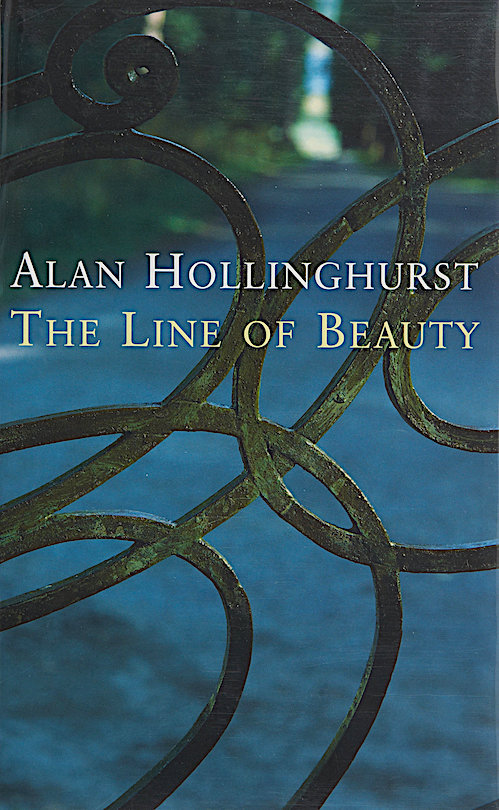
Hollinghurst’s third novel, the 1998 “The Spell”, used the satirical and romantic style of a weekend in the country plot to follow the changing relationships within a group of friends and occasional lovers. This work was followed by the 2004 three-part novel “The Line of Beauty”. Set during the Thatcher years between 1983 and 1987, the novel followed the life of the young, middle-class gay protagonist Nick Guest. Through exploring the realities of Nick’s tense and intimate relationships and life as a gay man, Hollinghurst examined the themes of hypocrisy, drugs, privilege and homosexuality during the time of England’s emerging AIDS crisis. “The Line of Beauty” won the high-profile 2004 Man Booker Prize with its fifty-thousand pound stipend and became the first gay novel to be so honored. It was also a finalist for the Lambda Literary Award and the National Book Critics Circle Award for Fiction.

Alan Hollinghurst’s fifth novel, the 2011 “The Stranger’s Child” which, told over the course of decades, revolves around a minor poet’s successful published poem and the resulting changes in his work and life. Received positively by critics, the novel was on the Man Booker Prize longlist, the Walter Scott Prize shortlist, and the winner of the 2013 Prix du Meilleur Livrr Étranger, France’s best foreign book prize. Hollinghurst’s sixth novel, the 2017 “The Sparsholt Affair”, explores the changing attitudes towards homosexuality as seen through the lives of two Englishmen: a teenager attending Oxford during the Second World War, and his later openly-gay son in London just after England decriminalizes homosexuality.

Hollinghurst currently lives in London with his partner Paul Mendez, the British author who authored the 2020 semi-autobiographical novel “Rainbow Milk” published by Dialogue Books, a Little, Brown and Company imprint.

“I grew up reading certain writers like Iris Murdoch who was very interested in sexual ambivalence and often created gay characters, usually from a cultured or academic background. I’m not sure how many straight writers I’ve read who create gay characters successfully from the inside, though I agree about Anthony Burgess and (his novel) “Earthly Powers”. — Alan Hollinghurst, 2017, Guardian Interview with Alex Clark

Note: For those interested, an interview between writer Peter Terzian and Alan Hollinghurst, “Alan Hollinghurst, The Art of Fiction No. 214”, is available through “The Paris Review”, a literary magazine featuring original writing, written interviews, podcasts and art. The article or a subscription to the magazine is available for purchase at: https://www.theparisreview.org/interviews/6116/the-art-of-fiction-no-214-alan-hollinghurst