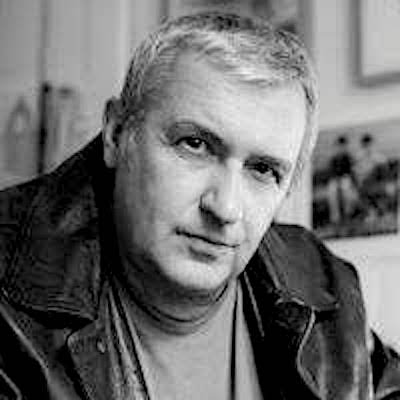
John Kingsley Orton: “Ordinary Decent People”

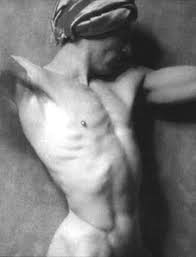
Photographers Unknown, Parts and Pieces Making a Whole: Set Thirteen

Sir- As a playgoer of forty years standing, may I say that I heartily agree with Peter Pinnell in his condemnation of ‘Entertaining Mr Sloane’. I myself was nauseated by this endless parade of mental and physical perversion. And to be told that such a disgusting piece of filth now passes for humor! Today’s young playwrights take it upon themselves to flaunt their contempt for ordinary decent people. I hope that the ordinary decent people of this country will shortly strike back! Yours truly, Edna Welthorpe (Mrs)

—John Kingsley Orton, Letter Sent for Publication under the Alias of Edna Welthorpe

Born in Leicester, England in January of 1933, John Kingsley Orton, known under the pen name of Joe Orton, was a working-class, gay playwright whose outrageous black comedies shocked, outraged, and amused theatre audiences in the 1960s. 

After attending secretarial classes at Clark’s College in Leicester from 1945 to 1947, Joe Orton worked as a junior clerk for three pounds a week. He began performing in theater productions beginning in 1949 and joined several groups, including the Leicester Dramatic Society. Orton was accepted for a scholarship at London’s Royal Academy of Dramatic Art in November of 1950; however, due to appendicitis, his entrance was delayed until May of 1951. It was at the Royal Academy that Orton met the seven-year older Kenneth Leith Halliwell, who also was a struggling actor and writer. After moving into a West Hampstead flat, they quickly formed a strong relationship and became lovers.

After graduation, Orton and Halliwell collaborated on writing several novels, which were unsuccessful at  publishing. Due to a lack of serious work, they began to amuse themselves with pranks and hoaxes. From January 1959 to May of 1962, Orton and Halliwell removed books from several local public libraries and began to modify the blurbs and cover art. One volume of poetry by writer and broadcaster John Betjeman was found with a new dust jacket featuring a photograph of a nearly naked, tattooed middle-aged man. Discovered by the authorities in May of 1962 and later found guilty of five counts of theft and malicious damage to seventy books, the two men served six months in prison. A collection of these altered book covers are now housed in the Islington Local History Center.

In 1959, Joe Orton wrote his only novel, which was  posthumously published as “Head to Toe”, and soon began to have success in his plays’ productions. His first play “Fred and Madge” was written in 1959; and “The Visitors” followed two years later. In 1963 the BBC purchased Orton’s radio play “The Ruffian on the Stair”, which was broadcast on August 31st of 1964 and, later in 1966, adapted as a stage play. 

By the end of August, Orton had also completed his play “Entertaining Mr. Sloane”, which premiered on May 6th of 1964 to reviews which ranged from praise to outrage. Although it lost money on its short run, the play tied for first in the Variety Critics’ Poll for Best New Play, and Orton came second in the category for Most Promising Playwright. By 1965, “Entertaining Mr. Sloane” was being performed in Spain, Israel, Australia, and New York, as well as being adapted into both a film and television play.

Written between June and October of 1964, Joe Orton’s next play was “Loot”, a wild parody of detective fiction, which added the blackest farce and jabs at established ideas on death, the police, religion, and justice. It underwent sweeping rewrites before it was judged fit for the West End. “Loot” was first staged in London on September 27th of 1966 to rave reviews. In November the play moved to the Criterion Theater where it ran for three hundred forty-two performances, won several awards and firmly established Orton’s fame.

Orton, over the next ten months, revised his “The Ruffian on the Stair” and his “The Erpngham Camp” for the stage as a double play entitled “Crimes of Passion”. He also wrote his television play “Funeral Games”, the screenplay entitled “Up Against It” for the Beatles music group, and his final full-length play “What the Butler Saw”, a play of seduction, blackmail, and cross-dressing, which came to the West End stage in 1969, eighteen months after Orton’s death.

On the 9th of August of 1967, John Kingsley Orton was bludgeoned to death by Kenneth Halliwell at their home in Islington, London, killed by nine hammer blows to the head. Halliwell then committed suicide with an overdose of Nembutal. Later evidence showed that Orton had earlier confided to a friend that he wanted to end his relationship with Halliwell; and it also showed that Halliwell had spoken to his psychiatrist three times on the day of the murder. Halliwell had felt increasingly threatened and isolated by Orton’s success, and had come to rely on barbiturates and antidepressants. The bodies, along with Halliwell’s suicide note, were found on the morning of August 10th by a chauffeur who had arrived to transport Orton for a meeting in London. 

The body of Joe Orton was brought into the chapel of London’s Golders Green Crematorium to a recording of the Beatles’ song “A Day in the Life”. Playwright and director Harold Pinter read the eulogy. After Orton’s cremation, his ashes and Halliwell’s ashes were mixed together and scattered in a section of the Garden of Remembrance at Golders Green; no marking memorial stone is erected there. A statue of Joe Orton was later installed in the city of Leicester and, in 1987, a film adaption of John Lahr’s 1978 biography of Orton was released under the title “Prick Up Your Ears”.

Note: For those interested in theater and gay history, an interesting article is Greg Buzwell’s 2019 “Homosexuality, Censorship, and British Drama During the 1950s and 1960s” located at the British Library site: https://www.bl.uk/20th-century-literature/articles/homosexuality-censorship-and-british-drama-during-the-1950s-and-1960s

Egyptian Arched Harp

Egyptian Arched Harp (Shoulder Harp), circa 1390-1295 BCE, Wood, Diagonal Length 82 cm, Soundbox Length 36 cm, Metropolitan Museum of Art, New York

The Eighteenth Dynasty of Egypt, spanning the period from 1550 to 1292 BCE,  is classified as the first dynasty of the New Kingdom, which was the era when ancient Egypt reached the peak of its power. This dynasty included the reigns of pharaohs such as Tutankhamun who ruled Egypt at a young age; Hatshepsut, the longest reigning woman pharaoh of an indigenous dynasty; and Akhenaten, the heretic pharaoh, who ruled with  his principle wife Nefertiti. Unique among the Egyptian dynasties, the Eighteenth Dynasty had two women who ruled as sole pharaoh: Hatshepsut, who ruled from 1470 to 1458 BCE, and Neferneferuaten, usually identified as Nefertiti, whose short reign extended from 1334 to 1332 BCE.

Arched harps were already in use during the Old Kingdom and remained the foremost string instruments until the end of the Middle Kingdom. From the New Kingdom onward, Egyptian arched harps co-existed with a great variety of harps in different shapes and sizes. During the later part of the New Kingdom, musicians experimented with new forms which could accommodate more  strings, eventually progressing from the arched bow harp with four or five strings to the classic full-sized arched harp with a leather soundboard and twenty-two strings. 

The smaller, more portable ancient Egyptian bowed shoulder harp became briefly more popular from about the reign of Tuthmosis III, who ruled from 1479 to 1425 BCE. The arched shoulder harp with the curved neck, preserved in New York’s Metropolitan Museum of Art’s collection, is dated from 1390 to 1295 BCE. This harp has twelve strings and an open, slightly waisted sound box, whose opening was once covered with skin. Rope tuning rings under each string gave a buzzing sound to the soft-sounding tone produced. Topping the arched frame of the harp is a carved head of a Nubian captive who appears to be bound by the strings of the harp. 

This type of portable, boat-shaped arched harp was a favorite during the New Kingdom and is shown in the hands of processional female musicians performing alone or in ensembles with singers, wind instruments, rattles, and sistrums, small rattling percussion instruments made of brass or bronze. Prior to the Middle Kingdom, depictions of harpists feature men as the chief musicians. Harps and other instruments were used for praise singing and entertainment at festivals, temple rituals, court functions, funerals, and military events. Today, arched harps derived from these ancient Egyptian forms are still used in parts of Africa and Asia

Chris Plytas

Photography by Chris Plytas

Born in 1953 in London, Chris Plytas is an established contemporary visual artist whose work covers the psychology of self-image and identity. His photographic portraiture works have been admired often for their way of unearthing the primal and sensual core of their subjects, and the way they sometimes straddle the borderline between beatific innocence and animal rage.

From 1974 to 1977, Plytas studied fine art, painting and sculpture at St. Martins School of Art in London and earned a BFA with honors. After graduation, he developed his darkroom skills on landscape and portraiture photography.Plytas also  did reportage photography for publications, in which he covered  events such as night clubs, concerts, fashion shows, the Royal Wedding, and the Cannes Film Festival.

During the period form 1977 to 1985, Chris  Plytas did photographic printing, layouts, and personal design realization in London for Vivienne Westwood, the English fashion designer largely responsible for bringing punk and new wave fashions into the mainstream. In 1982, he became Director of Berwick Universal Pictures, Limited, an award-winning documentary film company based in Soho, London.  Starting in 1985, Plytas began concentrating on his own personal, black and white, fine art photography, shot with Hasselblad cameras, for exhibition and personal archives. 

Chris Plytas’ first series, entitled “Australia”, was shot over a six month period mostly in the New South Wales and Victoria provinces of Australia. This large body of work, consisting of landscape and portraiture, was exhibited in 1987 at London’s Photographers Gallery and toured Europe for six years with support from Fonds National d’Art Contemporain, a public collection of France’s contemporary art. 

Starting in 1987, Plytas engaged in a six-year shoot for his series “Hadrian: The Violence and Sexuality of Adolescence” series, a coming of age story shot in real time. His next series “Le Corps Enjeux (The Body)” was shown as part of the Mois de la Photo exhibition, sponsored by Audiovisuel and Kodak,  held in Paris in 1988. Plytas spent a year from 1992 to 1993 in the Xi’an and the Yannan regions of China, where he shot his “China: Voyage to the East” portfolio, a series which he dedicated to Sun Wukong, the trickster Monkey King.

Known for his exhibited photographic series, Chris Plytas began to receive commissions for portraiture work. His “Family Portraits” series was commissioned by the De Ganay Archives and, at present, consists of forty-eight individual portraits of members of the French aristocratic family. He has also received portraiture commissions from various  other European  and American families 

After shooting his “Miami Beach” series in  1994.  Plytas  has continued working, throughout his career, on multiple personal portfolios, some of which have been exhibited and published. These include his “The Burden of Classicism”; “Nature and Nurture”; “Youth: A Retrospective” shot in Italy; “Beach-Scapes” shot in  Italy and Sicily; a series entitled “Allegorical Portraits”; and “Blood Ties”, a portfolio documenting family member connections.

In addition to his participation in numerous group exhibitions, Plytas  has shown his work in solo gallery exhibitions, including  Paris’ Galerie PONS in 1995, Paris’ Galerie Serge Aboukrat in 2000, a 2002 exhibition in Italy entitled “Frascati Doc”, an exhibition project at the Chateau de Courances in France in 2004, and in 2015 a Paris exhibition entitled “What is Erotic?”. 

Chris Plytas’ work is available in limited editions and custom portfolios. Private individual or family portraits can be commissioned. His website is located at: https://www.chrisplytas.com/index

Insert Images:

Chris Plytas,, Title Unknown (Slogan on Wall), 1992-93, China, Voyage to the East Series, Silver Gelatin Print

Chris Plytas,, “Boy and Girl Entwined”, 1986-2003, The Body Series, Silver Gelatin Print

Susi Leeton

Susi Leeton, The Birch Tree House

Susi Leeton graduated with honors in a Bachelor of Architecture Degree from Melbourne University. After gaining international experience in Rome and Singapore, she returned to Melbourne and began working on a range of residential, retail and commercial projects. In 1997, Leeton established her office, Susi Leeton Architects and Interiors, where she has creatively explored both urban and rural settings. 

Susi Leeton Architects and Interiors is a small practice, located in the South Yarra area of Melbourne, Australia, which focuses on high-end residential projects. The practice encompasses all the disciplines of architecture and interior design: conceptual design, regulatory, town planning, engineering, documentation, and furnishing. Working with clients on a holistic level, the practice ensures design continuity within strict budget parameters throughout the project. 

The Birch Tree House is a sculptural, four bedroom, family home approached along a pathway aligned with a row of birch trees. The entry is sheltered within an arch containing an oversized door. The focus of the house is towards the northern wall of large steel sliding doors which open onto the yard with its large oval pool. The volumes of space are soft, sculptural forms that overlap and intersect creating workable family zones both inside and out. 

Natural light and soft materials, whose finishes were deliberately refined and tonal, were selected to create a chiaroscuro of light and shade. Texture was a main consideration in the design. Natural limestone, oak timber flooring, polished plaster walls, and linen curtains were the understated palette. The walls of polished concrete create a shimmering effect throughout every space. 

Birch Tree House was on the 2020 shortlist for the Australian Interior Design Awards. Construction was done by Visioneer Builders, an Australian award-winning construction group located in Richmond, Victoria Province, which is  focused on unique, highly-specified single residences, multi=residential developments and commercial structures. 

The photography was done by Felix Mooneeram, a freelance photographer from the United Kingdom with a focus on design, architecture and lifestyles, and Nicole England, a Melbourne-based architecture and interiors photographer who has worked with many of the industry’s top architects and designers worldwide. 

Clara Peeters

Clara Peeters, “Still Life with Cheeses, Artichoke, and Cherries”, circa 1625, Oil on Wood, 46.7 x 33.3 cm, Los Angeles County Museum of Art

Clara Peeters, “Table with Cloth, Salt Cellar, Gilt Standing Cup, Pie, Jug, Porcelain Plate with Olives and Cooked Food”, 1611, Oil on Panel, 55 x 73 cm, Museo National del Prado, Madrid

Clara Peeters was a still-life pioneer, one of the only female Flemish artists who exclusively painted still-life works. She was a contemporary of Rubens, Van Dyck, and Jan Brueghel the Elder, and as such, was active during one of the great periods of European art. Peeters is credited with the popularization of colorful, banquet or breakfast pieces, depicting sumptuous displays of tableware, goblets, food, drink and flowers, into the Dutch painting tradition. She is known for her meticulous brushwork, ability to capture precise textures, and her low angle of perspective.

While customs and law did not favor women’s inclusion in professional activities, a small number of women were able to overcome the existing restrictions and become painters. Factors such as the problem of studying anatomical drawings from live, normally male, models who posed nude in an activity was forbidden to women and thus limited their work to portraits or still-life paintings.

There is very little documentation on the life of Clara Peeters aside from her paintings. Scholars believe she was born between 1588 and 1590. Although a record indicates a Clara Peeters was baptized in Antwerp in 1594, both Clara and Peeters were common names. A baptism in 1594 would imply that her sophisticated 1607 paintings, the earliest dated known works,  were done when she was thirteen, which seems unlikely. By 1612, Peeters was producing large numbers of painstakingly rendered still life paintings. There is no known work of hers beyond 1621; the date of her death is also unknown.

While Peeters is not registered in the painters’ guild in Antwerp, she is described in a document as a painter from there. Of her known works, six bear marks on their painting panels indicating their preparation in the city of Antwerp. On the blades of three silver knives depicted in Peeters’ paintings are hallmarks, indicating their origin as the city of Antwerp; these knives also bear Peeters’ name which might be an indication of her own marriage, as silver cutlery was used as wedding gifts.

Clara Peeters’ first known work, signed and dated 1607, reflects the compositional and technical skill of a trained artist. She signed thirty-one works and dated many of them; another seventy-six works are speculated to be in her body of work, although documentation is lacking to assign them affirmatively. Although no record of patrons is available, it appears that Peeters was a successful artist. The fact that her work was widely distributed and is present in collections in Amsterdam, Rotterdam, and Madrid, suggests she exported her paintings through dealers and likely was able to achieve some profit. Four of Peeters’ early works came to the Prado Museum from the Spanish Royal Collection. 

Clara Peeters devoted her activities to still-life painting, deploying a style that emphasized the real appearance of things, in a period where realism was seen as an alternative to the idealism of the Renaissance tradition.Her paintings depicted fish and fowl ready to be cooked, cooked food displayed on the table, serving vessels, cutlery, other objects, most of them costly luxury items. These were all painted with great detail in the description of both texture and form: the brightly lit objects were presented in elegant contrast with the dark backgrounds. 

Peeters’ paintings show the tastes and customs of the prosperous classes in the middle of the Renaissance period. The tables in her still-life works include imported goods and food, such as wine, fruit, sweetmeats, and particularly fish, of which Peeters was the first artist to portray as the main subject of a still-life. Her work also included falcons next to dead fowl, the subject of an aristocrat’s hunt, and sea shells, prized for their exotic origins and beauty. 

Clara Peeters was one of the first known artists to incorporate self-portraiture into still-life paintings. Barely noticeable, they appear at least in eight of her works, often reflected on a silver-gilt goblet or on the lids of pewter jugs. On the surface of the right goblet in her “Still Life with Flowers, Gilt Goblets, Coins and Shells” are located six self-portraits of Peeters, where she is seen holding her brushes and palette in a stance upholding her status as a woman painter. Depicted in detail on such a minute scale, these self-portraits attest to Clara Peeters’s level of artistic skill.

Insert Images:

Clara Peeters, “Still Life with Flowers, Gilt Goblets, Coins and Shells”, Detai View of Self-Portraits, 1612, Oil on Panel, 59.5 x 49 cm, Karlsruhe, Staatliche Kunsthalle

Clara Peeters, “Still Life with Fish, Candle, Artichokes, Crabs and Shrimp”, 1611, Oil on Panel, 50 x 72 cm, Museo National del Prado, Madrid

Clara Peeters, “Still Life with Cheeses, Almonds and Pretzels”, 1615, (With Signed Silver Knife), Oil on Panel, 34.5 x 49.5, Museum Mauritshuis, The Hage

Fabrian Cháirez

The Artwork of Fabrian Cháirez

Born in Chiapas in 1987, Fabrian Cháirez is a Mexican artist whose work questions the predominate idea of masculinity and provides alternate representations of the male image. Already showing an artistic aptitude at an early age, he studied from 2007 to 2012 at the Faculty of Arts in the University of Sciences and Arts of Chiapas, where he graduated with a BFA in Visual Arts.

Cháirez is a figurative and traditional academically trained painter whose work emphasizes both composition and color. The body of his work has a neoclassical style and is influenced by symbolism and the Art Nouveau. Major art influences in his paintings have come from the works of Mexican Neo-Expressionist painter Julio Gálan: Spanish portrait and landscape painter Joaquin Sorolla, known for his sunlit canvases;  Mexican painter Saturnino Herrán, renowned for his majestic paintings of indigenous people; and Spanish portrait painter Dîego Velásquez, whose work became the model for the early realist and impressionist painters. 

Cháirez’s work, in response to the hostilities against the concept of sexual diversity, revolves around the image of the male body and the LBGTQ world. In his discussion of the stereotypes of Mexican virility, he uses the traditional Mexican archetypes, such as wrestlers, charros or horsemen, and the Mara Salvatrucha or criminal gangs, for his central figures. Cháirez places these generic images in suggestive and erotic scenarios in direct contrast to the existing social norm regarding the male image.

In 2015, Fabrian Cháirez had a solo exhibition entitled “The Garden of Delights” at the José María Velasco Gallery where he presented thirty pieces, including graphic work, illustrations, and oil paintings. In this body of work, he showed typical male figures with feminine features. In 2019, Cháirez exhibited his most controversial work, “The Revolution” at the Palacio de Belles Artes, a prominent cultural center located in central Mexico City. 

“The Revolution” is a thirty by twenty centimeter oil painting on canvas that represents the revolutionary general Emiliano Zapata, a stereotype of Mexican masculinity, who is shown seated naked, wearing a pink hat, tricolor sash, and high-heeled shoes, on a horse. Created in 2014, Cháirez produced this image as a example of other types of masculine representation. After the Mexican Ministry of Culture selected this work to be part of, and the poster image for, the 2019  exhibition entitled “Emiliano: Zapata After Zapata”, a controversy developed in the social media. Zapata’s relatives and supporters threatened to sue Cháirez and the National Institute of Fine Arts for denigrating the figure of the revolutionary leader. 

On December 11, 2019, a demonstration occurred within the Palacio de Belles Arts in which demands for the removal of “The Revolution” were made. A counter demonstration by LBGTQ activists defended the inclusion of the painting in the exhibition. A message from the Minister of Culture defended the painting’s inclusion and rejected any violence or censorship. On December 13th, a note, containing the personal opinion of the Zapata family,  was added next to the painting as a compromise, despite objections by Cháirez and his supporters. In January of 2020, “The Revolution” became part of the Tatxo Benet Censored Art Collection, a collection of all art banned for political, religious or moral reasons, soon to be permanently housed in Barcelona. 

Fabrian Cháirez’s website is located at: https://www.fabianchairez.com

Manuel Puig: “The Most Beautiful Thing”


Photographers Unknown, The Most Beautiful Thing

“—What is being a man for you? —It’s many things, but for me… well, the most beautiful thing about a man is that, being pretty, strong, but without making a fuss of strength, and that he is advancing safely. That he walks safely, like my waiter, that he speaks without fear, that he knows what he wants, where he is going, without fear of anything. “It’s an idealization, a guy like that doesn’t exist.” “Yes, he exists, he is like that.” —Well, it will give that impression, but inside, in this society, without power, no one can advance safely, as you say.—Being a man is much more than that, it means not putting anyone down, with an order, with a tip. Moreover, it is… not allowing anyone next to you to feel less, that no one next to you feel bad.”

Manuel Puig, The Kiss of the Spider Woman

Born in December of 1932 in General Villegas, Argentina, Manuel Puig was a novelist and a screenwriter. As there was no secondary school in his hometown, his parents sent him to Buenos Aires in 1946 where he attended College Ward, an educational institute with intercultural bilingual education at all levels. During his time at College Ward, Puig began to systematically read books. Starting with the Nobel Prize winners, he read works by such writers as André Gide, Hermann Hesse, Aldous Huxley, Thomas Mann, and Jean-Paul Sartre.

After seeing Henri-Georges Clouzot’s 1947 police drama film, “Quai des Orfèvres”, Puig decided on a film career as a director. For this profession, he learned three languages: Italian, French, and German. In 1950, Puig enrolled at the University of Buenos Aires Faculty of Architecture; but, in 1951, he switched to its School of Philosophy. He was already working, upon graduation, as a film archivist and editor in Buenos Aires; and later, after  winning a scholarship from the Italian Institute of Buenos Aires, he continued that employment in Italy.

Returning to Argentina, Manuel Puig started his obligatory military service in 1953 where he served as a translator in the Aeronautics section. Living in Buenos Aires in the 1968, Puig wrote his first major novel, “La Traición de Rita Hayworth (Betrayed by Rita Hayworth)”, a novel told in multiple voices to create a portrayal of ordinary Argentinian lives in the1930s and 1940s. In 1969, he wrote his second novel “Boquitas Pintadas (Heartbreak Tango)”, a story about the contrast between mediocre reality and fantastical dreams; the novel also raised questions about machismo and the damage it causes. The narrative is told through confessions, letters, diaries, newspaper clippings, eyewitness accounts, and rememberances of life.

Holding leftist political tendencies and seeing the instability of the Argentinian government, Puig relocated to Mexico in 1973, a place where he would live in exile throughout rest of his life. He wrote his third novel “The Buenos Aires Affair” in 1973, and three years later, wote possibly his best known work, the 1976 “El Beso de la Mujer Araña (The Kiss of the Spider Woman)”. Unusual in that it has no traditional narrative voice, the novel is told in large part through dialogue, without any indication of who is speaking, except the insertion of a dash to show change of speaker. 

“Kiss of the Spider Woman” depicts the daily conversations between two Argentinian prison cellmates, one a political prisoner who was part of a group attempting the overthrow of the government and the other a transgender woman in jail for corruption of a minor. The two characters, seemingly opposites, form an intimate bond in their cell and become lovers, albeit briefly, and they are both changed by that relationship.   

Manuel Puig’s novel was initially published only in Spain; however, upon its publication, it was included on a list of novels banned to the population of Buenos Aires. Despite having been entered into the Frankfurt Book Fair in Germany, it remained banned in Argentina until Raúl Alfonsin’s government took control in 1976. Puig adapted “Kiss of the Spider Woman” into a stage play in 1983. The novel was later adapted in 1985 into an Academy Award-winning film of the same name, starring William Hurt and Raul Julia. Hurt’s winning the 1986 Oscar for Best Actor marked the first time an Academy Award went to an actor in an openly gay role. 

In 1989, Puig moved from Mexico City to Cuernavaca, Mexico. Following doctor’s orders to stop smoking, he took daily walks, but the high altitude of the area labored his breathing. He had access to higher quality medical care than most and received care at a clinic near his home. Experiencing pain for several days, he was admitted to the Las Palmas Surgical Center on July 21, 1990, for risk of peritonitis. 

An emergency operation removed Manuel Puig’s inflamed gall bladder; however, his lungs filled with fluid and he became delirious. He died from an acute heart attack, on July 22, 1990.  After funeral rites, attended by only six people including his mother, Manuel Puig’s body was sent to Argentina and placed in the Puig family tomb in the La Plata Cemetery.

Andreas Fux

Photography by Andreas Fux

Born in East Berlin of the German Democratic Republic in 1964, Andreas Fux is a photographer whose body of work focuses on how the human individual evolves into his own artistic creation. He belongs to the Prenzlauerberg photo artist scene, which documented the last decade of the German Democratic Republic. 

Andreas Fux initially trained from 1980 to 1982 as an electrician. In 1983, he began his own sstudy of  the process and techniques of photographic work. During the years between 1983 and 1988, Fux exhibited his photographs in private gallery spaces. His first published works appeared in a 1988 issue of Das Magazin, a monthly East Berlin magazine that focused on culture and lifestyle. Working as a freelancer, Fux provided the publication with black and white photographs covering Berlin’s punk and youth culture.

 In 1989, Fux worked on photo productions for Deutsche Film-Aldiengesellschaff, the state-owned film studio of East Germany. Since 1990, he has been working as a freelance photographer for various newspapers and magazines, as well as executing his own photographic projects. In 1992, Fux’s first solo photographic book was published entitled “The Russians”; it was a supplement to his solo exhibition, of the same name, at the Janssen Gallery in Berlin, a show which later traveled to Hamburg and Munich. 

Andreas Fux gained a wider audience for his work with the 2005 series “The Sweet Skin”, which covered a decade of works between 1995 and 2005. For this series of portraits which focused on tattoos and skin scarification; he followed the lives of his models, with daily documentation and night shoots in his studio. Against a mostly white background and in the silence of the photo studio, nude photographs of his models were taken, in which the contrast between intimacy of the body and clinical sterility of the room was exaggerated. In another series entitled “At the End of the Night”, whose topic was body culture, the nude, and sexuality, Fux posed his subjects against a black background with a selective light source that modeled and fragmented the models sculpturally. 

Fux’s 2001 series “The Horizonte” is reminiscent in its formality of the 1980s “Seascapes” series done by Japanese photographer and architect Hiroshi Sugimoto, in which Sugimoto bifurcated the landscape images exactly in half by the horizon line. At the beginning of September 2001, Fux travelled across the North Sea on board a Ukrainian training sailboat. For this series, he celebrated the beauty of the horizon as an interaction between sea, clouds and light. The images of “The Horizonte” series were seen by the critics as an expression of calm and innocence. For his 2010 series “Kerberos and Chimaira”, Fux staged his motifs in a wind tunnel at Berlin-Adlershot. Using the strict compositions of expressionism and the aesthetic codes of the latex and fetish scene, his series examined  a dangerous and often not considered proximity between the erotic picture codes of fetishism and the aesthetics of National Socialism.

For his 2016 exhibition “Shame and Beauty”,  Andreas Fux opposed new portraits with a selection of older works, a combination which showed the development of his oeuvre over the years. His new work preserved the almost tender and respectful handling of his subjects found in his early works. The photographic sessions in which he bathed his models in soft light took an entire night, were meticulously planned, and took place in a highly sensitized atmosphere. This Berlin show contextualized the discussion on governmental and social repression and persecution; the works in this show had previously been exhibited by Fux in Moscow in September of 2015 under rather adverse conditions.

Andreas Fux has had solo exhibitions in Germany and abroad, including the Widmer and Theodoris Gallery in Zurich, the Photo Festival in New York, the Esther Woerdehoff Gallery in Paris and the Pasinger Fabrik Gallery in Munich.

A collection of Fux’s photo work from Berlin can be found at: https://andreas-fux.berlin

Elise Ferguson

Paintings by Elise Ferguson

Born in Richmond, Virginia in 1964, Elise Ferguson is a painter, sculptor, and print maker. The daughter of a mother who designed women’s clothing and a stepfather who was an architect, she spent her early life in a home of modern design elements, surrounded by a growing art collection.  

Ferguson initially began her formal art education at Maryland Institute College of Art in Baltimore. She then received her BFA from The School of Art Institute in Chicago and her MFA from the University of Illinois at Chicago. After graduation, Ferguson moved to New York, considered a mecca for the visual arts, to be surrounded by artists, similar-minded colleagues and galleries. She currently works out of a shared studio space with two other creative professionals a short distance from her Brooklyn home.

Inspired by architect Louis Kahn’s un-camouflaged use of cement in his designs, Elise Ferguson uses sculptural materials, including metal, pigmented plaster and ink on medium-density fiberboard, as a means of creating illusory space and preserving a series of compositional actions. While certain of her works allude to representational elements found in the studio or nature, Ferguson also creates pieces that are purely abstract with optical interactions of grid, lines and concentric circles.

Ferguson was a sculptor for twenty years before she focused on painting. Her “Retaining Wall”, a two-hundred foot length wall cast of urethane tiles reminiscent of a 1950s linoleum kitchen floor, was installed at the Socrates Sculpture Park in Queens, New York in 2003. A similar sculpture entitled “Greenvine”, a patterned wall of green tiles executed in 2005, is installed at a private home in South Hampton, New York. Although she created distinctive sculptural works, Ferguson is best know for her textural paintings.

Incorporating her sculptural aptitude, Ferguson paints the majority of her work by using pigmented plaster on paper or panels. With the use of computer graphic programs, she draws her repeating and often undulating patterns, with purposefully placed imperfections and glitches. After they are drawn, Ferguson makes screen prints that she applies to the pigmented plaster. Although seemingly flawless, the imperfections seen on a closer look create a tension in the work between the geometric figure and the plaster build-up.

For her 2020 “Clamp” series, Elise Ferguson sought to translate her layering techniques used in her paintings to a handmade paper edition. These works of color and geometric patterns were accomplished by layering brightly colored linen pulps on cream or black cotton base paper sheets. Using her computer, Ferguson designed an undulating U-shaped wave of parallel lines which, once made into mylar stencils, made it possible to create thin, crisp lines on the base sheet. The resulting work, with its stenciled pulp lines, has a distinctive look, unique to the art of paper making.

Ferguson’s work has appeared in solo exhibitions at the Halsey McKay Gallery, the Romer Young Gallery and 57W57 Arts.  Her group exhibitions have included the Albada Jelgersma Gallery in Amsterdam, Ikast Kunstpakhus in Denmark, the Cincinnati Contemporary Arts Center, the Socrates Sculpture Park in Queens, and the Barton Art Galleries, among others.  

Elise Ferguson has been recognized with several awards, including a Northern Trust Purchase Prize, an EAST International exhibition grant,  the Dieu Donne Papermill Workspace Grant, and residencies at Barton College, University of Nevada Las Vegas, MacDowell Colony, and the  Illinois State University.  She is represented by Halsey McKay Gallery in East Hampton and Romer Young Gallery in San Francisco.

Elise Ferguson’s website is located at http://www.eliseferguson.org

Insert Images:

Elise Ferguson, “Cloudbank”, 2018, Hand-Printed Block Print on Linen, 15 Feet in Length, Gallery Installation, Halsey McKay Gallery, New York,

Elise Ferguson, “Pile”, 2014, Pigmented Plaster on Panel, 60.1 x 60.1 cm, Private Collection

James Huctwith


Figurative Paintings by James Huctwith

Born in rural southern Ontario, Canada in 1967, James Huctwith is a painter in the realist tradition. From 1986 to 1989, he studied fine art at the University of Guelph’s College of Art in Ontario, primarily in architecture and art history and theory. Huctwith started painting and exhibiting in the early 1990s in Vancouver. Relocating to Toronto in 1995, he was represented by the O’Connor Gallery where he regularly exhibited his emotionally and physically explicit work for a decade.

After a period of personal disruption and change, Huctwith joined Vancouver’s Gallery Jones in the spring of 2005. He stayed with the gallery for two years, during which time he exhibited  a series of non-figurative works. Beginning in 2006, Huctwith was also represented for two years by Montreal’s Galerie Harwood, where the work he exhibited consisted primarily of interpretations of the still life genre. In 2007, he ended his relationship with the O’Connor Gallery.

Feeling a need to recapture his connection with his work, James Huctwith returned to the province of Ontario, placed his previous work with Toronto’s Antonio Arch Fine Arts, and signed up with Ottawa’s Galeria La Petite Mort. His first solo show of figurative work at the Petite Mort gallery in the fall of 2009 was a success. Huctwith’s work, now published and regularly reviewed, is collected internationally with many works in private collections..

Huctwith’s current realist work, both figurative and portraiture, is done with an emphasis on historical techniques. His canvases of male figures are moody, masculine, and mysterious. While a sense of calmness is presented in Huctwith’s scenes, there is often a lurking undercurrent of uncertainty and conflict.

The artist’s website can be found at: http://daintybastard.blogspot.com

Franz Szony

Photographic Work by Franz Szony

Raised in Reno, Nevada, Franz Szony is a writer and photographic artist whose main body of work, both in its fine art and commercial forms, embraces conceptual portraiture. 

After finishing his primary education in 2014, which included art classes at an early age, Szony relocated to San Francisco where he attended the Academy of Art. At the academy, he initially studied fashion and illustration, and, later. focused on photography. After learning the technical aspects of photography, Szony returned to his hometown of Reno where, as a freelance artist, he photographed different advertisement campaigns for newspapers, theaters, and several casinos. He exhibited his own work in a small gallery he created and hosted monthly nude drawing workshops in that space. 

Szony moved to Los Angeles in 2012 and settled in the Brewery Artist Loft complex, an industrially zoned area where artists rent living and working space. Inspired by the area’s creative energy, he photographed campaigns for perfume and fashion brands, created album covers, and did creative photographic work for companies, including Disney and Warner Brothers. 

Influenced by illustrators such as Marc Davis and Erte, and, at an early age, by the extravagant stage shows of Reno’s casinos, Franz Szony’s conceptual portraiture work is lush both in its color and settings. His images are presented ambiguously in time and place, and androgynously in character. Szony’s photographs often contain symbolic or mythological elements and convey psychological, political, and sexual identity messages to the viewers.  

Franz Szony is also a songwriter who has produced several music videos in which he has incorporated his poetry and visual art. Shot over a period of three days, his music video, “Petunia”, based on several of his photographic pieces, was released in 2018. Other music videos by Szony include “La Petite Mort”, “Antibeige”, and “Pansy”, also released in 2018; and “What You Seek” and “Surrender Dorothy”, both released in 2020. 

Szony had solo exhibitions at Reno’s Sierra Arts Foundation in 2015 and at Hollywood’s World of Wonder Gallery in 2019. His work is included in many private collections. Franz Szony’s website is located at http://www.franzszony.com

Maurice Sendak: “Where the Wild Things Are”

Photographers Unknown,  Where the Wild Things Are

Max stepped into his private boat
and waved goodbye
and sailed back over a year
and in and out of weeks
and through a day
and into the night of his very own room
where he found his supper waiting for him
and it was still hot”

—Maurice Sendak, Where the Wild Things Are

Born to Polish Jewish immigrant parents in Brooklyn, New York, in June of 1928, Maurice Bernard Sendak was an American writer and illustrator of children’s books. He was affected in his childhood by the deaths of many of his extended family who perished in the Holocaust. An early reader of books, Sendak decided at the age of twelve to become an illustrator after seeing Walt Disney’s film “Fantasia”.

Sendak started his professional career with the creation of window displays, one of which was in the toy store FAO Schwarz located on Fifth Avenue in Manhattan. His first published illustrations, a series of figures explaining the atom and its energy, were in the 1947 textbook “Atomics for the Millions” written by Maxwell Leigh Eidinoff. In the 1950s, Sendak illustrated children’s books written by other authors, including two books written by his older brother, author Jack Sendak, and the “Little Bear” series of books written by Danish-American author Else Holmelund Minarik.

In 1956 Maurice Sendak published his first authored book, “Kenny’s Window”. and soon started working on second effort, for which he was inspired to use the Yiddish expression ‘vilde chaya”, or wild animals, to indicate overexcited children. Sendak’s authored and illustrated 1963 children’s book “Where the Wild Things Are” received international acclaim. Initially banned for two years by libraries and critiqued negatively, the book won the annual Caldecott Medal in 1964 for recognition as the most distinguished American illustrated book for children. Since its publication, it has sold over nineteen million copies worldwide.

Sendak illustrated Isaac Bashevis Singer’s first children’s book “Zlateh the Goat and Other Stories, which was published in 1966 and received the Newbery Honor for children’s literature. He authored and illustrated the 1970 “In the Night Kitchen”, a young boy’s dream journey through a surreal baker’s kitchen, one of a trilogy of books which contains “Where the Wild Things Are” and the 1981 “Outside Over There”. Illustrated in a different style from his previous works, the book is mainly pictorial with few captions. “In the Night Kitchen”, with its depiction of the young protagonist’s nudity, was controversial upon its release and is still ranked as one of the most frequently challenged books. 

Maurice Sendak’s works included many in the fields of television and stage. He was active in the development of the “Sesame Street” series, and wrote and designed four stories for the series, including an adaption of his book “Bumble Ardy” into an animated film. Sendak adapted his “Where the Wild Things Are’ into a stage production in 1979, and also designed sets for many operas and ballets, including Tchaikovsky’s “The Nutcracker:, Mozart’s “The Magic Flute”,  and Prokofiev’s “The Love for Three Oranges”.

In 1957, Maurice Sendak met his partner, psychoanalyst Eugene Glynn, with whom he remained for fifty years until Glynn’s death in May of 2007. After his partner’s death, he donated one million dollars to the Jewish Board of Family and Children’s Services in memory of Glynn, who had treated children and young adults there. While his sexuality was known among his friends, Sendak kept his sexuality from public view for almost his entire life. When the social climate regarding homosexuality began to change, he  came out, at the age of eighty years old, during a 2008 interview with the New York Times.

Considered one of the most important children’s book artists of the twentieth century, Maurice Sendak died on May 8th of 2012 at the Danbury Hospital in Conneticutt from stroke complications. His body was cremated and his ashes scattered at an unconfirmed location. Under an agreement with, and supported by a grant from, the Maurice Sendak Foundation, his original artwork, sketches, books, and other materials, totaling close to ten thousand items, are housed at the University of Conneticutt’s Archives and Special Collections in the Thomas J Dodd Research Center.

Osmar Schindler

Osmar Schindler, “The Victor”, Date Unknown, Oil on Canvas, Dimensions and Location Unknown

Osmar Schindler, “Germanic Warrior with Helmet”, 1902, Oil on Canvas, 99 x 79 cm, Private Collection

Born in the village of Burkhardtsdorf in December of 1867, Osmar Schindler was a German painter whose works were a mixture of Art Nouveau and Impressionism. With the financial support of an uncle, he attended the Dresden Art Academy where he studied under Belgian historical painter Ferdinand Pauwels and German portrait painter Leon Pohle. Among his fellow students were Art Nouveau painter Hans Unger and, sculptor and  painter Sascha Schneider.

Schindler traveled throughout Europe during his early life and, by 1895, had visited Belgium, the Netherlands, France, and Italy. His work in this period displayed his interest in classical forms, the nude, and allegorical scenes. In 1897, Schindler designed  the poster for Dresden’s International Art Exhibition and, in 1900, was appointed a professor at the Dresden Art Academy. There he  taught life modeling and draftsmanship, a position which he held for the remainder of his life. 

At the 1901 Dresden International Art Exhibition, Osmar Schindler exhibited and received a gold medal for his oil painting “Im Kumtlampenschein (Changing the Horse Collar by Lamp Light)”. He received a bronze medal for his mythological painting “Hercules” at the 1904 Dresden exhibition and, in the same year, exhibited his earlier 1888 lithograph “David and Goliath” at the Saint Louis World’s Fair Exposition. Schindler also produced several portraits including those of Christian Otto Mohr, a pioneer in structural engineering, and Herman Prell, a well-admired professor at the Dresden Academy. 

Aware of the artistic styles of his time, Osmar Schindler opened himself to the ornamental design of Art Nouveau and the abstract brushstrokes of the Impressionists. He died on June 19th of 1927 in Dresden, at the age of fifty-nine, and is buried at Loschwitz Cemetery, a burial place of numerous artists of national significance. 

Insert Images:

Osmar Schindler, “Siegfried”, Date Unknown, Oil on Canvas, 138 x 78 cm, Private Collection

Osmar Schindler, Illustration, Dresden 1897 International Art Exhibition, Lithograph, 75 x 94 cm, Private Collection


Hubert Julian Stowitts

The Photographs and Artwork of Hubert Julian Stowitts

Born in Rushville, Nebraska, in June of 1892, Hubert Julian (Jay) Stowitts was an American painter and ballet dancer. Raised in the Lakota Souix area of South Dakota, he moved with his family to Los Angeles in 1911. Upon his arrival, Stowitts enrolled at the University of California, Berkeley, where, as a gay student, he became a successful college athlete, captained the university’s track team, and acted in several student theater productions. 

Captivated by a ballet performance seen in San Francisco, Stowitts decided to begin private dance lessons. He became an accomplished dancer and performed both on the public stage and at private parties for  San Francisco’s upper class residents. Stowitts kept his dancing secret from his parents for much of his college years; he graduated from the University of California in 1915 with a degree in Commerce. 

In the summer of 1915, while dancing at the Greek Theatre, a large amphitheater owned by the University of California, Julian Stowitts impressed Russian ballerina Anna Pavlova who was in attendance. He accepted an invitation to join her dance company and dropped plans to attend graduate school at Harvard. Stowitts, the first American to star with a Russian ballet troupe, traveled as a successful dancer for six years throughout Europe and the Americas. Leaving Pavlova’s company, he moved to Paris and started a solo career with performances throughout Europe, including a starring role with the Folies Bèrgere in 1924.

During his solo career, Stowitts executed choreographies for other dance companies, designed sets and costumes, and continued  his painting. In 1925 at the age of thirty-three, he retired from dancing and pursued a new career as a painter and occasional film actor. Stowitts traveled through the Far East in the late 1920s, where he lived and painted  in Java for a year. After a stay in Indonesia, he lived in the southern part of Asia for several years and, during this stay, created a series of one hundred and fifty-five canvases entitled “Vanishing India”. After his return to Europe in 1931, Stowitts’s  painted depictions and scholarly studies of traditional Indonesian and Indian dance and costume enjoyed wide popularity in the 1930s.

For the art exhibition at the 1936 Berlin Olympics, Julian Stowitts presented a series of fifty-five paintings depicting American male athletes in the nude, which caused a sensation among the attendees. While in Berlin, he assisted German film director Leni Reifenstahl on her “Olympia”, released in 1938 as the first feature film documentary of an Olympic Games, later used by the Nazis as a propaganda film. Due to her fame and influence, Riefenstahl was able to protect Stowitts from persecution for being gay; but his exhibition was closed by the Nazi regime because of their objection to the manner in which Stowitts depicted Jewish and African-American athletes. 

Returning to California in 1937, Stowitts struggled financially as his artwork began to lose public interest. He found, with the assistance of friends, some security with employment as a house caretaker in the Los Angeles area. Stowitts continued to lecture on Indian and Javanese culture and to paint privately for the remainder of his life. The last of his painting series, uncompleted due to illness, was “The Labors of Hercules”, in which actor and body builder Steve Reeves served as the model. Hubert Julian Stowitts died in San Marino, California on February 8, 1953.

The papers of American dancer and painter Hubert Julian Stowitts, including biographical materials, correspondence, and exhibition and performance related materials are available for research at the Bancroft Library of the University of California, Berkeley. 

Mick Namarari Tjapaltjarri

Mick Namarari Tjapaltjarri, “Untitled (Yam Story)”, 1972, Acrylic on Board, 65 x 44 cm, Private Collection 

Mick Namarari Tjapaltjarri, “Tingari”, 1988, Acrylic on Belgian Linen, 121 x 180 cm, Private Collection

Born at Marnpi located in Australia’s Northern Territory in 1926, Mick Namarari Tjapaltjarri is one of the most important painters to emerge from Australia’s Western Desert. He was one of the foundation members of the art movement that emerged in Papunya Tula. While many of his peers painted according to stylized conventions, Namarari’s work is distinguished by an extraordinary range of visual inventions.

As a boy, Namrari was taken by his parents on traditional travels throughout the local area, including north to Nyunmanu, a major dingo dreaming site, south to Lake Neal,  and northwest to the Warnman Rocks and Warhungurru, a remote settlement in the Kintore Range of the Northern Territory. Following the murder of his father by a Aboriginal avenger group and his mother’s resulting suicide by fire, Namarari, along with his sister, fled the desert and traveled east to the safety of the Lutheran Hermannsburg Mission. 

In 1932, Namarari had his first associations with Australians of European background and began to attend the Hermannsburg Mission School. While attending the school, he became acquainted with the work of Aboriginal artist Albert Namatjira and his fellow Western Aranda landscape painters. At the age of eleven, Namarari began stock work for cattleman Billy MacNamara at a cattle station located near the early settlement of Areyonga, where he later became initiated in a ceremony that signified his manhood. With the establishment of cattle stations at Haasts Bluff in the 1950s and, later, at Papunya in the 1960s, Namarari and his wife, Elizabeth Nakamarra Marks,  eventually moved closer to their traditional country; they would later have one daughter, Angeline Nungurrayl.  

In 1971 encouraged by Geoff Bardon, one of the founding members of the Papunya Tula Artists, Namarari, at the age of forty-five, began painting at Papunya. His early works have a bare background of a single color, most often black or rich red-brown, with most depictions related to Aboriginal Dreaming stories of the Moon. Namarari explored figuration in this early work, in which he gave equal emphasis to both the depictions of ceremonial performers and the details of the ceremonial ground with its associated sacred objects. He also created hypnotic depictions of his birthplace, Marnpi, in which he used white pulsing lines to draw the viewer’s eye into the ancestral wind’s vortex generated at the site.

Namarari’s typical work of the 1980s were gracefully controlled renditions of the classical Tingari design of linked concentric circles, which was one of that period’s keystones of Western Desert iconography. Using such tradition patterns, he developed a image series of red and white triangular and rectangular forms. By the late 1990s, Namarari was creating works often using white and yellow paint stipples applied with his fingertips. Because of the unusually large range of totemic sites for which he held responsibilities, Namarari’s later works varied widely in their depictions and in their artistic styles. In addition to the Dreaming stories of the Moon, he painted Dingo, Wind, Kangaroo, Mallee-fowl, Crow, Tingari Men, Hopping Mouse, and Bandicoot Dreamings.

In 1981, Namarari, along with two other senior Pintupi artists, were invited, at the request of former Papunya-associated people, to paint and show their work at an exhibition in Sydney. Namarari was awarded the National Aboriginal Art Award in 1991 and, in 1994, was a co-winner of the Alice Prize and became the inaugural recipient of the Australia Council’s prestigious Red Ochre Award for lifetime achievement. He became the only artist to receive all three awards. Throughout his creative artistic career of over twenty-five years, Namarari remained a loyal member of the Papunya Tula Artists Company, despite numerous offers of representation from local and national galleries. 

A reserved man and patient teacher, Mick Namarari Tjapaltjarri died in Alice Springs in August of 1998, at the age of seventy two, and left a legacy of over seven hundred paintings that illustrate his inventiveness and the cultural richness of his heritage. His work can be found in the collections of the National Gallery of Australia in Canberra, Melbourne’s National Gallery of Victoria, Darwin’s Museum and Art Gallery of the Northern Territory, and the Kluge-Ruhe Aboriginal Art Collection of the University of Virginia in Charlottesville, as well as in many private collections.

Top Insert Painting: Mick Namarari Tjapaltjarri, Tingari Cycle, 1984, Acrylic on Canvas, 55 x 70 cm, Private Collection

Bottom Insert Painting: Mick Namarari Tjapaltjarri, Children’s Dreaming with Many Body Paint Variations, circa 1972-1973, Papunya Community School Collection