Collection: Ten Images from Art Studio, China

“Time passes, day by day. The greatness of this country lies in the inexorable journey it has taken through time.

Time is like an enormous pot, into which all ugliness and beauty are thrown, all happiness and grief, all life and all death.

Cycle follows cycle, living life and dying death. Only the great River rolls on, unending.”
Yo Yo, Ghost Tide

Images reblogged with many thanks to: artboy2012@163.com

Frederick Franck: “Nothing Escapes the Eye”

Faces of Man: WP Photo Set Three

“When drawing a face, any face, it is as if a curtain after curtain, mask after mask, falls away.. until a final mask remains, one that can no longer be removed, reduced. By the time the drawing is finished, I know a great deal about that face, for no face can hide itself for long. But although nothing escapes the eye, all is forgiven beforehand. The eye does not judge, moralize, criticize. It accepts the masks in gratitude as it does the long bamboos being long, the goldenrod being being yellow.”
Frederick Franck, The Zen of Seeing

James Stroudley


Leonard James Stroudley, “The Oarsmen”, 1930, Oil on Canvas, 224 x 178 cm, Private Collection

Born in London in June of 1906, Leonard James Stroudley was a painter, printmaker, and educator. He studied at the Clapham School of Art from 1923 to 1927, and continued his studies at the Royal College of Art from 1927 to 1930, where he studied under painters William Rothenstein and Alan Gwynne-Jones. As a recipient of the first Abbey Scholarship in 1930, Stroudley was able to study for three years in Italy, where he was influenced by the paintings of Giotto and Piero della Francesca, and produced one of the last decorative cycles by a Rome Scholar prior to World War II.

On his return to London in 1933, Leonard Stroudley became a visiting lecturer at the Royal Academy School and exhibited at the Royal Academy and the Royal Society of British Artists, of which he was elected a member in 1934. Working through a series of influences, including cubism in the late 1930s, he achieved the incisive draftsmanship that is the core of his work. Stroudley’s drawings, both figurative and landscapes, from this period are technically brilliant and bear comparison with illustrative work of British sculptor Eric Kennington.

After the Second World War, in which he worked with the Camouflage Unit, Stroudley taught at St. Martin’s School of Art and continued his lectures at the Royal Academy Schools. Though he continued to live in London, Stroudley’s later work, exhibited at the Royal Academy from 1955, indicated regular painting trips to the coastal areas of Kent and Sussex. Initially a figurative artist, his later works, starting in the 1950s, moved increasingly towards abstraction. 

Leonard James Stroudley, in addition to exhibitions at the Royal Schools, had numerous gallery shows, among which were the Walker Art Gallery in 1956-1957, the Apollinaire Gallery, the Arthur Tooth and Son Gallery, and London’s Reid Gallery in 1960. His former student, realist painter Peter Coker, paid homage to his teacher by including Stroudley’s work in the 1971 exhibition “Pupil & Masters” which was held at Westgate House in Long Melford, Suffolk.

Leonard James Stroudley died in May of 1985 at Wandsworth, London. His works are in the public collections of Bradford, Brighton, Coventry, and Rochdale, as well as many private collections. 

Top Insert Image: Leonard James Stroudley, “Undercliff Walk, Looking West from Rottingdean”, Watercolor and Penccil, Private Collection

Bottom Insert Image: Leonard James Stroudley, “First Floor Front”, 1959, Oil on Canvas, The Esplanade, Rochdale, Greater Manchester, England


Jean Genet: “I Shall Dare What Must Be Dared”

“I want to fulfill myself in one of the rarest of destinies. I have only a dim notion of what it
will be. I want it to have not a graceful curve slightly bent toward evening but a hitherto unseen beauty
lovely because of the danger which works away at it overwhelms it undermines it. Oh let me be only utter
beauty I shall go quickly or slowly but I shall dare what must be dared. I shall destroy appearances the
casings will burn away and one evening I shall appear there in the palm of your hand quiet and pure like a
glass statuette. You will see me. Round about me there will be nothing left.” 

-Jean Genet, The Thief’s Journal


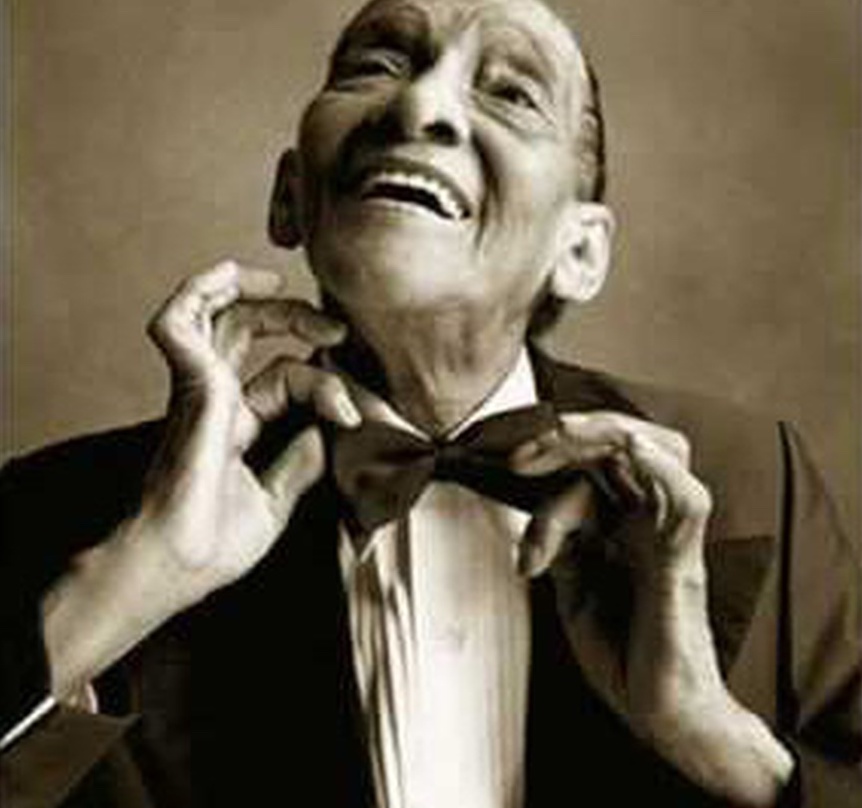
Jimmy Scott: Music History

Jimmy Scott, “I’m Getting Sentimental Over You”, 1986, From the Album “All the Way”

Born in Cleveland, Ohio, in July of 1925, James Victor Scott was an American jazz vocalist known for his sensitivity on ballads and for his high countertenor voice. The high range of his singing voice was due to a rare genetic disease, the Kallmann syndrome, which prevented him from reaching classic puberty and limited his physical height. 

Given the nickname of “Little Jimmy Scott” by jazz musician and band leader Lionel Hampton, Scott achieved prominence as the lead singer in Hampton’s band when he recorded “Everybody’s Somebody’s Fool” in December of 1949. This song became a top rhythm and blues hit in 1959. Scott sang the vocals on Charlie Parker’s adaption of Gershwin’s “Embraceable You” in 1947; however, his vocals was credited to the female vocalist Chubby Newsom on the album.

Jimmy Scott signed in 1963 with Tangerine Records, a record label owned by Ray Charles and distributed by ABC-Paramount Records. Under that label, he recorded the album “Falling in Love is Wonderful”, with Ray Charles interplaying on the piano. This ranks as one of the best works of Scott’s career, showing his range of emotions and his hitting all the notes with perfection on such classics as “How Deep is the Ocean” and “Someone to Watch Over Me”.

By the late 1960s, Jimmy Scott’s career had faded; he returned to his native Cleveland and worked in several menial labor positions. It wasn’t until 1989 that he returned to music, sharing a late-night billing with singer and pianist Johnnie Ray at the famed New York’s Ballroom. Singing at the funeral of his friend, blues singer and songwriter Doc Pomus, gained him further recognition and an opportunity with Sire Records. 

Sire Records, an arm of the Warner Records group, released Jimmy Scott’s 1992 album “All the Way” which earned Scott a nomination for a Grammy Award. Between 1994 and 1998, Jimmy Scott released three albums: the 1994 “Dreams”, “Heaven” released in 1996, and an album of pop/ rock interpretations entitled “Holding Back the Years”. This last album earned an award for Best Jazz Album of 2000, and included covers of songs written by Prince, Lennon, Elvis Costello, and Elton John and Bernie Taupin.

Jimmy Scott’s early recordings for Decca Records and Savoy Records were re-released as a box set in 1999. He signed with Milestone Records in 2000 and recorded four albums with guests such as Wynton Marsalis, Renne Rosnes, and Lewis Nash. His final recording took place at his home in May of 2014, a track written for him by Grégoire Maret titled “The 26th of May” which appears on Maret’s album “Wanted”.

Scott performed at the inaugurations of both President Eisenhower and William Clinton, singing “Why Was I Born”. He received the NEA Jazz Masters award in 2007, and the Lifetime Achievement Award from the Jazz Foundation of America in 2010. Jimmy Scott was inducted into the Rhythm and Blues Hall of Fame in 2013. He died in his sleep at his home in Las Vegas on June 12, 2014 at the age of eighty-eight years. He is buried in Knollwood Cemetery in Mayfield Heights, Ohio.

“As singers, we all deal in pain. We’re all trying to push the pain through the music and make it sound pretty. Jimmy Scott has more pain and prettiness in his voice than any singer anywhere”

– Ray Charles

Baron d’Holback: “All Errour is Prejudicial”

Photographers Unknown, (The Men and the Quote)

“All errour is prejudicial: it is by deceiving himself that man is plunged in misery. He neglected Nature; he understood not her laws; he formed gods of the most preposterous kinds: these became the sole objects of his hope, the creatures of his fear, and he trembled under these visionary deities; under the supposed influence of imaginary beings created by himself; under the terrour inspired by blocks of stone; by logs of wood; by flying fish; or else under the frowns of men, mortal as himself, whom his distempered fancy had elevated above that Nature of which alone he is capable of forming any idea.”
Baron d’Holbach

My thanks to a great blog: https://doctordee.tumblr.com

Green Light

The Color Green

The color green is evoked by light which has a dominant wavelength of 495 to 570 nanometers, appearing in the visual spectrum between the colors blue and yellow. It is created in painting by the combinations of yellow and blue, or yellow and cyan. The shades of the color green range from yellow-greens, such as lime and avocado, to those with a blue tinge, such as emerald and turquoise. 

The English word ‘green’ comes from the Old English and Middle English word ‘grene, which like the German word ‘grün’, has the same root as the words ‘grass’ and ‘grow’, The first recorded use of the word as a term for a color in Old English is dated to about 700 AD. Although many languages, such as Germanic, Romance, Slavic and Greek, have old terms for “green’ which derived from words for vegetation, there is no identifiable single Proto-Indo-European source word for the word “green”. Linguistics studies indicate that all these terms were developed independently over time. 

In ancient Egypt, the color green was the symbol of rebirth and regeneration. Egyptian artists used the mineral malachite, finely ground, for painting on walls and on papyrus; this mineral was mined in the west Sinai and the eastern desert. Green had very positive associations for the Egyptians. A growing papyrus sprout represented the hieroglyph for the word green, linking the color to vegetation, vigor and growth. Osiris, the Egyptian God of the Underworld, was usually portrayed as having a green face, as seen in the tomb of Nefertari who reigned from 1295 to 1253 BC. Malachite amulets were worn for protection from evil and given to the dead to promote vigor in the deceased. 

The green pigment verdigris is made by placing a copper, brass or bronze plate, slightly warmed, into a vat of fermenting wine for several weeks. The green powder that forms on the metal is scraped off and dried. This pigment was used by the Romans in murals, and in Celtic manuscripts. It produced a blue-green color; but it was unstable and toxic. Verdigris was used in Persian and European paintings util the late 19th century, when it was replaced by the pigment chrome green. Vincent van Gogh used viridian, a more stable green patented in 1859, in a mixture of Prussian blue to create the green tinted sky in his 1888 painting “Cafe Terrace at Night”.

The use of the color green in painting plays an important role in the creation of naturalistic flesh tones, as seen in Duccio di Buoninsegna’s altarpiece “Maestà” at the Museo deli’Opera Metropolitana del Duomo in Siena, Italy. Its use in underpainting and glazing is seen in Jan van Eyck’s oil paintings and Paolo Uccello’s murals. Helen Frankenthaler used the color green almost exclusively in her 1992 “Overture”, one of her freest works, swirling green paint into vortices and and then dissolving it into rich patterns.  

Another example of the use of green was the installation work “Green Light Corridor” by Indiana-born artist Bruce Nauman which enforced the contrast between the perceptual and physical experience of space. He constructed two high walls spaced twelve inches apart, lit by green fluorescent bulbs hanging above the created corridor. Spectators walked through the tight space, the eyes adjusting to the green light. Upon exiting, their eyes adjusted again, causing them to see an optical illusion of the color pink, the opposite end of the color spectrum. 

Shaun David Hutchinson: “But That’s Life. One Long Tunnel”

Photographer Unknown, (The Tunnel)

“But that’s life. One long tunnel. There are lights along the way. Sometimes they feel spread farther apart than others, but they’re there. And when you find one, it’s okay to stand under it for a while to catch your breath before marching back into the dark.”
Shaun David Hutchinson, The Apocalypse of Elena Mendoza

Erin Hanson

Paintings by Erin Hanson

Beginning her study of oil painting as a child, Erin Hanson marked her appreciation for impressionism with her first viewing of Vincent van Gogh’s “Irises”. She began, at the age of twelve, her study of acrylic paint techniques  working at a mural studio. A high school scholarship enabled Hanson to study figure drawing at the Otis College of Art and Design in Los Angeles, California. After graduating, she attended UC Berkeley where she obtained a degree in Bioengineering. 

Erin Hanson’s treks through the lands and national parks of Nevada, Utah and Colorado inspired many of her landscape paintings. Immersing herself in her artwork, she has painted consistently since her graduation from college. Hanson uses a minimalist technique of impasto painting, layering wet paint strokes upon previous wet strokes, with color palettes of four to five colors for control. Her work focuses primarily on landscapes shown with a boldness of light and color. Hanson currently lives and works in Los Angeles, California.

James Tissot

James Tissot, “The Circle of the Rue Royale”, 1868, Detail, Oil on Canvas, 174.5 x 280 cm, Musée d’Orsay, RMN-Grand Palais, France 

Born in Nantes in October of 1836, Jacques Joseph Tissot received his education at a Jesuit school, later enrolling at the Ecole des Beaux-Arts in Paris at the age of twenty. Here he studied under Hippolyte Flandrin and Louis Lamothe, both successful painters from the city of Lyons. While studying in Paris, Tissot met the young American pinter James Whistler and was befriended by the Impressionist painter Edgar Degas. it was also at this time that he anglicised his Christian name to James.

James Tissot exhibited at the Paris Salon for the first time in 1859, showing five paintings depicting medieval scenes and scenes from Goethe’s play “Faust”. The following year, the French government purchased Tissot’s exhibited painting “The Meeting of Faust and Marguerite”. In the early 1860s Tissot traveled to Italy and then to London, where his painting “Walk in the Snow” was shown at the 1862 London International Exhibition. 

Around 1863, James Tissot changed the focus of his work from medieval scenes to portraiture depicting modern life. He oriented his style to the taste of the British Victorian era, in subject matter and style, often employing the mystery of the Orient by including Japanese objects and costumes. The son of a fashion seller and a milliner, Tissot gave particular attention to the clothing and costumes in his paintings. In 1864, he exhibited his oil paintings of contemporary scenes at the Royal Academy in London for the first time.

James Tissot’s painting “The Circle of the Rue Royale”, a detail of which is shown as the central image of this posting, gave him an opportunity to show his interest in costume and his degree of accuracy to detail. The painting shows the taste of the British aristocracy of the 1860s, depicting the social status of the figures in the prestigious surroundings of the Hotel de Coislin, established in 1758. 

The Circle of the Rue Royale was a male club founded in 1852 which commissioned James Tissot to paint this portrait of its members in the style of a British conversation piece rather than Tissot’s French tradition. Each one of the twelve members paid 1000 Francs for the painting to be made, and the final owner was to be determined by a special draw. Baron Hottinger, the central figure in the detail image, was eventually named the winner. This painting contributed the Tissot’s emergence as one of the most talented portraitists of his generation. 

The Tempest

Benjamin Smith, “Act One, Scene One of the Tempest by William Shakespeare”, Untinted Engraving based on the Original Painting by George Romney, September 29, 1797, Published by J & J Boydell at the Shakespeare Gallery, Pall Mall, London

This engraving depicts the destruction of King Alonso’s ship caused by the tempest conjured by Prospero, seen on the right, who sent spirits to create the storm. Prospero caused the tempest in an act of revenge against his brother Antonio, one of the ship’s passengers, who had ursurped Propero’s position as Duke of Milan. Prospero’s daughter Miranda clings to him, begging for the lives of those on the ship. Prospero assured his daughter that he used his magic to prevent anyone from dying.

Benjamin Smith was a British engraver, publisher and print seller who was born in 1754 in London. He studied the art of stippling engraving under Francesco Bartolozzi,  one of the most famous engravers of the 1700s. During his career from 1786 to 1833, Smith engraved many plates from designs by William Hogarth, William Beechley, and George Romney. He also created portraits of the aristocracy such as the Marquis Cornwallis and King George III.

Employed for many years by J & J Boydell Publishing, Benjamin Smith was commissioned to engrave many plates for the Shakespeare Gallery and for the poetical works of John Milton in the years between 1794  and 1797. These are considered his best works and included the image above based on the painting by George Romney. Smith continued his engraving work until five years before his death in 1833, producing many works now in the collections of the British Museum and National Portrait Gallery.

Aldous Huxley: “Brave New World Revisited”

Photographers Unknown, Sixteen Men and Aldous Huxley

“In regard to propaganda the early advocates of universal literacy and a free press envisaged only two possibilities: the propaganda might be true, or the propaganda might be false. They did not foresee what in fact has happened, above all in our Western capitalist democracies – the development of a vast mass communications industry, concerned in the main neither with the true nor the false, but with the unreal, the more or less totally irrelevant. In a word, they failed to take into account man’s almost infinite appetite for distractions.

In the past most people never got a chance of fully satisfying this appetite. They might long for distractions, but the distractions were not provided. Christmas came but once a year, feasts were “solemn and rare,” there were few readers and very little to read, and the nearest approach to a neighborhood movie theater was the parish church, where the performances though frequent, were somewhat monotonous.

For conditions even remotely comparable to those now prevailing we must return to imperial Rome, where the populace was kept in good humor by frequent, gratuitous doses of many kinds of entertainment – from poetical dramas to gladiatorial fights, from recitations of Virgil to all-out boxing, from concerts to military reviews and public executions. But even in Rome there was nothing like the non-stop distractions now provided by newspapers and magazines, by radio, television and the cinema.

In “Brave New World” non-stop distractions of the most fascinating nature are deliberately used as instruments of policy, for the purpose of preventing people from paying too much attention to the realities of the social and political situation. The other world of religion is different from the other world of entertainment; but they resemble one another in being most decidedly “not of this world.” Both are distractions and, if lived in too continuously, both can become, in Marx’s phrase “the opium of the people” and so a threat to freedom.

Only the vigilant can maintain their liberties, and only those who are constantly and intelligently on the spot can hope to govern themselves effectively by democratic procedures. A society, most of whose members spend a great part of their time, not on the spot, not here and now and in their calculable future, but somewhere else, in the irrelevant other worlds of sport and soap opera, of mythology and metaphysical fantasy, will find it hard to resist the encroachments of those who would manipulate and control it.” 

― Aldous Huxley, Brave New World Revisited, 1958

Carlos Cancio

The Paintings of Carlos Cancio

Born in 1961 in the city of San Juan, Puerto Rico, Carlos Cancio graduated with a Bachelor of Fine Arts from the University of Boston. He moved to Strait of Gibraltar on the coast of Spain, setting up his first studio and began to show his work professionally beginning in 1981. Cancio lived in San Francisco from 1991 until 2003, at which time he returned to Puerto Rico where he currently resides and paints. 

The Ponce Art Museum in Puerto Rico acquired Carlos Cancio’s first large scale work in 1986- a nine-foot square painting entitled “Ballets Comteporains”. He had his first one-man show at the Institute of Puerto Rican Culture in 1987 and, in the following year, had a solo exhibition at the San Juan Museum of Art and History. Cancio also has shown at the Museo de Arte de Puerto Rico in 2001, the 2005 Art International Congesshaus in Zurich, Switzerland, Art Shanghai in China, and the 2012 “Afrolatinos Exhibition” at the Museo de Arte de Caguas in Puerto Rico. 

Carlos Cancio’s art is in the painting genre of Magical Realism, where magical elements are a natural part of an otherwise mundane, realistic environment. His oil and acrylic media paintings contain figures, elements of dream sequences, and visual narratives which break the rules of our perceptions.