
Photographer Unknown, (Muted Sunlight)
“Some people are so much sunshine to the square inch.”
―

A fine art, film, history and literature site oriented to, but not exclusively for, the gay community. Please be aware that there is mature content on this blog. Information on images and links to sources will be provided if known. Enjoy your visit and please subscribe.
Photographer Unknown, (Muted Sunlight)
“Some people are so much sunshine to the square inch.”
―

Photographer Unknown, The Dirigible, Date Unknown, Colorized Print

Prevaliz,“Hopeless Trail”, Date Unknown
Reblogged with thanks to https://www.instagram.com/prevailz/

A Year: Day to Day Men: 26th of November
Incoming Surf
November 26, 1853 marks the birthdate of prominent lawman, gambler and saloon keeper Bat Masterson.
Born Bartholomew William Barclay Masterson in Henryville, Quebec, Canada, Bat Masterson grew up on a series of family farms in New York, Illinois, and Kansas. In 1873, at the age of twenty, he left home and began working as a buffalo hunter and Indian scout in Dodge City, Kansas.
Over the next decade, Masterson worked intermittently as the Ford County Sheriff from 1877 to 1879 and a deputy United States Marshal in 1879; but he largely made his living as a saloonkeeper and a gambler. During this time, he befriended and became an associate of legendary lawman Wyatt Earp, who served both Dodge City, Kansas and Tombstone, Arizona. Masterson’s brothers, Ed and James, were also Dodge City lawmen.
Bat Masterson spent his later years in New York City. He became a close friend of President Theodore Roosevelt and was one of the “White House Gunfighters” who received federal appointments from Roosevelt, along with Pat Garrett and Pat Daniels. In 1905, President Theodore Roosevelt appointed him deputy U.S. Marshal for the southern district of New York, a position that Masterson held until 1907.
 Masterson’s enthusiasm for sports, especially prizefighting, led him to become a feature sports writer for Human Life Magazine. Masterson became a leading authority on prizefighting, attending almost every important match and title fight in the United States. This led eventually to Masterson becoming sports editor of the New York Morning Telegraph, a broadsheet newspaper focusing mostly on theater and sport racing. His column covered not only boxing and other sports, but he also gave his opinions on crime, politics, and other topics.
On October 25, 1921, at age 67, Bat Masterson died at his desk from a massive heart attack after writing what became his final column for the Morning Telegraph. About 500 people attended Masterson’s service at Frank E. Campbell’s Funeral Church at Broadway and 66th Street. He was buried at Woodlawn Cemetery in Bronx, New York. His full name, William Barclay Masterson, appears above his epitaph on the large granite grave marker in Woodlawn. Masterson’s epitaph states that he was “Loved by Everyone”.


Photographer Unknown, Gay Film Computer Graphics, Gay Gifs, (The Colours Become So Vivid)
“If you shut your eyes and are a lucky one, you may see at times a shapeless pool of lovely pale colours suspended in the darkness; then if you squeeze your eyes tighter, the pool begins to take shape, and the colours become so vivid that with another squeeze they must go on fire.”
― J.M. Barrie, Peter Pan

Chas, “Splashes of Blue Light”, (Morning Sun Through Blue Glass Bottles), 2018


Nine Presentations in Light and Shadow
“Nothing disappears before appears.”
― Ehsan Sehgal


Photographer Unknown, Shower After Shower
When their bodies had finished scouring for gaps in the door, their souls rose up. When their fingernails had scratched at the wood and in some cases were nailed into it by the sheer force of desperation, their spirits came toward me, into my arms, and we climbed out of those shower facilities, onto the roof and up, into eternity’s certain breadth. They just kept feeding me. Minute after minute. Shower after shower.”
―

Antonio Canova, “Psyche Revived by Cupid’s Kiss”, Detail, 1787, Marble, Louvre Museum, Paris
“Psyche Revived by Cupid’s Kiss” is a marble sculpture by Italian artist Antonio Canova, who was raised by his stonemason grandfather, Pasino Canova. Antonio Canova valued his independence as an artist, believing that art was above politics. However, through pressure by the French on the papacy, he was forced to accept titles and honors.
The marble sculpture is in a Neoclassical style but shows characteristics of the then emerging Romantic movement. There were two versions of this piece; the image shown being the prime version, which was acquired by Joachim Murat, Marshal of France and Admiral of France under the reign of Napoleon. After Murat’s death, the sculpture entered the Louvre Museum in 1824.
Image reblogged with thanks to http://abrighterhellas.tumblr.com

A Year: Day to Day Men: 25th of November
The Jaguar Hunter
November 25, 1920 marks the birthdate of actor Ricardo Montalbán
Born in Mexico City, Mexico, to Spanish immigrants, Ricardo Montalbán made his New York stage debut in 1940 in a small role in “Her Cardboard Lover”, starring  Tallulah Bankhead. In 1947 he landed his first major Hollywood film role in the musical “Fiesta”, playing twin siblings with Esther Williams. Montalbán had a memorable dance number in that film with Cyd Charisse.
The dark, handsome Montalbán with the Spanish accent would go on to play numerous Latin romantic-types. He teamed up again with Esther Williams in two more films, the musical romantic comedy “Neptune’s Daughter” and the 1948 romantic comedy “On an Island with You”. In 1949, Montalbán broke from his romantic typecast to play a border agent in the suspense drama film “Border Incident” directed by Anthony Mann.
During the 1950s and 1960s Montalbán was one of only a handful of actively working Hispanic actors in Hollywood, often playing characters of different ethnicities, such as the 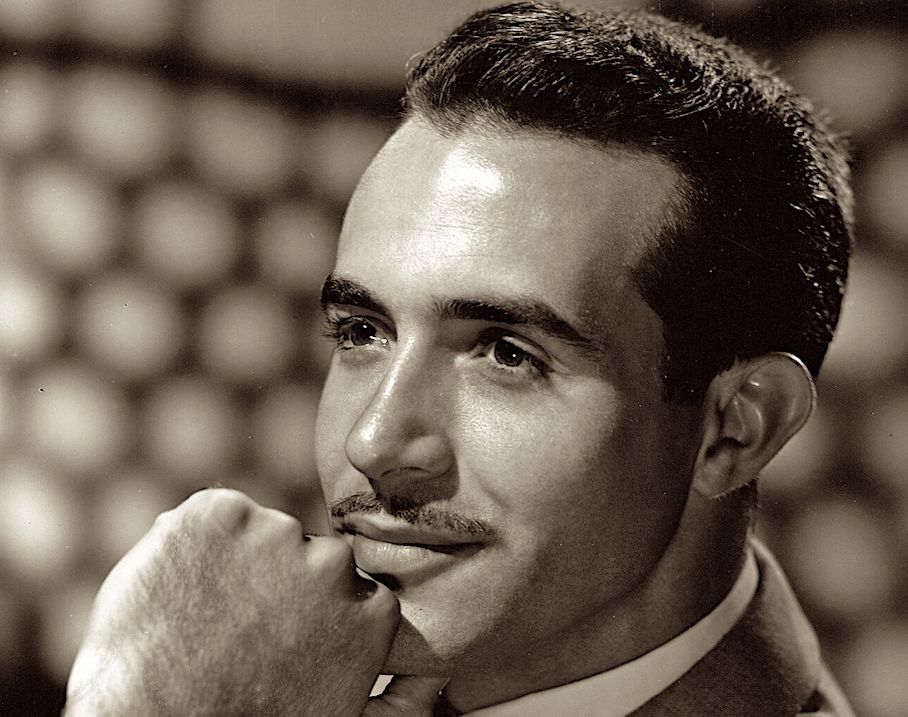 character Nakamura in the 1957 “Sayonara” and Tokura in a “Hawaii Five-O” episode. He also starred as a naive, penniless French duke in the romance comedy “Love is a Ball” released in 1963.
Ricardo Montalbán’s best known television role was that of the man in the white suit with the cultured demeanor, Mr. Roarke, on the television series “Fantasy Island” which ran from 1977 to 1984. The series was one of the most popular on television at that time, making him and his co-star Herve Villechaize, playing Tattoo, popular icons.
Montalbán’s most well-known film role was the character of Khan Noonien Singh in the 1982 “Star Trek II: The Wrath of khan”, in which he reprised the role he had originated in the 1967 episode of “Star Trek” titled “Space Seed”. Montalbán was already physically fit; so Khan’s costume was specifically designed to display his physique. He agreed to take the role at a significant pay cut because he relished reprising his original character. His only regret, Montalbán said, was that he and William Shatner never interacted in their roles; the scenes were all done through video communication, filming their scenes months apart to accommodate Montalbán’s schedule for “Fantasy Island”.
Montalbán reacted to the poor way Mexicans were being portrayed by establishing with other stars the Nosotros (We) Foundation in 1970 to advocate for Latinos in the movie and television industry. He served as its first president. The foundation created the Golden Eagle Awards, an annual awards show that highlights Latino actors. The awards are presented in conjunction with the Nosotros American Latino Film Festival, held at the now renamed Ricardo Montalbán Theater in Hollywood.

Frederic Vayssouze-Faure, “Moon Dust’
Frederic Vayssouze-Faure is a French artist interested in wave phenomenons and harmonic theory. He focuses on creating dynamic artworks in which each cell has its own periodic motion, or oscillation.
Image reblogged with thanks to the artist’s site: http://wavegrower.tumblr.com

“Sebastiane”, 1976, Directed by Derek Jarman and Paul Humfress
Sebastiane” is a 1976 Latin-language British historical thriller directed by Derek Jarman and Paul Humfress. The screenplay, written by Jarman, Humfress, and James Whaley, portrays events in the life of Saint Sebastian, including his martyrdom by arrows. The film, which was targeted to a gay audience, was controversial for the homoerotism portrayed and for being dialogued entirely in vulgar Latin. It was the only English-made film to have required English subtitles.
Intensely erotic, “Sebastiane” was filmed in Sardinia, near the town of Buggerru, and in locations in Italy. The film is an early film by the noted experimental and outspokenly gay director Jarman and features the debut of actor Leonardo Treviglio in his role of Sebastian. A bold film having the distinction of being the first non-porn film to show a male erection, “Sebastiane” now is probably only for the film aficionado who loves film- making and its history. A milestone in the history of non-porn gay films.

A Subjective Experience
“Human consciousness cannot be a passive observer of the outer world, just interpreting the input signals that are being received by the brain from the external world. Rather, it compares the fitness of a person’s inner world — feelings, perception, imagination, dreams, desires, etc. — with the external world, allegedly accepted as ‘objective reality’ outside individual consciousness. However, such an objective reality cannot be so objective as it is believed to be. Due to various internal processes to achieve a balance between the inner and outer worlds, consciousness insensibly changes the physical characteristics of reality, making it a subjective phenomenon, at least to a large extent. For this reason, in order to determine what is real (outside of human consciousness) and what is just a subjective experience, it is actually a difficult job.”
―

