
Marlene Dietrich: Film History Series

Marlene Dietrich, “Lili Marleen”, 1945, Decca Records

Marlene Dietrich was born on December 27th of 1901 in Berlin, Germany, with the given name Maria Magdalene Dietrich. Growing up, she studied French, English, and the violin at a private school, with the aspiration of becoming a professional violinist. Later in her teen years, Dietrich decided to explore acting, enrolling in Austrian-born theater director Max Reinhardt’s drama school, eventually acting in small parts on stage and in films. Because of her family’s disapproval of theater as a profession, she changed her name to Marlene Dietrich.

Dietrich married Rudolf Sieber in 1923 and, with his help, was able to get the small role of ‘Lucy’ in director Joe May’s 1923 “Tragedy of Love”. After the birth of their only child Maria in 1924, the marriage began to fail, leading to a separation but not a divorce. During this time, Paramount Studios signed to a contract director and filmmaker Josef von Sternberg, who already had produced a number of notable films. In 1929, Sternberg was sent to UFA, Paramount’s studio in Berlin, to direct the sound production of “The Blue Angel” based on Heinrich Mann’s book “Professor Unrat”.

Sternberg cast the little-known Marlene Dietrich in the female lead role of Lola Lola, the cabaret singer and dancer whose allure would attract and lead to the decline of Professor Unrat. With her sophisticated manner and sultry looks, Dietrich naturally fit into the role and became a star. The 1930 “Der Blaue Engel (The Blue Angel)”, the first talking picture in Germany, became a big hit, eventually making Dietrich an international star with its English language version in the United States.

In April of 1930, Marlene Dietrich moved to America. Working once again with Sternberg, she starred in the 1930 romantic-drama “Morocco” with actor Gary Cooper. The film received four Academy Award nominations; Dietrich was nominated for Best Actress in a Leading Role, her one and only Academy Award nomination.She continued in her next films to play the femme-fatale roles, creating new more-masculine fashion trends for women and challenging accepted views of the female image.

Dietrich made several more films working with director Sternberg: the 1931 successful spy film “Dishonored”, “Shanghai Express” in 1932, “The Scarlet Empress” in 1934, and her personal favorite film “The Devil is a Woman”, a 1935 romance film set in Spain in which she played a cold-hearted temptress. A strong opponent of the Nazi government in Germany, she disassociated herself from the German film companies and became a US citizen in 1939, resulting in the banning of her films in Germany. During the war, Dietrich traveled extensively, entertaining the troops, selling war bonds, and recording anti-Nazi messages to broadcast in Germany. 

Following the war, Marlene Dietrich worked with director Billy Wilder on his 1948 film “A Foreign Affair” and the 1957 film “Witness for the Prosecution” with actor Tyrone Power, based on the book by Agatha Christie. She also played strong supporting roles in director Orson Welles’ famous 1958 film-noir “Touch of Evil” and in Stanley Kramer’s 1941 courtroom drama “Judgement at Nuremberg”. As her acting career faded, Dietrich began a successful singing career in the mid-1950s performing from Las Vegas to Paris, and finally singing in Germany in 1960, her first visit since the war.

Marlene Dietrich gave up performing in the middle of the 1970s, moving to Paris and living in near-seclusion. She did agree to provide some audio commentary for the documentary “Marlene”, filmed by Maximillian Schell in 1984; however, she would not appear on camera for the film. Marlene Dietrich, one of the most glamorous leading ladies of the 1930s and 1940s, died in her Paris home on May 6th of 1992 and was buried next to her mother in Berlin.

The song “LiLi Marleen” is a German love song that became popular during WWII throughout Europe and the Mediterranean among both Axis and Allied troops. Written in 1915 as a poem of three verses by Hans Leip, a school theacher, it was set to music by Norbert Schultze in 1938 and recorded for the first time by Lale Andersen in 1939.  In 1944 the Morale Operations Branch of the US Office of Strategic Services initiated the Muzak Project. Marlene Dietrich recorded a number of songs in German for the project, including “Lili Marleen”, which became a massive success. This version of the song with Dietrich singing eventually became recorded as a single by Decca Records in 1944 and released in 1945.

Top Insert Image: Photographer Unknown, “Marlene Dietrich”, 1948, Gelatin Silver Print, Encyclopedia Britannica

Second Insert Image: Eugene Robert Richee, “Marlene Dietrich”, Publicity Photo for 1931 “Disnonored”, Gelatin Siver Print, Paramount Pictures

Third Insert Image: Photographer Unknown, “Marlene Dietrich in Uniform for USO Camp Shows, London”, September 25, 1944, Gelatin Silver Print, Associated Press

Bottom Insert Image: Clarence Sinclair Bull, “Marlene Dietrich”, 1944, Publicity Shoot for “Kismet”, Gelatin Silver Print, Metro Goldwyn Mayer
Jai Peng Fang: Music History

Jai Peng Fang, “Forever” 永远

Jia Peng Fang was born in April of 1958 in Jiamusi, China. He is a virtuoso of the erhu, the Chinese violin. He has played in hundreds of live concerts throughout China and Japan, as well as recording for movies, television and radio. 

At an early age, in 1966 and under the influence of his older brother, Jai Peng Fang began to learn to play erhu. At the age of sixteen, his brother helped him go to Beijing to study the Erhu with the most experienced players. From 1974 to 1976, Fang stayed with his aunt and practiced with the erhu. After the Great Karasan Earthquake, he joined the Navy Song and Dance Band until, as part of the Cultural Revolution, he was forced to return to his native Jama as an agricultural worker. 

After the Cultural Revolution, upon the advice of a former teacher, Fang decided to enter a music school. In 1978 he studied and applied to Central Conservatory of Music. After being recommended by Zhou Yaozhen in 1979, he officially became the erhu player of the Central National Orchestra as a performer in the Folk section. After six years as a professional erhu player, Fang was appointed deputy director of the orchestra department.

In 1988, Jia Peng Fang moved to Japan and enrolled in the Master of Arts Degree Program in Music at the Tokyo University of Arts. Upon graduating with his masters degree, he was admitted as a member of the China Musicians Association and became director of the Erhu Chinese Society. Upon graduation he also started participating in the production of Katsuhisa Hattori’s albums and concerts and began large-scale professional performances.

Jia Peng Fang has performed in the United Nations General Assembly Hall in New York, and in Carnegie Hall, playing with the Tokyo Pops Orchestra and New York Pops Orchestra. In 1997, Fang’s brilliant performances with his orchestra at Carnegie Hall in New York solidified his position in the world of music.

One of Jai Peng Fang’s most beautiful and moving melodic songs, “Silent Moon”, contained in the 1999 album “River”, was used as a musical mat in a famous video tribute dedicated to the great martial arts master Yip Man, master of Bruce Lee. The video shows the Grandmaster’s abilities in his Wing Chun style, images taken a few weeks before he died.

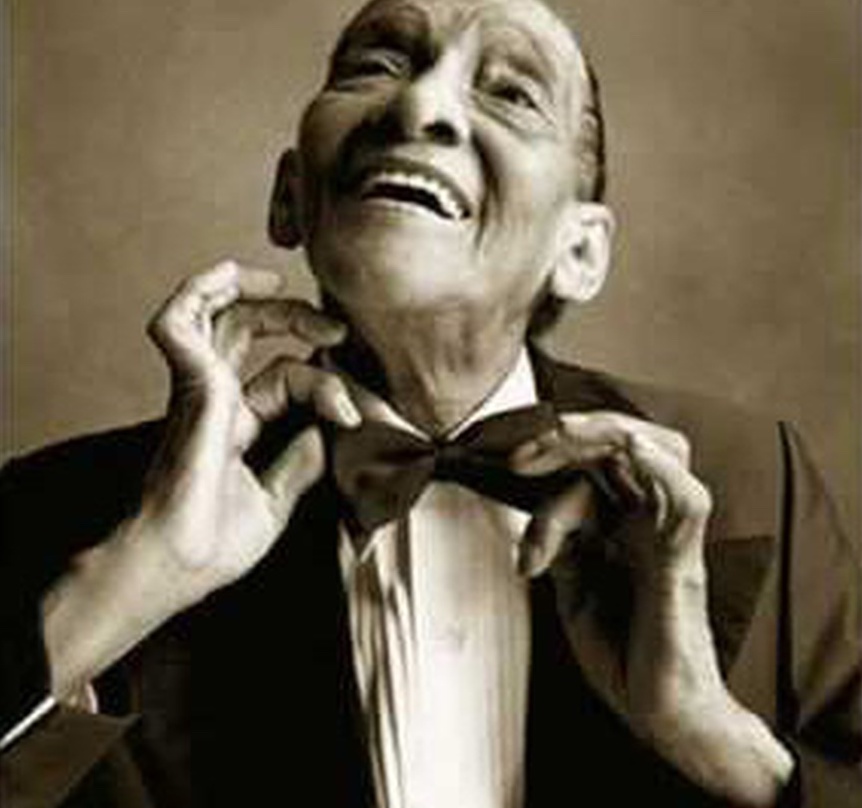
Jimmy Scott: Music History

Jimmy Scott, “I’m Getting Sentimental Over You”, 1986, From the Album “All the Way”

Born in Cleveland, Ohio, in July of 1925, James Victor Scott was an American jazz vocalist known for his sensitivity on ballads and for his high countertenor voice. The high range of his singing voice was due to a rare genetic disease, the Kallmann syndrome, which prevented him from reaching classic puberty and limited his physical height. 

Given the nickname of “Little Jimmy Scott” by jazz musician and band leader Lionel Hampton, Scott achieved prominence as the lead singer in Hampton’s band when he recorded “Everybody’s Somebody’s Fool” in December of 1949. This song became a top rhythm and blues hit in 1959. Scott sang the vocals on Charlie Parker’s adaption of Gershwin’s “Embraceable You” in 1947; however, his vocals was credited to the female vocalist Chubby Newsom on the album.

Jimmy Scott signed in 1963 with Tangerine Records, a record label owned by Ray Charles and distributed by ABC-Paramount Records. Under that label, he recorded the album “Falling in Love is Wonderful”, with Ray Charles interplaying on the piano. This ranks as one of the best works of Scott’s career, showing his range of emotions and his hitting all the notes with perfection on such classics as “How Deep is the Ocean” and “Someone to Watch Over Me”.

By the late 1960s, Jimmy Scott’s career had faded; he returned to his native Cleveland and worked in several menial labor positions. It wasn’t until 1989 that he returned to music, sharing a late-night billing with singer and pianist Johnnie Ray at the famed New York’s Ballroom. Singing at the funeral of his friend, blues singer and songwriter Doc Pomus, gained him further recognition and an opportunity with Sire Records. 

Sire Records, an arm of the Warner Records group, released Jimmy Scott’s 1992 album “All the Way” which earned Scott a nomination for a Grammy Award. Between 1994 and 1998, Jimmy Scott released three albums: the 1994 “Dreams”, “Heaven” released in 1996, and an album of pop/ rock interpretations entitled “Holding Back the Years”. This last album earned an award for Best Jazz Album of 2000, and included covers of songs written by Prince, Lennon, Elvis Costello, and Elton John and Bernie Taupin.

Jimmy Scott’s early recordings for Decca Records and Savoy Records were re-released as a box set in 1999. He signed with Milestone Records in 2000 and recorded four albums with guests such as Wynton Marsalis, Renne Rosnes, and Lewis Nash. His final recording took place at his home in May of 2014, a track written for him by Grégoire Maret titled “The 26th of May” which appears on Maret’s album “Wanted”.

Scott performed at the inaugurations of both President Eisenhower and William Clinton, singing “Why Was I Born”. He received the NEA Jazz Masters award in 2007, and the Lifetime Achievement Award from the Jazz Foundation of America in 2010. Jimmy Scott was inducted into the Rhythm and Blues Hall of Fame in 2013. He died in his sleep at his home in Las Vegas on June 12, 2014 at the age of eighty-eight years. He is buried in Knollwood Cemetery in Mayfield Heights, Ohio.

“As singers, we all deal in pain. We’re all trying to push the pain through the music and make it sound pretty. Jimmy Scott has more pain and prettiness in his voice than any singer anywhere”

– Ray Charles

Bombay Dub Orchestra

Bombay Dub Orchestra, “Amina” From the Album “3 Cities”, 2008

Bombay Dub Orchestra released its second album “3 Cities” in 2008. Both Gary Hughes and Andrew T. Mackay traveled to Mumbai and Chennai to record with the cities’ premier musicians and vocalists before returning to London to mix the album. “3 Cities” is where their cinematic soundscapes meet Indian Classical and electronica featuring a huge cast of over 75 musicians.

Graham Candy “Glowing in the Dark”

Graham Candy, “Glowing in the Dark”, Acoustic Version

A New Zealand-born, German-based singer/songwriter and actor with a distinctive voice, the aptly named Graham Candy is a quirky and unpredictable musician. A student of music, dance, and theater from a very young age, Candy spent the majority of his career in Auckland before relocating to Berlin in 2013.

In Berlin Candy lent his voice to popular German DJ and producer Alle Farber’s international hit single “She Moves.” Collaborations with German indie pop outfit Abbey and electro-swing enthusiast Parov Stelar followed in 2014, as did the release of his Crazy Planet Records-issued solo EP, “13 Lords”.

Simply Three

Simply Three, “Unsafe Haven”, 2017, From the Album “Undefined”

The classically trained trio of Glen McDaniel, Nick Villalobos, and Zack Clark, together known as Simply Three, has been captivating audiences since 2010. By reshaping convention through genre hopping, the trio continues to seek the true essence of classical crossover with original works as well as innovative arrangements that showcase their technical virtuosity and heartfelt musicality.

Kalki, “Varanasi”

Kalki, “Varanasi”, 2016, Cinematography by Basile Pierrat

Kalki is the tenth avatar of Vishnu to end the Kali Yuga, the last of the four periods in the endless cycle of existence in the Vaishnavism cosmology. He is described  in the Puranas as the avatar who rejuvenates existence by ending the darkest and destructive period to remove adhama and ushers in the Satya Yuga, the first yuga in the new cycle.

Kalki is a progressive psytrance project by Thibault Fontaine, an experience music producer from Lyon, France, who has been crafting electronic music for a decade. He emerged on the trance scene earlier in 2016, wiht the release of his first EP “Varnasi”, illustrated by a captivating music video shot in India by Basile Pierrat. Kalki unfolds a narrative and spiritual universe combining sci-fi culture, primitive rites, and psychic esperiences that resonate with the psytrance movement.

Club des Belugas, “Let’s Go”

Club des Belugas, “Let’s Go” from the Album “Fishing for Zebras”

Club des Belugas is one of the leading lounge & nujazz projects in Germany, perhaps in Europe. They combine Contemporary European Lounge & Nujazz Styles with Brazilian Beats and American Black Soul of the fifties, sixties and seventies, using their unique creativity and intensity.

Main members are Maxim Illion & Kitty the Bill, with such exquisite guests as the Californian jazz lady Brenda Boykin, trumpeter Reiner Winterschladen (Nighthawks), Swedish singer Anna Luca, London based jazz singer Iain Mackenzie, Anne Schnell from Jojo Effect, Dean Bowman from New York and trumpet player Thomas Siffling.