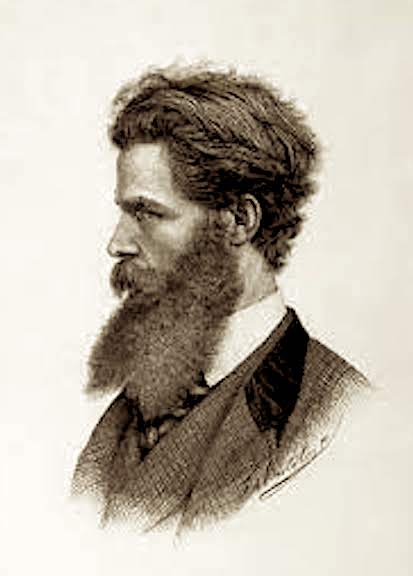
Niko Kok

The Artwork of Niko Kok

Born in the Netherlands, Niko Kok is a Dutch visual artist who works in multiple mediums. From 1973 to 1978, he studied in the sculpture department of the Gerrit Rietveld Academie in Amsterdam. Strongly influenced during the 1940s and 1950s by the Brauhaus and De Stijl movements, the Gerrit Rietveld Academie focuses on the artist’s individual expression and the role and influence of autonomous visual art.

Kok brings a nearly fifty-year career in the steel industry to his artwork. In 1972, he began his employment at Tata Steel IJmuiden where he had the unique opportunity to engage with a diverse range of materials. This exposure increased Kok’s creative spirt and allowed him to devise new techniques for his artwork, including the employment of graphite crucibles, formerly used to measure nitrogen levels in steel, as a tool for his rubbings on paper. 

Over forty years, Niko Kok has transformed ordinary shapes and materials into visual creations by using the specific properties of his chosen material in multiple and often unusual ways. The recurring themes that underlie his aesthetic ideology are simplicity and contrast. Kok has worked with stone, paper, fabric, metal, glass, wood shards, and both steel and iron wire. He has also created rubbings and geometrically designed works with graphite and paper; his Tear Series combined different pieces of torn paper arranged in patterns with added graphite effects. 

A pivotal point in Niko Kok’s artistic career occurred during his travel in 1979 to Centre Pompidou in Paris. He visited the former atelier of the Romanian sculptor Constantin Brancusi, an artist whose work had emphasized clean geometrical lines and the inherent properties of the materials used. Kok is also inspired by the Minimal Art movement, an extreme form of abstract art that emerged in the late 1950s and flourished into the 1970s. Minimalism saw art as its own reality. No attempt was made to represent an outside experience or emotion; the artwork’s medium and its form was the reality. 

From 1990 to 2006, Kok created a series of small sculptures using black, white and red granite. The “Double Cube”, “Column” and “Stacking” series were fashioned of either polished or unpolished granite stones fitted together to form perfectly squared sculptures of various heights. Using his knowledge of material properties, Kok has also worked with granite spheres, a shape capable of motion in every direction. Once the sphere is bisected, the two existing hemispheres each possess stability. Even after being pushed off balance, their equilibrium brings them back to rest.

Among his exhibitions, Niko Kok presented his graphic work at a 2012 exhibition at the Swiss Art Space in Lausanne, Switzerland. Hie participated in a solo exhibition at Artphy in 2019 held at Onstwedde, Netherlands. In the following year, Kok was part of a collaborative Artphy exhibition held in the same city. He currently lives and maintains a studio in the Dutch town of Heemskerk, Netherlands. 

Kok’s work has been exhibited and sold through the Alfa Gallery, an artist-operated space with locations in both the Miami Design District and the Chelsea area of New York City. His website, which include images of his work and contact information, can be found at: https://nicokok.exto.org

Top and Bottom Insert Images: Nico Kok, “Self Portrait”, 1988, Gelatin Silver Print, Private Collection

Middle Insert Image: Niko Kok, “Cubes and Cubes”, 2018, Plastic on Base, 96 x 96 x9.4 cm, Private Collection

Jacques de Lalaing

The Paintings of Jacques de Lalaing

Born in London on the fourth of November in 1858, Jacques de Lalaing was an English-Belgian painter and sculptor who worked in a realistic, naturalistic style both as a portrait artist and creator of historical scenes. As a sculptor, Lalaing produced both allegorical and animal bronzes as well as memorial monuments. Along with sculptors Léon Mignon and Antoine-Félix Bouré, he established a distinctively Belgian tradition of animal art.  

Jacques de Lalaing was the younger son of Belgian diplomat Count Maximilien IV de Lalaing, a member of a noble southern Flanders family which played an important role in the history of the Netherlands. Jacques’s older brother, Charles Maximilien de Lalaing, became an important diplomat who served as Belgian Ambassador to four countries from 1899 to 1917. 

Lalaing received his academic training in England until 1875 at which time he relocated to Brussels, Belgium. He studied at the city’s Académie Royale des Beaux-Arts under genre and portrait painter Jean-François Portaels, the founder of the Belgian Orientalist school; historical and portrait painter Louis Gallait; and portrait painter Alfred Cluysenaar, best known for his monumental decorative works.

As a sculptor, Jacques de Lalaing trained under sculptor and medalist Baron Thomas Jules Vinçotte, sculptor to the court of King Leopold II, and sculptor Josef Lambeaux, known for his large bronze statues and marble bas-reliefs. Lalaing created the British Waterloo Campaign Monument in Brussels, a large edifice of bronze figures on a plinth of rusticated stone blocks, below which lies the bodies of seventeen fallen soldiers from the battles at Quatre Bras and Waterloo. He also designed the bronze horseman battle group at the Bois de la Cambre in Brussels as well as the twenty-two meter bronze pylon in Schaerbeek, originally made for the 1913 Ghent Exposition.  

To ensure the accuracy of his work, Lalaing extensively used the medium of photography; he also enlisted the services of renowned photographers in Brussels to compile a photographic record of his work. Lalaing accumulated a large collection of “Academies”, images produced for artists by Parisian photographers and publishers to serve as sources for inspiration. He also photographed thousands of reference images  in his Brussels studio. These photos served as a simple work tools, the preparatory sketches from which to produce the initial plaster or charcoal study. In his vast Brussels studio, Lalaing staged his subjects facing the camera: celebrities whose portrait he had been commissioned to paint, as well as professional models, children and animals selected to inspire a future composition.

Jacques de Lalaing was commissioned for interior decorative scenes for the town hall of the Belgian commune of Saint-Gilles which bordered the city of Brussels. Other artists commissioned for this project included Fernand Khnopff, Albert Ciamberlani, and Emile Fabry, among others. Lalaing created six allegorical oil on canvas panels depicting the themes of commerce and industry; these panels were placed around the allegory “Truth, Goodness and Beauty”, a collaboration between painter Alfred Cluysenaar and himself.

In 1896, Lalaing was elected a member of the Académie Royale des Beaux-Arts in Brussels; between 1904 and 1913, he served as its director. Lalaing died on the tenth of October in 1917 at the age of fifty-eight. In addition to private collections, his works are represented in the museum collections of Antwerp, Brussels, Bruges, Ghent and Tournal. A collection of Lalaing’s photographic studies are housed in the Musée d’Orsay, France where an exhibition of these images was held from September of 2022 to March of 2023. . 

Notes: The website for L’Hôtel de Ville de Saint-Gilles, now a museum in the commune of Saint-Gilles, can be found at: https://hoteldeville.stgilles.brussels/fr/

Top Insert Image: Alexandre de Lalaing, “Jacques de Lalaing”, Date Unknown, Vintage Print

Second Insert Image: Jacques De Lalaing, “Shirtless Model Sitting”, 1980, Albumin Print, Musée d’Orsay

Third Insert Image: Philip de László, “Comte Jacques de Lalainig”, 1931 (Paris), Oil on Board, 90 x 72 cm, Private Collection

Bottom Insert Image: Jacques de Lalaing, “Model with Mannequin”, circa 1884, Albumin Photo, Rijksmuseum, Amsterdam


Klaus Pinter

The Artwork of Klaus Pinter

Born in 1940 at Schärding, a major port city on the Inn River, Klaus Pinter is an Austrian sculptor. After graduation from Vienna’s Academy of Fine Arts, he began his art career with a solo exhibition in the early 1960s at Vienna’s Ernest Fuchs Gallery which focused on work from the school of Fantastic Realism.

In 1967, Klaus Pinter, along with architects Laurids Ortner and Günter Zamp Kelp, founded the Haus-Rucker-Co group. These artists were joined by Laurids Ortner’s brother, architect and designer Manfred Ortner, in 1971. The Haus-Rucker group’s proposals alternated between architecture and performance art which was distinguished by its use of experimental materials and technologies. In 1970, studios were established in New York City and Düsseldorf; the two studios created projects independently starting in 1972 until Haus-Rucker-Co disbanded in 1992. 

Pinter played a role in Austria’s 1970s radical scene which criticized progress and industrialization for their effects on the environment. Combining his knowledge of historical architecture and engineering with aesthetic ideas, he created futuristic art installations that posed questions about the accepted ideas of space, symbols, and tradition. Architecture was extended beyond the actual building; it became a technological and utopian experience that modified the senses of its inhabitant.  

Klaus Pinter’s large pneumatic structures, composed of lightweight and translucent materials, were placed in urban spaces, both stationary and seemingly adrift. These sculptures altered the rigidity and stillness of the surrounding architectural spaces and placed the spectator as a fundamental piece of the art. Pinter’s 1969 “Balloon for Zwei” in Vienna and the 1972 “Oase Nr. 7” in Kassel were two pneumatic capsules, floating in the air, that questioned the uses given to public spaces.  

Pinter created “Rebounds” for his 2002 installation exhibition at Rome’s Pantheon, an extravagant Ancient Roman building whose rectangular vestibule leads to the rotunda with its coffered forty-two meter in diameter concrete dome. One pneumatic sphere of the installation was placed on the ground; another sphere was mounted so that it appeared to float in the church’s choir. The round reflective surface of the spheres made the building’s architectural elements appear distorted. Pinter’s choice of placing “Rebounds” at the Pantheon was a reference to Plato who also asked questions  about humanity’s relationship to the physical world. 

In 2018, Klaus Pinter installed “En Plein Midi”, a  large bamboo sphere covered with gold stars, at the Stables Canopy of Château de Chaumont-sur Loire, France. The installed sphere is now situated as part of the château’s historic gardens. From May to October in 2021, Klaus Pinter presented an exhibition of work at the historic Clerjotte Hotel and Ernest Cognacq Museum at Saomt-Martin-De-Ré. His “Take-Off” was situated in the hotel’s courtyard; an exhibition of thirty graphic works as well as a sample of his production method was presented in the upper rooms of the hotel.

After residing and working in New York, Belgrade, Paris and Bonn, Pinter now resides in Vienna and Île d’Oléron off the west coast of France. He continues to post experimental ideas every year for the Saltaire Arts Trail, a community arts event held annually in May in Saltaire, England.

Note: A short video on Klaus Pinter’s “En Plein Midi” can be found at the Château Chaumont website located at: https://domaine-chaumont.fr/en/centre-arts-and-nature/archives/2018-art-season/klaus-pinter

The Saltaire Arts Trail website can be located at: https://saltaireinspired.org.uk

Second Insert Image: Klaus Pinter, Haus-Rucker-Co Project, Palmtree Island (Oasis) Project, New York, New York Perspective, 1971

Bottom Insert Image: Klaus Pinter, “En Plein Midi”, 2018, Bamboo and Gold Stars, Installation, 6.2 Meters, Stable Canopy, Château Chaumont sur Loire, France

Antoni Rząsa

The Artwork of Antoni Rząsa

Born in February of 1919 in Futoma, a village located at the foot of the Carpathian Mountains, Antoni Rząsa was a Polish sculptor whose works were inspired by native folk art. He was born in an area where Catholic churches, having been erected since the sixteenth-century, were later  surrounded by Orthodox temples. The art of creating both practical and spiritual objects from wood was a common and flourishing tradition in Poland’s Subcarpathian Voivodeship.

Attracted by the characteristics of wood and its carving, Rząsa carried on local tradition and began combining the religious experience with the folk art of the region. His work presented to the viewer an uncharacteristic understanding of faith, suffering and humor. Rzasa’s figures of weeping Marys and Crucified Christs captivated both priests and atheists with their gestures and openness to more than one interpretation. In addition to his iconic figures, Rząsa also created figures drawn from family experiences and a series of carved chairs and benches with elements of flora and fauna.  

Antino Rząsa graduated from the High School of Fine Arts in Zakopane,  a southern Polish town in the region of Podhale. In 1938, he studied at the city’s School of Wood Industry under Polish sculptor Antoni Kenar, who was reforming the educational system by placing an emphasis on traditional folk art and its connection to contemporary art. In his own work, Kenar combined elements of the Podhale region with influences from Cubism and Art Déco.

In 1939, Rząsa’s studies were suspended with the outbreak of World War II. He joined the local guerrilla group in 1940 within which he served as a messenger runner. During his war service, Rząsa received notice that his mother had died in 1941. He returned to Zakopane in 1948 and resumed his studies under the guidance of Antoni Kenar at the School of Wood Industry. Rząsa graduated in 1952, the same year his father died. Invited by Kenar to teach sculpture at the school, he taught and lectured there until 1973. During his tenure, the school was renamed the Antoni Kenar Art School Complex after Kenar’s death in 1959.

Antoni Rząsa created the majority of his work through the creation of multiple series revolving around themes both secular and religious. His first series was the “Days of War” which covered a two year period from 1956 to 1958. In 1960, Rząsa started the one-year “Saint Annes”cycle and also began a twelve-year cycle entitled “The Pietas”. The most prolific of his series was “The Cycle of Crosses” which include six cycles created over a period of thirteen years from 1962 to 1975. 

Rząsa’s first group showing was the 1952 “Utility in Art” exhibition held in Zakopane. Other group exhibitions followed regularly In Berlin, Geneva, London, Warsaw, Shanghai and Beijing. In 1963, Rząsa had two solo exhibitions: the Artist and Viewer Gallery in Warsaw’s Łazienki Park and Kraków’s PAX Gallery. Other solo presentations included an exhibition at Warsaw’s Gallery of Sculpture in 1966, two shows in Zakopane in 1968 and 1973, and a 1972 solo exhibition in Chester, England. Polish directors Anna Micińska and Grzegorz Dubowski premiered their short 1973 biographical film “Portret Antoniego Rząsy (The Portrait of Antoni Rząsa)” at the Kraków Film Festival where they each were given a bronze award for their directorial work. 

In 1974, Antoni Rząsa with his wife Halina and son Marcin began construction of a home and gallery on Bogdańskiego Street in Zakopane. The next year, he showed his new work at a solo exhibition in Kraków’s Gallery of Contemporary Art. In 1976, Rząsa began his last Cycle of Crosses entitled “The Women of Ravensbrück” in honor of the one hundred and thirty thousand, mostly female, prisoners at that concentration camp. In July of the same year, the newly opened Antoni Rząsa Gallery on Bogdańskiego Street had its first exhibition.

On the twenty-sixth of January in 1980, Antoni Rząsa died and was buried in the Cemetery for People of Merit at the Pęksowy Brzyzk Cemetery in Zakopane. He was survived by his son Marcin and wife Halina Rząsa, who died on the fourteenth of December in the same year. Rząsa’s work is included in the collections of the Polish Army Museum; the National Museums in Warsaw, Kraków, and Poznań; the Reconciliation Chapel of the Ark of the Lord Church in Kraków-Fieńczyce; and in private collections in the United States, Denmark, Belgium, France, Italy and the Vatican. The Antoni Rząsa Gallery is currently managed by Marcin Rząsa and family.

The Antoni Rząsa Gallery website contains images of Rząsa’s work, testimonials from his friends, and contact information. The site address is: https://antonirzasa.pl/en/

Top Insert Image: Krystyna Gorazdowska, “Antoni Rząsa”, Date Unknown, Gelatin Silver Print

Second Insert Image: Antoni Rząsa, “Thoughtful”, 1960, Wood, 67.5 x 29 x 21.5 cm.

Third Insert Image: Antoni Rząsa, “Pieta Tobruku”, 1960, Polychrome Wood, 121 x 81 x 45 cm

Bottom Insert Image: Antoni Rząsa, “Pieta Tobruku”, 1960, Reverse, Polychrome Wood, 121 x 81 x 45 cm

Juan Adán Morlán

Juan Adán Morlán, “Luchadores de Florencia (Wrestlers of Florence)”, 1773, Terra Cotta, 36 x 40 x 28 cm, Uffizi Gallery, Florence

Born in March of 1741 in Tarazona, a provincial town of Zaragoza, Juan Adán Morlán was a Spanish painter and sculptor. The son of Juan and Manuela Morlán, he was baptized at the local parish church, Iglesia Parroquial San Pedro Apóstol, located in the town of Buenache de Alarcón. 

Juan Adán moved with his family around 1755 to Zargoza, the provincial capital, where he entered the workshop of Baroque architect and sculptor José Ramírez de Arellano. After being appointed sculptor to King Carlos III in 1740, José Ramírez had been commissioned in 1751 to oversee the work done at the capital’s Cathedral-Basilica of Our Lady of the Pillar. Once the works at the Cathedral were finished in 1765, Juan Adán at the age of twenty-four traveled to Rome.

Juan Adán Morlán lived on the resources he had saved from his work at the Basilica until they were exhausted. He then approached Tomas de Azpuru y Jiménez, a native of Zaragoza and the appointed Charge d’Affaires of Spain who oversaw King Carlos III’s business in Rome. Through Jiménez’s assistance, Juan Adán received several commissions for work in Rome. Among these were sculpturing a copy of Camilo Rusconi’s 1718 marble “Saint John the Evangelist” and a drawing that was later presented to Francisco Preciado de la Vega, a scholar elected both prince and secretary of the Academy of Artists, as well as, an Arcade of the College of Roman Arcades.

Juan Adán was granted a pension from the government in October of 1767 and began work on new commissions in Rome. In 1773, he created his terracotta “Luchadores de Florencia (Wrestlers of Florence)” and sent it to the Academic Board in Rome which extended his pension. In the following year, Juan Adán created his “Compassio Mariae”, a terracotta sculpture of the Virgin Mary supporting the body of the dead Christ. This technical exercise was sent that same year to the Academy as a pensioner’s work. 

In January of 1775, Juan Adán Morlán was appointed an Academic of Merit at the Academy of Saint Luke in Rome. He reproduced his “Compassio Mariae” again in 1791 for the church of the Royal College of Pious Schools of San Fernando. For this, Juan Adán was appointed Academic of Merit of Saint Fernando. He returned to Spain in 1776, where the Lérida Cathedral council commissioned him to work in the city until 1782. During Juan Adán’s stay in Lérida, construction work authorized by King Carlos III was still proceeding at the new Cathedral of Lérida that would serve as a  replacement for abandoned Cathedral of St. Mary of la Seu Vella,. 

Juan Adán stayed in the province of Granada from 1783 to 1786, where he worked at a chapel in the city of Cámenes. He returned in 1783 to the king’s court in Madrid where he was appointed lieutenant-director of Sculpture under the directorship of Isidro Carnicero, who rose to his position upon the death of director Roberto Michel. In May of 1793, Juan Adán received the appointment of Chamber Sculptor to King Carlos IV, a honor which became effective in February of 1795. 

In 1795, Juan Adán Morlán sculpted the busts of Carlos IV and his wife Maria Luisa of Parma, the youngest daughter of Philip, Duke of Parma and fourth son of Philip V of Spain. Numerous portrait commissions at this time were made by the nobility; among these was the 1794 portrait of Prime Minister Manuel Godoy y Álvarez de Faria, Duke of Alcudia. In 1807, Juan Adán Morlán made the Relief of San Miguel at his chapel inside the Cathedral of Granada and, in the following year, created the Anteo Fountain in the gardens of Aranjuez. 

Juan Adán was appointed in 1811 the Director of the Royal Academy of Fine Arts in San Fernando. In 1815, he became Chamber Sculptor to King Fernando VII who, after the defeat of the French invasion, was again legally recognized by the 1813 Treatry of Valençay as King of Spain.. A year after his royal appointment, Juan Adán Morlán died in Madrid on the 14th of June in 1816. He was buried in the Puerta de Fuencarral Cemetery in Madrid.

Top Insert Image: Juan Adán, “Manuel Godoy y Álvarez de Faria, Duke of Alcudia”, 1794, Marble, 72 x 53 x 35 cm, Real Academia de Belles Artes de San Fernando, Spain

Second Insert Image: Juan Adán Morlán, “Moisés (Moses)“, 1775, Terracotta, 67 x 32 x 30 cm, Real Academia de Bellas Artes de San Fernando, Madrid

Third Insert Image: Juan Adán, “San Juan Evangelista (St. John the Evangelist)“, 1767, Terracotta, 70 x 40 x 28 cm, Real Academia de San Fernando, Madrid

Bottom Insert Image: Juan Adán Morlán, “Priamo y Hector (Priam and Hector)”, 1770s, Terracotta, Real Academia de Bellas Artes de San Fernando, Madrid

Gizan Katō

Gizan Katō, “Jigen”, 2019, Carved Wooden Figure, 110.2 cm without Metal Stand, Private Collection

Born in Tokyo in 1968, Gizan Katō is a contemporary Japanese sculptor that works with Buddhist themes and classical stories. He studied under the Busshi (sculptor of Buddist statues) Shubun Iwamatsu, who is descended from Takamura Koun. An Imperial Household Artist, Takamura was a modernist in the field of wood carving and greatly respected professor at the Tokyo School of Fine Arts. It was he who created the statue of Japanese samurai Kusunoki Masashige which stands in front of the Tokyo Imperial Palace. 

With the understanding that he is both Japanese and Busshi, Gizan Katō focuses his work on the aesthetic roots of Japan, its history, tradition and culture, and the Buddhist realization of material existence’s impermanence. Gizan, as a modern sculptor, explores though his work the meaning of these cultural roots to contemporary art.

Instead of a sketch on paper, Gizan’s creative process begins with a model in plaster or clay. He next employs calipers to make a point-to-point transfer of the model to the wood that will form the actual sculpture.This lengthly and exacting technique requires both concentration and patience. Through this time-absorbing process, Gizan is able to reflect on his work’s expression of both longevity and dignity.

Gizan Katō’s first show was at the Takashimaya Exhibition in 2008. In 2016, he presented work at the Hakuin Exhibition held at the Tohoku History Museum. Gizan exhibited his work in several shows in 2017 including the “Amazing Craftsmanship Exhibition” at Tokyo’s Mitsui Memorial Museum, the Gifu Prefectural Museum of Contemporary Ceramics, Osaka’s Abeno Harukas Museum, and the Yamaguchi Prefectural Art Museum. A solo exhibition of Gizan’s work was held at the Nihonbashi Takashimaya X Gallery in 2019.

In 2011, Gizan, with Buddhist master Miura Yayama, participated in the Buddha Statue Dedication Project, an activity pf prayer and remembrance that carried Buddha statues to the disaster area in Toboku. He was also active in the 2019 Typhoon Number Nineteen Charity Exhibition and the 2020 Signs of a New Era Charity Project.

Gizan Katō’s “Jigen (Manifestation)” is a 110.2 centimeter carved wooden figure which sits on a metal stand. He represents the physical form of an intangible subject, either religious need or secular interest, that a person deeply craves. This subject, need or interest, is that which supports a human being’s existence among greater humanity. Even in our age of accelerated development in technology, the subject supports each human and it will perpetually conserve humanity for years forward.

Gizan’s “Jigen” was auctioned at Christie’s in September of 2020 and sold for 312,500 USD. The figure was exhibited at the Hiratsuka Museum of Art in the Kanagawa Prefecture of Japan from April of 2022 to March of 2023.

Gizan Katō’s website can be found at: https://gizan.tokyo/?lang=en

Note: Japanese naming conventions arrange names with the surname first and the given name second. Thus, Gizan Katō is a member of the Gizan family and was given the birth name of Katō, meaning ‘increasing wisteria’.

Second Insert Image: Gizan Katō and Yozan Miura, Leafing by Miyoko Washio, “Buddha Statue”, Cypress Wood, Crystal, Red Agate, 70 x 95 x 80 cm, Private Collection

Bottom Insert Image: Gizan Katō, “Jigen”, 2019, Carved Wooden Figure, Detail, 110.2 cm without Metal Stand, Private Collection

Fiona Hall

The Artwork of Fiona Hall

Born in Oatley, New South Wales in November of 1953, Fiona Margaret Hall is an Australian sculptor and photographer. Born to radio-physicist and astronomer Ruby Payne-Scott and telephone technician William Hall, she developed an early appreciation of nature during weekend walks in the Royal National Park. During her primary school years, Hall’s mother took her to the Art Gallery of New South Wales to see the 1967 exhibition “Two Decades of American Painting” which heightened her exposure to the world of art. 

Fiona Hall made the decision to pursue an art career and majored in painting at the East Sydney Technical School, now the National Art School, under John Firth-Smith, a Sydney abstract painter highly regarded for his Sydney Harbor scenes. Through her participation in Sydney’s early 1970s experimental art scene, Hall became interested in photography. As the college did not offer a major in photography, Firth-Smith initially mentored her in the subject. Hall later studied photography as a minor for her degree under printmaker and photographer George Schwarz; it was Schwarz who wrote and taught the first photography course at the National Art School. 

In 1974 while still a student, Hall exhibited her photographic work as part of the “Thoughts and Images” group exhibition at the Ewing and George Paton Galleries, a central hub for experimental art in Australia during the 1970s and 1980s. Hall graduated in 1975 with her graduate exhibition solely based in photography. She relocated to London in January of 1976 and spent three months of that year visiting numerous art institutions in Europe. Upon her return to London, Fiona Hall began working with Peter Turner, the editor of the photography magazine “Creative Camera”. 

While in London in 1977, Fiona Hall became an assistant to black and white landscape photographer Fay Goodwin and held her first solo photographic exhibition at the Creative Camera Gallery in London. Returning to Australia in 1978, she had her first Australian solo exhibition at the Church Street Photography Center in Melbourne. Hall relocated to the United States to study at New York’s Visual Studies Workshop in Rochester where she earned her Masters of Fine Arts in Photography in 1982. 

Throughout the 1980s, Hall established a significant profile in the art world through her involvement in solo and group shows in Australia. In 1981 in Australia, she created “The Antipodean Suite”, a series of photographs of objects such as power cords and bananas. In the same year, five of her photographs were acquired for the public collection of the Art Gallery of New South Wales. Beginning in 1983, Hall lectured in photography at Adelaide’s South Australian School of Art until her formal resignation in 2002. She received a commission in 1984 to document the new Parliament House of Australia and produced a portfolio of forty-four photographs depicting the new structure.

Beginning in the 1980s, Fiona Hall began to incorporate more sculptural works into her exhibitions. In 1984, she produced the series “Morality Dolls: The Seven Deadly Sins”, a group of seven cardboard marionettes constructed from photocopies of medical engravings. Hall’s “Illustrations to Dante’s Divine Comedy” consisted of photographs of human figures made from painted and burnished aluminum cans. Starting in 1989, she produced a continuing series of work entitled “Paradisus Terestris” which used sardine tins to form botanical sculptures. These botanical forms sat on top of opened sardine cans which revealed human sexual parts corresponding to the attributes of the plants above. By the late 1990s, Hall had completely stopped her photographic work to focus on sculpture. 

Since then, Hall has received numerous commissions for many public works. Among these are the 1998 “Fern Garden”, a twenty-square-meter permanent installation of landscape art at the National Gallery of Australia; the 1998 series “Cash Crop” at the Mt Coot-tha Botanic Gardens; the 2000 “A Folly for Mrs Macquarie” in Sydney’s Royal Botanic Gardens; and a sculpture for the Chancellery Building of the University of South Australia. 

Fiona Hall represented Australia in 2015 at the 56th International Art Exhibition at the Venice Biennale with an installation work entitled “Wrong Way Time”. This work was created with the collaboration of the Tjanpi Desert Weavers, a social enterprise of the Ngaanyatjarra, Pitjantjatjara and Yankunytjatjara Women’s Council which provides a range of community, family, research and advocacy services. This exhibition focused on the themes of death, extinction and annihilation. Included in the installation was Hall’s “All the King’s Men”, a series of twenty sculptures constructed of shredded military uniforms knitted by the artist into twenty oversized heads adorned with teeth, bones and found objects. These hollow skeletal figures represented the many who have fallen, and would fall, in war and conflict.

Hall continues to exhibit her work at the Roslyn Oxley9 Gallery in Sydney where she has exhibited since 1995. In 2013 she became an Officer in the general division of the Order of Australia for distinguished service to the visual arts as a painter, sculptor, photographer and art educator.  

Note: An interview between Fiona Hall and Anna Dickie on Hall’s “Wrong Way Time” exhibition can be found at the online art magazine “Ocula” located at: https://ocula.com/magazine/conversations/fiona-hall/

A listing of Fiona Hall’s exhibitions and additional images of her “Paradisus Terestris” sculptures can be found at the Roslyn Oxley9 Gallery site located at: https://www.roslynoxley9.com.au/exhibition/paradisus-terestris/5ukxp

Second Insert Image: Fiona Hall, “Wrong Way Time”, 2015, Installation View, Australian Pavilion, 56th Venice Biennale

Third Insert Image: Fiona Hall, “”Lair”, 2004, 15 cm / “Lesion”, 2004, 19 cm / “Rising Tide”, 2002, 15 cm, Musical Snow Domes, Private Collection

Fourth Insert Image: Fiona Hall, “Wrong Way Time”, 2015, Installation View, Australian Pavilion, 56th Venice Biennale

Bottom Insert Image: Fiona Hall, Untitled, 2015, Coal and Aluminum, 50 x 40 x 32 cm, Roslyn Oxley9 Gallery

Guillaume Coustou II

Guillaume Coustou II (the Younger), “Ganymede”, circa 1760, Marble,  152.5 cm, Victoria & Albert Museum, South Kensington

Born in Paris in March of 1716, Guillaume Coustou II, or the Younger, was a French sculptor of the late French Baroque and early Neo-Classical period. He was the son of Guillaume Coustou, royal sculptor to Louis XIV and his successor Louis XV, and nephew to sculptor Nicolas Coustou, chancellor of the Academy of Painting and Sculpture in Paris. Guillaume Coustou II initially trained at the family’s atelier, during which time his work earned him the 1735 Prix de Rome.  

Guillaume Coustou II relocated to Rome where he studied from 1736 to 1739 at the French Academy in Rome. As his father was too infirm to carry out commissions for the royal residence at Château de Marly, he returned to Paris in 1739 where he worked on the “Horse Trainers”, two full-size Carrara marble sculpted groups showing rearing horses with their groom. Completed in two years and installed at Marly in 1745, Coustou’s sculptures were moved twice, first in 1794 to Paris’s Place de la Concorde and finally in 1984 to a former courtyard, now the Cour Marly, in the Richelieu wing of the Louvre Museum.

Guillaume Coustou II was accepted in 1742 as a member at the Academy of Painting and Sculpture and began a successful career as a sculptor. He worked fluently in the contemporary styles of French art. During the late Baroque period, Coustou sculpted his 1742 “Seated Vulcan”, a sixty-nine cm tall marble figure of the Greek god of fire as a reception piece for the French Royal Academy. While during the sentimental early Neo-Classical period in France, he created his circa 1760 marble “Ganymede”. 

Ganymede is a divine Greek hero whose homeland was Troy; he was the most beautiful of mortals and was abducted by the god Jupiter, taking the form of an eagle, to serve as Zeus’s wine cup-bearer in Mount Olympus. The myth, popular with French eighteenth-century artists, was largely known to them from Roman poet Ovid’s “Metamorphoses”. Housed in the collection of the Victoria and Albert Museum, Coustou’s marble “Ganymede”, at 152 cm in height, stands with his weight on his left foot with right knee slightly bent. His right had holds a shallow cup and his left is place affectionately on an eagle perched on the tree trunk supporting the figure on the right.

Guillaume Coustou II produced portrait busts as well as his mythological and religious subjects. His most prominent and ambitious official commission was the “Tomb of Louis, Dauphin of France and Marie-Josephe of Saxony” for the Catholic cathedral in Sens, Burgundy, eastern France. The original design for the monument was created by the engraver and art critic Charles-Nicolas Cochin, who from 1755 to 1770 had the title of the King’s Administrator of the Arts. The monument was started by Coustou and later finished by his pupil, Rococo and Neo-Classical sculptor Pierre Julien who had studied at Coustou’s atelier.  

Among the pupils Guillaume Coustou II taught in his atelier and at the Academy were Claude Dejoux, who became an academician at the Royal Academy and sculptor to King Louis XVI of France; Pierre Julien, one of the original members of the Institut de France and a chevalier of the Legion of Honor; and Dutch sculptor Johannes Widewelt who became royal sculptor to the Danish Court in 1759 and known for his fifty-four monuments on the grounds of Crown Prince Frederik the Fifth’s Jægerspris Castle in eastern Denmark. 

Guillaume Coustou II passed away in Paris on the 13th of July in 1777.

Top Insert Image: François-Hubert Drouais, “Guillaume Coustou the Younger”, 1758, Oil on Canvas, 130 x 97 cm, Palace of Versailles, France

Second Insert Image: Guillaume Coustou II (the Younger), “Ganymede”, circa 1760, Marble, 152.5 cm, Victoria &Albert Museum, South Kensington, Niche View

Bottom Insert Image: Guillaume Coustou II (the Younger), “Apollo”, 1753, Marble, 180 x 80 cm, Chateau Versailles, France

Hendrik Christian Andersen

The Sculptural Works of Hendrik Christian Andersen

Born in Bergen in April of 1872, Hendrik Christian Andersen was a Norwegian-American sculptor, painter and urban planner. The younger brother of painter Andreas Martin Andersen, he moved in 1873 as an infant with his family to Newport, Rhode Island. As a young man, Andersen worked as a sculptor and served as an art instructor to prominent social figure Gertrude Vanderbilt Whitney, who was a sculptor and both patron and collector of the arts.

In 1893, Hendrik Andersen traveled to Europe to study art. In Paris, he met his older brother Andreas and student painter John Briggs Potter. The three of them traveled for a year through Europe and resided in Florence for some time at the end of their tour. In 1894 at their Florence residence, Andreas Andersen painted a portrait scene of both Hendrik and John Potter rising from sleep, entitled “Hendrik Andersen and John Briggs Potter in Florence”

Now settled in Rome in 1899, Hendrik Andersen met the American expatriate writer, Henry James, who is regarded as a prominent transitional figure between literary realism and literary modernism. Although James was thirty years older, the two men developed a close relationship and maintained correspondence for fifteen years. James, enamored with the sculptor, become one of his first patrons by buying Andersen’s painted terracotta bust of the twelve-year old Count Alberto Bevilacqua who regularly visited every Saturday at Andersen’s studio.

Henry James’s letters to Andersen, seventy-seven of which are in the University of Virginia’s library, show a high level of affection and sensual love for Anderson. James’s letter of condolence for the death of Andreas Andersen in 1902 expresses his grief as well as his love: “to put my arm round you and make you lean on me as a brother and a lover, and keep you on and on. . .”. However, as Andersen’s replies are not available, their actual relationship can not be definitely determined.

After Andreas Andersen’s death, his widow Olivia Cushing traveled to Rome to stay at Hendrik Andersen’s residence for discussions on the commemoration of Andreas’s life and work. Hendrik’s conception for a sculpted funeral monument grew into an idea for a Palace of Arts, and then further progressed into a plan for a World City full of sculptures, museums, and galleries. In 1813, Andersen published his “A World Centre of Communication”, a tome about social and spiritual renewal through the arts, with an emphasis on sculpture.

This tome alienated James who felt that Andersen was pursuing a megalomaniacal version of society at a time when Italy was under the rise of Fascism. By 1915, they both had ceased correspondence. Before his death, Henry James burned many of his papers, including pieces of correspondence. After James’s death, Andersen approached the James estate in 1930 for permission to publish the letters he had received: however, permission was refused. These letters were not available publicly until 2000.

Olivia Cushing Andersen came from a wealthy family with residences in both Newport, Rhode Island, and Boston, Massachusetts. In her own right, she was cultured and had amassed an extensive collection of art and rare books. Upon her death in Rome in December of 1917, she left a large sum of money to Hendrik Andersen. He used this inheritance to build a villa as part of his World City idea. Between 1922 and 1925, Villa Helene was built to Andersen’s design with an immense carving studio in the nearby Piazza del Popolo. 

Henrik Andersen worked in this studio until his death in December of 1940. Over his lifetime, he executed more than four hundred pieces of both plaster models and stone or bronze sculpture, many of which were monumental figurative works of larger than life size. Upon his death, Andersen bequeathed all of his work to the Italian State, only stipulating that Villa Helene be made available to his model and adopted sister, Lucie, until her death.

Upon Lucia’s death in 1979, the villa became state property and is now the Hendrik Christian Andersen Museum, located on Via Pasquale Stanislao Mancini in Rome. The museum houses all the papers and collected works of Hendrik Christian Andersen, which include sketches, models in plaster and bronze, as well as paintings by his brother Andreas and other contemporary artists of that time.

Notes: A collection of letters from Henry James to Hendrik Andersen can be found in Rosella Mamoli Zorzi’s “Henry James: Beloved Boy: Letters to Hendrik C. Andersen”. The book is available through many vendors.

A collection of six letters from Henry James to Hendrik Andersen, along with a short description of Henry James’s life, can be found at Rictor Norton’s Gay History and Literature site. There is however an error in the description of the Andreas Andersen’s painting; the seated figure is not Andreas Andersen but John Briggs Potter. The letters can be found at: https://rictornorton.co.uk/jameshen.htm

Top Insert Image: Photographer Unknown, “Hendrik Christian Andersen”

Second Insert Image: Photographer Unknown, “James Henry and Hendrik Andersen”, 1907

Third and Fourth Insert Images: Sculptures by Hendrik Christian Andersen, Museo Hendrik Christian Andersen

John Cavanaugh

The Sculptural Work of John Cavanaugh

Born in Sycamore, Ohio in September of 1921, John Cavanaugh was an American sculptor who lived and worked in the Du Pont Circle area of Washington D.C.. The third son of four born to poor, intensely religious parents, he lost his father to suicide in 1929. Recognizing her son’s artistic talent and seeing no local options where he could study, Hilda Cavanaugh, John’s mother, sent him to the Ursulan convent in Tiffin, Ohio. In 1938, Cavanaugh relocated to Urbana, Ohio, to study art under painter and designer Alice Archer Sewall James. After his studies with James which included sculpture, Cavanaugh registered at Ohio State University, with initial studies in Literature and English Composition. After adding sculpture courses in his second year, he graduated with his Bachelor of Arts in 1945. 

In 1946, John Cavanaugh met and married Janet Corneille in Columbus, Ohio. After a move to Boston where John studied at the Swedenborgian Theological School, the couple had a son together, who due to hydrocephalic syndrome died shortly after birth. A second son, Jon, would later be born in 1951. In 1948, after a move to Iowa, Cavanaugh enrolled at the University of Iowa to study engraving and sculpture. To further his education, he again enrolled at Ohio State University where he continued his sculptural work with experiments in ceramic, cast stone, wood, and sheet metal.

Cavanaugh won the National Sculpture Society’s Purchase Prize in 1951 for his sculpture, “Goose”, which was purchased by Syracuse University’s  Everson Museum. In 1955, he had his first solo exhibitions at Antioch College in Yellow Springs, Ohio, and the Cranbook Academy of Art in Michigan. With the added recognition to his growing reputation, Cavanaugh was given a faculty position at the Columbus Museum School in Georgia where he taught modeling classes. During this period, he began a sculptural series of haunting large-headed children, possibly in reference to his first-born child, which he repeated through the 1960s and 1970s.

In the mid-1950s, John Cavanaugh began working at North American Aviation, a major aerospace manufacturer responsible for a number of historic aircraft. Using metal salvaged from the company’s salvage yard, he created the 1954 hammered metal “Goat Head”, which won the 1954 Ohio Ceramic and Sculpture Exhibition’s highest honor. Through his working at the NAA, Cavanaugh was able to set up a studio space in Columbus, Ohio. The year of 1956 was a difficult one for Cavanaugh. With growing doubts about his sexuality, his marriage, his art and religious beliefs, he left in September of that year for New York, leaving his wife and son, extended family and friends behind. His mother disowned Cavanaugh and tried to turn his three brothers against him; he never saw his mother again and only reconciled with his brothers after her death. Cavanaugh, however, stayed on good terms with both his wife, Janet, and his son. 

Old friends from Ohio helped John Cavanaugh settle on Staten Island; he supported himself by working part-time as an industrial designer and producing window displays and murals for Resident Display in Greenwich Village. Several months after his arrival, John Cavanaugh met Dorothea Denslow, who was acting Director and founder of the New York Sculpture Center in Brooklynn. In return for work at the Center, he received free studio space for his terracotta sculptural work. By 1958, Cavanaugh had his self-confidence back and was regularly working  on new creations. In 1959, he met Greenwich Village resident Philip Froeder, who was studying architecture at Columbia University in New York. They soon became partners, a relationship which lasted until Cavanaugh’s death. 

During the early 1960s, Cavanaugh began to produce bronze castings of his terracotta work, either as a single cast or in small editions. In 1962, he started using lead as a sculptural medium, which enabled him to quickly produce larger-scale sculptures without the prohibitive cost of bronze. Cavanaugh met the established hammered-copper sculptor Nina Winkel during this time; she became an increasingly important influence and support to him. In 1963 Cavanaugh had his first solo exhibition at the Sculpture Center, where he showed forty-seven works in lead, bronze and terracotta to positive reviews.

John Cavanaugh and Philip Froeder moved to Washington D.C. in 1963, where they both set up studio/exhibition spaces in the neighborhood of Du Pont Circle. After his first studio show in 1964 led to major commissions, Cavanaugh presented twice yearly studio exhibitions  from 1964 to 1984; these amounted to eight hundred works in lead, ceramic stoneware and bronze, of which two hundred were life-sized. He also had five additional solo shows in New York’s Sculpture Center, single shows at Ohio State University in 1964, and a show at Indiana’s Ball State University in 1976. 

Cavanaugh regularly exhibited with the National Sculpture Society in New York, which now awards the John Cavanaugh Silver Medal on an annual basis. A recipient of numerous awards, he was awarded the 1984 New York Foundry Prize of the National Sculpture Society. Many of his works are in the public spaces and adorn the facades and walkways of homes in Washington D.C. Cavanaugh’s major commissions include several major works for the Marriott, the Landmark Corporation and the Crown Tower apartment complex in New Haven, Connecticut, among others.

In the early 1980s, John Cavanaugh was stricken with illness, found to be related to cancer from working with lead. During his last two years he worked with intensity; however, by June of 1984, he did not have the strength to hammer the lead into shape. Cavanaugh turned to specialized glass painting and, using a combinations of plastic and was, sculpted pieces to be cast in bronze. By December of that year, he had produced over seventy wax models for casting, including five life-sized figures. John Cavanaugh died in Washington, D.C., on January 9th in 1985.

Cavanaugh’s life partner, Philip Froeder,  fulfilled Cavanaugh’s wish for a final exhibition called “The Spirit of Motion is Almost Balanced”. He also founded the John Cavanaugh Foundation to promote and support the work and ideas of Cavanaugh. Cavanaugh’s sculpture “Demeter” can be seen in the Friendship Garden of the U.S. National Arboretum; his sculpture  of Olive Risley Seward is installed in a private residence in Southeast Washington, near Seward Square.There are several sculptural plaques done by Cavanaugh on buildings in the Dupont Circle area. 

The John Cavanaugh Foundation is located at: http://www.cavanaughfoundation.org

Notes: John Cavanaugh’s “Princess Pines”, featured in the bottom insert image, is currently being sold by its owner. Inquiries can be made at: periodpiles@gmail.com

Giulio Monteverde

Funeral Monuments of Giulio Monteverde

Born on October 8th of 1837 in Bistagno, a municipality in the Piedmont region of Italy, Giulio Monteverde was a sculptor and educator. He moved with his family to Genova where he began, at the age of nine, his initial training at the Ligustica Academy of Fine Arts in Genova, under the guidance of sculptor Santo Varni. Monteverde also studied at Rome’s Academy of Fine Arts, where he later obtained the position of Professor.

In 1865, Monteverde won the Pensionato Artistico Triennale, a three-year grant, which allowed him to relocate to Rome and establish his own studio. A neo-classical sculptor, his romantic-realist style achieved rapid success and critical acclaim, particularly in the United States. In 1886, Italian naval officer Enrico Alberto d’Albertis acquired a castle and commissioned a statue of the young Christopher Columbus from Monteverde. The 1870 white Carrara marble sculpture, “Colombo Giovinetto”, modeled from D’Albertis’s nephew Filippo, won a gold medal at an exhibition in Parma, Italy.

In 1873, Giulio Monteverde completed a narrative work, “Edward Jenner Vaccinating His Son Against Smallpox”, a life-sized marble sculpture, which he presented at the Vienna International Exposition. This was shown again at the 1878 Universal Exposition in Paris, and now resides at Rome’s National Gallery of Modern Art. Following his success a the Vienna Exposition, Monteverde, in the following year, sculpted a realistic, intricately detailed marble statue of the Roman water nymph, Egeria.

Most of Monteverde’s talent was dedicated to the execution of  religious sculpture and funerary monuments. The theme of the Angel of Death, or of the Night, was portrayed in a number of variations throughout Italy and Spain. The tomb of the Oneto Family, commissioned by Francesco Oneto, President of the General Bank, is located at the Staglieno Cemetery in Genoa. It portrayed a sensual angel holding the trumpet of Universal Judgement in his right hand, and was replicated many times by Monteverde for other families, an exmaple of which is the more demure angel leaning against the Llambi Campbell family vault in the Recoleta Cemetery of Buenos Aires, Argentina.

As an educator, Giulio Monteverde taught at Rome’s Acadey of Fine Arts; among his students were Argentine sculptor and medalist Victor de Pol and Lola Mora, a Argentine sculptor and a pioneer of women in her field. Monteverde was made an officer in the Legion of Honor in 1878 and, in 1889, became an Italian Senator. He passed away on October 3rd of 1917, at eighty years of age.

Bottom Insert Image: Giulio Monteverde, “Colombo Giovinetto (The Young Columbus)”, 1870, Carrara Marble, Museo della Culture del Mondo, Genoa, Italy

Egyptian Arched Harp

Egyptian Arched Harp (Shoulder Harp), circa 1390-1295 BCE, Wood, Diagonal Length 82 cm, Soundbox Length 36 cm, Metropolitan Museum of Art, New York

The Eighteenth Dynasty of Egypt, spanning the period from 1550 to 1292 BCE,  is classified as the first dynasty of the New Kingdom, which was the era when ancient Egypt reached the peak of its power. This dynasty included the reigns of pharaohs such as Tutankhamun who ruled Egypt at a young age; Hatshepsut, the longest reigning woman pharaoh of an indigenous dynasty; and Akhenaten, the heretic pharaoh, who ruled with  his principle wife Nefertiti. Unique among the Egyptian dynasties, the Eighteenth Dynasty had two women who ruled as sole pharaoh: Hatshepsut, who ruled from 1470 to 1458 BCE, and Neferneferuaten, usually identified as Nefertiti, whose short reign extended from 1334 to 1332 BCE.

Arched harps were already in use during the Old Kingdom and remained the foremost string instruments until the end of the Middle Kingdom. From the New Kingdom onward, Egyptian arched harps co-existed with a great variety of harps in different shapes and sizes. During the later part of the New Kingdom, musicians experimented with new forms which could accommodate more  strings, eventually progressing from the arched bow harp with four or five strings to the classic full-sized arched harp with a leather soundboard and twenty-two strings. 

The smaller, more portable ancient Egyptian bowed shoulder harp became briefly more popular from about the reign of Tuthmosis III, who ruled from 1479 to 1425 BCE. The arched shoulder harp with the curved neck, preserved in New York’s Metropolitan Museum of Art’s collection, is dated from 1390 to 1295 BCE. This harp has twelve strings and an open, slightly waisted sound box, whose opening was once covered with skin. Rope tuning rings under each string gave a buzzing sound to the soft-sounding tone produced. Topping the arched frame of the harp is a carved head of a Nubian captive who appears to be bound by the strings of the harp. 

This type of portable, boat-shaped arched harp was a favorite during the New Kingdom and is shown in the hands of processional female musicians performing alone or in ensembles with singers, wind instruments, rattles, and sistrums, small rattling percussion instruments made of brass or bronze. Prior to the Middle Kingdom, depictions of harpists feature men as the chief musicians. Harps and other instruments were used for praise singing and entertainment at festivals, temple rituals, court functions, funerals, and military events. Today, arched harps derived from these ancient Egyptian forms are still used in parts of Africa and Asia

The Heliodor Tree Frog

Hans-Jürgen Henn and Alfred Zimmermann, “Heliodor Tree Frog”, Date Unknown, Heliodor and Gold, 15 cm in Height, Henn Gems

Designed by Hans-Jürgen Henn and Alfred Zimmermann, the “Heliodor Tree Frog” was intricately fashioned by master gemstone carver Alfred Zimmermann. The frog and its perch was carved from richly colored Ukrainian heliodor, a member of the beryl family known for its hexagonal crystals, vitreous luster, and range of color. The amphibian’s gemstone perch is set on a base of eighteen-carat yellow gold; the combined materials allude to the various textures of an exotic tree trunk in the wild.  

One of the most renowned lapidary artists of the last several decades, Alfred Zimmerman is a member of an Idar-Oberstein family of gemstone carvers. Originally an apprentice of Gerd Dreher, a fourth-generation stone carver, Alfred Zimmerman is also known for working in the “Fabergé” tradition. Zimmerman’s frequent subjects are either soldiers or peasants in folkloric attire but he is well known for animal carvings of transparent crystalline minerals. Zimmermann has recently retired after a long career of finely executed sculptures.

The third-generation of the Henn family in the gemstone trade, Hans-Jürgen Henn has over fifty years of experience in the trade. From an early age, he combined his passion for precious stones with mountaineering, during which he was always searching for the rare and undiscovered. Henn, the first to coin the expression Kashmir Peridot, had the passion and foresight to preserve the Dom Pedro Aquamarine as a single, dramatic stone. This stone, the largest aquamarine ever cut, was fashioned by Bernd Munsteiner, and gifted to the Smithsonian Institute in 2011.  

For information on exhibitions, jewelry, and objects of art, the Henn Gemstone website is located at: https://henngems.de/home/

Francesco Mochi

Francesco Mochi, “Saint Veronica”, 1629, Marble, 500 cm, Basilica di San Pietro, Vatican City

One of the most individual sculptors of his age, Francesco Mochi was born in July of 1580 at Montevarchi, Italy. His initial training was with Santi di Tito, one of the most influential painters of the fundamental Baroque style. Mochi also studied under Mannerist sculptor Giambologna, who exposed him to pictorial clarity and the importance of ability and design in drawing. Mochi moved to Rome circa 1599 and trained in the studio of sculptor Camillo Mariani, whose work in Venice and Rome formed a base for the Baroque style of the seventeenth century.

Francesco Mochi worked in many of the thriving cities of central Italy, including Florence, Rome, Piacenza, and Orvieto. His early career was aided by the powerful Farnese family who brought him many commissions. Mochi worked with sculptor Stefano Maderno on the papal commission for the Cappella Paoline in the Basilica of Santa Maria Maggiore, Rome, where his travertine sculpture “Saint Matthew and the Angel” now resides. 

Mochi’s first major work was the dual-statue composition “Annunciation of the Virgin by the Angel”, which he completed in full by 1608. The polished smoothness of the marble surfaces and the audacity of Mochi’s composition is considered to have signaled the end point of Mannerism and the rise of the Baroque period. In the period between 1612 and 1620, Mochi created two works, commissioned by the Farnese family, consisting of monumental bronze equestrian statues of Ranuccio and Alessandro Farnese, both Dukes of Parma, which were erected in Piazza Cavalli in Piacenza. 

The statue of Ranuccio Farnese, executed first, is linked in style and type to earlier Renaissance models that depicted the rider as peacemaker and statesman, for example Giambologna’s Cosimo de’ Medici. However, in the statue of Alessandro Farnese, Francesco Mochi broke entirelynew ground to create the first dynamic equestrian monument of the Baroque. In an unprecedented manner, he used the device of a billowing cloak to unify the rider with the bulk of the horse and to create the illusion of warlike energy. During the casting, Mochi quarreled with the founder and took over the job himself; other than sculptor Domenico Guidi, he was the only major Roman sculptor with the expertise to cast his own work.

Finished with the equestrian statues, Francesco Mochi returned in 1629 to Rome, which was now dominated by the exuberant Baroque style of Gian Lorenzo Bernini, who was fully in charge of major commissions. Mochi, whose work was no longer fashionable, was becoming increasingly bitter and disappointed as the number of commissions he received decreased. One of the requests he did receive in this period was a commission for Pope Urban VIII, which was given to him by Bernini, to sculpt a statue which would be placed in one of the four niches at the crossing piers in Saint Peter’s Basilica.

One of the four larger-than-life sculptures in the crossing of the Basilica, “Saint Veronica” displaying the lost Veil of Veronica, executed between 1629-1632, is the best known masterpiece of Mochi’s work. Gian Bernini provided models for three of the statues but gave Mochi free-reign with the design for Saint Veronica. Influenced by Hellenistic sculpture, Mochi conceived the figure in strongly emotional terms: In agony, Saint Veronica holds the Veil, a lost relic of the Christ’s passion, in trembling outstretched hands. Spiraling, thin, drapery folds create an illusion of motion, as though the figure is rushing from the niche in an effort to present the viewer with the miraculous imprint of Christ’s countenance upon the veil. 

Compared to the heroic calm of the figures designed by Gian Bernini, especially his design for the statue of Saint Longinus, Francesco Mochi’s work, both original and audacious, received much criticism and, due to its excessive motion, was seen to be unsuitable and overstepping the decorum of the Basilica. More and more frequently after this criticism, Mochi lost commissions to Bernini and high-Baroque sculptor Alessandro Algardi, and even had planned commissions rescinded or his finished work rejected by the patrons. Seen by his contemporaries as being a difficult and bitter man, Francesco Mochi died on the 6th of February in 1654.

Top Insert Image: Francesco Mochi, “Saint Veronica”, 1629, Detail, Marble, Saint Peter’s Basilica, Rome, Italy

Middle Insert Image: Francesco Mochi, “Bust of a Youth”, 1630s, Marble on Variegated Black Marble Socle, 40.5 x 33 x 29 cm, Art Institute of Chicago

Bottom Insert Image: Francesco Mochi, “Angel of Annunciation”, 1603-1609, Marble, Museo dell’Opera del Duomo, Orvieto, Italy

Osiris-Antinous

Artist Unknown, “Osiris-Antinous”, 117-138 AD, Parian Marble, 241 x 77 x 79 cm, Musei Vaticani, Vatican City, Italy

This marble statue represents the Bithynian Greek youth Antinous, the favorite of Emperor Caesar Traianus Hadrianus. Born in the city of Claudiopolis, in now north-west Turkey, in November between 110 and 12 AD, according to early sources, Antinous was most likely the son of farmers or merchants. Having been taught to read and write, he would have had a basic education as a child.

Although little is known in surviving records about Antinous’s life, it is likely he first met Emperor Hadrian in June of 123 AD, during Hadrian’s visit to Claudiopolis while touring the Roman Empire. It is probable, due to Antinous’s young age, that Hadrian sent him to Italy, where he most likely was schooled at the paedgagium, the school to train young men as servants for the imperial palace, located at the Caelian Hill. Hadrian continued his tour of the Empire, returning to Italy in September of 125 AD, when he settled at his villa in Tibur. 

It was within three years that Antinous became Hadrian’s personal favorite, for Antinous was known to be in Hadrian’s personal retinue on his journey to Greece in 128 AD. It is known that Hadrian believed Antinous to be intelligent, and they both shared a love of hunting, which was seen as a manly pursuit in Roman culture. Early sources are explicit that the relationship between Hadrian and Antinous was sexual; and there is no evidence that Antinous ever exploited Hadrian for personal or political gain. 

In April of 128, Emperor Hadrian laid the foundation stone for a temple to Venus and Rome in the city of Rome, likely accompanied at the ritual by Antinous. From the middle of 128 to late September or early October of 130, Hadrian and Antinous, with an entourage, traveled to Greece, Syria, Arabia, Judaea, Libya, Alexandria, and Egypt, where they assembled at Heliopolis to set sail upstream as part of a flotilla along the Nile River. On their journey up the river, Hadrian and Antinous stopped at the Hermopolis Magna, the primary shrine to the god Thoth, leader of the eight principal deities of Egypt. 

In October of 130, during the period for the festival to Osiris, Antinous fell into the river, his death most likely resulting from drowning. Hadrian was devastated by the death; the local priesthood immediately deified Antinous, identifying him with Osiris due to the manner of his death. In keeping with Egyptian custom, Antinous’s body was mummified by priests and interred the following year, most likely, at Hadrian’s estate in Tibur, Italy, where an inscribed obelisk was erected.

Although the public and formal divination of humans was reserved for the Emperor and members of the imperial family, Hadrian declared Antinous a god and created a formal cult devoted to him, which was highly unusual and done without permission of the Senate. The cult  of Antinous spread through the Empire, especially between 133 and 138, the year of Hadrian’s death, with some seeing Antinous as hero or god, and into Egypt, where Antinous was seen primarily as a benevolent god who could aid and cure his worshipers.

Note: The iconographic model of “Osiris-Antinous”, shown above, was intended to express the regal and divine nature of the figure. The marble statue was donated to Pope Benedict XIV, and was placed in the Capitoline Museum in 1742. Pope Gregory XVI requested for it to be transferred to the Vatican in 1838 so it could be displayed in its new Egyptian Museum.