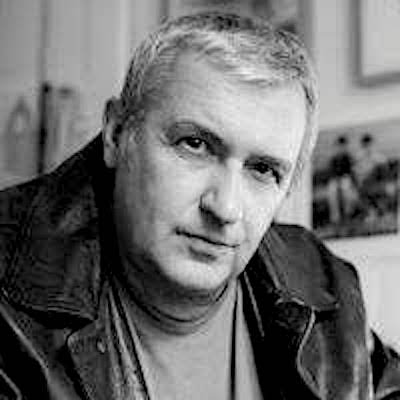
Born in Aberdeen, Washington, in July of 1934, Lee Friedlander is an artist and photographer known for his innovative images depicting America’s city streets. His candid street photography captured the light and content in the country’s urban landscapes.
At the age of eighteen, Friedlander began his formal studies of photography at the Art Center College of Design in Pasadena, California. In 1956, he settled in New York City, where he photographed jazz musicians for record album covers. Friedlander’s early work was influenced by Swiss photographer and documentary film maker Robert Frank, best known for his 1958 book “The Americans”; Walker Evans, known for his Depression Era images taken with a large-format view camera; and the French pioneer of documentary photography Eugène Atget, known for his scenes of Paris’ streets and architecture.
Awarded a Guggenheim Fellowship in 1960, Lee Friedlander was able to focus on his photography, which is primarily executed with hand-held Leica 35 mm cameras and black and white film. Friedlander’s street photography featured detached images of ordinary urban life, including structures framed by fences, gas stations, parking lots, store fronts, churches and commercial signs and posters. In his work, he cleverly used reflections and shadows, often shooting images at strange angles or through car windshields. Friedlander has also used car mirrors to frame an image within an image.
Friedlander is constantly aware of the photographer’s relationship to the picture plane; and he places at least as much importance on it as on the image’s apparent subject which could be an empty street, a store window, or an unremarkable piece of town statuary. Friedlander’s photographs often contain his shadow and/or his reflection, a self-portrait which lends an odd edge to his observations.
Friedlander had his first solo exhibition in 1963 at the International Museum of Photography located at the George Eastman House in Rochester, New York. Along with photographers Diane Arbus and Garry Winogrand, he was a key figure at curator John Szarkowski’s 1967 “New Documents” exhibition at New York’s Museum of Modern Art, an influential exhibition which generated a new look in documentary photography.
Lee Friedlander has published books regularly: the 1969 “Work from the Same House”, a collaborative effort with artist Jim Dine; “Self-Portrait” published in 1970; the 1981 “Flowers and Trees”; the 1985 retrospective “Lee Friedlander: Portraits”; “Nudes” published in 1991; and the 1992 “The Jazz People of New Orleans”.  Friedlander has received a number of awards for his photography, including three Guggenheim Fellowships, five National Endowment for the Arts Fellowships, and a MacArthur Foundation Award.
Friedlander is also responsible for rescuing and printing the negatives of early twentieth-century New Orleans photographer Ernest Joseph Bellocq, remembered for his haunting photographs taken in Storyville, New Orleans’ legalized red-light district. These photographs were published in the 1996 “Bellocq: Photographs from Storyville”, with an introduction by photographer Susan Sontag.
Note: In the early 1960s, Lee Friedlander’s attention was drawn to television sets, a relatively recent luxury appliance. His series “The Little Screens” first appeared as a 1963 picture essay in Harper’s Bazaar magazine, with a commentary by photographer Walker Evans. Six untitled photographs showed television screens broadcasting glowing images of faces and figures into unoccupied rooms in homes and motels across America.
Between 1963 and 1969, “The Little Screens” series grew and, in 2001, was exhibited in full at the Fraenkel Gallery in San Francisco. The series documented not only iconographic ghostly rooms filled with bland furnishings of the period; it also revealed an emerging future reality of omnipresent television screens, and droning television voices and personalities that filled space in an increasing isolationist culture.
Insert Images: Lee Friedlander, “Self Portraits”, 1960s, Gelatin Silver Prints