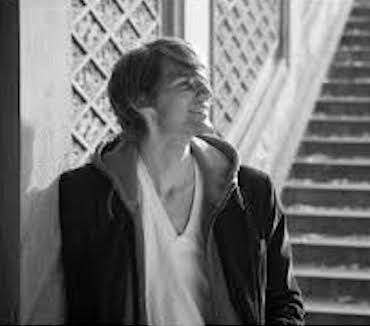
Travis Chantar

Photography by Travis Chantar

Born in California and raised in the mountains of Idaho by two moms, Travis Chantar studied music in Minnesota and settled in Brooklyn, New York, as an artist and freelance photographer. He first developed a passion for decorating and portrait photography in high school, after which he progressed to creating poster imagery for shows in college. Upon graduation, Chantar combined his enthusiasm for painting and portraiture to produce a solo exhibition entitled “Tribe”, a body painting series which resulted in a published art monograph of the same name. A subsequent series entitled “Flowers” consisted of images of nude sitters adorned with flower and petal arrangements. 

In 2014, Chantar began assisting Ryan Pfluger, a New York and Los Angeles based freelance photographer, in his high-profile shoots for publications such as Vogue, New York Times, Billboard, Elle, Netflix, and other image oriented companies. Chantar’s work has included both book and album covers, product campaigns, and portfolio work for creative agencies. Most recently, Chantar published editorials in Risk Magazine, Out Magazine, FGUK Magazine, Natural Pursuits Magazine, Kaltblut Magazine, and VMAN Magazine.

For more information and images, the artist’s website is located at:  http://www.chantarphotography.com

George Daniell


The Photography of George Daniell

Born in May of 1911 in Yonkers, New York, George Daniell was an American photographer and a painter. His experience in the dramatic landscape of his childhood was the genesis that led to his passion for black and white photography’s cinematic effects. Taking a keen interest in a variety of subjects throughout his life, Danielle shot photos of dock workers in New Brunswick, crabbers on the Hudson, swimmers at Glen Island Beach and ballet dancers on Fire Island, all of which to him presented a fierce and tender celebration of the angular male figure.

George Daniell began his artistic career with a folding Kodak camera and a drawing class at the Grand Central Art School in New York City. He trained as a painter at Yale University, where he graduated in 1934 earning a Bachelor of Arts Degree in Painting and Photography. After returning to Yonkers, Daniell began photographing fishermen and bathers along the banks of the Hudson River, traveling further to Glen Island, Jones Beach, and Fire Island on subsequent excursions. Moving to New York City and attending courses at the Art Students League, he supported himself as a freelance photographer for publications such as “Time” and “Life” magazines.

In the summer of 1937, Daniell traveled north to Maine, first visiting the art colony at Ogunquit and then continuing up the coast to Monhegan Island. Developing his eye for composition and tonal values, he shot many images of Monhegan’s distinctive houses, rugged terrain, and working fishermen. The publication of many of these Monhegan  images in both “Time” and “Life” earned Daniell a reputation as an artist with a keen sense for recognizing the human moments within everyday life. He followed this project in the following year with an internationally acclaimed photo essay about the lives of herring fishermen living on Grand Manan Island, off the coast of New Brunswick.

In 1940 in New York, George Daniell continued his studies of painting at Bronx’s American People’s School, after which he served from 1942 to 1944 in the US Army during World War II.  After his discharge he returned to New York City, purchased a house on Fire Island, and continued his freelance photography career. Soon after resuming his work, Daniell met and fell in love with realist-expressionist painter and gallery owner Stephen Dorland. The couple  moved in 1960 to Trenton, Maine, near Acadia National Park, to paint and to start a country life together; over the next forty years, they would travel and paint together.

George Daniell’s association with renowned photographer and owner of the famous “291” Gallery,  Alfred Stieglitz, would lead to his most known series of work, the celebrity portraits. Meeting Georgia O’Keeffe at the gallery would result in two famous intimate photo shoots, one in 1948 at Daniell’s Fire Island house and one in 1952 at O’Keeffe’s Ghost Ranch in New Mexico, which formed a lasting friendship between the two. Some of the famous subjects included in this celebrity series were landscape painter and friend John Marin, photographer Berenice Abbott, writer Tennessee Williams, and actors Robert De Niro and Greta Garbo. 

Over the course of his career, George Daniell spent a considerable amount of time traveling abroad, completing two around the world excursions. Between 1950 and 1954, he photographed many street scenes and images of the local people in Rome and Florence. Returning to Italy for two months in 1955, Daniell shot a series of images depicting  the streets and countryside of devastated postwar Italy; he also shot a series of portraits on the movie sets of Rome’s Cinecittà Studios. Marked by a distinct sense of sensuality and interest in his subjects, these two series, which Daniell considered his favorite work, combined his democratic vision and his recognition of the celebrity.

Affected by Stephen Dorland’s death in October of 1983 and suffering from depression, George Daniell was hospitalized and shortly after suffered a stroke which limited his mobility. Drawn to the dark and deep tones of the North Atlantic Coast, which coalesce in his early paintings, Daniell moved to Bar Harbor, Maine where he returned to painting. He continued working as a photographer and painter until his death on September 14, 2002 at the age of ninety-one.

The George Daniell Museum located in South Beach, Florida, houses a full collection of George Daniell’s work which covers the years from 1920 to 1991, and includes paintings, aquarelles, and his more personal photographs. The collection was recently unearthed by his estate and was presented through the cooperation of the German organization Zentraldepot, a security facility with conservators and restorers.

Top and Bottom Insert Images: Self Portraits of George Daniell, George Daniell Estate

Middle Insert Image:  George Daniell, “Steve Dorland in Acapulco”, 1944, Silver Gelatin Print, 34.5 x 23.1 cm, George Daniell Estate 

Rob Jacques: “This Rustic Eden”

Photographers Unknown, This Rustic Eden

. . .hills are turning
curved green against the astonished morning
sneeze-weed and ox-eye daisies
not caring I am a stranger
—-Audre Lorde

A pilgrim moving through on my way
to Wherever or Hereafter, I pull off I-90
into a town whose trees are flushed gold
with autumn, whose one white church
is washed honest and pure in stark fall light,
whose main street is paved with nostalgia,
and I park beside a roadside apple stand,
D’Arcy Spice, Irish Peach, and Silken
in bushel baskets above broad wood boxes
of Granny Smith, Gloster, and Ruby Grand.

I’m 17 again and just as innocent and good
as this rural town. A lanky, blond boy
with ice-gray eyes adds spice to this miracle
of a day, his face youthfully beautiful, and
I smile my greeting as I pick several Pippins
from a box in front of him and think I’d be
blessed to live free in this rustic Eden
without a care from urban storm and stress
as this boy turns away spitting, “Faggot!”
into autumn’s sacred, apple-fragrant air.

—-Rob Jacques, Every Traveler Has One Idaho Poem

Currently residing on a rural island in Washington State’s Puget Sound, Rob Jacques was raised in northern New England, after which he graduated from both Salem State University and the University of New Hampshire. He served as an officer in the US Navy during the Vietnam Era and has completed a civilian career as a technical editor and writer for the US Navy and the US Department of Energy.

Jacques has taught literature courses at Northern Virginia Community College, Olympic College, and the United States Naval Academy. Strongly influenced by the works of Emily Dickinson, Robert Frost and James Merrill, his poetry explores the metaphysical aspects of life and love, which include the paradoxes that develop as flesh and consciousness interact through one’s lifetime.

Jacques’s “War Poet”, published by Sibling Rivalry Press in 2017, is a collection of poems related to his experiences while on active duty in the US Navy. Full of erotic and martial intensity, the poems create a lyrical memoir out of the poet’s time serving as a gay man in the military. Exploring the complex intersections between violence and sexuality, Jacques’s poems alternate between wild abandon and formal rigidity. His work recognizes the self as a primary center of conflict, a body which is charged with understanding the conflux of love and war.

Rob Jacques’s second book of poems, “Adagio for Su Tung-p’o: Poems on How Consciousness Uses Flesh to Float Through Space/ Time”, was published by Fernwood Press in December of 2019. Jacques uses Su Tung-p’o’s poetic lines as epigraphs to introduce his own metaphysical work which looks at the human issues, addressed by poet Su Tung-p’o in the eleventh century, with a twenty-first century perspective.

Rob Jacques’s poetry has appeared in regional and national journals, including Prairie Schooner, Atlanta Review, American Literary Review, The Healing Muse, Poet Lore, and Assaracus, a quarterly print journal which features the work of a wide representation of gay poets. 

Note:  For readers who are interested in LGBTQ fiction and poetry, I recommend the publisher Sibling Rivalry Press, the home of the Undocupoet Fellowship and a sponsored project of Fractured Atlas, a nonprofit arts service organization: https://www.siblingrivalrypress.com

Michael Stamm

Paintings by Michael Stamm

Michael Stamm’s work, using literature, design, and autobiographical sources, examines the need for human relationships in an increasingly interconnected but alienated world. Raised in Illinois, he received his BA at Wesleyan University in West Virginia and an MA in English Literature from Columbia University; he later earned a MFA from New York University in 2016. Stamm also attended in 2016 the Skowhegan School of Painting and Sculpture, an intensive nine-week residency program for emerging visual artists.

Stamm’s work explores the themes of identity, spiritual and physical wellness, the individual’s innate decision capacity, and the issue of self-doubt. While other gay artists often use erotic imagery in their work, he takes everyday, mundane imagery and codes it with queer history, thus transforming it into archetypes. Throughout Stamm’s body of work, text highlights the talkative self-awareness implicit in his paintings. Whether functioning as the headspace of the artist, of the subject, or an omniscient voice, the use of text animates a thought into an object.

During his MFA work at the New York University, Stamm had his first solo exhibition “Just Like This Please” at the Thierry Goldberg Gallery. From this period came  his “April 26,, 2016” series, a work consisting of nine small panels depicting the same corner of his studio at different times of the day. Michael Stamm produced the 2017 “Tincture” series of seven larger paintings, a more refined and surreal series incorporating the human figure as a design element in the terrazzo-like textured works. The tightly composed surfaces of his paintings are formed by applying thin glazes in multiple layers; and his portrayal of human bodies are highly stylized and often cropped.

In early 2018, Michael Stamm exhibited a group of eight portraits of his therapist, each painting showing her in a different session, but only depicted as a torso in various modes of dress and decoration. The paintings’ outlandish jewelry, inspired by Stamm’s own therapist, is overlaid by poetry, text from cybernetics textbooks, and lyrics from pop songs. His most recent series at the Shulamit Nazarian gallery in Los Angeles, entitled “So Super Sorry Sir”, is currently running from January 16th  to March 6th of 2021. 

Michael Stamm’s work has been the subject of solo exhibitions in New York at DC Moore Gallery and Thierry Goldberg, and has been included in several group exhibitions, including shows at Deli Gallery, New York; Jack Hanley Gallery, New York; Taymour Grahne Projects, London; Galerie Tobias Naehring, Leipzig, and Shulamit Nazarian, Los Angeles. 

For more information and exhibitions, the artist’s site is located at: https://michaelstamm.com

T M Davy

The Artwork of T M Davy

Born in New York, New York in 1980, T M Davy is a painter  whose body  work is characterized by realistic oil portraits.  Davy studied at the National Academy of Design in New York in 2001, and graduated with a Bachelor of Fine Arts from the School of Visual Arts in New York where he currently teaches. In 2012 , he was an artist in residence at BOFFO in  Fire Island, New York. 

T M Davy’s work relies on scenes that are directly connected to his life and surroundings. Persistent themes in his work are the issues of intimacy, love, and friendship. Past subjects in his work have included candle-lit scenes of domestic life with family, his husband Liam, and his circle of friends. Davy has also painted a series of images centered on horses, inspired by the time he spent on a relative’s farm, and a series of images of candles lit in darkness.

The consistency of Davy’s technical execution  and the sophistication of its realism are apparent in his oil on canvas work, whether in a small or a large-scale format. A connecting link in all of his paintings is his use of the chiaroscuro effect, a technique used also by painters Caravaggio and Anthony van Dyck, which emphasizes the interaction of light and shadow.He has also worked in the mediums of pastel and gouache, with which he produced several series of open air spontaneous drawings in a smaller scale format.

In his work produced on Fire Island, New York, Davy portrays many of his beachside figures entering or in the water, exemplifying the union of bodies with nature, a prominent theme of the artist. His portraits celebrate his inseparable communion with his husband, Liam Davy, as well as the intimacy and bond among close friends. His “Fire Island” series are a meditation on the power and freedom born from togetherness—between figure and landscape, mind and body, human and human.

Davy’s work has been included in group exhibitions at the “No Soul for Sale” exhibition at theTate Modern in London; the “B-Out” exhibition at the Andrew Edlin gallery in New York; the 2009 “Nudes” exhibition at Galeria Fortes Vilaca in São Paolo; and the 2019 “Nobody Promised You Tomorrow: Art 50 Years After Stonewall” at the Brooklyn Museum in New York, among others. He has had solo exhibitions at Galerie Thomas Fuchs in Stuttgart, Germany in 2018: the Exile gallery in Berlin, Germany, 2012; and gallery 11R in New York in 2014 and 2017. 

“We exist in an age of complete transition. The time is now to communicate the beauty of queer love around the world.   A paradigm shift in people’s conception of love is happening. If I can, I want to play a small part in that–in revealing how true and how eternal it is. Transcendence is a movement to the broadest spectrum. “ —T M Davy, 2019

Information of T M Davy’s work and exhibitions can be found at the artist’s site: http://www.tmdavy.com

Patrick Angus

The Artwork of Patrick Angus

Born in December of 1953 in North Hollywood, California, American painter Patrick Angus studied at the Santa Barbara Art Institute. Inspired by David Hockney’s book “72 Drawings”, he came to New York in 1980 to see the Picasso retrospective at the Museum of Modern Art. Angus settled in the city and started illustrating the emerging modern gay culture with visual narratives and humor which had not been visible to the general population at that time. 

Patrick Angus depicted not only the pleasant aspects of the scenes he witnessed; but he was also concerned with the unadorned sides of the persons and situations. The central theme that is expressed in many of Angus’s works is the longing for true, not only physical, intimacy. With his distinct observation skills, his compositions, and the use of light and expressive color, he depicted his observation of the scene, but also captured its atmosphere and the vulnerability of its individuals. The loneliness that Angus, as well as other gay men, often felt during this time and the attempts to offset it play an important role in Angus’ body of work.

Angus is known for his depiction of the gay New York scene in the 1980s, particularly its bar scenes, porn theaters, bathhouses, and strip shows. He is especially known for his large paintings of the Gaiety Theater, above the Howard Johnson’s restaurant at the corner of 46th Street and Broadway, with its nightlife of bold colors, flashing lights, and young male erotic dancers. Angus often created a dialogue in his work with references to known artists; such as Picasso and Manet,, by depicting them in his work, a practice common with the notions of post-modern art. 

An example of this dialogue is Angus’s 1979 “Los Angeles Drawings”, which capture his experience discovering the city and its inhabitants at the beginning of his career as an openly gay artist. These drawings, which features portraits of men together in everyday life, are a direct conversation with fellow painter David Hockney, who remained a mentor, a collector of Angus’s work, as well as a friend until his death. 

Patrick Angus died in 1992 at the age of 38 from the effects of AIDS, without receiving due recognition for his work during his lifetime. In recent years, however, his popularity increased with major retrospective exhibitions being held. An exhibition in early 2015 at Galerie Thomas Fuchs was followed by art fair presentations in Karlsruhe, Berlin, Miami, and other cities. A comprehensive monograph was produced in 2016 by art publisher Hatje Cantz with the participation of Galerie Thomas Fuchs. 

This monograph was followed in 2017 by a major exhibition entitled “Patrick Angus” at the Kunstmuseum Stuttgart, Germany, on the occasion of which a publication was released by Distanz Verlag. In 2019 the Long Beach Museum of Art in California presented a retrospective of his work. The Leslie-Lohmann Museum of Gay and Lesbian Art in New York later showed Angus’s work in the group exhibition “On Our Backs: The Revolutionary Art of Queer Sex Work”. 

Patrick Angus is represented in the collections of the Fort Smith Regional Art Museum, the Kunstmuseum Stuttgart, the Leslie-Lohmann Museum of Gay and Lesbian Art and the Schwules Museum Berlin, and in many private collections.

James Baldwin: “The Child is Filled with Darkness”

Photographer Unknown, The Child is Filled with Darkness

“In a moment someone will get up and turn on the light. Then the old folks will remember the children and they won’t talk anymore that day. And when light fills the room, the child is filled with darkness. He knows that every time this happens he’s moved just a little closer to that darkness outside. The darkness outside is what the old folks have been talking about. It’s what they’ve come from. It’s what they endure. The child knows that they won’t talk any more because if he knows too much about what’s happened to them, he’ll know too much too soon, about what’s going to happen to him.” 

—-James Baldwin, Sonny’s Blues

“Sonny’s Blues” is a short story written by James Baldwin, originally published in 1957 in the Partisan Review, a small circulation quarterly New York City magazine dealing with politics, literature, and culture. Written in the first-person singular narrative style, the story presents the memories of a 1950s black teacher in Harlem as he reacts to his brother Sonny’s drug addiction, arrest, and recovery. 

Baldwin’s story is set in New York City of the post–World War Two era, when an important political and cultural change was occurring. A diverse array of artists from all over the world, learning and borrowing ideas and techniques from each other,  converged in the city and made New York a new cultural capital. Despite differences in style and subject matter, these artists were responding, through their work, to what they believed was America’s unique cultural and political crisis.

While the art scene in New York was rapidly expanding, thousands of African American soldiers were returning home from the war and heading north toward communities like Harlem.  Instead of finding new job opportunities and equal rights, the returning men found newly constructed housing projects and vast urban slums. Hundreds of homes in Harlem had been leveled to build these housing projects, which would eventually become symbols of urban blight and poverty,. This experience would be faced by thousands of other African-Americans in the years after the war’s conclusion.

Although America in the 1950s was generally more conservative, the groundwork for the 1960s radical political movements was being laid. The civil rights movement, which had begun in the South earluer in the decade, had started to rapidly spread across the country as millions of African Americans began to seek equal rights. Written at this critical juncture in history, James Baldwin’s “Sonny’s Blues” is a testament to the frustration of life in the cities of America and this frustration’s eventual transformation into a political and artistic movement.

Baldwin’s “Sonny’s Blues” was adapted for a short film of the same name by Gregory Scott Williams Jr for his second year project at New York University’s Graduate Film Program. Written and directed by Williams, the short, seventeen-minute film was produced by Seith Mann and starred actor Charles Parnell as the narrator-brother David, and New York-based poet and verbal stylist Saul Williams in the role of Sonny. The cinematography was by Cybel Martin, featuring the music of Gil Scott-Heron and Ray Charles with an original score by composer and pianist John Bickerton. The film can be found in its entirely at YouTube:   https://www.youtube.com/watch?v=5Y9CDEfnKvQ

Willem Arondeus

The Artwork of Willem Arondeus

Born in Amsterdam in 1895, Willem Arondeus was a Dutch illustrator, painter and author. At the age of thirteen, he attended the former Quellinus School, now the Rietveld Academy in Amsterdam, where he devoted himself to decorative painting. After a family dispute about his homosexuality, he left home at the age of seventeen and severed contact with his family. Contrary to the general custom of the time, Arondeus, even at a young age, openly talked about his homosexuality in his social circles.

After meeting artists in the neighboring villages of Laren and Blaricum, Arondeus decided to pursue a career as an artist. Traveling to Rotterdam, he studied painting at the city’s school for sculptors, the Quellinus School. He started his writing: work in 1920: and he received, in 1923, a commission for a large mural to be installed in the Rotterdam City Hall. Arondeus moved into the countryside of the central Netherlands to the city of Apeldoom where, in 1933, he met and settled with Jan Tijssen, a young gardener who would remain his partner for the next seven years.

Despite their financial struggles between the years 1923 and 1939, Willem Arondeus produced a significant amount of artwork in this period. He worked as an illustrator for the publications of Dutch poets J. H. Leopold, Pieter Cornelis Boutens and Martinus Nijhoff. He also received commissions for calendars and charity stamps, and painted landscapes in the areas of Amsterdam, Blaricum in northern Holland, and on the Isle of Urk. From 1930 to 1932, Arondeus made nine tapestries with ornaments around the arms of Noord-Holland towns for the County Seat.

Around 1935, Willem Arondeus ceased his visual arts work and devoted himself to his writing. He published two novels in 1938; “Het Uilenhuis (The Owls House)” and “In de Bloeiende Ramenas (In the Blossoming Winter Radish)”, both completed with his illustrations in the fin de siecle style. which embraced symbolism and the decadence movement. In 1939 Arondeus published “Matthijs Maris: De Tragiek van den Droom (The Tragedy of the Dream)”, a biography of the Dutch mystical painter Matthijs Maris, which eased his financial situation.

In May of 1940, the German army invaded and occupied the Netherlands, and required all, above the age of fifteen, to carry identity cards with all personal information, including religion. By 1941, realizing the danger of his work against the German occupation, Arondeus sent Tijssen back to their home in Apeldoorn. Soon after the invasion, he joined the Raad van Verzet, Council of Resistance, and in the spring of 1942, started an underground periodical “Brandarisbrief (The Brandaris Letter)”, named after the oldest Dutch lighthouse. With other graphical artists like Frans Duwaer, Willem Sandberg and Gerrit van der Veen, Arondeus started to hide Jewish citizens and to falsify identity cards, which eventually totaled over eighty thousand.

Aware of the prevalence of false identity cards, the Nazi occupation began to compare the cards with the information found in the Municipal Archives. A plan to attack the Archives and destroy all the records was made by Willem Arondeus, Gerrit van der Veen and others. This attack took place on the evening of March 27 in 1943. A fire was set; with the collusion of the local fire brigade to forestall its extinguishing, thousands of cards were destroyed, which hindered the registration process.

Willem Arondeus was arrested on April 1st of 1943 and sentenced to death in June at a Nazi court held at Amsterdam’s Tropical Museum. He took full responsibility for the attack, with the hope others would be spared. Willem Arondeus, along with a group of twelve, was executed on July 1st of 1943 in the North Sea dunes of Overveen. In his last message before his execution, Arondeus, who had lived openly as a gay man before the war, asked his friend, Laura Carola Mazirel, the future jurist and human rights activist, to testify after the war that “Let it be known that homosexuals are not cowards.”

In 1984 the Dutch government posthumously awarded Resistance Memorial Cross to Willem Arondeus and the others. Yad Vashem, the World Holocaust Remembrance Center, honored Arondeus in 1986 as a Righteous Among The Nations for destroying Municipal Records of Amsterdam, the result of which prevented the German occupiers from locating many of the Dutch-Jewish population. In 2001 twenty of Arondeus’s homo-erotic poems, written during his life in Urk and inspired by the work of gay Dutch poet Pieter Cornelis Boutens, were published as “Aloof Strophes (Aloof Stanzas)”.

Timothy Liu: “Tiny Flares Corkscrew Up the Sky”

Photographers Unknown, Parva Scaena (Brief Scenes): Photo Set Twenty-Two

Faces sludging forward on the esplanade
to where we are. What we are is energy—
our bodies angled skyward as fading blooms
parachute towards the earth, the crowd
a spent militia—torn blankets left behind
as we march to the riverfront where
tiny flares corkscrew up the sky to release
delayed reports. The night gives up
its ghost—wreaths of smoke crowning floral
cornucopias that spill a motherlode
of fire onto both sides of the shore,
hoarse voices bellowing out rote words
learned in grade school that take on
meaning in a country of peace where
thousands scream through the dark, waiting
for that twenty-one gun salute.

Timothy Liu, A Boston Fourth, Poetry, July 1996

Born in 1965 in San Jose, California, Timothy Liu is an American poet and author residing in New York City. He earned his BA in English at Brigham Young University in Provo, Utah, and his MA in Poetry at the University of Houston in Texas. Liu also studied at the University of California at Los Angeles and the University of Massachusetts in Amherst, where he met his husband, the artist Christopher Arabadjis.

Liu considers poet and critic Richard Howard, Welsh poet Leslie Norris, and American writer and literary critic Gordon Lish as his mentors. His poetry, based formally on the meter of syllables, explores the themes of identity, violence, sexuality, with the narrator as witness. His works also deal with cultural taboos and situations largely left out of poetic writing.

Timothy Liu’s work includes: the 1992 “Vox Angelica” which won the Norma Farber First Book Award from the Poetry Society of America; “Say Goodnight”, published in 1998 and winner of the PEN/Beyond Margins Award; the 2004 “Of Thee I Sing” winnerof the Poetry Book of the Year Award from Publishers Weekly; the 2005 “For Dust Thou Art”; “Don’t Go Back to Sleep” in 2014; and “Tin House” published in 2018..

Liu’s most recent works include “Luminous Debris: New and Selected Legerdemain 1992-2017” published in 2018 by Barrow Street Books and a finalist in the 2019 Thom Gunn Awards; and his twelfth book of poems, “Let It Ride” published in 2019, which explores how the necessities of life and art join to provide a path forward at midlife.

Timothy Liu has served as a core faculty member at Bennington College’s Writing Seminars and is currently a Professor of English at William Paterson University in New Jersey. His journals and papers are archived in the Berg Collection at the New York Public Library.

For more information on Timothy Liu, including books and poems: https://www.timothyliu.net

Forrest Williams

Paintings by Forrest Williams

Born in North Carolina, Forrest Williams is an American figurative painter who lives and works in New York and Provincetown, Massachusetts. His extensive education began at Edinburgh University in Scotland where he graduated in 1985 with honors in English Literature and Art History. He next studied at Davidson College in North Carolina, where he earned his BA in English Literature. In 1989, Williams attended the London Academy of Music and Dramatic Art, earning Honors in Theater. He earned his Masters of Fine Art  in Painting at the New York Academy of Art in 1994. 

Most of Forrest William’s figurative paintings contain individual male figures, clothed or nude, in subjective spaces. Similar to the work of Hopper, there is a psychological undercurrent of loneliness and a lack of connection between the characters in the presented scenes. The paintings are staged sets, often with decorative elements, such as arrows, whose figures represent the iconic man caught between desire and doubt, and intimacy and uncertainty. .

Williams exhibited in group show a the Elizabeth Leach Gallery in Portland, Oregon, and later had his first solo show there, in which all his work sold. These shows were followed with other solo shows, including three at the Heather Marx Gallery in San Francisco between 2002 and 2007, a 2010 solo show entitled “Crossways” at the Marx & Savattero Gallery in San Francisco, and five solo shows at the AMP Gallery in Provincetown between 2014 and 2019.

“I remember reading that the young Balthus was deeply influenced by Derain’s remark, ‘The only purpose of painting today is the recovery of lost secrets.’  That observation was made almost a hundred years ago now, but it still resonates with me.” — Forrest Willams

The artist’s site can be found at : http://www.forrestwilliams.net

Harald Kreutzberg

Hans Robertson, “Portrait of Harald Kreutzberg”, 1931

Born in Liberec, Czech Republic in December of 1902, Harald Kreutzberg was a modern dancer and choreographer, known for his roles in both traditional ballets and expressive dance dramas. He played a major role in the development of the expressionist modern dance in Germany. 

Trained at the Dresden Ballet School, Kreutzberg studied under two of the most important figures in modern dance, Mary Wigman and Rudolf Laban, and was a critical link in the aesthetic lineage that gave rise to American choreographer and composer Alwin Nikolais, choreographer and dance educator Hanya Holm, and many other U.S. choreographers. 

In 1926, Harald Kreutzberg was in Swiss theater choreographer Max Terpis’s “Don Morte”, a version of Edgar Allen Poe’s novel “The Masque of the Red Death”.  A year later, he appeared in the plays “Turnadot and Jedermann” and as Puck for “A Midsummer Night’s Dream”, both directed by Max Reinhardt. Kreutzberg  accompanied Reinhardt to New York City where he began a tour of the United States, Canada, and Europe with the dancer Yvonne Georgi. 

While his impact on expressionist modern dance was sweeping Europe, in the United States, Kreutzberg was considered by many as a major force in the development of the male modern dancer. He was not afraid to challenge the gender norms in his time. Kreutzberg tended to incorporate feminine movements and costuming in his performances, especially alongside his dance partner Yvonne Georgi. He specifically inspired male dancers by breaking the stereotypical roles of princes, birds, and mythical gods. 

With their international tours from 1928-1931, Kreutzberg and Yvonne Georgi exposed the public to the style of expressionist dance. Many gay male dancers in Germany also pursued their careers during the years of the National Socialist government. He was the most notable among them as his long-term partnership with his accompanist and composer Friedrich Wilckens was an open secret. While other gay men were imprisoned and forced to wear a pink triangle, Kreutzberg was allowed to tour throughout Germany and abroad.

In 1943, Harald Kreutzberg appeared as a jester in Georg Willhelm’s film “Paracelsus”, in which he performed a modern hypnotic dance. Choreographer George Balanchine and writer Lincoln Kirstein invited him to share a program with the New York City Ballet in the late 1940s. Kreutzberg established his own dance school in 1955 in Bern, Switzerland, and retired from the stage in 1959. He continued to choreograph for others and teach at his school until his death in Bern on April 25, 1968. 

Insert Image: German photographer Hans Robertson, who specialized in the genre of dance, took this photo, on December 11, 1902, showing  Harald Kreutzberg wearing a headdress for a performance at the Volksbühne in Berlin.  

Countee Cullen: “We Hide the Heart that Bleeds”

Photographer Unknown, We Hide the Heart that Bleeds

“We shall not always plant while others reap

The golden increment of bursting fruit,

Not always countenance, abject and mute,

That lesser men should hold their brothers cheap;

Not everlastingly while others sleep

Shall we beguile their limbs with mellow flute,

Not always bend to some more subtle brute;

We were not made to eternally weep. 

The night whose sable breast relieves the stark,

White stars is no less lovely being dark,

And there are buds that cannot bloom at all

In light, but crumple, piteous, and fall;

So in the dark we hide the heart that bleeds,

And wait, and tend our agonizing seeds.” 

—-Countee Cullen, From the Dark Tower, Copper Sun, 1927

Born on May 30, 1903, Countee Cullen was an American poet, novelist, children’s writer, and playwright who was a leading figure in the Harlem Renaissance. Raised in a Methodist parsonage by the Reverend Frederick A. Cullen and his wife, he attended and graduated with honors from the De Witt Clinton High School in The Bronx, New York. In 1922, Cullen entered New York University. 

Already having written poems since the age of fourteen, Cullen’s first published poems were in The Crisis magazine, under the leadership of W. E. B. Du Bois, and Opportunity, a magazine of the National Urban League. Soon after this, he began to be published in Harper’s, the Century Magazine, and Poetry, founded in 1912 by Harriet Monroe. Cullen won several awards, including second prize in a contest, sponsored by the Poetry Society of America, for his poem “Ballad of the Brown Girl”.

Countee Cullen graduated from New York University in 1923. In 1925, Harper & Brothers published Cullen’s first volume of verse, “Color”, and he was admitted to Harvard University to pursue a masters in English. Written in a traditional style, “Color” celebrated black beauty anddeplored the effects of racism. A landmark of the Harlem Renaissance, the book contained “Incident” and “Heritage”, probably Cullen’s most famous poems, and “Yet Do I Marvel”, his poem on racial identity and injustice. A year after his volume’s publication, Cullen graduated from Harvard with a masters degree in 1926.

Cullen worked as assistant editor for Opportunity magazine, where his column, “The Dark Tower”, increased his literary reputation. His poetry collections “The Ballad of the Brown Girl” and “Copper Sun”, both published in 1927, explored similar themes as “Color”, but they were not so well received. Many in the black community felt he did not give the subject of race the same attention he had given it previously..

Countee Cullen was awarded a Guggenheim Fellowship in 1928 which enabled him to study and write abroad. He traveled back and forth several times between France and the United States during the years 1928 to 1934, publishing four volumes of poetry by 1929. Shortly after in the early 1930s, Cullen’s work was almost completely free of racial subject matter, focused instead on idealized beauty and classic romantic subjects.

Cullen’s only novel “One Way to Heaven”, a social comedy of lower-class blacks and the bourgeoisie in New York City, was published in 1932. He taught French, English, and creative writing at Frederick Douglass Junior High School in New York City from 1934 until the end of his life. In his last years, Cullen wrote mostly for the theater, including adapting the novel “God Sends Sunday” into the 1946 Broadway musical “St. Louis Woman”.

Countee Cullen developed his Eurocentric style of writing from his exposure to Graeco-Roman Classics and English Literature, work he was exposed to while attending prestigious universities like New York University and Harvard. Cullen found inspiration in Greek mythology to explore the  themes of race and identity in his work. Influenced also by the Romantic movement of writers, he believed African-American poets’ use of a more traditional style of writing poetry would allow the building of bridges between the black and white communities.

Countee Cullen died from high blood pressure and acute kidney injury on January 9, 1946. He is buried in Woodlawn Cemetery in The Bronx, New York City. The Harlem branch of the New York Public Library was named the Countee Cullen Library in his honor. In 2013, Cullen was inducted into the New York Writers Hall of Fame. 

Insert Image: Winold Reiss, “Countee Cullen”, 1925, Pastel Portrait on Illustration Board, 76.1 x 54.7 cm, National Portrait Gallery, Smithsonian Institution, Washington DC

Note: “From the Dark Tower” is a sonnet that focuses on the injustices of racism, as the speaker notes that white people deprive black people of the fruits of their labor. However, the speaker, who is black, is confident that this will not be the case forever, ultimately suggesting that such hardships build strength and resiliency. In turn, the speaker sets forth the optimistic belief that black people will one day triumph over racist oppression and reap the rewards of their hard work.

Ricardo Rico

Photography by Ricardo Rico

Ricardo Rico is a self-taught photographer working and living in São Paulo, Brazil. He is currently working on “The Lonely Project”, dealing with masculine beauty in physical and emotional forms.  To date, there are nineteen issues of “The Lonely Project” available. 

Ricardo Rico’s website is located at: https://www.ricardorico.com

The Lonely Project website is located at: https://thelonelyproject.com.br/revista/

Richard Siken: “Unfinished Duet”

Photographer Unknown, Unfinished Duet

    • At first there were too many branches
      so he cut them and then it was winter.
      He meaning you. Yes. He would look out
      the window and stare at the trees that once
      had too many branches and now seemed
      to have too few. Is that all? No, there were
      other attempts, breakfasts: plates served,
      plates carried away. He doesn’t know
      what to do with his hands. He likes the feel
      of the coffeepot. More than the hacksaw?
      Yes, and he likes flipping the chairs,
      watching them fill with people. He likes
      the orange juice and toast of it, and waxed
      floors in any light. He wants to be tender
      and merciful. That sounds overly valorous.
      Sounds like penance. And his hands?
      His hands keep turning into birds and
      flying away from him. Him being you.
      Yes. Do you love yourself? I don’t have to
      answer that. It should matter. He has a
      body but it doesn’t matter, clean sheets
      on the bed but it doesn’t matter. This is
      where he trots out his sadness. Little black
      cloud, little black umbrella. You miss
      the point: the face in the mirror is a pale
      and naked hostage and no one can tell
      which room he’s being held in. He wants
      in, he wants out, he wants the antidote.
      He stands in front of the mirror with a net,
      hoping to catch something. He wants to
      move forward into the afternoon because
      there is no other choice. Everyone in this
      room got here somehow and everyone in
      this room will have to leave. So what’s left?
      Sing a song about the room we’re in?
      Hammer in the pegs that fix the meaning
      to the landscape? The voice wants to be
      a hand and the hand wants to do something
      useful. What did you really want? Someone
      to pass this with me. You wanted more.
      I want what everyone wants. He raises
      the moon on a crane for effect, cue the violins.
      That’s what the violins are for. And yes,
      he raises the moon on a crane and scrubs it
      until it shines. So what does it shine on?
      Nothing. Was there no one else? Left-handed
      truth, right-handed truth, there’s no pure
      way to say it. The wind blows and it makes
      a noise. Pain makes a noise. We bang on
      the pipes and it makes a noise. Was there
      no one else? His hands keep turning into
      birds, and his hands keep flying away
      from him. Eventually the birds must land.

—Richard Siken, Unfinished Duet, Crush

Born in New York City in February of 1967, Richard Siken is an American painter, poet, and filmmaker. He studied at the University of Arizona, earning a Bachelor of Arts in Psychology and later a Master of Fine Arts in Poetry.

Richard Siken is one of the co-founders and editors of Spork Press, established in 2001. Besides publishing its “Spork” literary magazine, the press produces novels and chapbooks, some of which were released in serial form. Siken received a Literature Fellowship in Poetry from the National Endowment of the Arts and two Arizona Commission on the Arts grants.

Influenced by the 1991 death of his boyfriend, Richard Siken wrote his collection of poems “Crush” which was published by Yale University Press.. A powerful literary work that is confessional, gay, and infused with eroticism, “Crush” won the 2004 Yale Younger Poets Competition, and received the Lambda Literary Award for “Gay Men’s Poetry” in 2005, and the Thom Gunn Award from Publishing Triangle in 2006. It was also a finalist for the National Book Critics Circle Award.

Siken’s most recent work, his second book of poems, “War of the Foxes”, was released from Copper Canyon Press in 2015. With interwoven lyrics, fables, portraits and landscapes, Siken confronts the ways in which we look to art for meaning and purpose. The poems in “The War of the foxes” show the fallacies inherent in a search for truth, both in the world outside and within the self.

Richard Siken currently lives and works in Tucson, Arizona.

Richard Siken: “I Am the Wind”

Photographer Unknown, I Am the Wind

“I am the wind and the wind is invisible, all the leaves tremble but I am invisible, blackbird over the dark field but I am invisible, what fills the balloon and what it moves through, knot without rope, bloom without flower, galloping without the horse, the spirit of the thing without the thing, location without dimension, without a within, song without throat, word without ink, wingless flight, dark boat in the dark night, shine without light, pure velocity, as the hammer is a hammer when it hits the nail and the nail is a nail when it meets the wood and the invisible table begins to appear out of mind, pure mind, out of nothing, pure thinking, hand of the mind, hand of the emperor, arm of the empire, void and vessel, sheath and shear, and wider, and deeper, more vast, more sure, through silence, through darkness, a vector, a violence, and even farther, and even worse, between, before, behind, and under, and even stronger, and even further, beyond form, beyond number, I labor, I lumber, I fumble forward through the valley as winter, as water, a shift in the river, I mist and frost, flexible and elastic to the task, a fountain of gravity, space curves around me, I thirst, I hunger, I spark, I burn, force and field, force and counterforce, agent and agency, push to your pull, parabola of will, massless mass and formless form, dreamless dream and nameless name, intent and rapturous, rare and inevitable, I am the thing that is hurtling towards you…” 

—Richard Siken, Lovesong of the Square Root of Negative One, War of the Foxes

Born in New York City in February of 1967, Richard Siken is an American painter, poet, and filmmaker. He studied at the University of Arizona, earning a Bachelor of Arts in Psychology and later a Master of Fine Arts in Poetry. 

Richard Siken is one of the co-founders and editors of Spork Press, established in 2001. Besides publishing its “Spork” literary magazine, the press produces novels and chapbooks, some of which were released in serial form. Siken received a Literature Fellowship in Poetry from the National Endowment of the Arts and two Arizona Commission on the Arts grants. 

Influenced by the 1991 death of his boyfriend, Richard Siken wrote his collection of poems “Crush” which was published by Yale University Press.. A powerful literary work that is confessional, gay, and infused with eroticism, “Crush” won the 2004 Yale Younger Poets Competition, and received the Lambda Literary Award for “Gay Men’s Poetry” in 2005, and the Thom Gunn Award from Publishing Triangle in 2006. It was also a finalist for the National Book Critics Circle Award. 

Siken’s most recent work, his second book of poems, “War of the Foxes”, was released from Copper Canyon Press in 2015. With interwoven lyrics, fables, portraits and landscapes, Siken confronts the ways in which we look to art for meaning and purpose. The poems in “The War of the foxes” show the fallacies inherent in a search for truth, both in the world outside and within the self.

Richard Siken currently lives and works in Tucson, Arizona.