

Photographer Unknown, Like a Road That Vanishes
“The same as your non-existent window
Like a hand’s shadow in a phantom instrument
The same as your veins and your blood’s intense journey
With the same equality with the precious continuity that ideally
reassures me of your existence
At a distance
In the distance
Despite the distance
With your head and your face
And your entire presence without closing my eyes
And the landscape arising from your presence when the city was
only, could only be, the useless reflection of your slaughter
presence
In order to better moisten the birds’ feathers
The rain is falling a great distance
And it encloses me within you all by myself
Within and far from you
Like a road that vanishes on another continent.”
—César Moro, The Illustrated World
Born in Lima in 1903, César Moro, birth name Alfredo Quispez Asin, was a Peruvian poet and painter, whose only fond memory of his Jesuit childhood education was his learning French. He changed his name to César Moro, at the age of twenty, after a character by author Romón Gómez de la Serna. After years of unbearable parochialism and hostility towards any form of poetic expression, which characterized Lima between 1920 and 1930, Moro traveled to Paris in 1925 to pursue dance and art; but later poetry and art became his focus.
Moro exhibited in group shows in Brussels in 1926, and in Paris the next year. He became a member of the Surrealist movement and exchanged ideas and art with such figures as poet Paul Éluard, writer and poet André Breton, poet Benjamin Péret, and outside the surrealist group, painters Henri and Simone Jannot. Moro promptly adopted French as his second writing language and became the only Latin American poet to contribute to Andre Breton’s surrealistic journals of the 1920s and 1930s.
While living in Paris, César Moro continued to publish his work in Latin America, including the Peruvian periodical “Amauta” whose April 1928 edition printed Moro’s poems “Oráculo”, “Infancia”, and “Following You Around”. He was active in the Parisian political protests through his contribution to the writing of the 1933 manifesto “Mobilization Against the War is Not Peace”. Moro added a note to the manifesto condemning Peru’s dictator Sánchez Cerro’s violent suppression of an uprising of sailors who were protesting against cruel discipline and poor nutrition.
Moro returned to Lima in 1934 and continued to write against those in power. The police of Peruvian dictator Benavides entered his home and confiscated copies of the clandestine pamphlet, CADRE, which supported the Spanish Republic. As a result of continual police harassment, Moro fled Peru in March of 1938. He traveled to Mexico City, his residence for the next ten years,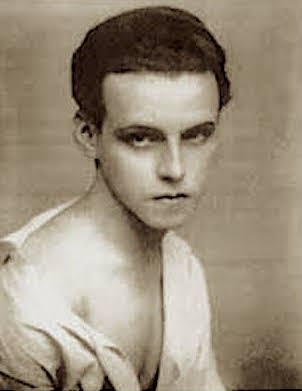 and befriended other progressive artists seeking haven, such as Austrian painter Wolfgang Paalen, photographer Eva Sulzer, surrealist painters Remedios Varo and Gordon Onslow Ford and British painter and novelist Leonora Carrington.
With assistance from Wolfgang Paalen and André Breton, the modernist avant-garde artists of Mexico City organized the 1940 International Exhibition of Surrealism at the Galeria de Art Mexicano. This large exhibition followed two others exhibitions staged by Moro, the earliest in 1935 with Chilean artists Maria Valencia, Waldo Paaraguez, and Carlos Sotomayor. Moro became more closely associated with Wolfgang Paalen and his international literary and art journal “Dyn”. This journal gave Moro the opportunity to publish his French-language poetry, and allowed him to expand on his exploration of indigenous culture as subject matter.
César Moro was prolific in his output during his stay in Mexico, where he also published in the periodicals “El Hijo Prodigo (The Prodigal Son)” and “Lettas de México (Letters from Mexico)”. He also translated the surrealist poems in the periodicals and a poem of his, a tribute to Breton, was published in the “Letters to Mexico”. As a result of his association with Paalen,  Moro published two collections of his poetry, “Le Chateau de Grisou (Firedamp Castle)” and “Lettre d’Amour (Love Letter)”, and many translations of his surrealist and avant-garde texts.
César Moro, who was gay, led a self-described scandalous life quietly and privately. Many of his fellow surrealists were unaware of his homosexuality, which he embraced for the first time in Mexico. While his love poetry written in France is tortured; the poetry written in Mexico City for his collection “The Equestrian Turtle”, an oblique chronicle of Moro’s relationship with army lieutenant Antonio Acosta, is openly homoerotic. Throughout 1939, Moro wrote a series of letters and poems which expressed the totality of his feelings for Acosta as being the sum total of his life. This totality of love lasted the duration of Moro’s residency in Mexico; even after Acosta married and became a father. Moro appears to have played an almost godfather-like role in the life of Acosta’s son.
The intensity of Moro’s relationship with Antonio coincided with Moro’s rift with Breton and the surrealist movement after the publication of Breton’s 1944 “Arcane 17”, a work combining memoir, poetry and political treatise in which Breton cited that heterosexual love was the only legitimate one. Moro denounced, not without reason,the  shortsightedness of Breton who had placed himself as the ultimate champion of freedom. From then on Breton, who could not accept love between members of the same sex, no longer had as great an impact on Moro’s artistic development. Moro turned instead to figures such as Paalen for direction in his work.
In 1948 César Moro returned to Lima, where he wrote poetry for the periodicals “The Magazine of Guatemala” and “Dwellings”, taught French at the Leoncio Prado military college, and met his future partner and lover, the French writer André Coyne. In 1954, he made his last public appearance at a conference on Marcel Proust, where he delivered a paper entitled “Passionately Loved and Admired”. César Moro died of leukemia in Lima on January 15th of 1956. His death went unnoticed by “Bief”, the surrealist main publication at that time. A large part of his prose and poetry was collected and published posthumously through the efforts of his lover and literary executor André Coyné.
Notes: César Moro’s 1939 collection “Le Tortuga Ecustre (The Equestrian Turtle)” contained an editorial and introduction by poet Américo Ferrari as well as an epilogue by Moro’s lover André Coyné. In his epilogue on page 88, Coyné noted that the title of the collection is an erotic symbol derived from their 1934-35 experience in Lima of seeing two turtles copulating in a park.
On the Asymptote Journal site, there are three poems from “TheEquestrian Turtle” that were translated by Leslie Bary and Esteban Quispe. These poems are located at: https://www.asymptotejournal.com/poetry/cesar-moro-the-equestrian-turtle/
More extensive information on the life of poet César Moro can be found at JSTOR’s online library located at: https://www.jstor.org/stable/90024968?seq=1