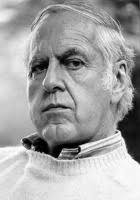
Jonathan Williams: “Glittering Frostily”

Photographers Unknown, Glittering Frostily

There are more things to love
than we would dare to hope for.
–Richard of St. Victor

where the car hit him, fireweed sprang with
blossoms of fennel

and umbels
of dill fell
through the spokes of a wheel

on Whistun holiday to the sun, Denton
Welch spun a web in his crushed cycle,

sat in the seat, spine curled up like a spider–

and spied: “saw
the very drops of sweat glittering frostily
between the shouder blades”

of a lad

…on and on he spied and bled from the blades of his cycle
small as a spider,
hiding in the fireweed, getting
wet from the skins of many human suns aground
at the Kentish river near
Tunbridge Wells,

where the dill
lulls,

and all boys
spoil…

Jonathan Williams, The Wreck on the A-222 in Ravensbourne Valley, Jubilant Thicket: New & Selected Poems, 2995

Born in Asheville, North Carolina, Jonathan Williams was a poet, photographer and graphic artist. He attended St. Albans School in Washington DC, and then Princeton University. After leaving Princeton to pursue the arts, Williams studied painting with Karl Knaths at the Phillips Gallery, and graphic arts and engraving under Stanley William Hayter at Atelier 17 in New York City. He later studied photography at Black Mountain College with Harry Callahan and Aaron Siskind.

In 1951, Williams, along with David Ruff, founded the book publishing company, The Jargon Society, with the goal of publishing obscure writers. This press, long associated with the Black Mountain Poets, an  post-modern group in North Carolina, launched a number of artists, both literary and visually artistic, who pioneered the 1980s avant-garde movement in United States. 

Jonathan Williams was a link between the experimental poets of the second generation of Modernists and the upcoming vernacular artists of Appalachia. Akin to a cultural anthropologist, he based his work on “found’ language, acquired through listening to others reminisce about their lives and experiences. Williams loved to reveal the poetic within the pedestrian, whether from commercial signs, such as “O’Nan’s Auto Service”, to amorous lavatory wall scribblings, such as “The Current Sexist Machismo in a Loo Along the River Kent”. He often infused light verse forms such as limericks, clerihews, and acrostics with his own ribald wit.Williams also invented a form of his own called the Meta-Four, which specified no length, only that every line contain four words. 

Jonathan Williams and his life-long partner, the poet Thomas Meyer, typically divided their year between Skywinding Farm, the property he owned in the Blue Ridge Mountains, outside Highlands, North Carolina, and a seventeenth-century stone cottage in  Cumbria, England. A longtime contributing editor of the photography journal Aperture, Jonathan Williams died from pneumonia on March 16, 2008 in his Blue Ridge Mountain home.

Insert Image: Guy Mendes, “Jonathan Williams and Thomas Meyer at Corn Close”, 1081, Silver Gelatin Print

William Morris Meredith: “Alive in Our Skins”

Photographers Unknown, Alive in Our Skins

Spared by a car or airplane crash or
cured of malignancy, people look
around with new eyes at a newly
praiseworthy world, blinking eyes like these.

For I’ve been brought back again from the
fine silt, the mud where our atoms lie
down for long naps. And I’ve also been
pardoned miraculously for years
by the lava of chance which runs down
the world’s gullies, silting us back.
Here I am, brought back, set up, not yet
happened away.

But it’s not this random
life only, throwing its sensual
astonishments upside down on
the bloody membranes behind my eyeballs,
not just me being here again, old
needer, looking for someone to need,
but you, up from the clay yourself,
as luck would have it, and inching
over the same little segment of earth-
ball, in the same little eon, to
meet in a room, alive in our skins,
and the whole galaxy gaping there
and the centuries whining like gnats—
you, to teach me to see it, to see
it with you, and to offer somebody
uncomprehending, impudent thanks.

William Morris Meredith, Accidents of Birth, Effort at Speech: New and Selected Poems, 1997

Born in January of 1919 in New York City, William Morris Meredith attended Lenox School in Massachusetts, graduating in 1936, and began writing poetry as a student at Princeton University. He graduated magna cum laude in 1940; his senior these was on the poet Robert Frost. After graduating, he worked for a year at the New York Times as a reporter before joining the army. Meredith transferred to the United States Navy in 1942 to become a pilot; he served on aircraft carriers in the Aleutian Islands and the Pacific Theater until the end of World War II.

Meredith’s first collection of poems, entitled “Love Letter from an Impossible Land”, was chosen by poet and playwright Archibald MacLeish for publication in the 1944 Yale Series of Younger Poets, an annual debut collection of promising U.S. poets. The poetry in this first collection were written while Meredith was still serving as a navy flier; many of the poems speak about the uncertainty of wartime life. His second collection of poems, “Ships and other Figures” was published in 1948. The volume contained twenty-nine brief poems, which included a trio of poems based on his wartime service.

William Meredith re-enlisted in 1952 to fly air missions in the Korean War, for which he received two Air Medals. In 1955 after his military service, he entered the academic field and taught English at the University of Hawaii, Connecticut College, and Princeton University until his retirement in 1983. In 1964, Meredith was elected as the Chancellor of the Academy of Poets, a position he held until 1987. From 1978 to 1980, he was Consultant in Poetry to the Library of Congress, the position which in 1985 became Poet Laureate Consultant. Meredith was the first gay poet to receive this honor.

During his academic career, Meredith published his 1958 “Open Sea and Other Poems”, a collection of poems previously published in journals, and his 1964 “The Wreck of the ‘Thresher’ and Other Poems”, of which the title poem is an elegy to the “Thresher”, an American submarine lost at sea with its crew in 1963. Meredith sustained a stroke in 1983, was immobilized for two years, and began to experience expressive aphasia, a condition which affected his ability to produce language. He retired early from teaching and endured a long period of  intensive rehabilitation to slowly regain his ability to speak.

A gathering of poems from Meredith’s career, entitled “Partial Accounts: New and Selected Poems” was published in 1987. Crafted from sonnets, quatrains, and and other formal poetic structures, the collection won the Pulitzer Prize for Poetry and a Los Angeles Times Book Award. A compilation of new and previously published works, “Effort at Speech: New and Selected Poems”, published in 1997, received the National Book Award for Poetry. Both these works, written during Meredith’s long rehabilitation, won poetry’s highest awards at a time in which he was without speech.

William Morris Meredith died in 2007 at the age of eighty-eight in New London, Connecticut. Throughout his long illness, he was nursed by his longtime partner of thirty-six years, the poet and fiction writer Richard Harteis. The William Meredith Foundation and the William Meredith Center for the Arts were established to continue his legacy through residency programs, poetry series, and other activities.

One of the most complete collections of William Meredith’s work can be found at Connecticut College. Acquired in 1994, the collection contains letters, drafts, speeches and papers from his time with the Library of Congress, government agencies, and many colleges.

British Pathé, “RMS Titanic”: Film History Series


Artist Unknown, Titanic Moored at Dock, Gifs, British Pathé, 1912

These three colorized gifs were taken from the beginning of a film, jointly owned by British Pathé and Gaumont Newsreels, containing known footage of the R.M.S. Titanic. Slightly different versions of this film are held by British Movietone and the National Film and Television Archive.

The three gifs depict the Titanic moored, probably on April 2nd of 1912, at the Thompson Graving Dock on Queen’s Island in Belfast, where the RMS Titanic was fitted out. In these shots, men can be seen walking beside the ship and smoke is seen issuing from the third funnel of the Titanic.

The British Pathé’s newsreel, just over six minutes in length,  covers several episodes in the story of the RMS Titanic’s final days. The captain of the RMS Titanic, Edward J. Smith, who perished when the ship sank, is shown on board the RMS Olympic, before assuming duty on the Titanic. Newsreel footage of icebergs and ice floes are shown to portray the scene of the disaster. Scenes of the rescue ship, Carpathia, nearing New York City with survivors, and scenes of the departing search and rescue vessel, Mackay Bennet, also are included in this Pathé footage.

At the forefront of cinematic journalism, British Pathé was a producer of newsreels and documentaries from 1910 to 1970 in England. The company blended information with entertainment for movie theater attendees who came to watch the news. Over the course of its sixty years, it documented everything from major armed conflicts and international political crises to the curious hobbies and eccentric lives of ordinary people.

British Pathé’s roots lie in 1896 Paris, France, when Société Pathé Frères  was founded by Charles Pathé and his brothers, who pioneered the development of the moving image. In 1908, the company invented the cinema newsreel with its introduction of the Pathé-Journal and opened a newsreel office on Wardour Street, London, in 1910. These early silent  newsreels, issued every two weeks and running about four minutes in length, were shown in local theaters; sound was introduced beginning in 1928. The Pathé newsreels captured events such as suffragette Emily Danison’s fatal injury by a racehorse at the 1913 Epsom Derby and Franz Reichelt’s fatal descent by parachute from the Eiffel Tower in February of 1912.

Considered now to be the finest newsreel archive in the world, British Pathé is a treasure trove of eighty-five thousand films unmatched in their historical and cultural significance. The company also represents the Reuters historical collection, which includes more than one hundred thirty-six thousand items from the following news agencies: Gaumont Graphic, active from 1910 to 1932; Empire News Bulletin, a film library from 1926 to 1930;  British Paramount,  a collection spanning from 1931 to 1957; and Gaumont British’s collection  from 1934 to 1959. Included in Pathés vast library of film is the collected content from the Visnews service active from 1957 until the end of 1984.

The full footage of British Pathé’s Titanic black and white newsreel can be found at: https://www.youtube.com/watch?v=05o7sOAjtXE

All footage can be viewed on the British Pathé website. https://www.britishpathe.com/

August Sander

August Sander: Portraits from “People of the Twentieth Century”

Born in 1876 in Herdorf, a small village east of Cologne in Rhineland-Palatinate, Germany, August Sander was a photographer, now viewed as a forefather of conceptual art and a pioneering documentarian of human diversity. 

Sander spent his time, between 1897 and 1899, as a photographer’s assistant during his military service. In 1901, Sander started working for a photo studio in Linz, Austria, became a partner in 1902, and then the proprietor in 1904. By this time, he already had several exhibitions and purchases of his work by museums. After many successful exhibitions of his work, Sander relocated his studio to Cologne. 

In 1911, August Sander began the first series of portraits for what would be his monumental project, “People of the Twentieth Century”, an archived and sustained photographic enterprise of twentieth-century man, These emphatically objective photographs from the years of the Kaisers, the Weimar Republic, the Nazi regime, and the early Federal Republic make up an unprecedented document of both the individual and the collective recent history of the German  people. 

In 1927, August Sander traveled through Sardinia for three months, where he took hundreds of photographs. A exhibition of his portraits at the Kölnische Kunstverein in 1927 received positive reviews from both critics and the public. This exhibition led to the 1929 publishing of Sander’s “Antlitz der Zeit (Faces of Our Time)”, which included the first sixty portraits from his twentieth-century series and an introduction by German novelist and essayist Alfred Döblin.

Under the rise of the Nazi regime in Germany, Sander’s work and personal life were greatly restrained. In 1934, Sander’s son Erich, a member of the Socialist Workers’ Party, was arrested and sentenced to ten years in prison, where he died shortly before the end of his sentence. The printing blocks for Sander’s “Antlitz der Zeit” were destroyed and unsold copies impounded in 1936 by the authorities, most likely due to the publication’s image of a heterogeneous German society of which the Nazi Party disapproved.

Despite the political situation in Germany between 1933 and 1945, August Sander continued working in his Cologne studio, portraying intellectuals, Jewish citizens, National Socialists, as well as regular people from the street. Many of these commercial portraits were included in his opus ”People of the Twentieth Century” where they became a political statement. Beginning in 1942, Sander started to relocate the most important parts of his negative archive to Kuchhausen, a small village in Westerwald, where he continued both his commercial photographic work and  his project wor

Although August Sander’s main studio in Cologne was destroyed in a 1944 bombing raid, tens of thousands of his negatives, which he had left behind in the basement of a former apartment in Cologne, survived the war. In a later 1946 fire, approximately twenty-five thousand negatives were destroyed in the same apartment basement. In 1946, Sander continued his historical archive with  a post-war photographic documentation of the bombed city of Cologne in 1946. 

Sander sold a portfolio of four-hundred and eight photographs of Cologne, taken between 1920 and 1939, to the Kölnisches State Museum in 1953. These photos would form the 1988 book “Koõin wie es War (Cologne As It Was)””.  In 1962 an edition of eighty photographs from the “People of the Twentieth Century” was published as a book entitled “German Mirror: People of the Twentieth Century”. Still working on his project at the age of eighty-eight, August Sander died of a stroke on April 20th in 1964. His body was buried next to his son Erich in Cologne’s Melaten Cemetery.  

One of the most ambitious undertakings in the history of photography, the “People  of the Twentieth Century” project occupied Sander for some 40 years, from the early 1920s until his death, during which he took portraits of hundreds of German citizens and then categorized them by social type and occupation — from farm laborers to circus performers to prosperous businessmen and aristocrats. Remarkable for their unflinching realism and deft analysis of character and lifestyle, Sander’s individual images stand out as high points of photographic portraiture and collectively propose the idea of the archive as art. 

Although the Nazis confiscated the first publication of Sander’s work, and the majority of his negatives were later destroyed by fire, approximately eighteen hundred portrait negatives for “People of the Twentieth Century” survived, as well as Sander’s notes and plans. Together with the existing vintage prints, they have provided the basis for current reconstruction of Sander’s ambitious project in both book and exhibition form.

Middle Insert Image: August Sander, “Workmen in the Ruhr Region”, 1928, Silver Gelatin Print, August Sander Archive, VG, Bild-Kunst

Yukio Mishima: “Someone, Somewhere, Had Tied Up the Darkness”

Photographers Unknown, Someone, Somewhere, Had Tied Up the Darkness

“Someone, somewhere, had tied up the darkness, he thought as he went: the bag of darkness had been tied at the mouth, enclosing within it a host of smaller bags. The stars were tiny, almost imperceptible perforations; otherwise, there wasn’t a single hole through which light could pass.

The darkness in which he walked immersed was gradually pervading him. His own footfall was utterly remote, his presence barely rippled the air. His being had been compressed to the utmost – to the point where it had no need to forge a path for itself through the night, but could weave its way through the gaps between the particles of which the darkness was composed.” 

—Yukio Mishima, Acts of Worship: Seven Stories

When Yukio Mishima committed ritual suicide in November 1970, he was only forty-five. He had written over thirty novels, eighteen plays, and twenty volumes of short stories. During Mishima’s lifetime, he was nominated for the Nobel Prize three times and had seen almost all of his major novels appear in English. 

While the flamboyance of Yukio Mishima’s life and the apparent fanaticism of his death, through the ritual rite of seppuku,  have dominated the public’s perception of his achievement, Japanese and Western critics alike are in agreement that Mishima’s literary gifts were prodigious.

A short biography of Yukio Mishima can be found on this site. For a more extensive biography on Yukio Mishima: https://www.bbc.com/culture/article/20201124-yukio-mishima-the-strange-tale-of-japans-infamous-novelist

Christopher Isherwood: “A Single Man”

Photographers Unknown, The Faces of Man: Photo Set Ten

“Staring and staring into the mirror, it sees many faces within its face – the face of the child, the boy, the young man, the not-so-young man – all present still, preserved like fossils on superimposed layers, and, like fossils, dead. Their message to this live dying creature is: Look at us – we have died – what is there to be afraid of?

 It answers them: But that happened so gradually, so easily. I’m afraid of being rushed.” 

—Christopher Isherwood, A Single Man

Christopher Isherwood’s 1964 novel “A Single Man” is considered by many to be his finest achievement. When it first appeared, it shocked many with its frank, sympathetic, and moving portrayal of a gay man in maturity. The novel,  which was Isherwood’s favorite of his own work, depicts one day in the life of George, a middle-aged gay Englishman who is a professor at a Los Angeles University. He is an outsider in every way, and his internal reflections and interactions with others reveal a man who loves being alive despite everyday injustices and loneliness. George, unable to cope with the sudden death of his younger partner Jim, encounters different people who give him insight into the possibilities of being alive and human in the world. 

“A Single Man” was adapted into the drama film of the same name in 2009. It was the directorial debut of fashion designer Tom Ford, and starred Colin Firth who, for his role in the film, was nominated for the Best Actor Academy Award. Matthew Goode plays Jim, his partner, seen in flashback sequences. Shot in twenty-one days, the film premiered on the 11th of September, 2009, at the 66th Venice International Film Festival, where it won the festival’s third annual Queer Lion Award, and then entered the film festival circuit. It had an initial limited run in the United States in December of 2009, and began its wider release in the early part of 2010. 

Rafael Campo: “What I Would Give”

Photographers Unknown, What I Would Give

What I would like to give them for a change
is not the usual prescription with
the hubris of the power to restore,
to cure; what I would like to give them, ill
from not enough of laying in the sun
not caring what the onlookers might think
while feeding some banana to their dogs–
what I would like to offer them is this,
not reassurance that their lungs sound fine,
or that the mole they’ve noticed change is not
a melanoma, but instead of fear
transfigured by some doctorly advice
I’d like to give them my astonishment
at sudden rainfall like the whole world weeping,
and how ridiculously gently it
slicked down my hair; I’d like to give them that,
the joy I felt while staring in your eyes
as you learned epidemiology
(the science of disease in populations)
the night around our bed like timelessness,
like comfort, like what I would give to them.

–Rafael Campo, What I Would Give, Landscape and Human Figure, 2002

Born in Dover, New Jersey, in November of 1964, Rafael Campo is a poet, doctor, and author. He graduated from Amherst College, where he earned his BA and MA degrees, and Harvard Medical School, where he earned his MD degree. Campo started practicing internal medicine in the early 1990s, at the height of the HIV-AIDS epidemic in the US. He currently practices medicine at both Harvard Medical School and Beth Israel Deaconess Medical Center in Boston.

Campo’s writing reflects his commitment to poetry as the fullest expression of self, and his understanding of it as a necessary tool for healing and empathy. A master of poetic meter, his work is highly structured in its various forms, including blank verse, villanelles and rhymed tercets. This attention to form tends to be mixed with narratives of family and illness, and often is structured around personal feelings for his patients and those who suffered from homophobic and racist encounters.

Rafael Campo’s first collections of poems, entitled “The Other Man Was Me: A Voyage to the New World”, won the National Poetry Series Open Competition in 1993. His 1996 collection “What the Body Told” was a winner of the Lambda Literary Award. Campo’s 1999 “Diva”, a collection which included his translations of poems by Federico García Lorca, was a finalist for the National Book Critics Circle Award. Three collections pf poetry followed: the “Landscape with Human Figure” published in 2002. “The Enemy” published in 2007, and “Alternative Medicine” published in 2013.

Rafael Campo is also the author of prose works, including the 2003 “The Healing Art: A Doctor’s Black Bag of Poetry”, which was reviewed favorably in medical journals. In this work, he used poems from poets such as Marilyn Hacker and William Carlos Williams, to address the necessity of differentiating between curing, which makes illness go away, and healing, which transforms one’s attitude toward illness. Campo’s earlier essay collection, “The Poetry of Healing”, published in 1997, received a Lambda Literary Award.

Campo is a PEN Center West Literary Award finalist and a recipient of the National Hispanic Academy of Arts and Sciences Annual Achievement Award. He recently received fellowships from the Guggenheim Foundation and the Echoing Green Foundation.

Note: Although Rafael Campo does not name his bed partner at the end of “What I Would Give”, it is understood from other poems and essays that it is Jorge, his longtime partner, then spouse. Rafael Campo came out as gay in the 1990s, and writes about this in his essay “The Desire to Heal” from “The Poetry of Healing”.

A small collection of Rafael Campo’s poetry can be found at: https://poets.org/poet/rafael-campo

The photo of the fighter, center of bottom row, is from a photo shoot of model Yuri Zalomov taken by photographer Andrei Vishnyakov.


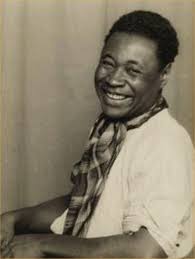
Claude McKay: “The Shadow-Fact with Which I Strove”

Photographers Unknown, The Shadow-Fact with Which I Strove

I
Not once in all our days of poignant love,
Did I a single instant give to thee
My undivided being wholly free.
Not all thy potent passion could remove
The barrier that loomed between to prove
The full supreme surrendering of me.
Oh, I was beaten, helpless utterly
Against the shadow-fact with which I strove.
For when a cruel power forced me to face
The truth which poisoned our illicit wine,
That even I was faithless to my race
Bleeding beneath the iron hand of thine,
Our union seemed a monstrous thing and base!
I was an outcast from thy world and mine.

II
Adventure-seasoned and storm-buffeted,
I shun all signs of anchorage, because
The zest of life exceeds the bound of laws.
New gales of tropic fury round my head
Break lashing me through hours of soulful dread;
But when the terror thins and, spent, withdraws,
Leaving me wondering awhile, I pause–
But soon again the risky ways I tread!
No rigid road for me, no peace, no rest,
While molten elements run through my blood;
And beauty-burning bodies manifest
Their warm, heart-melting motions to be wooed;
And passion boldly rising in my breast,
Like rivers of the Spring, lets loose its flood.

Claude McKay, One Year After, 2003

Born in Sunny Ville, Jamaica, in 1889, Festus Claudius McKay was poet and writer, one of the key figures in the literary movement of the 1920s Harlem Renaissance. His work ranged from vernacular verse celebrating peasant life in Jamaica to poems which protested racial and economic inequities. 

Proud of his African heritage, Claude McKay’s early interests were in the study of English poetry. He received his formative education under the tutelage of his brother, schoolteacher Uriah Theophilus McKay, and a local Englishman Walter Jekyll, who advised aspiring poet McKay to write verse in the Jamaican dialect. McKay’s studies were based in the British classic writers, such as Milton and Pope, and the later Romantic authors. McKay also studied the writings of philosopher Arthur Schopenhauer, whose works Jekyll was translating into English.

In 1906, McKay spent a year in Brown’s Town and the Jamaican capital of Kingston; but, after encountering extensive racism, he returned to Sunny Ville. In 1912, McKay published through a London company two collections of verses portraying opposing aspects of Black life inJamaica:“Songs of Jamaica” and “Constab Ballads”. His “Songs of Jamaica” presented a celebration of Jamaican peasant life and the people’s connections to the land. McKay’s “Constab Ballads”, however, portrayed a bleaker outlook on the plight of Black Jamaicans and was explicitly critical of the discrimination in urban Kingston. 

For his “Songs of Jamaica”, Claude McKay received an award and a stipend from the Jamaican Institute of Arts and Sciences, which he used to travel to America in 1912. He studied briefly at Kansas State College, but left in 1914 for New York City where he worked various menial jobs and continued writing poetry. In 1917, McKay published two poems in the short-lived periodical “Seven Arts”; a few years later, he published poems in the “Liberator” magazine. among these was his famous “If We Must Die”, a response to mob attacks by white Americans upon Afro-American communities during the ?Red Summer” from April to November of 1919.

McKay began a two year period of travel and work abroad, which began with a stay in Holland and Belgium, before moving to London and working at the “Workers’ Dreadnought” periodical, published on behalf of the East London Federation of Suffragettes. In 1920 he published his third collection of poetry, “Spring in New Hampshire”, notable for containing  “Harlem Shadows”, a poem of the plight of Black sex workers in the degrading urban city. 

Returning to the United States in 1921 McKay involved himself in various social causes. His 1922 anthology collection of poems, “Harlem Shadows”, assured his stature as a leading member of the Harlem Renaissance. Working on behalf of Blacks and laborers, McKay became involved with the Universal Negro Improvement Association and produced several articles for its publication. His travels took him to Paris, where he was hospitalized for a severe respiratory infection; upon recovery, McKay  traveled for the next eleven years, touring Europe and northern Africa. 

During this travel period, Claude McKay published three novels and a short story collection. His first novel, the 1928 “Home to Harlem”, tells the story of two black men, one who represents the instinctual aspect of an individual and, the other, the intellectual perspective, whose lives in Harlem are affected with either happiness or despair. This social-realist novel detailed a portrait of the hardships of Black urban life and recounted  different ways of rebelling against its ensuing circumstances. 

Mc Kay followed this book with the 1929 “Banjo” A Story without a Plot”, a novel about Banjo, a Black vagabond living in the French port city of Marseilles, who embodies the largely instinctual way of life, and Ray, a struggling, intellectual artist conventionally employed. The two men, always dissatisfied and disturbed by their limited roles in the racist society of Marseilles, cope with their problems in their own way, but both eventually decide to leave the city. 

In his third novel “Banana Bottom”, McKay presented a more incisive exploration of the Black individual’s quest for cultural identity in the face of racism, and explored the underlying racial and cultural tensions. In this story, the protagonist was a Jamaican peasant girl, who with pride and independence, fled the oppressive racist society in which she was forced to live and returned to an idealized peasant Jamaican environment.

During his final years abroad, Claude McKay published his 1932 “Gingertown”, a collection of twelve short stories, six of which were addressed to Harlem life and dealt with Black exploitation, and six stories which were set in Jamaica and North Africa, McKay’s last home before his return to the United States. Upon his return to Harlem in the mid-1930s, he began work on an autobiography, “A Long Way from Home”, a work published in 1937 about his challenges as a Black man in society.

Developing a keen interest in Catholicism after his disillusionment with Communism in the late 1930s, McKay became active in Harlem’s Friendship House, a missionary movement and a leading proponent of interracial justice. His work with the organization inspired his 1940 non-fiction historical treatise “Harlem: Negro Metropolis”, an account of the black community in Harlem during the 1920s and 1930s. McKay later moved to Chicago and worked as a teacher for a Catholic organization. 

In 1943, McKay started “Cycle Manuscript”, a collection of forty-four poems, which were never published; this important document remains as a typescript at the Beinecke Library of Yale University. By the middle of the 1940s, McKay’s health had deteriorated. He endured several illnesses throughout his last years and eventually died of heart failure in May of 1948. Claude McKay was buried at Calvary Cemetery in Queens, New York. 

Notes: An extensive collection of Claude McKay’s poetry can be found at: https://www.poemhunter.com/claude-mckay/poems/

An interesting read is “A Love So Fugitive and So Complete: Recovering the Queer Subtext of Claude McKay’s Harlem Shadows” by Lindsay Tuggle of the University of Sydney (originally printed in the journal “The Space Between; Literature and Culture 1914-1945”) which is located at: https://www.monmouth.edu/department-of-english/documents/a-love-so-fugitive-and-so-completerecovering-the-queer-subtext-of-claude-mckays-harlem-shadows.pdf/

Hans Mauli

Black and White Photography of Hans Mauli

Born in Switzerland in 1937, Hans Mauli studied graphic design at university for a career. In the late 1960s, he worked in New York for the celebrated American graphic designer Herb Lubain and was the designer of the art-deco typeface ITC Avant Garde, the font used for the World Trade Center signage. Mauli also worked for Young & Rubicam, a global full-service advertising agency in Paris, and in other world-wide cities including Copenhagen, London, New York, and Paris between the years 1971 and 1991.

Though graphic design was his profession, Mauli always had a passion to be a professional photographer. He moved to the United States in 1991 to focus on his career in photography. Mauli has produced a number of photographic series including: Chinese New Year, Portraits, Italy, Paris, Still Lifes, and two series on life in San Francisco. Recently he has done a series of shoots covering Napa Valley and Saint Helena, including the 2020 Glass and lightning fires in California.

For more information and images of Hans Mauli’s work visit the artist’s site located at: http://www.hansmauli.com

George Daniell


The Photography of George Daniell

Born in May of 1911 in Yonkers, New York, George Daniell was an American photographer and a painter. His experience in the dramatic landscape of his childhood was the genesis that led to his passion for black and white photography’s cinematic effects. Taking a keen interest in a variety of subjects throughout his life, Danielle shot photos of dock workers in New Brunswick, crabbers on the Hudson, swimmers at Glen Island Beach and ballet dancers on Fire Island, all of which to him presented a fierce and tender celebration of the angular male figure.

George Daniell began his artistic career with a folding Kodak camera and a drawing class at the Grand Central Art School in New York City. He trained as a painter at Yale University, where he graduated in 1934 earning a Bachelor of Arts Degree in Painting and Photography. After returning to Yonkers, Daniell began photographing fishermen and bathers along the banks of the Hudson River, traveling further to Glen Island, Jones Beach, and Fire Island on subsequent excursions. Moving to New York City and attending courses at the Art Students League, he supported himself as a freelance photographer for publications such as “Time” and “Life” magazines.

In the summer of 1937, Daniell traveled north to Maine, first visiting the art colony at Ogunquit and then continuing up the coast to Monhegan Island. Developing his eye for composition and tonal values, he shot many images of Monhegan’s distinctive houses, rugged terrain, and working fishermen. The publication of many of these Monhegan  images in both “Time” and “Life” earned Daniell a reputation as an artist with a keen sense for recognizing the human moments within everyday life. He followed this project in the following year with an internationally acclaimed photo essay about the lives of herring fishermen living on Grand Manan Island, off the coast of New Brunswick.

In 1940 in New York, George Daniell continued his studies of painting at Bronx’s American People’s School, after which he served from 1942 to 1944 in the US Army during World War II.  After his discharge he returned to New York City, purchased a house on Fire Island, and continued his freelance photography career. Soon after resuming his work, Daniell met and fell in love with realist-expressionist painter and gallery owner Stephen Dorland. The couple  moved in 1960 to Trenton, Maine, near Acadia National Park, to paint and to start a country life together; over the next forty years, they would travel and paint together.

George Daniell’s association with renowned photographer and owner of the famous “291” Gallery,  Alfred Stieglitz, would lead to his most known series of work, the celebrity portraits. Meeting Georgia O’Keeffe at the gallery would result in two famous intimate photo shoots, one in 1948 at Daniell’s Fire Island house and one in 1952 at O’Keeffe’s Ghost Ranch in New Mexico, which formed a lasting friendship between the two. Some of the famous subjects included in this celebrity series were landscape painter and friend John Marin, photographer Berenice Abbott, writer Tennessee Williams, and actors Robert De Niro and Greta Garbo. 

Over the course of his career, George Daniell spent a considerable amount of time traveling abroad, completing two around the world excursions. Between 1950 and 1954, he photographed many street scenes and images of the local people in Rome and Florence. Returning to Italy for two months in 1955, Daniell shot a series of images depicting  the streets and countryside of devastated postwar Italy; he also shot a series of portraits on the movie sets of Rome’s Cinecittà Studios. Marked by a distinct sense of sensuality and interest in his subjects, these two series, which Daniell considered his favorite work, combined his democratic vision and his recognition of the celebrity.

Affected by Stephen Dorland’s death in October of 1983 and suffering from depression, George Daniell was hospitalized and shortly after suffered a stroke which limited his mobility. Drawn to the dark and deep tones of the North Atlantic Coast, which coalesce in his early paintings, Daniell moved to Bar Harbor, Maine where he returned to painting. He continued working as a photographer and painter until his death on September 14, 2002 at the age of ninety-one.

The George Daniell Museum located in South Beach, Florida, houses a full collection of George Daniell’s work which covers the years from 1920 to 1991, and includes paintings, aquarelles, and his more personal photographs. The collection was recently unearthed by his estate and was presented through the cooperation of the German organization Zentraldepot, a security facility with conservators and restorers.

Top and Bottom Insert Images: Self Portraits of George Daniell, George Daniell Estate

Middle Insert Image:  George Daniell, “Steve Dorland in Acapulco”, 1944, Silver Gelatin Print, 34.5 x 23.1 cm, George Daniell Estate 

Randall Mann: “The Pool Shark Lurked”

Photographers Unknown, The Pool Shark Lurked

Like eelgrass through a glass-
bottom boat on the Silver River,
I see the state, obscured yet pure. Derision,

a tattooed flame crackling
underneath the lewd, uncool
khaki of an amused park worker.

I was the sometimes boy on a leash,
my sliver of assent in 1984 —
as if it were my decision.

The I-75 signage, more than metaphor.
As if I had the right to vote.
The slumber parties then were hidden wood;

the tea so sweet, the saccharin
pink and artificial, like intelligence.
The science sponsored in part by chance.

I made my acting debut with the red
dilettante down the street, “Rusty” Counts,
in Rusty Counts Presents: Suburbs of the Dead,

straight to VHS. My parents phoned a counselor.
A palmetto bug read Megatrends on the fold-
ing chair by our above-ground swimming pool …

The pool shark lurked, but not to fear.
The end unknowable, blue, inmost, and cold,
like the comfort of a diplomatic war.

—Randall Mann, Florida, Poetry, October 2015

Born in Provo, Utah, in January of 1972, Randall Mann is an American poet, the only son of Olympic medalist Ralph Mann. He spent his younger years in Kentucky and Florida, a time in which he was encouraged to read a wide range of literature. In his senior years in high school, Mann’s teachers supported his writing of poetry which he continued into his college years. Mann graduated with a BA and a MFA from the University of Florida. Since 1998 he has lived in San Francisco.

Randall Mann’s poetry is mostly influenced by the English poet Philip Larkin, whose poems are most often reflections of plainness and skepticism, the 1980 Pulitzer Prize Poetry winner Donald Justice who shared his insight into loss and distance, American poet Elizabeth Bishop whose work is formed with precise description and poetic serenity, and Chilean poet Pablo Neruda whose two-volume “Residencia en la Tierra” made him a renowned international poet.

In his work, Randall Mann explores the themes of loss, expectation, brutality, attraction, and the unabashed experiences of living a gay life. He is accomplished in the formalist design of the poem and has a witty sense in where he places his line-breaks. Mann projects a wide range of emotions in his work which is emphasized by the word choice he uses to set the poem’s tone. Usually set in the countrysides around San Francisco or in Florida, his poems often reflect the contrasts between the countryside beauty and the serious social problems inside city life, which includes the spreading of homelessness and random criminal attacks against the gay community.

Mann’s collections include the 2004 “Complaint in the Garden”, which won the Kenyon Review Prize in Poetry; “Breakfast with Thom Gunn”, published in 2009 and a finalist for the Lambda Literary Award for Gay Poetry and the California Book Award; the 2013 “Straight Razor”, a finalist for the Lambda Literary Award, and “Proprietary” published in 2017 and a finalist for the Northern California Book Award and Lambda Literary Award.

In addition to his poetry collections, Randall Mann is the author of “The Illusion of Intimacy: On Poetry”, a 2019 book of criticism in which Mann applies his attention to language, fearlessness, and sharp wit to a collection of musings, reviews, autographical sketches, and readings on the art of poetry. Mann also co-authored the seventh edition of“Writing Poems”, which was published in 2007.

A small collection of Randall Mann’s poetry can be found at the Poetry Foundation located at: https://www.poetryfoundation.org/poets/randall-mann#tab-poems

Mutsuo Takahashi: “Clean as Leather, Lustful as a Lily”

Photographers Unknown, The Parts and Pieces Making a Whole: Set Eleven

“Sleeping Wrestler
You are a murderer
No you are not, but really a wrestler
Either way it’s just the same
For from the ring of your entangled body
Clean as leather, lustful as a lily
Will nail me down
On your stout neck like a column, like a pillar of tendons
The thoughtful forehead
(In fact, it’s thinking nothing)
When the forehead slowly moves and closes the heavy eyelids
Inside, a dark forest awakens
A forest of red parrots
Seven almonds and grape leaves
At the end of the forest a vine
Covers the house where two boys
Lie in each others arms: I’m one of them, you the other
In the house, melancholy and terrible anxiety
Outside the keyhole, a sunset
Dyed with the blood of the beautiful bullfighter Escamillo
Scorched by the sunset, headlong, headfirst
Falling, falling, a gymnast
If you’re going to open your eyes, nows the time, wrestler”

—Mutsuo Takahashi, Sleeping Wrestler, Poems of a Penisist, 2012

Born in December of 1937 in the Fukuoka Prefecture of Japan, Mutsuo Takahashi is a poet, essayist and writer, known especially for his open writing about male homoeroticism. He spent his early years in the countryside of Japan. At three months old, Takahashi lost his father to pneumonia and was left, along with his sisters, by his mother in the care of his grandparents. After his mother returned from mainland China, the family moved to the port town of Moji, just as the air raids by the Allied Powers of World War Two intensified. It was at this time, watching the war in action with his classmates, that Takahashi  became aware of his sexual identity, which became a common subject in his first book of poetry published in 1959.

Takahashi graduated from the Fukuoka University of Education, after which he moved to Tokyo in 1962. He continued writing poetry while employed at an advertising company. His first book, published in 1964, was “Rose Tree, Fake Lovers”, an anthology that described male to male erotic love in bold and direct language. Takahashi sent the collection to novelist Yukio Mishima who helped promote Takahashi’s work; a close relationship and friendship resulted that lasted until Mishima’s suicide in 1970.

During the 1960s and 1970s, there was a large existential trend in the literature and culture of Japan, which included an interest in eroticism. In collaboration with his two friends, surreal poet Chimako Tada and poet Shigeo Washisu, Mutsuo Takahashi created the literary journal “The Symposium (Kyōen)”, named after Plato’s famous dialogue.

Written in free verse through the 1970s, Takahashi’s poetry used homoeroticism as an important theme. An example of this is his long poem Ode (Homeuta)”, an epic one-thousand line erotic fantasy poem published by Winston Leyland. He also started writing prose at this time: the 1970 “Twelve Views from the Distance” about his early life, a 1972 surrealistic novella based on his trip to the gay underground of New York City entitled “A Legend of a Holy Place”, and the 1974 “Zen’s Pilgrimage of Virtue”, a homoerotic and humorous retelling of the Buddhist legend of Sudhana.

Traveling through the world, Mutsuo Takahashi broaden his themes by incorporating his knowledge of the history of world literature and art, often including poems of homage to important writers in his collections. In 2010, he produced a small book of poems to accompany an exhibition which presented the work of American assemblage artist and filmmaker Joseph Cornell. Still actively using free style verse,Takahashi also wrote traditional Japanese verse and novels, Nō and Kyōgen plays, works of literary criticism, and a libretto written for an opera by composer Akira Miyoshi.

Residing presently in the seaside city of Zushi, Mutsuo Takahashi has been the recipient of a number of literary prizes in Japan, including the Yomiuri Literay Prize, the Takami Jun Prize, the Modern Poetry Hanatsubaki Prize, and, in 2000, the prestigious Kunshō Award fo his contributions to modern Japanese literature.

Arlene Gottfried

Photography by Arlene Gottfried

Born in August of 1959 in Coney Island, New York, Arlene Gottfried was a photographer who recorded scenes of ordinary life in some of New York City’s more impoverished neighborhoods. At the age of nine, Arlene Gottfired’s family moved to the Crown Heights area where its Puerto Rican culture caught her attention and expanded her world view. Later in the 1970s, her family moved to the Alphabet City neighborhoods of the East Village and the Lower East Side of Manhattan. 

Arlene Gottfried studied photography at the Fashion Institute of Technology where she was the only woman in her class. She later moved to Manhattan as a photographer for an advertising agency, where she did commercial work which at that time was a male-dominated profession. Switching to freelance work, Gottfried began shooting images for publications such as LIFE, the Village Voice, The New York Times Magazine, TIME, CBS News, and London’s The Independent. Her freelance work gave her the time and opportunity to wander the streets, always carrying a camera, and shoot her images spontaneously. 

Gottfried’s subjects are consistently depicted with a sense of intimacy and curiosity, in which strangers are indistinguishable from friends. In every frame, no matter how tough the subject matter, there is never a sense of detached irony or coolness. She approached all her subjects with careful empathy and directness.

Gottfried produced several series of importance including the 1991 “The Eternal Light” series on the Eternal Light Community Singers, a choral group on the Lower East Side which she later joined, and her 2016 series “Mommie”, her last collection and an epic compilation containing forty years of work documenting the women in her family. Gottfried, a frequent visitor of the Nuyorican Poets Cafe, was accepted into the Nuyorican downtown culture and documented her close friend Midnight’s years-long struggle with mental health problems in her 2003 series “Midnight”.

In 2008, a retrospective of Gottfried’s earlier black and white work was published as “Sometimes Overwhelming” by PowerHouse Books. Her “Barcalaitos and Fireworks”, a collection of images of New York’s Puerto Rican community in the 1970s, inspired by its poetry and music, was published in 2011. 

Through her life, Arlene Gottfried continued to capture the excitement of everyday life in New York City. She died from complications of breast cancer, surrounded by friends and family. in August of 2017 at her home. Gottfried’s photographs are held in the collections of The Brooklyn Museum; The Jewish Museum; The Tang Teaching Museum, The North Carolina Museum of Art; and the New York Public Library.

John Rechy: “The Coming of the Night”

Photographers and Artists Unknown, The Coming of the Night, Gay Film Gifs

“Did those “new gays” spinning about like giddy tops in discos care to know that dancing with someone of the same sex was punishable as “lewd conduct” then? Still, a club in Topanga Canyon boasted a system of warning lights. When they flashed, lesbians and gay men shifted—what a grand adventure!—and danced with each other, laughing at the officers’ disappointed faces! How much pleasure—and camaraderie, yes, real kinship—had managed to exist in exile. Did those arrogant young people know that, only years ago, you could be sentenced to life in prison for consensual sex with another man? A friend of his destroyed by shock therapy decreed by the courts. Another friend sobbing on the telephone before he slashed his wrists— Thomas’s hands on his steering wheel had clenched in anger, anger he had felt then, anger he felt now. And all those pressures attempted to deplete you, and disallow— “—the yearnings of the heart,” he said aloud. Yet he and others of his generation had lived through those barbaric times—and survived—those who had survived—with style.”

—John Rechy, The Coming of the Night

Born in March of 1931 in El Paso, Texas, during the Depression, John Francisco Rachy is a writer, playwright, essayist and literary critic. He attended Texas Western College, where he earned his bachelor’s degree in English. Rachy continued his education at the New School for Social Research in New York City, studying under Hiram Haydn, a Random House senior editor. Rachy’s semi-autobiographical works explore the world of social and sexual outsiders and draw upon his gay sexuality and Mexican-American heritage.

John Rachy’s writing career began with the short story “The Fabulous Wedding of Miss Destiny”, a gay-oriented story which received the Longview Foundation Fiction Prize in 1961. His first published work, the largely autobiographical novel “City of Night”, was published in 1963 by Grove Press. The novel chronicles the journey of a young Mexican-American from the border town of El Paso into the gay underworld of Times Square, Hollywood Boulevard and the French Quarter of New Orleans during the 1950s. Selling sixty-five thousand hardcover copies, it remained on the New York Times best-seller list for twenty-five weeks and became an international bestseller. 

Following the success of “City of Night”, John Rachy has written a large body of work, both fiction and non-fiction. Among his fiction works are: the “Numbers” published in 1967;; “Rushes” published in 1979; the 1999 “The Coming of the Night”; and the 2017 “After the Blue Hour”. Rachy’s non-fiction works include the 1977 “The Sexual Outlaw”, an account of three days and nights in the 1970s sexual underground of Los Angeles, and the 2004 “Beneath the Skin”, an anthology of his essays and literary reviews from The New York Times, Evergreen Review, The Nation, and other publications.. 

The first novelist to receive PEN-USA-West’s Lifetime Achievement Award in 1997, John Rachy is also the recipient of the 1999 Bill Whitehead Award for Lifetime Achievement presented by Publishing Triangle, an American association of gay men and lesbians in the publishing industry. He is currently a faculty member at the Master of Professional Writing Program at the University of Southern California. In 2018 Rachy’s 2017 novel “After the Blue Hour” won the Lambda Literary Award for Gay Fiction.

Note:  An interesting read is biographical author Charles Casillo’s 2002 “Outlaw: The Lives and Careers of John Rechy”, a book which examines the dichotomy of John Rechy’s life as both a respected author and professor, and a hustler on Hollywood Boulevard, with insights from Rachy himself and his family, friends,  and colleagues.

Jameson Fitzpatrick: “A Poem for Pulse”

Photographers Unknown, A Poem for Pulse

“We must love one another whether or not we die.

Love can’t block a bullet

but it can’t be destroyed by one either,

and love is, for the most part, what makes Us Us—

in Orlando and in Brooklyn and in Kabul.

We will be everywhere, always;

there’s nowhere else for Us, or you, to go.

Anywhere you run in this world, love will be there to greet you.

Around any corner, there might be two men. Kissing.” 

—Jameson Fitzpatrick, A Poem for Pulse, Excerpt, Bullets into Bells: Poets and Citizens Respond to Gun Violence, 2017

Poet and professor, Jameson Fitzpatrick holds a BA and an MFA from New York University, where he now teaches in the Expository Writing Program. His verse defines the cutting edge of contemporary American poetry, telling and retelling the regularity and specificity of contemporary gay experience.

Fitzpatrick’s first publication was the 2014 chapbook “Morrisroe: Erasure” which consists of twenty-four erasures of texts describing a hookup by the avant-garde photographer Mark Morrisroe, who was a pioneer for the more direct, intimate and confrontational, late twentieth-century queer art. Fitzpatrick’s chapbook, inspired by a “man of a certain age” whom he loved, explores the art of those lost to AIDS.

Jameson Fitzpatrick’s second work was the 2018 chapbook “Mr. &” which is centered on the long title poem whose sections purposely slide into one another with slips in logic and lurching sequence structure. The shorter poetic pieces present a modernist view of marriage as a politically ambiguous institution, recently also available to same-sex couples. 

His most recent publication is the 2020 “Pricks in the Tapestry”, published by Birds, LLC, a small independent poetry press. The book is a record of Jameson Fitzpatrick’s feelings and thoughts of his life during his mid-to-late twenties, which shows the difficulties a poet has using the self as the subject in a lyric form, Written from the narrative base of Cherry Grove and the Fire Island Pines of Long Island, New York, the characters are placed between the time-held, orgiastic perception of the area and its immense artistic history.

Jameson Fitzpatrick’s poems have appeared in The American Reader, The Awl, The Literary Review, Best New Poets 2017, The New Yorker, and Poetry magazine, among other publications. He is a 2017 NYSCA / NYFA Fellow in Poetry and currently lives in New York City.

Notes: The complete “A Poem for Pulse” can be found at the website “All Your Pretty Words” located at: https://allyourprettywords.tumblr.com/post/145923858388/a-poem-for-pulse-jameson-fitzpatrick

David Felsenthal’s Interview-discussion with Jameson Fitzpatrick on his  “Pricks in the Tapestry” can be found at the online magazine “The Believer” located: https://believermag.com/logger/a-review-of-pricks-in-the-tapestry-by-jameson-fitzpatrick/