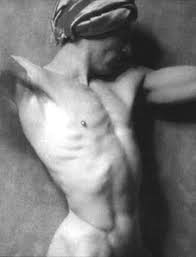
Maurice Sendak: “Where the Wild Things Are”

Photographers Unknown,  Where the Wild Things Are

Max stepped into his private boat
and waved goodbye
and sailed back over a year
and in and out of weeks
and through a day
and into the night of his very own room
where he found his supper waiting for him
and it was still hot”

—Maurice Sendak, Where the Wild Things Are

Born to Polish Jewish immigrant parents in Brooklyn, New York, in June of 1928, Maurice Bernard Sendak was an American writer and illustrator of children’s books. He was affected in his childhood by the deaths of many of his extended family who perished in the Holocaust. An early reader of books, Sendak decided at the age of twelve to become an illustrator after seeing Walt Disney’s film “Fantasia”.

Sendak started his professional career with the creation of window displays, one of which was in the toy store FAO Schwarz located on Fifth Avenue in Manhattan. His first published illustrations, a series of figures explaining the atom and its energy, were in the 1947 textbook “Atomics for the Millions” written by Maxwell Leigh Eidinoff. In the 1950s, Sendak illustrated children’s books written by other authors, including two books written by his older brother, author Jack Sendak, and the “Little Bear” series of books written by Danish-American author Else Holmelund Minarik.

In 1956 Maurice Sendak published his first authored book, “Kenny’s Window”. and soon started working on second effort, for which he was inspired to use the Yiddish expression ‘vilde chaya”, or wild animals, to indicate overexcited children. Sendak’s authored and illustrated 1963 children’s book “Where the Wild Things Are” received international acclaim. Initially banned for two years by libraries and critiqued negatively, the book won the annual Caldecott Medal in 1964 for recognition as the most distinguished American illustrated book for children. Since its publication, it has sold over nineteen million copies worldwide.

Sendak illustrated Isaac Bashevis Singer’s first children’s book “Zlateh the Goat and Other Stories, which was published in 1966 and received the Newbery Honor for children’s literature. He authored and illustrated the 1970 “In the Night Kitchen”, a young boy’s dream journey through a surreal baker’s kitchen, one of a trilogy of books which contains “Where the Wild Things Are” and the 1981 “Outside Over There”. Illustrated in a different style from his previous works, the book is mainly pictorial with few captions. “In the Night Kitchen”, with its depiction of the young protagonist’s nudity, was controversial upon its release and is still ranked as one of the most frequently challenged books. 

Maurice Sendak’s works included many in the fields of television and stage. He was active in the development of the “Sesame Street” series, and wrote and designed four stories for the series, including an adaption of his book “Bumble Ardy” into an animated film. Sendak adapted his “Where the Wild Things Are’ into a stage production in 1979, and also designed sets for many operas and ballets, including Tchaikovsky’s “The Nutcracker:, Mozart’s “The Magic Flute”,  and Prokofiev’s “The Love for Three Oranges”.

In 1957, Maurice Sendak met his partner, psychoanalyst Eugene Glynn, with whom he remained for fifty years until Glynn’s death in May of 2007. After his partner’s death, he donated one million dollars to the Jewish Board of Family and Children’s Services in memory of Glynn, who had treated children and young adults there. While his sexuality was known among his friends, Sendak kept his sexuality from public view for almost his entire life. When the social climate regarding homosexuality began to change, he  came out, at the age of eighty years old, during a 2008 interview with the New York Times.

Considered one of the most important children’s book artists of the twentieth century, Maurice Sendak died on May 8th of 2012 at the Danbury Hospital in Conneticutt from stroke complications. His body was cremated and his ashes scattered at an unconfirmed location. Under an agreement with, and supported by a grant from, the Maurice Sendak Foundation, his original artwork, sketches, books, and other materials, totaling close to ten thousand items, are housed at the University of Conneticutt’s Archives and Special Collections in the Thomas J Dodd Research Center.

Osmar Schindler

Osmar Schindler, “The Victor”, Date Unknown, Oil on Canvas, Dimensions and Location Unknown

Osmar Schindler, “Germanic Warrior with Helmet”, 1902, Oil on Canvas, 99 x 79 cm, Private Collection

Born in the village of Burkhardtsdorf in December of 1867, Osmar Schindler was a German painter whose works were a mixture of Art Nouveau and Impressionism. With the financial support of an uncle, he attended the Dresden Art Academy where he studied under Belgian historical painter Ferdinand Pauwels and German portrait painter Leon Pohle. Among his fellow students were Art Nouveau painter Hans Unger and, sculptor and  painter Sascha Schneider.

Schindler traveled throughout Europe during his early life and, by 1895, had visited Belgium, the Netherlands, France, and Italy. His work in this period displayed his interest in classical forms, the nude, and allegorical scenes. In 1897, Schindler designed  the poster for Dresden’s International Art Exhibition and, in 1900, was appointed a professor at the Dresden Art Academy. There he  taught life modeling and draftsmanship, a position which he held for the remainder of his life. 

At the 1901 Dresden International Art Exhibition, Osmar Schindler exhibited and received a gold medal for his oil painting “Im Kumtlampenschein (Changing the Horse Collar by Lamp Light)”. He received a bronze medal for his mythological painting “Hercules” at the 1904 Dresden exhibition and, in the same year, exhibited his earlier 1888 lithograph “David and Goliath” at the Saint Louis World’s Fair Exposition. Schindler also produced several portraits including those of Christian Otto Mohr, a pioneer in structural engineering, and Herman Prell, a well-admired professor at the Dresden Academy. 

Aware of the artistic styles of his time, Osmar Schindler opened himself to the ornamental design of Art Nouveau and the abstract brushstrokes of the Impressionists. He died on June 19th of 1927 in Dresden, at the age of fifty-nine, and is buried at Loschwitz Cemetery, a burial place of numerous artists of national significance. 

Insert Images:

Osmar Schindler, “Siegfried”, Date Unknown, Oil on Canvas, 138 x 78 cm, Private Collection

Osmar Schindler, Illustration, Dresden 1897 International Art Exhibition, Lithograph, 75 x 94 cm, Private Collection


Hubert Julian Stowitts

The Photographs and Artwork of Hubert Julian Stowitts

Born in Rushville, Nebraska, in June of 1892, Hubert Julian (Jay) Stowitts was an American painter and ballet dancer. Raised in the Lakota Souix area of South Dakota, he moved with his family to Los Angeles in 1911. Upon his arrival, Stowitts enrolled at the University of California, Berkeley, where, as a gay student, he became a successful college athlete, captained the university’s track team, and acted in several student theater productions. 

Captivated by a ballet performance seen in San Francisco, Stowitts decided to begin private dance lessons. He became an accomplished dancer and performed both on the public stage and at private parties for  San Francisco’s upper class residents. Stowitts kept his dancing secret from his parents for much of his college years; he graduated from the University of California in 1915 with a degree in Commerce. 

In the summer of 1915, while dancing at the Greek Theatre, a large amphitheater owned by the University of California, Julian Stowitts impressed Russian ballerina Anna Pavlova who was in attendance. He accepted an invitation to join her dance company and dropped plans to attend graduate school at Harvard. Stowitts, the first American to star with a Russian ballet troupe, traveled as a successful dancer for six years throughout Europe and the Americas. Leaving Pavlova’s company, he moved to Paris and started a solo career with performances throughout Europe, including a starring role with the Folies Bèrgere in 1924.

During his solo career, Stowitts executed choreographies for other dance companies, designed sets and costumes, and continued  his painting. In 1925 at the age of thirty-three, he retired from dancing and pursued a new career as a painter and occasional film actor. Stowitts traveled through the Far East in the late 1920s, where he lived and painted  in Java for a year. After a stay in Indonesia, he lived in the southern part of Asia for several years and, during this stay, created a series of one hundred and fifty-five canvases entitled “Vanishing India”. After his return to Europe in 1931, Stowitts’s  painted depictions and scholarly studies of traditional Indonesian and Indian dance and costume enjoyed wide popularity in the 1930s.

For the art exhibition at the 1936 Berlin Olympics, Julian Stowitts presented a series of fifty-five paintings depicting American male athletes in the nude, which caused a sensation among the attendees. While in Berlin, he assisted German film director Leni Reifenstahl on her “Olympia”, released in 1938 as the first feature film documentary of an Olympic Games, later used by the Nazis as a propaganda film. Due to her fame and influence, Riefenstahl was able to protect Stowitts from persecution for being gay; but his exhibition was closed by the Nazi regime because of their objection to the manner in which Stowitts depicted Jewish and African-American athletes. 

Returning to California in 1937, Stowitts struggled financially as his artwork began to lose public interest. He found, with the assistance of friends, some security with employment as a house caretaker in the Los Angeles area. Stowitts continued to lecture on Indian and Javanese culture and to paint privately for the remainder of his life. The last of his painting series, uncompleted due to illness, was “The Labors of Hercules”, in which actor and body builder Steve Reeves served as the model. Hubert Julian Stowitts died in San Marino, California on February 8, 1953.

The papers of American dancer and painter Hubert Julian Stowitts, including biographical materials, correspondence, and exhibition and performance related materials are available for research at the Bancroft Library of the University of California, Berkeley. 

Mick Namarari Tjapaltjarri

Mick Namarari Tjapaltjarri, “Untitled (Yam Story)”, 1972, Acrylic on Board, 65 x 44 cm, Private Collection 

Mick Namarari Tjapaltjarri, “Tingari”, 1988, Acrylic on Belgian Linen, 121 x 180 cm, Private Collection

Born at Marnpi located in Australia’s Northern Territory in 1926, Mick Namarari Tjapaltjarri is one of the most important painters to emerge from Australia’s Western Desert. He was one of the foundation members of the art movement that emerged in Papunya Tula. While many of his peers painted according to stylized conventions, Namarari’s work is distinguished by an extraordinary range of visual inventions.

As a boy, Namrari was taken by his parents on traditional travels throughout the local area, including north to Nyunmanu, a major dingo dreaming site, south to Lake Neal,  and northwest to the Warnman Rocks and Warhungurru, a remote settlement in the Kintore Range of the Northern Territory. Following the murder of his father by a Aboriginal avenger group and his mother’s resulting suicide by fire, Namarari, along with his sister, fled the desert and traveled east to the safety of the Lutheran Hermannsburg Mission. 

In 1932, Namarari had his first associations with Australians of European background and began to attend the Hermannsburg Mission School. While attending the school, he became acquainted with the work of Aboriginal artist Albert Namatjira and his fellow Western Aranda landscape painters. At the age of eleven, Namarari began stock work for cattleman Billy MacNamara at a cattle station located near the early settlement of Areyonga, where he later became initiated in a ceremony that signified his manhood. With the establishment of cattle stations at Haasts Bluff in the 1950s and, later, at Papunya in the 1960s, Namarari and his wife, Elizabeth Nakamarra Marks,  eventually moved closer to their traditional country; they would later have one daughter, Angeline Nungurrayl.  

In 1971 encouraged by Geoff Bardon, one of the founding members of the Papunya Tula Artists, Namarari, at the age of forty-five, began painting at Papunya. His early works have a bare background of a single color, most often black or rich red-brown, with most depictions related to Aboriginal Dreaming stories of the Moon. Namarari explored figuration in this early work, in which he gave equal emphasis to both the depictions of ceremonial performers and the details of the ceremonial ground with its associated sacred objects. He also created hypnotic depictions of his birthplace, Marnpi, in which he used white pulsing lines to draw the viewer’s eye into the ancestral wind’s vortex generated at the site.

Namarari’s typical work of the 1980s were gracefully controlled renditions of the classical Tingari design of linked concentric circles, which was one of that period’s keystones of Western Desert iconography. Using such tradition patterns, he developed a image series of red and white triangular and rectangular forms. By the late 1990s, Namarari was creating works often using white and yellow paint stipples applied with his fingertips. Because of the unusually large range of totemic sites for which he held responsibilities, Namarari’s later works varied widely in their depictions and in their artistic styles. In addition to the Dreaming stories of the Moon, he painted Dingo, Wind, Kangaroo, Mallee-fowl, Crow, Tingari Men, Hopping Mouse, and Bandicoot Dreamings.

In 1981, Namarari, along with two other senior Pintupi artists, were invited, at the request of former Papunya-associated people, to paint and show their work at an exhibition in Sydney. Namarari was awarded the National Aboriginal Art Award in 1991 and, in 1994, was a co-winner of the Alice Prize and became the inaugural recipient of the Australia Council’s prestigious Red Ochre Award for lifetime achievement. He became the only artist to receive all three awards. Throughout his creative artistic career of over twenty-five years, Namarari remained a loyal member of the Papunya Tula Artists Company, despite numerous offers of representation from local and national galleries. 

A reserved man and patient teacher, Mick Namarari Tjapaltjarri died in Alice Springs in August of 1998, at the age of seventy two, and left a legacy of over seven hundred paintings that illustrate his inventiveness and the cultural richness of his heritage. His work can be found in the collections of the National Gallery of Australia in Canberra, Melbourne’s National Gallery of Victoria, Darwin’s Museum and Art Gallery of the Northern Territory, and the Kluge-Ruhe Aboriginal Art Collection of the University of Virginia in Charlottesville, as well as in many private collections.

Top Insert Painting: Mick Namarari Tjapaltjarri, Tingari Cycle, 1984, Acrylic on Canvas, 55 x 70 cm, Private Collection

Bottom Insert Painting: Mick Namarari Tjapaltjarri, Children’s Dreaming with Many Body Paint Variations, circa 1972-1973, Papunya Community School Collection

Francisco Brines: “The Cause of Love”

Photographers Unknown, The Cause of Love

When they have asked me the cause of my love
I have never answered: You already know its great bearuty.
(And there are still more beautiful faces.)
Nor have I described the certain qualities of his spirit
that he always showed me in his customs,
or in readiness for silence or smile
as required by my secret.
They were things of the soul, and I said nothing about her.
(And I should still add that I have met higher souls.)
The fruit of my love now I know:
man’s imperfections overcome his presence,
it is atrocious to think
that bodies do not correspond to souls in us,
and so the grace of the spirit blinds bodies,
its clarity, the aching flower of experience,
goodness itself.
important events that we never discovered,
or we find out late.
The bodies lie, other times, an airy heat,
moved light, honda freshness;
and the damage reveals its dry falsehood to us.
Know the truth of my love now:
matter and breath joined in his life
like the light that falls on the mirror
(it was a small light, a tiny mirror);
It was a perfect random creation.
A being in order grew next to me,
and my disorder was serene.
I loved its limited perfection.

–Francisco Brines, Cause of Love

Born in Oliva, Valencia, in January of 1932, Francisco Brines Bañó was a Spanish poet and essayist. He was a prominent member of the Generation of “50, a Spanish literary movement whose new literary language incorporated metaphysical and philosophical techniques to undermine the strict censorship of the Franco government.

After studying at the Jesuits of Valencia, Francisco Brines attended the University of Madrid, where he studied Philosophy and Letters, and also the Universities of Valencia, Deusto and Salamanca, where he earned a degree in Law. He became a reader of Spanish literature at the University of Cambridge and a Professor of Spanish at the University of Oxford.

Described as a metaphysical poet, Brines was highly influenced by the work of Luis Cernuda, an openly gay poet of the Generation of ’27; inspired by these works, many of Brines’s poems also convey the theme of homosexual love. His poetry is characterized by the intimate tone of his verses, the constant reflection on the passage of time and decay of the living, and observations on the condition of a human being subjected to his own limitations. Memory also plays a fundamental role in Brines’s writing; although, his poems reveal the belief that neither poetry nor memory can endure the passage of time or save the moments of the past.

Francisco Brines’s first collection of poems, entitled “Las Brasas (Embers)”, was published in 1959 and won the 1960 Adonais Poetry Prize. In 1966, Francisco Brines published “Words in the Dark”, which earned him the National Critics Award in 1967. In the same year, he also won the Valencian Literature Award. “The Autumn of Roses’, a collection of sixty poems written over a ten year period, was published in 1986 and won the National Prize for Literature. This book, in which elegies of lamentation and exaltation merge, was his most critically acclaimed work.

Entering the world of theater, Brines revised and adapted playwright Pedro Calderón de la Barca’s 1636 drama“El Alcalde de Zalamea (The Mayor of Zalamea)”. Directed by José Luis Alonso, the play was performed by the Classical Theater Company in 1988. Told in three acts, it explored the power of a self-made man against political authority in seventeenth-century Spain,

Brines was recognized for his work by the Royal Spanish Academy in 1998 with the Fastenrath Prize and, later, received the 1999 National Prize for Spanish Letters for his poetic oeuvre. Elected a member of the Royal Spanish Academy of the Language in April of 2000, Brines gave his institutional speech on the poetry of Luis Cernuda, one of the poets who influenced his work. In 2020, he won the Premio Cervantes, the most important literary award of the Spanish language world.

Francisco Brines Bañó was taken to Gandía Hospital shortly after King Felipe VI and Queen Letizia presented him with the 2020 Cervantes Prize at his family estate in Oliva, Valencia, as he was unable to attend the official ceremony due to his delicate state of health. He died on the 20th of May in 2021, at the age of eighty-one, at Gandía Hospital, after a hernia operation.

Note: An interesting article on the homoeroticism of Francisco Brines’s poetry, long regarded as an open secret but rarely acknowledged in critical studies, entitled “Francisco Brines and the Humanist Closet” by Jonathan Mathew of the University of Kansas, can be found at: https://kuscholarworks.ku.edu/bitstream/handle/1808/7478/Mayhew_Francisco%20Brines.pdf?sequence=1&isAllowed=y

William Orpen

William Orpen, “Self Portrait on Cliff Top in Howth”, cica 1910, Black Charcoal and Gouache, 50.5 x 36.5 cm, Private Collection

Born in County Dublin in November of 1878, William Newenham Montague Orpen was an Irish draftsman and portrait painter of London’s wealthy Edwardian society. A talented figure of British-Irish Post-Impressionism, he was the youngest son of wealthy, amateur painters and a gifted student who learned rapidly from a succession of celebrated tutors. 

William Orpen was enrolled at the Dublin Metropolitan School of Art in 1891, where he studied from 1892 to 1896.  He continued his studies at London’s Slade School of Art between 1897 and 1899, under figurative painter Henry Tonks, landscape painter Philip Wilson Steer, and genre and portrait painter Frederick Brown. Having mastered oil painting and different painting techniques, Orpen’s work, during his six years of study, received many prizes including the British Isles gold medal for life drawing.

Upon graduation from the Slade School, Orpen, along with his fellow graduate, Welsh painter Augustus John,  opened in the autumn of 1903, the Chelsea Art School, a private teaching studio, near King’s Road in Chelsea. Although it was meant as a joint venture, most of the teaching and running of the school was undertaken by John, with Orpen’s chief contribution being a series of lectures on anatomy. Both male and female students were admitted to the school but, despite John’s own bohemian lifestyle, the sexes were segregated for the Life classes. The project was not a success, and, after the waning of both’s interest, the school closed in 1907.

From 1902 to 1915, William Orpen, in addition to his classes at the Chelsea School, taught at the Dublin Metropolitan School of At, where his pupils included portrait painter Margaret Clarke,  romantic-realist painter John Keating, and cartoonist Grace Gifford. In the summer of 1904, he and his friend and mentor, the gallery director and art dealer Hugh Lane, traveled to Paris and Madrid. Orpen guided Lane on the purchase of Impressionist works, and Lane, several years later, commissioned Orpen for a portrait series of notable Irish figures to be displayed at Dublin’s  Municipal Gallery of Modern Art. In 1908, Orpen began exhibiting his work regularly at London’s Royal Academy;  the work in this period was done in a distinctive open-air style that featured figures composed of touches of color.

Starting in 1912, Orpen began his successful career as a portrait painter with a series of portraits of his favorite model, Vera Brewster Hone, the wife of writer Joseph Hone. This series, of such quantity that Orpen numbered them instead of naming them, included the 1912 “The Angler” and the 1918 “The Roscommon Dragoon”, which portrayed Vera Brewster wearing a Dragoon uniform. With the support of painter John Singer Sargent, Orpen built a reputation, in both Dublin and London, as a fashionable portrait painter who presented his subjects in a traditional, polished style. He also painted several group portraits, a popular genre at the time, which include the 1912 “The Cafe Royal in London”, depicting Orpen and Augustus John,  and the 1909 “Homage to Manet”, with the subjects, including Hugh Lane and Henry Tonks, assembled before Manet’s portrait of Eva Gonzales.

In December of 1915, as World War One commenced, William Orpen was commissioned into the Army Service Corps. In January of 1917, through connections with the senior ranks of the British Army, he was given the title of an official artist, which included a promotion to major and unrestricted access to the Front areas in France. Throughout the war years, Orpen painted battle locations, trench scenes, and many portraits of both enlisted men and officers. For his work in this period, he stopped using half-tones and half-shades and adopted a new palettes of colors, with weak purples,  bright greens, and large white spaces of sunlight. Many of these war artist works are in the collection of the Imperial War Museum in London.

Both before and after the war, Orpen produced a number of realistic self-portraits. in which he used his skills as a draftsman to resolve the challenges of surface, lighting, and reflection that he set for himself. His 1910 “Myself and Cupid” was actually a painting within a painting; in this portrait, Orpen painted a table top beyond which was hung a portrait of himself sitting next to a statue of Cupid. Orpen’s 1910 self portrait, known as “Leading the Life in the West”, shows him reflected full-length in a mirror in his studio, wearing a bowler hat and holding gloves and a riding crop. An IOU note is tucked in the frame of the mirror, a testament to the pleasures and distractions of his early career. In Orpen’s 1917 self-portrait “Ready to Start”, painted shortly after his arrival in France, Orpen is inspecting himself in the mirror wearing his military uniform. The French postcards and papers on the desk in the foreground set the scene of wartime France, while the bottles of wine and spirits reference Orpen’s dependence on alcohol during the war.

William Orpen’s life after the war was never the same: he became an alcoholic, grew distant from his wife and family, and mostly painted only to support the lavish lifestyle he took up in Paris with his mistress. Despite his personal problems he was still successful and continued to exhibit widely. Orpen was made a member of the prestigious Royal Academy in 1921 and, in 1923, he received a commission to paint a portrait of Edward, Prince of Wales, for the Royal and Ancient Golf Club of St. Andrews. In 1927 he was commissioned for a portrait of Prime Minister David Lloyd George, which was posthumously entered into the National Portrait Gallery. Orpen’s work was also part of the painting event at the 1926 Summer Olympics in Amsterdam.

Orpen became seriously ill in May of 1931, and , after a period of alcohol-induced illness and memory loss, died in London, at the age of fifty-two, in September of 1931. His contribution to the teaching of Irish art has always been recognized as he helped to nurture and influence Ireland’s most important painters of the twentieth-century.William Orpen is buried at Putney Vale Cemetery in southwestern London; a commemorative stone is located in the Island of Ireland Peace Park at Messines, Belgium.

Insert Images Top to Bottom:

William Orpen, Self Portrait, 1913, Oil on Canvas, 122.9 x 89.9 cm, Saint Louis Art Museum

Sir William Orpen, “Self Portrait”, circa 1901, Colored Chalk on Dark Gray Paper, 15.5 x 10.9 cm, Private Collection

William Orpen, “Self Portrait (Ready to Start)”, 1917, Oil on Panel, 60.8 x 49.4 cm, Imperial War Museum, London

Horus

Photographer Unknown, Horus

Horus, in the ancient Egyptian religion, was one of the most important deities. The god appeared in the form of a falcon, whose left eye was the moon, representing healing, and whose right eye was the sun, representing power and the intrinsic substance of the heavenly bodies. Falcon cults were evident in late predynastic times and became widespread throughout Egypt. 

In the beginning stages of Egypt’s ancient religion, Horus was believed to be the god of war and the sky. As the religion progressed, Horus was seen as the son of Osiris and Isis, the divine child of the holy family triad. He is depicted as a falcon wearing a crown with a cobra, and later, wearing the Double Crown of the united Upper and Lower Egypt. The hooded cobra, worn by the gods and pharaohs on their foreheads, symbolized light and royalty. 

One of the oldest cultures in human history, ancient Egyptians are well-known for pioneering the fields of art, medicine, and the documentation of discoveries as mythological tales. The Egyptians mastered the integration of anatomy and mythology into artistic symbols and figures. The Eye of Horus was used as a sign of prosperity and protection, derived from the myth of Isis and Osiris. Comprised of six different parts, each an individual symbol, the Eye of Horus has an astonishing connection between neuroanatomical structure and function.

For those interested in the possible scientific speculation of the ingenuity of ancient Egyptians’ insight into human anatomy and physiology, a treatise, entitled “The Eye of Horus” by Karim ReFaey, Gabriella C. Quinones, William Clifton, and others can be found at the Cureus site, located at:https://www.cureus.com/articles/19443-the-eye-of-horus-the-connection-between-art-medicine-and-mythology-in-ancient-egypt

Virgilio Pinera: “The Waves of Music We Made”

Photographers Unknown, The Waves of Music We Made

Can it be they are going to kill?
Will they pierce the heart with a huge knife?
And with the sharpest scalpel empty the eyes?
And with the steeliest chisel break the skull?
And with the most hammer of hammers crush the bones?

Can it be that on the exotic table
–table of sex, table of love–
my love, you and I,
being startled one night
your heart spoke
when you were under my blood?
Can it be the same as it was
when it was an oath, and even more so,
your work, your word bled,
soaked by the soft perfume of kisses,
so as not to deny, to be one indivisible?
And can it be so blindly believed,
so blindly, that all the suns go dark forever
while the soul travels in darkness?
Can it be there never was a soul despite the waves of music
we made?
Soul that never was though you might be for an instant?

Renenber that instant when you were a soul and adored
me,
and then your own monster came suddenly
to take you to the place where being you were?

Can it be that after you are no longer,
when not being is merely a mound of dried out kisses,
you wil be by not being, instead of being love?

Virgilio Pinera, Poem to be Said in the Midst of a Great Silence, The Weight of the Island, 1967

Born in Cárdenas, Matanzas, Cuba in 1912, Virgilio Piñera was an author, playwright, poet, and essayist known for his avant-garde work, caustic wit, acid tongue, and bohemian lifestyle. He lived under the dual repression of the Catholic church and reactionary government leaders such as Argentina’s Juan Perón and Cuba’s Fulgencio Batista. Piñera’s homosexuality and non-conformism led to his marginalization during a well-documented period of Cuban history when homophobia and petty bureaucracy stifled creative freedom

An avid reader from an early age, which included works by Marcel Proust and Herman Melville, Piñera drew his inspiration from different genres, a foundation which became fundamental to his distinctive work with its combination of Cuban vernacular and more refined language.At the age of thirteen, Piñera’s family moved to Camagüey, a municipality located in central Cuba, where he earned his high school diploma. After settling in Havana in 1938,  he received his Doctoral Degree in philosophy from the University of Havana in 1949. 

Piñera published in his poems in Havana’s literary magazine “Espuela de Plata” and, in 1941. wrote his first poetry collection, “Las Furias (The Furies)” and  his most famous play “Electra Garrigó”, which featured the choral structure of a Greek tragedy alongside distinctive Cuban elements. Staged both before and after the revolution of Castro and Guevara, this play later became a powerful symbol of the Revolution and was consciously performed before foreign and  notable public figures as  being emblematic of the transformed nation.

Following his founding of the magazine “Poeta” in 1942, Piñera wrote his collection of poems entitled “La Isla en Peso (The Weight of the Island)”. Drawing upon episodes in his personal life as well as the social interactions occurring inside Cuba, he explored the nebulous regions between sadness and beauty, and disillusion and reality. Published posthumously after Piñera’ death in 1979, “The Weight of the Island” was initially scorned by some poets and critics; however, the collection is now regarded as one of the classics of Cuban literature.

In 1944, Virgilio Piñera, along with writer José Lezama Lima and editor and critic José Rodríguez Feo, founded the prestigious literary and arts review “Origenes”, which provided a focal point for promising poets and critics in Cuba during the 1940s and 1950s. The journal published short stories, poetry, and critical essays on art, literature, music and philosophy. Among Piñera’s contributions were several poems, an essay on Argentinian literature, and an 1945 essay entitled “El Secreto de Kafka”, a work in which Piñera developed his theory on the creation of images into a literary surprise. 

Piñera lived in Buenos Aires, Argentina, for a twelve year period from 1946 to 1958; it was  during this stay that he developed his voice as a writer. He worked as a translator and proofreader at the Cuban Embassy and became friends with writers Jorge Luis Borges and essayist José Bianco, who would write the forward to Piñera’s collection of short stories “El que Vina a Salvarme (The One Who Came to Save Me)”. Along with other writers, Piñera worked on the translation of Polish author Witold Gombrowicz’s 1937 controversial novel “Ferdydurke” into Spanish. 

Virgilio Piñera wrote two plays in Buenos Aires,  “Jesús” and “Falsa Alarma”, a fast paced, absurdist play of humor and anguish, to which he lengthened with dialogue for a later 1957 staging. His first novel, entitled “La Carne de René (René’s Flesh)”, was published in 1952 and told the dark story of a twenty-year old protagonist forced into a merciless life. After the closure of his literary review “Origenes” and the founding of his final magazine “Ciclón (Cyclone)”, Piñera left Argentina in 1958 to settle permanently in Cuba, where he arrived shortly before the Revolution. His work appeared in the newspaper “Revolución” and other numerous journals. In 1962, with the Cuban revolution in full motion, Piñera’s  most autobiographical play, “Airo Frio (Cold Air)”, a very personal celebratory work supporting the ouster of dictator Batista’s police and army, opened in Havana. 

Shortly after the opening of “Airo Frio”, Fidel Castro’s government made the decision that there was no room for any views other than those completely sympathetic to the Revolution. Intellectuals and other luminaries, as well as the religious and those youths not conforming to the revolution, were to face persecution. Virgilio Piñera, although never public about his homosexuality, was arrested under the revolutionary government’s clampdown on the prostitutes, pimps and homosexuals. By 1971, he was ostracized by the Cuban government and the literary establishment. As his career declined into obscurity. Piñera continued to write at n increased rate; however, his plays were no longer performed. 

In 1968, Piñera received Latin America’s most prestigious literary prize, the Premio Casa de las Américas, for his play “Dos Viejos Pánicos (Two Old Panics)”. Despite the award and acclaim, the play would not have its first performance in Cuba until the 1990s.  Leaving behind more than twenty plays, three novels, volumes of short stories and a vast number of poems, Virgilio Piñera, who lived the last years of his life in poverty, died of a cardiac arrest on the 18th of August in 1979, without any official recognition of his death. He is buried in his native town of Cárdenas.

As a way to redress some of the wrongs committed against Piñera in the past, Cuba declared the year 2012 as “El Añ0 Virgiliano”. In the month of June, a group of thirty researchers from countries, such as the United Kingdom, Mexico, Spain and the United States, came together in Havana to discuss the life, work and legacy of Virgilio Pañera, one of Latin America’s prominent writers. His two best known plays, “Airo Frio” and “Dos Viejos Pánicos”, were performed and a new ballet by choreographer Iván Tenorio, entitled “Virgiliando”, had its premiere. 

Note: The University of Miami Libraries contains the digital Cuban Heritage Collection which includes material on Virgilio Piñera. Included in the material are correspondence exchanged between Piñera and Adolfo de Obieta during the 1940s and 1950s, as well as a typescript of Piñera’s play “Una Caja de Zapatos Vacía” that he sent to his friend Luis F. González-Cruz, who published it in Miami in 1986. This material can be found at: https://merrick.library.miami.edu/cdm/search?collection=chc5278

Andrey Avinoff

Andrey Avinoff, Images from “The Fall of Atlantis” Series

In February of 1884, Andrey Avinoff was born to a wealthy Russian family in the town of Tulchyn, located in the western portion of Ukraine near the border of Moldova. Educated by private tutors on the family estate in the Ukraine, he was trained as a lawyer and diplomat at the University of Moscow, and became a gentlemen-in-waiting to the last tsar. A multi-faceted figure in the tradition of Da Vinci, Avinoff was equally at home in the worlds of art and science, spoke seven languages and read ten more, established an entomological library of seven-thousand volumes, and was an expert of Russian icons, Persian miniatures, and other esoteric subjects.

In his twenties, Avinoff inherited a bachelor uncle’s fortune and, pursuing his entomological interests, financed forty-two butterfly collecting expeditions between 1904 and 1914, including one to western Tibet in 1912. He eventually established himself as one of the world’s greatest butterfly collectors, with an initial collection of approximately eighty-thousand specimens, most of which came from central Asia. This collection was later impounded by the Bolsheviks during the Revolution and is now housed in the Zoological Museum in St. Petersburg. 

Due to his training in law and diplomacy, Andrey Avinoff was chosen by the Kerensky government of Russia to tundertake a purchasing mission in New York. Taking only one volume from his vast library, he left with his sister,  portrait painter Elizabeth Shoumatoff, on the last train out of St. Petersburg before the Revolution. When they arrived in New York several months later, the Russia they knew no longer existed. Avinoff decided to settle in Pittsburgh where, as a gay man, he lived a generally secluded upper-class life in the thriving city’s strongly elitist society.

After a brief career as a commercial artist, where he produced Art Deco advertising including work for Colgate toothpaste and Parliament cigarettes, Avinoff became an assistant curator of entomology in 1926 at the Carnegie Museum of Natural History in Pittsburgh, under the directorship of William Rolland. Within a year, he became the director of the museum, a position he held until his retirement in 1946. During the 1930s, Avinoff, along with his nephew Nicholas Shoumanoff, made six trips to Jamaica, where he collected fourteen-thousand specimens of the island’s moths and butterflies. Returning home, he established a second entomological library and a three-thousand volumn library on Russian Decorative Art, which Avinoff bestowed to his nephew in his will. 

Following a decline in his health during the latter part of his life, Andrey Avinoff moved to New York and resumed his interest in painting. A talented artist since his early years, he worked in a variety of mediums, including pencil, ink, watercolor, and oil paints. Avinoff  produced over his lifetime an impressive number of extraordinary detailed watercolors, mostly of flowers and butterflies, which were scientifically accurate, but often phantasmagorical and mystical in style. Besides still-lifes and landscapes, he  also produced paintings with themes of religious, sexual or apocalyptic nature. 

Avinoff’s most known work is his “The Fall of Atlantis” series, which illustrated George V. Golokhvastoff’s two hundred-fifty page poem of the same name. The series consists of twenty three illustrations, done in black and white chalk with pencil and watercolor, some of which are heightened with body white. The work exemplifies the Art Deco style, which was popular in the 1930s, and incorporates a young male figure of mystical imagery. Published in 1938 as a limited edition and presented in two matching gray cloth drop-back boxes, the set also contained a self-portrait of Audrey Avinoff, done in pencil and initialed. 

Andrey Avinoff was awarded an honorary Doctorate of Science from the University of Pittsburgh and was a member of the Entomological Society of America, having joined in 1939. Among Avinoff’s close friends were the Russian poet and novelist Vladmir Nabokov, author of “Speak, Memory” and “Lolita”, and biologist and sex researcher Alfred Kinsey, both of whom were also interested in entomology. Audrey Avinoff died in July of 1949 at the age of sixty-five. 

Besides his work published in numerous science and botanical publications, Andrey Avinoff’s work is housed in the collections of the Audrey Avinoff Foundation, the Smithsonian American Art Museum, the Kinsey Institute at Indiana University, and the Carnegie Museum of Art, as well as in many private collections.

Second and Third Insert Images: Andrey Avinoff, Titles Unknown, “The Fall of Atlantis” Series, 1938, Black and White Chalk with Pencil and Watercolor on Paper

Leonardo Corredor

The Black and White Photography of Leonardo Corredor

Born in Mérida, Venezuela, and based in New York City, Leonardo Corredor is a photographer and art film director. Before his photography career, he was professional model, named Best Venezuelan Model in 2007. Since his first appearance as an actor in 2010, Corredor has appearred in several acting roles on television series, including “Control Remoto”, “Dum Dum”, and “La Merienda”. He has also hosted Telemundo’s show “Invasion Casera”.

In 2012 Corredor became a creative director and fashion photographer for webzines, print magazines and fashion advertisers, including Essential Homme, Man About Town, Rollercoaster Magazine, Portrait, Fashionably Male, and Solar Magazine, among others. He is represented by The Industry MGMT, a artist and model management agency, focused on still and motion photography,  with offices in New York and Los Angeles.

Examples of Leonardo Corredor’s photographic and video work can be found at his site located at: https://www.leonardocorredor.com

Robert Winthrop Chanler

Robert Winthrop Charler, “Leopard and Deer”, 1912, Gouache or Tempera on Canvas on Wood, Single Panel Screen, 194.3 x 133.4 cm, Rokeby Collection

Born in February of 1872 into the Astor family, one of America’s oldest and wealthiest, Robert Winthrop Chanler was a largely self-taught decorative artist, designer, and muralist. One of eleven children in the family, he and his siblings became orphans after the death of their mother, Margaret Astor War, in 1875 and their father, John Winthrop Chanler, in 1877, both of whom succumbed to pneumonia. They were raised at their parents’ Rokeby Estate in Barrytown, New York, and amply provided for by their father’s will with twenty-thousand dollars a year for each child, equivalent to approximately four hundred seventy thousand dollars today.

Coming of age, Chanler traveled to Europe, where he stayed in Paris in the 1890s and associated with the artists of the city. His formal training in the arts was done at Paris’s École des Beaux-Arts, where he produced his best known work, the screen “Giraffes”, which was exhibited later at the 1905 Salon d’Autumne and  purchased by the French government. Returning to the United States in the early 1900s, he purchased a townhouse in New York City on East 19th Street. This townhouse, decorated with his own works, became a social center for the art community of the city. Whole living in the city, Chanler was a member of the New York State Assembly  in 1904 and the sheriff of Dutchess County from 1907 to 1910. 

Robert Chanler’s work involved the use of sculpted gesso, gilded finishes, and transparent glazes  to produce highly ornamental and decorative designs. His work included paintings, fresco murals, stained glass windows, and architectural interiors whose compositions featured fantastical avian, jungle, and aquatic creatures, many overlaid with iridescent metallic finishes. However, Chanler’s specialty was exotic and brilliantly colored, multi-paneled,  lacquered screens.

Chanler painted what interested and entertained him; his work attracted the wealthy Gilded Age patrons, which included Gertrude Vanderbilt and Mai Rogers Coe, and earned him both critical and popular acclaim at many exhibitions. He exhibited his works at the 1905 Salon d’Automne in Paris; his refined work, with its glazes and lacquered finishes, balanced the salon’s exhibition which was dominated by the  bold colors and aggressive brushwork of the Fauvist painters.  Chanler exhibited his painted screens, with great success, at the legendary “International Exhibition of Modern Art” in New York City, known as the 1913 Armory Show. 

His elaborately painted screens were placed in Gallery A near the entrance of the show, where they immediately captured the attention of the arriving public and critics. Chanler exhibited twenty-five screens during the three weeks of the Manhattan show and at least nine at the show when it relocated to Chicago. Two of these exhibited screens were his five-panel “Hopi Indian Snake Dance”, one of two works that focused on Native American subjects,  and  the single-panel, oil on wood  “Porcupines”, currently in the New York Metropolitan Museum of Art’s collection. 

Robert Winthrop Chanler was a member of the National Society of Mural Painters and a member of the New York Architectural League. Known for both his artistic prominence, bohemian lifestyle, and eccentricity, he was a close friend of novelist and poet Hervey White, who was one of the original founders of the Byrdcliffe Art Colony in Woodstock, New York.  Founded in 1902, it is the oldest operating arts and crafts colony in America.  Chanler became a member of the colony in the early 1920s and, toward the end of his life, owned a house in Woodstock, where he participated in local exhibitions. Robert Winthrop Chanler died, after having lain in a coma for twelve hours, at the Byrdcliffe Colony on October 24th in 1930.

Top Insert Image: Robert Winthrop Chanler, “Before the Wind”, 1919, Painted Screen, Private Collection

Middle Insert Image: Whitney Cox, “Robert Winthrop Chanler”,  circa 1900, Private Collection

Bottom Insert Image: Robert Winthrop Chanler and Hunt Diederich, “Mille Fleurs”, 1919, Painted Screen, Private Collection

Jorge Eduardo Eielson: “Half of My Body Smiles”

Photographers Unknown, Half of My Body Smiles

Si la mitad de mi cuerpo sonríe
La otra mitad se llena de tristeza
Y misteriosas escamas de pescado
Suceden a mis cabellos. Sonrío y lloro
Sin saber si son mis brazos
O mis piernas las que lloran o sonríen
Sin saber si es mi cabeza
Mi corazón o mi glande
El que decide mi sonrisa
O mi tristeza. Azul como los peces
Me muevo en aguas turbias o brillantes
Sin preguntarme por qué
Simplemente sollozo
Mientras sonrío y sonrío
Mientras sollozo

If a half of my body smiles,
The other one is steeped in sadness,
And strands of my hair
Turn into mysterious fish scales as they grow.
I smile and I cry
Oblivious as to whether it is my arms
Or my legs that smile or cry,
Oblivious as to whether it is my head,
My heart or my glans
Deciding on my smile
Or sadness. Blue like the fish,
I swim through waters troubled or shimmering,
Never wondering why
I just sob
As I smile and I smile
As I sob.

–Jorge Eduardo Eielson, Cuerpo Dividido (Body Divided), Translation by Juan Ribó Chalmeta and Irina Urumova

Glyn Warren Philpot

Glyn Warren Philpot, “A Young Breton”, 1917, Oil on Canvas, 127 z 101.6 cm, Tate Museum, London

Best known for his portraits of contemporary figures, Glyn Warren Philpot was a British painter and sculptor. Born in Chapham, London in 1884, he began studies at the Lambeth School of Art in 1900, under landscape painter Philip Connard. Philpot later studied at the studio of painter and sculptor Jean-Paul Laurens at the Académie Julian in Paris.

 In 1904 one of Philpot’s paintings was included in the Royal Academy’s annual Summer Exhibition and this led to his first portrait commission. By 1911, he was living and working in a studio flat in London and had become successfully established as a society portrait painter. Painting up to dozen portrait commissions a year, Philpot was able travel in Europe and America, where he absorbed the modernist influences of portraits by Diego Velázquez, Edouard Manet, and  Francisco de Goya, among others. 
Following his conversion to Catholicism in 1905, Glyn Philpot explored religious and spiritual subject matter throughout his career. After a visit to Florence and central Italy for the first time in the early 1920s, his production of religious-inspired paintings increased significantly. Philpot also produced narrative scenes that were less formal and done with looser brushwork. Some of these show the influence of the French Symbolist movement, which was disseminated throughout the European art forms at this time. These more personal works of Philpot were shown in 1910 at his first solo exhibition in London, however, these works  received far less critical acclaim than his portraits. 

Despite his conversion to Catholicism, Philpot’s interests in the male nude and portraits of young men show a gradual expression of his own homosexuality. A trip to Berlin in the autumn of 1931, where Philpot confronted both the shocking rise of Nazism and the sexual openness of the city, encouraged him to be less secretive about his own homosexuality. This trip further contributed to his belief in the need for a change and a new openness in his art. At an exhibition in 1932, Philpot showed transparently homoerotic portraits of Julien Zaïre, a Parisian cabaret artist, and Karl Heinz Müller, a young German man who had been Philpot’s companion in Berlin. 

After the start of World War I, Glyn Philpot joined the Royal Fussiliers and, in August of 1915, attended a training course at Aldershot, known as the home of the British Army. There he met Vivian Forbes, a fellow soldier and aspiring artist.. In 1917, as officers, they were independently invalided out of the army and, together, they shared a home and studio at Lanstown House in London between 1923 and 1935. Formerly a business man in Egypt, Forbes, with encouragement from Philpot, became an artist and later exhibited at the Royal Academy and elsewhere throughout the 1920s. Although he was talented, charming and devoted to Philpot, Forbes demonstrated increasing emotional instability, within which he became insanely jealous of Philpot’s other friends and liaisons. Despite the tumultuous nature of the relationship, Philpot never disowned him and found inspiration in their relationship.

Philpot lived in Paris  for a year in 1931, at a time when modernism was at its beginning. His exposure to modern art in Europe had an impact on Philpot’s work and influenced the change in style that characterized his early paintings in the 1930s. His “Acrobats Waiting to Rehearse”, painted in 1939 with monochromic light pink hues and contemplative mood, is similar in style to Picasso’s work of his Rose Period. Philpot was also acquainted with the art of Henri Matisse, whom he had met in 1930 when both were on the jury at the Carnegie International Competition, where Picasso was awarded first prize.

On visits to America and Paris, Glyn Philpot frequented jazz clubs and made sketches and painted portraits of black men. At a time when few portraits of black men were painted by white artists, Philpot’s paintings and drawings display empathy and sensitivity towards his sitters. In 1929, he met Henry Thomas, a Jamaican man who had missed his boat home, and  became a steady companion and aide until Philpot’s death. Starting in 1932, Thomas would sit as the model for all of Philpot’s paintings of black men. 

During the 1930s Philpot suffered from high blood-pressure and breathing difficulties. He passed the summer of 1937 in France where he spent time with Forbes. On December 18th,  Philpot collapsed suddenly in London and died of a brain hemorrhage. Vivian Forbes returned from Paris in a highly distressed state to attend Philpot’s funeral at Westminster Cathedral on December 22. The following day he took his own life with an overdose of sleeping pills. Glyn Warren Philpot is buried in a pink granite tomb in St. Peter’s Churchyard, Petersham, in west London. The burial site of Vivian Forbes is unknown.

Note: In regards to Glyn Philbo’s 1917 painting “A Young Breton”, there is another picture of the same young man, full face, entitled ‘Guillaume Rolland, a Young Breton’, in the Art Gallery of Toronto, Canada. This painting most likely was painted about the same time as the Tate image, shown above.

Inser Images From Top to Bottom:

Glyn Warren Philpot, “Portrait of Henry Thomas”, Date Unknown, Private Collection

Glyn Warren Philpot, “Resurgam (Again)”, 1929, Oil on Canvas, 86 x 89 cm, Private Collection

:Glyn Warren Philpot, “The Man in Black”, 1913, Oil on Canvas, 76.8 x 69.2 cm, Tate Museum, London

Glyn Warren Philpot, “Portrait of Vivian Forbes”, Date Unknown, Oil on Canvas, 146 x 97 cm, Private Collection

Paul Monette: “Everything Extraneous Has Burned Away”

Photographers Unknown, Everything Extraneous Has Burned Away

everything extraneous has burned away
this is how burning feels in the fall
of the final year not like leaves in a blue
October but as if the skies were a paper lantern
full of trapped moths beating their fired wings
and yet I can lie on this hill just above you
a foot beside where I will lie myself
soon soon and for all the wrack and blubber
feel still how we were warriors when the
merest morning sun in the garden was a
kingdom after Room 1010 war in not all
death it turns out war is what little
thing you hold onto refugees and far from home
oh sweetie will you please forgive me this
that every time I opened a box of anything
Glad Bags One-A-Days KINGSIZE was
the worst I’d think will you still be here
when the bus is empty Rog Rog who will
play boy with me now that I bucket with tears
through it all when I’d cling beside you sobbing
you’d shrug it off with the quietest I’m still
here
I have your watch in the top drawer
which I don’t dare wear yet help me please
the boxes grocery home day after day
the junk that keeps men spotless but it doesn’t
matter now how long they last or I
the day has taken you with it and all
there is now is burning dark the only green
is up by the grave and this little thing
of telling the hill I’m here oh I’m here

Paul Monette, Here, Love Alone: Eighteen Elegies for Rog 

Born in October of 1945 in Lawrence, Massachusetts, Paul Monette was n poet, author, and gay rights activist, best known for his essays about gay relationships. He graduated from the Phillips Academy, a university-preparatory school, in 1963 and earned his Bachelor of Arts at Yale University in 1967.  

Monette’s formative years in the rigid social boundaries and strict religious atmosphere of his middle-class upbringing prompted him to not disclose his gay orientation. Questioning his sexual identity, he moved to Boston, where he taught writing and literature at Milton Academy and Pine Manor College. In 1974 in Boston, Monette met his longtime partner, lawyer Roger Horwitz, a graduate of Harvard Law School, with a Ph.D in comparative literature from Harvard University.

In November of 1977, Paul Monette and Roger Horwitz moved to Los Angeles, where they became strongly associated with the gay rights movement in the city. Monette wrote and published several novels during this period; his first novel, “Taking Care of Mrs Carroll”, featuring two male lovers and a legendary movie goddess, was published in 1978. In the period from 1977 to 1982, he wrote several more works of poetry, fiction and memoirs, including the 1979 “The Gold Diggers” and the 1981 murder mystery “The Long Shot”.

Monette’s more serious work began with the onslaught of the AIDS crisis, when his work focused on its occurring loss and heartbreak. In 1985, his partner, Roger Horwitz, was diagnosed with the AIDS virus and, after a long nineteen month fight against the virus, passed away in October of 1986. After Horwitz’s death, Monette continued his writing and remained active with many public speaking appearances.

In 1988, Paul Monette published his “Love Alone: Eighteen Elegies for Rog”, a collection of poems in remembrance of Horwitz. Using different fonts and no punctuation, the lines are interpreted by the reader’s determination when to begin and end a sentence. Through the poetry Monette described the events that occurred during Roger’s decline in health and his own transition through the various  emotions he experienced, which included denial, anger, bargaining, depression and, finally, acceptance. His description of his loss is particularly evident in the poem “The Very Same”, written on the day of Horwitz’a funeral.

Monette published his “Afterlife” in 1990 and “Halfway Home” in 1991, both which were centered around people with AIDS and their families’ experiences. His most acclaimed book, the 1988 “Borrowed Time: An AIDS Memoir”, chronicles his partner Roger Horwitz’s long fight, and eventual death, from the AIDS virus. Describing the devastating loneliness felt by AIDS patients and their loved ones, the memoir received both the PEN Center West and Lambda literary awards. Monette’s 1992 memoir “Becoming a Man: Half a Life Story”, an autobiography of his early closeted life, culminating with his meeting Roger, was written as a classical coming of age story and won the National Book Award in 1992. 

Monette’s life story, including the final years before his own death from AIDS in February of 1995, is documented in Monte Bramer and Lesli Klainberg’s 1996 film “Paul Monette: The Brink of Summer’s End”. Premiered at the 1996 Los Angeles Outfest, the film went on to win four awards for best documentary, including the GLAAD Media Award and the Sun Dance Film Festival. 

Paul Monette died in Los Angeles where he lived with his partner of five years, author and psychotherapist Winston Wilde. He is buried alongside Roger Horwitz at Forest Lawn Memorial Park in Hollywood Hills Los Angeles. Shortly before his death, Paul Monette established the Monette-Horwitz Trust to support future LBGT activism and scholarship.Trust Awards are given annually to individuals and organizations for their contribution to eradicating homophobia through literary, scholarly, archival, or activist work. 

George Washington Lambert

George Washington Lambert, “The Half-Back (Maurice Lambert)”, 1920, Oil on Canvas, 76.2 x 61 cm, Art Gallery of South Australia, Adelaide

Although “The Half-Back (Maurice Lambert)” is a portrait of an individual, Australian painter George Lambert intended it to be seen as a general type of portrait, and thus gave it a generalized name. He originally exhibited it as “Young Man in a White Sweater” in 1920 at  London and, in the following year, at the Pittsburgh International. He later gave this portrait of his son Maurice, then an eighteen-year old sculpture student, a more athletic title, “The Half-Back”.

Lambert presented his son with a sensuous and powerful presence, typical of a matinee idol. This resulted from Lambert’s depiction of the sultry eyes, the dark brushed-back hair, the pouting expression of the mouth, and the subject’s white sweater, with the raised collar’s emphasis on the nape of the neck. Silhouetted against a plain blue background, the subject’s head and torso, composed of thin layers of paint to create a flat, matte surface,  are the focus of the painting.

Born in Paris in 1901, Maurice Lambert was the eldest of two children of George Lambert and Amelia Absell; the other child was a daughter Constant, born in 1905, who became a composer and conductor. Maurice Lambert studied sculpture under Derwent Wood at London’s  Royal Academy and also attended Chelsea Polytechnic. He is known mostly for his public sculptures. 

Considered one of the new group of British sculptors, Maurice Lambert’s  work in the late 1920s and 1930s was radical in his experimental use of materials. The wide range of his materials was evident in his 1929 “New Sculpture” exhibition, where he showed work made from African hardwood, alabaster, Portland stone, marble and metal. At the time his father painted this portrait, Maurice Lambert was still studying sculpture at the Royal College and was, also. working with his father at his studio as a model and painting assistant. 

Originally “The Half-Back” was in the collection of Australian painter Hans Heysen, known for his watercolors of monumental Australian gum trees, and images of men and animals in the Australian bush. It was purchased in 1958 by Adelaide’s Art Gallery of South Australia through a South Australian Government Grant. 

Biographical information on the life of George Lambert can be found at: https://ultrawolvesunderthefullmoon.blog/2020/12/18/george-washington-lambert/