Jan Preisler

Jan Preisler, “Black Lake”, circa 1904, Oil on Canvas, 111 x 153 cm, National Gallery, Prague

Born at the Litavka River town of Králův Dvůr in February of 1872, Jan Preisler was a Czech painter, decorative designer and art professor, a leading figure of Czech Symbolism and early Modernism. 

The son of an iron foundry worker, Jan Preisler was educated at a municipal school in Popović. A loner by nature, his early talent at drawing enabled him to receive financial aid for studies in Prague. In 1887 at the age of fifteen, Preisler entered the recently opened School of Applied Arts, now the Academy of Arts, Architecture and Design. He studied under Czech painter František Ženíšek, a member of the Generation of the National Theatre. 

During his studies at school, Preisler became a member of Prague’s artists’ association, the Mánes Union of Fine Arts, and became one of its journal’s contributors. He created the cover for the 1896 inaugural issue of the Union’s journal “Volné Směry (Free Directions)” and served as the journal’s editor for several years. After graduating, Preisler shared a studio in Malostranská with Karel Špillar, a painter, graphic artist and fellow student under Ženíšek at the School of Applied Arts. 

Jan Preisler initially painted in a Neo-Romantic style, a genre that arose in opposition to realism and naturalism, considering those formats to be misleading distortions of reality. As he progressed in his work, Preisler began to use the allegorical approach to symbolism. In the 1890s after studying the works of painters Alfons Mucha and Vojtěch Preissig, he began to experiment with the emerging Art Nouveau style.

Jan Preisler infused his paintings with poetic solitude and dreamlike mystery. The setting of a figure in a landscape is a typical feature of his paintings. In his development of the figure, Preisler’s understanding of that symbol changed from etheric levitating figures with symbolistic poses to their realistic rendering. This change in figural rendering was principally evidenced in the works from his loose “Black Lakes” series. Compact in content, those paintings build their stories from all the individual motifs.

In 1902, Preisler and his artist friend Antonin Gudechek traveled to Italy. In Vienna, he met French sculptor Auguste Rodin. Preisler was the organizer of the 1905 Prague Mánes Society exhibition of Edvard Munch’s works; Preisler designed the poster for this exhibition. He traveled to Paris in 1906, where attended a major retrospective of Paul Gauguin’s work at the Salon d’Automne.

In 1903, Jan Preisler became the teacher of nude painting at Prague’s School of Applied Arts and, later in 1913, was designated Professor of Painting at the city’s Academy of Fine Arts. In the period between 1908 and 1918, Preisler was given several public commissions for decorative work at prominent buildings in Prague. Among these were the Palacky Room in the Municipal House of Prague, and mural work for the dining hall of the District House (now Grand Hotel) at Hradec Králové.

Jan Preisler died of pneumonia in April of 1918. He was survived by his wife of four years, Božena Pallas Preisler, and his two children. Preisler was interred in the family vault in Prague.

Notes: In Preisler’s 1904 “Black Lake”, a pale horse stands with a solitary nude figure at the edge of an ominous, dark pool; the scene is an allegory of introspection, nature, and the unconscious. Preisler’s subdued palette and lyrical composition evoke myth and reverie, rooted in both Art Nouveau elegance and Symbolist philosophy. This enigmatic “Black Lake” remains one of Preisler’s most haunting and iconic works.

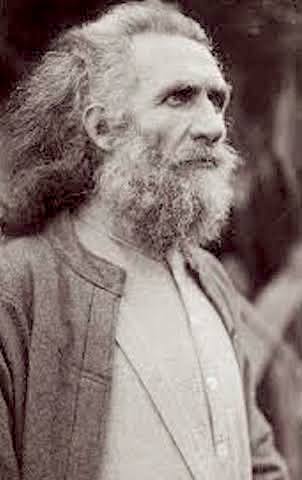
Top Insert Image: Jan Preisler, “Self Portrait with Cigarette”, circa 1900, Oil on Linen, 50 x 45 cm, Galerie Kodl, Prague

Second Insert Image: Jan Preisler, “Riders in the Wood”, 1904, Pastel on Paper, 36 x 51 cm, Private Collection

Third Insert Image: Jan Preisler, “Portrait of the Artist’s Mother”, Date Unknown, Oil on Board, 39.4 x 33 cm, Private Collection

Bottom Insert Image: Jan Preisler, “Study for Young Beggar”, Date Unknown, Black Pencil and White Chalk on Paper, 28 x 31.5 cm, Private Collection

Talon Abraxas

The Artwork of Talon Abraxas

Born in South London, England in 1980, Talon Abraxas is a symbolist artist, writer and occultist whose work consists of both traditional and digital images. Symbolism in painting was a fantastic, often mystic, style that emerged as a reaction to the naturalism of realist and impressionist trends. Symbolist painters believed that art should reflect an emotion or idea rather than represent the natural world in an objective, quasi-scientific manner. This style of painting emphasized the world of dreams and the religious traditions of human transformation; it placed the appearance of literature, music and the arts over their functions.

A self-taught artist, Talon Abraxas regards an artist as a spontaneously developed initiate (Greek: μύστης) whose work conveys spirituality and religious mysteries to the world. The inspiration for his work is drawn from past mystic artists and writers, including English artist and occultist Austin Osman Spare, Belgian symbolist painter and author Jean Delville, Dutch painter Hieronymus Bosch, and Polish surrealist painter and sculptor Zdislaw Beksiński.  

The Talon Abraxas Facebook site contains many images of Talon Abraxas’s work as well as other contemporary artists: https://www.facebook.com/p/Talon-Abraxas-100050477380184/

Notes: Archons are the  supernatural builders of the physical universe, each one related to one of the seven classical planets visible to the naked eye: the Sun, Moon, Venus, Jupiter, Mercury, Mars, and Saturn, ordered according to their brightness. Abraxas is the term for the “Great Archon” in Gnostic Christianity. The word is found in such Gnostic texts as the “Holy Book of the Great Invisible Spirit” and the “Apocalypse of Adam”. Saint Epiphanius of Salamis, the Eastern Orthodox Catholic Bishop of Salamis, Cyprus at the end of the fourth-century, designated Abraxas (Biblical Greek: ἀβραξάς) to be “the power above all, and First Principle” and “the cause and first archetype” of all things.

Archon (Greek: ἄρχων) is the Greek word that means “ruler”. It is the masculine present participle of the verb stem αρχ-, meaning “to rule, to be first”. Throughout Greek history, the term Archon referred to the chief magistrates of various Greek cities. In the Byzantine empire, the term was used to denote a powerful noble or magnate, both domestic and foreign. Today, in Orthodox Christianity, archon is a honorific title given to someone who has served and promoted the Orthodox Church faith and tradition, a sworn duty of the archon. As it is a significant religious position, the faith and dedication of a candidate for the role are reviewed extensively during consideration.

Top Insert Image: Talon Abraxas, “Phoibos (Phoebus) Apollon”, Date Unknown, Digital Art

Bottom Insert Image: Talon Abraxas, “New Jerusalem”, Date Unknown, Digital Art

Gustave Van de Woestijne

The Paintings of Gustave Van de Woestijne

Born at Ghent in August of 1881, Gustave Van de Woestijne was a Belgian expressionist painter whose depictions of humble rural life were shaped by philosophical reflections and avant-garde Western-European trends. While influenced by the Parisian avant-garde, Symbolism and Flemish Expressionism, Van de Woestijne created his own distinctive painterly style.

Gustave Van de Woestijne was the younger brother of writer, poet and art historian Karel Van de Woestijne who, upon the death of their father, oversaw his care. In his youth, Gustave studied at the Ghent Academy for the Fine Arts. Through his brother, he received an intellectual education that, at a young age, opened the door to a world of sculpture, literature and classical music.

In 1900 at the age of nineteen, Van de Woestijne traveled with his brother Karl to the small village of Sint-Martens-Latem on the banks of the River Lys where Karl, who had brought French symbolism to Belgium, founded a colony of loosely affiliated artists from the Ghent Academy. In the company of the First Group of Latem, Van de Woestijne developed artistically and painted biblical and rural life scenes, as well as sensitive portraits of village figures, family members and friends..

Gustave Van de Woestijne, like his brother Karel, organized his life as well as his art around philosophical reflections. He was concerned with existentialist questions that later became magnified with religion. After leaving Sint-Martens-Latem in 1905, he briefly entered the Benedictine Order in Leuven. However after four weeks, Van de Woestijne decided against the monastic life. He was too driven by creative desire to entirely devote his life to the church. Van de Woestijne instead used his painting skills and his palette of subtle earthly colors to portray the Catholic virtues of simplicity, humility and hope.

After leaving Leuven, Van de Woestijne relocated to Etterbeek, a municipality of Brussels and, later, the village of Tiegem in West Flanders. The memories of his stay at the River Lys artist colony still continued to influence both theme and style of his paintings. During the First World War, Van de Woestijne and his family lived in Wales where he spent time in the company of artists Valerius De Saedeleer and George Minna. He painted allegories of the war situation and numerous portraits, including those of his fellow artists. Van de Woestijne also was acquainted with businessman and art collector Jacob de Graaf, who became patron to him and other members of the Latem group. 

Gustave Van de Woestijne returned to Belgium in 1913 where he met Brussels art patrons David and Alice van Buuren who purchased their first painting by the artist. Between 1928 and 1931, the couple commissioned seven still lifes from Van de Woestijne for their modernist Brussels house. Eventually, David and Alice van Buuren acquired thirty-two works by the painter, a major part of Van de Woestijne’s oeuvre. 

Gustave Van de Woestijne’s 1910 Flemish portrait, “The Farmer”, had displayed the beginning of his movement towards modernism through its refined realism, large areas of color and its symmetrically composed plain background. Various trips to Paris had exposed Van de Woestijne to the artistic avant-garde innovations in the works of Picasso, Modigliani and Rousseau. It was after his return to Belgium that his work became more related to the Modernist movement. Van de Woestijne incorporated those avant-garde developments into his own techniques to create a  personal modernist style: a meditative form of symbolism with expressionist and cubist visual elements.

Upon the death of his brother Karel in 1929, Van de Woestijne took over his brother’s position as director of the Academy of Fine Arts in Mechelen and also taught in Antwerp and Brussels. He continued to paint, predominately Christian scenes with a more neutral palette, until his death. Gustave Van de Woestijne died at the age of sixty-five on the twenty-first of April in 1947 at the Belgian city of Uccle. His body is interred in the historic Cemetery of Campo Santo, Sint-Amandsberg, Ghent.

Works by Gustave Van de Woestyne are held in many private collections and public collections that include the Museum of Fine Arts Ghent, Van Buuren Museum & Gardens, and the Museum of Deinze and the Lys Region. 

Notes: Conceptual Fine Arts (CFA) has an article by Brussels-based curator and writer Evelyn Simons entitled “The Quotidian Avant-Garde of Gustave Van de Woestyne” on its website: https://www.conceptualfinearts.com/cfa/2020/08/31/gustave-van-de-woestyne/

The Museum of Fine Arts Ghent has a short article on Gustave Van de Woestijne in connection with its 2020-2021 collection exhibition of his work: https://www.mskgent.be/en/exhibitions/gustave-van-de-woestyne

A biography on Karel Van de Woestijne, considered possibly the most important post-symbolist poet to have written in the Dutch language, can be found on the Poetry International website: https://www.poetryinternational.com/en/poets-poems/poets/poet/102-8508_Van-de-Woestijne

Top Insert Image: Gustave Van de Woestijne, “Self Portrait”, 1912, Oil on Canvas, 180 x 48 cm, Private Collection

Second Insert Image: Gustave Van de Woestijne, “Still Life with a White Jug”, 1922, Gouache on Paper, 76.5 x 55.5 cm, Museum of Fine Arts, Ghent, Belgium

Third Insert Image: Gustave Van de Woestijne, “The Liquer Drinkers”, 1922, Oil on Canvas, 109.5 x 99 cm, Museum of Fine Arts, Antwerp, Belgium

Bottom Insert Image: Gustave Van de Woestijne, “Fugue”, 1925, Oil on Canvas, 80.5 x 80 cm, Museum of Fine Arts, Ghent, Belgium

Anton Carte

The Paintings of Antoine (Anton) Carte

Born at Mons, the provincial capital of Hainaut in December of 1886, Antoine (Anton) Carte was a Belgian painter and lithographer of the Flemish Expressionist movement who initially worked in the Symbolist style of the Sint-Martens-Latem artist colony. Along with painter and engraver Louis Buisseret, he founded the Groupe Nervia which  supported new artists in Hainaut and fostered the traditional Gallo-Romance art of the ethnic French-speaking southern region of Belgium.

The son of a woodworker, Anton Carte was an apprentice at the studio of Belgian painter and designer Frantz Depooter for a period of fourteen years. He began his formal training at the Academy of Mons in 1897 and finished his training in 1908 at the Royal Academy of Fine Arts in Brussels. It was at the Academy of Mons that Carte met Louis Buisseret, the man who would become his lifelong faithful friend. At the Royal Academy, both men studied under artists of the Symbolist movement: muralist painter Constant Montald, painter and mosaic artist Émile Fabry, and painter Jean Delville, a poet and leading exponent of the Belgian Idealist art movement during the 1890s.

A 1912 scholarship enabled Carte to travel to Paris where he stayed for two years at the studio of set and costume designer Léon Samoylovich Bakst and renowned French organ designer Aristide Cavaillé-Coll. During this period, Carte and Bakst worked for the Ballets Russes founded by Russian impresario Serge Diaghilev. Among other acquaintances in Paris, Carte came in contact with French Symbolist painter and theoretician Maurice Denis and Pierre Puvis de Chavannes, a French muralist painter of allegorical and antiquity scenes. 

After initially working in the Symbolist style, Anton Carte became a Flemish Expressionist after the First World War. Encouraged by Louis Buisseret, he exhibited a series of illustrations for a work by Belgian poet and playwright Emile Verhaeren at the 1917 Salon de l’Illustration in Brussels. Carte also illustrated editions of Maurice Maeterlinck’s 1895 “Massacre of the Innocents” and Marcel Wolfer’s 1914 “Writings of November”. 

Carte exhibited with the Flemish Expressionists at the 1923 Paris Salon d’Automne, an annual multi-disciplinary event. In 1924, he traveled to the United States and, in the following year, had a major retrospective at Pittsburgh’s Carnegie Institute. This show resulted in the sale of all sixty paintings presented at the show; it also ensured Carte’s success with the American public.

Although mostly known for his paintings, Anton Carte designed  posters in the 1920s and 1930s which included work for the Aéro Club de Belgique, the 1930 International Exposition at Antwerpen/Anvers, and Amsterdam’s Stedelijk Museum. Carte also created stained-glass windows, most notably the 1927 windows for a newly constructed building at the University of Mons-Hainaut in Wallonia, Belgium. Between 1935 and 1940, he undertook numerous commissions  with glassmaker F. P. Colpaert for stained-glass windows at the Church of Saint Philippe de Neri at the Abbey of La Cambre and a stained-glass series, “The Way of the Cross”, for the Notre Dame de la Cambre.

Carte, along with Buisseret and Léon Eeckman, founded the Expressionist art association Groupe Nervia in 1928. This group was committed to an intimate human art tinged with Symbolism and Italian art techniques. Carte began teaching in 1929 at the Ecole Nationale Supérieure des Arts Visuels de la Cambre in Brussels; however, as he did not agree with the first director’s ideas, Carte left in 1932 to become Professor of Decorative and Monumental Art at the Brussels Academy.  

During the war years, Anton Carte finished the stained-glass windows he had started with F. P. Colpaert but later withdrew to his house in Wauthier Braine to find some calm. After the war, Carte painted frescoes in the chapel and in the Great Hall of Orval, a community within the French commune of Montigny-Lengrain. At the inauguration of his eight large stained-glass windows at the Basilica of the Sacred Heart in Koekelberg, Carte entrusted painter Jacques Maes with the completion of his project.

A complete artist throughout his life, Anton Carte produced drawings, engravings, book illustrations, posters, lithographs, banknotes, stamps, fresco designs, sculptures, stained glass windows, theater sets, ceramics and carpets. Tired at the age of sixty-seven, Anton Carte died on the fifteenth of February in 1954 at his home on the Rue de l’Ermitage in Ixelles, Belgium.

Notes: The Anton Carte Foundation has a more extensive biography of Carte’s life as well as an extensive collection of his artwork at their site: https://www.antocarte.art/en

Top Insert Image: Photographer Unknown, “Anton Carte, L’Art Belge”, June 30 1920, Vintage Print

Second Insert Image: Anton Carte, “The Carter”, 1925-1930, Oil on Canvas, Anton Carte Foundation, Brussels, Belgium

Third Insert Image: Anton Carte, “Bénédiciié”, 1921, Oil on Canvas, 150 x 178 cm, Private Collection

Fourth Insert Image: Anton Carte, “The Boatman”, circa 1938, Oil on Canvas, 100 x 80 cm, Collection of the Province of Walloon Brabant

Botton Insert Image: Anto Carte, “The Passer (The Effort)”, 1920, Oil on Canvas, 130 x 90 cm, Private Collection

Carlos Alfonzo

The Paintings of Carlos Alfonzo

Born in Havana in 1950, Carlos Alfonzo was a Cuban-American painter and ceramicist whose Neo-Impressionist style incorporated forms from Cuban Santeria, Catholic medieval mysticism, and tarot cards to form a symbolic vocabulary for his work. 

Carlos Alfonzo began his artistic training at the Academia de Belle Artes San Alejandro in Havana where he studied painting, print making and sculpture. After receiving his degree in 1973, Alfonzo attended the University of Havana where he received a degree in Art History in 1977. As a student, he began to introduce Afro-Cuban religious symbols from various sects into his work. Alfonzo, although raised as a Catholic, often blended pagan and Christian imagery to reveal their overlapping symbolisms as well as their connections to the issues of passion, masculine power, and sin.

During the 1970s, Alfonzo was an active participant in Cuba’s artistic community. However, he grew increasingly dissatisfied  with the country’s Revolution and discouraged by the travel restrictions and pervasive homophobia. In 1980, Alfonzo was deemed undesirable as a gay man by the Cuban government and, after several days of refuge with others at the Peruvian embassy, was able to leave Cuba during the Mariel Boat-Lift. An agreement arranged between Cuban-Americans in the United States and Fidel Castro allowed the release of many Cubans from the increasing restrictive conditions on the island. After a journey marred by violence, Alfonzo settled in Miami where he was able to explore both his art and his life. 

Carlos Alfonzo’s wildly energetic work was quickly embraced among the artistic circles in the United States. Three years after arriving in the United States, he was awarded a Cintas Fellowship in the visual arts and, in the next year, a 1984 Fellowship in Painting from the National Endowment for the Arts in Washington D.C. In the 1980s and 1990s, Alfonzo began to exhibit his work internationally and participated in a number of traveling exhibitions that concentrated on LatinX artists.

Alfonzo’s earliest work was inspired by the visible symbols contained within the propaganda produced under the Castro regime. Later works embraced the impressionistic work of such artists as Henri Matisse and Pablo Picasso. Alonzo’s work was also influenced by that of Cuban painter Wilfredo Óscar Lam y Castilla, an artist who fused Surrealist and Cubist approaches to art with images and symbols from Santeria. Many of Alonzo’s paintings contain subtle hints of his sexuality or invoke the fear and anger generated by the deaths of the AIDS epidemic. During the last year of his life, Alfonzo radically reduced his color palette and began an intense use of pictorial markings on large, dull-colored paintings that expressed a range of emotions.

Carlos Alfonzo, in addition to his paintings, produced a great number of works in clay and painted ceramics over a span of ten years. Interested in public works, he personally made and glazed all the ceramic tiles for his two iconic public murals in South Florida. The 1986 ceramic “Ceremony of the Tropics” at the Santa Clara Metro-Rail Station was a project of Miami’s Art in Public Places program overseen by artist and curator Cesar Trasobares. Alfonzo’s second ceramic mural was the 1991 site-specific “Brainstorm” commissioned by the Florida International University.  

Before he left Cuba, Alfonzo had two solo shows in Havana. The first was in 1976 at Galeria Amelia Pelaez and the second at Havana’s Museo Nacional in 1977. Alfonzo’s first solo exhibition in the United States, “Paradiso” which featured paintings, ceramics and works on paper, was held at New York City’s Hal Bromm Gallery on Madison Avenue in 1987. His other solo exhibitions were held at Houston’s McMurtey Gallery and the Osuna Gallery in Washington DC as well as the Bass Museum of Art and the Lannan Museum, both in Florida. 

In 1987, Alfonzo entered his work in the group exhibition, “Hispanic Art in the United States”, held at Houston’s Museum of Fine Arts. His paintings were entered in the 1990 seminal  multi-venue show “The Decade Show: Frameworks of Identity in the 1980s” at New York City’s Museum of Contemporary Hispanic Art. This exhibition later traveled to the city’s The New Museum of Contemporary Art and The Studio Museum in Harlem. In 1991, Alfonzo’s paintings were chosen to be included in that year’s Whitney Biennial held at the Whitney Museum of American Art in New York. 

Carlos Alfonzo lived and worked in Miami, Florida until his death in 1991 from a cerebral hemorrhage with AIDS-related complications at the age of forty-one. His work is held in many private collections and such public collections as the Miami Art Museum, the Kendall Art Center, Washington D.C.’s Hirshhorn Museum and Sculpture Garden, the Smithsonian American Art Museum and the Sheldon Museum of Art in Lincoln, Nebraska, among others.

Notes: Art historian and curator Julia P. Herzberg has an extensive and informative article entitled “Carlos Alfonzo: Transformative Work from Cuba to Miami and the U.S.” on her site:  https://www.juliaherzberg.net/carlos-alfonzo

The online site of Miami’s New Times has an article by Isabella Marie Garcia entitled “The Dark Poignancy of Carlos Alfonzo’s Life” which covers the 2020 retrospective at the Institute of Contemporary Art in Miami: https://www.miaminewtimes.com/arts/things-to-do-in-miami-carlos-alfonzo-late-paintings-at-institute-of-contemporary-art-miami-14372933

The Farber Foundation’s The Archive: Cuban Art News has an article written by Janet Batet on Carlos Alfonzo’s late-career art: https://cubanartnewsarchive.org/2018/07/11/screaming-heads-and-still-lifes-the-late-career-art-of-carlos-alfonzo/

Top Insert Image: Ramiro Fernandez, “Carlos Alfonzo”, Date Unknown, Color Print, Miami New Times, May 2022

Second Insert Image: Carlos Alfonzo, Untitled, 1987, Acrylic on Paper, 76.2 x 56.5 cm, Private Collection

Third Insert Image: Carlos Alfonzo, Untitled, 1980-1989, Linocut Print, Artist Proof, 68.6 x 106.7 cm, Private Collection

Fourth Insert Image: Carlos Alfonzo, Untitled (Nine Figures Inside a Maze), 1979, Mixed Media on Paper on Board, 64.8 x 50.2 cm, Private Collection

Bottom Insert Image: Carlos Alfonzo, “Still Life with AIDS Victim”, 1990, Oil on Canvas, 213.4 x 213.4 cm, Private Collection

Greg Drasler

The Paintings of Greg Drasler

Born in Waukegan, Illinois in 1952, Greg Drasler is an American painter known for his metaphorical images that explore the formation of identity and memory. His representational work incorporates elements of abstraction, surrealism, and the postmodernist elements of graphic design. 

Drasler’s paintings of elaborately constructed interior spaces, symbolic and commonplace objects, and patterned panoramas hold enigmatic puzzles and psychological mysteries that intrigue the viewer’s sense of perception. A major component of his work is the exploration of liminal spaces and thresholds between public and private, real and imaginary, and object and environment. Liminality, in anthropology, is the quality of ambiguity or disorientation that occurs in the middle stage of a rite of passage. Participants in effect stand at the threshold of their previous self-identification and their new existence established by the rite. 

Greg Drasler uses the strategies of bricolage, the creation of a work from a diverse range of objects, to place the viewer in a state of liminality. His images of suitcases, men with hats, automobile interiors, film sets, and the American highway contain symbols, metaphors, visual puzzles and puns. Humor, nostalgia and a sense of the uncanny are contained in these examinations of the Self and its relationship to local culture and both personal space and location. 

In the 1960s, Drasler became interested in art as a career through his exposure to the contemporary art of his time. A major influence on his life’s work came from James Rosenquist’s awe-inspiring 1964-65 “F-111”, a painting of fifty-nine interlocking panels that enclosed the viewer. Drasler was also influenced by sculptor Horace Clifford Westermann, a master of traditional carpentry and marquetry techniques, as well as the representational artists of the Chicago Imagists such as Jim Nutt, whose work was inspired by pop culture, and Robert Brown for whom collected art and objects functioned as important source materials.

In 1976, Drasler entered the University of Illinois at Urbana-Champaign to study art. He committed to the medium of painting in 1978 and earned his Bachelor of Fine Arts in 1980. After receiving his degree, Drasler enrolled in the university’s Year in Japan Program, a period which focused his work on the relationship between identity and place presented through the use of domestic functional imagery. After completing his Master of Fine Arts in 1983, Drasler relocated to New York City and began to exhibit his work professionally. The first exhibition of his paintings was in the first “On View” held at the New Museum of Contemporary Art in 1983.

Greg Drasler’s earliest work focused on builder and handyman imagery that served as an allegory for self-construction. His first series, executed between 1987 and 1990, was the “Baggage Paintings”, which depicted plush luggage in random but carefully composed states, either stacked as in “Samson and Delilah” or grouped as in “Baggage Claim”. The meticulously detailed groups of baggage, whose lighting and color were playfully painted, presented allegories of identity, luxury, and privacy. Drasler’s 1990 painting from the series, “His”, depicts two upright traveling trunks in a room. One contains a set of six drawers while the other is opened to reveal an empty space for hanging clothes. The bright golden light that emanates from the interior of the trunk, almost magically, is in stark contrast to the dull interior of the room.

With the support of a New York Foundation for the Arts Fellowship in 1991 and a subsequent National Endowment for the Arts Fellowship in 1993, Drasler began “Cave Paintings” which depicted intricately constructed, ornate interior living spaces that served as metaphors for one’s creation of the Self, as well as, the relationship to one’s personal, domestic space. These tableaus with their architecture, wallpaper and fabric were distinguished by human absence and trope-l’oeil obfuscation. The illusionistic perspective and the meld of motifs were designed to create a voyeuristic view of unsettling presence and closely guarded secrets, a similar sensation akin to painter Giorgio de Chirico’s famous piazza paintings. “Cave Paintings’ were first presented at New York’s Queens Museum of Art in 1994, followed by exhibitions in Seattle, Boston and New York.

Greg Drasler’s “Tattoo Parlor” series explored wallpaper patterns and the psychological imprint they have on a room’s occupants. One group from the  series was “Jesus Wallpaper”, that consisted of papered walls of loosely rendered iconic images of Jesus and assorted hanging objects; the “Jumping Jesus” installation, for instance, contained hanging auto jumper-cables.  Starting in the early 2000s, Drasler’s investigations of liminal spaces included automobile interiors, Hollywood illusionism, and the great American road trip. After seeing cutaway automobile props used in film sets, which exist as both interior and exterior spaces, he employed that image in several paintings including the 2006 “Green Screen” and the 2010 “Internal Combustion”. 

With a 2014 Guggenheim Fellowship, Drasler drove across country, during which he gathered ideas for what became his “Road Trip”series, expansive vistas of the Midwest that often depicted the vernacular architecture of the American roadhouse. These paintings included large areas of criss-cross patterning, often looking like quilts in the sky, that suggested the vast reach of the landscape and its division into property. A major work of this series was the 2016 six-panel “Stratocaster Suite” which presented a stop-motion sequence in the style of Eadweard Muybridge when displayed across the wall.

Greg Drasler’s essay “Painting into a Corner: Representation as Shelter” was published in editor Joseph Scalia’s 2002 “The Vitality of Objects: Exploring the Work of Christopher Bollas”, published by Continuum Press, London, and Wesleyan Press. He collaborated with poet Timothy Liu for the 2009 “Plolytheogamy” published in 2009 by Philadelphia’s Saturnalia Press; it was comprised of interleaved images of Drasler’s paintings and Liu’s poetry. Drasler has taught and lectured at schools, including Princeton University, Pratt Institute for the past twelve years, Williams College, Hofstra University, and Montclair State University. Starting in 2007, he has been represented by New York’s Betty Cuningham Gallery on the Lower East Side. 

Notes: A biographical narrative by Greg Drasler on his life, as well aa contact information and video projects, can be found at the artist’s site located at: https://www.drasler.com

More information on Greg Drasler’s work can be found at the Betty Cuningham Gallery website located at: http://www.bettycuninghamgallery.com/artists/greg-drasler 

Second Insert Image: Greg Drasler, “Green Room”, Cave Painting Series, 1997, Oil on Canvas, 177.8 x 127 cm, Private Collection

Third Insert Image: Greg Drasler, “Houdini”, 1987, Oil on Canvas, 177.8 x 152.4 cm, Private Collection

Fourth Insert Image: Greg Drasler, “Wiggle Room Post It”, Wiggle Room Series, 2000, Oil on Canvas, 147.3 x 132 cm, Private Collection

Bottom Insert Image: Greg Drasler, “Slide Lecture”, Cave Painting Series, 1995, Oil on Canvas, 147.3 x 132.1 cm, Private Collection

Elijah Burgher

The Artwork of Elijah Burgher

Born in Kingston, New York in 1978, Elijah Burgher is an American artist who produces both figurative and abstract colored pencil drawings, paintings and prints of sigils. He received his Bachelor of Arts from Sarah Lawrence College in Bronxville, New York, and his Master of Fine Arts at Chicago’s Art Institute. Burgher currently lives and works in Berlin, Germany. His work is represented by the Horton Gallery in Dallas, New York’s contemporary PPOW Gallery, and Western Exhibitions in Chicago. 

In his work, Elijah Burgher uses ideas from occult and magic traditions to address queer sexuality, sub-cultural formations, and the history of abstraction. He also creates sigils, symbols of magical power, inspired by different esoteric systems, including the works of English illustrator and occultist Austin Osman Spare, who trained as a draughtsman at the Royal College of Art in South Kensington. Burgher’s sigils encode symbols of wishes and desires through their shape, and the compositions of their elements and color.

Burghers colored pencil drawings of nude male figures, often featuring images of friends,  illustrate scenes from his daily life and environment. Acting as ritual relics, they have an erotic quality that anchors their abstract components into reality. 

Elijah Burgher had solo exhibitions of his work in several galleries including the 2018 “Nudes in  the Forest” at the Ivan Gallery in Bucharest, Romania; “Bachelors” at New York’s Zieher Smith and Horton Gallery in 2016; and “Elijah Burgher, Topple the Table of Correspondences’ in 2011 at 2nd Floor Projects in San Francisco, among others. As a resident artist at Western Exhibitions in Chicago, Burgher has had several solo exhibitions in its gallery from 2012 to 2020. 

Burgher has also shown his work in multiple group exhibitions from 2000 to 2021, including the 2014 Gwangin Biennial, Asia’s most important contemporary art exhibition which was held in the Republic of Korea; New York City’s 2014 Whitney Biennial; “The Temptation of AA Bronson” exhibition held in 2013 at the Witte de With Center for Contemporary Art in Rotterdam, Netherlands; the 2020 “intimacy: New Queer Art from Berlin and Beyond” held at the Centre d’Art Contemporain in Geneva, Switzerland; and “Secret Language” held in 2021 at the Ivan Gallery in Bucharest, among others.

In 2011, Elijah Burgher held a Residency at the Skowhegan School of Painting and Sculpture in New York City and a Fire Island Artist Residency in Long Island, New York.

Note: an interview with Elijah Burgher can be found at the Inside/Within web art archive located at: http://insidewithin.com/elijah-burgher/

Elijah Burgher’s works can be found at the P.P.O.W. Gallery site located at https://www.ppowgallery.com/artists/elijah-burgher#tab:thumbnails

Bottom Insert Image: Elijah Burgher,, “Bachelor with Demons (Sleezy)”, 2015, Colored Pencil on Paper

Denis Forkas

The Paintings of Denis Forkas

Born in 1977 in Kamyshin, a town on the Volga river, Denis Forkas Kostromitin is a Russian painter whose work explores religious and mythological symbolism in the tradition of ancient Mediterranean art. The son of a military officer, his childhood years were spent in various remote regions of the Soviet states. Forkas’s early nomadic existence with its isolation and lack of comforts led to self-education in artistic training and numerous sensory deprivation experiences, which later had a major impact on his artwork.

With little stimulus from the austere Soviet environment, Forkas eagerly consumed literature on the esoteric worlds of Egyptian and Greek mysticism and mythology. After the iron curtain’s collapse in 1991, new translations of literary works, including the esoteric writings of English occultist Aleister Crowley and French author Eliphas Levi, entered the Soviet states. Forkas studied these new volumes and the literature written by Western philosophers, which became available in the mid-1990s.

After the economic boom in the new century, Denis Forkas frequently visited China as a journalist, interpreter, and commercial representative. After meeting several painting masters in China, he was able to receive formal training for three years in traditional Eastern painting techniques, including those of the Xieyl and Gongbi art forms. 

Xieyl is a genre of Chinese traditional painting worked on xuan paper that uses either ink or layers of watercolor. This genre includes works of calligraphy, poem, painting and seal, of which freehand painting is the most influential and popular. Gongbi is a careful, realistic technique of Chinese painting, often highly-colored, that is worked  on xuan paper. This method uses highly-detailed brushstrokes that delineate details very precisely without interpretation or free expression on the part of the artist.

After leaving China, Forkas settled in Moscow to concentrate on his career path as a professional artist. His early work was inspired by German Expressionism and the late nineteenth-century Symbolist movement, which emphasized the reality of the created paint surface itself. These paintings by Forkas were influenced by the early abstract, experimental works of Wassily Kandinsky that, in an immediate way, were an expression of Kandinsky’s inner feelings.

Denis Forkas’s new work, still in the artistic traditions of ancient Near East civilizations, draw their inspiration from early Renaissance and  seventeenth-century Dutch paintings. Drifting away from the earlier predominant symbolist style, Forkas’s paintings became influenced by the works of Belgian painter Fernand Khnopff, who carried symbolism’s recurring themes into his portraits, and Russian painter Mikhail Vrubel, whose paintings in the latter portion of his life displayed a glowing, otherworldly mosaic effect that fit within the Byzantine tradition.

Since 2007, Forkas has privately taught the techniques of painting and drawing to students and has participated in various local and international exhibitions, including the October 2014 Image Show in London. Forkas has produced many drawings and paintings that have been featured as album covers for international music releases. Currently living and working in Moscow, he has contributed both work and an interview for the esoteric publisher Fulgur Press.

Contact information and a small gallery of work by Forkas can be found at his website located at: www.denisforkas.com

For those interested, a list of album cover art by Denis Forkas can be found at the Encyclopaedia Mettalum site located at: https://www.metal-archives.com/artists/Denis_Forkas_Kostromitin/436114

Second Insert Image: Denis Forkas, “The Hanged Man / Gift of Prometheus”, 2017, Acrylics and Gilding on Paper, 41.5 x 29.5 cm

Third Insert Image: Denis Forkas, “Saglokratlok II”, 2017, Ink and Gouache on Paper, 24.1 x 18.5 cm

Bottom Insert Image: Denis Forkas, “Between Two Worlds (Study for a Recurring Dream of Ichor Baptism Fashioned as a Portico Fresco Cartoon)”, 2016, Acrylics on Paper on Hardboard, 23.7 x 22.5 cm

Karl Wilhelm Diefenbach

Karl Wilhelm Diefenbach, “Toteninsel (Isle of the Dead)”, ca 1905, Oil on Canvas, 100 x 150 cm, Private Collection

The son of a painter and teacher, Karl Wilhelm Diefenbach was born in the city of Hadamar, Germany,  in February of 1851. He received his initial training in the arts from his father Leonard Diefenbach, but also worked as a design draftsman for several photo studios and a railroad construction company. In 1872, Diefenbach traveled to Munich where he gained employment with Hanfstaengel, a photography publishing house, and entered the Munich Academy of Fine Arts, under historical painter Wilhelm Lindenschmit the Younger. In his studies, he became inspired by the Symbolist movement, particularly by the works of Swiss painter Arnold Böcklin.

Stricken with typhus in 1873, Diefenbach began to develop an increasing interest in alternative lifestyles. After having a visionary experience, he founded the alternative community Humanitas in an abandoned stone quarry near Höllriegelskreuth, located nineteen kilometers south of Munich. This community was centered on a return to nature, the rejection of religion, a basic vegetarian diet, and the end of monogamy. In 1887, Symbolist painter and illustrator Hugo Höppener, known as Fidus, joined the community and, with Karl Diefenbach, worked on the sixty-eight meter, monumental silhouette frieze entitled “Per Aspera ad Astra”. 

An oddity in the era due to his lifestyle, Karl Diefenbach, after repeated conflict with his social surroundings including local authorities, accepted the invitation of Salzburg’s Art Association and relocated with his family to Vienna.  While in Vienna, he met and taught the Czech abstractionist painter and graphic artist Frantiek Kupka. Diefenbach’s  unorthodox lifestyle forced a second relocation; this time he traveled to Egypt where his work focused on the ancient ruins and temples of the land. Returning to Vienna in 1897, he founded a country commune, Himmelhof, near Vienna, which disbanded after two years.

Despite the many exhibitions of his work, Karl Diefenbach was not successful commercially, which forced him to declare bankruptcy. He traveled to Italy in 1900 and settled on the island of Capri where he exhibited his works to visitors for a small fee, explained his philosophy of life, and sold small versions of his major works. The years Diefenbach spent on Capri were the most productive of his life. He produced many large scale depictions of the island’s landscapes, most  were scenes of grottos and cliffs, but all were  infused with reflections on his inner searching.

The Symbolist painter Karl Wilhelm Diefenbach died on the island of Capri in December of 1913. After years of obscurity, his work was honored in a successful 2009 exhibition held at Villa Stuck in Munich, and two years later at the Hermes Villa in Vienna. A museum of his work was founded in 1974 in Certosa di San Giacomo on Capri, and many of his works can be seen in the Jack Daulton Collection in Los Altos Hills, California.

Note: Karl Wilhelm Diefenbach’s 1905 “Isle of the Dead” was inspired by the famous painting of the same name by the Swiss symbolist artist Arnold Böcklin, whose work Diefenbach held in much esteem.

Arnold Böcklin painted five versions of his “Isle of the Dead” between 1880 and 1901. He provided no explanation for the painting’s image; the title was not specified by Böcklin, but was given by the art dealer Fritz Gurlitt in 1883. The inspiration for it was evoked, in part, by the landscape of the English Cemetery in Florence, Italy, where Böcklin resided for many years.

Top Insert Image:  Karl Wilhelm Diefenbach, Der Rettung Entgegen, 1900, Oil on Canvas, 65.5 x 90.5 cm, Private Collection

Bottom Insert mage:  Karl Wilhelm Diefenbach, The Great Sphinx of Giza, 1903, Oil on Canvas, 240 x 335 cm, Private Collection

Salomon-Léon Sarluis

The Artwork of Salomon-Léon Sarluis

Born in the Hague in October of 1874, French painter Salomon-Léon Sarluis, known as Léonard Sarluis, studied at the École des Beaux-Arts before moving to Paris in 1884 where he became a well known figure on its boulevards. He was a student of the French Symbolist painter Armand Point and of the French novelist Élémir Bourges, who was strongly linked with the Decadent and Symbolist movements in literature. Sarluis was also associated with the openly gay poet Jean Lorrain, who is remembered for his contributions to the satirical weekly Le Courrier Français and his Decadent novels and short stories.

Léonard Sarluis traveled widely throughout Italy, visiting Naples, and Russia. Upon his return to Paris, he exhibited at the Salon de la Rose Croix and the Salon des Artistes Français, and at a number of other Parisian galleries. With designer Armand Point, Sarluis created the poster for the fifth exhibition at the Salon des Artistes Français, depicting Perseus holding the severed head of  novelist Émile Zola, who was rejected by the Symbolists for his Naturalist social commentary. 

Working under the influence of Point, Léonard Sarluis combined a technique inspired by the Old Masters with a style that was sensual and very modern. He liked to work on a grand scale, and his monumental “Nero”, exhibited at the Galerie Georges Petit in Paris, was greatly admired by muralist painter Puvis de Chavannes. In 1919 Sarluis had a solo exhibition at the Galerie Bernheim, one of the oldest galleries in Pairs and a leader in avant-garde art. 

In 1923, Sarluis produced illustrations based on novelist Gaston Pavloski’s 1912 mystical “Voyage to the Land of the Fourth Dimension”. For a number of years, Sarluis worked on a series of three hundred-sixty paintings entitled “A Mystical Interpretation of the Bible”, which were shown at the Grafton Galleries in London in 1926. 

Léonard Sarluis’s inspiration was emblematic of a turn of the century that combined nostalgia for an imagined past, decadent themes and sometimes cloudy mysticism. A provocative character and dandy, and a friend of Oscar Wilde, Salomon-Léon Sarluis died in 1949 in Paris.

Ludwig von Hofmann

Ludwig von Hofmann, “Die Quelle (The Source)”, 1913, Oil on Canvas, Thomas Mann Archives, Swiss Federal Institute of Technology, Zurich

A member of the avant-garde group “Eleven”, Ludwig von Hofmann was an active participant in the cultural movement “Berlin Succession”. He taught at the art school in Weimar, located in central Germany, and at the Dresden Academy of Arts, where he directed a course in monumental painting. Von Hoffman was a frequent illustrator for the arts and literary magazine “Pan”, which played an important role in the development of the Art Nouveau movement in Germany. 

Working in a combination of Symbolist and Art Nouveau styles, Ludwig von Hofmann’s paintings included antique and biblical themes, and idyllic landscapes inhabited by surreal or mythological creatures. His work aspired to portray beauty in form, using unique and strong color combinations, and often presented a veiled eroticism in its figures.  Von Hofmann’s symbolist work is both decorative and idealized, with verdant forests, blossoming fields, and naked or clothed figures whose skin or flowing garments are lit by the sun. 

In 1903, von Hofmann was appointed a professor at the Weimar Saxon Grand Ducal Art School. He was later named a Professor at the Academy of Arts in Dresden in 1916, remaining there until 1931. In his later years, von Hofmann predominately worked in the Art Nouveau style, producing engravings and illustrations, and designing libraries, residential rooms and theaters. 

The production of Ludwig von Hofmann’s work slowed in the 1930s, with some of his work labeled “degenerate art’ by the National Socialist Party in 1937. He retired to the town of Pillnitz, a section of east Dresden, where he died in August of 1945. 

Top Insert Image: Ludwig von Hofmann, “Badende am Schwarzen Felsein ( Bathers on the Black Rock)”, 1930, Oil on Canvas

Bottom Insert Image: Ludwig von Hofmann, “Men, Boys and Horses in a Landscape”, circa 1910, Pastel on Paper

Jan de Clerck

Jan de Clerck, “De vermoeide Winden (The Tired Winds)”, 1937, Oil on Canvas, Private Collection

Born in Ostend, Belgium, Jan de Clerck studied briefly with the painter Camille Payen in Brussels, but was, for the most part, self-taught. He was much influenced by the exhibitions organized by the group La Libre Esthétique, and his first paintings date from the late 1890s. Quickly gaining in confidence and ability, De Clerck first exhibited his paintings in 1905.

Jan de Clerck developed an original technique of a sort of elongated pointillism of striped brushstrokes, producing landscapes and seascapes tinged with a Symbolist aesthetic. He often worked in mixed media, dragging the paint with short vertical strokes in order to build up the surface of the picture. This individual technique De Clerck made virtually his own: much of his best work up to 1920 is painted in this way.

A period of exile from Belgium during World War I, found De Clerke painting landscapes and camouflage, taking part in local exhibitions, and befriending such artists as Frank Brangwyn. After the war, Jan de Clerck returned to Ostend where his reputation continued to grow. He experimented with new techniques, often mixing pastel and watercolour, which he called ‘aquapastel’, to create the luminous effects he sought.

Further exhibitions of De Clerck’s work in Ostend, Liège and Ghent, as well as the publication of a book of reproductions of his work in 1928, served to advance his reputation. After 1933, however, there were no major exhibitions of De Clerck’s work for almost twenty years. His output began to decline, and he began to focus mainly on seascapes, always his favourite subject.

F. Scott Hess


F. Scott Hess, Unknown Title, Oil on Canvas, (Catch of the Day)

F. Scott Hess, “Light,” 2005, Oil on Canvas

Born in Baltimore, longtime Los Angeles artist F. Scott Hess attended the Academy of Fine Arts in Vienna, Austria, and Lawrence University in Appleton, Wisconsin, earning a BSA from the University of Wisconsin in 1977. In 1979, Hess moved to Vienna, Austria, where he studied for five years with the Austrian painter Rudolf Hausner, who has been credited as the first psychoanalytical painter. Through his artistic teaching experience in Vienna, Hess gained greater exposure to techniques of old master style painting, which profoundly influenced his work.

F. Scott Hess  has been described as a “New Old Master”. His narrative portraiture blends realistic scenes of everyday life with symbolic and allegorical events, humor, eroticism, and voyeurism. He begins with drawings and careful diagramming on his canvases before adding traditional oil paint or egg tempera. Hess’s works are defined by his strong brushwork, careful attention to the luminosity of flesh, and ability to capture ethereal light.

Martin Wittfooth

Martin Wittfooth, “Bacchanal”, 2016, Oil on Canvas, 78 x 60 Inches

Martin Wittfooth was born in 1981 in Toronto, Canada. He spent his childhood in Finland, before moving back to Canada as a teenager. It was in Toronto that he earned his BAA in illustration at Sheridan College in 2003. Wittfooth then moved to New York City where he received his MFA at the School of Visual Arts.

In his recent works, Wittfooth explores the ancient art of shamanism and the current renaissance it is enjoying around the globe. The optimism which emanates from his new works is a product of Wittfooth’s gradual uncovering of enlightening shamanic practices, which he has observed as holding the power to break us free fromthe status quo and the dark path it has lead us down.

Ai Weiwei

Ai Weiwei, “He Xie (River Crab)”, 2010, Porcelain

The installation “He Xie” consists of 3,200 porcelain crab sculptures. They were created after Chinese authorities ransacked and destroyed Weiwei’s studio in 2010. Following that event, a feast of real river crabs was hosted by Weiwei, who was unable to attend, due to his house arrest. The term “He Xie” is a homophone for “harmonious” in Chinese and has also become a term for internet censorship.