Sir Charles Lawes-Wittewronge, “The Death of Dirce”, 1906, Bronze, 252.7 x 172.7 x 195.6 cm, Tate Museum, Millbank, Westminster, London
Born at the seaside civil parish of Teignmouth, Devon in October of 1843, Sir Charles Bennet Lawes-Wittewronge, 2nd Baronet was an English athlete and sculptor. The only son of  agricultural chemist Sir John Bennet Lawes of Rothamsted Manor, Herfordshire, and his wife Caroline Fountaine, Charles Bennet Lawes was educated at Eton College and Trinity College, Cambridge, from which he graduated with a Bachelor of Arts in Natural Sciences in 1866.
At Eton, Lawes exhibited his exceptional athletic prowess in multiple sports including field and track, rowing and cycling. He claimed university titles in the half-mile, mile, and two mile track events between 1864 and 1865. In rowing, Lawes secured the Cambridge sculls (1862), the Henley Regatta diamond sculls (1863) and, as 1865 amateur champion oarsman, was part of the Cambridge crew in the 1865 Boat Race against Oxford. In 1899 at the age of fifty-six, he set competitive cycling’s amateur record of just over fifty-one minutes for the twenty-five mile course.
Charles Bennet Lawes made the decision to become a sculptor after graduating from Trinity College. His initial training was in London under Irish sculptor  John Henry Foley, a member of the Royal Academy who was considered the finest equestrian sculptor of the Victorian era. In 1869, Lawes studied in Berlin under German sculptor Hugo Hagen who was the director of the Christian Daniel Rauch Museum in Leipzig. After renting a studio in the Chelsea district of London, he exhibited his first work, “Girl at the Stream” at the Royal Academy in 1872. Two other works exhibited at the Royal Academy by Lawes were his “Daphne” in 1880 and “The Panther” in 1881.
After the death of his father in August of 1900, Charles Bennet Lawes became 2nd Baronet of Rothamsted Manor, assuming by Royal License the additional surname and arms of Wittewronge for himself and his heirs in 1902. In the same year, he was a co-founder of the Royal Society of British Sculptors and, from 1909 until his death, the society’s second president. Lawes exhibited his works at the Royal Society of British Sculptors, the 1878 Exposition Universelle in Paris where he received an honorable mention,  and London’s 1908 Franco-British Exhibition, which ran concurrently with the Summer Olympics on the 140-acre west London site known as White City.
In 1906, Lawes executed his “The Death of Dirce”, a large bronze sculptural group that was based on the “Farnese Bull”, a massive marble Roman copy of an earlier Hellenistic sculpture that depicted the mythological punishment of Dirce, first wife of Lykos, King of Thebes. This bronze sculpture was exhibited at the Franco-British Exhibition. At the same time, Lawes’s colossal marble version of this work was shown at the Royal Academy. The marble “Death of Dirce” is now in the grounds of the public park area of Rothamsted, Hertfordshire. The bronze version, given after Lawes’s death by his widow, is installed at the entrance of the Tate Gallery, Millbank, London.
Sir Charles Bennet Lawes-Wittewronge  married Marie Amelie Rose Fountaine on the eighth of April in 1869. He chaired the Lawes Agricultural Trust established by his father and supported the expansion of the Rothamsted estate’s agricultural experiments. A life-long Victorian patron of the arts, athletics and science, Lawes died at the age of sixty-eight in October of 1911 following an appendicitis operation. His body was cremated and interred at Golders Green Crematorioum, Golden Green, London. Charles and Marie Lawes’s only son John succeeded as the 3rd Baronet of Rothamsted in 1911. Marie Amelie Lawes died at the age of seventy-nine in August of 1928; she in interred with her husband at Golden Green, London.
Notes: There is a short biography on Sir Charles Lawes-Wittewronge at Harpenden History, a local history website presented by the Harpenden Museum in Rothamsted Park: https://www.harpenden-history.org.uk/harpenden-history/places-and-buildings/rothamsted/sir_charles_lawes-wittewronge
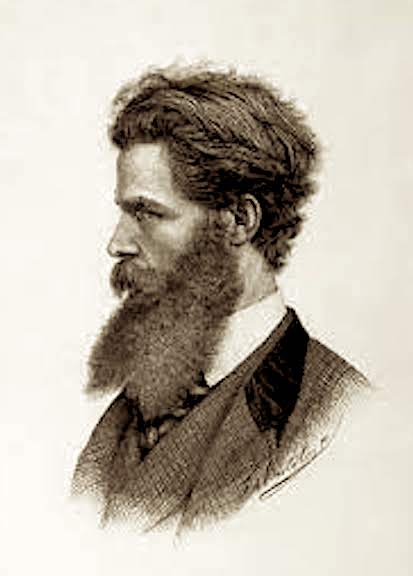
Top Insert Image: François Verheyden, “Sir Charles Lawes-Wittewronge”, 1883, Illustration for Vanity Fair Issue May 12 1883, London