Alejandro Amenábar: Film History Series


Photographers Unknown, A Collection of Thirteen Men

Born in Santiago in March of 1972, Alejandro Fernando Amenábar Cantos is a Spanish-Chilean film director, composer, and screenwriter. In August of 1973, his family relocated to Spain where they settled in Madrid, initially living in a camper-van and later moving to a complex in Madrid’s outer neighborhoods. From the age of fifteen, Amenábar was passionate about cinematic art; he also wrote stories and musical compositions for the guitar and keyboard.

Amenábar began his education at The Immaculate Piarist Fathers, a parochial multi-discipline school in Madrid, and later transferred to the secular Alameda de Osuna Institute, one of Madrid’s prominent private schools. After graduating, Amenábar enrolled at the sciences faculty of Madrid’s historic, public research Complutense University where he studied cinema and directing. There he met people who would lend support to his career in cinema including Argentine journalist Carlos Montero, actor Eduardo Noriega and Mateo Gil Rodriguez,  a filmmaker who would co-write most of Amenábar’s films.

In 1991, Alejandro Amenábar released the first of his short films, “La Cabeza (Head)”. The script, based on an urban legend, was written by Mateo Rodriquez and Amenábar, who also composed the musical score in collaboration with Alfredo Alonso. This film earned Amenábar a prize from the Amateur Independent Film Association. His second short film, the 1992  “Himenóptero”, was shot on location at Alameda de Osuna Institute, his former high school. Amenábar wrote the script and music for the horror suspense film, was director and editor, and performed the only male role. (Note: Hymenoptera is a large order of insects which includes wasps, bees, sawflies and ants.)

At the age of twenty-two, Amenábar released his first full-length film, the 1996 “Tésis (Thesis)”, which secured his reputation as one of Spain’s most promising  cinematographers. This film, which commented on the Spanish film industry, Hollywood’s influence on the industry and the voyeurism of the horror genre, was nominated for eight Goya awards, of which it won seven including Best Film. In 1997, Amenábar released the science-fiction based, psychological thriller, “Abre los Ojos (Open Your Eyes)”, which starred Penelope Cruz and Eduardo Noriega. The rights to this movie were later acquired by actor Tom Cruise who directed and starred in the American remake entitled “Vanilla Sky”, with Penelope Cruz playing the same role of the original film.

Alejandro Amenábar followed his success with an English language movie in 2001, entitled “The Others”, a psychological, gothic horror film. Written and directed by Amenábar, the supernatural film relied on tension built during disturbing scenes for its horror rather than the use of special effects. “The Others”, with its film score by Amenábar, was a box-office success and won seven Goya Awards, including Best Film and Best Director. It also won three Saturn Awards for Best Horror Film, Best Actress for Nicole Kidman, and Best Supporting Actress for Fionnula Flanagan, who played the housekeeper Bertha Mills.

In 2004, Amenábar had another success with his “Mar Adentro (The Sea Inside)”, based on the true life story of Ramón Sampedro. Paralyzed from the neck down, Sampedro fought a thirty-year campaign to win the right to end his life with dignity.The film won fourteen Goya Awards, including Best Film and Best Director, and won the Academy Award for Best Foreign Language Film.

In 2008, Amenábar released the historical drama “Agora”. Written by Mateo Gil and Amenábar, the biopic told the life story of Hypatia, the fourth-century female mathematician and astronomer who investigated the flaws of the geocentric Ptolemaic system of the solar system and the heliocentric model that challenged it. Winning seven Goya Awards, the film had limited release in the United States but was Spain’s highest grossing film of 2009.

After a seven year hiatus, Alejandro Amenábar released his psychological horror mystery film “Regression” in 2015. The film premiered at the 2015 San Sebastián International Film Festival. In 2019, he released the Spanish-Argentine historical drama “While at War”, the plot of which tracks the plight of writer and philosopher Miguel de Unamuno in 1936 Salamanca, a city controlled during the Spanish Civil War by the Rebel faction. 

In addition to composing the scores of his own films, he laid the sound tracks for Josè Luis Cuerda’s 1999 coming-of-age film“Butterfly’s Tongue” and Mateo Gil’s 1999 mystery film “Nobody Known Anybody”, among others. 

Top Insert Image: Mateo Gil, “Alejandro Amenábar, Himenóptero”, 1992

Third Insert Image: Javier Aguirresarobe, “Alakina Mann, The Others”, 1992, Written and Directed by Alejandro Amenábar, Warner Brothers

Corrado Cagli

The Artwork of Corrado Cagli

Born in the city of Ancona in February of 1910, Corrado Cagli was an Italian painter of Jewish heritage. Little information on his formative years is available; however, it is known that, at the age of five, his family relocated to Rome. Cagli grew up in a largely assimilated secular family, who had come to terms with its Jewish religion as antisemitism became more aggressive in Fascist Italy. His ties to his Italian heritage were always strong; even in his later years of exile from Italy, it was important for him to maintain a tie with his homeland. 

Corrado Cagli’s first commissioned work was a 1927 mural painted on a building in Via Sistina, the street at the top of  Rome’s Spanish Steps. In the following year, Cagli received another commission in Rome for a mural in Via Vantaggio. He had a remarkably early success in Italy; still in his twenties in the early 1930s, he was already famous nationally. Cagli had his first solo exhibition in 1932 at Rome’s Galleria d’Arte Moderna and showed at the Milan Triennale in 1936.

Along with other artists such as Emanuele Cavalli and Giuseppe Capogrossi, Cagli was a member of the Scuola Romana, an art movement of Expressionist painters in Rome who were active between 1928 and 1945. A rising star of the Scuola Romana, Cagli was supported by Italy’s Fascist regime despite being both Jewish and a homosexual.  He was chosen to represent Italy at the 1930 Paris Exposition, the Venice Biennale, and other prestigious expositions. 

In 1938, the Leggi Razzial were promulgated by the Fascist government; this series of laws enforced racial discrimination in Italy, directed mainly against Jewish Italians and inhabitants of Italy’s colonies. Two of Corrado Cagli’s murals were censored by the government as they did not fit with the regime’s rhetoric and stylistic preferences. With the enactment of the Racial Laws, Cagli was forced into exile, first to Paris, a place he had visited as a young star painter from Italy, and then to the United States, where he later became a citizen. His first showing was at the Julien Levy Gallery, a source for surrealist work. 

Corrado Cagli rarely had a proper studio during his exile years, which made painting difficult. Most of his work done in the United States is on paper. Cagli had always valued drawing as an art form; in his exile, they became the primary instrument of his artistic search. His use of paper as a medium was also the result of a crisis he went through with his idea of painting. In the 1930s, despite having been forced into exile, Cagli still retained the artistic ambitions of Italy and saw painting as a public art essential to constructing an Italian national identity.

Cagli enlisted in the United States Army and was recognized for his artistic talent. During his training he painted barracks, made his own drawings, and illustrated a military magazine. Later during the war, he worked as a military artist drawing scenes from the campaigns. Cagli fought at the 1944 Normandy landings and, later, in Belgium and Germany. Near the end of the war, he drew a series of dramatic drawings based on the liberation of the Buschenwald concentration camp. 

After the war, Cagli returned in 1948 to Rome and made it his permanent residence. Because of his past as a former regime-endorsed artist and a Jewish exile from Fascism, Cagli did not fit into any of the factions of Italy’s post-war heated cultural disputes. He arrived into Italy’s art world with a metaphysical route towards abstraction which was opposite to the Neo-Cubist trend that dominated postwar Italian painting. Settled in Italy, Cagli began a series of experimental works  in multiple mediums, including ceramics, mosaics, tapestries, architectural decoration, ballet scenery, and costumes. 

Corrado Cagli helped organize the Galleria La Cometa in Rome and, along with poet Libero De Libero, created an artistic circle of musicians, writers, architects, painters and sculptors. He was involved with New York’s Museum of Modern Art’s 1949 exhibition, “20th Century Italian Art” and facilitated the 1950 opening of the Catherine Viviano Gallery in New York City. In August of 1972, Cagli was commissioned as the official banner painter for the Palio di Siena, the twice yearly equestrian competition held in Siena, Italy. 

Cagli was awarded the Guggenheim Prize in 1946 and, in 1954, the Marzotto Prize, given by the Marzotto fashion company for his contributions to the cultural rebirth of Italy after the war. Corrado Cagli died in Rome in 1976. 

Notes: An article on Corrado Cagli’s 1936 mural “The Battle of San Marino”, now housed in Florence’s Uffizi Gallery,  can be found in a previous posting on this site.

An interview between author Raffaele Bedarida and Alessandro Cassin, Director of Centro Primo Levi, entitled “Corrado Cagli, the American Years” can be found online at Printed_Matter located at: http://primolevicenter.org/printed-matter/corrado-cagli-the-american-years/

Top  Insert Image: Photographer Unknown, “Corrado Cagli”, Circa 1930s

Second Insert Image: Corrado Cagli, “Ritmi Cellulari in Chiave di Giallo, 1949, Mised Media on Canvas on Paper, 90 x 70 cm, Private Collection

Third Insert Image: Corrado Cagli, “narcissus”, Date Unknown, Silkscreen Print, Edition of 50,, Sheet Size 90 x 85 cm, Private Collection

Bottom Insert Image: Photographer Unknown, “Corrado Cagli in His Studio in Rome”, December 1969, Radiocorriere Magazine, Gelatin Silver Print

Justin Chin: “What Measures Eternity?”

Photographers Unknown, What Measures Eternity?

Oh blameless innocent victim
What measures a lifetime?

I used to have this theory about how
much life a human body could hold.
It all had to do with the number
of heartbeats. Each human is assigned a number
determined by an unknown power cascading
over the dark waters of an unformed Earth.

For some, it was a magnificently high number
seen only in Ritchie Rich comics, and for others,
it was frightfully low, like twenty-six.
No bargaining, no coupons,
no White Flower Day sale, no specials. Once
you hit your number, you croak.
I imagined the angels in heaven
and the demons in hell gathering to watch
the counters turn, like how I enjoyed watching
the speedometer line up to a row of similar
numbers, and especially when the row of
nines turned into
the row of zeros.

Oh Blameless innocent victim
What measures eternity?

Justin Chin, Excerpt from the Poem “Grave”, Harmless Medicine, 2001

Born in September of 1969, Justin Chin was a Malaysian-American  poet, essayist, and performance artist. In his works, he dealt with identity categories that influenced his life: Asian-American, Gay Writer and Queer. Chin’s work sought to give a voice to marginalized groups of racial, national, and sexual minorities, Acknowledging that everyone one has an individual self-identity, he also questioned the usefulness of categories that dominate the language of today.

Justin Chin was educated in Singapore’s British colonial system where he developed his love for poetry and prose in English literature. In 1991 after graduating,  he left home to  attend Honolulu’s  University of Hawaii at Mānoa where he studied creative writing. Chin trained under poet and visual artist Faye Kicknosway, who encouraged his writing and introduced him to poet and playwright R. Zamora Linmark and  visual artist and poet  Lisa Asagi. These two artists remained important supporters of Chin’s work throughout his life.

In 1990 in San Francisco, Chin attended the first annual Outwrite Conference, which played a pivotal role in encouraging and shaping the LBGTQ literary culture in the United States. Relocating to San Francisco in 1991, he transferred to the journalistic program at San Francisco State University. Feeling restrained by the journalistic format, Chin began to write essays, poems, fiction, and performance pieces to express his views. In 1995 and 1996, Chin was a member of San Francisco’s team for the National Poetry Slam, an annual performance poetry competition.

Justin Chin published his first collection of poetry, the 1997 “Bite Hard”, which received nominations for both the Lambda Literary Award and the Firecracker Alternative Book Award. This mix of poems and short performance pieces, done in unflinching, harsh honesty and biting humor, dealt with AIDS, sexual tourism, racial stereotypes, Asian identity and bathroom sex. The prvading sense of loneliness in this volume culminates in its last poem, “Refuging”, where Chin discloses the pain of losing one’s cultural identity and examines the loss of lovers and its subsequent effect on one’s self.

In 1999, Chin published a collection of opinion and biographical essays from 1994 to 1997 in a volume entitled “Mongrel: Essays, Diatribes and Pranks”, which received positive reviews. A second collection of poetry, “Harmless Medicine” followed in 2001 and received nominations for the Lambda Literary Award and the Firecracker Alternative Book Award. This second collection is different than the first in tone; it is more serious and poignant in its discussion of homophobia, mortality, the American culture and AIDS. Its long and complex poems explore the meanings and effects of illness as well as the hatred of a xenophobic society hiding behind and seeking justification in religion.

Justin Chin published a collection of more personal and revealing essays in 2002 entitled “Burden of Ashes”. The first twelve essays dealt with his childhood family life, the abuse by an aunt, and growing up in a repressive society; the second part of the collection focused on his coming to terms with his sexuality and his mostly unfulfilling  love life. Chin’s third volume of poetry, “Gutted” was published in 2006; it became a finalist for a Lambda Literary Award and won the Thom Gunn Award, that honors gay male poetry. 

Other prose works by Chin include the 2005 “Attack of the Man-Eating Lotus Blossoms”, a collection of documents and scripts from his performance work, and “98 Wounds” published in 2011. In addition to his published work, Chin created eight full-length solo performance works and several shorter works that he performed throughout the United States. An anthology of writings from Chin’s seven published books, entitled “Justin Chin: Selected Works”, was published in 2016.

In his career, Justin Chin enlivened the poetry scenes of both San Francisco’s  Paradise Lounge and its spoken word and performance art collective Sister Spit , as well as open microphones at various clubs. He was a respected presence at the Outwrite Conferences and at Litquake, San Francisco’s Bay Area literary festival. Justin Chin’s life ended tragically, at the age of forty-six, with a stroke related to complications from AIDS on December 24th of 2015.

Corrado Cagli: “The Battle of San Marino”

Corrado Cagli, “The battle of San Marino”, 1936, Encaustic Tempera on Hollow-Core Wood, 545 x 651 cm,  Uffizi Gallery, Florence 

Born in the city of Ancona in February of 1910, Corrado Cagli was an Italian painter of Jewish heritage. Little information on his formative years is available; however, it is known that, at the age of five, his family relocated to Rome. Cagli grew up in a largely assimilated secular family, who had come to terms with its Jewish religion as antisemitism became more aggressive in Fascist Italy. His ties to his Italian heritage were always strong; even in his later years of exile from Italy, it was important for him to maintain a tie with his birth nation. 

Corrado Cagli helped organize the Gallleria La Cometa in Rome and, along with poet Libero De Libero, created an artistic circle of musicians, writers, architects, painters and sculptors. He was involved with New York’s Museum of Modern Art’s 1949 exhibition, “20th Century Italian Art” and facilitated the 1950 opening of the Catherine Viviano Gallery in New York City. Cagli was awarded the Guggenheim Prize in 1946 and, in 1954, the Marzotto Prize, given by the Marzotto fashion company for his contributions to the cultural rebirth of Italy after the war. Corrado Cagli died in Rome in 1976.

Corrado Cagli’s “Battle of San Marino” depicts the final battle of the Second War of Independence in which the Piedmont army, directed by King Vittorio Emanuele and supported by the French troops of Napoleon III, defeated in a fierce battle the Austrian forces commanded by Emperor Franz Joseph I. The battle is considered the founding moment of the Italian Risorgimento, the period leading to unification and the formation of the new state of Italy. 

The battle scene, depicted from a bird’s eye perspective, with the hectic confusion of weapons, horses, infantry and knights crushed together amid the surrounding hillsides, clearly highlights Cagli’s relationship with traditional painting styles, with influences ranging from Paolo Uccello to Piero della Francesca. Owned by Francesco Muzzi, secretary of the Cagli Foundation, and graciously loaned to the Uffizi in 1978, it was finally donated to the Uffizi Gallery in 2003.

Note: An interview between author Raffaele Bedarida and Alessandro Cassin, Director of Centro Primo Levi, entitled “Corrado Cagli, the American Years” can be found online at Printed_Matter located at: http://primolevicenter.org/printed-matter/corrado-cagli-the-american-years/

Don Herron

The Photography of Don Herron

Born in Brenham, Texas in 1941, Don Herron was an American photographer. Upon graduating from high school in 1959, he served four years in the United States Air Force. Herron received his Bachelor of Arts, and later in 1972, his Master of Fine Arts from the University of Texas at Austin, where he taught studio classes. He moved to San Francisco in the latter part of 1972. 

Inspired by medieval sculptures set in niches and largely self-taught, he began a series of portraits of people posed in bathtubs, which became known as the “Tub Shots”. Herron collaborated with his subjects and allowed them to stage the images. Some of his subjects simply sat in their empty bathtubs, while others wore costumes and created tableaux. The tubs were sometimes filled with water or styrofoam peanuts used for packing. Many of the subjects posed nude; others concealed themselves with bubbles or the limbs of mannequins. 

In 1978, Don Herron relocated to New York City where he became part of the East Village art scene. He continued his series of black and white images by photographing the members of its underground, bohemian community of artists. The “Tub Shots” series contains such personalities as painter Keith Haring, photographers Peter Hujar and Robert Mapplethorpe, filmmaker Peter Berlin, playwrights and drag performers Charles Busch and Ethyl Eichelberger, and actress and Warhol superstar Holly Woodlawn, among others. Through this work, Herron captured both the glamour and camp, as well as the joy and tragedy, that the community experienced in the 1970s.

Herron relocated in the middle of the 1980s to Newburgh, New York, where he became an active member of the Historical Society of Newburgh Bay and the Highlands. He settled in a historical 1836 Federal townhouse which had been designed by Thornton McNess Niven, a Scottish-American architect and master stonecutter who gained fame for his Gothic Revival and Italianate styles. Herron created accurate drawings of his and other historical buildings in the Newburgh area for publication in tour booklets. He also provided artwork for non-profit groups including Habitat for Humanity.

Don Herron also wrote newsprint articles for the Times Herald Record and the Mid-Hudson Times; his writings drew on his personal experiences, including his childhood in Texas and his confrontation with cancer. Don Lee Herron died on December 25th of 2012 at the Castle Point Veterans Administration Hospital surrounded by his many friends.

Herron’s  “Tub Shots” series has been published in New York’s Village Voice, the New York Magazine and in the art journal, Art Forum.  In 2018, the Daniel Cooney Gallery in the Chelsea district of Manhattan held a two month exhibition of Herron’s series which displayed sixty-five black and white photographs dated from 1978 to 1993.  Herron’s work is in the collections of the Chrysler Museum of Art in Norfolk, Virginia; Connecticut’s Aldrich Contemporary Art Museum; New York’s Tang Teaching Art Museum in Saratoga Springs; and the museums of the Universities of Texas, Louisiana, and Toronto. 

Note: Three articles on “Tub Shots” and Don Herron can be found at New York essayist and television producer Brian Ferrari’s informative blog site located at: https://brianferrarinyc.com

Top Insert Image: Don Herron, “Performer Winston Fong, San Francisco”, circa 1972-78, Tub Shots Series, Gelatin Silver Print

Middle Insert Image: Don Herron, Self Portrait, 1993, Gelatin Silver Print

Bottom Insert Image: Don Herron, “Actor Ethyl Sichelberger, NYC”, 1982, Tub Shot Series, Gelatin Silver Print

Donald Britton: “These Things Have No Beginning”

Photographers Unknown, These Things Have No Beginning

The start of a new era
Of desperation is starting over.

Meanwhile you and your bronze friend
Run naked through the yellowed broom sage,
Suspended vaporously above life
Like high pressure systems. A redolent
Cascade of voices from the lawn
As the next new hope something will happen
Ascends the orangerie steps, an endless
Unpunctuated sentence that seems at the time
To illuminate everything, as if a giant
Had stepped between you and the sun,
Sucking the light and punching a hole
In space, revealing infinite vistas
Of anticipation and delay.

These things have no beginning, or rather
Were set in motion long before we became
Their facsimile, thinking ourselves privileged
To secret information, not sensible
Of how the world contrives with enormous
Duplication of labor to rid itself of us
And perform its little routines
Solo in the galactic swimming pool
That is at last a total stage. It is
The amusing notion life might someday
Not be confusing that coordinates
Our award-winning sentiments these last days
Of summer, preparatory to the paint-by-number
Rush of autumn, the colors balking
Within their lines, which as a kid
Was the hardest part and apparently still is.
You must do something, though, not caring
What it is, so long as when the day ends,
You’re able to claim that this thing
has been accomplished, brought nearer
The perfection toward which it ludicrously
Aspires, then put aside to be resumed
At a point just over the next rise yonder
Where suddenly pertinent trees now loom.

Donald Britton, Here and Now, In the Empire of the Air, 2016

Born in San Angelo, Texas in 1951, Donald Eugene Britton earned his Bachelor of Arts and his Master of Arts in American Literature at the Austin campus of the University of Texas in 1976. He earned his Doctorate in Literary Studies in 1979 from the American University in Washington DC; his dissertation was on modernist poet Hart Crane’s poetics of praise. 

Britton lived in New York City and became part of a circle of avant-garde artists and poets, later known as the third-generation of New York poets, which included Dennis Cooper, Joe Brainard, Tim Dlugos, Brad Gooch, and Bernard Weh, among others. After several years in the city, he moved to Los Angeles where he worked for the advertising firm of Brierly and Partners.

Donald Britton was not a prolific poet; as a self-depreciating perfectionist, he spent a great length of time and effort on each of his poems. In his poems there is the lack of a defined self; the poems are not personalized in the traditional sense of confessional poetry but are more abstracted and generalized. Britton’s poems are not subject-centered nor do they have topics in the conventional sense. He writes more about the states of mind, in which he follows the wandering of a particular consciousness as it encounters bodily experiences.

Britton’s work was published in the gay-oriented New York magazine “Christopher Street”, Cornell University’s EPOCH magazine, and the literary journal “The Paris Review”, among others. They also appeared in several anthologies including “The Sons of the Male Muse”, “Coming Attractions: An Anthology of American Poets in Their Twenties”, and “Ecstatic Occasions, Expedient Poems”.

Donald Britton essentially stopped writing poetry in the late 1980s. The only collection of his work published during his lifetime was the 1981 “Italy” which featured short introductions by novelist Edmund White and poet John Ashbery. Britton was to publish a second collection of his work, entitled “In the Empire of the Air”; however, due to financial difficulties, it was never published in his lifetime. The collection was edited by poet Reginald Shepherd and author Philip Clark, and finally published in 2016 by NightBoat Books .

Britton wrote a two-part essay, entitled “The Dark Side of Disneyland”, on the death imagery of some of its rides, in which he argues that Disneyland is a monumental artwork memorializing dead children. This essay appeared in the art magazine “Issue”, now online, and later in his friend Bernard Welt’s 1996 essay book, “Mythomania”. Four of Britton’s poems were included in the 2010 “Persistent Voices”, a compilation of poetry by writers lost to AIDS.

Donald Eugene Britton died, at the age of forty-three, of complications from AIDS in 1994. He was survived by his partner, David Cobb Craig, whom Britton met in 1983.

Bottom Insert Image: Photographer Unknown, “Donald Britton (Third from the Left) at New York City’s Ear Inn”, Early 1980s, Gelatin Silver Print

Notes:   A short memoir written by David Cobb Craig entitled “Life and Times with Poet Donald Britton”, which includes their first meeting in 1983, can be found at the Gay & Lesbian Review site located at: https://glreview.org/article/life-and-times-with-poet-donald-britton/ 

Donald Britton’s doctorate dissertation on Hart Crane’s poetics of praise can be read at the American Library’s Digital Research Archive located at:  https://auislandora-stage.wrlc.org/islandora/object/thesesdissertations%3A791

I wish to acknowledge poet and author Reginald Shepherd as the source for most of the information in this article on Donald Britton’s life and work. The author of many essays on gay poets and writers, Shepherd passed away in the fall of 2008. His blog site with its wealth of material is still available online at: http://reginaldshepherd.blogspot.com

Edward Field: “This Man Is Not Dangerous”

Photographers Unknown, This Man Is Not Dangerous

The poster with my picture on it
is hanging on the bulletin board in the Post Offive.

I stand by it hoping to be recognized
Posing first full face and then in profile

But everybody passes by and I have to admit
The photograph was taken some years ago.

I was unwanted then and I’m unwanted now
Ah guess ah’ll go up echo mountain and crah.

I wish someone would find my fingerprints somewhere
Maybe on a corpse and say, You’re it.

Description: Male, or reasonably so
White, but not lily-white and usually deep-red

Thirty-fivish, and looks it lately
Five-feet-nine and one-hundred-thirty pounds: no physique

Black hair going gray, hairline receding fast
What used to be curly, now fuzzy

Brown eyes starey under the beetling brow
Mole on chin, probably will become a wen

It is perfectly obvious that he was not popular at school
No good at baseball, and wet his bed.

His aliases tell his story: Dumbell, Good-for nothing,
Jewboy, Fieldinsky, Skinny, Fierce Face, Greaseball, Sissy.

Warning: This man is not dangerous, answers to any name
Responds to love, don’t call him or he will come.

Edward Field, Unwanted, Stand Up, Friend, With Me, 1962

Born in Brooklyn, New York, in June of 1924 to Ashkenazi Jewish parents, Edward Field is an American poet and author. He spent his formative years living in Long Island, where as a cello player he played on the Field Family Trio, a weekly radio program on Freeport’s WGBB. Field enlisted in 1942 and did basic training with the U.S. Army’s Air Force division. During the training, a Red Cross worked handed Field an anthology of American  poet Louis Untermeyer’s poems, which spurred his decision to be a poet: he would later credit poet Constantine Cavafy as another source of inspiration for his writings. 

In the years of World War II, Field served in the Eighth Army Air Force, stationed in both England and France, from which he flew twenty-five missions over Germany as a B-17 bomber’s navigator. On a February 1945 mission over Berlin,  Field’s plane, crippled by enemy anti-aircraft fire, crashed into the North Sea. After rescue by a British air-boat, the surviving crew members were sent to a town near the Liverpool area of London. 

During his time in basic training and his military service, Edward Field came to terms with his identity as a gay person; however, he kept it very private during this time. Knowledge by military authorities of a enlisted person’s homosexuality would have resulted in a blue charge which, while neither honorable or dishonorable, gave military commanders authority to remove such person from the ranks. A person’s military dismissal by a  blue charge enabled the Veterans Administration to deny benefits of the G.I. Bill and, as employers were aware of its negative connotations. made employment after discharge difficult.

After his return to the United States, Field studied for a short period at New York University, where he met the eccentric writer Alfred Chester whose later novel “The Exquisite Corpse” was published in 1967. Field traveled to Paris in June of 1948 and focused on his career as a writer and poet. On the ocean voyage over to Europe, he met the slightly-older Robert Friend, a poet who had already published in several small presses in the United States. They stayed in Paris’s Hotel Jacob and soon became friends with author and poet Ralph Pomeroy and Frederick Kuh, who later became a well-known restaurateur and cabaret owner in 1950-1980s San Francisco . 

Edward Field’s time in Paris was productive, both in his writing and his cultural development. He wrote for hours in the cafés, and exchanged poems with Robert Friend, which led to a critique of  each others work. Encouraged by Friend’s praise, Field submitted his work to all the major journals in the United States. One work was accepted by an English journal, and the next spring, a number of his works were published in the magazine “Botteghe Obscure”. For his social activities, Field went frequently to the opera and theater; he also, accompanied with his friends, attended gatherings of artists and intellectuals at such places as the Paris residence of Monroe Wheeler, the director of publications and exhibitions for New York’s Museum of Modern Art.

After his return to the United States in the winter of 1949, Field supported himself with  various jobs, including  doing art production and working as a machinist, warehouse laborer and clerk-typist. In 1956, he studied acting with the Russian-born actress Vera Soloviova of the Moscow Art Theater, who was a student of theater practitioner Konstantin Stanislavski. Field applied his new acting techniques to his poetry readings and supported himself this way throughout the 1960s and 1970s. In New York City in 1959, he met writer Neil Derrick at the Museum of Modern Art, where Derrick had a position. They became lifelong partners for fifty-eight years, and co-author many writing projects, 

Edward Field’s poetry is eclectic and highly personal, being written in the first person; they are also deceptively simple in form. He used his personal experience and his knowledge of the mythologies of our collective history to explore his Jewish ancestry and the issues of alienation, oppression, city life, his experiences in the military, and alternative sexualities. Field’s  first published collection of poems was the 1962 “Stand Up, Friend, With Me”, which drew connections between modern America and ancient Greece. In this work, both comic and tragic, he rewrote the mythologies of such figures as Icarus, Aladdin and Fidel Castro.

Field’s second work was the 1967 “Variety Photoplays”, a continuation of his rewritten mythologies. Poems included in this work are “Frankenstein”, a commentary on the alienation of a gay male and his desire for male companionship, and “Bride of Frankenstein”, which examines ungratified sexual desire. In this collection, Field published a memoir inspired work, “World War II”, a long, harrowing account of a crashed military plane into the North Sea. Field followed this collection with five more works, including the 1973 “Eskimo Songs and Stories’, the 1981 “Full Heart’, and “After the Fall: Poems Old and New” published in 2007. 

Edward Field has also edited two anthologies, the 1979 “A Geography of Poets”, and co-edited its sequel, “A New Geography of Poets”, in 1992. He won an Academy Award for his written narration for the 1965 documentary “To Be Alive”. Field’s other awards include the Lambda Literary Award, the Lamont Award from the Academy of American Poets, the Shelley Memorial Award from the Poetry Society of America and the Prix de Rome from the American Academy of Arts and Letters.

Since 1972, Edward Field and his husband, Neil Derrick, were artists in residence at the Westbeth Artist Colony in the West Village area of New York City. They were a familiar sight in the city, walking side by side; Derrick, blind since 1971, would alway keep his hand on Field’s shoulder. Neil Derrick, co-author with Field of the bestselling 1980 novel “The Villagers”, died in March of 2018 at the age of eighty-seven. Edward Field is currently still living at the Westbeth Artist Colony. 

Notes: The Edward Field Papers, including personal and professional correspondence, drafts of poems, press clippings and personal journals, are housed in the Special Collections Archive of the University of Delaware. 

A collection of Edward Field’s poems, read by the poet, can be found at VOCA,  the University of Arizona’s Poetry Center website, located at: https://voca.arizona.edu/voca-search?rendered_item_1=edward+field

Bottom Insert Image: Photographer Unknown, “Edward Field (Left) and Neil Derrick (Right)”, Date Unknown, Washington Square Park, New York City

John O’Reilly

The Montage Work of John O’Reilly

Born in February of 1930 in Orange, New Jersey, John O’Reilly was an American artist whose intricate assemblages combine art, literature, history, and autobiography. His works of montage, both paper and photographic, investigate the issues of religion, violence and eroticism in society. O’Reilly studied at Syracuse University in New York where he earned his Bachelor of Fine Arts in 1952. After serving in the Army, he studied at the School of the Art Institute of Chicago, from which he graduated in 1956 with a Master of Fine Arts. While at the Art Institute, he met sculptor James Tellin, who became his lifelong partner and, later, husband in 2013.

Upon graduation, O’Reilly supported himself as an art therapist at the Worcester State Hospital in Massachusetts for twenty-seven years. He made small, intricate photo-collages in private for many years, only sharing them with close friends. In O’Reilly’s work, foreground and background are merged together to form the plane on which are placed fragmented images: Greek statues, Titian paintings, heads of World War Two soldiers, self-portraits, clippings from gay porn magazines, and works by Cézanne, Caravaggio and Vermeer, among others. O’Reilly’s works are in the same tradition as that of the boxed found-object assemblages created by Joseph Cornell, one of the pioneers and most celebrated exponents of assemblage.

One of John O’Reilly’s first works was his 1965 “Self Portrait”, in which he combined polaroid images of himself with astronomic images and details from the paintings of Hieronymus Bosch. During the 1970s, he combined in his collages images of  California’s west-coast modern architecture with works by Poussin, Titian and other historical art references. O’Reilly first started publicly exhibiting his photo montages at the age of fifty. One of his first exhibition was in 1983 at the Addison Gallery of American Art at Phillips Academy in Andover, Massachusetts. O’Reilly exhibited his work multiple times through the 1980s, including solo shows at New York’s Alan Stone Gallery and Boston’s Howard Yezerski Gallery, and a 1985 group show at the Museum of Modern Art in New York. 

John O’Reilly’s main subject in his 1900s work was the topic of war which he felt was a great obscenity. Exhibitions during the period included group shows at the John Weber Gallery and the Wessel & O’Connor Gallery in New York, a solo exhibition at New York’s Julie Saul Gallery, and another group show at MOMA. In 1995, art dealer and curator Klaus Kertess, the owner of New York’s Bykert Gallery,  selected a number of O’Reilly’s images for inclusion in the Whitney Museum’s Biennial. Works during this period of the 1990s included stage dioramas from his series “Occupied Territories”, which featured bodies from gay porn magazines collaged to the heads of German soldiers from World War II; these newly eroticized figures were then attached to scenes from painter Jean-Baptiste-Camille Corot’s landscapes. 

Starting in the early 2000s, O’Reilly began to remove his image from his photo montages. The collages became more dense in appearance, fragmented and austere with his only appearance being one reflected in images of glass shards. Endlessly suggestive, the montages contain shadows drifting from bodies and body parts wafting out of open mouths. Discarding the seamlessness of his previous works’ backgrounds, O’Reilly began using complex, intersecting lines at the edges of his collage work which pushed his work closer to abstraction.

John O’Reilly, at the age of ninety-one, died of a stroke on May 20th of 2021 in the Briarwood retirement community of Worcester. He was survived by his husband, James Tellin, and his brother Edward. The majority of O’Reilly’s work, a collection in excess of thirteen-hundred works, is now housed at the Addison Gallery of the Phillips Academy. His work is included in the collections of many museums including Boston’s Museum of Fine Art, the Detroit Institute of Art, the Princeton University Art Museum, and the San Francisco Museum of Modern Art, among others.

“I have to fight intellect — my work needs to look like one unit without looking like a collage. It starts with an idea, then I go through book after book until I find something, over a long period of time. I call them montages, where one thing logically flows into another.”—John O’Reilly, The Brooklyn Rail, 2017

Note: A collection of twelve black and white photomontages by John O’Reilly can be found at the online Queer Arts Resource located at: http://www.queer-arts.org/archive/jun_98/oreilly/oreilly.html

Top Insert Image: Seth David Ruben, “John O’Reilly”, 2021

Second Insert Image: John O’Reilly, “Tears”, 1999,  Polaroid Montage, 20 x 17.1 cm

Third Insert Image: John O’Reilly, “Umbrella”, 1981, Paper Montage, 20.3 x 20.3 cm

Bottom Insert Image: John O’Reilly, “A Constellation”, 1982, Caseine and Halftone Montage, 25.4 x 17.3 cm


Luchino Visconti: Film History Series

Photographers Unknown, Parts and Pieces Making a Whole: Set Fourteen

Born in Milan in November of 1906, Luchino Visconti di Modrone, Count of Lonate Pozzolo, was an Italian screenwriter, stage director and filmmaker. A major figure in Italian art and culture, he was one of the pioneers of cinematic neorealism, a film movement that explored the conditions of the poor and lower working class, which was shot almost exclusively on location and generally filmed with nonprofessional actors and local people.

One of seven children born into a prominent noble family in Milan, Luchino Visconti grew up in the family seat, the Palazzo di Modrone in Via Cerva, as well as in Grazzano Viconsti Castle, the family estate. Exposed in his early years to music, art and theater,Visconti studied cello with the Italian cellist and composer Lorenzo de Paolis and met the poet and playwright Gabriele D’Annunzio, composer Giacomo Puccini, and the conductor Arturo Toscanini. 

During the second World War, Visconti joined the Italian Communist Party, which he saw as the only viable opponent to Mussolini’s Italian Fascism. After Mussolini’s overthrow and Italy’s armistice in September of 1943 with the Allies, he began working with the Italian resistance and provided his villa in Roma as a meeting place for oppositional artists. After the Germans invaded Italy, Visconti went into hiding in the mountains where he hid English and American prisoners of war after their escapes. He also provided shelter to the resistance fighters in Rome. 

Through the intercession of their common friend Coco Chanel, Luchino Visconti began his filmmaking career as a set dresser on directorJean Renoir’s 1936 short feature “Partie de Campagane”. He also worked with Renoir on the 1941 historical drama “Tosca”, until it was interrupted by the war. Along with film director Roberto Rossellini, Visconti joined the salon of Vittorio Mussolini, who was then Italy’s national arbitrator for cinema and the arts. While with this group of artists, he wrote the screenplay for his first film as director, the 1943 “Ossessione (Obsession)”, one of the first neorealist movies to be made. Visconti, in collaboration with a group of writers, adapted the film from a French version of “The Postman Always Rings Twice” given to him byJean Renoir during the time they worked together in France.

In 1948, Visconti wrote and directed “The Earth Trembles”, an exploration of working-class fishermen in a small village, which was based on Giovanni Verga’s novel “The House by the Medlar Tree”. This film received a Special International Award at the 9th Venice International Film Festival. After filming his 1951 drama film “Bellissima”, a satire of the postwar Italian film industry, Visconti diverted from the neorealist movement with his 1954 melodrama “Senso”, a color film which combined romanticism with realism. He returned to neorealism with his 1960 “Rocco and His Brothers”, a story about Southern Italians who migrate to Milan hoping to find financial stability. This film won Silver Ribbons from the Italian National Syndicate of Film Journalists for Best Director and Screenplay. 

Through the 1960s, Luchino Visconti’s films became more personalized. He felt the conflict between the post-war world of difficult economic and moral conditions, including its poverty and injustice, and his origins from an important and wealthy noble family. He considered himself as belonging to a past world, particularly that of the nineteenth-century. Visconti’s 1963 “The Leopard”, based on author Giuseppe di Lampedusa’s novel of the same name, depicts the decline of the old social order and its aristocracy and the rise of the new modern world. In his research for the film, he searched through world literature for relevant works to show discrepancies between familial generations and their world views. “The Leopard”, the sixth most popular film of the year in France, won the Palme d’Or at the 1963 Cannes Film Festival.

Visconti’s 1969 “The Damned”, tells the story of a German industrialist’s family which begins to disintegrate during the Nazi’s consolidation of power in the 1930s. It is regarded as the first of Visconti’s films described as “The German Trilogy”; this 1969 film is followed by the 1971 “Death in Venice” and the 1973 “Ludwig”, a biographical film about the life and death of King Ludwig II of Bavaria. The October opening of “The Damned” in Rome met with critical acclaim; however, it faced controversy from the rating board due to its sexual content, including depictions of homosexuality, pedophilia, rape and incest. Upon its entry to the United States, it was given an X rating, which was only lowered to an R rating after twelve minutes of offending footage were cut. The film won the Italian Film Journalists’ 1970  Silver Ribbon Award and was nominated for an Academy Award for Best Original Screenplay.

Luchino Visconti’s next film was the1971 “Death in Venice”, written by Visconti and screenwriter Nicola Badalucco. Based on Thomas Mann’s 1912 novel of the same name, it tells the story of composer Gustav von Aschenbach, a man dying from heart disease, who travels with his wife to Venice for rest, unaware that the city is in the midst of a cholera epidemic. The composer soon develops an obsession with the beauty of an adolescent Polish boy named Tadzio, who is staying with his family in the same hotel. “Death in Venice” was nominated for several awards: BAFTA Awards for Best Direction and Best Film, and the 1971 Palme d’Or at the Cannes Film Festival. Visconti’s film won both the David di Donatello and the Nastro d’Argento for Best Director. 

Baptized and raised in the Roman Catholic church, Luchino Visconti remained a devout Catholic throughout his life. His first three-year relationship, which started in 1936, with photographer Horst P. Horst remained discreet due legal and social conventions of the time. In his later years, Visconti appeared openly with his lovers, among whom were actor Udo Kier and film director Franco Zeffirelli. His last lover was the Austrian actor Helmut Berger, who played  Martin in “The Damned” and later appeared in Visconti’s 1973 “Ludwig” and the 1974 “Conversation Piece”.

Luchino Visconti, who was also a celebrated theater and opera director,  suffered a stroke in 1972. He died in Rome of a second stroke at the age of sixty-nine in March of 1976.  On the island of Ischia where Visconti had his summer residence, there is a museum dedicated to his work.

Note: An interesting article on the film “The Damned”, including information on its technical production, is Wheeler Winston Dixon’s “Grandeur and Decadence: Luchino Visconti’s The Damned (1969)” located at: https://www.sensesofcinema.com/2021/cteq/grandeur-and-decadence-luchino-viscontis-the-damned-1969/

Top Insert Image: Horst P. Horst, “Luchino Visconti, Paris”, 1937, Gelatin Silver Print

Second Insert Image: Luchino Visconti, “Rocco and His Brothers”, (Alan Delon and Renato Salvatori), 1960, Astor Pictures

Third Insert Image: Luchino Visconti, “The Damned” (Helmut Berger, Dirk Bogarde and Ingrid Thulin), Ital-Noleggio Cinematografico and Warner Brothers-Seven Arts 1969,

Fourth Insert Image: Mario Tursi, “Luchino Visconti with Björn Andrésen on the Set of “Death in Venice”, 1970, Gelatin Silver Print

Bottom Insert Image: Luchino Visconti, “The Leopard” (Burt Lancaster), 1963, Titanus/ Parthé/ 20th Century Fox

Ellsworth Kelly

Ellsworth Kelly, “Spectrum Colors Arranged by Chance VI”, 1951, Cut and Pasted Color Coated Paper and Pencil on Four Sheets of Black Paper, 94.6 x 94.6 cm, Museum of Modern Art, New York

Born in Newburgh, New York in May of 1929, Ellsworth Kelly was an American painter, printmaker and a sculptor who was associated with Color Field painting, Minimalism, and the hard-edge painting style. Introduced to ornithology, the study of birds, at an early age by his grandmother, he developed a passion for form and color which he carried into his future works. Encouraged by his early teachers to pursue an artistic career, Kelly studied, starting in 1941, at Brooklyn’s Pratt Institute, which he attended until his induction into the Army in 1943.

Entering into military service, Kelly requested to be assigned to the 603rd Engineers Camouflage Battalion which took many inducted artists. During World War II, he served with others in its deception unit, known as the Ghost Army, which used inflatable tanks and other elements of subterfuge, including the art of camouflage, to mislead the enemy forces. Kelly served with the unit until the end of the war’s European phase. From 1946 to 1947, he used the G.I. Bill to study at Boston’s School of the Museum of Fine Arts. 

During his time in Boston, Ellsworth Kelly exhibited in his first group show at the Boris Mirski Gallery and taught art classes at the Norfolk House Center in Roxbury. In 1948, he moved to Paris to study at its School of Fine Arts. Kelly immersed himself in Paris’s artistic resources and met such American artists as composer John Cage and dancer and choreographer Merce Cunningham, French surrealist artist Jean Arp and Romanian abstract sculptor Constantin Brâncuși , whose simplification of natural forms had a lasting influence on him.

In 1954 Kelly returned to the United States and settled in New York City. In May of 1956, and again in the fall of 1957, he had exhibitions at Betty Parson’s gallery. Three of Kelly’s works, “Atlantic”, “Bar” and “Painting in Three Panels”,  were selected for the Whitney Museum of American Arts’s exhibition entitled “Young America 1957”; all three works were considered radically different from the other entries in the show.

Ellsworth Kelly left New York City in 1970 and settled in Spencertown, a hamlet about one hundred-thirty miles north of the city. His husband, the photographer Jack Shear, joined him in 1984. Kelly worked in a twenty-thousand square foot extended studio in Spencertown until 2005. At that time, the couple moved to a small 1815 colonial house which they shared until Kelly’s death in December of 2015, at the age of ninety-two.

Ellsworth Kelly made his first abstract paintings in 1949. His 1950 “Seine”, consisting of black and white rectangles arranged by chance, was inspired by the dispersal of light on the surface of water. This was followed by a series of eight collages in 1951 entitled “Spectrum Colors Arranged by Chance I to VIII”, produced  by using number slips of different colors arranged on a large square grid. Kelly’s work gradually increased in size and became more abstract with a focus on shape and masses of color on the canvas plane.

Starting in the 1960s, Kelly started painting on angular and, later,  shaped canvases; the first shaped work was his 1966 “Yellow Piece”. His 1968 “Green White” marks the first appearance of the triangle in his work, a shape which reoccurs throughout his career.  In 1971, Kelly produced a series of fourteen paintings entitled “Chatham Series”, each painting consisting of two panels painted in balancing monochrome colors and joined together. In 1979, he used curves in two-color paintings made of separate panels. In his later works Kelly distilled his palette and worked on rectangular panels of many coats of white, on top of which is placed a shaped black canvas.

An artist of many mediums and styles, Ellsworth Kelly produced many drawings of plants from the late 1940s onward. In the 1960s, he took up printmaking and, from 1964 to 1966, produced his “Suite of Twenty-Seven Lithographs”, during his stay in Paris. His 1988 “Purple/Red/Gray/Orange” at eighteen feet in length may be the largest single-sheet lithograph ever made. From 1959 onwards, Kelly made freestanding folded sculptures; in 1973 for his large-scale outdoor sculptures, he switched mediums to steel, aluminum, or bronze. Kelly produced a total of one hundred and forty sculptures in his lifetime.

Top Insert Image: Onni Saari, “Ellsworth Kelly in his Broad Steet Studio, New York”, 1956, Gelatin Silver Print

Second Insert Image: Ellsworth Kelly, “Colors for a Large Wall”, 1951, Oil on Sixty Four Canvas Panels, 240 x 240 cm, Museum of Modern Art, New York

Third Insert Image: Ellsworth Kelly, “Spectrum IV”, Oil on Thirteen Canvas Panels, 297.2 x 297.2 cm, Museum of Modern Art, New York

Bottom Insert Image: Ellsworth Kelly, “Meschers”, 1951, Oil on Camvas, 149.9 x 149.9 cm, Museum of Modern Art, New York

John Cavanaugh

The Sculptural Work of John Cavanaugh

Born in Sycamore, Ohio in September of 1921, John Cavanaugh was an American sculptor who lived and worked in the Du Pont Circle area of Washington D.C.. The third son of four born to poor, intensely religious parents, he lost his father to suicide in 1929. Recognizing her son’s artistic talent and seeing no local options where he could study, Hilda Cavanaugh, John’s mother, sent him to the Ursulan convent in Tiffin, Ohio. In 1938, Cavanaugh relocated to Urbana, Ohio, to study art under painter and designer Alice Archer Sewall James. After his studies with James which included sculpture, Cavanaugh registered at Ohio State University, with initial studies in Literature and English Composition. After adding sculpture courses in his second year, he graduated with his Bachelor of Arts in 1945. 

In 1946, John Cavanaugh met and married Janet Corneille in Columbus, Ohio. After a move to Boston where John studied at the Swedenborgian Theological School, the couple had a son together, who due to hydrocephalic syndrome died shortly after birth. A second son, Jon, would later be born in 1951. In 1948, after a move to Iowa, Cavanaugh enrolled at the University of Iowa to study engraving and sculpture. To further his education, he again enrolled at Ohio State University where he continued his sculptural work with experiments in ceramic, cast stone, wood, and sheet metal.

Cavanaugh won the National Sculpture Society’s Purchase Prize in 1951 for his sculpture, “Goose”, which was purchased by Syracuse University’s  Everson Museum. In 1955, he had his first solo exhibitions at Antioch College in Yellow Springs, Ohio, and the Cranbook Academy of Art in Michigan. With the added recognition to his growing reputation, Cavanaugh was given a faculty position at the Columbus Museum School in Georgia where he taught modeling classes. During this period, he began a sculptural series of haunting large-headed children, possibly in reference to his first-born child, which he repeated through the 1960s and 1970s.

In the mid-1950s, John Cavanaugh began working at North American Aviation, a major aerospace manufacturer responsible for a number of historic aircraft. Using metal salvaged from the company’s salvage yard, he created the 1954 hammered metal “Goat Head”, which won the 1954 Ohio Ceramic and Sculpture Exhibition’s highest honor. Through his working at the NAA, Cavanaugh was able to set up a studio space in Columbus, Ohio. The year of 1956 was a difficult one for Cavanaugh. With growing doubts about his sexuality, his marriage, his art and religious beliefs, he left in September of that year for New York, leaving his wife and son, extended family and friends behind. His mother disowned Cavanaugh and tried to turn his three brothers against him; he never saw his mother again and only reconciled with his brothers after her death. Cavanaugh, however, stayed on good terms with both his wife, Janet, and his son. 

Old friends from Ohio helped John Cavanaugh settle on Staten Island; he supported himself by working part-time as an industrial designer and producing window displays and murals for Resident Display in Greenwich Village. Several months after his arrival, John Cavanaugh met Dorothea Denslow, who was acting Director and founder of the New York Sculpture Center in Brooklynn. In return for work at the Center, he received free studio space for his terracotta sculptural work. By 1958, Cavanaugh had his self-confidence back and was regularly working  on new creations. In 1959, he met Greenwich Village resident Philip Froeder, who was studying architecture at Columbia University in New York. They soon became partners, a relationship which lasted until Cavanaugh’s death. 

During the early 1960s, Cavanaugh began to produce bronze castings of his terracotta work, either as a single cast or in small editions. In 1962, he started using lead as a sculptural medium, which enabled him to quickly produce larger-scale sculptures without the prohibitive cost of bronze. Cavanaugh met the established hammered-copper sculptor Nina Winkel during this time; she became an increasingly important influence and support to him. In 1963 Cavanaugh had his first solo exhibition at the Sculpture Center, where he showed forty-seven works in lead, bronze and terracotta to positive reviews.

John Cavanaugh and Philip Froeder moved to Washington D.C. in 1963, where they both set up studio/exhibition spaces in the neighborhood of Du Pont Circle. After his first studio show in 1964 led to major commissions, Cavanaugh presented twice yearly studio exhibitions  from 1964 to 1984; these amounted to eight hundred works in lead, ceramic stoneware and bronze, of which two hundred were life-sized. He also had five additional solo shows in New York’s Sculpture Center, single shows at Ohio State University in 1964, and a show at Indiana’s Ball State University in 1976. 

Cavanaugh regularly exhibited with the National Sculpture Society in New York, which now awards the John Cavanaugh Silver Medal on an annual basis. A recipient of numerous awards, he was awarded the 1984 New York Foundry Prize of the National Sculpture Society. Many of his works are in the public spaces and adorn the facades and walkways of homes in Washington D.C. Cavanaugh’s major commissions include several major works for the Marriott, the Landmark Corporation and the Crown Tower apartment complex in New Haven, Connecticut, among others.

In the early 1980s, John Cavanaugh was stricken with illness, found to be related to cancer from working with lead. During his last two years he worked with intensity; however, by June of 1984, he did not have the strength to hammer the lead into shape. Cavanaugh turned to specialized glass painting and, using a combinations of plastic and was, sculpted pieces to be cast in bronze. By December of that year, he had produced over seventy wax models for casting, including five life-sized figures. John Cavanaugh died in Washington, D.C., on January 9th in 1985.

Cavanaugh’s life partner, Philip Froeder,  fulfilled Cavanaugh’s wish for a final exhibition called “The Spirit of Motion is Almost Balanced”. He also founded the John Cavanaugh Foundation to promote and support the work and ideas of Cavanaugh. Cavanaugh’s sculpture “Demeter” can be seen in the Friendship Garden of the U.S. National Arboretum; his sculpture  of Olive Risley Seward is installed in a private residence in Southeast Washington, near Seward Square.There are several sculptural plaques done by Cavanaugh on buildings in the Dupont Circle area. 

The John Cavanaugh Foundation is located at: http://www.cavanaughfoundation.org

Notes: John Cavanaugh’s “Princess Pines”, featured in the bottom insert image, is currently being sold by its owner. Inquiries can be made at: periodpiles@gmail.com

Wilson Bueno: “Yes, the Scorpions of the Heart: Ñandu: Alight They Hit You”

Photographers Unknown, The Scorpions of the Heart

one dusk après une autre I sit ici on this sofa diagonal to the window, and in
sitting it’s presque as if everything’s crumbling into bits; cramps in the guts:
setting sun weaving humid nuances: spaces from où move déjà les occupations
cérémoniales of light and lune: between the crowns of sombreros or entre les
durs vides of the fig tree that devastate into shadow and suspicion in the
crépuscule of the beach town: figuier, couronne, sombreros: la ancestral speech
of fathers and grands-pères that infinitely vanishes into memory, they
entertain all speech et tricot: these Guaraní voices eternalize so simply as they
go on weaving: ñandu: there is no better fabric than the web des leaves tissées
all together, ñandu, together and between the arabesques that, symphoniques,
interweave, in a warp and weft of green and bird et chanson, in the happy
amble of a freedom: ñanduti: ñandurenimbó:

: here I sit: ñandu: to inflect into the crochèterie my ñanduti renderings:
ñandutimichī: smallest ti-fleur that persists with the needle barely for the
excruciating patience of a few hours: in these sutures, salt clocks, that keep
themselves smeared with the fluctuating couleurs du coucher du soleil that play
themselves out in les automnes de maintenant: here ñandu: an opacity of
feeling: winter more than automne panique autumn; ñandu: what is the secret
of identité entre these deux things absolument distinctes: spiders and
scorpions?

: yes, the scorpions of the heart: ñandu: alight they hit you, vous frappent with
all they’ve got: the ñandu bateau mortally occurring: we’ll survive it: even
ostrich-necked, ñanduguasú: fileté in the sand: ñandu: ñandutí: web: the
crochet contorting from one stitch to the next: corolla: ramification of hair and
ligne: slow announcing the fleur of flower most florid: most michī:
ñandutimichī: almost invisible: miraculum: simulacrum: ñandu: mirroir of
God: ñandu: a thousand à vrai dire solitaire ñanduti: the needle as dark désir
for blood et death: the oldie each second ticking older: the boy: how can they be
so green, hovi mboihovi: those eyes of the boy with their myriad green flecks
creating their pigmentation: hovi hovi hovi: my despair was greater than the
recyclical nuit of the beach of Guaratuba where I hear myself meurt: dollyface:
like a passenger at sea: la mer: paraná: ñanduti *

Wilson Bueno, One Dusk Après Une Autre, Paraguayan Sea, 1992, Translation by Erin Moure, 2017

Born in Jaguapita, a city in the state of Paraná, in March of 1949, Wilson Bueno was a major Brazilian literary figure and one of several experimental authors to emerge from the southern city of Curitiba in the late twentieth century. In its importance to the development of modern poetry in Brazil, Bueno’s work stands alongside the experimental works of poets Alice Ruiz, author of over twenty poetry collections,  and Paulo Leminski, whose novel and poetry collections were inspired by the Concrete poetry movement . In additions to his contributions to literature, Bueno was the editor of Curitiba’s cultural journal, O Nicolau, and collaborated with several renowned newspapers in Brazil.

Several early works by Bueno include his first title “Bolero’s Bar”, published in 1986; “Meu tio Roseno, a Cavalo (My Uncle Roseno, on Horseback)” and “Manual de Zoofilia”, both published in 2004; the 2005 “Cachorros do Cén (Heavenly Dogs)’, a finalist for the Portugal Telecom Literature Award; and the 2007 “A Copist de Kafka”, a mixture of fact and fiction which tells the story of Felice Bauer, a professional copyist, and her relationship, through her own words, with the author Franz Kafka. 

Of Wilson Bueno’s early works, the best known and one that has been continuously republished due to its popularity, is his serpentine prose poem “Mar Paraguayo (Paraguayan Sea)”, first published in Brazil in 1992 with a prologue by the late Argentine poet Néstor Perlongher. It is written in a unique mixture of Portuguese and Spanish, known as Portunhol, and Guarani, the three main languages of the border region between Brazil and Paraguay. The book is the confessional narrative of a Paraguayan woman, or possibly a gay man, who moves to Guaratuba, a Brazilian coastal town known locally as the Paraguayan Sea. Through the narrative, the protagonist recounts a life in prostitution and the strong, binding relationship that developed with an older man. The cross-national languages used in the book  are mixed across the page and invoke an unique cadence from the reader’s lips, either vocal or silent.

Later books by Bueno include his tenth book, the 2004 “Amar-te a Ti Nem Sei se com Caricas (I Love You, I Don’t Know If With Caresses)”, which presents the rewriting of a supposed manuscript found among the rubble of an aristocratic house in Rio de Janeiro. This novel, which recreates the speech and habits of nineteenth-century Brazil, won the Viate Literature Scholarship. Bueno’s last work “Mano, a Noite está Velha (Brother, the Night is Old)”, published posthumously in 2011, is a narration told as if to a dead brother, which addresses the issues of death, sexuality, and the relationship to one’s parents.

One of Brazil’s most influential and loved contemporary authors, with several of his titles deemed essential to modern Brazilian literature, Wilson Bueno was murdered at his home in Curitaba, Brazil, in June of 2010 in what was determined to be an example of anti-gay violence. His confessed killer was acquitted by a jury and subsequently released from custody.

Notes: Concrete poetry is an arrangement of linguistic elements, which include words, punctuation, spaces and symbols, where the typographical effect is more important in the conveyance of meaning than the verbal significance  Occasionally referred to as visual poetry, concrete poetry developed from a long tradition of patterned or shaped poems in which words are arranged in such a way as to depict their subject. An early and very basic example is poet George Herbert’s 1633 “Easter Wings”, which was printed sideways on facing pages so that the poem’s lines would envision the out-stretched wings of an angel.

There are many translations of Wilson Bueno’s“Parguayan Sea” available. A point to consider is that Bueno, wanting a translation to be as faithful to his work as possible, thought Erin Moure, a poly-lingual poet and translator, would be the best choice for that task. Moure has written sixteen books of poetry, a book of essays, and translated fifteen volumes of poetry from multiple languages, of which one is her 2017  translation of “Paraguayan Sea” for Nightboat Books. Erin Moure’s translation of Bueno’s prose poem took twelve years to complete.

An interesting article on Wilson Bueno’s “Paraguayan Sea” is “The Shipwreck of the Poem”, written in 2018 by Gerardo Muñoz and published on the online cultural magazine “berfrois”, located at:  https://www.berfrois.com/2018/01/gerardo-munoz-wilson-bueno/

Edward Burra

Paintings by Edward Burra

Born in South Kensington in March of 1905, Edward John Burra was an English painter, printmaker, and draftsman best known for his depictions of the urban underworld and New York City’s Harlem culture of the 1930s. He attended preparatory school at Northaw Place, located in Hertfordshire, until 1917 when he suffered from pneumonia and had to continue his education at home. His education ranged wider than most boys of his class, including a great understanding of French literature.

Burra struggled his whole life with rheumatoid arthritis and a debilitating blood disease which meant that he was never able to use an easel in the conventional way. He was basically forced to sit and work mostly in watercolor, unfashionable at the time, on thick paper laid flat on a table. The fluidity of the watercolor medium, though, allowed Burra to produce a smooth finish, even though he was working with an arthritic hand. Although Burra was briefly a member of the 1930s’ One Unit collective of Modernist artists , his ill health prevented him from actively joining artistic groups and cliques. He, for the most part, protected his privacy and went his own way in the art world.

Edward Burra began his art training in 1921 with a tutor, Miss Bradley, who lived in the coastal town of Rye, East Sussex. At the age of sixteen, he studied at the Chelsea School of Art for two years. From 1923 to 1925, Burra studied at the Royal College of Art under draftsman and etcher Randolph Schwabe and portrait and landscape painter Raymond Coxon. In his time at Chelsea, he established friendships which would support him his whole life; these included the costume designer Beatrice Dawson, photographer Barbara Ker-Seymer, and, perhaps his closest friend, William Chappell, a ballet dancer who became a fellow traveler and Burra’s introduction to avant-garde dance.

Burra delighted in travel. In the summer of 1925 while in Italy, he met landscape painter Paul Nash, who at that time was already well-know for his work as a war artist in World War One. In October of that year, Burra visited Paris accompanied by William Chappell and, in 1926, visited Paris and stayed in both Florence and Siena, Italy with his family. Later, in the mid 1930s, he landed in Harlem, New York, at the height of its cultural Renaissance; he had been fascinated with its culture since his early exposure to imported American jazz music. Burra’s paintings of the places he visited in the world were not made on location. Blessed with a photographic memory, he reworked images of Paris, Marseilles, and Harlem at his parents’ eleven-acre estate in Rye where he continued to live until his death.

Edward Burra has his first solo exhibition at London’s Leicester Galleries in 1929 which was followed with a second show in May of 1931. In October of 1929, he exhibited with the London Group and showed his woodblock prints at the Society of Wood-Engravers exhibition at London’s Redfern Gallery, this would be followed in November of 1942 with a solo exhibition of his paintings.  In October of 1931, Burra exhibited in the show “Recent Developments in British Painting”, alongside Paul Nash,, Ben Nicolson, John Armstrong and Edward Wadsworth, at Arthur Tooth & Sons gallery in London. Beginning in July of 1952, at the age of forty-seven, until his death, Burra had multiple solo exhibitions at the Lefevre Gallery, one of London’s most prestigious galleries. 

Edward Burra had a sharp eye for contemporary urban life and also a deep knowledge and affection for art of the past. His 1926 “Market Day”, showing two black sailors sauntering along a chaotic dockside, contains a wealth of detail from its merchant ships unloading and couples courting to the bowl of fruit balanced on the head of a woman and the jazzy necktie on one of the sailors. In his 1929 “The Two Sisters”, Burra took the eighteenth-century conventional genre of a group of people gathered socially and, showing his satirical wit, depicted the two women with pronounced rouge, lipstick and open dresses, being served by a maid who on closer look is a man in drag. Another work in 1929, “Dockside Cafe, Marseilles” shows clearly two male transvestites by the bar and a standing sailor wearing ballet shoes with criss-crossed ribbons. Burra’s life, however, cannot be read directly from his art. Although drawn to the clubs and cafés, he was a non-participating observer of these scenes which he stored in his memory for future works. 

Best known for his early images of city life, Edward Burra continued to develop his painting throughout his career. Beginning in the mid-1930s and into the war years, his work darkened with images of the cruelty of the war and the tragedy of the innocents who killed or were killed. In the 1950s, Burra started painting images of the British countryside, whose consoling pastures evolved into ones with rusting machinery, animal skulls, and an increasing sense of unease. In the 1960s through the mid-1970s, his work directly commented on the rapid change in the countryside around him. The farm tractors, lorries, and diggers in Burra’s work transform into monstrous machines ripping through the landscape. 

Following the death of his mother in the 1960s, Burra moved into a small cottage on the grounds of the family’s estate. His sister came to visit and there were occasional motoring holidays with his close friend William Chappell. Burra continued, however, to be obsessed with his painting to the exclusion of all else. After breaking his hip in 1974, his health declined quickly. Edward Burra died, at the age of seventy-one, in Hastings, East Sussex, on the 22nd of October in 1976.

Although he declined associate membership in the Royal Academy in 1963, Edward Burra accepted the Most Excellent Order of the British Empire, the CBE, in 1971. A retrospective of his work was held at the Tate Gallery in 1973; in conjunction with the exhibition, the Arts Council of Great Britain produced “Edward Burra”, a documentary on his life and work. In June of 2011, Edward Burra’s 1948 watercolor “Zoot Suits”, depicting two well-dressed men in Harlem, set a record at Sotheby’s for a work by the artist when it sold for 2,057,250 Pounds.

Tope Insert Image: Barbara Ker-Seymer, “Edward Burra”, 1933, Photograph, 4.5 x 3.5 cm, Tate Museum, London

Second Inser Image: Edward Burra, “Flowering Vegetables”, 1957-59, Watercolor and Pencil on Paper, 134.5 x 76.5 cm, Private Collection

Third Insert Image: Photographer Unknown, “Edward Burra”, Date Unknown, Gelatin Silver Print, Tate Museum, London

Bottom Insert Image: Edward Burra, “Ropes and Pullies”, 1942-43, Watercolor and Pencil on Paper, 109.9 x 76.8 cm, Private Collection

James Whale: Film History Series

Photographers Unknown, I Am Rather the Fallen Angel

“Be calm! I entreat you to hear me before you give vent to your hatred on my devoted head. Have I not suffered enough, that you seek to increase my misery? Life, although it may only be an accumulation of anguish, is dear to me, and I will defend it. Remember, thou hast made me more powerful than thyself; my height is superior to thine, my joints more supple. But I will not be tempted to set myself in opposition to thee. I am thy creature, and I will be even mild and docile to my natural lord and king if thou wilt also perform thy part, the which thou owest me. Oh, Frankenstein, be not equitable to every other and trample upon me alone, to whom thy justice, and even thy clemency and affection, is most due. Remember that I am thy creature; I ought to be thy Adam, but I am rather the fallen angel, whom thou drivest from joy for no misdeed. Everywhere I see bliss, from which I alone am irrevocably excluded. I was benevolent and good; misery made me a fiend. Make me happy, and I shall again be virtuous.” 

― Mary Shelley, Frankenstein, or the Modern Prometheus, 1818 

Born in Dudley, a town in the county of Worcestershire, in July of 1889, James Whale was an English actor and film and theater director, best remembered by many for his classic horror films. Known for his use of camera movement, he is credited with being the first director to use a 360-degree panning shot in a feature film.

James Whale was the sixth of seven children born to William Whale, a blast-furnace worker, and his wife Sarah, a nurse. He attended public education until his teenage years. Because the cost of his further education was prohibitive and his labor was needed to support his family, Whale took work as a cobbler. He used his early artistic ability to earn extra money by lettering signs for his neighbors; this additional income paid for classes at the Dudley School of Arts and Crafts located in the West Midlands.

In August of 1914, Whale enlisted into the Inns of Court Regiment of the British Army at the outbreak of the first world war; in July of 1916, he was commissioned as a second lieutenant in the Worcestershire Regiment. Taken prisoner of war in August of 1917 at the battle in  Flanders, Whale was held at the Holzminden Officers’ Camp in Germany and later repatriated at the war’s end to England in December of 1918. After an unsuccessful attempt to find work as a cartoonist in Birmingham, he embarked on a professional stage career in 1919. 

James Whale worked as an actor, set designer, stage manager, and director under the tutelage of director and actor Nigel Playfair at the Lyric Theater in Hammersmith. In 1922, he met stage and costume designer Doris Zinkeisen; they were considered a couple for a period of two years despite Whale’s living as an openly gay man. In 1928, Whale was given the opportunity to direct two private performances of writer Robert Cedric Sherriff’s “Journey’s End”, a play that gave a glimpse of British infantry officers’ experiences in the trenches of France during 1918. The two lead roles were given to actors Laurence Olivier and Maurice Evans. 

The initial two performances of “Journey’s End” were well received; and the play opened in January of 1929, with actor Colin Clive now in the lead, at the Savoy Theater in London’s West End. Critically acclaimed, the play after its three-week run was then transferred to the Prince of Wales Theater in Coventry Street, where it ran for the next two years. The rights to a New York production of “Journey’s End” were acquired by Broadway producer Gilbert Miller who chose James Whale, already experienced with the play, for its director. This production of the play premiered at Henry Miller’s Theater at Broadway and West 43rd Street and ran for over a year. 

Brought to the attention of movie producers by the Broadway success of “Journey’s End”, James Whale traveled to Hollywood in 1929 and signed a contract with Paramount Pictures to be the dialogue director for the 1929 film “The Love Doctor”. After the completion of the film, Whale met David Lewis, who became his longtime romantic partner; they lived together until 1952. David Lewis would later become a prominent film producer in the 1940s and 1950s, known for producing such films as the 1939 “Dark Victory” with Bette Davis and Humphrey Bogart and the 1957  “Raintree County” with Montgomery Clift and Elizabeth Taylor.  
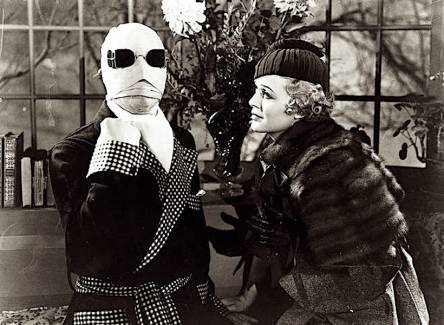
In 1931, James Whale began what is probably the best known part of his career as a producer. He signed a five-year contract with Universal Studios and received his first project, the 1931 drama-war romance film “Waterloo Bridge”, which starred actress Mae Clarke, who is remembered by many for playing Jame Cagney’s girl in “The Public Enemy”. Later in 1931, Carl Laemmie, Jr, the twenty-five year old head of Universal Studios, gave Whale his choice of which studio-owned property he wanted for his next shoot; Whale chose the script for “Frankenstein”. He casted Colin Clive as Henry Frankenstein and Mae Clarke as Elizabeth Frankenstein, Henry’s wife, and chose the little known Boris Karloff for the role of the Monster. Shooting ran from August 24th of 1931 to October 3rd. After premieres on October 29th of 1931, “Frankenstein” had a wide release beginning on November 21st and instantly became a hit with critics and the public.

In 1932, Whale directed two films: the drama “The Impatient Maiden” and a thriller film with Karloff and Charles Laughton entitled “The Old Dark House”, which has been credited with reinventing the “old house” genre of horror films. Whale’s 1933 film, “The Kiss Before the Mirror”, a pre-Code mystery film, received little notice and was a box-office failure. With a script approved by author H. G. Wells, Whale returned to the horror genre and produced the 1933 “The Invisible Man” which the New York Times placed in their list of best films for that year. This adaption of Well’s book, whose special effects were done in utmost secrecy, broke box-office records in cities across America.

James Whale’s next major project was the 1935 “Bride of Frankenstein”, a sequel to the original movie which he was initially reluctant to do for fear of being typecast as a horror director. The film, however, was a critical and commercial success; today it is regarded as the finest of all gothic horror movies and considered Whale’s masterpiece. Whale worked next on a comedy-mystery film entitled “Remember Last Night?” which resulted in divided reviews. After its completion, Whale started immediately on the project that had been in his mind for a long time, a film version of the stage production “Show Boat”. 

For the film version of this long-running romantic musical, Whale gathered as many members of the original show as he could; these included Paul Robeson, Helen Morgan, Sammy White, Irene Dunne, and conductor Victor Baravalle and orchestrator Robert Russell Bennett. Great care was taken by Whale to ensure a feeling of complete authenticity in the set and costume design for this film. Faithfully adapted from the original stage production, the 1936 “Show Boat” is considered the definitive film version of the musical by many critics. This film was the last of Whale’s films produced with the Laemmie family.

Jame Whale eventually retired from the film industry in 1941. Encouraged by his partner David Lewis to resume his artwork, he rediscovered his love of painting and built a studio for himself. In 1942, Whale made training films for the United States Army and created, in collaboration with actress Claire DuBrey, the theater group Brentwood Service Players. He returned to Broadway to direct the 1940 thriller “Hand in Glove” and directed his final film, a short subject entitled “Hello Out There”. Whale’s last professional engagement was the comedy play “Pagan in the Parlour”, which was forced to close early due to contract difficulties that happened during its opening tour in Europe.

While in Europe, Whale met and became infatuated with the twenty-five year old bartender Pierre Foegel. He made the decision to bring Foegel back to the United States as his chauffeur. In November of 1952 when David Lewis heard this, he ended their twenty-three year relationship, separated but still maintained a friendship. Foegel moved in with Whale in early 1953, returned for several months to France, and then in 1954  moved back permanently with Whale. In the spring of 1956, Whale suffered a small stroke, and was hospitalized several months later after suffering a second and more severe stroke. As his mental faculties were diminishing, he began to suffer from mood swings and depression. 

James Whale committed suicide, at the age of sixty-seven, by drowning himself in his Pacific Palisades swimming pool on the 29th of May in 1957. He left a suicide note to David Lewis, who withheld it from the public until his own death. Whale was cremated per his request and his ashes were interred in the Columbarium of Memory at Forest Lawn Memorial Park in Glendale, California. When David Lewis died in 1987, James Curtis, as his executor, had Lewis’s  ashes interred in a niche across from Whale’s internment site. James Curtis would later write the definitive biography of Whale, “James Whale: A New World of Gods and Monsters”, published in 2003.

Note: James Whale lived as an openly gay man throughout his career in the British theater and in Hollywood, which was virtually unheard of in that era. While he did not go out of his way to publicize his homosexuality, he made no effort to conceal it either.

Top Insert Image: Photographer Unknown, “James Whale” (Profile), circa 1930, Cream-Toned Vintage Print, 23.7 x 18 cm, National Portrait Gallery, Washington, DC

Second Insert Image: Arthur Edeson, “Colin Clive and Boris Karloff”, 1931, Film Shot from “Frankenstein”, Director James Whale, Universal Pictures

Third Insert Image; Arthur Edeson, “Claude Rains and Gloria Stuart”, 1933, Film Shot from “The Invisible Man”, Director James Whale, Universal Pictures

Fourth Insert Image: Photographer Unknown, “James Whale”, Date Unknown, Studio Photo Shoot, Universal Pictures

Fifth Insert Image: John J. Mescall, “Paul Robeson, Irene Dunne, Hattie McDaniel, and Helen Morgan”, 1936, Film Shot from “Showboat”, Director James Whale, Universal Pictures

Bottom Insert Image: Photographer Unknown, “James Whale”, circa 1930, Cream-Toned Vintage Print, 23.7 x 18 cm, National Portrait Gallery, Washington, DC

Carl Phillips: “To Sing a Song of Water”


Photographers Unknown, To Sing a Song of Water

Archery

           was still a thing, then. To have timed your arrow
perfectly meant watching the air for a moment
seem stitched throughout with a kind of
timelessness. To have straddled at last, correctly,
the storm of falling in love (and staying there) meant
the smell of apples, victory, tangerines, and smoke
all mixed together on the breath

of a stranger, half asleep still, just beginning to remember a bit,
as he stirs beside you. I dreamed we were young again,
he’s mumbling, as if to someone whose name he’s known
long enough to have called it out more than once in anger
and sex and fear equally. Somewhere happiness too,

right? All those hours spent trying to outstare the distance
of what the days must come to,

and pretending a choice to it: now the shadow-script
that willows and hazel trees mark the barn’s western
face with; now the wind-rippled field, like a lesser version—tamer,
tameable—of the sea, for movement (same infinite
pattern, and variation; randomness and intention; release;
restraint—that kind of movement) …

                                                         Dear saddle
of gentleness. Dear moss, sweet moss that only
the dark and wet and patience make possible. To sing a song
of  water, and not drown in it. And some calling that
a good trick. And some calling it

mastery. That last flickering before nightfall. From beneath
the low branches. I dreamed we were new again. Stars. Just a little
past dusk.

Carl Phillips, Archery, 2020

Born in Everett, Washington, in July of 1959, Carl Phillips is an American poet and writer. The child of a military family which changed residences year to year, he spent his teenage years in Cape Cod, Massachusetts. Phillips earned his Bachelor of Arts from Harvard University, where he studied Latin and Greek. He next earned a Master of Arts in Teaching from the University of Massachusetts, and his Master of Arts in Creative Writing from Boston University. 

Phillips first began to write poetry in his teenage years, a time during which he constructed a world of his own that he could rely on. After entering Harvard University, he did not write any poetry for a long time; however, in 1990 after coming to terms with his identity as a gay man, Phiilips rediscovered his voice as a poet. A classicist by his formal training, he draws allusions to classical art, music and literature in his poems through the use of metaphors and associative words. His poems are often presented in a narrative form which is emphasized through the use of spaced pauses, italics, hyphens, ellipsis, and parentheses. 

Phillips published his first collection of poems, “In the Blood”, in 1992. This collection of love poems and poems based on Greek mythology and Christian iconography won the Samuel French Morse Poetry Prize. His second book, the 1995 “Cortège”, a collection which explores desire and the various points at which spirit and flesh intersect, was nominated tor the National Book Critics Circle Award and the Lambda Gay Men’s Poetry Award.

Carl Phillips’s collections, the 2000 “Pastoral” and the 2001 “The Tether”, winner of the Kingsley Tuft Poetry Award, were both well received by the critics. His seventh book, the 2005 “The Rest of Love”, examined the conflict between belief and disbelief and our ability to face up to hard truths. This collection won the 2005 Thom Gunn Award. Phillips’s recent work includes “Speak Low”, a 2009 work that was a finalist for the National Book Award; the 2011 “Double Shadow” which won the Los Angeles Times Book Prize for Poetry; and the 2013 “Silverchest” which was nominated for the Griffin Prize. His thirteenth collection of poems, the 2015 “Reconnaissance”, was nominated for an NAACP Image Award for Best Poetry and won the Lambda Literary Award and the PEN Center USA Award.

Carl Phillips has also published works of criticism; two collections of essays puvlished by Graywolf Press include the 2004 “Coin of the Realm”Essays on the Life and Art of Poetry” and the 2014 “The Art of Daring: Risk, Restlessness, Imagination”. 

Carl Phillips previously taught Latin in public schools for eight years before becoming Professor of English at St. Louis’s Washington University, where he also teaches creative writing. He was elected a chancellor of the Academy of American Poets in 2006 and has served as the judge for the Yale Series of Younger Poets since 2011. Phillips received an Award in Literature form the American Academy of Arts and Letters, the Academy of American Poets Prize and a Pushcart Prize. 

Note: Carl Phillip’s 1995 poem, “Cortège”, was actually my first choice for the poem to be included with his biography; however, the poem in its full form was too lengthy for this posting. For those interested in reading this poem, I offer this link: https://www.poetryfoundation.org/poems/47856/cortege-56d228a1cf7ae