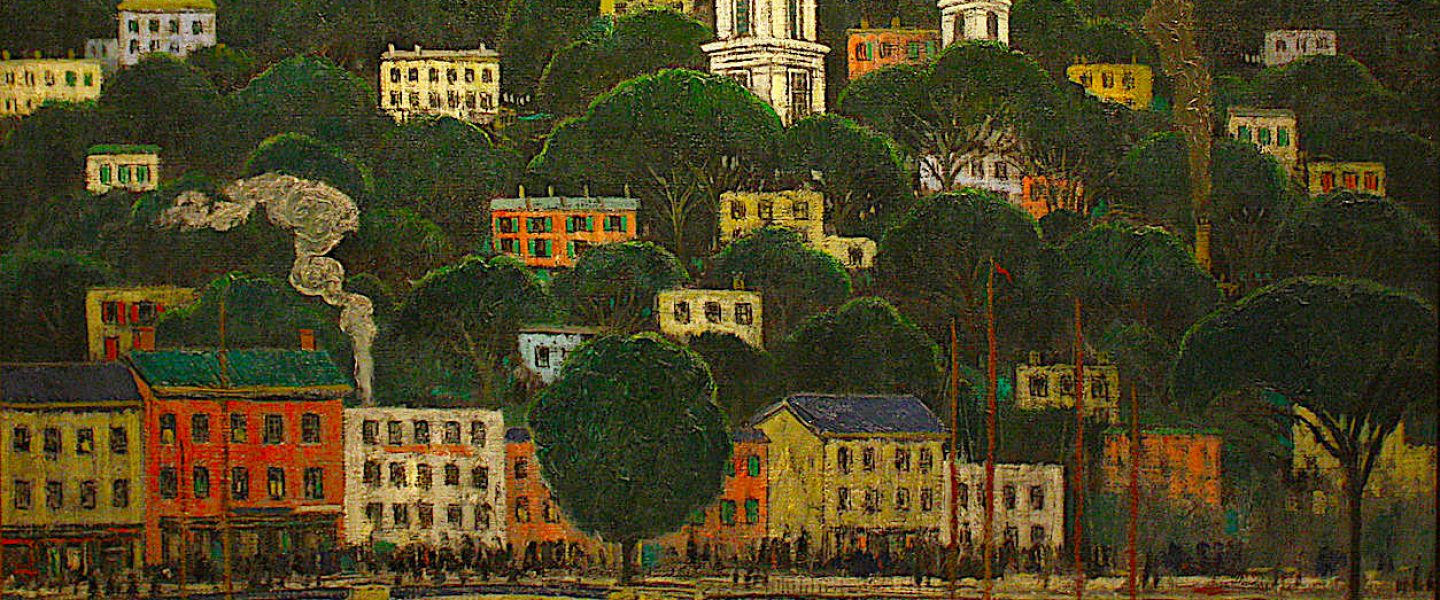
Calendar: November 25

A Year: Day to Day Men: 25th of November

The Jaguar Hunter

November 25, 1920 marks the birthdate of actor Ricardo Montalbán

Born in Mexico City, Mexico, to Spanish immigrants, Ricardo Montalbán made his New York stage debut in 1940 in a small role in “Her Cardboard Lover”, starring Tallulah Bankhead. In 1947 he landed his first major Hollywood film role in the musical “Fiesta”, playing twin siblings with Esther Williams. Montalbán had a memorable dance number in that film with Cyd Charisse.

The dark, handsome Montalbán with the Spanish accent would go on to play numerous Latin romantic-types. He teamed up again with Esther Williams in two more films, the musical romantic comedy “Neptune’s Daughter” and the 1948 romantic comedy “On an Island with You”. In 1949, Montalbán broke from his romantic typecast to play a border agent in the suspense drama film “Border Incident” directed by Anthony Mann.

During the 1950s and 1960s Montalbán was one of only a handful of actively working Hispanic actors in Hollywood, often playing characters of different ethnicities, such as the character Nakamura in the 1957 “Sayonara” and Tokura in a “Hawaii Five-O” episode. He also starred as a naive, penniless French duke in the romance comedy “Love is a Ball” released in 1963.
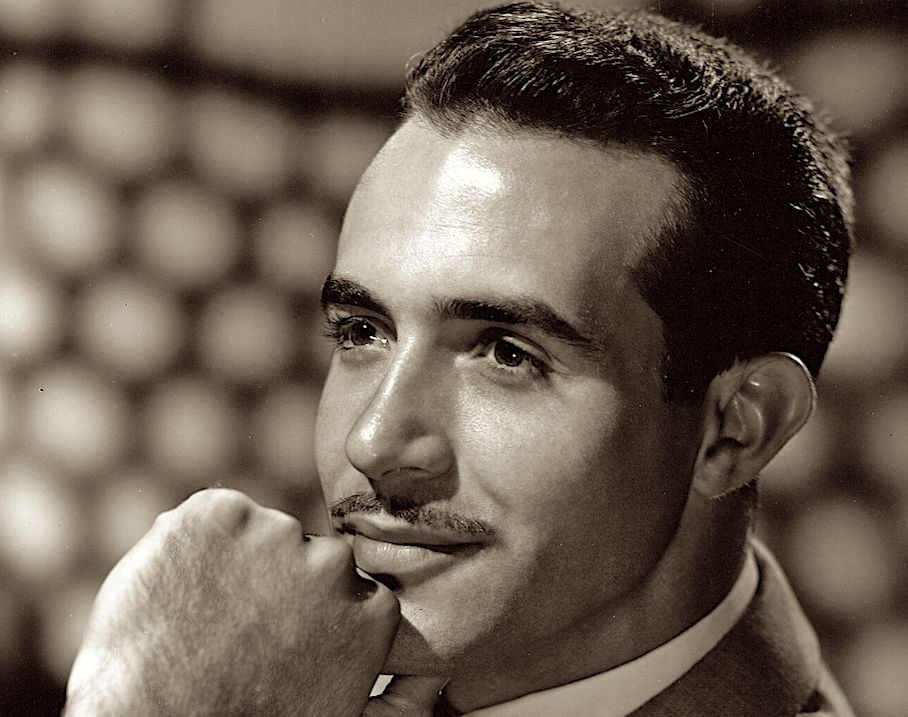
Ricardo Montalbán’s best known television role was that of the man in the white suit with the cultured demeanor, Mr. Roarke, on the television series “Fantasy Island” which ran from 1977 to 1984. The series was one of the most popular on television at that time, making him and his co-star Herve Villechaize, playing Tattoo, popular icons.

Montalbán’s most well-known film role was the character of Khan Noonien Singh in the 1982 “Star Trek II: The Wrath of khan”, in which he reprised the role he had originated in the 1967 episode of “Star Trek” titled “Space Seed”. Montalbán was already physically fit; so Khan’s costume was specifically designed to display his physique. He agreed to take the role at a significant pay cut because he relished reprising his original character. His only regret, Montalbán said, was that he and William Shatner never interacted in their roles; the scenes were all done through video communication, filming their scenes months apart to accommodate Montalbán’s schedule for “Fantasy Island”.

Montalbán reacted to the poor way Mexicans were being portrayed by establishing with other stars the Nosotros (We) Foundation in 1970 to advocate for Latinos in the movie and television industry. He served as its first president. The foundation created the Golden Eagle Awards, an annual awards show that highlights Latino actors. The awards are presented in conjunction with the Nosotros American Latino Film Festival, held at the now renamed Ricardo Montalbán Theater in Hollywood.

Subjective Experience

A Subjective Experience

“Human consciousness cannot be a passive observer of the outer world, just interpreting the input signals that are being received by the brain from the external world. Rather, it compares the fitness of a person’s inner world — feelings, perception, imagination, dreams, desires, etc. — with the external world, allegedly accepted as ‘objective reality’ outside individual consciousness. However, such an objective reality cannot be so objective as it is believed to be. Due to various internal processes to achieve a balance between the inner and outer worlds, consciousness insensibly changes the physical characteristics of reality, making it a subjective phenomenon, at least to a large extent. For this reason, in order to determine what is real (outside of human consciousness) and what is just a subjective experience, it is actually a difficult job.”
― Elmar Hussein

Calendar: November 24

A Year: Day to Day Men: 24th of November

One Facet of Life

November 24, 1639 marks the first known observation and recording of a transit of Venus.

By the 17th century, two developments allowed for the transits of planets across the face of the sun to be predicted and observed. One was the telescope of which the actual inventor is unknown; a patent for a refracting telescope was submitted in 1608 in the Netherlands by spectacle maker Hans Lippershey. Galileo heard about it, and in 1609 built his own version for observing celestial objects.

The second development was the new astronomy of Johannes Kepler, which assumed elliptical rather than circular orbits fro the planets. In 1627, Kepler published his “ Rudolphine Tables”, a star catalogue and planetary tables using some observational data collected by Danish astronomer Tycho Brahe. Two years later, Kepler published extracts from his tables concerning the transit of Mercury and of Venus for the year 1631. These occurred as predicted and were observed by several astronomers, vindicating Kepler’s approach to astronomical theory.

The first known observations and recording of the transit of Venus across the sun were made in 1639 by the English astronomers Jeremiah Horrocks and his friend and correspondent William Crabtree. These observations were made on November 24, under the Julian calendar then in use in England. This calendar was refined and gradually replaced by our Gregorian calendar initiated by Pope Gregory XIII, changing the observation date to December 4th of that year. Horrocks observed the event from the village of Much Hoole, Lancashire, and Crabtree, independently, observed the event from his home in Broughton, near Manchester.

Both men, followers of Kepler’s astronomy, were self-taught mathematical astronomers who methodically worked to correct and improve Kepler’s Tables by observation and measurement. In 1639, Horrocks was the only astronomer who realized that the transit of Venus was imminent; others became aware only upon receiving Horrocks’s report. The two men’s observations and later mathematical work were influential in establishing the size of the solar system. For their achievements, they are considered the founders fo British research astronomy.

Insert Image: Ford Madox Brown, “Crabtree Watching the Transit of Venus AD 1639”, 1883, Oil on Canvas, Manchester Town Hall, Manchester, England

Alan Wilson Watts: “A Whole System of Symbols”

Photographer Unknown, Model Unknown, (A Whole System of Symbols)

“The art of meditation is a way of getting into touch with reality, and the reason for it is that most civilized people are out of touch with reality because they confuse the world as it with the world as they think about it and talk about it and describe it. For on the one hand there is the real world and on the other there is a whole system of symbols about that world which we have in our minds. These are very very useful symbols, all civilization depends on them, but like all good things they have their disadvantages, and the principle disadvantage of symbols is that we confuse them with reality, just as we confuse money with actual wealth.”
― Alan Wilson Watts

Valery Bryusov: “A Sweet Whirling of Ecstasy”

Photographers Unknown, Beguiling the Senses and Enchanting the Mind: Photo Set Seven

“If there exist fortunate people, if from time to time the wild sun of joy soars towards foreign lands in a sweet whirling of ecstasy — then where are the words which might tell of this? And if in the world there exists a beauty for enchantment, then how might one describe it?”

― Valery Bryusov

Michael Ende: “The Never-Ending Story”


Artist Unknown, (The Endless Story), Computer Graphics, Film Gifs

“Human passions have mysterious ways, in children as well as grown-ups. Those affected by them can’t explain them, and those who haven’t known them have no understanding of them at all. Some people risk their lives to conquer a mountain peak. No one, not even they themselves, can really explain why. Others ruin themselves trying to win the heart of a certain person who wants nothing to do with them. Still others are destroyed by their devotion to the pleasures of the table. Some are so bent on winning a game of chance that they lose everything they own, and some sacrafice everything for a dream that can never come true. Some think their only hope of happiness lies in being somewhere else, and spend their whole lives traveling from place to place. And some find no rest until they have become powerful. In short, there are as many different passions as there are people.”
― Michael Ende, The Never-Ending Story