José Moreno Carbonero, “Gladiators After the Fight”, circa 1882, Oil on Canvas, 230 x 300 cm, Museo de Málaga, Museo de Prado Collection
Born at Málaga in March of 1858, José Moreno Carbonero was a Spanish decorator and painter, one of the last history painters of the nineteenth-century. A celebrated portraitist of Madrid’s upper classes, he was influenced by  Spanish Romantic painter Mariano Fortuny, known for his historical and orientalist themed works.
The son of a carpenter, José Carbonero enrolled in Málaga’s School of Fine Arts in 1868 and also studied under Bernardo Ferrándiz Bádenes, a costumbrista painter and the Chair of Color and Composition at the Escuela de Bella Artes de San Telmo. While at Ferrándiz’s studio, Carbonero was introduced to history painting and his teacher’s revolutionary views of commitment to freedom, independence and nonconformity. In 1872 at the age of fourteen, he was awarded a gold medal at the Exhibition of the Lyceum of Málaga.
Carbonero visited Morocco in 1873 where, influenced by Mariano Fortuny’s portraits and exotic, orientalist court scenes, he began to create African-themed paintings. After receiving a scholarship from the Málaga government, he traveled to Paris and joined the studio of painter and sculptor Jean-Léon Gérôme, one of the three most successful artists of the Second French Empire. Carbonero became acquainted with art dealer/publisher Adolphe Goupil, who introduced him to the commercial popularity of small genre paintings known as tableautins, a form of art that afforded great success.
After a study trip to Rome, Moreno Carbonero won a gold medal at Madrid’s 1881 National Exhibition of Fine Arts for his portrait “El Príncipe don Carlos de Viana”, now in the Prado Museum. Three years later, he won a second gold medal at the National Exhibition for his 1884 large-scale scene “La Conversión del Duque de Gandia”, which he painted during his time in Rome. Recognized for his ability, Carbonero received commissions from several official institutions including the Spanish Senate and the country of Argentina.
For the Conference Hall of the Spanish Senate, Carbonero created the 1888 “Entrada de Roger de Flor en Constantinopla”, a large-scale (350 x 550 cm) depiction of the Italian mercenary Roger de Flor and his troops entering Constantinople to relieve the Emperor from Turkish occupation. For this work, Carbonero did extensive research in Paris on the architecture,  decoration and clothes of the Byzantine Empire, and created dozens of staging models and small paintings of individual warriors.
Moreno Carbonero received the highest award at the 1888 Vatican Exposition and participated in the International Exhibitions held in Munich and Vienna. Other awards included a silver medal at the 1889 Exposition Universelle in Paris, a gold medal at the 1890 Budapest International Exposition, an honorary degree at the 1891 Berlin Universal Exposition, and the only gold medal at the 1893 World’ Columbian Exposition in Chicago.
In 1910, Moreno Carbonero received a commission from King Alfonso XIII of Spain for a commemorative painting to be given to the city of Buenos Aires to mark the city’s one-hundredth anniversary of the Argentine War of Independence. For this work, Carbonero proposed that the painting, “The Founding of Buenos Aires”, combine three symbolic representations for religion, justice and conquest. Its scene refers historically to the second (and permanent) founding of Buenos Aires on the Rio de la Plata, The 400 x 250 cm work depicts Juan de Garay with his sixty-three soldiers taking possession of the area on behalf of King Felipe II of Spain on the eleventh of June in 1580.
As a history painter, Carbonero was eclectic in his style and, due to his early success at creating small-scale genre paintings, excelled in drawing and clean brushwork. He was adamant about the historical accuracy of his paintings to the extent of repainting in 1924 some sections of his finished 1909 “The Founding of Buenos Aires” due to factual errors in its composition. In his scenes of large historical events, Carbonero put extra focus on portraying the reactions and feelings of the event’s participants..
Beginning in 1892 until his death, José Moreno Carbonero was an Academician and Professor of Live Drawing at Madrid’s Real Academia de Bellas Artes de San Fernando. He died in Madrid at the age of eighty-two in April of 1942 and was buried in the city’s San Miguel Cemetery. His work is in many private and public collections; the collection of Málaga’s Museo de Belles Artes holds thirty works by Carbonero.
Notes: Costumbrista painting was a localized branch of genre painting in Spain that had a realistic focus on precise representation of particular times and places, It captured the social and/or aesthetic behavior that characterized a human group belonging to a specific time, place, and culture, without any particular analysis of the depicted social scene. Artists who worked in this genre included Vincente Castell, José Villegas, Antonio Cabral Bejarano, and Leandro Ramón Garrido.
José Moreno Carbonero’s 1882 “Gladiadores Después del Combate (Gladiators After the Fight)” was submitted by the artist during his first year as a scholarship recipient in Rome. It was displayed in the Scholarship Recipients’ Section of the 1884 National Exhibition of Fine Arts in Rome. The inscription on the intrados of the pillar referred to the profession of the figures depicted in the scene and translated as follows: “The gladiatorial company of the aedile A. Suetius Certus will fight in Pompeii on May 31. There will be hunting and awnings.”
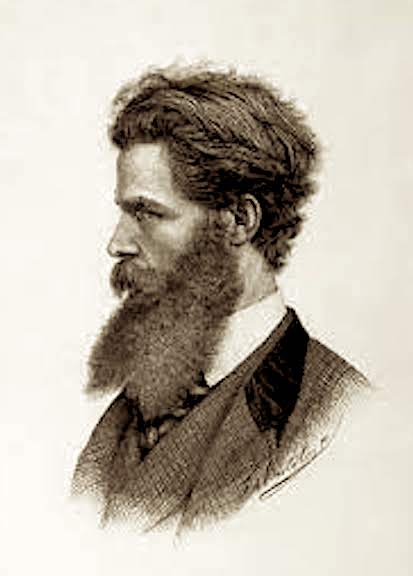
Top Insert Image: Christian Franzen, “José Moreno Carbonero”, 1898, December 15, 1898 Issue, “La Illustración Española y Americana”, Madrid, Spain
Second Insert Image: José Moreno Carbonero, “Portrait of H.R.H. King Alfonso XIII de Borbón”, 1927, Oil on Canvas, 74 x50 cm, Private Collection
Third Insert Image: José Moreno Carbonero, “Bebiendo en la Fuente (Drinking from the Fountain, Date Unknown, Oil on Canvas, 31.5 x 55.5 cm, Private Collection
Fourth Insert Image: José Moreno Carbonero, “El Fumador de Kif”, 1890s, Oil on Canvas, 126 x 166 cm, Private Colllection
Bottom Insert Image: José Moreno Carbonero, “Study of a Guarani Man, Argentina”, 1922, Oil on Canvas, 32 x 26 cm, Private Collection