Cecil Milton Hepworth: Film History Series

Cecil Hepworth and Percy Snow, “Alice in Wonderland”, 1903, Silent Blcak and White Film, Cinematographer Cecil Hepworth, Hepworth Studios, Film Gifs

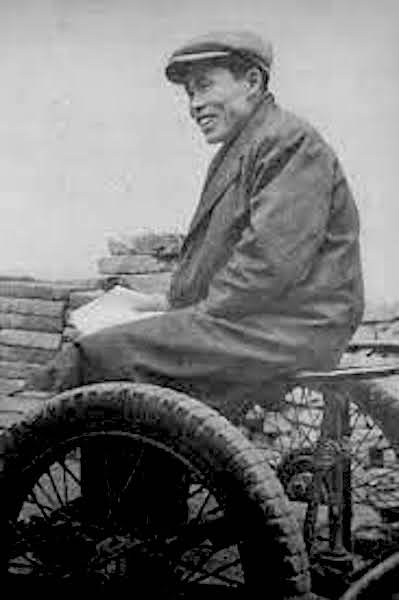
Born in the London borough of Lambeth in March of 1874, Cecil Milton Hepworth was a British film director and producer, screen writer, and inventor. Among the founders of the British film industry, he continually made films at his Hepworth Studios from 1897 to 1923,

Born to the magic-lantern showman and author Thomas Cradock Hepworth, Cecil Hepworth began working in the early stages of filmmaking under film pioneer Birt Acres, the inventor of the Birtac, Britain’s first 35 mm moving picture camera. He also worked during this time under film producer and distributor Charles Urban, a pioneer of documentary and educational films, many of them produced through the Kinemacolor motion picture color system. With the knowledge he acquired from this experience, Hepworth wrote in 1897 the first British book on filmmaking.

Hepworth and his cousin Monty Wicks founded the Hepworth Film Manufacturing Company, later renamed Hepworth Picture Plays. In 1899, they established Hepworth Studios, a small film studio in Walton-on-Thames in northwest Surrey. In 1901, the British director Percy Stow entered into a partnership with Hepworth until 1904 when Snow founded his Clarendon Film Company, a movie camera equipment company which made short films. Snow specialized in film effects and became co-director on the 1903 “Alice in Wonderland”, his second film with Hepworth Studios.

Cecil Hepworth was the inventor of the Hepworth Vivaphone, a 1910 early sound on disc system developed and marketed by the Hepworth Film Manufacturing Company. It was not a true synchronized sound system for film. The performers appearing in the films would typically synch their singing and speech to prerecorded phonograph records. The device and the short films produced on this system were distributed in Britain and later, beginning in 1913, to Canada and the United States.

Despite Hepworth’s increasingly outdated film style, Hepworth Studio continued making popular films into the 1920s. The studio had several successful films, including the 1905 “Rescue by Rover”, whose collie is considered the first canine film star, and the internationally successful 1919 “Alf’s Button”, the story of a British soldier whose magic button produces a wish-fulfilling genie. Despite these successes, Hepworth failed to raise the necessary capital to fund studio development. After the box office failure of the 1923 “Coming Thro the Rye”, Hepworth declared bankruptcy, which put the studio in receivership and ended his career as a director and producer. All of the original films in Hepworth’s possession were melted down by the receiver to sell the silver. Though some originals and copies have survived, many of the studio’s films are considered lost to history. 

Cecil Hepworth, proud of his place in history, toured in later life with a lecture program on the birth of cinema. Among the films he had produced were several Charles Dickens adaptions, including “Oliver Twist” and “David Copperfield”, and a version of “Hamlet” starring Sir Johnston Forbes-Robinson, an actor considered the finest Hamlet of the Victorian era. So popular were Hepworth’s films that actress Alma Taylor, who starred in fourteen films by his studio, became one of the major British stars of the 1910s and early 1920s. Cecil Hepworth died in February of 1953 in Greenford, Middlesex, England at the age of seventy-eight.

Hepworth Studio’s 1903 British silent fantasy film “Alice in Wonderland” was directed by Cecil Hepworth and Percy Snow. Only one copy of the original twelve-minute film is known to exist. The British Film Institute partially restored the film and its original film tinting and, in 2010, released the restoration with a running time of nine minutes. Filmed mostly in Oxford’s Port Meadow, it is the first movie adaption of Lewis Carroll’s 1865 children’s book “Alice’s Adventures in Wonderland”. Instead of a flowing narrative found in the book,  the story is seen through several vignettes taken from the novel. 

The 1903 “Alice in Wonderland” starred May Clark, already a Hepworth Studio veteran at age eighteen, as Alice; Cecil Hepworth as The Frog Footman; Cecil’s wife Margaret Hepworth as the White Rabbit and the Red Queen of Hearts; Norman Whitten as the Mad Hatter and The Fish; and the two Faithfull brothers, Geoffrey and Stanley, as Playing Cards. The Hepworth’s family cat made its appearance as the Cheshire Cat. The film is notable for the early special effects work by Percy Snow, among which are Alice’s shrinking in the Hall of Many Doors and the regrown Alice stuck inside the White Rabbit’s tiny home. 

Note: The restored 1903 “Alice in Wonderland” was released as a bonus feature on a 1996 British Broadcasting Company disc. It is now available from several sources including online venues. A full-length restoration with a piano soundtrack, which is available as a download, can be found at the Internet Archive located at:  https://archive.org/details/AliceInWonderland1903

Top Insert Image: Photographer Unknown, “Cecil Milton Hepworth”, circa 1910-1920

Three Insert Images: Lewis Carroll, “Alice’s Adventures in Wonderland”, 1895, Book Cover with Two Illustrations by John Tenniel, Publisher McMillan & Company, New York

Edward Everett Horton Jr: Film History Series

James Hargis Connelly, “Edward Everett Horton Jr, circa 1930s, Publicity Photo, Gelatin Silver Print

Born in Brooklyn, New York in March of 1886, Edward Everett Horton Jr. was an American character actor. A veteran of the stage, he was one of the actors who made the transition to Hollywood at the advent of the sound era. The pretentiously mannered dictation and pompous disposition of Horton’s film character enabled him to succeed in the theatrical, dialogue-driven comedies and musicals of the 1930s. Slightly coded queer characters in these early films, played by such talented actors as Clifton Webb, Franklin Pangborn and Horton, acted as a juxtaposition to the romantic-male stereotypes of that era.

Edward Everett Horton attended Boys’ High School in Brooklyn and Baltimore’s City College, a liberal arts college-preparatory school in Maryland. He was a student at Oberlin College in Ohio until his expulsion for pretending to jump off one of the college’s buildings; he threw a dummy from the roof. Horton attended the art courses at Brooklyn’s Polytechnic Institute for one year and changed to courses at Columbia University. After his performance at the university’s “The Varsity Show of 1909”, Horton and Columbia University parted ways amicably. 

Horton’s stage career began in 1906 during his college years. He sang, danced and played small roles in college productions, vaudeville and Broadway productions. Horton, as manager and lead actor, played shows with actor Franklin Pangborn at New York City’s Majestic Theater on Broadway. In 1908, he joined noted actor Louis Mann’s theater troupe and learned all the basics: props, sound effects, acting and stage management. In 1909, Horton played the hysterical husband in actress Theda Bara’s Broadway production of “A Fool There Was” to great reviews. This play later became the 1915 silent film of the same name with Belgian actor Edward José as the husband.

Edward Horton moved to Los Angeles, California in 1919 and joined the Thomas Wilkes theatrical company at Los Angeles’s Majestic Theater. He also received a contract for three films at Vitagraph Studios, one of the most prolific film producers at that time. Horton’s first starring film role was in the 1922 comedy “Too Much Business”. Lent to Paramount, he achieved his biggest success in silent film with the role of the very proper English butler in the 1923 “Ruggles of Red Gap”. Horton followed this success with the leading role of a young classical composer in the 1925 “Beggar on Horseback”. Between 1927 and 1929, he starred in eight two-reel silent comedies that were produced by Harold Lloyd for Paramount Pictures.  

In 1925, Horton purchased the Encino neighborhood property in the San Fernando Valley that would be his residence until his death. The twenty-one acre property named Belleigh Acres contained his own house as well as houses for his brother and sister with their respective families. Desiring to produce his own theatrical plays, Horton leased the Vine Street Theater, later known as the Huntington Hartford, in February of 1928. Among the plays he performed at the theater was “The Nervous Wreck” which co-starred silent film actress Lois Wilson; Horton had played in the original 1923 production with the Thomas Wilkes company. Although he ceased his stage production in early 1930, Horton would appear in many local productions in his later years.

Edward Horton, through his silent-comedy work with Educational Pictures in the late 1920s, made an smooth transition to sound films. Stage-trained, he found film work easily and appeared in two films for Warner Brothers: director Roy Del Ruth’s 1928 horror film “Terror” and Archie Mayo’s live-action 1929 “Sonny Boy”. Horton appeared in many 1930s’ comedy features and became well known for his supporting-role characters. Among these film roles were the reporter in the 1931 “Front Page’; the husband in Ernest Lubitsch’s 1933 “Design for Living”; Fred Astaire’s friend Egbert in the 1934 “Gay Divorcee”; Horace Hardwick in the 1935 musical comedy “Top Hat” starring Astaire and Ginger Rogers; and the paleontologist Alexander Lovett in Frank Capra’s 1937 adventure-fantasy film “Lost Horizon”.

In the 1940s, Horton appeared in several notable films including the 1941 “Here Comes Mr. Jordan’, the 1944 “Arsenic and Old Lace” with Cary Grant and Raymond Massey, and the 1961 “Pocket Full of Miracles”, among others. He continued to appear in stage productions and, beginning in 1945, became the host for radio’s “Kraft Music Hall”. With a starting appearance on television’s “The Chevrolet Tele-Theater in December of 1948, Horton began a notable television career as a guest star on such shows as “I Love Lucy”, “Dennis the Menace” and “The Real McCoys”. However for many television viewers, he remains best known for his voice role as the wise narrator of Fractured Fairy Tales in the animated series “The Rocky and Bullwinkle Show” which aired from 1959 to 1964.

Edward Horton’s long-term companion was the actor Gavin Gordon, who had been an actor with Horton’s theater company. They had both appeared in the 1931 Broadway production of Noël Coward’s “Private Lives” and in the 1961 film “Pocket Full of Miracles”. Fifteen years younger than Horton, Gordon starred as Greta Garbo’s leading man in the 1930 “Romance” and later played the role of Lord Byron in James Whale’s 1935 “The Bride of Frankenstein”. His distinctive voice enabled him to also appear in numerous radio dramas. Gavin Gordon died on his eighty-second birthday, the seventh of April in 1983. 

Holding over one-hundred eighty acting credits, Edward Everett Horton was an actor with solid and professional performances throughout his career as a character actor. He passed away, at the age of eighty-four, in Los Angeles on the twenty-ninth of September in 1970. Horton’s remains are interred at the Forest Lawn Memorial Park Cemetery in Glendale, California. For his contributions to the motion picture industry, he has a star on the Hollywood Walk of Fame at 6427 Hollywood Boulevard.  

Notes: For those interested in more information on Edward Everett Horton, I recommend two sites which have biographical information as well as film clips of Horton’s work: 

Dare Daniel- Podcast and Movie Reviews found at: https://daredaniel.com/2014/04/30/great-character-actors-edward-everett-horton/

The WOW Report article by writer and actor Stephen Rutledge located at: https://worldofwonder.net/bornthisday-beloved-character-actor-edward-everett-horton/

Top Insert Image: Photographer Unknown, “Edward Everett Horton Jr”, circa 1930s, Publicity Photo, Gelatin Silver Print

Second Insert Image: Cinematographer David Abel, “Fred Astaire and Edward Everett Horton Jr”, 1935, Film Shot from “Top Hat”, Director Mark Sandrich, RKO, Rko/Kobal/Shutterstock (5883758s)

Third Insert Image: Cinematographers David Abel and Joseph F Biroc, “Edward Everett Horton Jr and Eric Blore”, 1937, Film Shot from “Shall We Dance”, Director Mark Sandrich

Fourth Insert Image: Cinematographer Sol Polito, “Cary Grant, Josephine Hull, Edward Everett Horton Jr,  Jean Adair and Peter Lorre”, 1944, Film Shot from “Arsenic and Old Lace”, Director Frank Capra 

Bottom Insert Image: Photographer Unknown, “Edward Everett Horton Jr and Carmen Miranda”, 1937, Publicity Shot for “Springtime in the Rockies”, Director Irving Cummings, Cinematographer Ernest Palmer

Anton Walbrook: Film History Series

Born in Vienna in November of 1896, Adolf Anton Wilhelm Wohlbrück was an Austrian actor who settled in the United Kingdom under the name Anton Walbrook. He was descended from ten generations of actors, although his father, Adolf Ferdinand Wohlbrück, broke from the tradition and became a well known and successful stage clown. At the age of seven, his family relocated to Berlin. Wohlbrück left school in 1911, at the age of fifteen, to train as an actor under the prominent theater and film director Max Reinhardt. 

Wohlbrück’s talent was quickly recognized and he was given a five-year contract to work with the Deutsches Theater. Still under contract, he enlisted and fought on both the western and eastern fronts before he was captured in France in 1917 to spend the rest of the war as a prisoner. After his return home, Wohlbrück met actress and director Hermine Korner who became a lifelong mentor and co-actor in several highly-praised stage productions. Although he enjoyed the classics, he also appeared in new stage productions and became drawn to the rapidly expanding German film industry.

In the early 1930s, Adolf Wohlbrück was cast in some exceptional movies among which were the 1933 cross-dressing musical comedy “Viktor and Viktoria” and the international 1934 Austrian operetta film “Masquerade” which later won the Best Screenplay at the Vienna Film Festival. Wohlbrück’s character in the 1934 film was Ferdinand von Heidenick, a charming, rather well-mannered, and slightly dangerous man. His following was built on films with such a character role; however, he also succeeded in other diverse roles in such films as the 1935 thriller “I Was Jack Mortimer”, director Arthur Robison’s 1935 German horror film “The Student of Prague”, and the 1936 action-packed historical drama “The Czar’s Courier”, based on Jules Verne’s novel “Michael Strogoff”.

Widely known and respected as an actor in both theater and film, Wohlbrück built up his career and appeared alongside some of Germany’s best leading ladies. In 1936, he traveled to Hollywood to reshoot dialogue for the 1937 multinational film “The Soldier and the Lady”, director George Nichols Jr’s American version of “Michael Stogoff”. It was during this period in Hollywood that Wohlbrück changed his name to Anton Walbrook. Rather than return to Germany where, under the government’s law, he risked persecution due to being a homosexual and a person of mixed race in the first degree due to his mother being Jewish, Walbrook decided to settle in England.  He continued acting in England and appeared in many European-continental character roles. 

In the first six years of his film work in Britain, Anton Walbrook appeared in many film studies of men struggling to find their identities in a foreign land. These displaced person roles included Prince Albert in the 1937 “Victoria the Great” and its sequel, the 1938 “Sixty Glorious Years”; the role of Polish pilot and composer Stefan Radetzky in the 1940 “Dangerous Moonlight”; and the foreign domestic despot Paul Mallen in Thorold Dickinson’s 1940 version of the psychological thriller “Gaslight”. Walbrook also appeared on stage in the role of Otto in the first London production of “Design for Living” in January of 1939 playing opposite Diana Wynyard and Rex Harrison. 

Walbrook appeared in several more film roles in England during the late 1940s, including the dashing “good” German officer Theo Kretschmar-Schuldorff in the 1943 “The Life and Death of Colonel Blimp” and the tyrannical impersario in Michael Powell’s 1948 ballet film “The Red Shoes”, which received many nominations, a Golden Globe and two Academy Awards. One of Walbrook most unusual films of this time was the 1949 Gothic thriller “The Queen of Spades” in which he co-starred with Edith Evans. This fantasy-horror film, based on a short story by Alexander Pushkin, used sets from original baroque designs by English stage designer Oliver Messel. Some critics considered it one of the true classics of supernatural cinema.  

After the end of the war, Anton Walbrook returned to his homeland Germany and accepted stage work in Munich. His most notable film performances for this early-1950s period are the two movies he did for German-French director Max Ophüls: the 1950 French film “La Ronde”, nominated for two Academy Awards and originally classified by New York film censors as immoral, and the 1955 historical romance film “Lola Montès”, the last completed film of Max Ophüls. Walbrook’s final film role was the duplicitous French army officer Major Esterhazy in the 1958 Dreyfus Affair dramatization “I Accuse!”, directed by José Ferrer. 

After his last film, Walbrook performed in stage productions, both in Britain and Germany, often with appearances in comedies and musicals. He continued acting until his death of a heart attack in Feldafing, Bavaria, Germany in August of 1967. In accordance with his last testament, Walbrook was cremated and his ashes were interred in the churchyard of St. John’s Church, Hampstead, London.  

Note: In 2020, author and archivist at the University of Exeter’s Special Collections Department  James Downs published his monograph “Anton Walbrook: A Life of Masks and Mirrors”, the first Walbrook biography. Downs had previously written and presented conference papers on Walbrook and had curated the 2013 exhibition “Anton Walbrook: Star and Enigma” at the Bill Douglas Cinema Theater in Exeter, United Kingdom. More information on the biography can be found at: https://www.peterlang.com/document/1058817 

Top Insert Image: JDA Riga, “Anton Walbrook as Michael Strogoff, The Czar’s Courier”, 1936, Bromide Postcard Print, 13.7 x 8.6 cm, National Portrait Gallery, London

Second Insert Image: Anton Walbrook in “The Man from Morocco”, 1945, Director Mutz Greenbaum, Cinematographer Basil Emmett and Geoffrey Faithfull

Third Insert Image: Angus McBean, “Rex Harrison, Diana Wynyard, Anton Walbrook”, 1939, Gelatin Silver Print, 20.2 x 25.3 cm, Harvard Theater Collection, Harvard University

Fourth Insert Image: “Anton Walbrook as Jean Boucheron,The Rat”, “The Rat”, 1937, Director Jack Raymond, Cinematographer Freddie Young

Bottom Insert Image: Photographer Unknown, “Anton Walbrook”, Date Unknown, Studio Photo Shot, 15.2 x 10.2 cm, Private Collection

James Sibley Watson Jr: Film History Series

James Sibley Watson Jr., “Lot in Sodom”, 1933, Black and White Film, Twenty-Seven Minutes, Co-Producer: Melville Weber, Musical Score: Alex Wilder, Starring Friedrich Haak, Hildegarde Watson, Dorothea Haus, Lewis Whitbeck

Born in Rochester, New York in August of 1894, James Sibley Watson Jr. was an American medical doctor, publisher, photographer and experimenter in motion pictures. As an heir to the Western Union telegraph fortune created by his grandfathers, Don Alonzo Watson and Hiram Sibley, he grew up in a wealthy family that cultivated appreciation for the arts and encouraged an active, generous engagement in the Rochester community.

In June of 1916, Watson graduated from Harvard where he made two lifelong friends: poet, art collector and future business partner Scofield Thayer and poet-playwright E. E. Cummings. After graduation, Watson married the singer and actress Hildegarde Lasell who shared Watson’s passion and generous support for all fields of the arts. Despite his shy personality, Watson had several successful careers during his life. He became not only a practicing medical doctor but also contributed in both the publishing and film industries. 

James Sibley Watson was directly involved in the Modernist literary movement through his association with the modernist magazine “The Dial”. Originally an editorial reader, he and Scofield Thayer purchased the magazine in 1918 and produced their first issue in January of 1920. The magazine would feature works by friends of Thayer and Watson such as Cummings and the versatile sculptor Gaston Lachaise. After Thayer suffered a nervous breakdown in 1926, poet and critic Marianne Moore took his place as  editor. These three figures developed “The Dial” into one of the most influential magazines of American Modernism.

In the waning years of “The Dial” before it ceased publication in 1929, Watson became increasingly interested in experimental short films. He was joined in his endeavors by fellow Harvard graduate Melville Folsom Webber, who would become his permanent partner in film. The first film produced was a 1928 seventeen-minute ethnographic film entitled “Nass River Indians” which was distributed solely in Canada. Later in 1928, they produced a short avant-garde film “The Fall of the House of Usher”. Based on Edgar Allan Poe’s short story, this film achieved widespread success and was hailed as a major contribution to motion film. The third film of their collaboration was a lesser known work, the 1930 parody of sound-film melodrama “Tomatos Another Day”.

James Watson and Melville Webber’s next serious avant-garde film was the 1933 “Lot in Sodom” based on the Biblical tale of Sodom and Gomorrah. Directed by Watson and Webber, the twenty-seven minute film used multiple experimental techniques, avant-garde imagery and presented strong allusions to sexuality, particularly homosexuality. Composer Alec Wilder, a close friend of Watson, recruited the actors for the production, acted as assistant director and composed the original experimental soundtrack. The cast included Friedrich Haak as Lot, James’s wife Hildegarde as Lot’s wife, Dorothea Haus as Lot’s daughter and Lewis Whitbeck as the angel. 

Watson and Webber also produce a 1931 industrial film in collaboration with optical company Bausch & Lomb entitled “The Eyes of Science”. Multiple exposures, lap dissolves, color and micro-cinematography, as well as a number of unusual photographic effects, gave this film a technical interest much above the average. In 1938, Watson, this time in collaboration with filmmaker Ken Edwards, was engaged by the Kodak Research Laboratories to produce an industrial film on its manufacturing process for film and cameras. In “Highlights and Shadows”, Watson used the multiple exposure imagery he had used in his previous films to make the tool and die drill presses, assembly lines of camera parts, and the film coating process every bit as expressive and interesting as an MGM historic drama. The film featured a score performed by the symphony orchestra of the Eastman School of Music directed by Dr. Howard Hanson. 

After his work with “The Dial” and motion pictures, James Sibley Watson continued his medical career, with a specialization in gastrointestinal studies. The first color photographs of the stomach’s interior have been credited to him. Watson kept up his correspondence with E. E. Cummings, Alex Wilder and others from his days at “The Dial”. In the 1980s, he founded a private press, the Sigma Foundation, with writer and publisher Dale Davis. After Watson’s death in March of 1982, his second wife Nancy Watson Dean appointed Davis as executor and sold the Watson papers that Davis had compiled to the New York Public Library. 

Note:The full-length 1933 “Lot and Sodom” by James Sibley Watson Jr. can be found at the Internet Archive located at: https://archive.org/details/Lot_in_Sodom_1933

An excellent 1975 article written by James Sibley Watson Jr. on his production of the films “The Fall of the House of Usher” and “Lot in Sodom” was published in the University of Rochester Library Bulletin. The article can be found at: https://rbscp.lib.rochester.edu/3507

The 1938 black and white film “Highlights and Shadows” and an article on its production can be found at the online Eastman Museum site located at: https://www.eastman.org/highlights-and-shadows 

Top Insert Image: Photographer Unknown, “James Sibley Watson Jr.”, circa 1930-1940, Memorial Art Gallery of the University of Rochester

Remaining Insert Images: James Sibley Watson Jr, “The Fall of the House of Usher”, 1928, Film Scene Gifs

The Flying Train: Film History Series

Denis Shiryaev,“The Flying Train”, 1902, Cinematographer Unknown, 2015 Stabilized and Colorized Version

The German cities of Elberfeld and Barmen formed a commission in 1887 for the construction of an elevated railway or Hochbaln. In 1894, the commission chose the system by inventor and engineer Eugen Langen. In addition to his work in the development of the petrol engine, Langen was co-owner and engineer of the railway company Cologne Waggonfabrik van der Zypen & Charlier. Two years later, the order was licensed by the City of Dusseldorf, the capital city of North Rhine-Westphalia. 

The suspended transport system, or monorail, was chosen to efficiently traverse the region’s hilly terrain and to circumvent the flood-prone river and high groundwater levels that impeded construction of traditional land-based transportation. Construction on the actual suspension railway began in 1898 and was overseen by the government’s master builder Wilhelm Feldmann. Built at a time when steel engineering was still a fairly new concept, this elevated transport system was the first to feature vehicles made entirely of steel. 

Approximately nineteen-thousand tons of steel were used to produce the supporting framework and the railway stations; the total cost of the construction was sixteen-million gold marks. The railway was closed owing to severe damage during World War II but was reopened again in 1946. The Schwebabahn is famous for a 1950 incident when a young elephant, given a ride as a stunt, fell out a window and dropped twelve meters into the river below. The elephant survived with just a scrape and lived until the age of forty-three.

Now the world’s oldest operating monorail system, the Wuppertal Schwebebahn system was officially opened on the first day of March in 1901, only three years after construction began. Kaiser Wilhelm II and his entourage rode in its “Imperial Carriage” during the very first test run of the system. The thirteen kilometer, electrical powered transport linked the small cities and towns of Elberfeld, Barmen, Ronsdorf, Cronenberg and Vohwinkel. The cities were united originally in 1929 under the name of Barmen-Elberfield; however, in 1930 the name was changed to Wuppertal (Wupper Valley) as all the cities were situated around the Wupper River.

The original 1902 “The Flying Train” is a two-minute black and white documentary of a journey on the newly established Schwebebahn suspended rail system. It was shot on Biograph’s 68mm film stock, a format whose large image area afforded exceptional visual clarity and quality. The original black and white film is housed in the Film Collection of the Museum of Modern Art in New York City.

The video featured above is a version of the original 1902 “The Flying Train” that has been restored and updated by Denis Shiryaev, a Russian digital artist, currently based in Poland, known for his restoration of old videos from the late nineteenth and early twentieth centuries. He uses different computer processes to upscale the videos to 4K, increase the frame rate to sixty frames per second, and add color.

Shiryaev is the CEO and product director of the software service company Neutral Love as well as the project Manager of KMTT.

Note: Three versions of “The Flying Train”, that being the original 1902 film, Denis Shiryaev’s stabilized and colorized 2015 version, and a side by side comparison of the two versions, can be found at the online art magazine COLOSSAL located at: https://www.thisiscolossal.com/2020/08/the-flying-train-moma/

Dziga Vertov: Film History Series

Dziga Vertov, “Man with a Movie Camera”, 1929, Film Scene Gifs, Cinematographer Mikhail Kaufman, Silent Film, Running Time 68 Minutes, All-Ukrainian Photo Cinema Administration/Dovzhenko Film Studios

“Man with a Movie Camera” is a 1929 experimental film which was written and directed by the Soviet pioneer documentary film and newsreel director Dziga Vertov. His filming practices and theories influenced the cinéma vérité style of documentary film-making which combined improvisation with the use of the camera to unveil truth or hidden subjects. This style would sometimes involve stylized set-ups and interaction, at times provocative, between the filmmaker and the subject. 

The cinematographer was Mikhail Kaufman, the younger brother of Vertov and the actor who played the man of the film. The film was edited by Vertov’s wife, Yelizaveta Svilova, who became known for her documentaries on World War II and for her work as co-director of the 1945 “The Fall of Berlin”, the 1946 Stalin Prize winner. The film is famous for its cinematic techniques which included multiple exposures, fast and slow motion, split screens, extreme close-ups, tracking shots, and jump cuts, in which footage from a scene is removed to render a jump in time.

“Man with a Movie Camera” presents urban life in Moscow, Kyiv, and Odesa during the late 1920s. Ordinary Soviet citizens are shown, from dawn to dusk at work and at play, in scenes where they interact with the structure of everyday life. Divided into six separate parts, one for each film reel printed, the film is done in an avant-garde style with varying subject matter. Mixed in with scenes of laborers at work and sporting scenes are scenes of Mikhail Kaufman traveling to locations and setting up his camera, as well as Svilova cutting and editing strips of film. Several staged situations are also on the film, including a spliced scene of falling chess pieces played backwards.

Dziga Vertov was a member of a movement of filmmakers know as the kinoks whose mission was to abolish all non-documentary styles of film making. Most of his films were controversial and despised by many filmmakers. Vertov’s “Man with a Movie Camera” was a response to critics who rejected his previous film “A Sixth Part of the World”. Produced in 1926, it depicted through a travelogue format the multitude of Soviet people in remote areas and the wealth of the nation. Although well received by Pravda, the newspaper of the Communist Party, prominent critics gave it bad reviews. 

“Man with a Movie Camera” was not always a highly regarded work; it was criticized for both its stark experimentation and for its staging. Vertov’s Soviet contemporaries criticized its focus on form rather than content. The pace of the film’s editing, four times faster than a typical film of the era, with about seventeen hundred individual shots, bothered many viewers and critics. Today it is regarded by many as one of the great films ever made; it ranked nine in the 2022 Sight & Sound poll of the world’s best films. Throughout the years, many notable composers have written soundtracks for the film. 

Note: Dziga Vertov’s “Man with a Movie Camera” in its entirety can be seen on YouTube and on the DailyMotion website located at: https://www.dailymotion.com/video/x21992b  

Robert Arthur: Film History Series

Photographer Unknown, “Robert Arthur”, 1948, Publicity Photo “Yellow Sky”, Gelatin Silver Print

Born in Aberdeen, Washington in June of 1925, Robert Paul Arthur was an American motion picture actor, primarily of youthful secondary roles, who appeared in thirty-five feature films and numerous episodes of television series.

Robert Arthur graduated in 1943 from the Aberdeen High School, where he had won a radio announcing contest. He attended the University of Washington and was in the U.S. Navy training program. While at the university, Arthur also maintained a professional career as a radio announcer. Relocating to Los Angeles, he was soon given his first role as Rosalind Russell’s teenage son Frankie in Michael Curtiz’s 1945 comedy-drama for Warner Brothers, “Roughly Speaking”.  

Arthur was soon given a contract with Warner Brothers and appeared in three more films in 1945, including the role of Jimmy in Frederick de Cordova’s “Too Young to Know” and an uncredited role in the film noir “Mildred Pierce”.  Between 1946 and 1948, he appeared in seven films, the most notables being the 1946 biographical-musical on the life of Cole Porter, “Night and Day”, and Walter Lang’s 1947 Technicolor musical with Betty Grable “Mother Wore Tights”, later nominated for American Film Institute’s 2006 list for Greatest Movie Musicals.

In 1948, Robert Arthur appeared in the role of Ken McLaughlin in Twentieth Century Fox’s western “Green Grass of Wyoming”; he had a credited role with his name appearing on the publicity posters. In the same year, Arthur appeared as Bull Run in William A. Wellman’s western “Yellow Sky” which starred Gregory Peck, Richard Widmark and Anne Baxter. This film from Twentieth Century Fox was praised by critics for its cinematography, screenplay and its realistic Western style. In 1949 , Arthur appeared as Sergeant Mc Illhenny in a major film of the era “Twelve O’Clock High”. Directed by Henry King, the film was nominated for four Academy Awards, of which it won two, and later became a television series that ran for three years.

Robert Arthur appeared as a supporting actor in seventeen films between 1950 and 1960. Among these films were Billy Wilder’s 1951 film noir “Ace in the Hole”,  Richard Brooks’s 1953 war film “Take the High Ground”, and Nathan Juran’s 1957 submarine war film “Hellcats of the Navy” which starred  Ronald Reagan, Nancy (Reagan) Davis, and Arthur Franz. Arthur’s last film before leaving acting was the 1961 “Wild Youth” in which he played the role of Frankie, an escapee from a detention Honor Farm.

In the early days of television in the 1950s, Arthur appeared in supporting roles on several series. Among these were the syndicated western “Frontier Doctor” with actor Rex Allen and ABC’s eight-year drama-western “The Lone Ranger”, which starred Clayton Moore and Jay Silverheels.

In his later years, Robert Arthur went into business and became active in several causes. He became an activist for gay rights on behalf of senior citizens, assisted in the founding of Project Rainbow, and was a co-founder of the Log Cabin Republicans which advocated for equal rights for LBGTQ+ Americans. Robert Arthur died in Aberdeen, Washington, on the first of October in 2008 at the age of eighty-three. 

Note: The “Clayton Moore The Lone Ranger” website has a short article in which Robert Arthur reminisces on his experience with Clayton Moore on the western series. The short piece on Arthur can be found at the Clayton Moore site: https://claytonmoore.tripod.com/arthur.html

Top Insert Photo: Photographer Unknown, “Robert Arthur”, circa 1950-55, Publicity Shoot, Gelatin Silver Print

Second Insert Image: Charles Land, “Robert Arthur”, 1951, Film Scene “Ace in the Hole”, Director Billy Wilder

Third Insert Image: Charles Land, “Kirk Douglas and Robert Arthur”, 1951, Film Scene “Ace in the Hole”, Director Billy Wilder

Bottom Insert Image: Joseph MacDonald, “Robert Arthur and Gregory Peck”, 1948, Film Scene “Yellow Sky”, Director William A. Wellman

Calendar: December 23

Year: Day to Day Men: December 23

The Blue Leather Armchair

December 23rd of 1912 marks the release of director Mack Sennett’s comedy short “Hoffmeyer’s Legacy”, notable for being the first Keystone Cops comedy.  There are no known existing copies of this film; it is now considered a lost work. 

Mack Sennett was a Canadian-American producer, director, actor and studio head. Born in Danville, Quebec in 1880, he started his career in films with the Biograph Company of New York City, which during the height of the silent era was the most prominent and respected film studio in the United States. In 1912, Sennett, with backing from the owners of the New York Motion Picture Company, opened Keystone Studios in California. This studio possessed the first fully-enclosed film stage and studio ever constructed.

At Keystone Studios in 1912, Sennett created the slapstick antics of the Keystone Kops. The idea for the Keystone Kops came from Hank Mann, a Russian-American comedian who became one of the first Keystone Kops. Mann played the police chief Tehiezel in the group’s first film, “Hoffmeyer’s Legacy”. The popularity of the Keystone Kops began with the 1913 comedy short “The Bangville Police” which had comedian Ford Sterling in the role of chief. 

Notable members of the Keystone Kops were comedic character actor Edgar Kennedy; Roscoe “Fatty” Arbuckle, one of the most popular silent stars of the 1910s; William Frawley known for his later role as Fred Mertz in “I Love Lucy”; and Alfred St. John known for his scruffy character role in both the 1940 “Billy the Kid” and 1941 “Lone Rider” series. The casting of the Keystone police changed from one film to the next; many of the members were per diem actors who remain uncredited. 

Mack Sennett continued producing films with the Keystone Kops through the 1920s but, with the arrival of sound films, the group became less popular. In 1935, Warner Brothers director Ralph Staub staged a revival of the group with his short film “Keystone Hotel” which featured the Kops’ frantic movements. Homages to the group appeared in the 1939 “Hollywood Cavalcade” which had Buster Keaton in a Keystone chase scene, and the 1955 “Abbot and Costello Meet the Keystone Kops” which include stuntmen dressed as the Kops in a lengthy chase scene. The “Abbot and Costello” film had cameo appearances by two of the original Kops, Hank Mann and Heinie Conklin, as well as a cameo by Mack Sennett. The master of comedy, Mel Brooks included a Keystone Kops-styled chase scene in his 1976 comedy “Silent Movie”. 

Buster Keaton: “The Haunted House”: Film History Series

Buster Keaton, “The Haunted House”, 1921, Directors Buster Keaton and Edward F Cline, Cinematographer Elgin Lessley≠≠≠

Happy Halloween

Written and directed by Buster Keaton and Edward F. Cline, the 1921 “The Haunted House”, an American two-reel silent comedy film, starred actor and comedian Joseph Frank “Buster” Keaton. Keaton is best known for his silent film work with its physical comedy and his stoic, deadpan expression. 

“The Haunted House” was shot in a time of simplistic comedic storytelling.The film used a generic, two-decades old story of haunted houses occupied by criminals, one which remained a favorite of theater audiences. Cinematography was done by special effects artist Elgin Lessley, a groundbreaking hand-cranked cameraman who had previously worked with Roscoe “Fatty” Arbuckle. The film was produced by Joseph M. Schenck who became the second president of United Artists Studio, and later, co-founded Twentieth Century Pictures with Darryl F. Zanuck.

In the film, Buster Keaton plays a teller at a successful bank who, in the process of thwarting a robbery, is mistaken for one of the thieves. He takes refuge in an old house unaware that it is a rehearsal space for a theatrical troupe clad in scary costumes. Keaton and the robbers, also hiding there, have many encounters with the costumed actors and the house’s booby traps. 

After it is revealed that the thieves’ leader is the bank’s manager, Keaton suffers a blow to the head which renders him unconscious. A dream sequence follows in which he is revived by angels and taken to Heaven. Denied entrance by Saint Peter, Keaton is sent to Hell instead. At the end of the twenty-one minute film, he regains consciousness to realize only a few seconds had passed. 

Reblogged with thanks to http://catholicboysdetention.tumblr.com

Jean Cocteau: Film History Series

Enrique Riveros, “The Blood of a Poet”, 1932, Director Jean Cocteau, Cinematographer Georges Périnal

Jean Cocteau’s “The Blood of a Poet” is an avant-garde film which starred Enrique Riveros, a Chilean actor who had a successful career in European films. It is the first part of the Orphic Trilogy, which is continued in the 1949 “Orphee”, and followed by the 1960 “Testament of Orpheus”.

The film was financed by French nobleman Charles de Noailles who gave Cocteau one million francs to make the film. Shortly after the completion of the film, rumors began circulating that it was an anti-Christian message. Due to the riotous public reaction to Noailles’s previous film “L’Age d’Or”, Cocteau’s release date for his film was delayed for more than a year. “The Blood of a Poet” was finally released on January 20, 1932.

In this scene from the second section of the film, the artist played by Riveros is transported through the mirror to a hotel, where he peers through several keyholes, witnessing such people as an opium smoker and a hermaphrodite. The artist finally cries out that he has seen enough and returns back through the mirror.

“Many years ago, as I was glancing through a catalogue of jokes for parties and weddings, I saw an item, ‘An object difficult to pick up’. I haven’t the slightest idea what that ‘object’ is or what it looks like, but I like knowing that it exists and I like thinking about it.

A work of art should also be ‘an object difficult to pick up’. It must protect itself from vulgar pawing, which tarnishes and disfigures it. It should be made of such a shape that people don’t know which way to hold it, which embarrasses and irritates the critics, incites them to be rude, but keeps it fresh. The less it’s understood, the slower it opens its petals, the later it will fade. A work of art must make contact, be it even through a misunderstanding, but at the same time it must hide its riches, to reveal them little by little over a long period of time. A work that doesn’t keep its secrets and surrenders itself too soon exposes itself to the risk of withering away, leaving only a dead stalk.” 

Jean Cocteau, Cocteau on the Film, 1972, Dover Publications

Reblogged with thanks to http://bandit1a.tumblr.com

Kaneto Shindo, “Onibaba”: Film History Series


Kaneto Shindo, “Onibaba (Demon Hag)”, 1964, Cinematogapher Kiyomi Kuroda

Born in Saeki in the Hiroshima Prefecture in April of 1912, Kaneto Shindo was a Japanese film director, screenwriter, film producer and writer. One of the pioneers of independent film production in Japan, he co-founded, with director Kōzaburō Yoshimura and actor Taiji Tonoyama, the film company Kindai Eiga Kyōkai which produced most of Shindo’s films, most notably “The Naked Island” and “Ohibaba”.

Born to wealthy landowners, Kanato Shindo was the youngest of four children. His father was a loan guarantor; however, he went bankrupt and all family members, now living in a storehouse, had to seek employment to support the household. Shindo’s mother worked as an agricultural worker until her death in his early childhood. Living with his brother in 1933, Shindo was inspired by Sadao Yamanak’s early film “Bangaku No Isshō” to seek a career in film. He saved enough money working for a year at a bicycle shop to enable his move to Kyoto, the major cultural capital of Japan.  

In Kyoto, Kanato Shindo found employment at the film developing department of Shinkō Kinema, a successful film studio and distributor in the 1930s. With access to old scripts, he studied them and their relationships to the films that were processed. When Shinkō Kinema moved to Tokyo in November of 1936, Shindo was able to get a position in its art department managed by Hiroshi Mizutani, a talented art director and production designer. For his work as an art director, he scouted and sketched locations for film shooting, cameras being less used at the time.

While working at Shochiku Film Studios after World War Two, Shindo met director Kōzaburo Yoshimura and began one of the most successful film partnerships in Japan’s postwar industry. The partnership’s first critical hit was the 1947 “A Ball at the Anjo House”, a drama film that won the prestigious Kinema Junpo Award. Both men left Shochiku Studios to form, along with actor Taiji Tonoyama, the independent film company Kindai Eiga Kyokai, which produce most of Shindo’s films. 

In 1951, Kanato Shindo made his debut as director with the autobiographical drama “Story of a Beloved Wife”, with actress Nobuko Otowa in the role of his deceased common-law wife Takako Kuji. After directing the 1952 “Avalanche”, Shindo made the 1952 “Children of Hiroshima”, a drama of a young teacher who returns to Hiroshima to find surviving friends. Premiered at the 1953 Cannes Film Festival, this first Japanese film to deal with the atomic bomb was an international success. This pivotal film was followed by Shindo’s 1953 “Epitome”, whose central theme was the strength and endurance of women in times of distress.

Between 1953 and 1959, Shindo made political films that were critiques of poverty and women’s suffering in contemporary Japan. These included the 1953 “Life of a Women”, the 1954 “Dobu”, and the 1955 “Wolf”, based on a true story of desperate men and women who rob a money transport. In 1960, Shindo put all his resources into producing his “The Naked Island”, a non-dialogue black and white drama film of a struggling couple with two young sons living on a small island with no water supply. The film was awarded the Grand Prize at the Second Moscow International Film Festival in 1961.

After making “Ningen” in 1962 and “Mother” in 1963, Kanato Shindo shifted his focus as filmmaker to the individuality of a person, specifically a person’s sexual nature. From these ideas came his 1964 film “Onibaba”. Written and directed by Shindo, this historical drama-horror film was inspired by the Shin Buddhist parable of “yome-odoshi-no men”, in which a mother used a mask to scare her daughter from going to the temple. In the parable, the mother was punished by the mask sticking to her face. After begging to remove it, she was able to take it off, but the flesh of her face came with it.

“Onibaba” stars Nobuko Otowa and Jitsuko Yoshimura as fourteenth-century Japanese peasant women living in a reed-filled marshland who survive by killing and robbing defeated samurai. Wanting to film in a field of suski grass, Shindo found his location at inna-Numa in Chiba. Filming for the black and white film started on the thirtieth of June in1964 and continued for three months. Some of the sequences were shot in slow-motion. Its background and title music consists of Taiko drumming combined with jazz.

“Onibaba” won numerous awards and the Grand Prix at the Panama Film Festival. The Award for Best Supporting Actrress went to Jitsuko Yoshimura and the Best Cinematography Award to Kiyomi Kuroda at the 1964 Blue Ribbon Awards by the Association of Tokyo Film Journalists.  

Calendar: March 27

Year: Day to Day Men: March 27

The Slithering Snake

The twenty-seventh of March in 1902 marks the birth date of Charles Bryant Lang Jr., one of the outstanding cinematographers of Hollywood’s Golden Age. Modest and yet a perfectionist, he spent the majority of his career at Paramount Studios where he contributed to its reputation for visual style.

Born in Bluff, Utah, Charles Lang studied law at the University of Southern California, but soon joined his father, photographic technician Charles Bryant Lang Sr., at an East Los Angeles film laboratory in 1918.  Lang apprenticed as a laboratory assistant and still photographer before becoming an assistant cameraman. He worked with cinematographers Harry Kinley Martin and Lesley Guy Wilky who often collaborated with William C. DeMille. Quickly promoted, Lang soon worked with William DeMille and, later, followed him to Paramount Studios.

In 1929, Lang became a full director of photography at Paramount Studios. He was part of a team of cinematographers working at the studio that included such craftsmen as Victor Milner, Karl Struss and Lee Garmes. At this time, Paramount dominated the Academy Awards for cinematography, especially in the genre of black and white romantic and period film. The style of lighting that Lang introduced in Fred Borzage’s 1932 “A Farewell to Arms” became heavily identified with all of Paramount’s films during the 1930s and 1940s. 

Charles Lang excelled in the use of chiaroscuro, light and shade, and was adept at creating a mood for every genre. His film work in this period included Henry Hathaway’s 1935 drama-fantasy “Peter Ibbetson”. Frank Borzage’s 1936 comedy drama “Desire” with Marlene Dietrich and Gary Cooper, and Mitchell Leisen’s 1939 screwball comedy “Midnight”, scripted by Billy Wilder and starring Claudette Colbert and Don Ameche. Lang was especially appreciated by female stars, such as Dietrich, Hepburn and Helen Hayes, due to his ability to photograph them to their best advantage, often with subdued lighting and diffusion techniques. 

Lang’s lighting effects adapted perfectly to the expressionist neo-realism of the 1950s film noir. His expert techniques strongly contributed to the mood in such films as Billy Wilder’s 1939 “Ace in the Hole” with Kirk Douglas as the exploitive newspaper reporter, and Sydney Boehm’s 1953 crime drama “Big Heat” with Glenn Ford and Gloria Grahame. The success of such films as the 1954 “Sabrina” and the 1959 “Some Like It Hot”, all nominees for Lang’s cinematography, owed much of their success to his camera work. 

Though he preferred black and white photography, Lang became equally proficient in color photography. He worked with different processes, including Cinerama and VistaVision, on richly-textured and sweeping outdoor westerns such as John Sturges’s 1960 “The Magnificent Seven” and John Ford and Henry Hathaway’s 1962 “How the West Was Won’.  Lang also did the cinematography for romantic thrillers such as Stanley Donen’s 1963 romantic mystery “Charade” with Cary Grant and Audrey Hepburn, and William Wyler’s art theft film “How to Steal a Million” with Audrey Hepburn, Peter O’Toole and Charles Boyer. 

Charles Lang won an Academy Award Oscar, the second time he received a nomination, for his work on “Farewell to Arms”. He was nominated eighteen times which tied him with cinematographer Leon Shamroy who did most of his work for 20th Century Fox. In 1991, Lang received a Lifetime Achievement Award from the American Society of Cinematographer for a career that included one hundred and fourteen feature films. Charles Lang died in Santa Monica, California in April of 1998 at the age of ninety-six. 

Calendar: March 11

Year: Day to Day Men: March 11

Juxtaposition

The eleventh of March in 1887 marks the birth date of Raoul Walsh, an American film director, actor, and founding member of the Academy of Motion Picture Arts and Sciences. 

Born Albert Edward Walsh in New York, Raoul Walsh studied at Seton Hall College, a private Roman Catholic research university in New Jersey. In 1909, he began an acting career in New York City theaters. Walsh became an assistant to film director David Wark Griffith in 1914. He acted in his first full-length feature film, D.W. Griffith’s 1914 silent drama “The Life of General Villa”. Shot on location in Mexico, the film starred Pancho Villa as himself in actual as well as recreated filmed battles; Walsh played the role of Villa as a younger man.

In 1915, Walsh served as assistant director on D.W. Griffith’s silent epic “The Birth of a Nation”, the first non-serial American twelve-reel film ever made. In the film, he had the role of John Wilkes Booth, the stage actor who assassinated President Abraham Lincoln at Ford’s Theater. Walsh and Carl Harbaugh created the screenplay for Walsh’s  directorial debut from an adaptation of Owen Kildare’s 1903 memoir “My Mamie Rose”. This critically acclaimed 1915 silent drama “Regeneration”, shot on location in Manhattan’s Bowery district, was the first full-length feature gangster film. 

After his service in the United States Army during World War I, Raoul Walsh directed United Artist’s 1924 silent “The Thief of Bagdad” which starred and was produced by Douglas Fairbanks. One of the most expensive films of the 1920s, the film was lavishly staged on a Hollywood studio set and contained state of the art special effects. In 1926, Walsh directed “What Price Glory?”, a synchronized sound film with a music score and sound effects, that starred Dolores del Rio and Victor McLaglen. 

Walsh directed the 1928 “Sadie Thompson”, which starred Gloria Swanson, and appeared in the role of Swanson’s boyfriend; this was his first acting role since 1915 and his last as well. While directing and acting in the 1928 western “In Old Arizona”, Walsh was in a car crash that resulted in the loss of his right eye; he would wear an eye patch for the rest of his life. Walsh directed his first widescreen film for Fox Studios in 1930, the epic wagon train western “The Big Trail” which starred the then unknown John Wayne, a former prop man. In 1933, he directed “The Bowery”, a historic drama of residents in New York’s Bowery district during the 1890s. The first film produced by Twentieth Century Pictures, it starred Wallace Beery, George Raft, Fay Wray, and child actor Jackie Cooper.

After an undistinguished period with Paramount Pictures, Raoul Walsh’s career soared with his work at Warner Brothers from 1939 to the end of his contract in 1953. During this period, he directed many of the major studio stars in Hollywood. Among his films were the 1939 “Roaring Twenties” with James Cagney and Humphrey Bogart; the 1940 crime western “Dark Command”, made under Republic Pictures, with Claire Trevor, John Wayne, Walter Pidgeon and Roy Rogers; the 1941 “High Sierra” with Bogart and Ida Lupino: the 1941 “Manpower” with Edward G. Robinson, George Raft and Marlene Dietrich; and the 1949 “White Heat” with James Cagney.

Walsh made his last films as a freelancer for five different studios. Among these were the 1952 “Blackbeard the Pirate” with Robert Newton in the lead role; the 1953 “The Lawless Breed” with Rock Hudson in an early starring role as gunman John Wesley Hardin; the 1958 “The Naked and the Dead”, an adaptation of Norman Mailer’s World War II novel; and Walsh’s first Cinemascope production, the 1955 “Battle Cry” starring Tab Hunter, Aldo Ray and Hugh Van Heflin with a screenplay by author Leon Uris. 

By the early 1960s, Raoul Walsh was suffering from physical difficulties, most notably fading sight in his good eye. He retired from the film industry in 1964. Walsh died from a heart attack on the last day of December in 1980 in Palm Springs, California at the age of ninety-three. His legacy of sixty-nine sound pictures as well as the many earlier silent films remains among the most-impressive bodies of work submitted by any Hollywood director.

Calendar: February 10

Year: Day to Day Men: February 10

Bricks and Gecko

The tenth of February in 1939 marks the premiere of John Ford’s western film “Stagecoach” at the Lincoln Theatre in Miami Beach, Florida. The film was the first of many Westerns shot by director John Ford in Monument Valley, a region of the Colorado Plateau characterized by its cluster of sandstone buttes. The site, considered sacred by its inhabitants, lies within the land of the Navajo Nation.

“Stagecoach” is Dudley Nichols’s adaptation of the 1937 short story,”The Stage to Lordsburg”, written by author Ernst Haycox, a prolific writer of Western fiction. The story follows a group of individuals, primarily strangers, who journey by stagecoach through dangerous territory ruled by Apache warriors. John Ford bought the rights to the story soon after its publication in Collier’s magazine. He presented the “Stagecoach” project to several studios in Hollywood. However, none were interested in a big-budget Western film or Ford’s placing B-film actor John Wayne in the lead role.

David O. Selznick, an independent producer with his own studio, Selznick International Pictures, agreed to finance the production of “Stagecoach”. However, he had doubts about the casting choices and was frustrated about Ford’s indecision on the initial date of shooting. Ford withdrew the film from Selznick and approached independent producer Walter Wanger about the project. Although he had reservations about the project, Wanger agreed to finance the project with a proviso. He would provide two hundred-fifty thousand dollars to finance the film. However, though Ford could still cast John Wayne in the film, he had to give the lead credit to Clair Trevor. an already established actress. 

At the time of the filming, Clair Trevor had already starred in twenty-nine films, often in the lead role or the role of the heroine. After her role in “Stagecoach”, Trevor would be nominated for an Academy Award for Best Supporting Actress in the 1937 “Dead End” and win that award for her role in the 1948 “Key Largo”. John Wayne, however, had played leading roles throughout the 1930s in numerous B-movies, mostly Westerns, without achieving stardom. His role as the Ringo Kid in “Stagecoach” became the breakthrough role that began Wayne’s career as a  mainstream star. Over the course of his fifty year acting career, Wayne appeared in one hundred sixty-nine feature films and numerous documentary and television appearances. 

The film’s  supporting cast included such experienced actors as stage and screen actor John Carradine; radio and character actor Andy Devine; Thomas Mitchell, the first male actor to gain the Triple Crown of Acting- an Oscar, an Emmy, and a Tony Award; theatrical actress Louise Platt; stage and film actor Donald Meek; and established western film stars Tom Tyler and Tim Holt. 

Ford’s “Stagecoach” was first released in Los Angeles on the second of February in 1939. It opened in Miami Beach on the tenth of February and had its nationwide release on the third of March in 1939. Met with immediate critical praise, the film is considered one of the most influential films ever made. The roles presented in “Stagecoach” have become archetypical characters for the Western film genre.  In 1995, the United States Library of Congress considered “Stagecoach” to be culturally, historically, or aesthetically significant for preservation in the National Film Registry.  

Calendar: January 20

Year: Day to Day Men: January 20

The Passageway

The twentieth of January in 1929 marks the general release of Raoul Walsh and Irving Cumming’s pre-Code talkie “In Old Arizona”. This film was a major innovation for Hollywood as it was the first major Western to employ the newly developed sound technology and the first “talkie” to be filmed outdoors. 

The 1928 film “In Old Arizona” was based on the character of the Cisco Kid in the 1907 story “The Cabellero’s Way” written by William Sydney Porter, better known by his pen name O. Henry. Originally a murderous criminal in O. Henry’s story, the Cisco Kid was depicted as a heroic Mexican caballero or horseman for radio, film and television adaptations.

Raoul Walsh was originally scheduled to play the role of the Cisco Kid; however, an accident on location caused the loss of one eye. Silent film actor Warner Baxter took on the lead role of the film with Edmund Lowe as Sergeant Dunn and Dorothy Burgess as Tonia Maria.

The cinematographers Arthur Edeson and Alfred Hansen extensively used authentic locations for the sets. Filming took place in Utah’s Zion National Park, Bryce Canyon National Park, the Mojave Desert area of California, and at the colonial Mission San Juan Capistrano. “In Old Arizona” was the film that began the iconic image of the singing cowboy as its star Warner Baxter does some incidental singing in this first Western talkie.

“In Old Arizona” premiered in Los Angeles on Christmas Day, December 25th of 1928. At the 2nd Academy Awards in 1930, the film was nominated for five awards: Outstanding Picture, Best Actor, Best Director, Best Writing, and Best Cinematography. Warner Baxter won the Best Actor Award for his performance. In 2004, Walsh and Cumming’s “In Old Arizona” was preserved in the Academy Film Archive at the Pickford Center for Motion Picture Study.