Eden Yerushalmy, “Yuval Sliper”

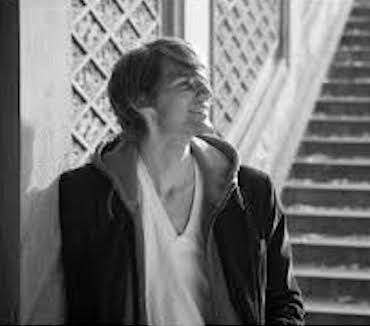
Eden Yerushalmy, “Yuval Sliper”, 2020, Eroticco Magazine

Eden Yerushalmy is a professional hair stylist and photographer of portraits and fashion; he is living and working in Tel Aviv, Israel. Yerushalmy has done work for:  the clothing company Urban Outfitters and the online magazines Graveravens, Maxculine Dosage, Kaltblut Magazine, Yup Magazine, and The Male Fashion..

Yeurshalmy”s exclusive photo shoot of Yuval Sliper, an Israeli model with the BOLD talent agency, was posted in the November 2020  issue of the online Eroticco Magazine, located at:  https://eroticcomagazine.com..

For information on Eden Yerushalmy’s work, a link to the artist’s sites is located at:  https://www.instagram.com/edenyeru/

Hedda Sterne

The Artwork of Hedda Sterne

Born Hedwig Lindenberg in Bucharest, Romania, in 1910, Hedda Sterne received a rich primary education that included the study of multiple languages, German philosophy, and art history. With the encouragement of Modernist painter and professor Max Hermann Maxy, Sterne began her formal art education in 1918. Her first teacher was the Realist sculptor Frederic Stock, a professor at the Bucharest National University of the Arts. 

As early as 1924, Hedda Sterne gravitated to the Constructivist, Dada, and Surrealist artist communities of Bucharest and Paris. She took classes in ceramics atVienna’s Museum of Fine Arts and, in 1929, enrolled at the University of Bucharest, where she studied under literary and art critic Tudor Vianu, and philosophers Nae Ionescu, and Mircea Florian. In addition to her early work with Frederic Stock, Sterne worked in the studio of Surrealist painter Marcel Janco, who was a co-founder of the Dada movement, and became a close friend with Surrealist painters Victor Brauner and his brother Théodore Brauner, realist painter Jules Perahim, classical painter Medi Wexler, and surrealist poet Gheorghe Dinu.

In the late 1930s, Sterne began her work in the mediums of painting and collage. Drawn to the Surrealist practice of automatism, a process which allows the subconscious mind control over the formation of a work, Sterne  developed her own unique style of collage. Sterne’s collage work was first recognized in 1939 at the Fiftieth annual Salon des Indépendants in Paris, where her work was singled out by painter Jean Arp, who recommended her work to art patron and collector Peggy Guggenheim. After the outbreak of World War II and the Bucharest pogrom, Sterne was able to acquire the necessary visas for travel, which enabled her to embark from Lisbon and sail to New York in October of 1941. 

Settling in Manhattan, Hedda Sterne established an apartment and studio on East 50th Street and soon developed a close friendship with Peggy Guggenheim, a close neighbor on Beekman Place. Sterne re-united with many Surrealistic artists she had known in Paris, including Marcel Duchamp, Max Ernst, and André Breton. She also began a close friendship with author Antoine de Saint-Exupéry, whom she encouraged to illustrate his own book “The Little Prince”. Involved with the circle of New York School of artists, Sterne’s work was included in surrealism’s seminal exhibition in the United States, “The First Papers of Surrealism”,  held in October of 1942 at Manhattan’s Whitelaw Reid Mansion.

By 1943 Sterne’s work was regularly show in exhibitions at Peggy Guggenheim’s Art of This Century gallery, including the 1943 “Exhibition by 31 Women”. In November of 1943, Sterne had her first solo show in the United States at the Manhattan’s Wakefield Gallery, organized by art dealer and collector Betty Parsons. This began a nearly forty-year collaboration between Sterne and Parsons, who represented her after the opening of her own gallery, the Betty Parsons Gallery, in 1947.

Throughout her career, Hedda Sterne’s diverse series of artwork were a reflection of the changing world around her.  In the 1940s, she began to draw inspiration from the motion, architecture and scale of her new New York surroundings.  Following a visit to Vermont with her husband and fellow artist Saul Steinberg, Sterne began studying farm machinery, as well as the construction sites and harbors of New York and post-war Paris. By the 1950s, these Machine paintings and drawings had evolved into a series about motion itself.   Often utilizing commercial spray paint to invoke a feeling of speed, Sterne’s large gestural canvases of the mid-1950s were inspired by city bridges and her travels on highways around the United States.

Hedda Sterne began, in the 1960s, to explore new themes in her work, expanding beyond the inspiration of her immediate surrounding to include her interests in science and philosophy.  The qualities of light and space were often a central focus of investigation in Stern’s work.  While on a Fulbright Fellowship in Venice in 1963, she experimented with mosaic and refined a series entitled “Vertical-Horizontals”, paintings that invoked an expansive, horizontal landscape, whose reach, however, was confined within a vertical format. Later in the decade, as drawing took on a more central role in her practice, Sterne developed dense and intricate organic abstractions in series entitled “Lettuces and Baldanders”.

In addition to exploring both physical and conceptual subjects in her work, Sterne also produced both geometric and organic abstractions.  Among her largest series of works on canvas are her 1980s “Patterns of Thought” paintings, in which she, now in her seventies, explored the universality of signs and symbols through prismatic geometric structures.  While doing this series, Sterne also developed various drawings and loose studies of nature, with elaborate organic structures and ghostly apparitions emerging from the page.

Hedda Sterne was a prolific artist who maintained  a daily practice of making art throughout a career that spanned nine decades. Her work intersected with some of the most important movements and figures of twentieth-century art. Even though affected by macular degeneration, she continued to create new work in her eighties and nineties; unable to paint by 1998, she still drew. Her vision and movement affected by two strokes between 2004 and 2008, Sterne passed away in April of 2011 at the age of one hundred.

In 1977 Hedda Sterne was honored with her first retrospective exhibition of her work at the Montclair Art Museum in New Jersey. Her second retrospective entitled “Hedda Sterne: Forty Years” was held at New York’s Queens Museum in 1985. Her third retrospective was held in 2006, entitled “Uninterrupted Flux: Hedda Sterne; A Retrospective:, at the Krannert Art Museum at the University of Illinois.

Top Insert Image: Henri Cartier-Bresson, “Hedda Sterne”, 1961, Silver Gelaton Print.   Second Image: Edith Glogau, “Hedda Sterne, October 1932 Issue of Die Bühne Magazine, Vienna;   Third Image: Lilian Bristol, “Hedda Sterne in Her Studio with Her Portrait of Joan Mitchell”, 1955;   Bottom Image: Nina Leen, Hedda Sterne and New York School of Painters, January 1951 Life Magazine Photo

More information on Hedda Sterne’s life and a complete body of her work cna be found at the Hedda Sterne Foundation located at: https://heddasternefoundation.org

Matthijs Röling

Paintings by Matthijs Röling

Born in Oostkapelle, The Netherlands, in 1943, Matthijs Nicolaas Röling is a figurative painter, lithographer and academy lecturer who has carried on the tradition of realistic painting, enriching its language with artistic techniques derived from surrealism. 

Röling received his training at the Royal Academy of Art in The Hague from 1960 to 1963; he continued his studies at the Rijksacademie in Amsterdam in 1963 to 1964 . He had his first exhibition in 1965 at the Drents Museum in the city of Assen . In 1972, Röling became a lecturer at the Academie Minerva in Groningen where he taught such future artists as realist painters Jan van der Kooi, Douwe Elias, and Peter Pander. Röling has also lectured at the Classical Academy for Fine Art, also in Groningen.

Matthijs Röling first achieved recognition for his work in 1976 with his series of still-lifes, entitled “Cabinets”. In 1983 he began working on large-scale decorative projects, such as monumental canvases and wall and ceiling paintings. In recent years these projects have come to occupy an increasingly important place within Röling’s highly diverse body of work.

Röling’s first large-scale, oil on panel mural, entitled “De Sterrenhemel (The Starry Sky)”, was finished in 1983. The mural is located at the Café De Eenhoorn in the city of Eelde, and consists of four horizontal panels, each panel depicting a section of the night sky with its zodiac symbols and measuring 196 x 173 x 16 centimeters. In a 1987 collaboration with Northern-realist painter Wout Muller, Matthijs Röling produced the mural “Boom van Kennis (Tree of Knowledge)”, which is installed in the auditorium of the Academy Building at the University of Groningen. 

Since 1962, Matthijs Röling has been regularly exhibiting his work in museums and galleries throughout the Netherlands, including Amsterdam’s galleries M.L. de Boer and Galerie Mokum, and Groningen’s Galerie Wiek XX. Röling received the Dr. AH Heineken Prize for Art in 1994 for his short operatic work. The Drents Museum in Assen houses a number of Röling’s paintings and sketchbooks in its collection.

Candido Pontinari

The Paintings of Candido Portinari

Considered one of the most important Brazilian painters, Candido Portinari was a prominent and influential member of Brazil’s Neo-Realist movement. Producing more than five thousand canvases, Portinari’s  inspiration was rooted in his formative years spent with family on a Brodowski coffee plantation. He developed a social preoccupation throughout his work and was active in both the cultural and political worlds of Brazil.

Candido Portinari was born in December of 1903 in the Brodowski municipality of São Paulo, Brazil. He received formal education at the local school until 1912, when, at the age of nine, his family’s poverty forced his suspension of education. However, even at a young age, Portinari manifested an interest and aptitude in drawing and painting. At the age of fifteen, he assisted a visiting group of Italian painters and sculptors who had come to the area for the purpose of decorating  local small town churches. 

In 1919, Portinari moved to Rio de Janeiro with friends of his parents, the Toledo family, who owned a boarding house in the city. He enrolled in the Lyceum of Arts and Trades and, in the following year, at the National School of Fine Arts, where he regularly attended figure drawing classes. Portinari exhibited his work for the first time in 1922 and received an Honorable Mention for his portrait of classmate Ezequel Fonseca Filho. At this time he became one of the first Brazilian artists to incorporate Modernist elements in his work, which would feature in all future work.

 In 1924 Candido Portinari submitted eight works to the selection panel of the National School of Fine Arts, of which the panel chose his seven portraits for the exhibition. A pivotal point in his career occurred in 1928 with the presentation of twelve works at the 35th General Exhibition of Fine Arts. For his oil portrait of poet and diplomat Olegário Mariano, he won the European Travel Prize and achieved recognition in the press. 

After a solo exhibition of twenty-five portraits at the Palace Hotel in Rio de Janeiro, Portinari traveled to Paris, settling in the artist haven of Montparnasse. He visited museums in Europe and met other artists working in the various trends of Modernism, mostly drawn to the styles of Cubism and Surrealism. In 1930, Portinari participated in a group exhibition of Brazilian art at the Exposition d’Art Brésilien in Paris, where he entered two works, a still life and a portrait. While in Paris, he met Maria Victoria Martinelli, a nineteen year old Uruguayan, who would become his lifelong companion. 

Portinari decided, during this Parisian stay, that the prominent subject of his work would be the colorful people and landscapes in his Brodowski homeland. Returning to Brazil with Martinelli in 1931, he began a prolific period of work as an artist. In a 1932 solo exhibition at the Palace Hotel promoted by the Brazilian Artists Association, Portinari presented over sixty works. For the first time, the artist showed paintings with Brazilian themes, primarily scenes from his childhood, circus themes, and scenes of circle games. 

Portinari painted his first work with a social theme “The Evicted” in 1934; in the same year, his portraiture work “Mestizo” was purchased by the Pinacoteca de São Paulo and became the first of his paintings to be included in a public institution. At the invitation of Celso Kelly whose portrait he had painted in 1926, Portinari was hired in 1935 to teach mural and easel painting at the Art Institute of the Federal District University in Rio de Janeiro. Between 1935 and 1940, Portinari produced several major works, which portrayed the Brazilian spirit with all its hardships, but also its strengths, hard work and independence. 

Candido Portinari’s 1935 “Coffee”, a large painting depicting the hard-working coffee harvesters and baggers, was entered into the Carnegie Institute exhibition and won Second Honorable Mention. Portinari produced four large panels for the Art Deco-designed Monument Via Dutra, which celebrated the construction of the Rio-São Paulo motorway. These interior murals were the first of his works on the themes of socialism and nationalism.He also created exterior mosaic panels and twelve fresco murals for the Modernist-designed Gustavo Capanema Palace.

In the years that followed, Portinari’s work gained greater recognition in the United States. In 1939 he painted three panels, “Northeastern Rafts”, “Gaúcha Scene”, and “Night of Saint John”, for the interior of the Brazilian Pavilion at the New York World’s Fair. Impressed by the paintings, Alfred H. Barr, then director of the New York’s MOMA, showcased Portinari’s work in a solo exhibition at the museum, a first time for a Brazilian artist. This led to a commission by the Library of Congress to create murals to decorate its magnificent Hispanic Reading Room.

In the 1940s, Candido Portinari turned to politics, becoming a full member of the Brazilian Communist Party, and ran for congress and senate twice, but was defeated narrowly. In 1947 he left for exile in Uruguay where he was to stay until 1951 when, benefitting from a thaw in government persecution, he returned to Brazil for the rest of his life. It was in 1952 that Portinari started his best known work, the grandiose double mural “Guerra e Paz (War and Peace)”, commissioned by the Brazilian government as a gift to the United Nations, to be displayed in the United Nations’s newly built headquarters in New York City.

These panels are Portinari’s masterpiece and one of the most recognizable pieces of Brazilian art. Measuring individually an imposing 46 by 32 feet, Portinari sought to encapsulate in this work the hopes and fears that the newly founded organization represented to a world reeling from the horrors of the Second World War. He worked on the project for four years and produced one hundred-eighty sketches to complete his two-paneled mural. The dark-blue, purple and red palette of the “War” tableau contrasts starkly with the lighter yellow tones of its companion “Peace”, offering all its viewers a reminder of the peace mission of the United Nations.

For the completion of this monumental project, Portinari sacrificed his own health. During the long process of creating the two panels, Portinari became increasingly sick due to the toxicity of the paint fumes he inhaled while painting the panels. Dedicated to complete the two murals, he finished his work in 1956; however, he suffered from health issues, showing symptoms of lead poisoning, throughout the last decade of his life. Candido Portinari died on February 6, 1962 due to contact with the paint. His dedication to his work at the expense of his health made him even more of a legend among the people of Brazil, a martyr to art and the cause of equality.

Top Insert Image: Paulo Rossi Osir, “Candido Portinari”, 1935, Oil on Canvas, Museu de Arte Contemporânea da Universidade de São Paulo:  Second Insert Image: Candido Portinari, “Flautista”, 1957, Oil on Canvas,  41 x 50 cm, Private Collection;  Third Insert Image: Candido Pontinari, “Mastiço”, 1934, Oil on Canvas, Pinacoteca de São Paulo:   Bottom Insert Image: Candido Portinari, “Guerra e Paz (War and Peace”, 1952-1956, Dyptch in Oil on Six-Sheet Cedar Plywood, Each Panel: 14.32 x 10.66 meters, United Nations General Assembly, New York City 

Felicia Chiao

Illustrations by Felicia Chiao

Born in Houston, Texas, Felicia Chiao is an industrial designer and illustrator who is currently residing in San Francisco. She attended Providence’s Rhode Island School of Design where she graduated in 2016 with a degree in Industrial Design. Chiao has experience in toy design, machining and shop work, sketching, and digital and physical prototyping. She balances her work at the global design and consulting firm IDEO with her greatest passion, drawing in her free time.

Traveling frequently due to work, Chiao carries an artist’s notebook with her, in which she daily draws illustrations. Her imaginative illustrations are traditionally done with Copic markers and gel-ink pens on brown paper. Much of Chiao’s work, often infused with a surrealistic atmosphere, are populated by a common humanoid protagonist, as well as black spirit-figures reminiscent of the creatures in Japan’s manga artist and animator Hayao Miyazaki. 

Felicia Chiao’s layered illustrations often depict her protagonists in mundane, everyday narratives and exhibiting states of anxiety and other complex emotions. Although the scenes appear whimsical, there is often, particularly in her most recent work, a sense of loneliness, foreboding, or confinement, a common feeling during this time of isolation.   

Chiao exhibited her work at the GR2: 8 x 8- Group Exhibition held by Giant Robot in July of 2020. Most recently she has a solo show at the GR2 Gallery through March 20th of 2021. The online show is at: https://www.giantrobot.com/collections/gr2-daydreams-felicia-chiao

For more information and images of her work, Felicia Chiao’s website is located at https://society6.com/feliciachiao/prints

Francesco Mochi

Francesco Mochi, “Saint Veronica”, 1629, Marble, 500 cm, Basilica di San Pietro, Vatican City

One of the most individual sculptors of his age, Francesco Mochi was born in July of 1580 at Montevarchi, Italy. His initial training was with Santi di Tito, one of the most influential painters of the fundamental Baroque style. Mochi also studied under Mannerist sculptor Giambologna, who exposed him to pictorial clarity and the importance of ability and design in drawing. Mochi moved to Rome circa 1599 and trained in the studio of sculptor Camillo Mariani, whose work in Venice and Rome formed a base for the Baroque style of the seventeenth century.

Francesco Mochi worked in many of the thriving cities of central Italy, including Florence, Rome, Piacenza, and Orvieto. His early career was aided by the powerful Farnese family who brought him many commissions. Mochi worked with sculptor Stefano Maderno on the papal commission for the Cappella Paoline in the Basilica of Santa Maria Maggiore, Rome, where his travertine sculpture “Saint Matthew and the Angel” now resides. 

Mochi’s first major work was the dual-statue composition “Annunciation of the Virgin by the Angel”, which he completed in full by 1608. The polished smoothness of the marble surfaces and the audacity of Mochi’s composition is considered to have signaled the end point of Mannerism and the rise of the Baroque period. In the period between 1612 and 1620, Mochi created two works, commissioned by the Farnese family, consisting of monumental bronze equestrian statues of Ranuccio and Alessandro Farnese, both Dukes of Parma, which were erected in Piazza Cavalli in Piacenza. 

The statue of Ranuccio Farnese, executed first, is linked in style and type to earlier Renaissance models that depicted the rider as peacemaker and statesman, for example Giambologna’s Cosimo de’ Medici. However, in the statue of Alessandro Farnese, Francesco Mochi broke entirelynew ground to create the first dynamic equestrian monument of the Baroque. In an unprecedented manner, he used the device of a billowing cloak to unify the rider with the bulk of the horse and to create the illusion of warlike energy. During the casting, Mochi quarreled with the founder and took over the job himself; other than sculptor Domenico Guidi, he was the only major Roman sculptor with the expertise to cast his own work.

Finished with the equestrian statues, Francesco Mochi returned in 1629 to Rome, which was now dominated by the exuberant Baroque style of Gian Lorenzo Bernini, who was fully in charge of major commissions. Mochi, whose work was no longer fashionable, was becoming increasingly bitter and disappointed as the number of commissions he received decreased. One of the requests he did receive in this period was a commission for Pope Urban VIII, which was given to him by Bernini, to sculpt a statue which would be placed in one of the four niches at the crossing piers in Saint Peter’s Basilica.

One of the four larger-than-life sculptures in the crossing of the Basilica, “Saint Veronica” displaying the lost Veil of Veronica, executed between 1629-1632, is the best known masterpiece of Mochi’s work. Gian Bernini provided models for three of the statues but gave Mochi free-reign with the design for Saint Veronica. Influenced by Hellenistic sculpture, Mochi conceived the figure in strongly emotional terms: In agony, Saint Veronica holds the Veil, a lost relic of the Christ’s passion, in trembling outstretched hands. Spiraling, thin, drapery folds create an illusion of motion, as though the figure is rushing from the niche in an effort to present the viewer with the miraculous imprint of Christ’s countenance upon the veil. 

Compared to the heroic calm of the figures designed by Gian Bernini, especially his design for the statue of Saint Longinus, Francesco Mochi’s work, both original and audacious, received much criticism and, due to its excessive motion, was seen to be unsuitable and overstepping the decorum of the Basilica. More and more frequently after this criticism, Mochi lost commissions to Bernini and high-Baroque sculptor Alessandro Algardi, and even had planned commissions rescinded or his finished work rejected by the patrons. Seen by his contemporaries as being a difficult and bitter man, Francesco Mochi died on the 6th of February in 1654.

Top Insert Image: Francesco Mochi, “Saint Veronica”, 1629, Detail, Marble, Saint Peter’s Basilica, Rome, Italy

Middle Insert Image: Francesco Mochi, “Bust of a Youth”, 1630s, Marble on Variegated Black Marble Socle, 40.5 x 33 x 29 cm, Art Institute of Chicago

Bottom Insert Image: Francesco Mochi, “Angel of Annunciation”, 1603-1609, Marble, Museo dell’Opera del Duomo, Orvieto, Italy

César Moro: “Like a Road That Vanishes”

Photographer Unknown, Like a Road That Vanishes

“The same as your non-existent window
Like a hand’s shadow in a phantom instrument
The same as your veins and your blood’s intense journey
With the same equality with the precious continuity that ideally
reassures me of your existence
At a distance
In the distance
Despite the distance
With your head and your face
And your entire presence without closing my eyes
And the landscape arising from your presence when the city was
only, could only be, the useless reflection of your slaughter
presence

In order to better moisten the birds’ feathers
The rain is falling a great distance
And it encloses me within you all by myself
Within and far from you
Like a road that vanishes on another continent.”
—César Moro, The Illustrated World

Born in Lima in 1903, César Moro, birth name Alfredo Quispez Asin, was a Peruvian poet and painter, whose only fond memory of his Jesuit childhood education was his learning French. He changed his name to César Moro, at the age of twenty, after a character by author Romón Gómez de la Serna. After years of unbearable parochialism and hostility towards any form of poetic expression, which characterized Lima between 1920 and 1930, Moro traveled to Paris in 1925 to pursue dance and art; but later poetry and art became his focus. 

Moro exhibited in group shows in Brussels in 1926, and in Paris the next year. He became a member of the Surrealist movement and exchanged ideas and art with such figures as poet Paul Éluard, writer and poet André Breton, poet Benjamin Péret, and outside the surrealist group, painters Henri and Simone Jannot. Moro promptly adopted French as his second writing language and became the only Latin American poet to contribute to Andre Breton’s surrealistic journals of the 1920s and 1930s.

While living in Paris, César Moro continued to publish his work in Latin America, including the Peruvian periodical “Amauta” whose April 1928 edition printed Moro’s poems “Oráculo”, “Infancia”, and “Following You Around”. He was active in the Parisian political protests through his contribution to the writing of the 1933 manifesto “Mobilization Against the War is Not Peace”. Moro added a note to the manifesto condemning Peru’s dictator Sánchez Cerro’s violent suppression of an uprising of sailors who were protesting against cruel discipline and poor nutrition. 

Moro returned to Lima in 1934 and continued to write against those in power. The police of Peruvian dictator Benavides entered his home and confiscated copies of the clandestine pamphlet, CADRE, which supported the Spanish Republic. As a result of continual police harassment, Moro fled Peru in March of 1938. He traveled to Mexico City, his residence for  the next ten years, and befriended other progressive artists seeking haven, such as  Austrian painter Wolfgang Paalen, photographer Eva Sulzer, surrealist painters Remedios Varo and Gordon Onslow Ford and British painter and novelist Leonora Carrington. 

With assistance from Wolfgang Paalen and André Breton, the modernist avant-garde artists of Mexico City organized the 1940 International Exhibition of Surrealism at the Galeria de Art Mexicano. This large exhibition followed two others exhibitions staged by Moro, the earliest in 1935 with Chilean artists Maria Valencia, Waldo Paaraguez, and Carlos Sotomayor. Moro became more closely associated with Wolfgang Paalen and his international literary and art journal “Dyn”. This journal gave Moro the opportunity to publish his French-language poetry, and allowed him to expand on his exploration of indigenous culture as subject matter. 

César Moro was prolific in his output during his stay in Mexico, where he also published in the periodicals “El Hijo Prodigo (The Prodigal Son)” and “Lettas de México (Letters from Mexico)”. He also translated the surrealist poems in the periodicals and a poem of his, a tribute to Breton, was published in the “Letters to Mexico”. As a result of his association with Paalen, Moro published two collections of his poetry, “Le Chateau de Grisou (Firedamp Castle)” and “Lettre d’Amour (Love Letter)”, and many translations of his surrealist and avant-garde texts.

César Moro, who was gay, led a self-described scandalous life quietly and privately. Many of his fellow surrealists were unaware of his homosexuality, which he embraced for the first time in Mexico. While his love poetry written in France is tortured; the poetry written in Mexico City for his collection “The Equestrian Turtle”, an oblique chronicle of Moro’s relationship with army lieutenant Antonio Acosta, is openly homoerotic. Throughout 1939, Moro wrote a series of letters and poems which expressed the totality of his feelings for Acosta as being the sum total of his life. This totality of love lasted the duration of Moro’s residency in Mexico; even after Acosta married and became a father. Moro appears to have played an almost godfather-like role in the life of Acosta’s son.

The intensity of Moro’s relationship with Antonio coincided with Moro’s rift with Breton and the surrealist movement after the publication of Breton’s 1944 “Arcane 17”, a work combining memoir, poetry and political treatise in which Breton cited that heterosexual love was the only legitimate one. Moro denounced, not without reason,the shortsightedness of Breton who had placed himself as the ultimate champion of freedom. From then on Breton, who could not accept love between members of the same sex, no longer had as great an impact on Moro’s artistic development. Moro turned instead to figures such as Paalen for direction in his work.

In 1948 César Moro returned to Lima, where he wrote poetry for the periodicals “The Magazine of Guatemala” and “Dwellings”, taught French at the Leoncio Prado military college, and met his future partner and lover, the French writer André Coyne. In 1954, he made his last public appearance at a conference on Marcel Proust, where he delivered a paper entitled “Passionately Loved and Admired”. César Moro died of leukemia in Lima on January 15th of 1956. His death went unnoticed by “Bief”, the surrealist main publication at that time. A large part of his prose and poetry was collected and published posthumously through the efforts of his lover and literary executor André Coyné.

Notes: César Moro’s 1939 collection “Le Tortuga Ecustre (The Equestrian Turtle)” contained an editorial and introduction by poet Américo Ferrari as well as  an epilogue by Moro’s lover André Coyné. In his epilogue on page 88, Coyné noted that the title of the collection is an erotic symbol derived from their 1934-35 experience in Lima of seeing two turtles copulating in a park.

On the Asymptote Journal site, there are three poems from “TheEquestrian Turtle” that were translated by Leslie Bary and Esteban Quispe. These poems are located at: https://www.asymptotejournal.com/poetry/cesar-moro-the-equestrian-turtle/

More extensive information on the life of poet César Moro can be found at JSTOR’s online library located at:  https://www.jstor.org/stable/90024968?seq=1

Richard Laeton

Digital Photographic Art by Richard Laeton

Born and raised in Long Beach, New York, Richard Laeton is a graphic designer and illustrator. He attended the Carnegie Mellon University from 1973 to 1975, receiving his BA in Communication Design, and the Parsons School of Design from 1974 to 1975, earning his MFA in Illustration and Design. Laeton currently lives and works in Marin County, California. 

A versatile graphic designer with expertise in all phases of art direction, Laeton was graphic designer and illustrator for the SYDA Foundation from 1995 to 2003. He was art director for the global world music label Real Music from 2005 to 2012. During that period, Laeton founded Laeton Designs, a provider of designs and illustrations for private clients, as well as a source for commissioned portraitures, fine art drawings, and other digital work. 

Richard Laeton creates works of art that blend conventional photography and painting with digital technology. Inspired by the naturally occurring forms, contours, and colors in the environment, his figurative work uses natural colors with a layered and textural approach to the image. Laeton’s works include figurative works, celebrity portraits, floral images, abstracts, and meditative works.

For more information and available images for purchase, Richard Laeton’s website is located at:  https://richard-laeton.pixels.com

Insert Image: Richard Leaton, “Andrea P”, Date Unknown, Digital Art Photography

Matthew Hittinger: “In Strings of Is and Os”

Photographers Unknown, In Strings of Is and Os

I have been here since on other dates but it’s your ghost
still hausts this place. Or should I say duppy?
Can duppies cross the wide Sargasso sea?
or are they bound by the roots of the Banyan tree?

I won’t lie. A Jamaican ache. You seduced me
before you knew me, reading from a blank
sheet or receipt the words scared in that space
behind iris and cornea. And days later

when we met, when my boot heels clicked down those steps,
when
the March air blew me through that door, I gave
a wave to your perched chair. You would later
recount your disbelief to Richard that the man

who wrote you, who you thought a kindly old gentle
man, was an anagram and rhyme. Come now.
Did you really think me other than those
words you surely googled? I do not remember

what we drank, but I remember the direction
the wood grains went–yes I knew Erna’s work,
I studied with Lorna, and Walcott’s knot
was a year of my life. That landscape long dormant

woke again in me that night, your accent a chant,
your eyes brinning with island light, your skin
a song on my lips. Started, we parted
on opposite sides of the tracks, you Brooklyn-bound

me, Queens. I knew you, but not convinced of bamboo
clues I missed the hint, lint trapped in lucite.
The modern courting of email ensued,
the story of your name, our chat-box-poems exchanged

in strings of Is and Os. And that April surprise
to come home to find dew on my bed. Hi.
Hello. Hues conjured. There for me? For you?
for something we both felt and knew needed to bloom?

Matthew Hittinger, “71 Irving Place”, Smite and Spoon Project, 2017

Born in 1978 in Bethlehem, Pennsylvania, Matthew Hittinger is a poet and a printmaker. He earned his BFA in English and Art History at Pennsylvania’s Muhlenberg College in 2000 and his MFA in Creative Writing from the University of Michigan in 2004. Hittinger is married to Michael Ernst Sweet, a Canadian writer, educator, and photographer known for his oddly-framed street photography.

Hittinger is the author of the poetry collections “The Masque of Marilyn, The Erotic Postulate” and “Skin Shift”, which , in 2012, earned him recognition as a Debut Poet from Poets & Writers Magazine. He has also written three chapbooks: the 2007 “Pear Slip”,  winner of the 2006 Spire Press Chapbook Award, and two volumes published in 2009, “Narcissus Resists” and “Platos de Sal”.

Matthew Hittinger received the Helen S. and John Wagner Prize from the University of Michigan, the Kay Deeter Award from the literary journal “Fine Madness”, two Best of the Net nominations from Sundress Publications, and eleven nominations from the literary Pushcart Prize. His work has appeared on the web poetry anthology “Verse Daily” and in over fifty journals including American Letters & Commentary, the Michigan Quarterly Review, and StepAway Magazine, an award-winning online literary magazine. Hittinger’s work has also been featured in The Academy of American Poets.

Matthew Hittinger has also collaborated on projects with artists of other disciplines, such as the Canadian painter Kristy Gordon, American painter Judith Peck, composer Randall West, and New York City-based John Glover. Glover’s art song based on Hittinger’s poem “8:46 AM, Five Years Later” was included in the 2012 Five Borough Songbook, a book celebrating the five New York boroughs’ music festival.

Matthew Hittinger’s website is located at: https://matthewhittinger.com

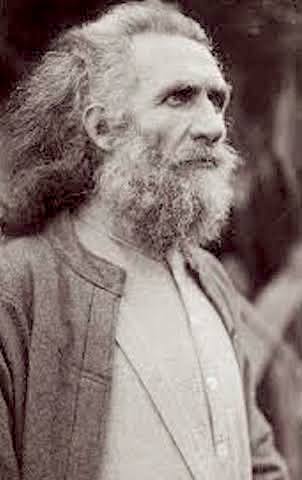
Karl Wilhelm Diefenbach

Karl Wilhelm Diefenbach, “Toteninsel (Isle of the Dead)”, ca 1905, Oil on Canvas, 100 x 150 cm, Private Collection

The son of a painter and teacher, Karl Wilhelm Diefenbach was born in the city of Hadamar, Germany,  in February of 1851. He received his initial training in the arts from his father Leonard Diefenbach, but also worked as a design draftsman for several photo studios and a railroad construction company. In 1872, Diefenbach traveled to Munich where he gained employment with Hanfstaengel, a photography publishing house, and entered the Munich Academy of Fine Arts, under historical painter Wilhelm Lindenschmit the Younger. In his studies, he became inspired by the Symbolist movement, particularly by the works of Swiss painter Arnold Böcklin.

Stricken with typhus in 1873, Diefenbach began to develop an increasing interest in alternative lifestyles. After having a visionary experience, he founded the alternative community Humanitas in an abandoned stone quarry near Höllriegelskreuth, located nineteen kilometers south of Munich. This community was centered on a return to nature, the rejection of religion, a basic vegetarian diet, and the end of monogamy. In 1887, Symbolist painter and illustrator Hugo Höppener, known as Fidus, joined the community and, with Karl Diefenbach, worked on the sixty-eight meter, monumental silhouette frieze entitled “Per Aspera ad Astra”. 

An oddity in the era due to his lifestyle, Karl Diefenbach, after repeated conflict with his social surroundings including local authorities, accepted the invitation of Salzburg’s Art Association and relocated with his family to Vienna.  While in Vienna, he met and taught the Czech abstractionist painter and graphic artist Frantiek Kupka. Diefenbach’s  unorthodox lifestyle forced a second relocation; this time he traveled to Egypt where his work focused on the ancient ruins and temples of the land. Returning to Vienna in 1897, he founded a country commune, Himmelhof, near Vienna, which disbanded after two years.

Despite the many exhibitions of his work, Karl Diefenbach was not successful commercially, which forced him to declare bankruptcy. He traveled to Italy in 1900 and settled on the island of Capri where he exhibited his works to visitors for a small fee, explained his philosophy of life, and sold small versions of his major works. The years Diefenbach spent on Capri were the most productive of his life. He produced many large scale depictions of the island’s landscapes, most  were scenes of grottos and cliffs, but all were  infused with reflections on his inner searching.

The Symbolist painter Karl Wilhelm Diefenbach died on the island of Capri in December of 1913. After years of obscurity, his work was honored in a successful 2009 exhibition held at Villa Stuck in Munich, and two years later at the Hermes Villa in Vienna. A museum of his work was founded in 1974 in Certosa di San Giacomo on Capri, and many of his works can be seen in the Jack Daulton Collection in Los Altos Hills, California.

Note: Karl Wilhelm Diefenbach’s 1905 “Isle of the Dead” was inspired by the famous painting of the same name by the Swiss symbolist artist Arnold Böcklin, whose work Diefenbach held in much esteem.

Arnold Böcklin painted five versions of his “Isle of the Dead” between 1880 and 1901. He provided no explanation for the painting’s image; the title was not specified by Böcklin, but was given by the art dealer Fritz Gurlitt in 1883. The inspiration for it was evoked, in part, by the landscape of the English Cemetery in Florence, Italy, where Böcklin resided for many years.

Top Insert Image:  Karl Wilhelm Diefenbach, Der Rettung Entgegen, 1900, Oil on Canvas, 65.5 x 90.5 cm, Private Collection

Bottom Insert mage:  Karl Wilhelm Diefenbach, The Great Sphinx of Giza, 1903, Oil on Canvas, 240 x 335 cm, Private Collection

Matthew Bourne: “Swan Lake”

Matthew Bourne, “Swan Lake”

Craig Schwartz, Matthew Bourne’s “Swan Lake” (Dance Troupe), 2019

Johan Persson, Bourne’s “Swan Lake” (Matthew Ball and Liam Mower), 1995

English choreographer and director Matthew Bourne was born in Hackney in 1960. Leaving full time eduction in 1978, he received employment at routine positions in the arts field; in addition to this work, he directed various amateur dance companies. Bourne enrolled, at the age of twenty-two, in London’s  Conservatoire of Music and Dance, formerly the Laban Centre. For his final year, he danced with the center’s Transitions Dance Company, and at end of term in 1985 received a Bachelor of Arts in Dance Theater. After graduation, Bourne spent two more years dancing with the Transition performance company.

In 1987, along with friends and fellow dancers Emma Gladstone and David Massingham, Matthew Bourne established the dance company Adventures in Motion Pictures, where he was AMP’s artistic director from 1987 until 2002. He  also became a charter member of the all-male dance company, The Featherstonehaughs, formed in 1988. Bourne danced professionally for fourteen years, including in his own productions, until his final performance in 1999, when he appeared as The Private Secretary in the Broadway production of “Swan Lake”. 

As a choreographer and director, Matthew Bourne’s work includes “Spitfire”, a highly colored mixture of the 1845 ballet “Pas de Quatre” and men’s underwear advertising, and “The Infernal Galop” which toys with British illusions about lower-class Parisians, both choreographed during the 1980s. In the early 1990s, he produced “Town and Country”, a humorous exploration of life on a small island,  and “Deadly Serious”, a tribute to Alfred Hitchcock films. His revised production of the “Nutcracker!” premiered at Sadler’s Wells in 1992, and returned the following year for a second sold-out season. In 1995, Bourne met and became partners with dancer and choreographer Arthur Pita, who has become a frequent collaborator and is a principle dancer at AMP.

Of Bourne’s work, some of the most acclaimed pieces are those updated from classical ballet’s repertoire, and often infused with contemporary themes. His groundbreaking 1995 “Swan Lake” was a contemporary ballet, based on the Russian romantic work, which became the longest-playing dance production in the history of London’s West End. The ballet took Tchaikovsky’s music and a broad outline of the plot and paired them with an all-male dance company. Bourne’s 1995 “Swan Lake” received over thirty international awards including the Laurence Olivier Award for Best New Dance Production and  Tony Awards for Best Director, Best Choreography, and Best Costume Design.

In the 1995 “Swan Lake”, the roles of the white swan Odette and the black swan Odile, traditionally played by females, were danced by male performers and explored the issue of homoeroticism..Although the traditional story was changed for Bourne’s production, the central theme, the doomed, forbidden love and a protagonist who wishes to transcend conventional boundaries through that love, was still present. That theme had strong ties to the life of the ballet’s composer Pyotr Ilyich Tchaikovsky, whose homosexuality, although kept private, caused a number of complications in his life.

In 2002, Matthew Bourne founded the production company “New Adventures”. The first success of the new company, “Play Without Words”, premiered in 2002 and won the Olivier Awards for Best Entertainment and Choreography. The play was inspired by the 1963 film, “The Servant” in which the class system is chanllenged by the employer;s servant. Bourne’s revised “Nutcracker!”, also in 2002, received critical acclaim and embarked on a world tour. A Tenth Anniversary edition of “Swan Lake” in 2005 reached new audiences and its success led to an extensive international tour. These productions were followed in 2005 with a choreographed production of “Edward Scissorhands”. and revivals of classical musicals including: “My Fair Lady”, “South Paacific”, “Mary Poppins”, and “Olivr!”, among others. 

Matthew Bourne has worked with England’s Royal Shakespeare Company and the London’s National Theatre. He was knighted in the Queen’s  2016 New Year Honors for services to dance, and awarded the Queen Elizabeth II Coronation Award, one of the most coveted honors in the world of dance, in recognition of his outstanding services to the art of ballet. Bourne was presented the Special Award at the 2019 Olivier Awards, in recognition of his extraordinary achievements in dance. This Special Award makes Bourne joint holder of the most ever Olivier Awards, alongside Judi Dench.

Top and Bottom Insert Images:  Johan Persson, Matthew Bourne’s “Swan Lake” (Matthew Ball and Liam Mower) . Middle Insert Image: Johan Persson, “Liam Mower”, Photo Shoot

Travis Chantar

Photography by Travis Chantar

Born in California and raised in the mountains of Idaho by two moms, Travis Chantar studied music in Minnesota and settled in Brooklyn, New York, as an artist and freelance photographer. He first developed a passion for decorating and portrait photography in high school, after which he progressed to creating poster imagery for shows in college. Upon graduation, Chantar combined his enthusiasm for painting and portraiture to produce a solo exhibition entitled “Tribe”, a body painting series which resulted in a published art monograph of the same name. A subsequent series entitled “Flowers” consisted of images of nude sitters adorned with flower and petal arrangements. 

In 2014, Chantar began assisting Ryan Pfluger, a New York and Los Angeles based freelance photographer, in his high-profile shoots for publications such as Vogue, New York Times, Billboard, Elle, Netflix, and other image oriented companies. Chantar’s work has included both book and album covers, product campaigns, and portfolio work for creative agencies. Most recently, Chantar published editorials in Risk Magazine, Out Magazine, FGUK Magazine, Natural Pursuits Magazine, Kaltblut Magazine, and VMAN Magazine.

For more information and images, the artist’s website is located at:  http://www.chantarphotography.com

Arcangelo Corelli: Music History

Arcangelo Corelli, Concerto in D Major Op. 6 No. 4, 1714, Performed by the Voices of Music Ensemble

Born on February 17, 1653 in Fusignano, Papal States, Italy, Arcangelo Corelli was a violinist and composer of the Italian Baroque era, whose  family were prosperous landowners, but not of the nobility. Known chiefly for his influence on the development of violin style and for his sonatas, Corelli’s “12 Concert Grossi “ established the contrast between a small group of soloists and the full orchestra as a popular compositional medium. 

Historical records of the poet Giovanni Mario Crescimbeni, founder of the celebrated Academy of Arcadians, state Arcangelo Corelli initially studied music under priests, first in the city of Faenza and then in Lugo, before he moved in 1666 to Bologna, a major center of musical culture. Plausible, but largely unconfirmed, historical accounts link his musical education with several master violinists, including Giovanni Benvenuti, Bartolomeo Laurenti, and Giovanni Battista Bassani. 

Although it is unclear exactly when Corelli arrived in Rome, it is known that he was actively engaged as a violinist in 1675. He played as one of the supporting violinists in three Lenten oratorios: one at the church of San Giovanni dei Florentini, one held on August 25th for a celebration at the church San Luigi dei Francesi, and one for the ordination ceremony of a noble Chigi family member held at the church Santi Domenico e Sisto. By February of 1675, Corelli was third violinist in the Chapel of San Luigi dei Francesi’s orchestra in Rome; by the following year Corelli was second violinist.

Corelli rapidly gain a reputation by playing in a number of ensembles sponsored by wealthy patrons at San Marcello al Corso, for whom he played in oratorios during the Lenten seasons from 1671 to 1679. In June of 1677, Corelli completed and sent his first composition “Sonata for Violin and Lute” to Count Fabrizio Laderchi, a noble in Faenza attached to the household of Prince Francesco Maria de Medici. Corelli’s “Twelve  Trio Sonatas (Two Violins and Cello, with Organ Basso Continuo), Opus 1”, dedicated to Queen Christina of Sweden, was published in 1681. 

From September 1687 to November 1690, Arcangelo Corelli was musical director at the Palazzo Pamphili, where he performed and conducted important musical events, Including conducting an orchestra of one hundred fifty strings for Queen Christina. A favorite of the great music patron Cardinal Pietro Ottoboni, Corelli in 1690 entered into the Cardinal’s service where he performed in concerts at Ottoboni’s Palazzo della Cancelleria. Joining him at these concerts were the violinist Matteo Fornari, the cellist G. B. Lulier from Spain, and the harpsichordist Bernardo Pasquini, and other orchestral players.

Corelli had first met Matteo Fornari in 1682, and they soon developed an intimate relationship which lasted until Corelli’s death. Socially protected by Ottoboni and living discreetly among male friends, they devoted their time together to the pursuit of their music which included many performances played together. Their relationship became the inspiration for two compositions by their friend Giuseppe Valentini, who dedicated his trio sonatas to both Corelli and Fornari. During this period, Corelli quietly developed his best-known and most influential works, the orchestral “Concerti Grossi”, and also became one of the most renowned violin teachers, who taught such students as Gasparini, Castrucci, and Locatelli.

In 1702, Corelli went to Naples and performed a composition by the Italian composer Alessandro Scarlatti, a performance which was probably performed  in the presence of its regent, King Philip IV.  In 1706, together with composer Bernardo Pasquini and Scarlatti, Corelli was received into the Pontifical Academy of Arcadia in Rome and conducted a concert for the occasion. By 1708 he withdrew from public view and began to revise his compositions. A contemporary of both Lully and Handel, Corelli died in Rome on the 8th of January in 1713. 

Arcangelo Corelli left his large art collection of paintings, all his instruments and music, and all future proceeds from it, to Matteo Fornari who readied Corelli’s unpublished “Op. 6 Concertos” for publication with Estienne Roger of Amsterdam. By special decree from the Pope, Corelli was buried next to Raphael in the section of the Pantheon in Rome that holds the remains of painters and architects.

Arcangelo Corelli’s “Concerto in D Major Op. 6”, was published in 1714 in Amsterdam and dramatically affected the style of the baroque concerto for the next generation of composers. The reception of this collection, considered one of the crown jewels of baroque instrumental music, owes a portion of its success to the music publishing boom which began around 1690. Corelli’s signature violin sonata set, “Opus 5”, also widely published, appeared in at least forty-two editions by 1800. 

Corelli’s concertos are written in an expanded trio sonata style, in which the two solo violins and cello form a small ensemble within the larger tutti framework, which is performed with all instruments together. The fourth concerto, played in the video linked above, is noteworthy for its suave and serene introduction, the gracefulness of the dance movement, the exceptionally well-balanced counterpoint and harmony, and the furious concluding coda which flows out of the second ending of the last movement.

Note: The video is from the Voices of Music Lamentations of Jeremiah concert held in April of 2014. Played with period instruments and practice,, there isn’t any conductor present at the performance. Kati Kyme and Elizabeth Blumenstock play solo baroque violins; Shirley Edith Hunt plays solo baroque cello; Gabrielle Wunsch and Maxine Nemerovski play ripieno baroque violins; Lisa Grodin plays baroque viola; Farley Pearce plays violone; Hanneke van Proosdij plays baroque organ; and David Tayler plays the archlute.

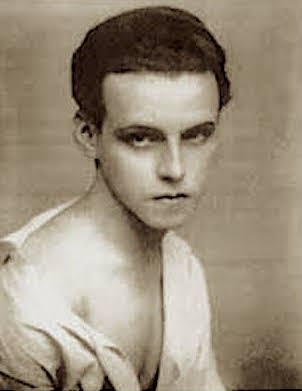
Karl Sterrer

The Artwork of Karl Sterrer

Born on December 4th of 1885 in Vienna, Karl Sterrer was an Austrian engraver and painter. The son of a sculptor, he studied at Vienna’s Academy of Fine Arts and was awarded in 1908 the Academy’s prestigious traveling scholarship, the Rompreis, for his landscapes and portraits. Sterrer traveled to the south of Italy in the years 1910 and 1911 to continue his studies and to paint.

Sterrer was one of the first Austrian artists to be intrigued by the works of the emerging German Expressionist artists. Beginning in 1910-1911, he began to strip his landscape compositions to their essentials, by emphasizing the deep, dark lines of his drypoint technique. Sterrer became a member in 1911 of Vienna’s Künstierhaus, at that time the exhibition and meeting hall of the more traditional Vienna Artists’ Society.  

In November of 1915, at the beginning of World War I, Karl Sterrer joined the Landsturm, a reserve militia force in Austria, and applied to its propaganda service as a war artist. The following year, he was sent to the Russian and Italian theaters of war where he served until the summer of 1918, at which time he was transferred to the Tyrolean front in western Austria at the special request of the Air Force. Working under the command of the Imperial and Royal Air Force of Austria-Hungary, Sterrer drew and painted portraits of aviator pilots, illustrations of aircraft, and produced advertising posters promoting the purchase of war bonds.

After having been awarded the 1919 Reichel Artists Prize, Karl Sterrer became a Professor of Fine Arts at the Vienna Academy in 1921, where he would teach such future artists as landscape painter Leopold Hauer who was deeply influenced by Egon Schiele’s work: painter Rudolf Hausner, a surrealist considered to be the first psychoanalytical painter;  expressionist graphic artist and illustrator Hans Fronius; and Max Weiler, who developed his own naturalistic form of abstraction. Dismissed from his academic post at the time of Nazi Germany’s annexation of Austria, Sterrer was reinstated after joining the Nazi Party. However, because of that affiliation, he was again dismissed at the end of World War II; but he was allowed to keep his pension.

After 1946, Karl Sterrer devoted most of his work to religious subjects. In recognition of the scope of his work, he was awarded in 1957 the Austrian State Grand Prize for Fine Art. Karl Sterrer died in June of 1972 at the age of eighty-six and is buried in the Hütteldorfer cemetery in Vienna.

Insert Image:

The success of Karl Sterrer’s exhibition in Maysedergass, Austria, was due in part to the support of his generous benefactor, lawyer and architect Baron Heinrich von Haerdt, who would support Sterrer and his family over the coming years. In the summer of 1913, Sterrer and his family were invited to stay as guests of the Baron at his estate in Styria. Sterrer created several oil and tempera paintings during this stay, of which one was the oil painting “Das Klagelied”.

Dedicated to Baron Heinrich von Haerdtl, the painting is divided horizontally into two parts. In the lower section, a river nymph bends over to kiss a drowned man; the upper section depicts the drowned man’s wife, sitting on the bank of the river Mur and singing a song of grief. These elements formed the basic image of the painting. However, Sterrer transformed and idealized the image by transitioning the river scene into a broad, peaceful lake, plied by sailing boats and overlaid by a blue sky.

The Sterrer family lived close to the bank of the Mur River, which was often a terrifying, loudly rushing body of water. They were acquainted with a woman whose husband, a raftsman, had drowned in the Mur during the early 1910s.

Hans Mauli

Black and White Photography of Hans Mauli

Born in Switzerland in 1937, Hans Mauli studied graphic design at university for a career. In the late 1960s, he worked in New York for the celebrated American graphic designer Herb Lubain and was the designer of the art-deco typeface ITC Avant Garde, the font used for the World Trade Center signage. Mauli also worked for Young & Rubicam, a global full-service advertising agency in Paris, and in other world-wide cities including Copenhagen, London, New York, and Paris between the years 1971 and 1991.

Though graphic design was his profession, Mauli always had a passion to be a professional photographer. He moved to the United States in 1991 to focus on his career in photography. Mauli has produced a number of photographic series including: Chinese New Year, Portraits, Italy, Paris, Still Lifes, and two series on life in San Francisco. Recently he has done a series of shoots covering Napa Valley and Saint Helena, including the 2020 Glass and lightning fires in California.

For more information and images of Hans Mauli’s work visit the artist’s site located at: http://www.hansmauli.com