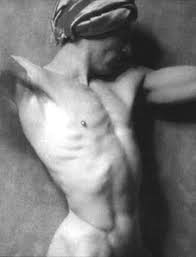
Andreas Fux

Photography by Andreas Fux

Born in East Berlin of the German Democratic Republic in 1964, Andreas Fux is a photographer whose body of work focuses on how the human individual evolves into his own artistic creation. He belongs to the Prenzlauerberg photo artist scene, which documented the last decade of the German Democratic Republic. 

Andreas Fux initially trained from 1980 to 1982 as an electrician. In 1983, he began his own sstudy of  the process and techniques of photographic work. During the years between 1983 and 1988, Fux exhibited his photographs in private gallery spaces. His first published works appeared in a 1988 issue of Das Magazin, a monthly East Berlin magazine that focused on culture and lifestyle. Working as a freelancer, Fux provided the publication with black and white photographs covering Berlin’s punk and youth culture.

 In 1989, Fux worked on photo productions for Deutsche Film-Aldiengesellschaff, the state-owned film studio of East Germany. Since 1990, he has been working as a freelance photographer for various newspapers and magazines, as well as executing his own photographic projects. In 1992, Fux’s first solo photographic book was published entitled “The Russians”; it was a supplement to his solo exhibition, of the same name, at the Janssen Gallery in Berlin, a show which later traveled to Hamburg and Munich. 

Andreas Fux gained a wider audience for his work with the 2005 series “The Sweet Skin”, which covered a decade of works between 1995 and 2005. For this series of portraits which focused on tattoos and skin scarification; he followed the lives of his models, with daily documentation and night shoots in his studio. Against a mostly white background and in the silence of the photo studio, nude photographs of his models were taken, in which the contrast between intimacy of the body and clinical sterility of the room was exaggerated. In another series entitled “At the End of the Night”, whose topic was body culture, the nude, and sexuality, Fux posed his subjects against a black background with a selective light source that modeled and fragmented the models sculpturally. 

Fux’s 2001 series “The Horizonte” is reminiscent in its formality of the 1980s “Seascapes” series done by Japanese photographer and architect Hiroshi Sugimoto, in which Sugimoto bifurcated the landscape images exactly in half by the horizon line. At the beginning of September 2001, Fux travelled across the North Sea on board a Ukrainian training sailboat. For this series, he celebrated the beauty of the horizon as an interaction between sea, clouds and light. The images of “The Horizonte” series were seen by the critics as an expression of calm and innocence. For his 2010 series “Kerberos and Chimaira”, Fux staged his motifs in a wind tunnel at Berlin-Adlershot. Using the strict compositions of expressionism and the aesthetic codes of the latex and fetish scene, his series examined  a dangerous and often not considered proximity between the erotic picture codes of fetishism and the aesthetics of National Socialism.

For his 2016 exhibition “Shame and Beauty”,  Andreas Fux opposed new portraits with a selection of older works, a combination which showed the development of his oeuvre over the years. His new work preserved the almost tender and respectful handling of his subjects found in his early works. The photographic sessions in which he bathed his models in soft light took an entire night, were meticulously planned, and took place in a highly sensitized atmosphere. This Berlin show contextualized the discussion on governmental and social repression and persecution; the works in this show had previously been exhibited by Fux in Moscow in September of 2015 under rather adverse conditions.

Andreas Fux has had solo exhibitions in Germany and abroad, including the Widmer and Theodoris Gallery in Zurich, the Photo Festival in New York, the Esther Woerdehoff Gallery in Paris and the Pasinger Fabrik Gallery in Munich.

A collection of Fux’s photo work from Berlin can be found at: https://andreas-fux.berlin

Elise Ferguson

Paintings by Elise Ferguson

Born in Richmond, Virginia in 1964, Elise Ferguson is a painter, sculptor, and print maker. The daughter of a mother who designed women’s clothing and a stepfather who was an architect, she spent her early life in a home of modern design elements, surrounded by a growing art collection.  

Ferguson initially began her formal art education at Maryland Institute College of Art in Baltimore. She then received her BFA from The School of Art Institute in Chicago and her MFA from the University of Illinois at Chicago. After graduation, Ferguson moved to New York, considered a mecca for the visual arts, to be surrounded by artists, similar-minded colleagues and galleries. She currently works out of a shared studio space with two other creative professionals a short distance from her Brooklyn home.

Inspired by architect Louis Kahn’s un-camouflaged use of cement in his designs, Elise Ferguson uses sculptural materials, including metal, pigmented plaster and ink on medium-density fiberboard, as a means of creating illusory space and preserving a series of compositional actions. While certain of her works allude to representational elements found in the studio or nature, Ferguson also creates pieces that are purely abstract with optical interactions of grid, lines and concentric circles.

Ferguson was a sculptor for twenty years before she focused on painting. Her “Retaining Wall”, a two-hundred foot length wall cast of urethane tiles reminiscent of a 1950s linoleum kitchen floor, was installed at the Socrates Sculpture Park in Queens, New York in 2003. A similar sculpture entitled “Greenvine”, a patterned wall of green tiles executed in 2005, is installed at a private home in South Hampton, New York. Although she created distinctive sculptural works, Ferguson is best know for her textural paintings.

Incorporating her sculptural aptitude, Ferguson paints the majority of her work by using pigmented plaster on paper or panels. With the use of computer graphic programs, she draws her repeating and often undulating patterns, with purposefully placed imperfections and glitches. After they are drawn, Ferguson makes screen prints that she applies to the pigmented plaster. Although seemingly flawless, the imperfections seen on a closer look create a tension in the work between the geometric figure and the plaster build-up.

For her 2020 “Clamp” series, Elise Ferguson sought to translate her layering techniques used in her paintings to a handmade paper edition. These works of color and geometric patterns were accomplished by layering brightly colored linen pulps on cream or black cotton base paper sheets. Using her computer, Ferguson designed an undulating U-shaped wave of parallel lines which, once made into mylar stencils, made it possible to create thin, crisp lines on the base sheet. The resulting work, with its stenciled pulp lines, has a distinctive look, unique to the art of paper making.

Ferguson’s work has appeared in solo exhibitions at the Halsey McKay Gallery, the Romer Young Gallery and 57W57 Arts.  Her group exhibitions have included the Albada Jelgersma Gallery in Amsterdam, Ikast Kunstpakhus in Denmark, the Cincinnati Contemporary Arts Center, the Socrates Sculpture Park in Queens, and the Barton Art Galleries, among others.  

Elise Ferguson has been recognized with several awards, including a Northern Trust Purchase Prize, an EAST International exhibition grant,  the Dieu Donne Papermill Workspace Grant, and residencies at Barton College, University of Nevada Las Vegas, MacDowell Colony, and the  Illinois State University.  She is represented by Halsey McKay Gallery in East Hampton and Romer Young Gallery in San Francisco.

Elise Ferguson’s website is located at http://www.eliseferguson.org

Insert Images:

Elise Ferguson, “Cloudbank”, 2018, Hand-Printed Block Print on Linen, 15 Feet in Length, Gallery Installation, Halsey McKay Gallery, New York,

Elise Ferguson, “Pile”, 2014, Pigmented Plaster on Panel, 60.1 x 60.1 cm, Private Collection

James Huctwith


Figurative Paintings by James Huctwith

Born in rural southern Ontario, Canada in 1967, James Huctwith is a painter in the realist tradition. From 1986 to 1989, he studied fine art at the University of Guelph’s College of Art in Ontario, primarily in architecture and art history and theory. Huctwith started painting and exhibiting in the early 1990s in Vancouver. Relocating to Toronto in 1995, he was represented by the O’Connor Gallery where he regularly exhibited his emotionally and physically explicit work for a decade.

After a period of personal disruption and change, Huctwith joined Vancouver’s Gallery Jones in the spring of 2005. He stayed with the gallery for two years, during which time he exhibited  a series of non-figurative works. Beginning in 2006, Huctwith was also represented for two years by Montreal’s Galerie Harwood, where the work he exhibited consisted primarily of interpretations of the still life genre. In 2007, he ended his relationship with the O’Connor Gallery.

Feeling a need to recapture his connection with his work, James Huctwith returned to the province of Ontario, placed his previous work with Toronto’s Antonio Arch Fine Arts, and signed up with Ottawa’s Galeria La Petite Mort. His first solo show of figurative work at the Petite Mort gallery in the fall of 2009 was a success. Huctwith’s work, now published and regularly reviewed, is collected internationally with many works in private collections..

Huctwith’s current realist work, both figurative and portraiture, is done with an emphasis on historical techniques. His canvases of male figures are moody, masculine, and mysterious. While a sense of calmness is presented in Huctwith’s scenes, there is often a lurking undercurrent of uncertainty and conflict.

The artist’s website can be found at: http://daintybastard.blogspot.com

Franz Szony

Photographic Work by Franz Szony

Raised in Reno, Nevada, Franz Szony is a writer and photographic artist whose main body of work, both in its fine art and commercial forms, embraces conceptual portraiture. 

After finishing his primary education in 2014, which included art classes at an early age, Szony relocated to San Francisco where he attended the Academy of Art. At the academy, he initially studied fashion and illustration, and, later. focused on photography. After learning the technical aspects of photography, Szony returned to his hometown of Reno where, as a freelance artist, he photographed different advertisement campaigns for newspapers, theaters, and several casinos. He exhibited his own work in a small gallery he created and hosted monthly nude drawing workshops in that space. 

Szony moved to Los Angeles in 2012 and settled in the Brewery Artist Loft complex, an industrially zoned area where artists rent living and working space. Inspired by the area’s creative energy, he photographed campaigns for perfume and fashion brands, created album covers, and did creative photographic work for companies, including Disney and Warner Brothers. 

Influenced by illustrators such as Marc Davis and Erte, and, at an early age, by the extravagant stage shows of Reno’s casinos, Franz Szony’s conceptual portraiture work is lush both in its color and settings. His images are presented ambiguously in time and place, and androgynously in character. Szony’s photographs often contain symbolic or mythological elements and convey psychological, political, and sexual identity messages to the viewers.  

Franz Szony is also a songwriter who has produced several music videos in which he has incorporated his poetry and visual art. Shot over a period of three days, his music video, “Petunia”, based on several of his photographic pieces, was released in 2018. Other music videos by Szony include “La Petite Mort”, “Antibeige”, and “Pansy”, also released in 2018; and “What You Seek” and “Surrender Dorothy”, both released in 2020. 

Szony had solo exhibitions at Reno’s Sierra Arts Foundation in 2015 and at Hollywood’s World of Wonder Gallery in 2019. His work is included in many private collections. Franz Szony’s website is located at http://www.franzszony.com

Maurice Sendak: “Where the Wild Things Are”

Photographers Unknown,  Where the Wild Things Are

Max stepped into his private boat
and waved goodbye
and sailed back over a year
and in and out of weeks
and through a day
and into the night of his very own room
where he found his supper waiting for him
and it was still hot”

—Maurice Sendak, Where the Wild Things Are

Born to Polish Jewish immigrant parents in Brooklyn, New York, in June of 1928, Maurice Bernard Sendak was an American writer and illustrator of children’s books. He was affected in his childhood by the deaths of many of his extended family who perished in the Holocaust. An early reader of books, Sendak decided at the age of twelve to become an illustrator after seeing Walt Disney’s film “Fantasia”.

Sendak started his professional career with the creation of window displays, one of which was in the toy store FAO Schwarz located on Fifth Avenue in Manhattan. His first published illustrations, a series of figures explaining the atom and its energy, were in the 1947 textbook “Atomics for the Millions” written by Maxwell Leigh Eidinoff. In the 1950s, Sendak illustrated children’s books written by other authors, including two books written by his older brother, author Jack Sendak, and the “Little Bear” series of books written by Danish-American author Else Holmelund Minarik.

In 1956 Maurice Sendak published his first authored book, “Kenny’s Window”. and soon started working on second effort, for which he was inspired to use the Yiddish expression ‘vilde chaya”, or wild animals, to indicate overexcited children. Sendak’s authored and illustrated 1963 children’s book “Where the Wild Things Are” received international acclaim. Initially banned for two years by libraries and critiqued negatively, the book won the annual Caldecott Medal in 1964 for recognition as the most distinguished American illustrated book for children. Since its publication, it has sold over nineteen million copies worldwide.

Sendak illustrated Isaac Bashevis Singer’s first children’s book “Zlateh the Goat and Other Stories, which was published in 1966 and received the Newbery Honor for children’s literature. He authored and illustrated the 1970 “In the Night Kitchen”, a young boy’s dream journey through a surreal baker’s kitchen, one of a trilogy of books which contains “Where the Wild Things Are” and the 1981 “Outside Over There”. Illustrated in a different style from his previous works, the book is mainly pictorial with few captions. “In the Night Kitchen”, with its depiction of the young protagonist’s nudity, was controversial upon its release and is still ranked as one of the most frequently challenged books. 

Maurice Sendak’s works included many in the fields of television and stage. He was active in the development of the “Sesame Street” series, and wrote and designed four stories for the series, including an adaption of his book “Bumble Ardy” into an animated film. Sendak adapted his “Where the Wild Things Are’ into a stage production in 1979, and also designed sets for many operas and ballets, including Tchaikovsky’s “The Nutcracker:, Mozart’s “The Magic Flute”,  and Prokofiev’s “The Love for Three Oranges”.

In 1957, Maurice Sendak met his partner, psychoanalyst Eugene Glynn, with whom he remained for fifty years until Glynn’s death in May of 2007. After his partner’s death, he donated one million dollars to the Jewish Board of Family and Children’s Services in memory of Glynn, who had treated children and young adults there. While his sexuality was known among his friends, Sendak kept his sexuality from public view for almost his entire life. When the social climate regarding homosexuality began to change, he  came out, at the age of eighty years old, during a 2008 interview with the New York Times.

Considered one of the most important children’s book artists of the twentieth century, Maurice Sendak died on May 8th of 2012 at the Danbury Hospital in Conneticutt from stroke complications. His body was cremated and his ashes scattered at an unconfirmed location. Under an agreement with, and supported by a grant from, the Maurice Sendak Foundation, his original artwork, sketches, books, and other materials, totaling close to ten thousand items, are housed at the University of Conneticutt’s Archives and Special Collections in the Thomas J Dodd Research Center.

Osmar Schindler

Osmar Schindler, “The Victor”, Date Unknown, Oil on Canvas, Dimensions and Location Unknown

Osmar Schindler, “Germanic Warrior with Helmet”, 1902, Oil on Canvas, 99 x 79 cm, Private Collection

Born in the village of Burkhardtsdorf in December of 1867, Osmar Schindler was a German painter whose works were a mixture of Art Nouveau and Impressionism. With the financial support of an uncle, he attended the Dresden Art Academy where he studied under Belgian historical painter Ferdinand Pauwels and German portrait painter Leon Pohle. Among his fellow students were Art Nouveau painter Hans Unger and, sculptor and  painter Sascha Schneider.

Schindler traveled throughout Europe during his early life and, by 1895, had visited Belgium, the Netherlands, France, and Italy. His work in this period displayed his interest in classical forms, the nude, and allegorical scenes. In 1897, Schindler designed  the poster for Dresden’s International Art Exhibition and, in 1900, was appointed a professor at the Dresden Art Academy. There he  taught life modeling and draftsmanship, a position which he held for the remainder of his life. 

At the 1901 Dresden International Art Exhibition, Osmar Schindler exhibited and received a gold medal for his oil painting “Im Kumtlampenschein (Changing the Horse Collar by Lamp Light)”. He received a bronze medal for his mythological painting “Hercules” at the 1904 Dresden exhibition and, in the same year, exhibited his earlier 1888 lithograph “David and Goliath” at the Saint Louis World’s Fair Exposition. Schindler also produced several portraits including those of Christian Otto Mohr, a pioneer in structural engineering, and Herman Prell, a well-admired professor at the Dresden Academy. 

Aware of the artistic styles of his time, Osmar Schindler opened himself to the ornamental design of Art Nouveau and the abstract brushstrokes of the Impressionists. He died on June 19th of 1927 in Dresden, at the age of fifty-nine, and is buried at Loschwitz Cemetery, a burial place of numerous artists of national significance. 

Insert Images:

Osmar Schindler, “Siegfried”, Date Unknown, Oil on Canvas, 138 x 78 cm, Private Collection

Osmar Schindler, Illustration, Dresden 1897 International Art Exhibition, Lithograph, 75 x 94 cm, Private Collection


Hubert Julian Stowitts

The Photographs and Artwork of Hubert Julian Stowitts

Born in Rushville, Nebraska, in June of 1892, Hubert Julian (Jay) Stowitts was an American painter and ballet dancer. Raised in the Lakota Souix area of South Dakota, he moved with his family to Los Angeles in 1911. Upon his arrival, Stowitts enrolled at the University of California, Berkeley, where, as a gay student, he became a successful college athlete, captained the university’s track team, and acted in several student theater productions. 

Captivated by a ballet performance seen in San Francisco, Stowitts decided to begin private dance lessons. He became an accomplished dancer and performed both on the public stage and at private parties for  San Francisco’s upper class residents. Stowitts kept his dancing secret from his parents for much of his college years; he graduated from the University of California in 1915 with a degree in Commerce. 

In the summer of 1915, while dancing at the Greek Theatre, a large amphitheater owned by the University of California, Julian Stowitts impressed Russian ballerina Anna Pavlova who was in attendance. He accepted an invitation to join her dance company and dropped plans to attend graduate school at Harvard. Stowitts, the first American to star with a Russian ballet troupe, traveled as a successful dancer for six years throughout Europe and the Americas. Leaving Pavlova’s company, he moved to Paris and started a solo career with performances throughout Europe, including a starring role with the Folies Bèrgere in 1924.

During his solo career, Stowitts executed choreographies for other dance companies, designed sets and costumes, and continued  his painting. In 1925 at the age of thirty-three, he retired from dancing and pursued a new career as a painter and occasional film actor. Stowitts traveled through the Far East in the late 1920s, where he lived and painted  in Java for a year. After a stay in Indonesia, he lived in the southern part of Asia for several years and, during this stay, created a series of one hundred and fifty-five canvases entitled “Vanishing India”. After his return to Europe in 1931, Stowitts’s  painted depictions and scholarly studies of traditional Indonesian and Indian dance and costume enjoyed wide popularity in the 1930s.

For the art exhibition at the 1936 Berlin Olympics, Julian Stowitts presented a series of fifty-five paintings depicting American male athletes in the nude, which caused a sensation among the attendees. While in Berlin, he assisted German film director Leni Reifenstahl on her “Olympia”, released in 1938 as the first feature film documentary of an Olympic Games, later used by the Nazis as a propaganda film. Due to her fame and influence, Riefenstahl was able to protect Stowitts from persecution for being gay; but his exhibition was closed by the Nazi regime because of their objection to the manner in which Stowitts depicted Jewish and African-American athletes. 

Returning to California in 1937, Stowitts struggled financially as his artwork began to lose public interest. He found, with the assistance of friends, some security with employment as a house caretaker in the Los Angeles area. Stowitts continued to lecture on Indian and Javanese culture and to paint privately for the remainder of his life. The last of his painting series, uncompleted due to illness, was “The Labors of Hercules”, in which actor and body builder Steve Reeves served as the model. Hubert Julian Stowitts died in San Marino, California on February 8, 1953.

The papers of American dancer and painter Hubert Julian Stowitts, including biographical materials, correspondence, and exhibition and performance related materials are available for research at the Bancroft Library of the University of California, Berkeley. 

Mick Namarari Tjapaltjarri

Mick Namarari Tjapaltjarri, “Untitled (Yam Story)”, 1972, Acrylic on Board, 65 x 44 cm, Private Collection 

Mick Namarari Tjapaltjarri, “Tingari”, 1988, Acrylic on Belgian Linen, 121 x 180 cm, Private Collection

Born at Marnpi located in Australia’s Northern Territory in 1926, Mick Namarari Tjapaltjarri is one of the most important painters to emerge from Australia’s Western Desert. He was one of the foundation members of the art movement that emerged in Papunya Tula. While many of his peers painted according to stylized conventions, Namarari’s work is distinguished by an extraordinary range of visual inventions.

As a boy, Namrari was taken by his parents on traditional travels throughout the local area, including north to Nyunmanu, a major dingo dreaming site, south to Lake Neal,  and northwest to the Warnman Rocks and Warhungurru, a remote settlement in the Kintore Range of the Northern Territory. Following the murder of his father by a Aboriginal avenger group and his mother’s resulting suicide by fire, Namarari, along with his sister, fled the desert and traveled east to the safety of the Lutheran Hermannsburg Mission. 

In 1932, Namarari had his first associations with Australians of European background and began to attend the Hermannsburg Mission School. While attending the school, he became acquainted with the work of Aboriginal artist Albert Namatjira and his fellow Western Aranda landscape painters. At the age of eleven, Namarari began stock work for cattleman Billy MacNamara at a cattle station located near the early settlement of Areyonga, where he later became initiated in a ceremony that signified his manhood. With the establishment of cattle stations at Haasts Bluff in the 1950s and, later, at Papunya in the 1960s, Namarari and his wife, Elizabeth Nakamarra Marks,  eventually moved closer to their traditional country; they would later have one daughter, Angeline Nungurrayl.  

In 1971 encouraged by Geoff Bardon, one of the founding members of the Papunya Tula Artists, Namarari, at the age of forty-five, began painting at Papunya. His early works have a bare background of a single color, most often black or rich red-brown, with most depictions related to Aboriginal Dreaming stories of the Moon. Namarari explored figuration in this early work, in which he gave equal emphasis to both the depictions of ceremonial performers and the details of the ceremonial ground with its associated sacred objects. He also created hypnotic depictions of his birthplace, Marnpi, in which he used white pulsing lines to draw the viewer’s eye into the ancestral wind’s vortex generated at the site.

Namarari’s typical work of the 1980s were gracefully controlled renditions of the classical Tingari design of linked concentric circles, which was one of that period’s keystones of Western Desert iconography. Using such tradition patterns, he developed a image series of red and white triangular and rectangular forms. By the late 1990s, Namarari was creating works often using white and yellow paint stipples applied with his fingertips. Because of the unusually large range of totemic sites for which he held responsibilities, Namarari’s later works varied widely in their depictions and in their artistic styles. In addition to the Dreaming stories of the Moon, he painted Dingo, Wind, Kangaroo, Mallee-fowl, Crow, Tingari Men, Hopping Mouse, and Bandicoot Dreamings.

In 1981, Namarari, along with two other senior Pintupi artists, were invited, at the request of former Papunya-associated people, to paint and show their work at an exhibition in Sydney. Namarari was awarded the National Aboriginal Art Award in 1991 and, in 1994, was a co-winner of the Alice Prize and became the inaugural recipient of the Australia Council’s prestigious Red Ochre Award for lifetime achievement. He became the only artist to receive all three awards. Throughout his creative artistic career of over twenty-five years, Namarari remained a loyal member of the Papunya Tula Artists Company, despite numerous offers of representation from local and national galleries. 

A reserved man and patient teacher, Mick Namarari Tjapaltjarri died in Alice Springs in August of 1998, at the age of seventy two, and left a legacy of over seven hundred paintings that illustrate his inventiveness and the cultural richness of his heritage. His work can be found in the collections of the National Gallery of Australia in Canberra, Melbourne’s National Gallery of Victoria, Darwin’s Museum and Art Gallery of the Northern Territory, and the Kluge-Ruhe Aboriginal Art Collection of the University of Virginia in Charlottesville, as well as in many private collections.

Top Insert Painting: Mick Namarari Tjapaltjarri, Tingari Cycle, 1984, Acrylic on Canvas, 55 x 70 cm, Private Collection

Bottom Insert Painting: Mick Namarari Tjapaltjarri, Children’s Dreaming with Many Body Paint Variations, circa 1972-1973, Papunya Community School Collection

William Orpen

William Orpen, “Self Portrait on Cliff Top in Howth”, cica 1910, Black Charcoal and Gouache, 50.5 x 36.5 cm, Private Collection

Born in County Dublin in November of 1878, William Newenham Montague Orpen was an Irish draftsman and portrait painter of London’s wealthy Edwardian society. A talented figure of British-Irish Post-Impressionism, he was the youngest son of wealthy, amateur painters and a gifted student who learned rapidly from a succession of celebrated tutors. 

William Orpen was enrolled at the Dublin Metropolitan School of Art in 1891, where he studied from 1892 to 1896.  He continued his studies at London’s Slade School of Art between 1897 and 1899, under figurative painter Henry Tonks, landscape painter Philip Wilson Steer, and genre and portrait painter Frederick Brown. Having mastered oil painting and different painting techniques, Orpen’s work, during his six years of study, received many prizes including the British Isles gold medal for life drawing.

Upon graduation from the Slade School, Orpen, along with his fellow graduate, Welsh painter Augustus John,  opened in the autumn of 1903, the Chelsea Art School, a private teaching studio, near King’s Road in Chelsea. Although it was meant as a joint venture, most of the teaching and running of the school was undertaken by John, with Orpen’s chief contribution being a series of lectures on anatomy. Both male and female students were admitted to the school but, despite John’s own bohemian lifestyle, the sexes were segregated for the Life classes. The project was not a success, and, after the waning of both’s interest, the school closed in 1907.

From 1902 to 1915, William Orpen, in addition to his classes at the Chelsea School, taught at the Dublin Metropolitan School of At, where his pupils included portrait painter Margaret Clarke,  romantic-realist painter John Keating, and cartoonist Grace Gifford. In the summer of 1904, he and his friend and mentor, the gallery director and art dealer Hugh Lane, traveled to Paris and Madrid. Orpen guided Lane on the purchase of Impressionist works, and Lane, several years later, commissioned Orpen for a portrait series of notable Irish figures to be displayed at Dublin’s  Municipal Gallery of Modern Art. In 1908, Orpen began exhibiting his work regularly at London’s Royal Academy;  the work in this period was done in a distinctive open-air style that featured figures composed of touches of color.

Starting in 1912, Orpen began his successful career as a portrait painter with a series of portraits of his favorite model, Vera Brewster Hone, the wife of writer Joseph Hone. This series, of such quantity that Orpen numbered them instead of naming them, included the 1912 “The Angler” and the 1918 “The Roscommon Dragoon”, which portrayed Vera Brewster wearing a Dragoon uniform. With the support of painter John Singer Sargent, Orpen built a reputation, in both Dublin and London, as a fashionable portrait painter who presented his subjects in a traditional, polished style. He also painted several group portraits, a popular genre at the time, which include the 1912 “The Cafe Royal in London”, depicting Orpen and Augustus John,  and the 1909 “Homage to Manet”, with the subjects, including Hugh Lane and Henry Tonks, assembled before Manet’s portrait of Eva Gonzales.

In December of 1915, as World War One commenced, William Orpen was commissioned into the Army Service Corps. In January of 1917, through connections with the senior ranks of the British Army, he was given the title of an official artist, which included a promotion to major and unrestricted access to the Front areas in France. Throughout the war years, Orpen painted battle locations, trench scenes, and many portraits of both enlisted men and officers. For his work in this period, he stopped using half-tones and half-shades and adopted a new palettes of colors, with weak purples,  bright greens, and large white spaces of sunlight. Many of these war artist works are in the collection of the Imperial War Museum in London.

Both before and after the war, Orpen produced a number of realistic self-portraits. in which he used his skills as a draftsman to resolve the challenges of surface, lighting, and reflection that he set for himself. His 1910 “Myself and Cupid” was actually a painting within a painting; in this portrait, Orpen painted a table top beyond which was hung a portrait of himself sitting next to a statue of Cupid. Orpen’s 1910 self portrait, known as “Leading the Life in the West”, shows him reflected full-length in a mirror in his studio, wearing a bowler hat and holding gloves and a riding crop. An IOU note is tucked in the frame of the mirror, a testament to the pleasures and distractions of his early career. In Orpen’s 1917 self-portrait “Ready to Start”, painted shortly after his arrival in France, Orpen is inspecting himself in the mirror wearing his military uniform. The French postcards and papers on the desk in the foreground set the scene of wartime France, while the bottles of wine and spirits reference Orpen’s dependence on alcohol during the war.

William Orpen’s life after the war was never the same: he became an alcoholic, grew distant from his wife and family, and mostly painted only to support the lavish lifestyle he took up in Paris with his mistress. Despite his personal problems he was still successful and continued to exhibit widely. Orpen was made a member of the prestigious Royal Academy in 1921 and, in 1923, he received a commission to paint a portrait of Edward, Prince of Wales, for the Royal and Ancient Golf Club of St. Andrews. In 1927 he was commissioned for a portrait of Prime Minister David Lloyd George, which was posthumously entered into the National Portrait Gallery. Orpen’s work was also part of the painting event at the 1926 Summer Olympics in Amsterdam.

Orpen became seriously ill in May of 1931, and , after a period of alcohol-induced illness and memory loss, died in London, at the age of fifty-two, in September of 1931. His contribution to the teaching of Irish art has always been recognized as he helped to nurture and influence Ireland’s most important painters of the twentieth-century.William Orpen is buried at Putney Vale Cemetery in southwestern London; a commemorative stone is located in the Island of Ireland Peace Park at Messines, Belgium.

Insert Images Top to Bottom:

William Orpen, Self Portrait, 1913, Oil on Canvas, 122.9 x 89.9 cm, Saint Louis Art Museum

Sir William Orpen, “Self Portrait”, circa 1901, Colored Chalk on Dark Gray Paper, 15.5 x 10.9 cm, Private Collection

William Orpen, “Self Portrait (Ready to Start)”, 1917, Oil on Panel, 60.8 x 49.4 cm, Imperial War Museum, London

Andrey Avinoff

Andrey Avinoff, Images from “The Fall of Atlantis” Series

In February of 1884, Andrey Avinoff was born to a wealthy Russian family in the town of Tulchyn, located in the western portion of Ukraine near the border of Moldova. Educated by private tutors on the family estate in the Ukraine, he was trained as a lawyer and diplomat at the University of Moscow, and became a gentlemen-in-waiting to the last tsar. A multi-faceted figure in the tradition of Da Vinci, Avinoff was equally at home in the worlds of art and science, spoke seven languages and read ten more, established an entomological library of seven-thousand volumes, and was an expert of Russian icons, Persian miniatures, and other esoteric subjects.

In his twenties, Avinoff inherited a bachelor uncle’s fortune and, pursuing his entomological interests, financed forty-two butterfly collecting expeditions between 1904 and 1914, including one to western Tibet in 1912. He eventually established himself as one of the world’s greatest butterfly collectors, with an initial collection of approximately eighty-thousand specimens, most of which came from central Asia. This collection was later impounded by the Bolsheviks during the Revolution and is now housed in the Zoological Museum in St. Petersburg. 

Due to his training in law and diplomacy, Andrey Avinoff was chosen by the Kerensky government of Russia to tundertake a purchasing mission in New York. Taking only one volume from his vast library, he left with his sister,  portrait painter Elizabeth Shoumatoff, on the last train out of St. Petersburg before the Revolution. When they arrived in New York several months later, the Russia they knew no longer existed. Avinoff decided to settle in Pittsburgh where, as a gay man, he lived a generally secluded upper-class life in the thriving city’s strongly elitist society.

After a brief career as a commercial artist, where he produced Art Deco advertising including work for Colgate toothpaste and Parliament cigarettes, Avinoff became an assistant curator of entomology in 1926 at the Carnegie Museum of Natural History in Pittsburgh, under the directorship of William Rolland. Within a year, he became the director of the museum, a position he held until his retirement in 1946. During the 1930s, Avinoff, along with his nephew Nicholas Shoumanoff, made six trips to Jamaica, where he collected fourteen-thousand specimens of the island’s moths and butterflies. Returning home, he established a second entomological library and a three-thousand volumn library on Russian Decorative Art, which Avinoff bestowed to his nephew in his will. 

Following a decline in his health during the latter part of his life, Andrey Avinoff moved to New York and resumed his interest in painting. A talented artist since his early years, he worked in a variety of mediums, including pencil, ink, watercolor, and oil paints. Avinoff  produced over his lifetime an impressive number of extraordinary detailed watercolors, mostly of flowers and butterflies, which were scientifically accurate, but often phantasmagorical and mystical in style. Besides still-lifes and landscapes, he  also produced paintings with themes of religious, sexual or apocalyptic nature. 

Avinoff’s most known work is his “The Fall of Atlantis” series, which illustrated George V. Golokhvastoff’s two hundred-fifty page poem of the same name. The series consists of twenty three illustrations, done in black and white chalk with pencil and watercolor, some of which are heightened with body white. The work exemplifies the Art Deco style, which was popular in the 1930s, and incorporates a young male figure of mystical imagery. Published in 1938 as a limited edition and presented in two matching gray cloth drop-back boxes, the set also contained a self-portrait of Audrey Avinoff, done in pencil and initialed. 

Andrey Avinoff was awarded an honorary Doctorate of Science from the University of Pittsburgh and was a member of the Entomological Society of America, having joined in 1939. Among Avinoff’s close friends were the Russian poet and novelist Vladmir Nabokov, author of “Speak, Memory” and “Lolita”, and biologist and sex researcher Alfred Kinsey, both of whom were also interested in entomology. Audrey Avinoff died in July of 1949 at the age of sixty-five. 

Besides his work published in numerous science and botanical publications, Andrey Avinoff’s work is housed in the collections of the Audrey Avinoff Foundation, the Smithsonian American Art Museum, the Kinsey Institute at Indiana University, and the Carnegie Museum of Art, as well as in many private collections.

Second and Third Insert Images: Andrey Avinoff, Titles Unknown, “The Fall of Atlantis” Series, 1938, Black and White Chalk with Pencil and Watercolor on Paper

Leonardo Corredor

The Black and White Photography of Leonardo Corredor

Born in Mérida, Venezuela, and based in New York City, Leonardo Corredor is a photographer and art film director. Before his photography career, he was professional model, named Best Venezuelan Model in 2007. Since his first appearance as an actor in 2010, Corredor has appearred in several acting roles on television series, including “Control Remoto”, “Dum Dum”, and “La Merienda”. He has also hosted Telemundo’s show “Invasion Casera”.

In 2012 Corredor became a creative director and fashion photographer for webzines, print magazines and fashion advertisers, including Essential Homme, Man About Town, Rollercoaster Magazine, Portrait, Fashionably Male, and Solar Magazine, among others. He is represented by The Industry MGMT, a artist and model management agency, focused on still and motion photography,  with offices in New York and Los Angeles.

Examples of Leonardo Corredor’s photographic and video work can be found at his site located at: https://www.leonardocorredor.com

Robert Winthrop Chanler

Robert Winthrop Charler, “Leopard and Deer”, 1912, Gouache or Tempera on Canvas on Wood, Single Panel Screen, 194.3 x 133.4 cm, Rokeby Collection

Born in February of 1872 into the Astor family, one of America’s oldest and wealthiest, Robert Winthrop Chanler was a largely self-taught decorative artist, designer, and muralist. One of eleven children in the family, he and his siblings became orphans after the death of their mother, Margaret Astor War, in 1875 and their father, John Winthrop Chanler, in 1877, both of whom succumbed to pneumonia. They were raised at their parents’ Rokeby Estate in Barrytown, New York, and amply provided for by their father’s will with twenty-thousand dollars a year for each child, equivalent to approximately four hundred seventy thousand dollars today.

Coming of age, Chanler traveled to Europe, where he stayed in Paris in the 1890s and associated with the artists of the city. His formal training in the arts was done at Paris’s École des Beaux-Arts, where he produced his best known work, the screen “Giraffes”, which was exhibited later at the 1905 Salon d’Autumne and  purchased by the French government. Returning to the United States in the early 1900s, he purchased a townhouse in New York City on East 19th Street. This townhouse, decorated with his own works, became a social center for the art community of the city. Whole living in the city, Chanler was a member of the New York State Assembly  in 1904 and the sheriff of Dutchess County from 1907 to 1910. 

Robert Chanler’s work involved the use of sculpted gesso, gilded finishes, and transparent glazes  to produce highly ornamental and decorative designs. His work included paintings, fresco murals, stained glass windows, and architectural interiors whose compositions featured fantastical avian, jungle, and aquatic creatures, many overlaid with iridescent metallic finishes. However, Chanler’s specialty was exotic and brilliantly colored, multi-paneled,  lacquered screens.

Chanler painted what interested and entertained him; his work attracted the wealthy Gilded Age patrons, which included Gertrude Vanderbilt and Mai Rogers Coe, and earned him both critical and popular acclaim at many exhibitions. He exhibited his works at the 1905 Salon d’Automne in Paris; his refined work, with its glazes and lacquered finishes, balanced the salon’s exhibition which was dominated by the  bold colors and aggressive brushwork of the Fauvist painters.  Chanler exhibited his painted screens, with great success, at the legendary “International Exhibition of Modern Art” in New York City, known as the 1913 Armory Show. 

His elaborately painted screens were placed in Gallery A near the entrance of the show, where they immediately captured the attention of the arriving public and critics. Chanler exhibited twenty-five screens during the three weeks of the Manhattan show and at least nine at the show when it relocated to Chicago. Two of these exhibited screens were his five-panel “Hopi Indian Snake Dance”, one of two works that focused on Native American subjects,  and  the single-panel, oil on wood  “Porcupines”, currently in the New York Metropolitan Museum of Art’s collection. 

Robert Winthrop Chanler was a member of the National Society of Mural Painters and a member of the New York Architectural League. Known for both his artistic prominence, bohemian lifestyle, and eccentricity, he was a close friend of novelist and poet Hervey White, who was one of the original founders of the Byrdcliffe Art Colony in Woodstock, New York.  Founded in 1902, it is the oldest operating arts and crafts colony in America.  Chanler became a member of the colony in the early 1920s and, toward the end of his life, owned a house in Woodstock, where he participated in local exhibitions. Robert Winthrop Chanler died, after having lain in a coma for twelve hours, at the Byrdcliffe Colony on October 24th in 1930.

Top Insert Image: Robert Winthrop Chanler, “Before the Wind”, 1919, Painted Screen, Private Collection

Middle Insert Image: Whitney Cox, “Robert Winthrop Chanler”,  circa 1900, Private Collection

Bottom Insert Image: Robert Winthrop Chanler and Hunt Diederich, “Mille Fleurs”, 1919, Painted Screen, Private Collection

Glyn Warren Philpot

Glyn Warren Philpot, “A Young Breton”, 1917, Oil on Canvas, 127 z 101.6 cm, Tate Museum, London

Best known for his portraits of contemporary figures, Glyn Warren Philpot was a British painter and sculptor. Born in Chapham, London in 1884, he began studies at the Lambeth School of Art in 1900, under landscape painter Philip Connard. Philpot later studied at the studio of painter and sculptor Jean-Paul Laurens at the Académie Julian in Paris.

 In 1904 one of Philpot’s paintings was included in the Royal Academy’s annual Summer Exhibition and this led to his first portrait commission. By 1911, he was living and working in a studio flat in London and had become successfully established as a society portrait painter. Painting up to dozen portrait commissions a year, Philpot was able travel in Europe and America, where he absorbed the modernist influences of portraits by Diego Velázquez, Edouard Manet, and  Francisco de Goya, among others. 

Following his conversion to Catholicism in 1905, Glyn Philpot explored religious and spiritual subject matter throughout his career. After a visit to Florence and central Italy for the first time in the early 1920s, his production of religious-inspired paintings increased significantly. Philpot also produced narrative scenes that were less formal and done with looser brushwork. Some of these show the influence of the French Symbolist movement, which was disseminated throughout the European art forms at this time. These more personal works of Philpot were shown in 1910 at his first solo exhibition in London, however, these works  received far less critical acclaim than his portraits. 

Despite his conversion to Catholicism, Philpot’s interests in the male nude and portraits of young men show a gradual expression of his own homosexuality. A trip to Berlin in the autumn of 1931, where Philpot confronted both the shocking rise of Nazism and the sexual openness of the city, encouraged him to be less secretive about his own homosexuality. This trip further contributed to his belief in the need for a change and a new openness in his art. At an exhibition in 1932, Philpot showed transparently homoerotic portraits of Julien Zaïre, a Parisian cabaret artist, and Karl Heinz Müller, a young German man who had been Philpot’s companion in Berlin. 

After the start of World War I, Glyn Philpot joined the Royal Fussiliers and, in August of 1915, attended a training course at Aldershot, known as the home of the British Army. There he met Vivian Forbes, a fellow soldier and aspiring artist.. In 1917, as officers, they were independently invalided out of the army and, together, they shared a home and studio at Lanstown House in London between 1923 and 1935. Formerly a business man in Egypt, Forbes, with encouragement from Philpot, became an artist and later exhibited at the Royal Academy and elsewhere throughout the 1920s. Although he was talented, charming and devoted to Philpot, Forbes demonstrated increasing emotional instability, within which he became insanely jealous of Philpot’s other friends and liaisons. Despite the tumultuous nature of the relationship, Philpot never disowned him and found inspiration in their relationship.

Philpot lived in Paris  for a year in 1931, at a time when modernism was at its beginning. His exposure to modern art in Europe had an impact on Philpot’s work and influenced the change in style that characterized his early paintings in the 1930s. His “Acrobats Waiting to Rehearse”, painted in 1939 with monochromic light pink hues and contemplative mood, is similar in style to Picasso’s work of his Rose Period. Philpot was also acquainted with the art of Henri Matisse, whom he had met in 1930 when both were on the jury at the Carnegie International Competition, where Picasso was awarded first prize.

On visits to America and Paris, Glyn Philpot frequented jazz clubs and made sketches and painted portraits of black men. At a time when few portraits of black men were painted by white artists, Philpot’s paintings and drawings display empathy and sensitivity towards his sitters. In 1929, he met Henry Thomas, a Jamaican man who had missed his boat home, and  became a steady companion and aide until Philpot’s death. Starting in 1932, Thomas would sit as the model for all of Philpot’s paintings of black men. 

During the 1930s Philpot suffered from high blood-pressure and breathing difficulties. He passed the summer of 1937 in France where he spent time with Forbes. On December 18th,  Philpot collapsed suddenly in London and died of a brain hemorrhage. Vivian Forbes returned from Paris in a highly distressed state to attend Philpot’s funeral at Westminster Cathedral on December 22. The following day he took his own life with an overdose of sleeping pills. Glyn Warren Philpot is buried in a pink granite tomb in St. Peter’s Churchyard, Petersham, in west London. The burial site of Vivian Forbes is unknown.

Note: In regards to Glyn Philbo’s 1917 painting “A Young Breton”, there is another picture of the same young man, full face, entitled ‘Guillaume Rolland, a Young Breton’, in the Art Gallery of Toronto, Canada. This painting most likely was painted about the same time as the Tate image, shown above.

Inser Images From Top to Bottom:

Glyn Warren Philpot, “Portrait of Henry Thomas”, Date Unknown, Private Collection

Glyn Warren Philpot, “Resurgam (Again)”, 1929, Oil on Canvas, 86 x 89 cm, Private Collection

:Glyn Warren Philpot, “The Man in Black”, 1913, Oil on Canvas, 76.8 x 69.2 cm, Tate Museum, London

Glyn Warren Philpot, “Portrait of Vivian Forbes”, Date Unknown, Oil on Canvas, 146 x 97 cm, Private Collection

George Washington Lambert

George Washington Lambert, “The Half-Back (Maurice Lambert)”, 1920, Oil on Canvas, 76.2 x 61 cm, Art Gallery of South Australia, Adelaide

Although “The Half-Back (Maurice Lambert)” is a portrait of an individual, Australian painter George Lambert intended it to be seen as a general type of portrait, and thus gave it a generalized name. He originally exhibited it as “Young Man in a White Sweater” in 1920 at  London and, in the following year, at the Pittsburgh International. He later gave this portrait of his son Maurice, then an eighteen-year old sculpture student, a more athletic title, “The Half-Back”.

Lambert presented his son with a sensuous and powerful presence, typical of a matinee idol. This resulted from Lambert’s depiction of the sultry eyes, the dark brushed-back hair, the pouting expression of the mouth, and the subject’s white sweater, with the raised collar’s emphasis on the nape of the neck. Silhouetted against a plain blue background, the subject’s head and torso, composed of thin layers of paint to create a flat, matte surface,  are the focus of the painting.

Born in Paris in 1901, Maurice Lambert was the eldest of two children of George Lambert and Amelia Absell; the other child was a daughter Constant, born in 1905, who became a composer and conductor. Maurice Lambert studied sculpture under Derwent Wood at London’s  Royal Academy and also attended Chelsea Polytechnic. He is known mostly for his public sculptures. 

Considered one of the new group of British sculptors, Maurice Lambert’s  work in the late 1920s and 1930s was radical in his experimental use of materials. The wide range of his materials was evident in his 1929 “New Sculpture” exhibition, where he showed work made from African hardwood, alabaster, Portland stone, marble and metal. At the time his father painted this portrait, Maurice Lambert was still studying sculpture at the Royal College and was, also. working with his father at his studio as a model and painting assistant. 

Originally “The Half-Back” was in the collection of Australian painter Hans Heysen, known for his watercolors of monumental Australian gum trees, and images of men and animals in the Australian bush. It was purchased in 1958 by Adelaide’s Art Gallery of South Australia through a South Australian Government Grant. 

Biographical information on the life of George Lambert can be found at: https://ultrawolvesunderthefullmoon.blog/2020/12/18/george-washington-lambert/

Luigi Lucioni

Paintings by Luigi Lucioni

Born in 1900 in Malnate, a small town near Milan, Italy, Luigi Lucioni was an accomplished etcher and artist who painted precisely described landscapes, still-lifes, and portraits over his sixty year career. Working with a strong feeling for his subjects and with great technical skill. Lucioni was a classical realist with a modern perspective, who drew inspiration from the Italian Renaissance artists, as well as the work of Paul Cezanne and landscape artist Claude Lorrain.

Lucioni’s body of work, both landscape and portraiture, was a result of close observation, meticulous delineation, and the careful positioning of compositional elements. He was paid close attention to the textures, patterns, colors, and the arrangement of shapes that would effect his compositions. 

In August of 1911, Luigi Lucioni came to the United States with his family, where they landed in New York Harbor with three hundred-fifty other third-class passengers. After being processed, the family initially moved into an apartment on Christopher Street in Manhattan before finally eventually settling, in 1929, at Union City, New Jersey. At age fifteen, Lucioni entered a competition for admission to Cooper Union, a private college with full scholarships to admitted students, and was accepted. 

In 1915, Lucioni began studying drawing and painting at the Cooper Union, where he received sound criticism from painting instructor and muralist William de Leftwich Dodge. Through Dodge’s influence, Lucioni developed a determination not to adapt to current trends in art but to pursue his own artistic vision. At age nineteen, he entered New York City’s National Academy of Design, where he studied etching under William Aueerbach-Levy. As a student, Lucioni met and was acquainted with many in the city’s circle of gay artists, including painter Jared French, photographer George Platt Lynes, writer Lincoln Kirstein, and artist Paul Cadmus, with whom he became romantically involved. 

In 1924, Lucioni was awarded a Tiffany Foundation Scholarship, which enabled him to spend part of every year for the next decade painting at Tiffany’s Oyster Bay, Long Island, estate. In 1925 he traveled to Italy for the first time since he had left the country as a boy. Lucioni’s encounter with Italy’s Renaissance art, which included the works of Botticelli, Raphael, and Piranesi, had a profound affect on his developing painting style. Upon his return to the United States from Italy, Luigi Lucioni lived and worked in a townhouse at 33 West 10th Street in New York City.

In 1928, Lucioni painted his “Portrait of Paul Cadmus” which memorialized the passion of both artists for the works of painter Piero della Francesca. Using a modern, close-up format, Lucioni modeled Cadmus against the geometric backdrop of a creased white cloth, capturing a piercing gaze that is at once mysterious and mesmerizing. In 1931, Lucioni  was commissioned to paint a Vermont landscape and, struck by the beauty of the mountains, eventually purchased a farmhouse in 1939 near Manchester, where he spent his  summers.

 In 1938, Lucioni met actress and singer Ethel Waters through a mutual friend, writer and photographer Carl Van Vechten, who was a patron of the Harlem Renaissance. The result of this meeting was the 1939 “Portrait of Ethel Waters”, which last seen publicly in 1942 and presumed lost, is now in the collection of the Huntsville Museum of Art. In 1939, Lucioni also painted the “Portrait of Jared French” in which he used a  close-up format to capture the textures of French’s  hair and skin with fine details; Lucioni also highlighted French’s face by placing it against an off-white cloth background.

During the course of his successful career, Luigi Lucioni  exhibited in New York with the Ferargil Gallery, the Associated American Artists, and the Milch Gallery. In 1932, he became the youngest person to have a painting purchased by the Metropolitan Museum of Art. Lucioni passed away on July 22nd of 1988 in New York City..

Lucioni’s work is in the collections of many leading American museums, including the Metropolitan Museum of Art, Whitney Museum of American Art, Brooklyn Museum, Pennsylvania Academy of the Fine Arts, Dallas Museum of Art, Carnegie Museum of Art, Denver Art Museum, and Nelson-Atkins Museum of Art.

Top Insert Image: Luigi Lucioni, “Rose Hobart”, 1934, Oil on Canvas, 76.7 x 61 cm, Private Collection

Middle Insert Image: Photographer Unknown, “Luigi Lucioni”. 1930, Photographic Print, 13 x 18 cm, Archives of American Art, Smithsonian Museum 

Bottom Insert Image: Luigi Lucioni, “Resting Athlete”, 1938, Oil on Canvas, 110.5 x 122 cm, Private Collection