
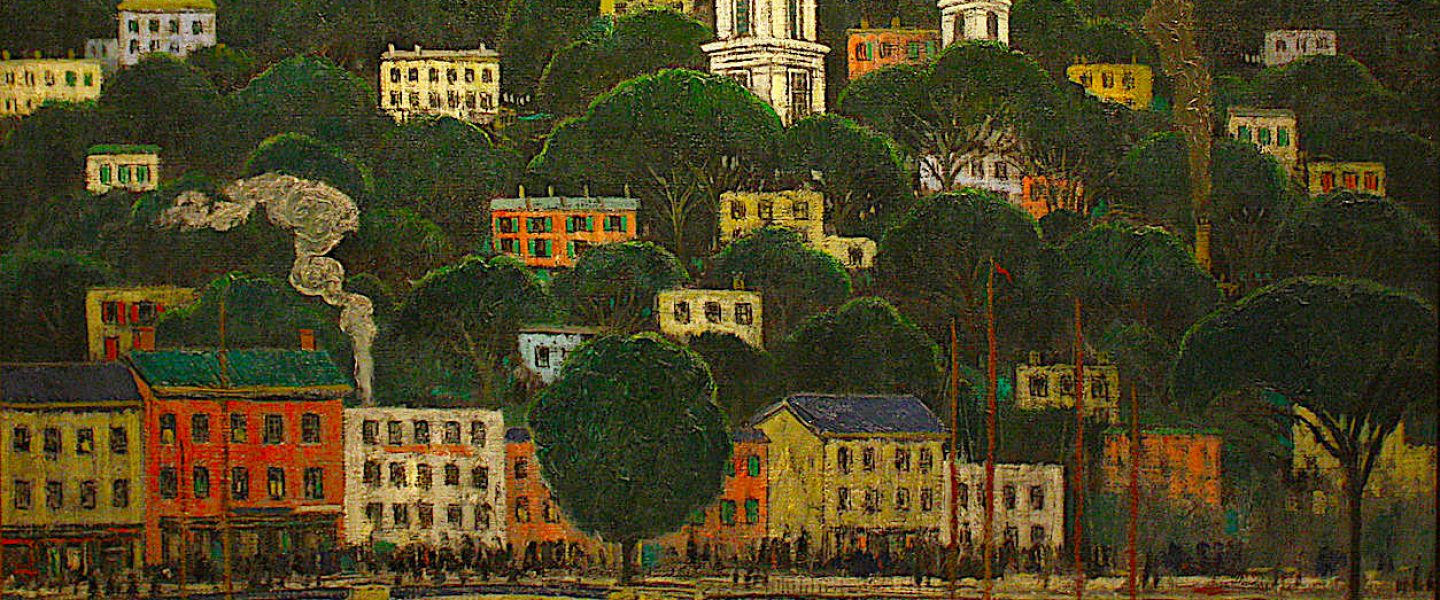
Jared French, “Washing the White Blood from Daniel Boone”, Date Unknown, Egg Tempera on Gesso Panel of Masonite, 71 x 78 cm, Cleveland Museum of Art
A fine art, film, history and literature site oriented to, but not exclusively for, the gay community. Please be aware that there is mature content on this blog. Information on images and links to sources will be provided if known. Enjoy your visit and please subscribe.
Jared French, “Washing the White Blood from Daniel Boone”, Date Unknown, Egg Tempera on Gesso Panel of Masonite, 71 x 78 cm, Cleveland Museum of Art

Wet White Tiles
“He ran on the white tiles up through the tunnels, ignoring the escalators, because he wanted to feel his feet move, arms swing, lungs clench, unclench, feel his throat go raw with air.”
-Ray Bradbury, Fahrenheit 451


Un deux trois quatre…Respire, il faut que tu respire …
Un deux, trois, quatre …Respire …


Natural Photography by Walter Mason
German artist Walter Mason offers an interesting perspective on the natural world surrounding him. He examines relationships between natural elements, re-arranging and pulling them apart to put them back in new positions. The results are profound time-based-art sculptures that highlight the fragility and beauty of the environment. His careful geometric positioning of objects in space create surreal scenes that highlight the simultaneous complexity & simplicity that can often be found in nature.

A Year: Day to Day Men: 27th of October
Shirt of Stars
October 27, 1955 was the release date of the film “Rebel Without a Cause”.
“Rebel Without a Cause” is a 1955 American drama film, filmed during the Eisenhower years in the United States, and directed by Nicholas Ray, who became an important influence on the French New Wave in film. The film was an attempt to explore the differences and conflicts between the generations, and the emotional lives of middle-class teenagers.
Although the rights to author Robert Lindner’s book “Rebel Without a Cause’ were acquired, an entirely new script by Irving Shulman and Stewart Stern was used for the film. The film starred James Dean in his last role as the lead character Jim Stark; Natalie Wood as Judy; Sal Mineo as John “Plato” Crawford; and Jim Backus and Ann Doran as Jim Stark’s parents.
“Rebel Without a Cause” was one of James Dean’s three major films which included the 1955 “East of Eden”, for which he was nominated for Best Actor; and the 1956 released “Giant”, for which he was nominated posthumously for Best Actor. “Rebel Without a Cause” was the last film James Dean starred in before his early death in a car crash. Just before his death, his agent Jane Deacy had negotiated a six-year, nine film deal with the Warner Brothers Studio.
The film was in production from March 28 to May 25 in 1955. Originally considered just a B-movie, the initially filming was in black and white film stock. When the studio recognized the star significance of Jame Dean, filming was switched to color, with many scenes being reshot. It was shot in the widescreen CinemaScope format, a recent introduction to film making.
“Rebel Without a Cause”, known as an epochal story of a new non-conforming generation in the 1950s, was also a gay-positive cinema landmark. It was filmed in an era when homosexuality was still a crime in many parts of America; the Motion Picture Production Code censors of the era had a long list of forbidden topics, irrespective of the manner in which they were treated. In the spring of 1955, a Production Code memo was sent to producer Jack Warner with a reminder that it was vital that there be no inference of a questionable relationship between the characters of Plato and Jim.
“Rebel Without a Cause” is considered as the first in mainstream films to depict gay desire. James Dean’s character Jim becomes both friend and fascination to Sal Mineo’s Plato, a lonely younger kid who is obviously gay. Most of the references, due to the era, are non-verbal: the pin-up photo of Alan Ladd in Plato’s school locker, the looks of adoration Plato gives Jim, and late in the film a coded declaration of love from Plato to Jim. The film marks a turning point in film’s and society’s attitude from one of hostility to tolerance and support of gay life.
“Rebel Without a Cause” was nominated for three Academy Awards: Sal Mineo for Best Supporting Actor; Natalie Wood for Best Supporting Actress; and Nicholas Ray for Best Writing of a Motion Picture Story. It was entered into the National film Registry in 1990. As a side note, the film upon its release was banned in New Zealand out of fears it would incite teenage delinquency (released one year later with scenes cut out).

Photographer Unknown, (The Orange Cell)

José Villegas Cordero, “Self-Portrait”, 1898, Oil on Canvas, Museo National del Prado
José Villegas Cordero was a Spainish painter of historical, genre, and costumbrista scenes. Costumbrism is the pictorial interpretation of everyday life with its customs and mannerisms. It is related both to thhe movements of Realism with its focus on precise representation and Romanticism with its interest on expression and romantic styling.
José Cordero studied at the Escuela de Bellas Artes in Seville. In 1867 he traveled to Madrid and worked in the studios of Federico de Madrazo. copying the works of Valazquez to perfect his technique. Codero visited Rome in 1868 where he first created his costumbrista works.

A Year: Day to Day Men: 26th of October
Slow Moving Water
October 26, 1825 marks the opening of the Erie Canal.
From the days of the birchbark canoe, the early trade routes of the Northeast utilized New York’s waterways. The Lake Champlain-Hudson River Route and the Lake Ontario-Oswego River-Mohawk River Route were utilized by native Americans, fur traders, missionaries and colonizers. The birchbark canoes used earlier were supplemented by longer heavier boats rowed or pulled by several men, which by 1791 was able to haul a two ton load.
In March of 1792, the Western Inland Lock and Navigation Company came into being and improved navigation on the Mohawk River. Also in that year, this company built small canals 3 feet deep with locks of 12 feet by 74 feet around the falls and rapids of the river. By 1796, Durham boats with capacities of 15-20 tons were able to navigate the route. Although business was brisk, maintenance on the wooden locks and channels depleted revenue and the operation folded a few years later.
In 1817 the Erie Canal was established under the management of a New York State Commission. Federal funds were not legislated; so this canal and all subsequent canals in New York State were built and maintained exclusively with state funds. The canal was dug from Albany to Buffalo, 4 feet deep and 40 feet wide, with stone locks 15 feet by 90 feet. The locks were the limiting factor on boat size and their efficiency of operation dictated the allowable traffic flow.
Additional canals were dug from the Hudson River to Lake Champlain, from Montezuma to Cayuga and Seneca Lakes and from Syracuse to Oswego. This canal system proved to be so successful that almost every community in the state lobbied for a link to the system, resulting in a network of canals. These lateral canals proved to be of marginal value at best:
In 1836, an enlargement program commenced on the main Erie Canal system. The canal was straightened a bit, the channel was increased in size to 7 feet by 70 feet, and the locks were enlarged to 18 feet by 110 feet. This permitted boats of much greater size on the Erie, Champlain, Cayuga-Seneca and Oswego canals, and further diminished the importance of the smaller lateral canals. Most of the lateral canals were closed by 1878 with only the Black River Canal lasting until the eventual close of the entire system in 1917.
The growth of steam power on the canal and steel boat construction eliminated the need for a waterway as protected as the old Erie Canal. A twentieth century canal of grand dimension with cast concrete structures and electronic controls was begun. This Barge Canal system, utilizing canalized rivers and lakes and enlarged sections of the original Erie Canal, opened in 1918. Several of the old routes are still utilized today.

Chris Cubellis, “Pup- The Dream is Over”, Album Art Gif


Ramón Novarro
Ramón Novarro, whose birth name was Jose Ramón Gil Samaniego, was a Mexican-American actor born in 1899 in Durango, Mexico. Fleeing the Mexican Revolution in 1913, Novarro and his family settled in Los Angeles, California. Within four years, he started appearing in the films of Rex Ingram and his wife  Alice Terry, while also working as a singing waiter. Novarro’s first major success was his role in the 1923 “Scaramouche”, playing the lead role of André-Louis Moreau.
Novarro’s good looks and adequate skill as an actor made him an ideal competitor for Rudolph Valentino’s dominance as a Latin lover. Three years after Valentino played the title character of “The Shiek” in 1921, Novarro played a similar role. In 1925, Novarro gave his breakthrough performance as the title character in director Fred Niblo’s “Ben Hur: A Tale of the Christ”. The film was a blockbuster hit, cementing MGM’s reputation as a quality studio and elevating Navarro into the Hollywood elite.
Valentino’s 1926 death left Novarro the title of Latin Lover Number One in Hollywood, and he enjoyed the status into the talking film era. He was popular as a swashbuckle r in action films and one of the great romantic leads of the era. Novarro appeared with Norma Shearer in the 1927 “Student Prince in Old Heidelberg” and in the 1928 “Across to Singapore” with actress Joan Crawford.
At the peak of his success in the early 1930s, Novarro was earining more than 100,000 US dollars per film. It was only after his studio contract with MGM Studios was not renewed in 1935 that his celebrity faded. After that, he made sporadic appearances in film, including John Huston’s 1949 “We Were Stagers” and the 1950 film-noir crime film “Crisis” with Cary Grant.
Ramón Novarro was gay in a time when society had little understanding and no tolerance for anyone considered different. MGM mogul Louis B. Mayer asked him to take a woman as a bride, to participate in a “lavender marriage’ for publicity purposes. Novarro refused, and maintained romantic relationships with men, including composer Harry Partch and Hollywood journalist Herbert Howe. On the night of October 30, 1968, Novarro was murdered by brothers Paul and Tom Ferguson whom he invited into his home. Believing there was a large sum of money in the house, the brothers hoped to rob him. Novarro died as a result of asphyxiation, choked to death on his own blood after having been beaten. He is buried in Calvary Cemetery in East Los Angeles.

Giorgio Vasari, “Six Tuscan Poets”, 1554, Oil on Canvas, Minneapolis Institute of Art, Minneapolis,Minnesota
In this group portrait “Six Tuscan Poets” by Giorgio Vasari, six distinguished poets and philosophers of the thirteenth and fourteenth centuries are shown as if engaged in a literary conversation. Each was revered for his role in the development of lyric poetry, which helped establish the Tuscan dialect as the standard language in Italy.
The seated figure is Dante Alighieri, author of the “Divine Comedy”. Facing him is Guido Cavalcanti, acclaimed for his love sonnets. The standing figure in clerical garb is the humanist and classical scholar Francesco Petrarch; to his right is Giovanni Boccaccio, author of the “Decameron”. The figures at the far left are two authoritative commentators on their works, the humanist and writer Marsilio Ficino and the platonic philosopher Cristoforo Landino.
All four of the main figures wear laurel wreaths, symbolic of literary achievement. The objects on the table represent various scholarly disciplines. The solar quadrant and celestial globe denote astronomy and astrology; the compass and terrestrial globe, geometry and geography; the books, grammar and rhetoric.


