James Stroudley


Leonard James Stroudley, “The Oarsmen”, 1930, Oil on Canvas, 224 x 178 cm, Private Collection

Born in London in June of 1906, Leonard James Stroudley was a painter, printmaker, and educator. He studied at the Clapham School of Art from 1923 to 1927, and continued his studies at the Royal College of Art from 1927 to 1930, where he studied under painters William Rothenstein and Alan Gwynne-Jones. As a recipient of the first Abbey Scholarship in 1930, Stroudley was able to study for three years in Italy, where he was influenced by the paintings of Giotto and Piero della Francesca, and produced one of the last decorative cycles by a Rome Scholar prior to World War II.

On his return to London in 1933, Leonard Stroudley became a visiting lecturer at the Royal Academy School and exhibited at the Royal Academy and the Royal Society of British Artists, of which he was elected a member in 1934. Working through a series of influences, including cubism in the late 1930s, he achieved the incisive draftsmanship that is the core of his work. Stroudley’s drawings, both figurative and landscapes, from this period are technically brilliant and bear comparison with illustrative work of British sculptor Eric Kennington.

After the Second World War, in which he worked with the Camouflage Unit, Stroudley taught at St. Martin’s School of Art and continued his lectures at the Royal Academy Schools. Though he continued to live in London, Stroudley’s later work, exhibited at the Royal Academy from 1955, indicated regular painting trips to the coastal areas of Kent and Sussex. Initially a figurative artist, his later works, starting in the 1950s, moved increasingly towards abstraction. 

Leonard James Stroudley, in addition to exhibitions at the Royal Schools, had numerous gallery shows, among which were the Walker Art Gallery in 1956-1957, the Apollinaire Gallery, the Arthur Tooth and Son Gallery, and London’s Reid Gallery in 1960. His former student, realist painter Peter Coker, paid homage to his teacher by including Stroudley’s work in the 1971 exhibition “Pupil & Masters” which was held at Westgate House in Long Melford, Suffolk.

Leonard James Stroudley died in May of 1985 at Wandsworth, London. His works are in the public collections of Bradford, Brighton, Coventry, and Rochdale, as well as many private collections. 

Top Insert Image: Leonard James Stroudley, “Undercliff Walk, Looking West from Rottingdean”, Watercolor and Penccil, Private Collection

Bottom Insert Image: Leonard James Stroudley, “First Floor Front”, 1959, Oil on Canvas, The Esplanade, Rochdale, Greater Manchester, England


Jean Genet: “I Shall Dare What Must Be Dared”

“I want to fulfill myself in one of the rarest of destinies. I have only a dim notion of what it
will be. I want it to have not a graceful curve slightly bent toward evening but a hitherto unseen beauty
lovely because of the danger which works away at it overwhelms it undermines it. Oh let me be only utter
beauty I shall go quickly or slowly but I shall dare what must be dared. I shall destroy appearances the
casings will burn away and one evening I shall appear there in the palm of your hand quiet and pure like a
glass statuette. You will see me. Round about me there will be nothing left.” 

-Jean Genet, The Thief’s Journal


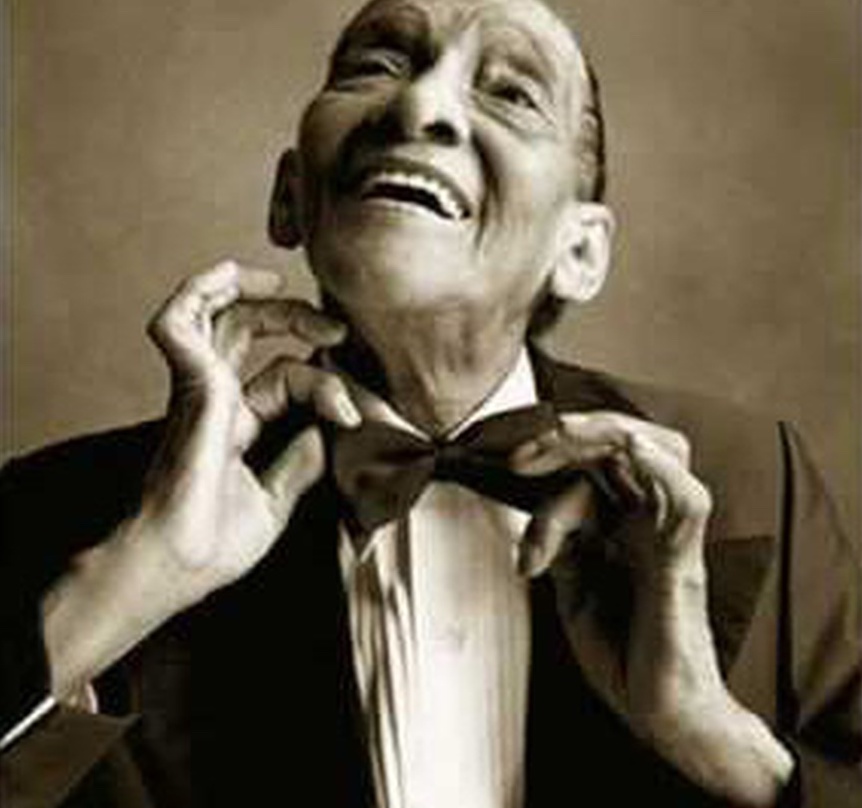
Jimmy Scott: Music History

Jimmy Scott, “I’m Getting Sentimental Over You”, 1986, From the Album “All the Way”

Born in Cleveland, Ohio, in July of 1925, James Victor Scott was an American jazz vocalist known for his sensitivity on ballads and for his high countertenor voice. The high range of his singing voice was due to a rare genetic disease, the Kallmann syndrome, which prevented him from reaching classic puberty and limited his physical height. 

Given the nickname of “Little Jimmy Scott” by jazz musician and band leader Lionel Hampton, Scott achieved prominence as the lead singer in Hampton’s band when he recorded “Everybody’s Somebody’s Fool” in December of 1949. This song became a top rhythm and blues hit in 1959. Scott sang the vocals on Charlie Parker’s adaption of Gershwin’s “Embraceable You” in 1947; however, his vocals was credited to the female vocalist Chubby Newsom on the album.

Jimmy Scott signed in 1963 with Tangerine Records, a record label owned by Ray Charles and distributed by ABC-Paramount Records. Under that label, he recorded the album “Falling in Love is Wonderful”, with Ray Charles interplaying on the piano. This ranks as one of the best works of Scott’s career, showing his range of emotions and his hitting all the notes with perfection on such classics as “How Deep is the Ocean” and “Someone to Watch Over Me”.

By the late 1960s, Jimmy Scott’s career had faded; he returned to his native Cleveland and worked in several menial labor positions. It wasn’t until 1989 that he returned to music, sharing a late-night billing with singer and pianist Johnnie Ray at the famed New York’s Ballroom. Singing at the funeral of his friend, blues singer and songwriter Doc Pomus, gained him further recognition and an opportunity with Sire Records. 

Sire Records, an arm of the Warner Records group, released Jimmy Scott’s 1992 album “All the Way” which earned Scott a nomination for a Grammy Award. Between 1994 and 1998, Jimmy Scott released three albums: the 1994 “Dreams”, “Heaven” released in 1996, and an album of pop/ rock interpretations entitled “Holding Back the Years”. This last album earned an award for Best Jazz Album of 2000, and included covers of songs written by Prince, Lennon, Elvis Costello, and Elton John and Bernie Taupin.

Jimmy Scott’s early recordings for Decca Records and Savoy Records were re-released as a box set in 1999. He signed with Milestone Records in 2000 and recorded four albums with guests such as Wynton Marsalis, Renne Rosnes, and Lewis Nash. His final recording took place at his home in May of 2014, a track written for him by Grégoire Maret titled “The 26th of May” which appears on Maret’s album “Wanted”.

Scott performed at the inaugurations of both President Eisenhower and William Clinton, singing “Why Was I Born”. He received the NEA Jazz Masters award in 2007, and the Lifetime Achievement Award from the Jazz Foundation of America in 2010. Jimmy Scott was inducted into the Rhythm and Blues Hall of Fame in 2013. He died in his sleep at his home in Las Vegas on June 12, 2014 at the age of eighty-eight years. He is buried in Knollwood Cemetery in Mayfield Heights, Ohio.

“As singers, we all deal in pain. We’re all trying to push the pain through the music and make it sound pretty. Jimmy Scott has more pain and prettiness in his voice than any singer anywhere”

– Ray Charles