
Chas, “Splashes of Blue Light”, (Morning Sun Through Blue Glass Bottles), 2018
A fine art, film, history and literature site oriented to, but not exclusively for, the gay community. Please be aware that there is mature content on this blog. Information on images and links to sources will be provided if known. Enjoy your visit and please subscribe.
Chas, “Splashes of Blue Light”, (Morning Sun Through Blue Glass Bottles), 2018


Nine Presentations in Light and Shadow
“Nothing disappears before appears.”
― Ehsan Sehgal


Photographer Unknown, Shower After Shower
When their bodies had finished scouring for gaps in the door, their souls rose up. When their fingernails had scratched at the wood and in some cases were nailed into it by the sheer force of desperation, their spirits came toward me, into my arms, and we climbed out of those shower facilities, onto the roof and up, into eternity’s certain breadth. They just kept feeding me. Minute after minute. Shower after shower.”
―

Antonio Canova, “Psyche Revived by Cupid’s Kiss”, Detail, 1787, Marble, Louvre Museum, Paris
“Psyche Revived by Cupid’s Kiss” is a marble sculpture by Italian artist Antonio Canova, who was raised by his stonemason grandfather, Pasino Canova. Antonio Canova valued his independence as an artist, believing that art was above politics. However, through pressure by the French on the papacy, he was forced to accept titles and honors.
The marble sculpture is in a Neoclassical style but shows characteristics of the then emerging Romantic movement. There were two versions of this piece; the image shown being the prime version, which was acquired by Joachim Murat, Marshal of France and Admiral of France under the reign of Napoleon. After Murat’s death, the sculpture entered the Louvre Museum in 1824.
Image reblogged with thanks to http://abrighterhellas.tumblr.com

A Year: Day to Day Men: 25th of November
The Jaguar Hunter
November 25, 1920 marks the birthdate of actor Ricardo Montalbán
Born in Mexico City, Mexico, to Spanish immigrants, Ricardo Montalbán made his New York stage debut in 1940 in a small role in “Her Cardboard Lover”, starring  Tallulah Bankhead. In 1947 he landed his first major Hollywood film role in the musical “Fiesta”, playing twin siblings with Esther Williams. Montalbán had a memorable dance number in that film with Cyd Charisse.
The dark, handsome Montalbán with the Spanish accent would go on to play numerous Latin romantic-types. He teamed up again with Esther Williams in two more films, the musical romantic comedy “Neptune’s Daughter” and the 1948 romantic comedy “On an Island with You”. In 1949, Montalbán broke from his romantic typecast to play a border agent in the suspense drama film “Border Incident” directed by Anthony Mann.
During the 1950s and 1960s Montalbán was one of only a handful of actively working Hispanic actors in Hollywood, often playing characters of different ethnicities, such as the 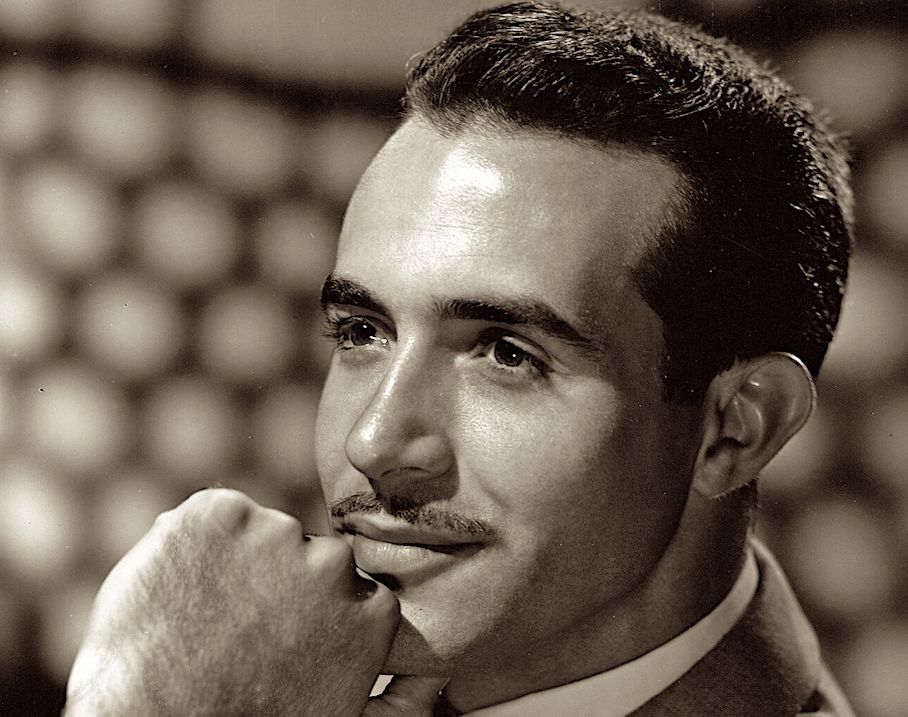 character Nakamura in the 1957 “Sayonara” and Tokura in a “Hawaii Five-O” episode. He also starred as a naive, penniless French duke in the romance comedy “Love is a Ball” released in 1963.
Ricardo Montalbán’s best known television role was that of the man in the white suit with the cultured demeanor, Mr. Roarke, on the television series “Fantasy Island” which ran from 1977 to 1984. The series was one of the most popular on television at that time, making him and his co-star Herve Villechaize, playing Tattoo, popular icons.
Montalbán’s most well-known film role was the character of Khan Noonien Singh in the 1982 “Star Trek II: The Wrath of khan”, in which he reprised the role he had originated in the 1967 episode of “Star Trek” titled “Space Seed”. Montalbán was already physically fit; so Khan’s costume was specifically designed to display his physique. He agreed to take the role at a significant pay cut because he relished reprising his original character. His only regret, Montalbán said, was that he and William Shatner never interacted in their roles; the scenes were all done through video communication, filming their scenes months apart to accommodate Montalbán’s schedule for “Fantasy Island”.
Montalbán reacted to the poor way Mexicans were being portrayed by establishing with other stars the Nosotros (We) Foundation in 1970 to advocate for Latinos in the movie and television industry. He served as its first president. The foundation created the Golden Eagle Awards, an annual awards show that highlights Latino actors. The awards are presented in conjunction with the Nosotros American Latino Film Festival, held at the now renamed Ricardo Montalbán Theater in Hollywood.

Frederic Vayssouze-Faure, “Moon Dust’
Frederic Vayssouze-Faure is a French artist interested in wave phenomenons and harmonic theory. He focuses on creating dynamic artworks in which each cell has its own periodic motion, or oscillation.
Image reblogged with thanks to the artist’s site: http://wavegrower.tumblr.com

“Sebastiane”, 1976, Directed by Derek Jarman and Paul Humfress
Sebastiane” is a 1976 Latin-language British historical thriller directed by Derek Jarman and Paul Humfress. The screenplay, written by Jarman, Humfress, and James Whaley, portrays events in the life of Saint Sebastian, including his martyrdom by arrows. The film, which was targeted to a gay audience, was controversial for the homoerotism portrayed and for being dialogued entirely in vulgar Latin. It was the only English-made film to have required English subtitles.
Intensely erotic, “Sebastiane” was filmed in Sardinia, near the town of Buggerru, and in locations in Italy. The film is an early film by the noted experimental and outspokenly gay director Jarman and features the debut of actor Leonardo Treviglio in his role of Sebastian. A bold film having the distinction of being the first non-porn film to show a male erection, “Sebastiane” now is probably only for the film aficionado who loves film- making and its history. A milestone in the history of non-porn gay films.

A Subjective Experience
“Human consciousness cannot be a passive observer of the outer world, just interpreting the input signals that are being received by the brain from the external world. Rather, it compares the fitness of a person’s inner world — feelings, perception, imagination, dreams, desires, etc. — with the external world, allegedly accepted as ‘objective reality’ outside individual consciousness. However, such an objective reality cannot be so objective as it is believed to be. Due to various internal processes to achieve a balance between the inner and outer worlds, consciousness insensibly changes the physical characteristics of reality, making it a subjective phenomenon, at least to a large extent. For this reason, in order to determine what is real (outside of human consciousness) and what is just a subjective experience, it is actually a difficult job.”
―

Straddling the Horse
“When I bestride him, I soar, I am a hawk: he trots the air; the earth sings when he touches it; the basest horn of his hoof is more musical than the pipe of Hermes. ”
―
Reblogged with thanks to http://satyrspantheist.tumblr.com


Valerie Ganz, Five Paintings from the “Shower” Series, circa 1980s, Mixed Media
Valerie Ganz was born in Swansea, South Wales, United Kingdom, overlooking the dramatic sweep of Swansea Bay with its background of heavy industry. She attended Swansea College of Art and studied painting, sculpture and stained glass. Ganz remained as a tutor until 1973 when she turned her attention to painting full time.
 As Valerie Ganz’a interest in the landscape of South Wales grew, her attention was drawn to the landscape of its industrial areas and, in particular, to its mining industry. Over a period of many years, Ganz worked at fourteen different collieries, taking a house and studio in 1985 at Six Bells, Abertillery.
For a year Ganz worked at the Six Bells Colliery, alongside the miners both above ground and at the coalface. In the evening she made studies of the miners and their families at choir practice, in the snooker halls and in the chapel. This work formed the basis of the mining exhibition in 1986 at the Glynn Vivian Gallery in Swansea. The exhibition was entitled “Mining in Art”; her work was shown along with the works of fellow artists Josef Herman, Jack Crabtree and Nicholas Evans.
Valerie Ganz died after a prolonged period of illness on the twenty-eighth of September in 2015 at Swansea, United Kingdom. Today, her works are held in the collections of the National Coal Mining Museum for England in Wakefield as well as the Newport Museum and Art Gallery in Wales.
Insert Image: Valerie Ganz, “Ben Waits Patiently”, circa 1980s, Oil on Canvas, 31.5 x 26 cm, Private Collection

Photographer Unknown, (The Iron Dark of the World)
“By early evening all the sky to the north had darkened and the spare terrain they trod had turned a neuter gray as far as the eye could see. They grouped in the road at the top of a rise and looked back. The storm front towered above them and the wind was cool on their sweating faces. They slumped bleary-eyed in their saddles and looked at one another. Shrouded in the black thunderheads the distant lightning glowed mutely like welding seen through foundry smoke. As if repairs were under way at some flawed place n the iron dark of the world.”
―

Photographer Unknown, Title Unknown, (Hidden Identity)
Reblogged with many thanks to http://penisprocess.tumblr.com

A Year: Day to Day Men: 24th of November
One Facet of Life
November 24, 1639 marks the first known observation and recording of a transit of Venus.
By the 17th century, two developments allowed for the transits of planets across the face of the sun to be predicted and observed. One was the telescope of which the actual inventor is unknown; a patent for a refracting telescope was submitted in 1608 in the Netherlands by spectacle maker Hans Lippershey. Galileo heard about it, and in 1609 built his own version for observing celestial objects.
The second development was the new astronomy of Johannes Kepler, which assumed elliptical rather than circular orbits fro the planets. In 1627, Kepler published his “ Rudolphine Tables”, a star catalogue and  planetary tables using some observational data collected by Danish astronomer Tycho Brahe. Two years later, Kepler published extracts from his tables concerning the transit of Mercury and of Venus for the year 1631. These occurred as predicted and were observed by several astronomers, vindicating Kepler’s approach to astronomical theory.
The first known observations and recording of the transit of Venus across the sun were made in 1639 by the English astronomers Jeremiah Horrocks and his friend and correspondent William Crabtree. These observations were made on November 24, under the Julian calendar then in use in England. This calendar was refined and gradually replaced by our Gregorian calendar initiated by Pope Gregory XIII, changing the observation date to December 4th of that year. Horrocks observed the event from the village of Much Hoole, Lancashire, and Crabtree, independently, observed the event from his home in Broughton, near Manchester.
Both men, followers of Kepler’s astronomy, were self-taught mathematical astronomers who methodically worked to correct and improve Kepler’s Tables by observation and measurement. In 1639, Horrocks was the only astronomer who realized that the transit of Venus was imminent; others became aware only upon receiving Horrocks’s report. The two men’s observations and later mathematical work were influential in establishing the size of the solar system. For their achievements, they are considered the founders fo British research astronomy.
Insert Image: Ford Madox Brown, “Crabtree Watching the Transit of Venus AD 1639”, 1883, Oil on Canvas, Manchester Town Hall, Manchester, England


Photographer Unknown, Model Unknown, (A Whole System of Symbols)
“The art of meditation is a way of getting into touch with reality, and the reason for it is that most civilized people are out of touch with reality because they confuse the world as it with the world as they think about it and talk about it and describe it. For on the one hand there is the real world and on the other there is a whole system of symbols about that world which we have in our minds. These are very very useful symbols, all civilization depends on them, but like all good things they have their disadvantages, and the principle disadvantage of symbols is that we confuse them with reality, just as we confuse money with actual wealth.”
―
